
Cetirizine 10 Gulf 10 mg Tablets
PDF Leaflet Revision Date: 07 February 2023
Clinical Summary
Quick overview from the medicine insert
Indication
Symptomatic relief of allergic conditions.
Dosage (summary)
Adults: 10 mg once daily; Children 6-12: 10 mg once or 5 mg twice daily.
Onset of Action / Duration
Onset: 1 hour, Duration: 10 hours
Special Populations
- Renal impairment
- Hepatic impairment
Pregnancy & Breastfeeding
Contraindicated in pregnancy and lactation; safety not established.
Key Drug Interactions
- Alcohol
- CNS depressants
Contraindications
- Hypersensitivity to cetirizine
- Lactating women
- Pregnancy
- Children under 2 years
Common side effects
- Drowsiness
- Dry mouth
- Nausea
- Headache
Counselling Points
- Avoid alcohol
- Determine individual sedation response
- Withdraw before allergy tests
Serious warnings
- May impair ability to drive
- Caution in porphyria
Important Disclaimer
The Cetirizine 10 Gulf 10 mg Tablets professional information leaflet below is the property of Gulf Drug Company and is provided on Medinsert exactly as issued, with no.. alterations or editorial changes. We make every effort to keep content current by updating documents as soon as new versions become available. Medinsert serves as a trusted access point for healthcare professionals, but does not replace official sources or clinical judgement. For more details, please read our full disclaimer. read more>>
 Healthcare Professionals Only
This content is for registered healthcare professionals
Sign in or create a free account to read the full package insert.
Free for HPCSA-registered professionals. Powered by Medinsert.
Clinical Particulars
Section 4 of the official insert — extracted exactly as issued, no alterations
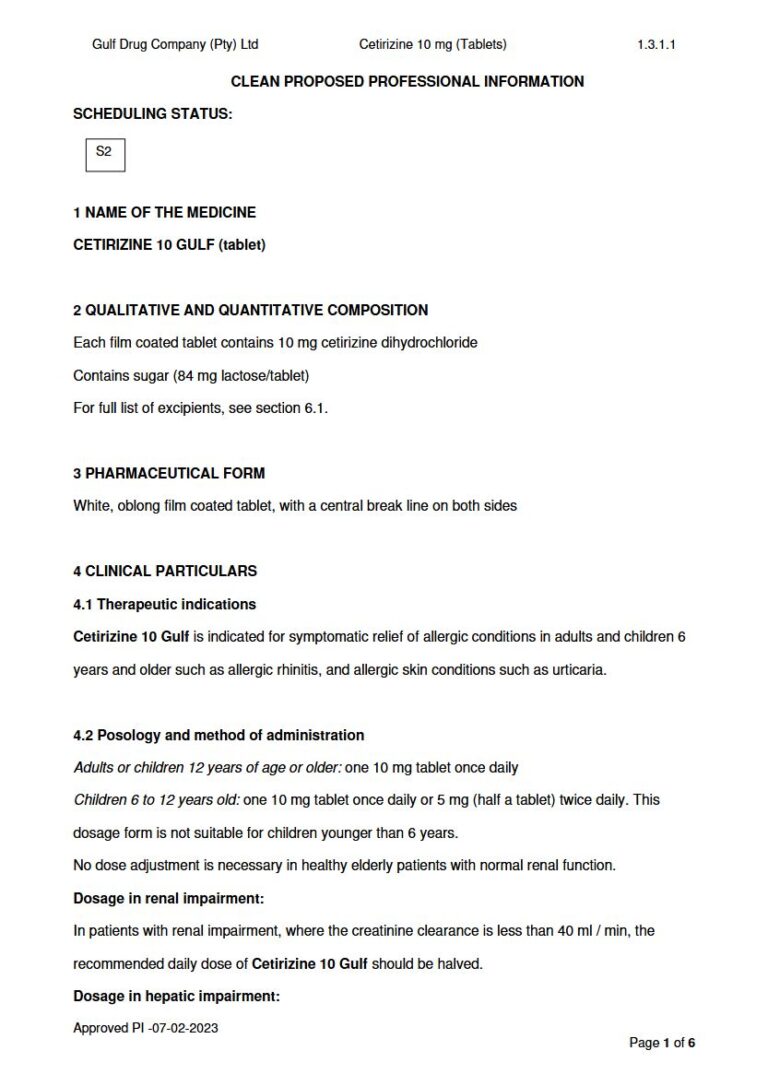
4.1 Therapeutic indications
Cetirizine 10 Gulf is indicated for symptomatic relief of allergic conditions in adults and children 6 years and older such as allergic rhinitis, and allergic skin conditions such as urticaria.
4.2 Posology and method of administration
Adults or children 12 years of age or older: one 10 mg tablet once daily
Children 6 to 12 years old: one 10 mg tablet once daily or 5 mg (half a tablet) twice daily. This dosage form is not suitable for children younger than 6 years.
No dose adjustment is necessary in healthy elderly patients with normal renal function.
Dosage in renal impairment: In patients with renal impairment, where the creatinine clearance is less than 40 ml / min, the recommended daily dose of Cetirizine 10 Gulf should be halved.
Dosage in hepatic impairment: In patients with moderate to severe hepatic impairment, the recommended daily dose of Cetirizine 10 Gulf should be halved.
4.3 Contraindications
Hypersensitivity to Cetirizine 10 Gulf or any of the ingredients.
Hypersensitivity to hydroxyzine
Cetirizine 10 Gulf is contra-indicated in lactating women, since the active ingredient is excreted in breast-milk.
Cetirizine 10 Gulf is contra-indicated in pregnancy, as safety has not been established.
Children under the age of two years, as safety and efficacy have not been demonstrated.
4.4 Special warnings and precautions for use
Cetirizine 10 Gulf may lead to drowsiness and impaired concentration, which may be aggravated by the simultaneous intake of alcohol or other central nervous system depressant medicines. The patientu2019s ability to perform hazardous activities requiring mental alertness or physical co-ordination such as driving or operating machinery may be impaired.
Porphyria: Use with Caution
Cetirizine 10 Gulf lacks significant sedative effects. Patients should be warned, however, that a small number of individuals may experience sedation. It is therefore advisable to determine individual response before driving or performing complicated tasks. This effect may be compounded by the simultaneous intake of alcohol or other central nervous system depressants (see 4.5 Interaction with other medicines and other forms of interaction).
Laboratory tests: Since Cetirizine 10 Gulf may interfere with skin tests for allergy, it must be withdrawn well before such tests are performed.
Contains lactose: Patients with rare hereditary problems of galactose intolerance, total lactase deficiency or glucose-galactose should not take CETIRIZINE 10 GULF.
4.5 Interactions with other medicines and other forms of interaction
Concomitant use of alcohol and other sedating medicines should be avoided. There is no evidence of an interaction between cetirizine and cimetidine, ketoconazole, erythromycin, azithromycin, diazepam, glipizide, and pseudoephedrine.
4.6 Fertility, pregnancy and lactation
Safety in pregnancy and lactation has not been established (see 4.3 CONTRAINDICATIONS). Cetirizine is excreted in breast milk.
4.7 Effects on ability to drive and use machines
Patients should be warned that some individuals may experience sedation. It is therefore advisable to determine individual response before driving a vehicle or operating machinery. This effect may be compounded by the simultaneous intake of alcohol or other central nervous system depressants.
4.8 Undesirable Effects
Gastro-intestinal system disorders: Frequent: nausea, gastro-intestinal discomfort, increased or loss of appetite, dry mouth and constipation or diarrhoea
Respiratory thoracic and mediastinal disorders: Frequent: thickening of mucous
Ear and labyrinth disorders: Frequent: tinnitus
Eye disorders: Frequent: blurred vision, diplopia
Nervous system disorders: Less frequent: drowsiness, fatigue, dizziness, headache, anxiety, nervousness, asthenia, insomnia and tremors have been reported.
Skin and subcutaneous tissue disorders: Less frequent: skin rash, urticaria, pruritus, angioedema, photosensitivity, increased sweating
Musculoskeletal, connective tissue and bone disorders: Less frequent: malaise
Immune system disorders: Less frequent: anaphylaxis
Hepatobiliary disorders: Less frequent: urinary retention or frequency and dysuria
4.9 Overdose
Drowsiness is an expected symptom of overdosage. Overdosage in children may produce agitation, somnolence, pruritus, rash, urinary retention, fatigue, tremor and tachycardia. In the case of massive overdosage, gastric lavage should be performed together with usual supportive measures. There is no specific antidote. Cetirizine 10 Gulf is not effectively removed by dialysis. FURTHER TREATMENT IS SYMPTOMATIC AND SUPPORTIVE.
