
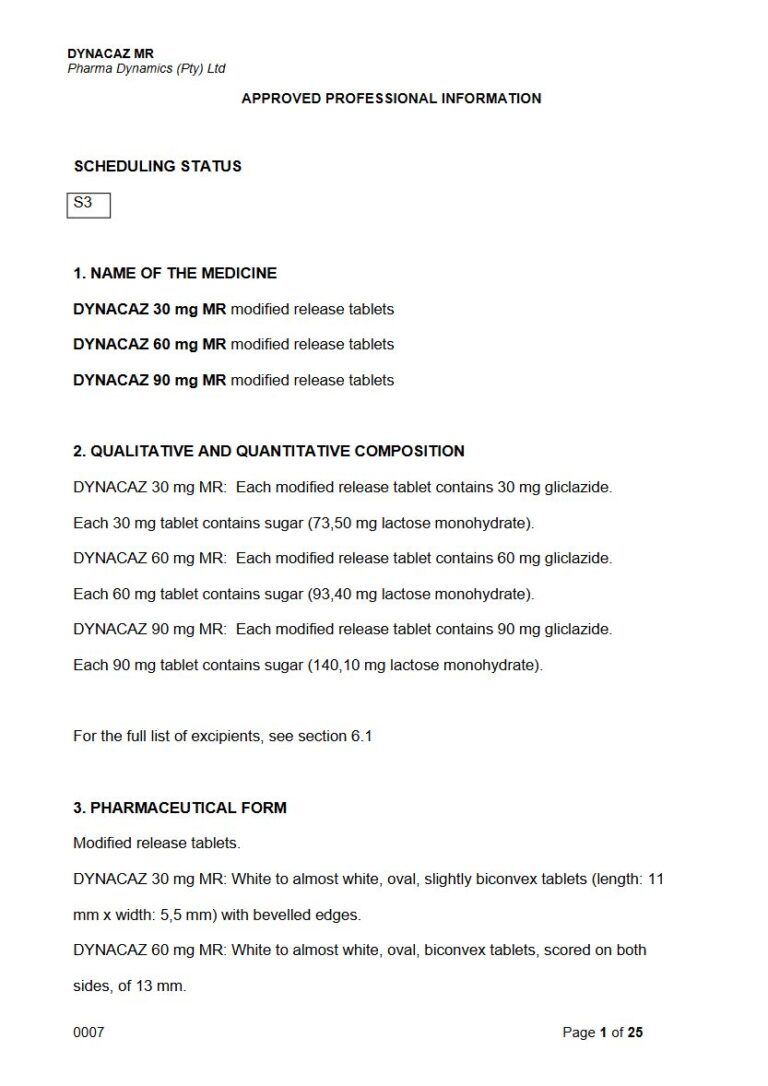
Dynacaz Mr 30 mg, 60 mg, 90 mg MR tablets.
PDF Leaflet Revision Date: 14 March 2023
Clinical Summary
Quick overview from the medicine insert
Indication
For Type 2 diabetes management when diet and exercise are insufficient.
Dosage (summary)
Initial: 30 mg once daily with breakfast; max: 120 mg/day.
Special Populations
- Elderly
- Renal impairment
Pregnancy & Breastfeeding
Safety not established in pregnancy or lactation.
Key Drug Interactions
- Miconazole
- Alcohol
- Fluoroquinolones
Contraindications
- Hypersensitivity to gliclazide
- Type 1 diabetes
- Severe renal or hepatic insufficiency
Common side effects
- Hypoglycaemia
- Headache
- Dizziness
- Gastrointestinal disturbances
Counselling Points
- Take with breakfast
- Monitor blood glucose regularly
- Avoid skipping meals
Serious warnings
- Risk of cardiovascular mortality
- Severe hypoglycaemia possible
Important Disclaimer
The Dynacaz Mr 30 mg, 60 mg, 90 mg MR tablets. professional information leaflet below is the property of Pharma Dynamics and is provided on Medinsert exactly as issued, with no.. alterations or editorial changes. We make every effort to keep content current by updating documents as soon as new versions become available. Medinsert serves as a trusted access point for healthcare professionals, but does not replace official sources or clinical judgement. For more details, please read our full disclaimer. read more>>
 Healthcare Professionals Only
This content is for registered healthcare professionals
Sign in or create a free account to read the full package insert.
Free for HPCSA-registered professionals. Powered by Medinsert.
Clinical Particulars
Section 4 of the official insert — extracted exactly as issued, no alterations
4.1 Therapeutic indications
DYNACAZ MR is indicated in Type 2 diabetic patients, in association with dietary measures, lifestyle changes and exercise, when dietary measures, lifestyle and exercise alone are not sufficient to control blood glucose.
4.2 Posology and method of administration
Posology
For adult use only:
DYNACAZ 30 mg MR: The daily dose may vary from 1 to 4 tablets a day, i.e. 30 to 120 mg taken as a single daily dose.
DYNACAZ 60 MR: The daily dose may vary from one half to 2 tablets a day, i.e. 30 to 120 mg taken as single daily dose. It is recommended that DYNACAZ MR be taken with breakfast.
If a dose is forgotten, the dose taken on the next day should not be increased. The dose should be adjusted according to the individual patientu2019s metabolic response (blood glucose levels and/or glycosylated haemoglobin HbA1c).
Initial dose: The initial recommended dose is 30 mg once daily, taken with breakfast.
Dose adjustments: If fasting blood glucose levels have not decreased satisfactorily, the dosage can be increased progressively to 60, 90 or 120 mg per day, by successive increments, respecting an interval of at least one month between each increment, except in patients whose blood glucose levels have not decreased after 15 days of treatment. In this case, the dosage may be increased at the end of the 2nd week of treatment. The daily dose should not exceed 120 mg. Previously untreated patients should commence with a dose of 30 mg. One DYNACAZ 60 mg MR modified release tablet is equivalent to two DYNACAZ 30 mg MR modified release tablets.
Replacement of gliclazide 80 mg with DYNACAZ MR: In patients stabilised on gliclazide 80 mg, the replacement of gliclazide 80 mg by DYNACAZ MR may initially be based on: 1 tablet gliclazide 80 mg = 1 x 30 mg tablet of DYNACAZ MR.
Replacement of another sulphonylurea with DYNACAZ MR: For replacement of another sulphonylurea treatment with DYNACAZ MR, it is recommended that the dosage and the half-life of the previous oral hypoglycaemic medicine must be taken into account.
If a patient is changed from another oral sulphonylurea with a prolonged half-life, a therapeutic window of a few days may prove to be necessary to avoid the additive effect of the two products and the subsequent risk of hypoglycaemia. During such a changeover, it is recommended that the initiation of treatment be the same as for the initial DYNACAZ MR dosage, start with daily doses of 30 mg per day and then increase the dosage by increments, according to the patientu2019s metabolic response.
Association with other oral antidiabetic medicines: DYNACAZ MR may be given concurrently with alpha glucosidase inhibitors or insulin; however, diabetic control should be checked with blood sugar readings because of the possibility of hypoglycaemia. In combined therapy with biguanides, there may be an increased risk of cardiovascular mortality than with the use of DYNACAZ MR alone.
Special populations
Elderly patients: The dosage is identical to that recommended for adults under the age of 65 years, and for patients with normal renal function, with careful patient monitoring.
Patients with mild to moderate renal failure (creatinine clearance 30 - 80 mL/min): A reduction in dosage may be necessary in patients with renal dysfunction. The dosage is identical to that recommended for patients with normal renal function, with careful monitoring. Use of DYNACAZ MR is contraindicated in patients with severe renal impairment (see section 4.3).
Patients at risk of hypoglycaemia: It is recommended that the minimum starting dose of 30 mg is used in these patients (see section 4.4).
Paediatric population: The safety and efficacy of DYNACAZ MR in children and adolescents have not been established. No data is available.
Method of administration: It is recommended that the tablet(s) be swallowed whole.
4.3 Contraindications
- hypersensitivity to gliclazide, sulphonylureas, sulphonamides or to any of the ingredients of DYNACAZ MR
- type 1 diabetes mellitus (Juvenile Insulin Dependent Diabetes Mellitus), diabetic ketoacidosis, diabetic pre-coma and coma
- significant acidosis, severe burns, severe infection or hyperosmolar nonketotic coma.
- major surgery or severe trauma
- severe renal or hepatic insufficiency, in these cases the use of insulin is recommended
- treatment with miconazole (see section 4.5)
- children
- pregnancy and lactation (see section 4.6).
4.4 Special warnings and precautions for use
Increased risk of cardiovascular mortality: The administration of oral hypoglycaemics may be associated with increased cardiovascular mortality, as compared to treatment with diet alone or diet with insulin. Clinical signs of a still insufficiently lowered blood glucose (i.e. hyperglycaemia, polyuria, polydipsia, dry mouth) may require dose adjustment of DYNACAZ MR.
Hypoglycaemia: Hypoglycaemia may occur following administration of sulphonylureas including DYNACAZ MR (see section 4.8). Some cases may be severe and prolonged. Hospitalisation may be necessary and glucose administration may need to be continued for several days. Careful selection of patients, of the dose used, and clear patient directions are necessary to reduce the risk of hypoglycaemic episodes. The administration of oral hypoglycaemics, such as DYNACAZ MR, may be associated with increased cardiovascular mortality as compared to treatment with diet alone or diet with insulin. Treatment with DYNACAZ MR can cause hypoglycaemia if mealtimes are irregular and, in particular, if meals are skipped. Possible symptoms of hypoglycaemia are: A reduction in dosage may be necessary in patients with mild to moderate renal dysfunction (see sections 4.2 and 4.3).
headache, intense hunger, nausea, vomiting, lassitude, sleep disorders, agitation, aggression, poor concentration, reduced awareness and slowed reactions, depression, confusion, visual and speech disorders, aphasia, tremor, paresis, sensory disorders, dizziness, feeling of powerlessness, loss of self-control, delirium, convulsions, shallow respiration, bradycardia, drowsiness, and loss of consciousness, possibly resulting in coma and lethal outcome. In addition, signs of adrenergic counter-regulation may be observed, sweating, clammy skin, anxiety, tachycardia, hypertension, palpitations, angina pectoris and cardiac dysrhythmia. Usually, symptoms disappear after intake of carbohydrates (sugar), however, artificial sweeteners have no effect. Experience with other sulphonylureas shows that hypoglycaemia can recur even when measures prove effective initially. If a hypoglycaemic episode is severe, or is prolonged, and even if it is temporarily controlled by intake of sugar, immediate medical treatment or even hospitalisation is required. In the initial weeks of treatment, the risk of hypoglycaemia may increase, and careful monitoring is necessary. At risk patients and/or factors favouring hypoglycaemia include: (see section 4.2)
- patients (particularly elderly patients) refusing or unable to co-operate
- patients who are malnourished or undernourished, with irregular mealtimes, skipping meals, periods of fasting or dietary changes
- imbalance between physical exercise and carbohydrate intake
- certain endocrine disorders: thyroid disorders, hypopituitarism and adrenocorticotrophic insufficiency, which should be controlled appropriately before therapy starts
- withdrawal of prolonged and/or high dose corticosteroid treatment
- severe vascular disease (severe coronary heart disease, severe carotid impairment, diffuse vascular disease)
- severe hepatic disease
- renal insufficiency
- concomitant administration of certain other medicines (see section 4.5)
- overdose of DYNACAZ MR.
It is recommended that the minimum starting dose of 30 mg be used. DYNACAZ MR should be prescribed only if the patient is likely to have a regular food intake (including breakfast). It is important to have a regular carbohydrate intake due to the increased risk of hypoglycaemia, if a meal is taken late, if an inadequate amount of food is consumed or, if the food is low in carbohydrate. Hypoglycaemia is more likely to occur during low-calorie diets, following prolonged or strenuous exercise, alcohol intake or if a combination of hypoglycaemic medicine is being used. In an exceptional stress situation e.g. trauma, fever, infection or surgical intervention, blood glucose regulation may deteriorate, and a temporary change to insulin may be necessary to maintain good metabolic control. Gastrointestinal side effects can be avoided if DYNACAZ MR is taken with breakfast.
Hepatobiliary symptoms may disappear after discontinuation of treatment. Discontinue treatment if cholestatic jaundice appears. Beta-blockers may decrease the efficacy of DYNACAZ MR by impairing the release of insulin. Beta-blockers may mask the typical sympathomimetic warning signs and symptoms of hypoglycaemia and may inhibit the normal physiological response to hypoglycaemia.
Patient information: The risk of hypoglycaemia, together with its symptoms (see section 4.8), treatment and conditions that predispose to its development, should be explained to the patient and to family members. The patient should be informed of the importance of following dietary advice, of taking regular exercise and of regular monitoring of blood glucose levels.
Poor blood glucose control: Blood glucose control may deteriorate under certain conditions, despite compliance from the patient. This occurs with exceptional stressors like fever, trauma, infection, surgery and febrile illnesses as well as St. John's wort (Hypericum perforatum) preparations (see section 4.5). Under these circumstances, it is prudent to convert the patient to insulin therapy temporarily to maintain good metabolic control. The hypoglycaemic efficacy of DYNACAZ MR may be attenuated over time in many patients. This may be due to progression in the severity of the diabetes, or to a reduced response to treatment. This phenomenon is known as secondary failure, which is distinct from primary failure, when an active substance is ineffective as first-line treatment. Adequate dose adjustment and dietary compliance should be considered before classifying the patient as secondary failure.
Dysglycaemia: Disturbances in blood glucose, including hypoglycaemia and hyperglycaemia have been reported, in diabetic patients receiving concomitant treatment with fluoroquinolones, especially in elderly patients. Careful monitoring of blood glucose is recommended in all patients receiving DYNACAZ MR and a fluoroquinolone together.
Renal and hepatic insufficiency: The pharmacokinetic and/or pharmacodynamic properties of DYNACAZ MR may be altered in patients with hepatic insufficiency or severe renal failure. A hypoglycaemic episode occurring in these patients may be prolonged, so appropriate management should be initiated.
Skin reactions: There is a potential for the occurrence of erythema multiforme, toxic dermal necrolysis and allergic vasculitis.
Laboratory tests: Measurement of glycosylated haemoglobin levels (for fasting venous plasma glucose) is recommended in assessing blood glucose control. Blood glucose self-monitoring may also be useful.
Treatment of patients with G6PD-deficiency with sulphonylurea agents can lead to haemolytic anaemia. Since gliclazide belongs to the chemical class of sulfonylurea medicines, caution should be used in patients with G6PD-deficiency and a non-sulfonylurea alternative should be considered.
Lactose: DYNACAZ 30/60/90 mg MR contain 73,50 mg, 93,40 mg and 140,10 mg lactose monohydrate per tablet, respectively. This should be taken into account in patients with diabetes mellitus. Patients with the rare hereditary conditions of galactose intolerance, total lactase deficiency or glucose-galactose malabsorption should not take DYNACAZ MR.
Paediatric population: The safety and efficacy of DYNACAZ MR in children has not been established (see section 4.3).
4.5 Interaction with other medicines and other forms of interaction
Hypoglycaemia may occur with concomitant use of DYNACAZ MR and the following medicines:
Combination which is contraindicated: Miconazole (systemic route, oromucosal gel) u2014 increases the hypoglycaemic effect with possible onset of hypoglycaemic symptoms, or even coma and is therefore contraindicated (see section 4.3).
Combinations which are not recommended: Phenylbutazone (systemic route) u2013 increases the hypoglycaemic effect of sulphonureas (displaces their binding to plasma proteins and/or reduces their elimination). It is preferable to use a different anti-inflammatory medicine, or else to warn the patient and emphasise the importance of self-monitoring. Where necessary, adjust the dose during and after treatment with the anti-inflammatory medicine. Alcohol u2014 increases the hypoglycaemic reaction (by inhibiting compensatory reactions) that can lead to the onset of hypoglycaemic coma. Avoid alcohol or medicines containing alcohol.
Combinations requiring precautions during use: Potentiation of the blood glucose lowering effect and thus, in some instances, hypoglycaemia may occur when one of the following medicines is taken:
- allopurinol
- anabolic steroids and androgens
- angiotensin-converting enzyme inhibitors: captopril and enalapril
- antidysrhythmics: disopyramide
- antibacterials: chloramphenicol, sulphonamides, fluoroquinolone antibiotics, tetracyclines, clarithromycin
- antidepressants and monoamine-oxidase inhibitors: fluoxetine
- appetite suppressants: fenfluramine
- azole antifungals: ketoconazole, itraconazole, voriconazole, fluconazole (systemic route, oral gel)
- H2 receptor antagonists u2013 cimetidine and ranitidine
- fibrates: clofibrate
- insulin and other oral antidiabetic medicines (acarbose, metformin, thiazolidinediones, dipeptidyl peptidase-4 inhibitors, GLP-1 receptor agonists)
- salicylates or nonsteroidal anti-inflammatory medicines (NSAIDs)
- Probenecid or sulphinpyrazone
- sulphonamides.
Sympatholytic medicines (e.g. beta-blockers, clonidine) may blunt the signs of adrenergic response to hypoglycaemia, as well as impair mechanisms that control the normal physiological response to a fall in blood glucose, thereby increasing the risk of a severe hypoglycaemic reaction.
Hyperglycaemia may occur with concomitant use of DYNACAZ MR with the following:
Combination which is not recommended: Danazol u2014 diabetogenic effect of danazol. If the use of gliclazide, as in DYNACAZ MR, cannot be avoided, warn the patient and emphasise the importance of urine and blood glucose monitoring. It may be necessary to adjust the dose of DYNACAZ MR during and after treatment with danazol.
Combinations requiring precautions during use:
- epinephrine (adrenaline) and other sympathomimetic medicines
- corticosteroids
- calcium channel blocking medicines
- phenothiazines, chlorpromazine (neuroleptic medicine): high doses (u02c3 100 mg/day) increase blood glucose levels (reduced insulin release)
- clonidine
- diazoxide, parenteral
- diuretics
- ephedrine, pseudoephedrine and common cold products
- glucagon
- glucocorticoids (systemic and local route: intra-articular, cutaneous and rectal preparations) and tetracosactrin: increase in blood glucose levels with possible ketosis
- isoniazid
- lithium
- oestrogens and progesterones
- phenytoin
- rifampicin
- thyroid hormones
- St. Johnu2019s wort (Hypericum performatum) preparations: Gliclazide exposure is decreased by St. Johnu2019s wort. Emphasise the importance of blood glucose level monitoring
- ritodrine, salbutamol, terbutaline (I.V.) and other beta-adrenergic medicines: increased blood glucose levels due to beta-2 agonist effects. Emphasise the importance of monitoring blood glucose levels. If necessary, switch to insulin.
Combinations which must be taken into account: barbiturates may prolong the effect of DYNACAZ MR.
The following products may cause dysglycaemia:
Combinations requiring precautions during use: Fluoroquinolones: in case of a concomitant use of DYNACAZ MR and a fluoroquinolone, the patient should be warned of the risk of dysglycaemia, and the importance of blood glucose monitoring should be emphasised. Anticoagulant therapy (coumarin derivatives such as warfarin): DYNACAZ MR may lead to weakening or potentiation of anticoagulation during concurrent treatment. Adjustment of the anticoagulant may be necessary, and INR should be monitored.
4.6 Fertility, pregnancy and lactation
Pregnancy
Safety and efficacy in pregnancy has not been established (see section 4.3).
Breastfeeding
Safety and efficacy in lactation has not been established (see section 4.3).
Fertility
No effect on fertility or reproductive performance has been reported.
4.7 Effects on ability to drive and use machines
DYNACAZ MR has no, or negligible influence, however, alertness and reactions may be impaired by hypo- or hyperglycaemia, especially when initiating treatment or altering doses. This may affect the ability to drive or operate machinery.
4.8 Undesirable effects
a) Summary of the safety profile
The most frequent adverse reaction with DYNACAZ MR is hypoglycaemia u2013 especially if mealtimes are irregular and, in particular, if meals are skipped. Hypoglycaemia may range from mild to severe and life threatening with possible symptoms that may include: headache, intense hunger, nausea, vomiting, lassitude, sleep disorders, sleepiness, nightmares, agitation, aggression, poor concentration, reduced awareness and slowed reactions, restlessness, depression, delirium, apathy, confusion, visual and speech disorders, slurred speech, aphasia, seizures, tremor, paresis, sensory disorders, dizziness, feeling of powerlessness, behavioural changes that mimic drunkenness, loss of self-control, convulsions, shallow respiration, bradycardia, drowsiness, loss of consciousness, coma, adrenergic counter-regulation (cold sweats, sweating, clammy skin, anxiety, tremor, tachycardia, hypertension, palpitations, angina pectoris, cardiac dysrhythmia). Usually, symptoms disappear after intake of carbohydrates (sugar). However, artificial sweeteners have no effect. Experience with other sulfonylureas shows that hypoglycaemia can recur even when measures prove effective initially (see section 4.4). If a hypoglycaemic episode is severe or prolonged, even if temporarily controlled by the intake of sugar, immediate medical treatment or hospitalisation is required.
b) Tabulated summary of adverse reactions
System Organ Class
Frequency
Side effects
Blood and lymphatic system disorders
Less frequent
Leukopenia, thrombocytopenia, aplastic or haemolytic anaemia, agranulocytosis, pancytopenia, eosinophilia, blood dyscrasias, granulocytopenia, erythrocytopenia
Immune system disorders
Less frequent
Rash, allergic vasculitis
Endocrine disorders
Less frequent
Hypoglycaemia
Metabolism and nutrition disorders
Less frequent
Hyponatraemia, anorexia
Nervous system disorders
Frequent
Headache, dizziness, drowsiness
Eye disorders
Less frequent
Blurred vision and/or changes in accommodation
Gastrointestinal disorders
Frequent
Constipation, diarrhoea, dyspepsia, flatulence, heartburn, loss of or increase in appetite, weight gain, nausea, stomach pain, fullness or discomfort, vomiting, alterations in sense of taste (metallic taste)
Hepato-biliary disorders
Less frequent
Increased levels of hepatic enzymes (alanine amino- transferase, aspartate amino transferase, alkaline phosphatase), hepatitis, cholestasis, cholestatic jaundice, hepatic function impairment, hepatic porphyria, porphyria cutanea tarda, liver failure
Skin and subcutaneous tissue disorders
Frequency unknown: Erythema multiforme, photosensitivity, pruritus, urticaria and maculopapular rashes, bullous reactions (such as Stevens-Johnson syndrome and toxic epidermal necrolysis), exfoliative dermatitis, erythema nodosum, angioedema, drug rash with eosinophilia and systemic symptoms (DRESS)
Renal and urinary disorders
Frequent: Polyuria
c) Description of selected adverse reactions
Hypoglycaemia may be prevented if mealtimes are regular and, in particular, if no meals are skipped. Usually, symptoms disappear after intake of carbohydrates (sugar). If a hypoglycaemic episode is severe or prolonged, and even if it is temporarily controlled by intake of sugar, immediate medical treatment or even hospitalisation are required.
Reporting of suspected adverse reactions
Reporting suspected adverse reactions after authorisation of the medicine is important. It allows continued monitoring of the benefit/risk balance of the medicine. Healthcare professionals are asked to report any suspected adverse reactions to SAHPRA via the online service for adverse drug reaction reporting by following the link: https://www.sahpra.org.za/Publications/Index/8. An email can be sent directly to the company, [email protected] to ensure safety of the product.
4.9 Overdose
Signs and symptoms: An overdose of DYNACAZ MR may cause hypoglycaemia which could be severe or prolonged. Moderate symptoms of hypoglycaemia, without any loss of consciousness, or neurological signs must be corrected by carbohydrate intake, dose adjustment and/or modification of diet.
Management of overdose: Treatment is symptomatic and supportive. Strict monitoring should be continued until the patient is out of danger. Severe hypoglycaemia reactions, with coma, convulsions or other neurological disorders should be treated as a medical emergency, requiring immediate hospitalisation. If hypoglycaemic coma is diagnosed or suspected, the patient should be given a rapid IV injection of 50 mL of concentrated glucose solution (50 %). This should be followed by continuous infusion of a more dilute solution (10 %), at a rate necessary to maintain blood glucose levels above 5,5 mmol/L. Patients should be monitored closely, long enough to make sure that hypoglycaemia will not re-occur, and, depending on the patientu2019s condition, the doctor will decide if further monitoring is necessary. Dialysis is of no benefit in these patients due to strong binding of gliclazide to proteins.
