
Betaprofen 200mg Tablet
Clinical Summary
Quick overview from the medicine insert
Indication
Relief of mild to moderate pain, inflammation, and fever.
Dosage (summary)
200 mg to 400 mg every 4 to 6 hours as needed, not exceeding 1200 mg per day.
Onset of Action / Duration
Effects typically begin within 30 minutes to 1 hour after administration.
Special Populations
- Elderly patients may require dose adjustment.
- Patients with renal impairment should use with caution.
- Patients with hepatic impairment should use with caution.
Pregnancy & Breastfeeding
Use during pregnancy, especially in the third trimester, is not recommended. Ibuprofen is excreted in breast milk; caution is advised when used during lactation.
Key Drug Interactions
- May interact with anticoagulants, increasing the risk of bleeding.
- Concurrent use with other NSAIDs may increase the risk of gastrointestinal side effects.
- May reduce the effectiveness of antihypertensive medications.
Contraindications
- Hypersensitivity to ibuprofen or any component of the formulation.
- Active or history of peptic ulcer disease.
- Severe heart failure or renal impairment.
Common side effects
- Gastrointestinal discomfort, nausea, and vomiting.
- Dizziness or headache.
- Rash or allergic reactions.
Counselling Points
- Take with food or milk to reduce gastrointestinal irritation.
- Do not exceed the recommended dose.
- Seek medical attention if symptoms persist or worsen.
Serious warnings
- Use with caution in patients with cardiovascular disease.
- May cause gastrointestinal bleeding, especially in long-term use.
- Monitor for signs of liver dysfunction in long-term therapy.
Important Disclaimer
The Betaprofen 200mg Tablet professional information leaflet below is the property of Ranbaxy Pharmaceuticals and is provided on Medinsert exactly as issued, with no.. alterations or editorial changes. We make every effort to keep content current by updating documents as soon as new versions become available. Medinsert serves as a trusted access point for healthcare professionals, but does not replace official sources or clinical judgement. For more details, please read our full disclaimer. read more>>
 Healthcare Professionals Only
This content is for registered healthcare professionals
Sign in or create a free account to read the full package insert.
Free for HPCSA-registered professionals. Powered by Medinsert.
Clinical Particulars
Section 4 of the official insert — extracted exactly as issued, no alterations
4.1 Therapeutic Indications
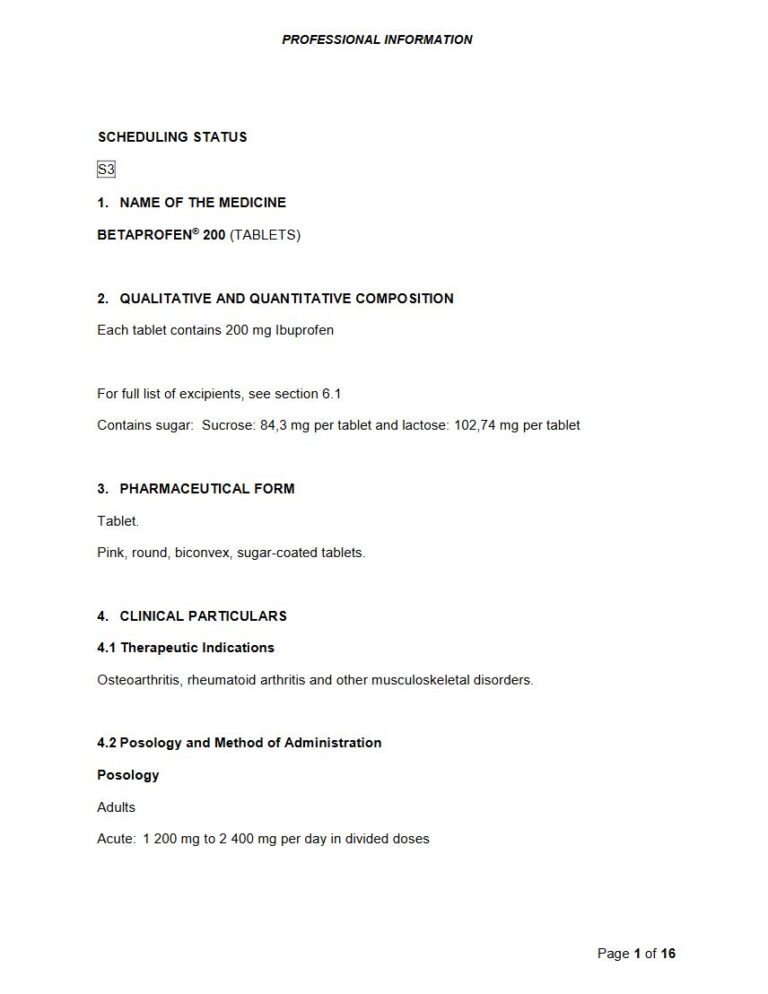
Osteoarthritis, rheumatoid arthritis and other musculoskeletal disorders.
4.2 Posology and Method of Administration
Posology
Adults
Acute: 1 200 mg to 2 400 mg per day in divided doses
Maintenance: 600 mg to 1 200 mg per day in divided doses
The total daily dose should not exceed 2 400 mg per day. To minimize gastrointestinal side-effects or if gastrointestinal disturbances occur, BETAPROFEN u00ae should be given with food or milk.
4.3 Contraindications
BETAPROFEN u00ae 200 should not be given to patients with:
- Peptic ulceration
- History of gastrointestinal perforation, ulceration or bleeding (PUB) related to previous NSAIDu2019s use.
- Active history of recurrent ulcer, haemorrhage or perforations.
- BETAPROFEN u00ae 200 is contraindicated in patients who are hypersensitive to ibuprofen, aspirin or any other non-steroidal anti-inflammatory agent. Because of the possibility of cross-sensitivity due to structural relationships which exist among non-steroidal anti-inflammatory medicines, acute allergic reactions may be more likely to occur in patients who have exhibited allergic reactions to these compounds.
- BETAPROFEN u00ae 200 is contraindicated in patients with heart failure.
- BETAPROFEN u00ae 200 is contraindicated in patients with renal failure.
- The use of BETAPROFEN u00ae 200 around 20 weeks gestation or later in pregnancy may cause a rare but serious foetal renal dysfunction leading to oligohydramnios and, in some cases, neonatal renal impairment. (see Section 4.4 and 4.6)
- Third trimester of pregnancy and during labour (See section 4.6)
4.4 Special warnings and precautions for use
- BETAPROFEN u00ae 200 should be given with care to patients with asthma or bronchospasm, cardiovascular disease, peptic ulceration or a history of such ulceration, bleeding disorders, renal failure and to those receiving coumarin anticoagulants.
- Caution is required in patients with a history of hypertension and/or heart failure as fluid retention and oedema have been reported in association with BETAPROFEN u00ae 200 therapy. In view of BETAPROFEN u00ae 200 u2019s inherent potential to cause fluid retention, heart failure may be precipitated in some compromised patients.
- Elderly: The elderly have an increased frequency of adverse reactions to NSAIDs including BETAPROFEN u00ae 200 , especially gastrointestinal perforation, ulceration and bleeding (PUBs) which may be fatal.
- The risk of gastrointestinal perforation, ulceration or bleeding (PUBs) is higher with increasing doses of BETAPROFEN u00ae 200 , in patients with a history of ulcers, and the elderly.
- When gastrointestinal bleeding or ulceration occurs in patients receiving BETAPROFEN u00ae 200 , treatment with BETAPROFEN u00ae 200 should be stopped.
- BETAPROFEN u00ae 200 should be given with caution to patients with a history of gastrointestinal disease (e.g. ulcerative colitis, Crohnu2019s disease, hiatus hernia, gastro-oesophageal reflux disease, angiodysplasia) as the condition may be exacerbated.
- Serious skin reactions, some of them fatal, including exfoliative dermatitis, Steven Johnson Syndrome, and toxic epidermal necrolysis have been reported. BETAPROFEN u00ae 200 should be discontinued at the first appearance of skin rash, mucosal lesion, or any other sign of hypersensitivity.
- The use of BETAPROFEN u00ae 200 around 20 weeks gestation or later in pregnancy may cause fetal renal dysfunction leading to oligohydramnios and, in some cases, neonatal renal impairment. Complications of prolonged oligohydramnios include limb contractures and delayed lung maturation, which may require invasive procedures such as exchange transfusion or dialysis. If NSAID treatment is determined necessary, limit use to the lowest effective dose and shortest duration possible. Additionally it should be avoided at 30 weeks and later in pregnancy because of the additional risk of premature closure of the fetal ductus arteriosus. Consider ultrasound monitoring of amniotic fluid if NSAID treatment extends beyond 48 hours. Discontinue the NSAID if oligohydramnios occurs (see Section 4.3 and 4.6).
- BETAPROFEN u00ae 200 contains lactose monohydrate and should not be given to patients with rare hereditary problems or a history of galactose intolerance, lapp lactase deficiency or glucose-galactose malabsorption.
- BETAPROFEN u00ae 200 should be given with care to the elderly, to patients with asthma or bronchospasm, bleeding disorders, cardiovascular disease, a history of peptic ulceration, and in liver or renal failure.
- Patients with congestive heart failure, cirrhosis, diuretic-induced volume depletion, or renal insufficiency require local synthesis of vasodilating prostaglandins to maintain renal perfusion, and therefore these patients are at greater risk of developing renal dysfunction due to NSAID-induced inhibition of renal prostaglandins synthesis.
- Because of the possibility of cross-sensitivity due to structural relationships which exists among non-steroidal anti-inflammatory medicines, acute allergic reactions may be more likely to occur in patients who have exhibited allergic reactions to these compounds.
- Serious interactions have been reported after the use of high dose methotrexate with ibuprofen.
- Care is required in those who are also receiving warfarin and other anti-coagulants. Patients who are sensitive to aspirin or other NSAIDs should generally not be given ibuprofen.
- Ibuprofen should be discontinued in patients who experience blurred or diminished vision or changes in colour vision.
- Patients with collagen disease may be at increased risk of developing aseptic meningitis.
- Drug Reaction with Eosinophillia and Systemic Symptoms (DRESS) has been reported in patients taking NSAIDs such as BETAPROFEN u00ae 200. Some of these events have been fatal or life-threatening. DRESS typically, although not exclusively, presents with fever, rash, lymphadenopathy, and/or facial swelling. Other clinical manifestations may include hepatitis, nephritis, haematological abnormalities, myocarditis, or myositis. Sometimes symptoms of DRESS may resemble an acute viral infection. Eosinophillia is often present. Because this disorder is variable in its presentation, other organ systems not noted here may be involved. It is important to note that early manifestations of hypersensitivity, such as fever or lymphadenopathy, may be present even though rash is not evident. If such signs or symptoms are present, discontinue BETAPROFEN u00ae 200 and evaluate the patient immediately.
- Renal: Renal impairment as renal function may deteriorate (see sections 4.3 and 4.8). There is a risk of renal impairment in dehydrated children and adolescents. Severe hypokalaemia and renal tubular acidosis have been reported due to prolonged use of ibuprofen at higher than recommended doses. This risk is increased with the use of codeine/ibuprofen as patients may become dependent on the codeine component (see warning on Opioid use disorder, section 4.8 and section 4.9). Presenting signs and symptoms included reduced level of consciousness and generalised weakness. Ibuprofen induced renal tubular acidosis should be considered in patients with unexplained hypokalaemia and metabolic acidosis.
- Opioid use disorder (abuse and dependence): Tolerance, physical and psychological dependence and opioid use disorder (OUD) may develop upon repeated administration of opioids such as codeine. Abuse or intentional misuse of Ibuprofen and Codeine Tablets may result in overdose and/or death. Serious clinical outcomes, including fatalities, have been reported in association with abuse and dependence with codeine/ibuprofen combinations, particularly when taken for prolonged periods at higher than recommended doses. These have included reports of gastrointestinal perforations, gastrointestinal haemorrhages, severe anaemia, renal failure, renal tubular acidosis and severe hypokalaemia associated with the ibuprofen component. Patients should be informed about the risks and signs of OUD as well as serious clinical outcomes. If these signs occur, patients should be advised to contact their doctor. Withdrawal symptoms, such as restlessness and irritability may occur once the drug is stopped.
4.5 Interaction with other medicines and other forms of interaction
- Anti-hypertensives, beta-blockers and diuretics: BETAPROFEN u00ae 200 may reduce the effect of anti-hypertensives, such as ACE inhibitors, beta-blockers and diuretics.
- NSAIDs: use of two or more NSAIDs concomitantly could result in an increase in side effects.
- Corticosteroids: increased risk of gastrointestinal perforation, ulceration or bleeding (PUBs).
- Anti-coagulants: BETAPROFEN u00ae 200 may enhance the effects of anti-coagulants such as warfarin.
- Anti-platelet medicines and selective serotonin reuptake inhibitors (SSRs): increased risk of gastrointestinal bleeding.
- Diuretics can also increase the risk of nephrotoxicity of BETAPROFEN u00ae 200.
- Digoxin: BETAPROFEN u00ae 200 may exacerbate cardiac failure, reduce GFR and increase plasma digoxin levels.
- Lithium: Decreased elimination of lithium.
- Ciclosporin: Increased risk of nephrotoxicity.
- Mifepristone: A decrease in the efficacy of the medicinal product can theoretically occur due to the antiprostaglandin properties of BETAPROFEN u00ae 200. Limited evidence suggests that coadministration of BETAPROFEN u00ae 200 on the day of prostaglandin administration does not adversely influence the effects of mifepristone or the prostaglandin on cervical ripening or uterine contractility and does not reduce the clinical efficacy of medicinal termination of pregnancy.
- Quinolone antibiotics: Patients taking BETAPROFEN u00ae 200 and quinolones may have an increased risk of developing convulsions.
- Aminoglycosides: BETAPROFEN u00ae 200 may decrease the excretion of aminoglycosides.
- Herbal extracts: Ginkgo biloba may potentiate the risk of bleeding with BETAPROFEN u00ae 200.
4.6 Fertility, pregnancy and lactation
Pregnant women should not use BETAPROFEN u00ae 200 at 20 weeks or later unless specifically advised to do so by a health care professional because it may cause fetal renal dysfunction leading to oligohydramnios and, in some cases, neonatal renal impairment. Additionally it should be avoided at 30 weeks and later in pregnancy because of the additional risk of premature closure of the fetal ductus arteriosus (see Section 4.3 and 4.4).
4.7 Effects on ability to drive and use machines
Undesirable effects such as dizziness, drowsiness, fatigue and visual disturbances are possible after taking BETAPROFEN u00ae 200. If affected, patients should not drive or operate machinery.
4.8 Undesirable Effects
SIDE EFFECTS
System Organ Class
Frequent
Less frequent
Frequency Unknown
Blood and lymphatic system disorders
Anaemia, thrombocytopaenia, neutropaenia, eosinophilia, agranulocytosis
Immune system disorders
aseptic meningitis, angioedema, anaphylaxis, fever, rashes, exacerbation of asthma and bronchospasm
Psychiatric disorders
Depression
Nervous system disorders
Dizziness, nervousness, tinnitus, drowsiness, insomnia
Eye disorders
Visual impairment, changes in visual colour perception, toxic amblyopia.
Cardiac Disorders
Oedema, hypertension and cardiac failure
Gastrointestinal disorders
Peptic ulcers, perforation or gastrointestinal bleeding, sometimes fatal. Nausea, vomiting, diarrhoea, flatulence, constipation, dyspepsia, abdominal pain, melaena, haematemesis, ulcerative stomatitis, exacerbation of colitis, Crohnu2019s disease and gastritis. Abdominal discomfort or pain, gastrointestinal ulcers, sometimes with bleeding.
Hepato - biliary disorders
Hepatotoxicity, abnormalities in liver function tests
Skin and subcutaneous tissue disorders
Bullous reactions, including Stevens-Johnson syndrome and toxic epidermal necrolysis. Drug reaction with Eosinophillia and Systemic Symptoms (DRESS) [see section 4.4]
Renal and Urinary disorders
Acute renal failure, cystitis, haematuria, intestinal nephritis, nephrotic syndrome. Renal tubular acidosis*
Metabolism and Nutrition Disorders
Hypokalaemia*
Description of Selected Adverse Reactions: *Renal tubular acidosis and hypokalaemia have been reported in the post-marketing setting typically following prolonged use of ibuprofen at higher than recommended doses when taken together with codeine containing medicines due to dependence on the codeine medicine.
4.9 Overdose
The most likely symptoms are epigastric pain and nausea. If recently taken, gastric lavage will remove any unabsorbed ibuprofen. Electrolytes may be corrected by intravenous infusions, if necessary. There is no specific antidote to BETAPROFEN u00ae 200. Treatment is symptomatic and supportive.
Symptoms: In serious poisoning metabolic acidosis may occur and the prothrombin time/INR may be prolonged, probably due to interference with the actions of circulating clotting factors. Acute renal failure and liver damage may occur.
Prolonged use at higher than recommended doses may result in severe hypokalaemia and renal tubular acidosis. Symptoms may include reduced level of consciousness and generalised weakness (see section 4.4 and section 4.8). Exacerbation of asthma is possible in asthmatics.
