
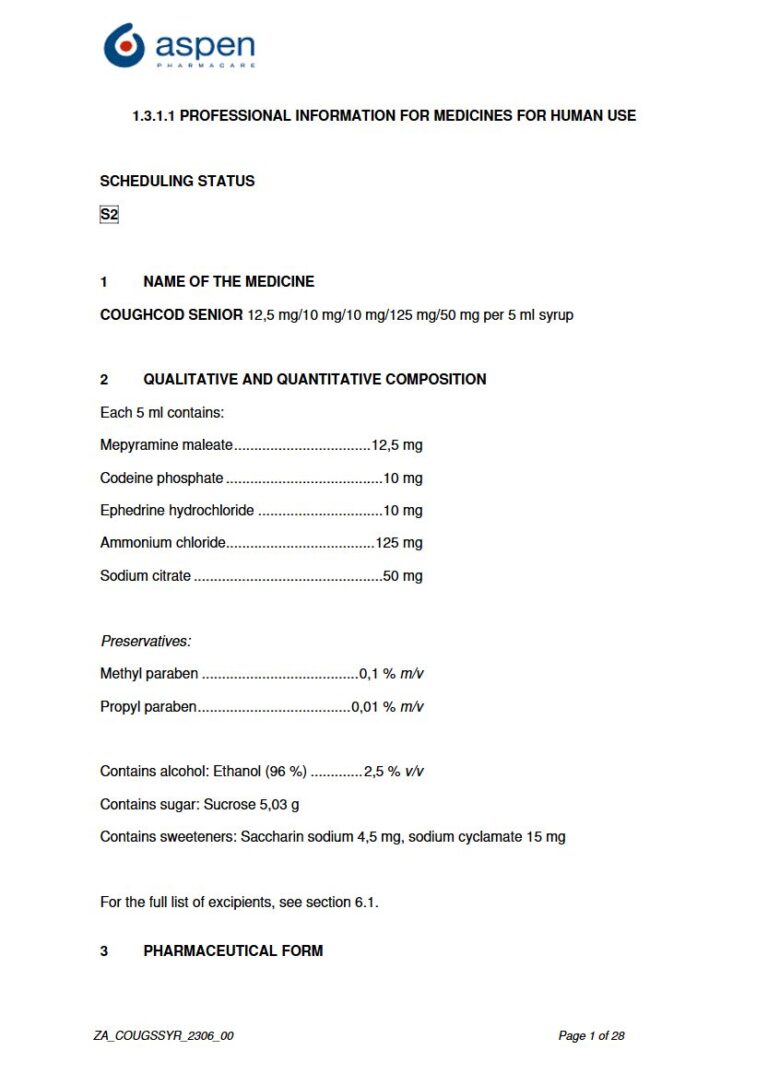
Coughcod Senior 12,5 mg/10 mg/125 mg/50 mg/5 ml Syrup
PDF Leaflet Revision Date: 29 June 2023
Clinical Summary
Quick overview from the medicine insert
Indication
Temporary relief of cough.
Dosage (summary)
Adults and children over 12 years: 5-10 ml three times daily.
Special Populations
- Elderly
- Renal impairment
- Hepatic impairment
Pregnancy & Breastfeeding
Contraindicated in pregnancy and lactation due to risks of dependence and respiratory depression in neonates.
Key Drug Interactions
- CNS depressants
- MAOIs
- Antihypertensives
Contraindications
- Hypersensitivity
- Coronary thrombosis
- Ischaemic heart disease
- Closed-angle glaucoma
- Respiratory depression
- Children under 12
Common side effects
- Drowsiness
- Nausea
- Constipation
- Dry mouth
Counselling Points
- Avoid alcohol
- Monitor for signs of respiratory depression
- Do not exceed prescribed dose
Serious warnings
- Risk of dependency
- Caution in respiratory conditions
- May impair ability to drive
Important Disclaimer
The Coughcod Senior 12,5 mg/10 mg/125 mg/50 mg/5 ml Syrup professional information leaflet below is the property of Pharmacare and is provided on Medinsert exactly as issued, with no.. alterations or editorial changes. We make every effort to keep content current by updating documents as soon as new versions become available. Medinsert serves as a trusted access point for healthcare professionals, but does not replace official sources or clinical judgement. For more details, please read our full disclaimer. read more>>
 Healthcare Professionals Only
This content is for registered healthcare professionals
Sign in or create a free account to read the full package insert.
Free for HPCSA-registered professionals. Powered by Medinsert.
Clinical Particulars
Section 4 of the official insert — extracted exactly as issued, no alterations
4.1 Therapeutic indications
COUGHCOD SENIOR is indicated for temporary relief of cough.
4.2 Posology and method of administration
Posology
Adults and children over 12 years: Take one to two medicines measures (5 ml to 10 ml) three times daily and at night or as prescribed. COUGHCOD SENIOR should be used at the lowest effective dose for the shortest period.
Paediatric population
The safety and efficacy of COUGHCOD SENIOR in children aged under 12 years has not been established (see section 4.3).
Method of administration
Oral administration.
4.3 Contraindications
COUGHCOD SENIOR is contraindicated in:
u2022 Patients with hypersensitivity to mepyramine maleate, codeine phosphate, ephedrine hydrochloride, ammonium chloride, sodium citrate or to any of the excipients in COUGHCOD SENIOR (see section 6.1).
u2022 The presence of coronary thrombosis.
u2022 Patients with ischaemic heart disease as ephedrine, as contained in COUGHCOD SENIOR, has positive inotropic and chronotropic effects on the heart, and therefore should be avoided.
u2022 Closed-angle glaucoma.
u2022 Patients with impaired hepatic or renal function.
u2022 Patients who suffer from epilepsy i.e. convulsive disorders.
u2022 Concomitant use with mono-amine oxidase inhibitors or within 14 days after cessation of such treatment.
u2022 Respiratory depression, especially in the presence of cyanosis and excessive bronchial secretion and obstructive airways disease.
u2022 During an asthma attack.
u2022 In the presence of acute alcoholism.
u2022 Head injuries and conditions in which intracranial pressure is raised.
u2022 Patients known to be CYP2D6 ultra-rapid metabolisers.
u2022 Comatose patients.
u2022 Patients at risk of paralytic ileus. In conditions where there is inhibition of peristalsis, is to be avoided.
u2022 In acute diarrhoeal conditions such as acute ulcerative colitis or antibiotic associated colitis (e.g. pseudomembranous colitis).
u2022 In diarrhoea caused by poisoning.
u2022 Hypertensive patients, as ephedrine which is contained in COUGHCOD SENIOR, increases blood pressure and should be avoided.
u2022 Patients with hyperthyroidism as they may be hypersensitive or have an increased susceptibility to the effects of ephedrine.
u2022 Patients with prostatic hypertrophy as acute urinary retention may be precipitated.
u2022 In patients with phaeochromocytoma.
u2022 In patients who have problems with breathing (see section 4.4).
u2022 In children younger than 12 years (see section 4.4).
u2022 Children (under 18 years of age) who undergo tonsillectomy or adenoidectomy (or both) for obstructive sleep apnoea.
u2022 In pregnancy and lactation as sympathomimetics with vasoconstrictor effects may reduce placental perfusion (see section 4.6).
4.4 Special warnings and precautions for use
Codeine phosphate
Exceeding the prescribed dose, together with prolonged and continuous use of COUGHCOD SENIOR, may lead to dependency and addiction.
General
Do not combine with other treatments for cough and colds.
Mepyramine maleate
Large doses of antihistamines such as mepyramine maleate, contained in COUGHCOD SENIOR, may precipitate convulsions. COUGHCOD SENIOR should not be used in patients with epilepsy, hepatic and renal impairment (see section 4.3), these are contraindicated. Administration of antihistamines may occasionally cause an allergic reaction.
COUGHCOD SENIOR may lead to drowsiness and impaired concentration that may be aggravated by the simultaneous intake of alcohol or other central nervous system depressants. Patients should be advised, particularly at the initiation of therapy, against taking charge of vehicles or machinery or performing potentially hazardous tasks where loss of concentration could lead to accidents (see section 4.7).
Antimuscuranic effects
Because of the antimuscarinic actions of mepyramine maleate, as contained in COUGHCOD SENIOR, it should not be used in conditions such as angle-closure glaucoma, urinary retention, prostatic hyperplasia, or pyloroduodenal obstruction (see section 4.3).
Elderly patients
Elderly patients are also more susceptible to many of the adverse effects of antihistamines such as mepyramine maleate.
Codeine toxicity
Codeine phosphate is not recommended for use in patients whose breathing might be compromised, including those with: neuromuscular disorders; severe cardiac or respiratory conditions; upper respiratory or lung infections; multiple traumas; or extensive surgical procedures. The symptoms of codeine toxicity may be increased in these settings (see section 4.3).
Disease states whereby reduced dosing is required
Codeine phosphate should be given with caution or in reduced doses to patients with hypothyroidism, adrenocortical insufficiency, chronic obstructive pulmonary disease (COPD), prostatic hyperplasia, hypotension, shock, inflammatory or obstructive bowel disorders, cardiac dysrhythmias, acute abdomen, gallstones, diseases of the biliary tract, or myasthenia gravis disease. Other disease states include prostatic hypertrophy, urethral stenosis, urethral stricture and convulsive disorders. Codeine phosphate is metabolised by the liver and should not be used in patients with hepatic disease because increased bioavailability after oral administration or cumulative effects may occur (see section 4.3). Renal disease also significantly alters the pharmacokinetics of codeine (see section 4.3).
Elderly
The dosage should be reduced in elderly and debilitated patients. Use with caution in the elderly, as codeine phosphate may induce faecal impaction, producing incontinence, spurious diarrhoea, abdominal pain and colonic obstruction. Prolonged use could aggravate irritable bowel syndrome. The risk-benefit of continued use should be assessed regularly by the prescriber.
Physical dependence and withdrawal syndrome
Therapy with an opioid such as codeine phosphate, as contained in COUGHCOD SENIOR, may cause physical dependence with withdrawal syndrome. Use with caution in those with a history of substance abuse. Discontinuation should be carried out gradually in patients who may have developed physical dependence to avoid precipitating withdrawal symptoms.
Alcohol and other central nervous system depressants.
COUGHCOD SENIOR may lead to drowsiness and impaired concentration that may be aggravated by the simultaneous intake of alcohol or other central nervous system depressants (see section 4.7).
Asthma
Use with caution or in reduced doses in asthma and decreased respiratory reserve, avoid use during an acute asthma attack (see section 4.3).
Biliary tract disorders
Opioid analgesics should be avoided in patients with biliary tract disorders or used in conjunction with an antispasmodic (see section 4.3), this includes inflammatory or obstructive bowel disorders.
Monoamine oxidase inhibitor (MAOI)
Patients taking a monoamine oxidase inhibitor (MAOI) with opioid analgesics, such as codeine phosphate contained in COUGHCOD SENIOR, has been associated with very severe and sometimes fatal reactions (see sections 4.3 and 4.5).
CYP2D6 metabolism
Codeine phosphate is metabolised by the liver enzyme CYP2D6 into morphine, its active metabolite. If a patient has a deficiency or is completely lacking this enzyme an adequate analgesic effect will not be obtained. Estimates indicate that up to 7 % of the caucasian population may have this deficiency. However, if the patient is an extensive or ultra-rapid metaboliser there is an increased risk of developing side effects of opioid toxicity even at commonly prescribed doses. These patients convert codeine into morphine rapidly resulting in higher-than-expected serum morphine levels. General symptoms of opioid toxicity include confusion, somnolence, shallow breathing, small pupils, nausea, vomiting, constipation and lack of appetite. In severe cases this may include symptoms of circulatory and respiratory depression, which may be life-threatening and very rarely fatal (see section 4.3).
Post-operative use in children
There have been reports that codeine phosphate given post-operatively in children after tonsillectomy and/or adenoidectomy for obstructive sleep apnoea, led to rare, but life-threatening adverse events including death (see section 4.3). All children received doses of codeine that were within the appropriate dose range; however there was evidence that these children were either ultra-rapid or extensive metabolisers in their ability to metabolise codeine to morphine (see section 4.3).
Patients with compromised respiratory function
Codeine phosphate is not recommended for use in patients in whom respiratory function might be compromised including neuromuscular disorders, severe cardiac or respiratory conditions, upper respiratory or lung infections, multiple trauma or extensive surgical procedures. These factors may worsen symptoms of morphine toxicity (see section 4.3).
Ephedrine hydrochloride
Disease states
COUGHCOD SENIOR, containing ephedrine hydrochloride should not be used in patients who may be particularly susceptible to their effects; particularly those with hyperthyroidism (see section 4.3). Great care is also needed in patients with cardiovascular disease such as ischaemic heart disease, dysrhythmia or tachycardia, occlusive vascular disorders including arteriosclerosis, hypertension, or aneurysms. Anginal pain may be precipitated in patients with angina pectoris. Care is also required when ephedrine hydrochloride is given to patients with diabetes mellitus. The use of COUGHCOD SENIOR in patients with close-angle glaucoma and phaeochromocytoma is contraindicated (see section 4.3).
Sympathomimetics with beta 2 effects
should be used with caution in obstructive cardiomyopathy and other disorders where a reduction in total peripheral resistance could be harmful.
Anaesthesia and other medicines
COUGHCOD SENIOR contains ephedrine hydrochloride and should be avoided or used with caution in patients undergoing anaesthesia with cyclopropane, halothane, or other halogenated anaesthetics, as they may induce ventricular fibrillation. An increased risk of dysrhythmias may also occur if ephedrine as contained in COUGHCOD SENIOR is given to patients receiving cardiac glycosides, quinidine, or tricyclic antidepressants (see section 4.5).
4.5 Interactions with other medicines
Mepyramine maleate
Central nervous system depressants: Alcohol, barbiturates, hypnotics, opioid analgesics, anxiolytic sedatives, and antipsychotics. May enhance the sedative effects of CNS depressants.
Anticholinergics: Atropine and some antidepressants (both tricyclics and MAOIs). May have an additive antimuscarinic action with other antimuscarinic medicines.
Aminoglycoside antibacterials. Some sedating antihistamines such as mepyramine maleate as contained in COUGHCOD, could mask the warning signs of damage caused by these ototoxic medicines may be masked.
Allergen tests: Antihistamines such as mepyramine maleate as contained in COUGHCOD may suppress the cutaneous histamine response to allergen extracts and should be stopped several days before skin testing.
Codeine phosphate
Contraindicated combinations: Monoamine oxidase inhibitors (MAOIs) (e.g. moclobemide, selegiline, linezolid): Due to the possible risk of excitation or depression, avoid concomitant use and for 14 days after discontinuation of MAOIs (see sections 4.3 and 4.4).
Concomitant combinations not recommended: Alcohol or central nervous system depressants: The depressant effects of opioid analgesics are enhanced. Cimetidine: Inhibits the metabolism of opioid analgesics causing increased plasma concentration of codeine phosphate. Cisapride, metoclopramide or domperidone: The reduction in intestinal motility caused by codeine phosphate may delay the absorption or antagonise the gastrointestinal effects of other medicines.
Opioid antagonists (e.g. buprenorphine, naltrexone, naloxone): May precipitate withdrawal symptoms. Ritonavir: May increase plasma levels of opioid analgesics such as codeine phosphate. Anaesthetics: Concomitant administration of codeine phosphate and anaesthetics may cause increased CNS depression and/or respiratory depression and/or hypotension. Anti-dysrhythmics: mexiletine, quinidine: Codeine phosphate delays the absorption of mexiletine. The analgesic activity of codeine phosphate is likely to be significantly impaired by quinidine which impairs codeine phosphate metabolism. Antidepressants: The depressant effects of opioid analgesics may be enhanced by tricyclic antidepressants. Antihistamines: Concomitant administration of codeine phosphate and antihistamines with sedative properties may cause increased CNS depression and/or respiratory depression and/or hypotension. Antipsychotics: Enhanced sedative and hypotensive effect. Tranquillisers: As an opioid analgesic, codeine phosphate may potentiate the sedative effects of tranquillisers such as barbiturates, general anaesthetics, anxiolytics and hypnotics, sedatives and alcohol. Interference with laboratory tests: Opioids may interfere with gastric emptying studies as they delay gastric emptying and with hepatobiliary imaging using technetium Tc 99m disofenin as opioid treatment may cause constriction of the sphincter of Oddi and increase biliary tract pressure.
Antimuscarinics: Codeine phosphate, as contained in COUGHCOD SENIOR, may increase the risk of antimuscarinic side effects such as dry mouth, urine retention and constipation.
Rifampicin: Metabolism of codeine is accelerated by rifampicin leading to reduced effect.
Ephedrine hydrochloride
Antidepressants: With tricyclics, administration of adrenaline and noradrenaline may cause hypertension and dysrhythmias (but local anaesthetics with adrenaline appear to be safe); with MAOIs administration of inotropics such as dopamine and dopexamine may cause hypertensive crisis; also with MAOIs administration of dexamphetamine and other amphetamines, dexfenfluramine, diethylpropion, ephedrine, fenfluramine, isometheptene, methylphenidate, pemoline, phentermine, phenylephrine, phenylpropanolamine, and pseudoephedrine may cause hypertensive crisis.
Antiepileptics: Increased plasma concentration of phenytoin and possibly of phenobarbitone and primidone.
Antihypertensives: Sympathomimetics in anorectics and cold and cough remedies antagonise hypotensive effects of adrenergic neuron blockers; possible risk of hypertension with apraclonidine and adrenaline or noradrenaline; hypotensive effect of some other antihypertensives may be enhanced by dexfenfluramine and fenfluramine.
Doxapram: Risk of hypertension. Oxytocin: Hypertension with vasoconstrictor sympathomimetics. Cyclopropane, halothane, or other halogenated anaesthetics: They may induce ventricular fibrillation. Cardiac glycosides, quinidine: Increased risk of dysrhythmias.
Ergot alkaloids: There is an increased risk of vasoconstrictor or pressor effects with ergotamine of methysergide. Concurrent use of ergotamine not recommended (risk of gangrene). The rate of metabolism of some other medicines is increased by ephedrine hydrochloride. Other adrenoceptor stimulants: Concurrent use of ephedrine hydrochloride, as contained in COUGHCOD SENIOR, with theophylline may result in increased nausea, nervousness, and insomnia. Corticosteroids: Ephedrine hydrochloride, as contained in COUGHCOD SENIOR, has been shown to increase the clearance and prolong the half-life of dexamethasone in asthmatic patients. Urinary acidifiers/alkalinisers: Effects of ephedrine hydrochloride may be reduced by acidification and increased by alkalinisation of the urine.
4.6 Fertility, pregnancy and lactation
COUGHCOD SENIOR should not be used in pregnancy and lactation (see section 4.3).
Pregnancy
COUGHCOD SENIOR is contraindicated and should not be used in pregnancy (see section 4.3). Codeine phosphate, as contained in COUGHCOD SENIOR crosses the placenta. Regular use during pregnancy may cause physical dependence in the foetus, leading to withdrawal symptoms (convulsions, irritability, excessive crying, tremors, hyperactive reflexes, fever, vomiting, diarrhoea, sneezing, and yawning) in the neonate (see section 4.8). The administration of COUGHCOD SENIOR during labour may cause respiratory depression in the newborn infant and may prolong labour.
Ephedrine hydrochloride
Ephedrine hydrochloride readily crosses the placenta and this is associated with an increase in foetal heart rate and beat-to-beat variability.
Lactation
COUGHCOD SENIOR is contraindicated and should not be used in lactation. Codeine phosphate, as contained in COUGHCOD SENIOR, is distributed into breast milk. Breastfed infants of mothers taking codeine phosphate may be at an increased risk of toxicity from its metabolite, morphine, if the mother is an ultra-rapid metaboliser of codeine phosphate. It is advised that breastfeeding mothers taking codeine phosphate should be informed of the potential risk of morphine overdose and the need to monitor breastfed infants for signs of toxicity such as increased sleepiness, difficulty feeding or breathing, or limpness. Breastfeeding mothers, themselves, may also develop overdose symptoms including extreme sleepiness, confusion, shallow breathing, and severe constipation.
Ephedrine hydrochloride
The use of ephedrine hydrochloride in lactation has been associated with irritability and disturbed sleep in the infant. Breastfeeding should be regarded as a contraindication for ephedrine administration.
Fertility
There is no fertility data.
4.7 Effects on ability to drive and use machines
COUGHCOD SENIOR has major influence on the ability to drive and use machines. Since adverse reactions such as drowsiness, impaired concentration and blurred vision have been reported in patients receiving COUGHCOD SENIOR, patients should not drive, use machinery or perform any tasks that require concentration, until they are certain that COUGHCOD SENIOR does not adversely affect their ability to do so (see section 4.8).
4.8 Undesirable effects
a) Tabulated list of adverse reactions
Mepyramine maleate
System organ class
Frequent
Less frequent
Frequency unknown (cannot be estimated from the available data)
Blood and the lymphatic system disorders
Blood dyscrasias, including agranulocytosis, leucopenia, haemolytic anaemia, thrombocytopenia
Immune system disorders
Rashes and hypersensitivity reactions (including bronchospasm, angioedema anaphylaxis and cross-sensitivity to related medicines)
Metabolism and nutrition disorders
Anorexia
Psychiatric disorders
Hallucinations, irritability, nightmares, euphoria, elation
Confusion, paradoxical stimulation especially at high doses and in children or the elderly, sleep disturbances as insomnia, depression
Nervous system disorders
Sedation, varying from slight drowsiness to deep sleep, and including inability to concentrate, drowsiness, dizziness, fatigue, lassitude, headache, psychomotor impairment
Nervousness, ataxia, heaviness and weakness of the hands
Convulsions, paraesthesias, extrapyramidal effects, tremor
Eye disorders
Blurred vision
Ear and labyrinth disorders
Tinnitus
Cardiac disorders
Palpitations, dysrhythmias, tachycardia
Vascular disorders
Hypotension
Respiratory, thoracic and mediastinal disorders
Tightness of the chest, thickened respiratory-tract secretions
Gastrointestinal disorders
Dryness of the mouth, increased gastric reflux, constipation, colic
Nausea, vomiting, diarrhoea, epigastric pain
Hepatobiliary disorders
Jaundice
Skin and subcutaneous tissue disorders
Photosensitivity Rash, sweating, hair loss
Musculoskeletal and connective tissue disorders
Myalgia
Renal and urinary disorders
Difficulty in micturition, urinary retention
Codeine phosphate
System organ class
Frequent
Less frequent
Frequency unknown (cannot be estimated from the available data)
Blood and the lymphatic system disorders
Splenomegaly, lymphadenopathy
Immune system disorders
Maculopapular rash
Metabolism and nutrition disorders
Hyperglycaemia, anorexia, loss of appetite
Psychiatric disorders
Nervousness, hallucinations, nightmares or unusual dreams, trouble in sleeping, medicine dependence
Mental depression, restlessness, confusion, mood changes, euphoria, dysphoria, addiction, sleep disturbances
Nervous system disorders
Trembling or uncontrolled muscle movements, feeling faint or lightheadedness
Convulsions (especially in infants and children), dizziness, drowsiness, headache (prolonged use of a painkiller for headaches can make them worse) raised intracranial pressure
Eye disorders
Blurred or double vision or other changes in vision, miosis
Ear and labyrinth disorders
Ringing or buzzing in the ears
Vertigo
Cardiac disorders
Bradycardia, palpitations, tachycardia
Vascular disorders
Increased blood pressure
Postural hypotension, facial flushing. Large doses produce hypotension, oedema
Respiratory, thoracic and mediastinal disorders
Atelectasis, bronchospastic allergic reaction, allergic laryngeal oedema, allergic laryngospasm
Dyspnoea. Large doses produce respiratory depression
Gastrointestinal disorders
Constipation, nausea, vomiting
Dry mouth, paralytic ileus or toxic megacolon, gastrointestinal irritation, acute pancreatitis, abdominal pain
Hepatobiliary disorders
Hepatotoxicity Biliary spasm (may be associated with altered liver enzyme values)
Skin and subcutaneous tissue disorders
Contact dermatitis, burning erythemato-vesicular plaques, maculopapular rash
Allergic reactions such as skin rashes, urticaria, pruritus, sweating and facial oedema
Musculoskeletal and connective tissue disorders
Muscle fasciculation, rigidity
Renal and urinary disorders
Micturition difficulties, ureteric spasm, antidiuretic effect, urinary retention
Reproductive system and breast disorders
Sexual dysfunction, erectile dysfunction, decreased potency, decreased libido
General disorders and administrative site conditions
False sense of well-being, general feeling of discomfort or illness, weakness, fever, medicine tolerance
Malaise, tiredness, hypothermia
Ephedrine hydrochloride
System organ class
Frequent
Less frequent
Frequency unknown (cannot be estimated from the available data)
Metabolism and nutrition disorders
Reduced appetite, altered metabolism including changes in blood sugar concentrations
Psychiatric disorders
Anxiety
Fear, confusion, psychotic states, irritability, tolerance with dependence with prolonged administration
Nervous system disorders
Insomnia, restlessness
Headache, nervousness, drowsiness, giddiness, tremor, seizure
Cardiac disorders
Palpitations, tachycardia, precordial pain, dysrhythmias
Myocardial infarction
Dyspnoea
Vascular disorders
Impaired circulation to the extremities, hypertension
Respiratory, thoracic and mediastinal disorders
Chest discomfort or pain
Gastrointestinal disorders
Nausea
Heartburn, thirst
Vomiting, hypersalivation, dry mouth
Skin and subcutaneous tissue disorders
Sweating
Musculoskeletal and connective tissue disorders
Muscle cramps
Renal and urinary disorders
Difficulty in micturition in large doses, urinary retention
4.9 Overdose
Symptoms
Mepyramine maleate
Overdosage with sedating antihistamines, like mepyramine maleate as contained in COUGHCOD SENIOR, is associated with antimuscarinic, extrapyramidal, and CNS effects. When CNS stimulation predominates over CNS depression, which is more likely in children or the elderly, it causes ataxia, excitement, tremors, psychoses, hallucinations, and convulsions; hyperpyrexia may also occur. Deepening coma and cardiorespiratory collapse may follow. In adults, CNS depression is more common with drowsiness, coma, and convulsions, progressing to respiratory failure and cardiovascular collapse.
Codeine phosphate
Poisoning with codeine phosphate, as contained in COUGHCOD SENIOR produces central nervous system depression with exhilaration, miosis and slow breathing, and in children, convulsions, followed by vomiting, drowsiness, respiratory depression and cyanosis, coma, reduced levels of consciousness, somnolence, lack of appetite, constipation nausea, pinpoint pupils, dry mouth, sweating and facial flushing are symptoms of overdose. High doses of codeine may produce hypotension, circulatory failure, sedation, or excitement and, in children, convulsions may occur. Administration should be stopped immediately in cases of overdosage.
Ephedrine hydrochloride
The effects of ephedrine hydrochloride, as contained in COUGHCOD SENIOR in overdose include nausea, vomiting, fever, palpitations, tachycardia, hypertension, paranoid psychosis, respiratory depression, convulsions and coma.
Treatment
Mepyramine maleate
Treatment is symptomatic and supportive.
Codeine phosphate
In acute overdosage with respiratory depression or coma, naloxone is indicated using one of the following dose regimens:
Intravenous injection: 0,8 to 2 mg repeated at intervals of 2 to 3 minutes to a maximum of 10 mg. Child: 10 u03bcg/kg and, if no response, subsequent doses of 100 u03bcg/kg. Subcutaneous or intramuscular injection: As intravenous injection but only if the intravenous route is not feasible. The onset of action is slower with subcutaneous or intramuscular injection. Continuous intravenous infusion: 2 mg diluted in 500 ml of intravenous infusion solution at a rate adjusted according to the patient's response.
Ephedrine hydrochloride
The treatment of ephedrine overdose with COUGHCOD SENIOR may require intensive supportive treatment. Slow intravenous injection of labetalol 50 to 200 mg may be given with electrocardiograph monitoring for the treatment of supraventricular tachycardia. Marked hypokalaemia (< 2,8 mmol.L -1) due to compartmental shift of potassium predisposes to cardiac dysrhythmias and may be corrected by infusing potassium chloride in addition to propranolol and correcting respiratory alkalosis, when present.
