
Macleods Nevirapine 200 mg Tablets
PDF Leaflet Revision Date: 23 May 2025
Clinical Summary
Quick overview from the medicine insert
Indication
For treatment of HIV-1 infection in combination with other antiretroviral agents.
Dosage (summary)
200 mg once daily for 14 days, then 200 mg twice daily.
Special Populations
- Hepatic impairment
- Renal impairment
Pregnancy & Breastfeeding
Contraindicated in breastfeeding; single dose may be used during labor.
Key Drug Interactions
- CYP3A inducers
- CYP2B inducers
- Fluconazole
- Warfarin
Contraindications
- Hypersensitivity to nevirapine
- Severe hepatic dysfunction
- End-stage renal failure
Common side effects
- Rash
- Hepatitis
- Nausea
- Headache
Counselling Points
- Report any rash immediately
- Avoid hormonal contraceptives alone
- Monitor for signs of hepatitis
Serious warnings
- Severe skin reactions
- Hepatotoxicity
- Monitor liver function
Important Disclaimer
The Macleods Nevirapine 200 mg Tablets professional information leaflet below is the property of Macleods Pharmaceuticals Sa and is provided on Medinsert exactly as issued, with no.. alterations or editorial changes. We make every effort to keep content current by updating documents as soon as new versions become available. Medinsert serves as a trusted access point for healthcare professionals, but does not replace official sources or clinical judgement. For more details, please read our full disclaimer. read more>>
 Healthcare Professionals Only
This content is for registered healthcare professionals
Sign in or create a free account to read the full package insert.
Free for HPCSA-registered professionals. Powered by Medinsert.
Clinical Particulars
Section 4 of the official insert — extracted exactly as issued, no alterations
4.1 Therapeutic indications
For treatment of HIV - 1 infection: MACLEODS NEVIRAPINE 200 mg tablets is indicated for use in combination with other antiretroviral agents for the treatment of HIV-1 infection. Resistant virus emerges rapidly and uniformly when MACLEODS NEVIRAPINE 200 mg tablets is administered as monotherapy. Therefore, MACLEODS NEVIRAPINE 200 mg tablets should always be administered in combination with at least two additional antiretroviral agents.
To reduce the risk of intrapartum transmission of HIV - 1 from mother to child in pregnant women who are not taking antiretroviral therapy at the time of labour: MACLEODS NEVIRAPINE 200 mg tablets is indicated and may be used alone, as a single oral dose of 200 mg to the mother during labour preferably more than 2 hours before delivery and a single oral dose of 2 mg/kg of nevirapine suspension to the infant within 48 to 72 hours after birth or before discharge, whichever is earlier. MACLEODS NEVIRAPINE 200 mg tablets should only be prescribed for the reduction in risk of intrapartum transmission of HIV-1 from mother to child in patients who have been tested for HIV and appropriately counselled.
4.2 Posology and method of administration
Posology Treatment of HIV - 1 Infection: Adults: The recommended dose for MACLEODS NEVIRAPINE 200 mg is 200 mg once daily for the first 14 days (this lead-in period should be used because it has been found to lessen the frequency of rash), followed by 200 mg twice daily, in combination with at least two additional antiretroviral agents, to which the patient has not been previously exposed. For concomitantly administered therapy, the manufactureru2019s recommended dosage and monitoring should be followed. The total daily dose should not exceed 400 mg for any patient. Patients should be advised to take MACLEODS NEVIRAPINE 200 mg every day as prescribed. Patients should not alter the dose without consulting their doctor. If a dose is missed, patients should not double the next dose but should take the next dose as soon as possible. Monitoring of patients: Clinical chemistry, which include liver function tests, should be performed prior to initiating MACLEODS NEVIRAPINE 200 mg therapy and at appropriate intervals during therapy (see section 4.4). Dosage adjustment: MACLEODS NEVIRAPINE 200 mg should be discontinued if patients experience severe rash or rash accompanied by constitutional symptoms (see section 4.4). Patients experiencing rash during the 14-day lead-in period of 200 mg/day (4 mg/kg/day in paediatric patients) should not have their MACLEODS NEVIRAPINE 200 mg dose increased until the rash has resolved (see section 4.4). Patients who interrupt MACLEODS NEVIRAPINE 200 mg dosing for more than 7 days should restart the recommended dosing, using 200 mg/day for the first 14 days (lead-in) followed by 200 mg twice daily. For the dosage for patients with hepatic and renal dysfunction including those undergoing haemodialysis, please refer to the section 5.2.
To reduce the risk of intrapartum transmission of HIV - 1 from mother to child in pregnant women who are not taking antiretroviral therapy at the time of labour: MACLEODS NEVIRAPINE 200 mg may be used alone, as a single oral dose of 200 mg to the mother during labour preferably more than 2 hours before delivery followed by a single oral dose of 2 mg/kg of nevirapine suspension to the infant within 48 to 72 hours after birth or before discharge, whichever is earlier.
Method of administration Oral use
4.3 Contraindications
- MACLEODS NEVIRAPINE 200 mg tablets is contra-indicated in patients with hypersensitivity to nevirapine or to any of the excipients of the product.
- MACLEODS NEVIRAPINE 200 mg tablets is contra-indicated in severe hepatic dysfunction; Child-Pugh class B or C and in end-stage renal failure in patients not on haemodialysis. If AST or ALT is > 2,5 X ULN before or during treatment, liver tests should be monitored more frequently during more regular clinic visits.
- MACLEODS NEVIRAPINE 200 mg tablets should not be administered or re-administered to patients with a pre-treatment or during treatment aspartate transaminase (AST) or alanine aminotransferase (ALT) > 5 X Upper Limit of Normality (ULN).
- MACLEODS NEVIRAPINE 200 mg tablets should not be re-administered to patients who have required permanent discontinuation for severe rash, rash accompanied by constitutional symptoms, hypersensitivity syndrome, or clinical hepatitis due to MACLEODS NEVIRAPINE 200 mg tablets.
- MACLEODS NEVIRAPINE 200 mg tablets should not be re-administered to patients who previously had aspartate transaminase (AST) or alanine aminotransferase (ALT) > 5 X Upper Limit of Normality (ULN) during MACLEODS NEVIRAPINE 200 mg tablets therapy or had rapid recurrence of liver function abnormalities upon re-administration of MACLEODS NEVIRAPINE 200 mg tablets (see section 4.4).
4.4 Special warnings and precautions for use
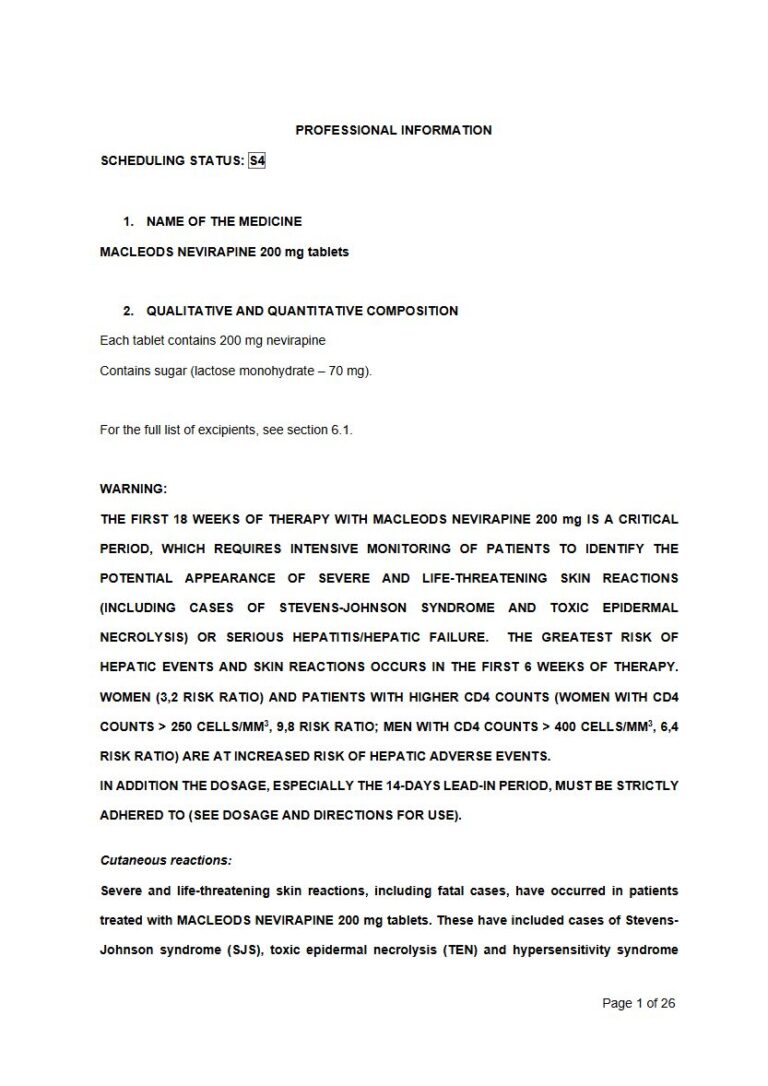
The first 18 weeks of therapy with MACLEODS NEVIRAPINE 200 mg tablets is a critical period, which requires intensive monitoring of patients to identify the potential appearance of severe and life-threatening skin reactions (including cases of Stevens-Johnson syndrome and toxic epidermal necrolysis) or serious hepatitis/hepatic failure. The greatest risk of hepatic events and skin reactions occurs in the first 6 weeks of therapy. Women (3,2 risk ratio) and patients with higher CD4 counts (women with CD4 counts > 250 cells/mm 3; 9,8 risk ratio; men with CD4 counts > 400 cells/mm 3, 6,4 risk ratio) are at increased risk of hepatic adverse events. In addition the dosage, especially the 14-days lead-in period, must be strictly adhered to (see section 4.2). Patients should be instructed that the major toxicity of MACLEODS NEVIRAPINE 200 mg tablets is rash and should be advised to promptly notify their doctor of any rash. The lead-in period should be used because it has been found to lessen the frequency of rash (see section 4.2). The majority of rashes associated with MACLEODS NEVIRAPINE 200 mg tablets occur within the first 6 weeks of therapy, therefore, patients should be monitored carefully for the appearance of rash during this period. Patients should be instructed that dose escalation is not to occur if any rash occurs during the lead-in dosing period, until the rash has resolved (see section 4.2).
Cutaneous reactions: Severe and life-threatening skin reactions, including fatal cases, have occurred in patients treated with MACLEODS NEVIRAPINE 200 mg tablets. These have included cases of Stevens-Johnson syndrome (SJS), toxic epidermal necrolysis (TEN) and hypersensitivity syndrome characterised by rash, constitutional findings and visceral involvement. Patients should be carefully monitored during the first 18 weeks of treatment. Patients should be closely monitored if an isolated rash occurs. MACLEODS NEVIRAPINE 200 mg tablets must be permanently discontinued in any patient experiencing severe rash or a rash accompanied by constitutional symptoms (such as fever, blistering, oral lesions, conjunctivitis, facial oedema, muscle or joint aches, or general malaise), including Stevens-Johnson syndrome or toxic epidermal necrolysis. MACLEODS NEVIRAPINE 200 mg tablets must be permanently discontinued in any patient experiencing hypersensitivity syndrome, characterised by rash with constitutional symptoms, plus visceral involvement, such as hepatitis, eosinophilia, granulocytopenia, and renal dysfunction or signs of other visceral involvement (see section 4.8).
Concomitant prednisone use (40 mg/day for the first 14 days of MACLEODS NEVIRAPINE 200 mg tablets administration) has been shown to not decrease the incidence of MACLEODS NEVIRAPINE 200 mg tablets-associated rash, and may be associated with an increase in rash during the first 6 weeks of MACLEODS NEVIRAPINE 200 mg tablets therapy. Risk factors for developing serious cutaneous reactions include failure to follow the initial dosing of 200 mg daily during the lead-in period. A long delay between the initial symptoms and medical consultation may increase the risk of a more serious outcome of cutaneous reactions. Women are at a higher risk (3,2 risk ratio) than men of developing rash. Women with CD4 counts > 250 cells/mm 3 are at a higher risk (9,8 risk ratio) of developing rash. Any patient experiencing severe rash or a rash accompanied by constitutional symptoms such as fever, blistering, oral lesions, conjunctivitis, facial oedema, muscle or joint aches, or general malaise should discontinue medication and consult a doctor. In these patients MACLEODS NEVIRAPINE 200 mg tablets must not be restarted. If patients present with a suspected MACLEODS NEVIRAPINE 200 mg -associated rash, liver function tests should be performed immediately. Patients with moderate to severe elevations (AST or ALT > 5 X ULN) should be permanently discontinued from MACLEODS NEVIRAPINE 200 mg.
In patients with a hypersensitivity syndrome, characterised by rash with constitutional symptoms such as fever, arthralgia, myalgia and lymphadenopathy, plus visceral involvement, such as hepatitis, eosinophilia, granulocytopenia, and renal dysfunction, MACLEODS NEVIRAPINE 200 mg should be permanently stopped and not be re-introduced.
Hepatic reactions: Severe or life-threatening hepatotoxicity, including fatal fulminant hepatitis (transaminase elevations, with or without hyperbilirubinaemia, prolonged partial thromboplastin time or eosinophilia) has occurred in patients treated with MACLEODS NEVIRAPINE 200 mg. Serious hepatitis and hepatic failure events in MACLEODS NEVIRAPINE 200 mg treated patients have been reported to occur in the first 18 weeks of therapy, but some have occurred later. The first 18 weeks of treatment are a critical period which require close monitoring. The risk of hepatic events is greatest in the first 6 weeks of therapy. Women (3,2 risk ratio) and patients with higher CD4 counts (women with CD4 counts > 250 cells/mm 3, 9,8 risk ratio; men with CD4 counts > 400 cells/mm 3, 6,4 risk ratio) are at increased risk of hepatic adverse events. However, the risk continues past this period and monitoring should continue at frequent intervals throughout treatment. Patients should be informed that hepatic reactions are a major toxicity of MACLEODS NEVIRAPINE 200 mg and that occurrence of symptoms suggestive of hepatitis should lead them to contact their doctor promptly. Increased AST or ALT levels > 2,5 X ULN at the start of antiretroviral therapy is associated with a greater risk (risk ratio: 3,2 u2013 4,3) of hepatic adverse events during antiretroviral therapy with MACLEODS NEVIRAPINE 200 mg -containing regimens. Women have a three fold higher risk than men for rash-associated hepatic events (4,6 % vs. 1,5 %). Patients with higher CD4 counts may also be at higher risk for rash-associated hepatic events with MACLEODS NEVIRAPINE 200 mg. In a retrospective review, women with CD4 counts > 250 cells/mm 3 had a higher risk (risk ratio: 9,8) of rash-associated hepatic adverse events compared to women with CD4 counts 400 cells/mm 3 compared to men with CD4 counts < 400 cells/mm 3 (4,5 % vs. 0,7 %).
Liver disease: MACLEODS NEVIRAPINE 200 mg is contra-indicated in patients with severe underlying liver disorders. Patients with chronic hepatitis B or C and treated with combination antiretroviral therapy are at an increased risk for severe and potentially fatal hepatic adverse events. In the case of concomitant antiviral therapy for hepatitis B or C, please also refer to the relevant package inserts for these medicinal products. Patients with pre-existing liver dysfunction including chronic active hepatitis have an increased frequency of liver function abnormalities during combination therapy and should be monitored according to standard practice. If there is evidence of worsening liver disease in such patients, interruption or discontinuation of treatment must be considered.
Liver monitoring: All patients should have baseline liver function tests prior to MACLEODS NEVIRAPINE 200 mg treatment (See section 4.4 and 4.8). If AST or ALT is > 2,5 X ULN before or during treatment, liver tests should be monitored more frequently during more regular clinic visits. MACLEODS NEVIRAPINE 200 mg should not be administered or re-administered to patients with pre-treatment or during treatment AST or ALT > 5 X ULN. Abnormal liver function has been reported with MACLEODS NEVIRAPINE 200 mg, some in the first few weeks of therapy. Asymptomatic elevations of liver enzymes are frequently described and are not necessarily a contra-indication to use MACLEODS NEVIRAPINE 200 mg. Asymptomatic GGT elevations are not a contra-indication to continuing therapy. Monitoring of liver function tests is strongly recommended at frequent intervals, appropriate to the patient's clinical needs, especially during the first 18 weeks of treatment. Clinical and laboratory monitoring should continue throughout MACLEODS NEVIRAPINE 200 mg treatment. Doctors and patients should be vigilant for prodromal signs or findings of hepatitis, such as anorexia, nausea, jaundice, bilirubinuria, acholic stools, hepatomegaly or liver tenderness. Patients should be instructed to seek medical attention if these occur. If aspartate transaminase (AST) or alanine aminotransferase (ALT) increase to > 5 X Upper Limit of Normality (ULN) during treatment, MACLEODS NEVIRAPINE 200 mg should be immediately stopped and not re-instituted. If clinical hepatitis occurs, characterised by anorexia, nausea, vomiting, icterus AND laboratory findings (such as moderate or severe liver function test abnormalities (excluding GGT)), MACLEODS NEVIRAPINE 200 mg must be permanently stopped. MACLEODS NEVIRAPINE 200 mg should not be re-administered to patients who have required permanent discontinuation for clinical hepatitis due to MACLEODS NEVIRAPINE 200 mg.
4.5 Interactions with other medicines and other forms of interaction
MACLEODS NEVIRAPINE 200 mg induces hepatic cytochrome P450 metabolic enzymes (CYP3A, CYP2B) and may result in lower plasma concentrations of other concomitantly administered medicines that are extensively metabolised by CYP3A or CYP2B (see section 5.2). Thus, if a patient has been stabilised on a dosage regimen for a medicine metabolised by CYP3A or CYP2B and begins treatment with MACLEODS NEVIRAPINE 200 mg, dose adjustments may be necessary.
Nucleoside Analogues: No dosage adjustments are required when nevirapine is taken in combination with zidovudine (ZDV), didanosine (ddI) or zalcitabine (ddC).
Non-nucleoside Analogues: Steady-state pharmacokinetic parameters of nevirapine are not affected by co-administration of efavirenz. However, plasma levels of efavirenz are significantly reduced in the presence of nevirapine.
Protease Inhibitors: Saquinavir: The co-administration of nevirapine and saquinavir leads to a mean reduction of 24 % (p = 0,041) in saquinavir AUC and no significant change in nevirapine plasma levels. The reduction in saquinavir levels due to this interaction may further reduce the marginal plasma levels of saquinavir which are achieved with the hard gelatin capsule formulation. The clinical significance of this interaction is not known. Co-administration did not affect the pharmacokinetics of nevirapine. Ritonavir: No dosage adjustments are required when MACLEODS NEVIRAPINE 200 mg is taken in combination with ritonavir. Indinavir: The co-administration leads to a 28 % mean decrease (p < 0,01) in indinavir AUC and no significant change in nevirapine plasma levels. A dose increase of indinavir to 1000 mg every 8 hours should be considered when indinavir is given with nevirapine 200 mg twice daily. However, there are no data currently available to establish that the short-term or long-term antiviral activity of indinavir 1000 mg every 8 hours with nevirapine 200 mg twice daily will differ from that of indinavir 800 mg every 8 hours with nevirapine 200 mg twice daily. Nelfinavir: Administered MACLEODS NEVIRAPINE 200 mg, nelfinavir (750 mg three times daily) and d4T (30 - 40 mg twice daily) showed no statistically significant changes in nelfinavir pharmacokinetic parameters after the addition of MACLEODS NEVIRAPINE 200 mg. Compared with historical controls MACLEODS NEVIRAPINE 200 mg levels appeared to be unchanged. The major metabolite of nelfinavir (M8) which has comparable activity to the parent compound, however, has a 55 % mean decrease in AUC with a 50 % decrease in C max and 59 % decrease in C min. The appropriate dose for nelfinavir in combination with nevirapine, with respect to safety and efficacy, has not been established. Lopinavir/ritonavir: There is some evidence that nevirapine, used in combination with lopinavir/ritonavir 400/100 mg (3 capsules) twice daily resulted in a decline in the mean lopinavir AUC of 27 % and a decrease in the C max and C min of 22 % and 55 % respectively. An increase in the dose of lopinavir/ritonavir to 533/133 mg twice daily (4 capsules) with food may be considered in combination with nevirapine. There were no increased safety concerns noted when MACLEODS NEVIRAPINE 200 mg was administered in combination with any of the protease inhibitors. Ketoconazole: Ketoconazole and nevirapine should not be given concomitantly. Administration of nevirapine 200 mg twice daily with ketoconazole 400 mg daily resulted in a significant reduction. Ketoconazole administration resulted in a 15 - 28 % increase in the plasma levels of nevirapine compared with historical controls. The effects of nevirapine on itraconazole are not known. Fluconazole: Co-administration of fluconazole and nevirapine resulted in approximately 100 % increase in nevirapine exposure compared with historical data where nevirapine was administered alone. Because of the risk of increased exposure to nevirapine, caution should be exercised if MACLEODS NEVIRAPINE 200 mg and fluconazole are given concomitantly and patients should be monitored closely. There was no clinically relevant effect of nevirapine on fluconazole.
Anticoagulants: The in-vitro interaction between nevirapine and the antithrombotic agent warfarin is complex. As a result, when giving these medicines concomitantly plasma warfarin levels and therapeutic efficacy may change with the potential for both increases and decreases in coagulation time. The net effect of the interaction may change during the first weeks of co-administration or upon discontinuation of nevirapine. When warfarin is co-administered with MACLEODS NEVIRAPINE 200 mg prothrombin time should be more frequently monitored.
CYP isoenzyme inducers: Rifampicin: The available pharmacokinetic data suggest that the concomitant use of rifampicin and nevirapine is not recommended. Therefore, these medicinal products should not be used in combination. Rifabutin: Administration of nevirapine 200 mg twice daily with rifabutin 300 mg once daily (or 150 mg once daily if concomitantly receiving ZDV or protease inhibitors), resulted in non significant changes to rifabutin concentrations and a significant increase in median C maxss. There were no significant changes in the active metabolite 25-O-desacetyl-rifabutin concentrations. High inter-patient variability however, may result in some patients experiencing large increases in rifabutin exposure which may make them at higher risk for toxicity. In the same study, rifabutin administration resulted in an apparent significant increase in systemic clearance of nevirapine by 9 % compared with historical controls. The latter changes are not considered to be clinically important. Care should be taken when MACLEODS NEVIRAPINE 200 mg and rifabutin are administered concurrently with considerations of a decrease in the dose of rifabutin. The dose of MACLEODS NEVIRAPINE 200 mg need not be changed.
St. Johnu2019s wort: Concomitant use of MACLEODS NEVIRAPINE 200 mg and St. Johnu2019s wort (Hypericum perforatum) or St. Johnu2019s wort containing products is not recommended, as co-administration of Non-Nucleoside Reverse Transcriptase Inhibitors (NNRTIs), including MACLEODS NEVIRAPINE 200 mg, with St. Johnu2019s wort is expected to decrease NNRTI concentrations and may result in sub-optimal levels of MACLEODS NEVIRAPINE 200 mg and lead to loss of virologic response and possible resistance to MACLEODS NEVIRAPINE 200 mg or to the class of NNRTIs.
CYP isoenzyme inhibitors (e.g. cimetidine and macrolides): Steady-state nevirapine trough plasma concentrations in patients who received long-term nevirapine treatment revealed that nevirapine trough concentrations were elevated in patients who received cimetidine. Nevirapine-clarithromycin interaction shows a significant reduction in clarithromycin AUC, C max and C min but a significant increase in the AUC and C max of the active metabolite 14-OH clarithromycin. There was a significant increase in the nevirapine C min and a non-significant increase in nevirapine AUC and C max. Test results would suggest that no dose adjustment is necessary for either clarithromycin or nevirapine when the two medicinal products are co-administered. Close monitoring of hepatic abnormalities and activity against Mycobacterium avium-intracellular complex (MAC) is nevertheless recommended and alternative therapy to clarithromycin should be considered when treating a patient for Mycobacterium avium-intracellular complex (MAC), as the active metabolite is not effective in this instance.
Oral Contraceptives: Nevirapine 200 mg twice daily co-administered with a single dose of an oral contraceptive containing ethinyl estradiol (EE) 0,035 mg and norethisterone (NET) 1,0 mg showed that compared with plasma concentrations observed prior to nevirapine administration, the median AUC for 17 u03b1 -EE was significantly decreased after 28 days of nevirapine dosing. There was a significant reduction in EE mean resident time and half-life. There was a significant reduction (18 %) in median AUC for NET, without changes in mean resident time or half-life. The magnitude of the effect suggests that the dose of the oral contraceptive could be adjusted to allow adequate treatment for indications other than contraception (e.g. endometriosis), if used with nevirapine. However, the risk of oral contraceptive failure is a possibility if oestrogen/progesterone-containing oral contraceptives are used. Other means of contraception (such as barrier methods) are recommended, when MACLEODS NEVIRAPINE 200 mg is administered to women of childbearing potential. For other therapeutic uses requiring hormonal regulation, the therapeutic effect in patients being treated with MACLEODS NEVIRAPINE 200 mg should be monitored.
Methadone: Based on the metabolism of methadone, nevirapine may decrease plasma concentrations of methadone by increasing its hepatic metabolism. Narcotic withdrawal syndrome has been reported in patients treated with MACLEODS NEVIRAPINE 200 mg and methadone concomitantly. Methadone-maintained patients beginning MACLEODS NEVIRAPINE 200 mg therapy should be monitored for evidence of withdrawal and the methadone dose should be adjusted accordingly.
Other information on interactions: In vitro: Studies using human liver microsomes indicated that the formation of nevirapine hydroxylated metabolites was not affected by the presence of dapsone, rifabutin, rifampicin and trimethoprim/sulphamethoxazole. Ketoconazole and erythromycin significantly inhibited the formation of nevirapine hydroxylated metabolites. It should be noted that other compounds that are substrates of CYP3A or CYP2B6 may have decreased plasma concentrations when co-administered with MACLEODS NEVIRAPINE 200 mg.
4.6 Fertility, pregnancy and lactation
Women of childbearing potential: Adequate contraceptive methods should be used in women. Oral contraceptives and other hormonal methods of birth control should not be used as the sole method of contraception in women taking MACLEODS NEVIRAPINE 200 mg, since nevirapine may lower the plasma levels of these medications. For this reason, and to reduce the risk of HIV transmission, barrier contraception (e.g. condoms) is recommended.
Pregnancy: The safety of MACLEODS NEVIRAPINE 200 mg in pregnant or lactating women except when used as a single dose during labour has not been established.
Breastfeeding: Breast-feeding Mothers: MACLEODS NEVIRAPINE 200 mg readily crosses the placenta and is found in breast milk. Patients should be counselled before initiating therapy that breast-feeding is contra-indicated (see section 4.8). Patients should also be counselled on the advisability and appropriate use of alternate forms of feeding. Evidence from a clinical study on mother to child transmission of HIV-1 using a single dose regimen confirms the results of other studies indicating that postpartum breast-feeding is associated with a significantly higher rate of HIV-1 transmission than that found in non breast-fed infants. Consequently breast-feeding is contra-indicated if the benefits of the medication in achieving HIV-1 free survival are to be maintained. Safety and efficacy have not been established in neonates with a birth weight of < 2 500 g. Pregnant Women: In HIV - 1 - infected women in labour, the half - life of MACLEODS NEVIRAPINE 200 mg after a single oral 200 mg dose is prolonged and oral clearance is highly variable. Nevirapine readily crosses the placenta such that the administration of a 200 mg dose to the mothers resulted in cord concentrations above 100 ng/ml and a cord blood-to-maternal blood ratio of 0,84 u00b1 0,19.
4.7 Effects on ability to drive and use machines
There are no specific studies about the ability to drive vehicles and use machinery. However, patients should be advised that they may experience side-effects such as fatigue while taking MACLEODS NEVIRAPINE 200 mg. Therefore, caution should be recommended when driving a car or operating machinery. If patients experience fatigue they should avoid potentially hazardous tasks such as driving or operating machinery.
4.8 Undesirable effects
Tabulated list of adverse reactions
| MedDRA System organ class | Frequency | Adverse reactions |
|---|---|---|
| Blood and lymphatic system disorders | Less frequent | granulocytopenia, anaemia |
| Immune system disorders | Frequent | allergic reactions (including anaphylactic reaction, angioedema, uricaria |
| Less frequent | hypersensitivity syndrome, anaphylaxis, angioedema, immune reconstitution syndrome | |
| Nervous system disorders | Frequent | Headache |
| Gastrointestinal disorders | Frequent | Nausea, |
| Less frequent | vomiting, abdominal pain, diarrhoea | |
| Hepatobiliary disorders | Frequent | hepatitis, abnormal liver function tests |
| Less frequent | jaundice, liver failure/fulminant hepatitis | |
| Skin and subcutaneous disorders | Frequent | Rash |
| Less frequent | Stevens - Johnson syndrome, urticaria, toxic epidermal necrolysis | |
| Musculoskeletal, connective tissue and bone disorders | Less frequent | Arthralgia, myalgia |
| Metabolism and nutrition disorders | Less frequent | Lipodystrophy (redistribution/accumulation of body fat), hypertriglyceridaemia, hypercholesterolaemia, insulin resistance, hyperglycaemia, hyperlactataemia. |
| General disorders and administrative site conditions | Less frequent | fatigue, fever |
It has been shown that the most serious adverse reactions are Stevens-Johnson syndrome, toxic epidermal necrolysis, serious hepatitis/hepatic failure and hypersensitivity syndrome, characterised by rash with constitutional symptoms such as fever, arthralgia, myalgia and lymphadenopathy, plus visceral involvement, such as hepatitis, eosinophilia, granulocytopenia, and renal dysfunction. The first 18 weeks of treatment is a critical period, which requires close monitoring (see WARNINGS). Skin and subcutaneous tissues: The most common clinical toxicity of MACLEODS NEVIRAPINE 200 mg is rash. Severe or life-threatening skin reactions occur. These include Stevens-Johnson syndrome (SJS) and, rarely, toxic epidermal necrolysis (TEN) which occur almost exclusively within the first six weeks of therapy. Rashes may occur alone or in the context of a hypersensitivity syndrome characterised by rash with constitutional symptoms such as fever, arthralgia, myalgia and lymphadenopathy plus visceral involvement, such as hepatitis, eosinophilia, granulocytopenia and renal dysfunction. Fatal cases of SJS, TEN and hypersensitivity syndrome have been reported. Rashes are usually mild to moderate, maculopapular erythematous cutaneous eruptions, with or without pruritus, located on the trunk, face and extremities. Allergic reactions (including anaphylaxis, angioedema and urticaria) have been reported. MACLEODS NEVIRAPINE 200 mg must be discontinued immediately in patients developing a severe rash or a rash accompanied by constitutional symptoms. The majority of rashes of any severity occur within the first 6 weeks of treatment. Some patients have required hospitalisation.
Functional groupings of cutaneous eruptions (rashes) presumed to be related to MACLEODS NEVIRAPINE 200 mg Group I: Erythema, pruritus. Group IIA: One of the two following clinical presentations: u2022 Diffuse erythematous macular or maculopapular cutaneous eruption or dry desquamation with or without pruritus without the presence of any additional constitutional findings as described in Group III. u2022 Typical target lesions without blistering, vesicles or ulcerations in the lesions (usually referred to as erythema multiforme minor). Group IIB: Urticaria. Group III: One of the five following clinical presentations: u2022 Extensive erythematous or maculopapular rash or moist desquamation with or without pruritus together with the presence of any of the following constitutional findings: o Clinically relevant increases in any one or more of the following liver function tests: aspartate transaminase (AST) (SGOT), alanine aminotransferase (ALT) (SGPT), alkaline phosphatase and which are possibly related to the nevirapine reaction. o Fever, defined as > 39 u00b0 C possibly related to nevirapine reaction. o Blistering and/or vesiculation of cutaneous eruptions. o One site of extensive mucosal lesions, which are presumed to be due to nevirapine reaction (e.g. not due to herpes simplex, CMV). u2022 Angioedema. u2022 Exfoliative dermatitis: Severe widespread erythema and dry scaling of the skin, with generalised superficial lymphadenopathy and with other constitutional findings, such as fever, weight loss, hypoproteinaemia, which could possibly be related to a nevirapine reaction. u2022 Diffuse rash and serum sickness-like reactions defined as a clinical symptom complex manifested as fever, lymphadenopathy, oedema, myalgia, and/or arthralgia. u2022 Diffuse cutaneous eruptions, usually starting on the face and trunk or back, often with prodromal symptoms (e.g. fever, general malaise, myalgia, arthralgia) plus one or more of the following (usually referred to as Stevens-Johnson syndrome): o Cutaneous bullae sometimes confluent, with widespread sheet-like detachment covering 10 % of body surface area. Note: Two or more anatomically distinct sites of mucosal erosion or ulceration not due to another cause (e.g. herpes simplex, CMV, etc.) may be observed but are not required for inclusion of the patient in Group IV. Presumed Prodrome to Group III or IV: The prodrome includes symptoms such as fever > 39 u00b0 C, or a clinical symptom complex manifested as fever, lymphadenopathy, oedema, myalgia, and/or arthralgia, and the symptoms are thought to be related to nevirapine. The following management algorithms are suggested based on the grouping of the cutaneous eruptions: u2022 Cutaneous eruption Groups I, IIA and IIB: MACLEODS NEVIRAPINE 200 mg may be continued for Groups I, IIA and IIB. Manage pruritus and minor accompanying symptoms with antihistamines, antipyretics and/or nonsteroidal anti-inflammatory medications. If MACLEODS NEVIRAPINE 200 mg is interrupted during a Group I or IIA reaction, it may be re-introduced once the cutaneous eruptions have cleared. If Group I or IIA cutaneous eruptions occur during the nevirapine low-dose lead-in period, dose escalation should not be attempted until the cutaneous eruptions have resolved. If Group IIB cutaneous eruption occurs during the low-dose lead-in period, the nevirapine dose must not be escalated, and if nevirapine treatment is interrupted, it must not be re-introduced. u2022 Cutaneous eruption Groups III and IV: MACLEODS NEVIRAPINE 200 mg must be permanently discontinued. No rechallenge is allowed. If symptoms occur during the low-dose lead-in period that are suggestive of a possible prodrome to a Group III or IV cutaneous eruption, dose escalation should be delayed until the possible prodrome has resolved or a non-nevirapine cause is established. u2022 No MACLEODS NEVIRAPINE 200 mg rechallenge of any patient with a Group IIB, III or IV cutaneous eruption is allowed. Hepato-biliary: The most frequently observed laboratory test abnormalities are elevations in liver function tests (LFTs), including aspartate transaminase (AST), alanine aminotransferase (ALT), u03b3-Glutamyl transpeptidase (GGT), total bilirubin and alkaline phosphatase. Asymptomatic elevations of GGT levels are the most frequent. Cases of jaundice have been reported. Cases of hepatitis, severe and life-threatening hepatoxicity and fatal fulminant hepatitis, have been reported in patients treated with nevirapine. In clinical trials, the risk of clinical hepatic events with MACLEODS NEVIRAPINE 200 mg at 1 year was approximately 2-fold that of placebo. Increased aspartate transaminase (AST) or alanine aminotransferase (ALT) levels and/or seropositivity for hepatitis B and/or C was associated with a greater risk of hepatic adverse events for both MACLEODS NEVIRAPINE 200 mg and control groups. The risk of serious hepatic events at 1 year of MACLEODS NEVIRAPINE 200 mg treatment was less than 2 % among patients who were hepatitis B and/or C negative. The first 18 weeks of treatment is a critical period which requires close monitoring. The risk of hepatic events is greatest in the first 6 weeks of therapy. However the risk continues past this period and monitoring should continue at frequent intervals throughout treatment (see section 4.4). Clinical hepatitis may be isolated or associated with rash and/or additional constitutional symptoms. For liver function test monitoring, refer to section 4.4. The following events have also been reported when MACLEODS NEVIRAPINE 200 mg has been used in combination with other antiretroviral agents: pancreatitis, lipodystrophy, peripheral neuropathy and thrombocytopenia. These events are commonly associated with other antiretroviral agents and may be expected to occur when MACLEODS NEVIRAPINE 200 mg is used in combination with other agents.
4.9 Overdose
Symptoms of overdose: There is no known antidote for MACLEODS NEVIRAPINE 200 mg overdosage. Cases of MACLEODS NEVIRAPINE 200 mg overdose at doses ranging from 800 to 6000 mg per day for up to 15 days have been reported. Patients have experienced oedema, erythema nodosum, fatigue, fever, headache, insomnia, nausea, pulmonary infiltrates, rash, vertigo, vomiting, increase in transaminases and weight decrease.
Treatment of overdose: Treatment is symptomatic and supportive.
