
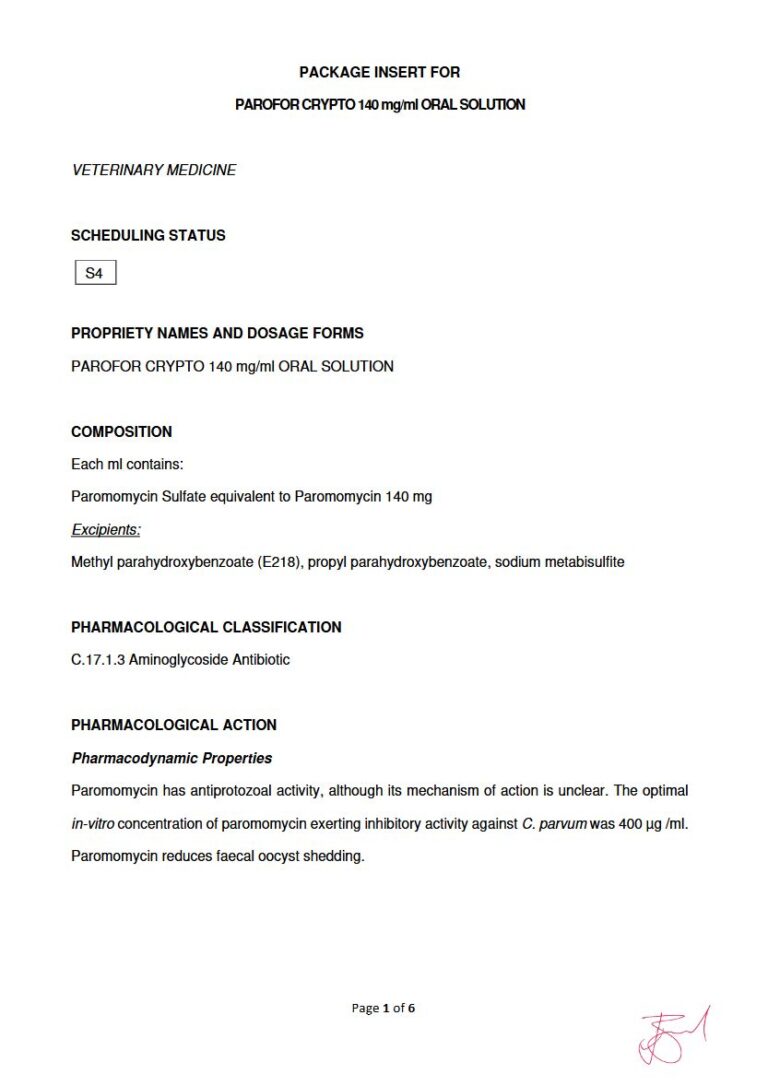
Parofor Crypto 140 Mg Oral Solution
PDF Leaflet Revision Date: 31 August 2021
Clinical Summary
Quick overview from the medicine insert
Indication
Reduction in diarrhoea due to Cryptosporidium parvum.
Dosage (summary)
50 mg/kg BW/day for 7 days; 2.5 ml/10 kg BW/day.
Special Populations
- New-born animals
- Renal impairment
- Hepatic impairment
Pregnancy & Breastfeeding
Safety not established in pregnant/lactating cattle; not recommended.
Key Drug Interactions
- General anaesthetics
- Muscle relaxants
- Strong diuretics
Contraindications
- Hypersensitivity to paromomycin
- Impaired kidney function
- Impaired liver function
- Ruminating animals
Common side effects
- Soft faeces
- Oto-toxicity
- Nephrotoxicity
Counselling Points
- Administer within 48 hours of birth
- Use protective equipment when handling
- Seek medical advice if exposed
Serious warnings
- Potentially ototoxic and nephrotoxic
- Assess kidney function before use
Important Disclaimer
The Parofor Crypto 140 Mg Oral Solution professional information leaflet below is the property of Huvepharma South Africa and is provided on Medinsert exactly as issued, with no.. alterations or editorial changes. We make every effort to keep content current by updating documents as soon as new versions become available. Medinsert serves as a trusted access point for healthcare professionals, but does not replace official sources or clinical judgement. For more details, please read our full disclaimer. read more>>
 Healthcare Professionals Only
This content is for registered healthcare professionals
Sign in or create a free account to read the full package insert.
Free for HPCSA-registered professionals. Powered by Medinsert.
Clinical Particulars
Section 4 of the official insert — extracted exactly as issued, no alterations
4.1 Therapeutic indications
Reduction in the occurrence of diarrhoea due to diagnosed Cryptosporidium parvum.
4.2 Posology and method of administration
50 mg of paromomycin sulphate /kg BW /day for 7 consecutive days, i.e. 2.5 ml of product / 10 kg BW/day for 7 consecutive days. The consecutive treatment should be done at the same time each day. On farms with a history of cryptosporidiosis confirmed by positive oocyst count, treat all newborn calves on that farm before the age of 48 hours.
4.3 Contraindications
Do not use in animals with known hypersensitivity to paromomycin, other aminoglycosides or any of the excipients. Do not use in cases with impaired function of the kidneys or liver. Do not use in ruminating animals.
4.4 Special warnings and precautions for use
Special warnings for each target species
Animals should receive enough colostrum according to good breeding practice. Calves should only receive the product upon confirmation of cryptosporidium oocysts in their faeces and before the onset of diarrhoea.
Special precautions for use in animals
Since the product is potentially ototoxic and nephrotoxic, it is recommended to assess kidney function. Special care should be taken when considering administration of the product to new-born animals due to the known higher gastrointestinal absorption of paromomycin in neonates. This higher absorption could lead to an increased risk of oto- and nephrotoxicity. The use of the product in neonates should be based on a benefit/risk assessment by the responsible veterinarian.
Withdrawal Period(s)
Meat and offal: 62 days
Special precautions to be taken by the person administering PAROFOR 140 ORAL SOLUTION to animals
People with known hypersensitivity (allergy) to paromomycin or any other aminoglycosides should avoid contact with the product. Avoid contact with the skin and eyes. Personal protective equipment consisting of protective clothing and impervious gloves should be worn when handling the veterinary medicinal product.
In the event of accidental contact with the skin or eyes, rinse with plenty of clean water and seek medical attention of irritation persists. If you develop symptoms following exposure, such as skin rash, you should seek medical advice and show the physician this warning. Swelling of the face, lips and eyes or difficulty in breathing are more serious symptoms and require urgent medical attention. Do not eat, drink and smoke when handling the product. Do not ingest. In case of accidental ingestion, seek medical advice immediately and show the label to the physician. Wash hands after use.
4.5 Interactions with other medicines
General anaesthetics and muscle relaxing products increase the neuro-blocking effect of aminoglycosides. This may cause paralysis and apnoea. Do not use concurrently with strong diuretics and potentially oto- or nephrotoxic substances.
4.6 Fertility, pregnancy and lactation
The safety of the product has not been established in pregnant or lactating cattle. This product is only indicated for use in pre-ruminant calves. Therefore, the use of the product is not recommended in these animals.
4.8 Undesirable effects
On rare occasions, soft faeces have been observed. Aminoglycoside antibiotics such as paromomycin can cause oto- and nephrotoxicity.
4.9 Overdose
Do not administer for more than 7 days. In 2 to 5 week old calves, overdoses in excess of 50 mg paromomycin sulphate/kg bodyweight may induce gastrointestinal lesions (ulceration, pustules, chronic hyperplastic inflammation) mostly in the rumen and reticulum. Bruxism and poor appetite have been reported. Repeated overdose may be associated with death.
