
Serrapress 20 20 mg FC tablets
PDF Leaflet Revision Date: 10 October 2023
Clinical Summary
Quick overview from the medicine insert
Indication
Treatment of depression, OCD, social phobia, panic disorder, and GAD.
Dosage (summary)
20 mg daily, may increase by 10 mg increments up to 50 mg for depression; 40 mg daily for panic disorder and OCD; 20 mg for GAD.
Special Populations
- Elderly
- Hepatic impairment
- Renal impairment
Pregnancy & Breastfeeding
Not recommended during pregnancy or lactation; potential teratogenic effects.
Key Drug Interactions
- MAO inhibitors
- Serotonin precursors
- Pimozide
- Thioridazine
- Warfarin
Contraindications
- Hypersensitivity to paroxetine
- Children under 18 years
- Epilepsy
- Porphyria
Common side effects
- Dizziness
- Nausea
- Insomnia
- Sexual dysfunction
- Dry mouth
Counselling Points
- Take with food in the morning
- Do not abruptly discontinue
- Monitor for worsening depression or suicidality
- Avoid alcohol
Serious warnings
- Increased risk of suicidality in children and adolescents
- Serotonin syndrome
- Akathisia
- Withdrawal symptoms
Important Disclaimer
The Serrapress 20 20 mg FC tablets professional information leaflet below is the property of Pharma Dynamics and is provided on Medinsert exactly as issued, with no.. alterations or editorial changes. We make every effort to keep content current by updating documents as soon as new versions become available. Medinsert serves as a trusted access point for healthcare professionals, but does not replace official sources or clinical judgement. For more details, please read our full disclaimer. read more>>
 Healthcare Professionals Only
This content is for registered healthcare professionals
Sign in or create a free account to read the full package insert.
Free for HPCSA-registered professionals. Powered by Medinsert.
Clinical Particulars
Section 4 of the official insert — extracted exactly as issued, no alterations
4.1 Therapeutic indications
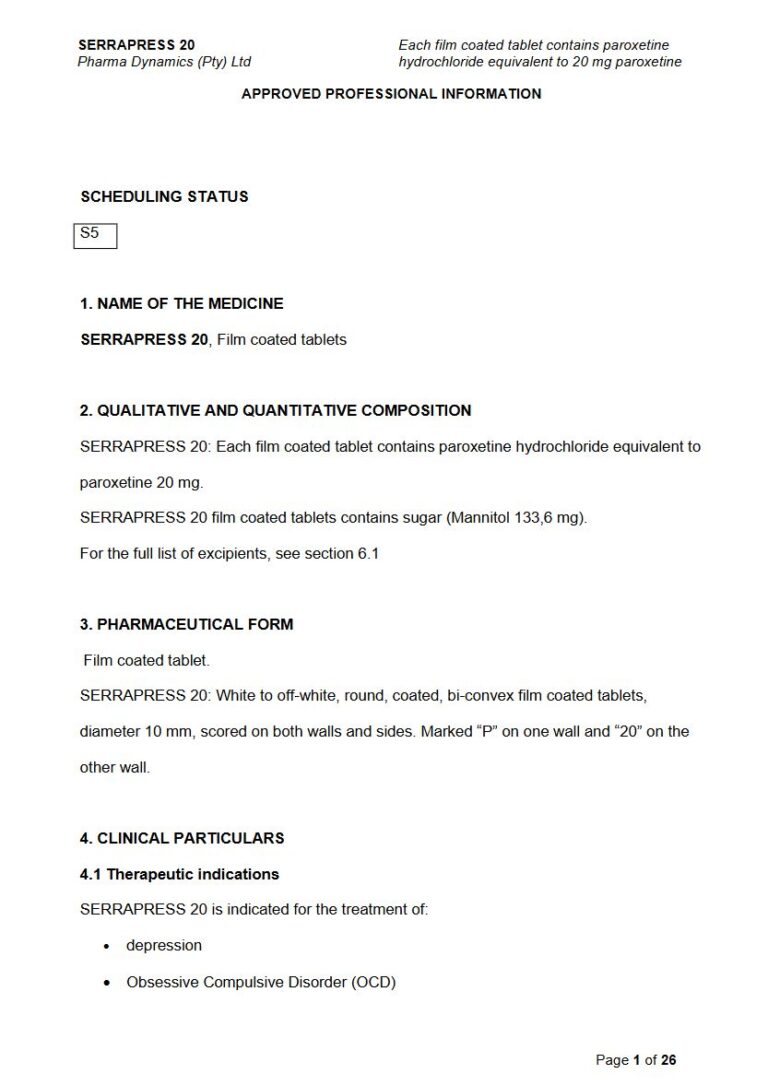
SERRAPRESS 20 is indicated for the treatment of:
- depression
- Obsessive Compulsive Disorder (OCD)
- social phobia
- panic disorder
- Generalised Anxiety Disorder (GAD).
4.2 Posology and method of administration
Depression: 20 mg daily. This dose can be increased gradually, if needed, by 10 mg increments to a maximum of 50 mg daily, according to the patientu2019s response.
Panic Disorder: The recommended dose is 40 mg daily. The initial starting dose is 10 mg daily, which may be increased by 10 mg increments. The maximum dose is 60 mg daily. The low initial starting dose is recommended to minimise the potential worsening of panic symptoms when initiating treatment with SERRAPRESS 20.
Obsessive Compulsive Disorder: The recommended dose is 40 mg daily. The initial starting dose is 20 mg daily, which may be increased by 10 mg increments to a maximum of 60 mg daily.
Social Phobia: The recommended daily dose is 20 mg. This dose may be increased gradually, if needed, by 10 mg increments to a maximum of 40 mg, according to the patientu2019s response.
Generalised Anxiety Disorder: The recommended dose is 20 mg daily. Some patients not responding to a 20 mg dose may benefit from having dose increments of 10 mg of at least one week, to a maximum of 50 mg per day, according to the patientu2019s response.
Special populations
Elderly: Elderly subjects may experience increased plasma concentrations with SERRAPRESS 20. Dosing should commence at the adult starting dose and may be increased gradually by 10 mg increments up to 40 mg daily.
Hepatic and renal impairment: Increased plasma concentrations of SERRAPRESS 20 may occur in patients with severe renal impairment (creatinine clearance < 30 mL/min) or severe hepatic impairment. The dosage should therefore be restricted to the lower end of the dosage range. Patients should be treated for a sufficient period to ensure that they remain free from symptoms. This may be several months or longer.
Paediatric population: The safety and efficacy of SERRAPRESS 20 in children under the age of 18 years have not been established (see section 4.3). SERRAPRESS 20 should not be used in the treatment of children and adolescents under the age of 18 years. Suicide-related behaviours (suicide attempts and suicidal thoughts), and hostility (predominantly aggression, oppositional behaviour and anger) were more frequently observed in clinical trials among children and adolescents treated with antidepressants compared to those treated with placebo (see section 4.4).
Method of administration: It is recommended that SERRAPRESS 20 be administered as a single dose in the morning with food. SERRAPRESS 20 should be swallowed rather than chewed.
Missed dose: Doctors should advise patients who forget to take SERRAPRESS 20 to take a dose as soon as possible and then continue with the normal dose. Patients should not take a double dose to compensate for the missed dose.
Discontinuation of SERRAPRESS 20: Abrupt discontinuation of SERRAPRESS 20 should be avoided (see sections 4.4 and 4.8). The taper phase regimen involves an increment decrease in the daily dose by 10 mg/day at weekly intervals. When a daily dose of 20 mg/day is reached, patients should continue on this dose for one week before stopping treatment. If intolerable symptoms occur after a decrease in the dose or upon discontinuation of treatment, then resuming the previously prescribed dose may be considered. The general practitioner may continue decreasing the dose but at a more gradual rate.
4.3 Contraindications
- Hypersensitivity to paroxetine or to any of the ingredients of SERRAPRESS 20.
- Concomitant use with serotonin precursors (see sections 4.4 and 4.5).
- MAO Inhibitors: SERRAPRESS 20 should not be used in combination with MAO inhibitors or within 2 weeks of terminating treatment with MAO inhibitors. MAO inhibitors should not be introduced within 2 weeks of cessation of therapy with SERRAPRESS 20.
- Children under the age of 18 years (see section 4.4).
- Patients with epilepsy, seizures or a history of epilepsy.
- SERRAPRESS 20 should not be used in combination with pimozide (see section 4.5).
- SERRAPRESS 20 should not be used in combination with thioridazine, as paroxetine can elevate plasma levels of thioridazine (see section 4.5), leading to the prolongation of the QTc interval on the ECG.
- Porphyria. SERRAPRESS 20 is considered to be unsafe in patients with porphyria.
- SERRAPRESS 20 should not be used in pregnancy (see section 4.6).
4.4 Special warnings and precautions for use
Paediatric population: Safety and efficacy of SERRAPRESS 20 in children under 18 years have not been established (see section 4.3). Children and Adolescents under 18 years of age u2013 clinical worsening and suicide risk.
SERRAPRESS 20 may increase the risk compared to placebo of suicidal thinking and behaviour (suicidality) in children, adolescents, and young adults in short-term studies of major depressive disorder (MDD) and other psychiatric disorders. Short-term studies did not show an increase in the risk of suicidality with antidepressants compared to placebo in adults beyond age 24; there was a reduction in risk with antidepressants compared to placebo in adults aged 65 and older. Long-term safety data in children and adolescents concerning growth, maturation and cognitive and behavioural development are lacking. SERRAPRESS 20 is not approved for use in paediatric patients (see section 4.3 and section 4.8).
SERRAPRESS 20 should not be used in the treatment of children and adolescents under the age of 18 years as controlled clinical trials in major depressive disorder, there were increased reports of hostility and suicide-related adverse events such as suicidal ideation and self-harm (see section 4.3).
Suicidal thoughts / suicide and psychiatric disorders: Patients with major depressive disorder, both adults and children, may experience worsening of their depression and/or the emergence of suicidal ideation and behaviour, whether or not they are taking antidepressant medicines. This risk may persist until significant remission occurs. A causal role, however, for antidepressant medicines in inducing such behaviour has not been established. Patients being treated with SERRAPRESS 20 should, nevertheless, be observed closely for clinical worsening and suicidality, especially at the beginning of a course of therapy, or at any time of dose changes, either increases or decreases.
Because of the possibility of co-morbidity between major depressive disorder and other psychiatric and non-psychiatric disorders, the same precautions observed when treating patients with major depressive disorder should be observed when treating patients with other psychiatric and non-psychiatric disorders.
The following symptoms have been reported in patients being treated with antidepressants such as SERRAPRESS 20 for major depressive disorder as well as for other indications, both psychiatric and non-psychiatric: anxiety, agitation, panic attacks, insomnia, irritability, hostility (aggressiveness, impulsivity, akathisia, hypomania, and mania). Although a causal link between the emergence of such symptoms and either the worsening of depression and/or the emergence of suicidal impulses has not been established, consideration should be given to changing the therapeutic regimen, including possibly discontinuing SERRAPRESS 20, in patients for whom such symptoms are severe, abrupt in onset, or were not part of the patientu2019s presenting symptoms.
Discontinuation of SERRAPRESS 20 treatment: If the decision is made to discontinue treatment, SERRAPRESS 20, should be tapered (see section 4.2). Abrupt discontinuation of SERRAPRESS 20 can lead to withdrawal symptoms such as dizziness, sensory disturbances (including paraesthesia, electric shock sensations and tinnitus), sleep disturbances, insomnia, tremor, confusion, agitation or anxiety, headache, palpitations, emotional instability, irritability, nervousness, vertigo, visual disturbances, nausea and swelling. In the majority of these patients, these symptoms are mild to moderate and are self-limiting. No particular patient group appears to be a higher risk of these symptoms; it is therefore advised that when SERRAPRESS 20 treatment is no longer required, gradual discontinuation by dose tapering be carried out (see section 4.2).
Patients with epilepsy: SERRAPRESS 20 should be used with caution in patients with epilepsy or a history of epilepsy. SERRAPRESS 20 should be avoided in patients where epilepsy is poorly controlled (see sections 4.3 and 4.4).
Akathisia: The use of SERRAPRESS 20 has been associated with the development of akathisia, which is characterised by an inner sense of restlessness and psychomotor agitation, such as an inability to sit or stand still usually associated with subjective distress. This is most likely to occur within the first few weeks of treatment.
Serotonin Syndrome/Neuroleptic Malignant Syndrome: Development of a serotonin syndrome or neuroleptic malignant syndrome-like events may occur in association with treatment of SERRAPRESS 20, particularly when given in combination with other serotonergic and/or neuroleptic medicines. As these syndromes may result in potentially life-threatening conditions, treatment with SERRAPRESS 20 should be discontinued if such events (characterised by clusters of symptoms such as hyperthermia, rigidity, myoclonus and autonomic instability with possible rapid fluctuations of vital signs, mental status changes including confusion, irritability, extreme agitation progressing to delirium and coma) occur. Supportive symptomatic treatment should be initiated.
SERRAPRESS 20 should not be used in combination with serotonin-precursors (such as L-tryptophan, oxitriptan) due to the risk of serotonergic syndrome (see sections 4.3 and 4.5).
Mania and Bipolar disorder: A major depressive episode may be the initial presentation of bipolar-disorder. It is generally believed (though not established in controlled trials) that treating such an episode with an antidepressant e.g. SERRAPRESS 20 alone, can increase the likelihood of precipitation of a mixed/manic episode in patients at risk for bipolar disorder. Prior to initiating treatment with SERRAPRESS 20, patients should be adequately screened to determine whether they are at risk for bipolar disorder. Such screening should include a detailed psychiatric history, including a family history of suicide, bipolar disorder and depression. It should be noted that SERRAPRESS 20 is not approved for use in treating bipolar depression. SERRAPRESS 20 should be used with caution in patients with a history of mania. SERRAPRESS 20 should be discontinued in any patient entering a manic phase.
Tamoxifen: Paroxetine, a potent inhibitor of CYP2D6, may lead to reduced concentrations of endoxifen, one of the most important active metabolites of tamoxifen. Therefore, paroxetine should whenever possible be avoided during tamoxifen treatment (see section 4.5).
Haemorrhage: Patients concomitantly treated with SERRAPRESS 20 and anticoagulant medicines have an increased risk of bleeding, or patients with a known tendency or with predisposing conditions for bleeding may have an increased tendency of skin and mucous membrane bleedings. Co-administration of SERRAPRESS 20 with warfarin may result in increased bleeding in the presence of unaltered prothrombin times. The elderly and patients at high risk of gastrointestinal bleeding should be cautioned against the use of SERRAPRESS 20 with NSAIDs due to the increased risk of upper gastrointestinal bleeding. Haemorrhagic manifestations e.g. gastrointestinal haemorrhage have been reported in patients taking selective serotonin reuptake inhibitors (SSRIs) concomitantly with NSAIDs. Caution is advised in the elderly and patients with a history of bleeding disorders or conditions which may predispose to bleeding (see section 4.5).
Postpartum haemorrhage: SSRIs, such as SERRAPRESS 20, may increase the risk of postpartum haemorrhage (see sections 4.6, 4.8).
Renal/hepatic impairment: Caution is recommended in patients with severe renal impairment or in those with hepatic impairment (see section 4.2).
Risperidone: Co-administration with risperidone may lead to increased toxicity (see section 4.5).
Alcohol: The concomitant use of SERRAPRESS 20 and alcohol is not advised.
Increased risk for bone fractures: Epidemiological studies, mainly conducted in patients 50 years of age and older, show an increased risk of bone fractures in patients receiving SSRIs and tricyclic antidepressants (TCAs) (see section 4.8).
Cardiac Conditions: Administration of SERRAPRESS 20 to patients with serious cardiovascular disorders such as (unstable) angina pectoris, poorly monitored cardiac decompensation, ventricular rhythm disorder and acute myocardial infarction has not been studied and must therefore be avoided. Nevertheless, if antidepressant medicine is indicated for such patients, SERRAPRESS 20 should be administered with caution.
Seizures: SERRAPRESS 20 should be discontinued in any patient who develops seizures or when there is an increase in seizure frequency (see section 4.3).
Electro-Convulsive Therapy (ECT): Clinical experience of the concurrent administration of SERRAPRESS 20 and electro-convulsive therapy is lacking.
Hyponatraemia: Hyponatraemia, which is generally reversible on discontinuation of SERRAPRESS 20, may occur predominantly in the elderly.
Glaucoma: SERRAPRESS 20 may cause mydriasis and should be used with caution in patients with narrow angle glaucoma.
Diabetes mellitus: SERRAPRESS 20 may alter glycaemic control and caution should therefore be used in patients with diabetes mellitus. Insulin and/or oral hypoglycaemic dosage may need to be adjusted.
Sexual dysfunction: SSRIs may cause symptoms of sexual dysfunction (see section 4.8). There have been reports of long lasting sexual dysfunction where the symptoms have continued despite discontinuation of SSRIs.
4.5 Interactions with other medicines
- Interaction between SERRAPRESS 20 and serotogenic medicines (e.g. monoamine oxidase (MAO) inhibitors) (see section 4.3) and also between SERRAPRESS 20 and L-tryptophan, triptans, tramadol, linezolid, methylthioninium chloride (methylene blue), SSRIs, pethidine and St. Johnu2019s Wort (hypericum performatum) may occur, resulting in a u201cserotonin syndromeu201d. The risk of using SERRAPRESS 20 in combination with other CNS active medicines has not been systematically evaluated. Consequently, caution is advised if concomitant administration is required.
- Co-administration of SERRAPRESS 20 with anticonvulsants carbamazepine, phenytoin, sodium valproate. Concomitant administration showed no effect on pharmacokinetic/dynamic profile in epileptic patients.
- SERRAPRESS 20 inhibits the specific hepatic cytochrome P450 isoenzyme CYP2D6 responsible for the metabolism of debrisoquine and sparteine. This may lead to enhanced plasma levels of those co-administered medicines which are metabolised by this isoenzyme. Medicine metabolised by this isoenzyme include certain tricyclic antidepressant (e.g. nortriptyline, amitriptyline, imipramine and desipramine), phenothiazine neuroleptics (e.g. perphenazine and thioridazine u2013 see section 4.3), risperidone, amoxetine Type 1c antidysrhythmics (e.g. propafenone and flecainide) and metoprolol. It is not recommended to use SERRAPRESS 20 in combination with metoprolol when given in cardiac insufficiency, because of the narrow therapeutic index of metoprolol in this indication.
- Co-administration with risperidone may lead to increased toxicity thereof.
- Caution is also advised with fentanyl used in general anaesthesia or tramadol in the treatment of chronic pain.
- Concurrent administration of SERRAPRESS 20 and lithium should be undertaken with caution. Lithium levels should be monitored.
- Co-administration of SERRAPRESS 20 and phenytoin is associated with decreased plasma concentrations of paroxetine and increased adverse experiences (diarrhoea, indifference, imbalance, nervousness, ataxia and vertigo). No initial dosage adjustment of SERRAPRESS 20 is considered necessary when these medicines are co-administered. Any subsequent adjustments should be guided by clinical effect.
- Primidone is partially metabolised to phenobarbitone, which induces many cytochrome P450 enzymes. Administration with any of these medicines concomitantly with SERRAPRESS 20 may reduce the systemic availability of paroxetine. No initial dosage adjustments of SERRAPRESS 20 are recommended, but subsequent titration should be based on clinical effects.
- Concomitant administration of pimozide with SERRAPRESS 20 may increase the systemic availability of pimozide. Due to the narrow therapeutic index of pimozide and its known ability to prolong the QT interval, concomitant use of pimozide and SERRAPRESS 20 is contraindicated (see section 4.3).
- Daily administration of SERRAPRESS 20 may significantly increase the plasma levels of procyclidine; other anti-cholinergic medicines may be similarly affected. If anti-cholinergic effects are seen, the dose of procyclidine should be reduced.
- SERRAPRESS 20 should be administered with great caution to patients receiving oral anticoagulants as preliminary data suggest that there may be a pharmacodynamic interaction between paroxetine and warfarin, which may result in increased bleeding in the presence of unaltered prothrombin times/INRs (see section 4.4), aspirin or nonsteroidal medicines (NSAIDs) which can lead to an increased risk of haemorrhage.
- Sumatriptan may increase the risk of adverse reactions when used in combination with SERRAPRESS 20. If concomitant therapy is clinically warranted, appropriate observation of the patient is advised.
- Elevated theophylline concentrations may occur after concurrent use of SERRAPRESS 20. Monitoring of theophylline serum concentrations during concurrent use is recommended.
- Reduced efficacy of tamoxifen has been reported with concomitant usage of some SSRI antidepressants. As a reduced effect of tamoxifen cannot be excluded, co-administration with potent CYP2D6 inhibitors (including SERRAPRESS 20) should, whenever possible, be avoided.
- The absorption and pharmacokinetics of SERRAPRESS 20 are not affected, or only marginally affected by food, antacids, propranolol.
- Concurrent administration of SERRAPRESS 20 with digoxin should be undertaken with caution.
- The concomitant use of paroxetine, as in SERRAPRESS 20 and alcohol is not advised.
- When SERRAPRESS 20 is to be co-administered with a known medicine metabolising enzyme inhibitor, such as cimetidine, consideration should be given to using doses at the lower end of the range. No initial dosage adjustment of SERRAPRESS 20 is considered necessary when it is to be co-administered with known medicine metabolising enzyme inducers (e.g. carbamazepine, rifampicin, phenobarbitone, phenytoin). Any subsequent dosage adjustment should be guided by clinical effects (tolerability and efficacy).
- Co-administration of fosamprenavir/ritonavir with SERRAPRESS 20 significantly decreased plasma levels of paroxetine. Any dose adjustment should be guided by clinical effect (tolerability and efficacy).
- SSRIs may reduce plasma cholinesterase activity resulting in a prolongation of the neuromuscular blocking action of mivacurium and suxamethonium.
4.6 Fertility, pregnancy and lactation
Fertility: Some clinical studies have shown that SSRIs (including SERRAPRESS 20) may affect sperm quality. This effect appears to be reversible following discontinuation of treatment.
The safety of SERRAPRESS 20 in pregnancy or lactation has not been established. Patients should be advised to notify their medical practitioner if they become pregnant or intend to become pregnant during therapy. SERRAPRESS 20 should not be used during pregnancy (see section 4.3).
Teratogenic effects: Epidemiological studies suggest an increased risk of congenital malformations, particularly cardiovascular (e.g. ventricular and atrial septum defects), associated with the use of SERRAPRESS 20 during the first trimester. The mechanism is unknown. If a patient becomes pregnant while taking SERRAPRESS 20, consideration should be given to either discontinuing SERRAPRESS 20 therapy or switching to another antidepressant (see section 4.4: Discontinuation of SERRAPRESS 20 treatment). For women who intend to become pregnant or are in their first trimester of pregnancy, treatment with SERRAPRESS 20 should only be initiated after consideration of the other available treatment options.
Non-teratogenic effects: Neonates must be observed if maternal use of SERRAPRESS 20 continues into the later stages of pregnancy, particularly the third trimester. The physician should carefully consider the potential risks and benefits of treatment (see section 4.4). The following symptoms may occur in the neonate after maternal SERRAPRESS 20 and other SSRIs or serotonin and norepinephrine reuptake inhibitors (SNRIs), use in later stages of pregnancy requiring prolonged hospitalisation, respiratory support, and tube feeding: respiratory distress, cyanosis, apnoea, seizures, temperature instability, feeding difficulty, vomiting, hypoglycaemia, hypertonia, hypotonia, hyperreflexia, tremor, jitteriness, irritability, lethargy, constant crying, somnolence and difficulty in sleeping. These symptoms could be due to either serotonergic effects or withdrawal symptoms. In a majority of instances, the complications begin immediately or soon (< 24 hours) after delivery (see section 4.4). Infants exposed to SSRIs in pregnancy may have an increased risk for persistent pulmonary hypertension of the newborn (PPHN). Observational data indicate an increased risk (less than 2-fold) of postpartum haemorrhage following SSRI/SNRI exposure within the month prior to birth (see sections 4.4, 4.8).
Lactation: Small amounts of paroxetine are excreted into breast milk. SERRAPRESS 20 should not be used during lactation.
4.7 Effects on ability to drive and use machines
Due to the adverse effects (see section 4.8) the patient should be cautioned not to drive or use machines until they know how Serrapress 20 affects them.
4.8 Undesirable effects
Tabulated summary of adverse reactions
System Organ Class Frequency Side effects
Blood and lymphatic system disorders Less frequent Frequency unknown Abnormal bleeding, predominantly of the skin and mucous membranes (mostly ecchymosis, but also in the gastrointestinal tract, central nervous system and eye), purpura, bruising Thrombocytopenia*
Immune system disorders Frequency unknown Severe and potentially fatal allergic reactions* (including anaphylactoid reactions, urticaria and angioedema, maculopapular rash)
Endocrine disorders Frequency unknown Syndrome of inappropriate antidiuretic hormone secretion (SIADH)*
Metabolism and nutrition disorders Frequent Frequency unknown Decreased or increased appetite, anorexia, weight loss, increased risk of gastrointestinal bleeding, changes in blood sugar, increases in cholesterol levels Hyponatraemia* (which may occur predominantly in elderly patients)
Psychiatric disorders Frequent Less frequent Frequency unknown Somnolence, insomnia, agitation Confusion, hallucinations, amnesia, impaired concentration, abnormal dreams, anxiety, in children, reports of hostility, suicidal ideation, suicidal behaviour and self-harm, depersonalisation, panic attacks, akathisia Manic reactions*
Nervous system disorders Frequent Less frequent Frequency unknown Dizziness, tremor, drowsiness, headache, fatigue Extrapyramidal disorders, migraine, anxiety, restlessness, nervousness, insomnia, paraesthesia Akathisia*, convulsions*, Serotonin syndrome* (symptoms may include agitation, confusion, diaphoresis, hallucinations, hyperreflexia, myoclonus, shivering, tachycardia and tremor)
Eye disorders Frequent Less frequent Frequency unknown Blurred or abnormal vision Anisocoria,mydriasis, Acute glaucoma*
Ear and labyrinth disorders Frequency unknown Tinnitus*
Cardiac disorders Less frequent Palpitations, tachycardia, bradycardia
Vascular disorders Less frequent Postural hypotension, hypertension
Respiratory, thoracic and mediastinal disorders Frequent Less frequent Yawning Chest pain, difficulty in breathing, sinusitis, bronchitis, coughing, pharyngitis, rhinitis
Gastrointestinal disorders Frequent Less frequent Frequency unknown Constipation, diarrhoea, dry mouth, nausea, vomiting, dyspepsia, abdominal pain, flatulence Increased risk of gastrointestinal bleeding Colitis microscopic
Hepatobiliary disorders Frequency unknown Elevation of hepatic enzymes*, Hepatic events* (such as hepatitis, sometimes associated with jaundice and/or liver failure). Discontinuation of SERRAPRESS 20 should be considered if there is prolonged elevation of liver function test results
Skin and subcutaneous tissue disorders Frequent Less frequent Frequency unknown Excessive sweating Skin rashes, pruritus, eczema, alopecia, pruritus Erythema multiforme*, Stevens Johnsonu2019s syndrome*, toxic epidermal necrolysis* photosensitivity reactions*, cutaneous vasculitis*, urticaria*
Musculoskeletal, connective tissue and bone disorders Less frequent Myalgia, myasthenia, myopathy, arthralgia, increased risk of bone fractures
Renal and urinary disorders Less frequent Urinary retention, urinary tract infection, urinary incontinence
Reproductive system and breast disorders Frequent Less frequent Frequency unknown Sexual dysfunction Dysmenorrhoea, menstrual disorder, vaginitis, priapism Safety of SERRAPRESS 20 in pregnancy has not been established (see section 4.6) postpartum haemorrhage (see sections 4.4, 4.6) hyperprolactinaemia* / galactorrhoea*
General disorders and administrative site conditions Less frequent Frequency unknown Asthenia, body weight gain Peripheral oedema*
* Post marketing events
Description of selected adverse reactions Symptoms seen on discontinuation of paroxetine treatment Common: dizziness, sensory disturbances, sleep disturbances, anxiety Uncommon: agitation, nausea, sweating. Discontinuation of SERRAPRESS 20 (particularly when abrupt) may lead to symptoms such as dizziness, sensory disturbances (including paraesthesia, electric shock sensations and tinnitus), sleep disturbances (including intense dreams), agitation or anxiety, headache, nervousness, vertigo, nausea, diarrhoea and sweating. In the majority of patients, these events are mild to moderate and are self-limiting. No particular patient group appears to be at higher risk of these symptoms; it is therefore advised that when SERRAPRESS 20 treatment is no longer required, gradual discontinuation by dose tapering be carried out (see sections 4.2 and 4.4).
Reporting of suspected adverse reactions: Reporting suspected adverse reactions after authorisation of the medicine is important. It allows continued monitoring of the benefit/risk balance of the medicine. Healthcare professionals are asked to report any suspected adverse reactions to SAHPRA via the online service for adverse drug reaction reporting by following the link: https://www.sahpra.org.za/Publications/Index/8 . An email can be sent directly to the company, [email protected] to ensure safety of the product.
4.9 Overdose
Signs and symptoms: In overdose, side effects are usually exacerbated and exaggerated. Vomiting, dilated pupils, fever, blood pressure changes, headache, involuntary muscle contractions, agitation, anxiety, tachycardia, coma and ECG changes (see section 4.8).
Management of overdose: Treatment is symptomatic and supportive. There is no specific antidote. To decrease absorption, the stomach could be emptied by induction of emesis. This should be followed by administration of 20 to 30 g of activated charcoal every four to six hours during the first 24 hours after ingestion. Frequent monitoring of vital signs and careful observation is recommended.
