
Xycam Dispersible 20 mg TABLETS
PDF Leaflet Revision Date: 13 November 2023
Clinical Summary
Quick overview from the medicine insert
Indication
Anti-inflammatory and analgesic for conditions like arthritis and acute gout.
Dosage (summary)
20 mg daily; 40 mg for acute conditions initially.
Special Populations
- Elderly
- Renal impairment
- Hepatic impairment
Pregnancy & Breastfeeding
Avoid in late pregnancy; may impair renal function in fetus.
Key Drug Interactions
- Anticoagulants
- Other NSAIDs
- Methotrexate
Contraindications
- Hypersensitivity to piroxicam
- Hepatic dysfunction
- Children
Common side effects
- Gastrointestinal disturbances
- Dizziness
- Skin rash
Counselling Points
- Take with food to reduce GI irritation
- Monitor for skin reactions
- Avoid in pregnancy after 20 weeks
Serious warnings
- Risk of gastrointestinal bleeding
- Serious skin reactions
- Cardiovascular risks
Important Disclaimer
The Xycam Dispersible 20 mg TABLETS professional information leaflet below is the property of Pharmacare and is provided on Medinsert exactly as issued, with no.. alterations or editorial changes. We make every effort to keep content current by updating documents as soon as new versions become available. Medinsert serves as a trusted access point for healthcare professionals, but does not replace official sources or clinical judgement. For more details, please read our full disclaimer. read more>>
 Healthcare Professionals Only
This content is for registered healthcare professionals
Sign in or create a free account to read the full package insert.
Free for HPCSA-registered professionals. Powered by Medinsert.
Clinical Particulars
Section 4 of the official insert — extracted exactly as issued, no alterations
4.1. Therapeutic indications
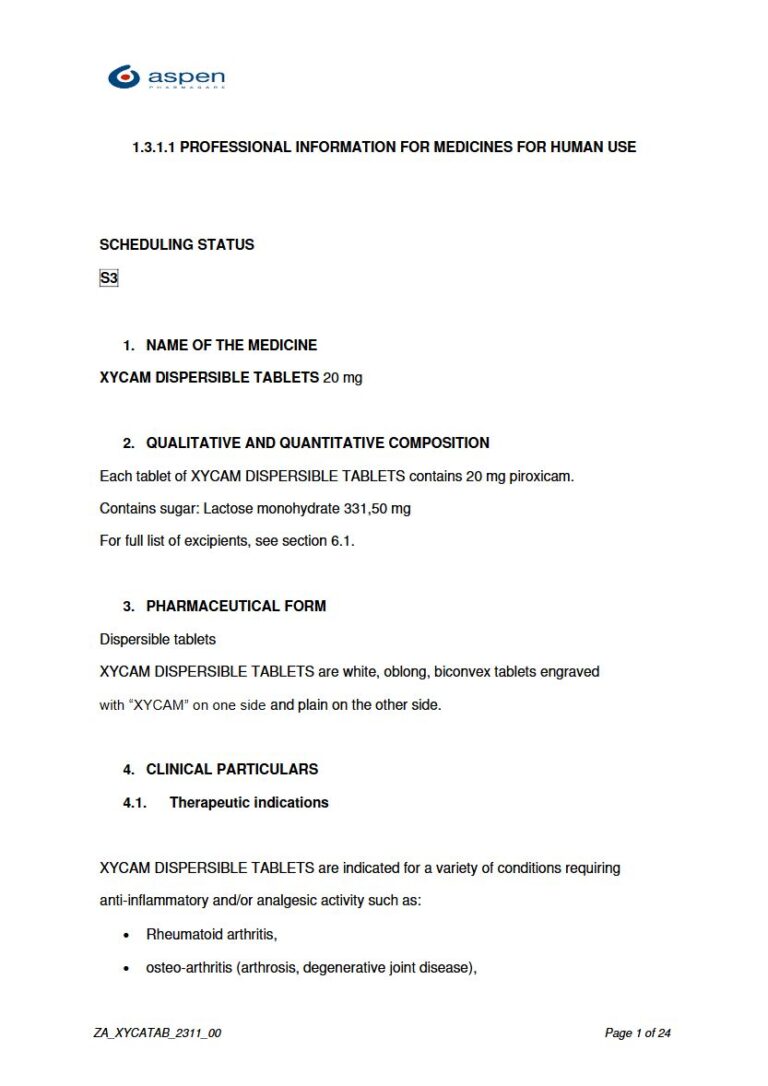
XYCAM DISPERSIBLE TABLETS are indicated for a variety of conditions requiring anti-inflammatory and/or analgesic activity such as:
- Rheumatoid arthritis,
- osteo-arthritis (arthrosis, degenerative joint disease),
- ankylosing spondylitis,
- acute musculoskeletal disorders,
- acute gout.
4.2. Posology and method of administration
Posology
Adults
Use the lowest effective dose for the shortest possible duration of treatment.
Rheumatoid arthritis, osteo-arthritis, ankylosing spondylitis
The usual dose is 20 mg daily in a single daily dose. Long term administration of doses higher than 30 mg carries an increased risk of gastrointestinal side effects (see section 4.8).
Acute musculoskeletal disorders
An initial dose of 40 mg daily may be given for the first two days in single or divided doses. For the remainder of the 7 to 14 day treatment period, the dose should be reduced to 20 mg daily.
Acute gout
The usual dose is 40 mg daily for 5 to 7 days. XYCAM DISPERSIBLE TABLETS are not indicated for the long-term management of gout.
Paediatric population
Not for use in children (see section 4.3)
Method of administration
For oral administration. XYCAM DISPERSIBLE TABLETS should preferably be taken after meals or with food to reduce gastrointestinal irritation. XYCAM DISPERSIBLE TABLETS should be taken with a full glass (240 ml) of water and the patient should remain in an upright position for 15 to 30 minutes after administration. XYCAM DISPERSIBLE TABLETS may be taken whole with fluid or dispersed in a minimum of 50 ml water and then swallowed.
4.3. Contraindications
XYCAM DISPERSIBLE TABLETS are contraindicated in:
- Patients with hypersensitivity to piroxicam or to any excipients in XYCAM DISPERSIBLE TABLETS (see section 6.1).
- Patients with previous skin reaction (regardless of severity) to XYCAM DISPERSIBLE TABLETS or other NSAIDs.
- Patients with hepatic dysfunction.
- Children.
- Patients in whom aspirin and other non-steroidal anti-inflammatory medicines induce the symptoms of asthma, nasal polyps, angiodema, rhinitis or urticaria. The potential exists for cross sensitivity to aspirin and other non-steroidal anti-inflammatory medicines.
- Concomitant use with other NSAIDs, including COX-2 selective NSAIDs and acetylsalicylic acid (aspirin).
- Concomitant use with anticoagulants.
- Patients with a history of gastrointestinal perforation, ulceration or bleeding (PUBs) related to previous NSAIDs, including XYCAM DISPERSIBLE TABLETS.
- Patients with active or history of recurrent ulcer/haemorrhage/perforation.
- Patients with porphyria.
- Patients with heart failure.
- Pregnancy or lactation: The use of XYCAM DISPERSIBLE TABLETS around 20 weeks gestation or later in pregnancy may cause a rare but serious foetal renal dysfunction leading to oligohydramnios and, in some cases, neonatal renal impairment. (see Section 4.4 and 4.6).
- Patients with a history of gastrointestinal disorders that predispose to bleeding disorders such as ulcerative colitis. Crohnu2019s disease, gastrointestinal cancers or diverticulitis.
- History of previous serious allergic medicine reaction of any type, especially cutaneous reactions such as erythema multiforme, Stevens-Johnson Syndrome, toxic epidermal necrolysis.
- During the last trimester of pregnancy.
4.4. Special warnings and precautions for use
Undesirable effects may be minimised by using the lowest effective dose for the shortest duration necessary to control symptoms (see section 4.2, and gastrointestinal (GI) and cardiovascular (CV) risks below). The clinical benefit and tolerability should be re-evaluated periodically and treatment should be immediately discontinued at the first appearance of cutaneous reactions or relevant gastrointestinal events.
Gastrointestinal effects, risk of gastrointestinal perforation, ulceration, bleeding (PUBs)
XYCAM DISPERSIBLE TABLETS can cause serious gastrointestinal events including perforation, ulceration and bleeding (PUBs) of the stomach, small intestine or large intestine, which can be fatal. These serious adverse events can occur at any time, with or without warning symptoms, in patients treated with XYCAM DISPERSIBLE TABLETS. XYCAM DISPERSIBLE TABLETS exposure of both short and long duration have an increased risk of serious gastrointestinal events (see section 4.2). Administration of doses of greater than 20 mg per day carries an increased risk of gastrointestinal side effects. XYCAM DISPERSIBLE TABLETS may be associated with a high risk of serious gastrointestinal toxicity, relative to other NSAIDs. Patients with significant risk factors for serious gastrointestinal events should be treated with XYCAM DISPERSIBLE TABLETS only after careful consideration (see section 4.3).
The possible need for combination therapy with gastro-protective agents (e.g. misoprostol or proton pump inhibitors) should be carefully considered. (see section 4.2).
Serious GI Complications
Identification of at-risk subjects
The elderly have an increased frequency of adverse reactions to XYCAM DISPERSIBLE TABLETS, especially gastrointestinal perforation, ulceration and bleeding (PUBs) which may be fatal. The risk for developing serious GI complications increases with age. Age over 70 years is associated with high risk of complications. The administration to patients older than 80 years should be avoided.
The risk of gastrointestinal perforation, ulceration and bleeding (PUBs) is higher with increasing doses of XYCAM DISPERSIBLE TABLETS, in patients with a history of ulcers and the elderly. Patients taking concomitant oral corticosteroids, selective serotonin reuptake inhibitors (SSRIs), anti-platelet agents such as low-dose acetylsalicylic acid as well as those ingesting excessive amount of alcohol are at increased risk of serious GI complications (see below and section 4.5). As with other NSAIDs, the use of XYCAM DISPERSIBLE TABLETS in combination with protective agents (e.g. misoprostol or proton pump inhibitors) must be considered for these at-risk patients.
When gastrointestinal perforation, ulceration and bleeding (PUBs) occurs in patients receiving XYCAM DISPERSIBLE TABLETS, treatment with XYCAM DISPERSIBLE TABLETS should be stopped. XYCAM DISPERSIBLE TABLETS should be given with caution to patients with a history of gastrointestinal disease (e.g. ulcerative colitis, Crohnu2019s disease, hiatus hernia, gastro-oesophageal reflux disease, angiodysplasia) as the condition may be exacerbated.
Cardiovascular and cerebrovascular effects
XYCAM DISPERSIBLE TABLETS should be used with caution in patients with cardiovascular disorders where oedema may worsen the condition. Caution is required in patients with a history of hypertension and/or heart failure as fluid retention and oedema have been reported in association with XYCAM DISPERSIBLE TABLETS therapy. In view of the XYCAM DISPERSIBLE TABLETSu2019s inherent potential to cause fluid retention, heart failure may be precipitated in some compromised patients.
Patients with uncontrolled hypertension, congestive heart failure, established ischaemic heart disease, peripheral arterial disease, and/or cerebrovascular disease should only be treated with XYCAM DISPERSIBLE TABLETS after careful consideration. Caution is required in patients with significant risk factors for cardiovascular events (e.g. hypertension, hyperlipidaemia, diabetes mellitus, smoking) and should only be treated with XYCAM DISPERSIBLE TABLETS after careful consideration.
Clinical trial and epidemiological data suggest that use of some NSAIDs (particularly at high doses and in long term treatment) may be associated with a small increased risk of arterial thrombotic events (for example myocardial infarction or stroke). There are insufficient data to exclude such a risk for XYCAM DISPERSIBLE TABLETS. The relative increase of this risk appears to be similar in those with or without known cardiovascular disease or cardiovascular risk factors. However, patients with known cardiovascular disease or cardiovascular risk factors may be at greater risk in terms of absolute incidence, due to their increased rate at baseline.
Poor Metabolisers of CYP2C9 Substrates
Patients who are known or suspected to be poor CYP2C9 metabolizers based on previous history/experience with other CYP2C9 substrates should be administered XYCAM DISPERSIBLE TABLETS with caution as they may have abnormally high plasma levels due to reduced metabolic clearance.
Skin reactions
Serious skin reactions, some of them fatal, including exfoliative dermatitis, Stevens-Johnson syndrome (SJS) and toxic epidermal necrolysis (TEN) have been reported (see section 4.8). XYCAM DISPERSIBLE TABLETS should be discontinued at the first appearance of skin rash, mucosal lesions, or any other sign of hypersensitivity. XYCAM DISPERSIBLE TABLETS may be associated with a higher risk of serious skin reactions than other non-oxicam NSAIDs. Patients appear to be at highest risk of these reactions early in the course of therapy, the onset of the reaction occurring in the majority of cases within the first month of treatment. The best results in managing SJS and TEN come from early diagnosis and immediate discontinuation of any suspect drug. Early withdrawal is associated with a better prognosis. If the patient has developed SJS or TEN with the use of XYCAM DISPERSIBLE TABLETS, XYCAM DISPERSIBLE TABLETS must not be re-started in this patient at any time.
Drug Rash with Eosinophilia and Systemic Symptoms (DRESS)
Drug Reaction with Eosinophilia and Systemic Symptoms (DRESS) has been reported in patients taking NSAIDs such as XYCAM DISPERSIBLE TABLETS. Some of these events have been fatal or life-threatening. DRESS typically, although not exclusively, presents with fever, rash, lymphadenopathy, and/or facial swelling. Other clinical manifestations may include hepatitis, nephritis, hematological abnormalities, myocarditis, or myositis. Sometimes symptoms of DRESS may resemble an acute viral infection. Eosinophilia is often present. Because this disorder is variable in its presentation, other organ systems not noted here may be involved. It is important to note that early manifestations of hypersensitivity, such as fever or lymphadenopathy, may be present even though rash is not evident. If such signs or symptoms are present, discontinue XYCAM DISPERSIBLE TABLETS and evaluate the patient immediately.
Cases of fixed drug eruption (FDE) have been reported with XYCAM DISPERSIBLE TABLETS. XYCAM DISPERSIBLE TABLETS should not be reintroduced in patients with history of piroxicam-related FDE. Potential cross reactivity might occur with other oxicams. XYCAM DISPERSIBLE TABLETS should be discontinued at the first appearance of skin rash, mucosal lesions, or any other sign of hypersensitivity. Care should be exercised when administering XYCAM DISPERSIBLE TABLETS to patients with significant impairment of renal function or bronchial asthma. XYCAM DISPERSIBLE TABLETS should not be used in patients on coumarin type anticoagulants such as warfarin. XYCAM DISPERSIBLE TABLETS decreases platelet aggregation and prolongs bleeding time. XYCAM DISPERSIBLE TABLETS should be used with caution in patients with renal, hepatic and cardiac impairment. In rare cases, XYCAM DISPERSIBLE TABLETS may cause interstitial nephritis, glomerulitis, papillary necrosis and nephrotic syndrome. XYCAM DISPERSIBLE TABLETS inhibits the synthesis of the prostaglandin which plays a supportive role in the maintenance of renal perfusion in patients whose renal blood flow and blood volume are decreased. In these patients, administration of XYCAM DISPERSIBLE TABLETS may precipitate overt renal decompensation, which is typically followed by recovery to pre-treatment state upon discontinuation of XYCAM DISPERSIBLE TABLETS therapy. Patients at greatest risk of such a reaction are those with congestive heart failure, liver cirrhosis, nephrotic syndrome and overt renal disease. Such patients should be carefully monitored whilst receiving XYCAM DISPERSIBLE TABLETS therapy. Because of reports of adverse eye findings with non-steroidal anti-inflammatory medicines, it is recommended that patients who develop visual complaints during treatment with XYCAM DISPERSIBLE TABLETS have ophthalmic evaluation. The use of XYCAM DISPERSIBLE TABLETS with concomitant NSAIDs including cyclooxygenase-2 selective inhibitors should be avoided (see section 4.5).
4.5. Interaction with other medicines and other forms of interaction
Antacids: Concomitant administration of antacids had no effect on XYCAM DISPERSIBLE TABLETS plasma levels.
Anticoagulants: XYCAM DISPERSIBLE TABLETS may enhance the effects of anticoagulants, such as warfarin. Therefore, the use of XYCAM DISPERSIBLE TABLETS with concomitant anticoagulants such as warfarin should be avoided (see section 4.3).
Antiplatelet medicines and selective serotonin reuptake inhibitors (SSRIs): Increased risk of gastrointestinal bleeding (see section 4.4).
Aspirin and other non-steroidal anti-inflammatory drugs (NSAIDs): XYCAM DISPERSIBLE TABLETS decreases platelet aggregation and prolongs bleeding time. This effect should be kept in mind when bleeding times are determined. As with other NSAIDs, the use of XYCAM DISPERSIBLE TABLETS together with acetyl-salicylic acid or concomitant use with other NSAIDs, including other piroxicam formulations, must be avoided, since data are inadequate to show that such combinations produce greater improvement than that achieved with XYCAM DISPERSIBLE TABLETS alone; moreover, the potential for adverse reactions is enhanced (see section 4.4). Human studies have shown that concomitant use of XYCAM DISPERSIBLE TABLETS and acetyl-salicylic acid reduces the plasma piroxicam concentration to about 80% of the usual value.
Cardiac glycosides: XYCAM DISPERSIBLE TABLETS may exacerbate cardiac failure, reduce GFR and increase plasma glycoside levels.
Digoxin, Digitoxin: Concurrent therapy with XYCAM DISPERSIBLE TABLETS and digoxin, or XYCAM DISPERSIBLE TABLETS and digitoxin, did not affect the plasma levels of either medicine.
Ciclosporin, tacrolimus: Possible increased risk of nephrotoxicity when XYCAM DISPERSIBLE TABLETS are given with ciclosporin or tacrolimus.
Cimetidine: Results of two separate studies reported indicate a slight but significant increase in absorption of piroxicam following cimetidine administration but no significant changes in elimination rate constants or half-life. The small increase in absorption is unlikely to be clinically significant.
Corticosteroids: Increased risk of gastrointestinal perforation, ulceration and bleeding (PUBs) (see section 4.4).
Anti-hypertensives including diuretics, angiotensin-converting enzyme (ACE) inhibitors, angiotensin II antagonists (AIIA) and beta-blockers: XYCAM DISPERSIBLE TABLETS may cause sodium, potassium and fluid retention and may interfere with the natriuretic action of diuretic medicines. These properties should be kept in mind when treating patients with compromised cardiac function or hypertension since they may be responsible for the worsening of those conditions. NSAIDs can reduce the efficacy of diuretics and other anti-hypertensive drugs including ACE inhibitors, AIIA and beta-blockers. In patients with impaired renal function (e.g. dehydrated patients or elderly patients with the renal function compromised), the co-administration of an ACE inhibitor or an AIIA and/or diuretics with a cyclo-oxygenase inhibitor can increase the deterioration of the renal function, including the possibility of acute renal failure, which is usually reversible. The occurrence of these interactions should be considered in patients taking piroxicam with an ACE inhibitor or an AIIA and/or diuretics. Therefore, the concomitant administration of these drugs should be done with caution, especially in elderly patients. Patients should be adequately hydrated and the need to monitor the renal function should be assessed in the beginning of the concomitant treatment and periodically thereafter.
Highly protein-bound medicines: XYCAM DISPERSIBLE TABLETS are highly protein-bound and therefore might be expected to displace other protein-bound medicines. The physician should closely monitor patients for change when administering XYCAM DISPERSIBLE TABLETS to patients on highly protein-bound medicines.
Lithium: Non-steroidal anti-inflammatory medicines, including XYCAM DISPERSIBLE TABLETS, have been reported to increase steady state plasma lithium levels. It is recommended that these levels are monitored when initiating, adjusting and discontinuing XYCAM DISPERSIBLE TABLETS.
NSAIDs: Use of two or more NSAIDs concomitantly could result in an increase in side effects. XYCAM DISPERSIBLE TABLETS may interact with the following medicines/classes of therapeutic medicines:
- Antihypertensives - antagonism of the hypotensive effect.
- Methotrexate - reduced excretion of methotrexate, possibly leading to acute toxicity. When methotrexate is administered concurrently with NSAIDs, including piroxicam, NSAIDs may decrease elimination of methotrexate resulting in increased plasma levels of methotrexate. Caution is advised, especially in patients receiving high doses of methotrexate.
- Quinolone antibiotics - possible increased risk of convulsions.
- Mifepristone - XYCAM DISPERSIBLE TABLETS could interfere with mifepristone-mediated termination of pregnancy.
- Antidiabetic medicines - XYCAM DISPERSIBLE TABLETS can potentiate the hypoglycaemic effect of antidiabetic medicines.
4.6. Fertility, pregnancy and lactation
Pregnancy
Although no teratogenic effects were reported in animal testing, the safety of XYCAM DISPERSIBLE TABLETS during pregnancy or during lactation has not yet been established. XYCAM DISPERSIBLE TABLETS inhibits prostaglandin synthesis and release through a reversible inhibition of the cyclo-oxygenase enzyme. This effect, as with other non-steroidal anti-inflammatory drugs (NSAIDs) has been associated with an increased incidence of dystocia and delayed parturition in pregnant animals when medicine administration was continued in late pregnancy. In view of the known effects of NSAIDs on the foetal cardiovascular system (risk of closure of the ductus arteriosus), use in the last trimester of pregnancy is contraindicated. The onset of labour may be delayed, and the duration increased with an increased bleeding tendency in both mother and child (see section 4.3).
Inhibition of prostaglandin synthesis might adversely affect pregnancy. Data from epidemiological studies reported suggest an increased risk of spontaneous abortion after use of prostaglandin synthesis inhibitors in early pregnancy. In animals, administration of prostaglandin synthesis inhibitors has been shown to result in increased pre- and post- implantation loss. NSAIDs should not be used during the first two trimesters of pregnancy or labour. Pregnant women should not use XYCAM DISPERSIBLE TABLETS at 20 weeks or later unless specifically advised to do so by a health care professional because it may cause foetal renal dysfunction leading to oligohydramnios and, in some cases, neonatal renal impairment. Additionally, it should be avoided at 30 weeks and later in pregnancy because of the additional risk of premature closure of the foetal ductus arteriosus (see Section 4.3, 4.4 and 4.6).
Breastfeeding
A reported study indicates that piroxicam appears in breast milk at about 1-3% of the maternal plasma concentrations. No accumulation of piroxicam occurred in milk relative to that in plasma during treatment for up to 52 days. Piroxicam is not recommended for use in nursing mothers as clinical safety has not been established.
Fertility
Based on the mechanism of action, the use of NSAIDs, including XYCAM DISPERSIBLE TABLETS, may delay or prevent rupture of ovarian follicles, which has been associated with reversible infertility in some women. In women who have difficulties conceiving or who are undergoing investigation of infertility, withdrawal of NSAIDs, including XYCAM DISPERSIBLE TABLETS, should be considered.
4.7. Effects on ability to drive and use machines
XYCAM DISPERSIBLE TABLETS have moderate influence on the ability to drive or operate machinery. Since adverse reactions such as dizziness, drowsiness, fatigue and visual disturbances have been reported in patients receiving XYCAM DISPERSIBLE TABLETS, patients should not drive, use machinery or perform any tasks that require concentration until they are certain that XYCAM DISPERSIBLE TABLETS do not adversely affect their ability to do so (see section 4.8).
4.8. Undesirable effects
a) Summary of the safety profile
Gastrointestinal system disorders: Gastrointestinal disturbances are the most common side effects occurring with XYCAM DISPERSIBLE TABLETS. Administration of doses higher than 30 mg carries an increased risk of gastrointestinal side effects.
b) Tabulated list of adverse reactions
System organ class Frequent Less frequent Frequency unknown (cannot be estimated from the available data)
Blood and the lymphatic system disorders Anaemia, eosinophilia, leucopenia, thrombocytopenia Aplastic anaemia, haemolytic anaemia
Immune system disorders Hypersensitivity reactions such as anaphylaxis, urticaria/angioneurotic oedema, vasculitis, serum sickness.
Metabolism and nutrition disorders Anorexia, Hyperglycaemia. Hypoglycaemia Weight increase or decrease, fluid retention
Psychiatric disorders Dream abnormalities, mood alterations, depression, hallucinations, insomnia, mental confusion, nervousness
Nervous system disorders Dizziness, Headache, somnolence, vertigo. Paraesthesia.
Eye disorders Blurred vision. Swollen eyes, eye irritation,
Ear and labyrinth disorders Tinnitus. Hearing impairment.
Cardiac disorders Palpitations Cardiac failure Arterial thrombotic events oedema
Vascular disorders Vasculitis, hypertension
Respiratory,thoracic and mediastinal disorders Bronchospasm, epistaxis, dyspnoea
Gastrointestinal disorders Nausea, abdominal discomfort, abdominal pain, constipation, diarrhoea, epigastric pain or discomfort, flatulence, vomiting, indigestion. Stomatitis, Peptic ulceration, perforation, gastritis, dyspepsia, ulcerative stomatitis, exacerbation of colitis and Crohnu2019s disease, Gastrointestinal bleeding (including hematemesis and melena) Pancreatitis
Hepatobiliary disorders Fatal hepatitis, jaundice.
Skin and subcutaneous tissue disorders Pruritis skin rash. Severe cutaneous adverse reactions (SCARs): Stevens-Johnson syndrome (SJS), toxic epidermal necrolysis (TEN), (see section 4.4) Vesiculo bullous reaction, alopecia, angioedema, non-thrombocytopenic purpura (Henoch-Schoenlein), urticaria, dermatitis exfoliative, peeling of the skin, erythema multiforme, onycholysis, photosensitivity reactions, Drug Reaction with Eosinophillia and Systemic Symptoms (DRESS), Fixed drug eruption (FDE) (see section 4.4).
Renal and urinary disorders Interstitial nephritis, nephrotic syndrome, renal failure, renal papillary necrosis. Glomerulonephritis.
Reproductive system and breast disorders Female fertility decreased (see section 4.4).
General disorders and administration site conditions Oedema (mainly of the ankle) Malaise.
Investigations Increased serum transaminase levels. Increased alkaline phosphatase levels, blood urea elevation, elevation in serum creatinine, positive ANA (antinuclear antibody), weight decrease, decrease in hemoglobin and hematocrit unassociated with obvious gastrointestinal bleeding.
c) Description of selected adverse reactions
Gastrointestinal: These are the most commonly encountered side-effects but in most instances do not interfere with the course of therapy. Objective evaluations of gastric mucosa appearances and intestinal blood loss show that 20 mg/day of Piroxicam administered either in single or divided doses is significantly less irritating to the gastrointestinal tract than aspirin. Some epidemiological studies reported have suggested that piroxicam is associated with higher risk of gastrointestinal adverse reactions compared with some NSAIDs, but this has been confirmed in all reported studies. Administration of doses exceeding 20 mg daily (of 1 more than several days duration) carries an increased risk of gastrointestinal side effects, but they may also occur with lower doses (see Section 4.2). Oedema, hypertension, and cardiac failure, have been reported in association with NSAID treatment. The possibility of precipitating congestive heart failure in elderly patients or those with compromised cardiac function should therefore be borne in mind. Clinical trial and epidemiological data suggest that use of some NSAIDs (particularly at high doses and in long term treatment) may be associated with a small increased risk of arterial thrombotic events (for example, myocardial infarction or stroke) (see section 4.4).
Liver function: Changes in various liver function parameters have been observed. Although such reactions are rare, if abnormal liver function tests persist or worsen, if clinical symptoms consistent with liver disease develop, or if systemic manifestations occur (e.g. eosinophilia, rash etc.), piroxicam should be discontinued.
Other: Routine ophthalmoscopy and slit-lamp examination have revealed no evidence of ocular changes.
Reporting of suspected adverse reactions
Reporting suspected adverse reactions after authorisation of the medicine is important. It allows continued monitoring of the benefit/risk balance of the medicine. Healthcare providers are asked to report any suspected adverse reactions to: SAHPRA: via the u201c6.04 Adverse Drug Reactions Reporting Formu201d, found online under SAHPRAu2019s publications: https://www.sahpra.org.za/Publications/Index/8 Aspen Pharmacare: E-mail: [email protected] Tel: 0800 118 088
4.9. Overdose
In the event of overdosage with XYCAM DISPERSIBLE TABLETS, supportive and symptomatic therapy is indicated. Studies reported indicate that administration of activated charcoal may result in reduced re-absorption of XYCAM DISPERSIBLE TABLETS, thus reducing the total amount of active medicine available. Although there are no studies reported to date, haemodialysis is probably not useful in enhancing elimination of piroxicam since the medicine is highly protein-bound.
