
Metjenta 50/850 And 50/1 000 50/850 mg, 50/1 000 mg FC tablets.
PDF Leaflet Revision Date: Not revised yet.
Clinical Summary
Quick overview from the medicine insert
Indication
Adjunct to diet and exercise for glycaemic control in type 2 diabetes.
Dosage (summary)
Starting dose based on current regimen; usual starting dose is 50 mg sitagliptin twice daily.
Special Populations
- Renal impairment
- Hepatic impairment
- Elderly patients
Pregnancy & Breastfeeding
Not recommended in pregnancy or breastfeeding.
Key Drug Interactions
- Alcohol
- Iodinated contrast agents
- NSAIDs
Contraindications
- Hypersensitivity to components
- Renal disease
- Hepatic impairment
- Acute metabolic acidosis
- Diabetic pre-coma
Common side effects
- Hypoglycaemia
- Nausea
- Diarrhoea
- Headache
- Metallic taste
Counselling Points
- Monitor renal function regularly.
- Avoid excessive alcohol intake.
- Report symptoms of pancreatitis.
Serious warnings
- Risk of lactic acidosis
- Acute pancreatitis
- Serious hypersensitivity reactions
Important Disclaimer
The Metjenta 50/850 And 50/1 000 50/850 mg, 50/1 000 mg FC tablets. professional information leaflet below is the property of Elttab Pharmaceuticals Cc and is provided on Medinsert exactly as issued, with no.. alterations or editorial changes. We make every effort to keep content current by updating documents as soon as new versions become available. Medinsert serves as a trusted access point for healthcare professionals, but does not replace official sources or clinical judgement. For more details, please read our full disclaimer. read more>>
 Healthcare Professionals Only
This content is for registered healthcare professionals
Sign in or create a free account to read the full package insert.
Free for HPCSA-registered professionals. Powered by Medinsert.
Clinical Particulars
Section 4 of the official insert — extracted exactly as issued, no alterations
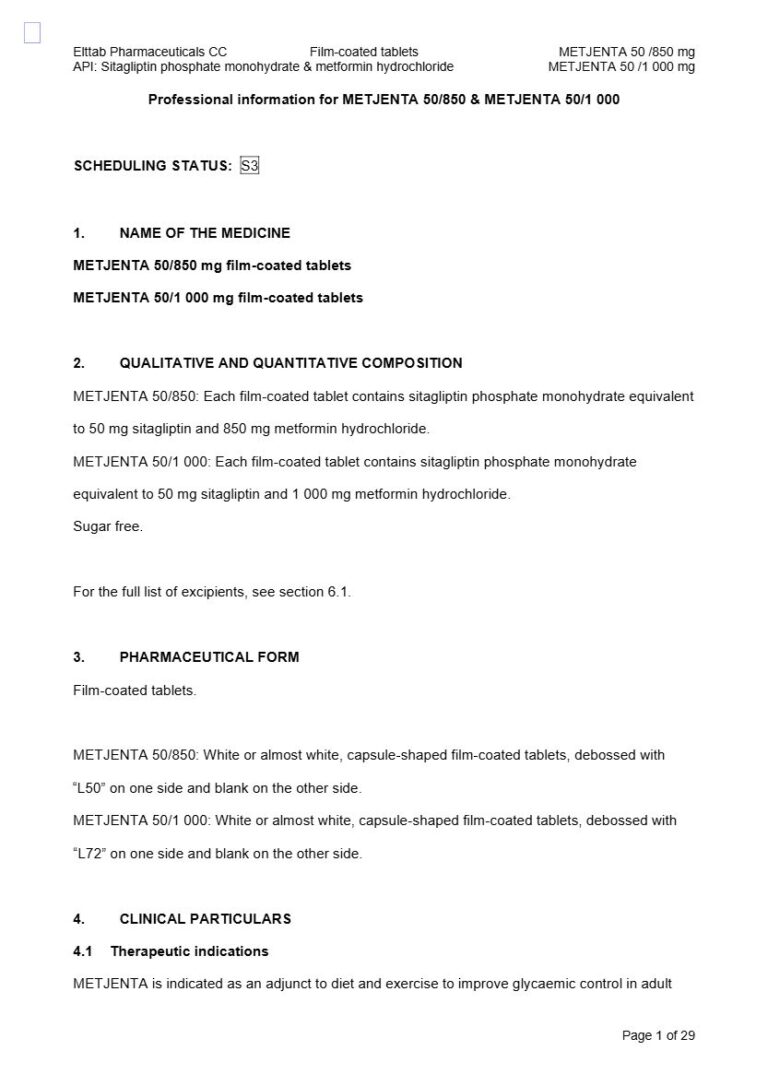
4.1 Therapeutic indications
METJENTA is indicated as an adjunct to diet and exercise to improve glycaemic control in adult patients with type 2 diabetes mellitus, already being treated with sitagliptin and metformin given separately. METJENTA is also indicated in combination with a sulphonylurea (i.e. triple combination therapy) as an adjunct to diet and exercise in patients with type 2 diabetes mellitus, inadequately controlled with any two of the three medicines: metformin, sitagliptin or a sulphonylurea.
4.2 Posology and method of administration
The dosage of antihyperglycaemic therapy with METJENTA should be individualised based on the patient's current regimen, effectiveness, and tolerability while not exceeding the maximum recommended daily dose of 100 mg sitagliptin. The starting dose of METJENTA should be based on the patient's current regimen.
For patients switching from co-administration of sitagliptin and metformin
For patients switching from co-administration of sitagliptin and metformin, METJENTA may be initiated at the dose of sitagliptin and metformin already being taken.
For patients inadequately controlled on dual combination therapy with any two of the following three antihyperglycaemic medicines: sitagliptin, metformin or a sulphonylurea
The usual starting dose of METJENTA should provide sitagliptin dosed as 50 mg twice daily (100 mg total daily dose). In determining the starting dose of the metformin component, the patientu2019s level of glycaemic control and current dose of metformin should be considered. Gradual dose escalation to reduce the gastrointestinal (GI) side effects associated with metformin should be considered. Patients currently on or initiating a sulphonylurea may require lower sulphonylurea doses to reduce the risk of sulphonylureas-induced hypoglycaemia (see sections 4.4 and 4.8).
No studies have been performed specifically examining the safety and efficacy of METJENTA, in patients previously treated with other oral antihyperglycaemic medicines and switched to METJENTA. Any change in therapy of type 2 diabetes should be undertaken with care and appropriate monitoring, as changes in glycaemic control can occur.
Special populations
Patients with renal insufficiency
METJENTA should not be used in patients with renal failure or renal dysfunction, e.g. serum creatinine levels u2265 133 u03bcmol/L (males), u2265 124 u03bcmol/L (females) or abnormal creatinine clearance (see section 4.3).
Elderly patients
As metformin and sitagliptin are excreted by the kidneys, it should be used with caution as age increases. Monitoring of renal function is necessary to aid in prevention of metformin-associated lactic acidosis, particularly in elderly patients (see sections 4.4 and 4.8).
Hepatic impairment
METJENTA is contraindicated in patients with hepatic impairment (see section 4.3).
Paediatric population
METJENTA is not recommended for use in children below 18 years of age due to lack of data on its safety and efficacy in this population.
Method of administration
For oral use. METJENTA should generally be given twice daily with meals, with gradual dose escalation, to reduce the gastrointestinal side effects associated with metformin.
4.3 Contraindications
- Hypersensitivity (including a history of severe hypersensitivity reaction, such as anaphylaxis or angioedema) to sitagliptin phosphate, any other gliptins (dipeptidyl peptidase 4 [DPP-4] inhibitors), metformin hydrochloride or to any of the excipients of METJENTA listed in section 6.1.
- Renal disease or renal dysfunction, e.g. as suggested by serum creatinine levels u2265 133 u03bcmol/L (males), u2265 124 u03bcmol/L (females), or abnormal creatinine clearance which may also result from conditions such as cardiovascular collapse (shock), acute myocardial infarction and septicaemia.
- Acute conditions with the potential to alter renal function (such as dehydration, severe infection and shock).
- METJENTA should be temporarily discontinued in patients undergoing radiological studies involving intravascular administration of iodinated contrast media because the use of such products may result in acute alteration of renal function (see sections 4.4 and 4.5).
- Acute or chronic metabolic acidosis (such as lactic acidosis and diabetic ketoacidosis), with or without coma.
- Diabetic pre-coma.
- Acute or chronic disease which may cause tissue hypoxia (such as cardiac or respiratory failure, recent myocardial infarction and shock).
- Hepatic impairment.
- Acute alcohol intoxication, alcoholism.
- Breastfeeding (see section 4.6).
4.4 Special warnings and precautions for use
Post-marketing reports of serious hypersensitivity reactions in patients treated with sitagliptin, one of the components of METJENTA, have been reported. These reactions include anaphylaxis, angioedema and exfoliative skin conditions including Stevens-Johnson syndrome. Onset of these reactions occurred within the first 3 months after initiation of treatment, with some reports occurring after the first dose. If a hypersensitivity reaction is suspected, METJENTA should be discontinued immediately. Other potential causes for the event should be assessed, and alternative treatment for diabetes initiated (see sections 4.3 and 4.8).
General
METJENTA should not be used in patients with type 1 diabetes or for the treatment of diabetic ketoacidosis.
Acute pancreatitis
Use of DPP-4 inhibitors has been associated with a risk of developing acute pancreatitis. Patients should be informed of the characteristic symptom of acute pancreatitis: persistent, severe abdominal pain. Resolution of pancreatitis has been observed after discontinuation of sitagliptin, as in METJENTA (with or without supportive treatment), but very rare cases of necrotising or haemorrhagic pancreatitis and/or death have been reported (see section 4.8). If pancreatitis is suspected, METJENTA and other potentially suspect medicines should be discontinued. If acute pancreatitis is confirmed, METJENTA should not be restarted. Caution should be exercised in patients with a history of pancreatitis.
Lactic acidosis
Lactic acidosis, a rare but serious metabolic complication, most often occurs at acute worsening of renal function or cardiorespiratory illness or sepsis. Metformin accumulation occurs at acute worsening of renal function and increases the risk of lactic acidosis.
In case of dehydration (severe vomiting, diarrhoea, fever or reduced fluid intake), metformin should temporarily be discontinued and it is recommended that a health care provider is consulted. Medicines that can acutely impair renal function (such as antihypertensives, diuretics and nonsteroidal anti-inflammatory drugs [NSAIDs]) should be initiated with caution in metformin-treated patients. Other risk factors for lactic acidosis are excessive alcohol intake, hepatic insufficiency, inadequately controlled diabetes, ketosis, prolonged fasting and any conditions associated with hypoxia, as well as concomitant use of medicines that may cause lactic acidosis (see sections 4.3 and 4.5). Patients and/or caregivers should be informed of the risk of lactic acidosis. Lactic acidosis is characterised by acidotic dyspnoea, abdominal pain, muscle cramps, asthenia and hypothermia, followed by coma. In case of suspected symptoms, the patient should stop taking METJENTA and seek immediate medical attention. Diagnostic laboratory findings are decreased blood pH ( 5 mmol/L) and an increased anion gap and lactate/pyruvate ratio.
Renal function
Metformin and sitagliptin are known to be excreted substantially by the kidneys. The risk of metformin accumulation and lactic acidosis increases with the degree of impairment of renal function. Thus, patients with serum creatinine levels above the upper limit of normal for their age should not receive METJENTA. In patients with advanced age, METJENTA should be carefully titrated to establish the minimum dose for adequate glycaemic effect, because ageing can be associated with reduced renal function. In elderly patients, particularly those 80 years of age or older, renal function should be monitored regularly.
Before initiation of therapy with METJENTA and at least annually thereafter, renal function should be assessed and verified as normal. In patients in whom development of renal dysfunction is anticipated, renal function should be assessed more frequently and METJENTA discontinued if evidence of renal impairment is present.
Hypoglycaemia
Patients receiving METJENTA in combination with a sulphonylurea may be at risk for hypoglycaemia. Therefore, a reduction in the dose of the sulphonylurea may be necessary. Hypoglycaemia does not occur in patients receiving metformin alone under usual circumstances, but could occur when caloric intake is insufficient, when strenuous exercise is not compensated by caloric supplementation, or during concomitant use with other glucose-lowering medicines (such as sulphonylureas and insulin) or ethanol. Elderly, debilitated or malnourished patients, and those with adrenal or pituitary insufficiency or alcohol intoxication, are particularly susceptible to hypoglycaemic effects. It may be difficult to recognise hypoglycaemia in elderly patients and in people who are taking beta-adrenergic blocking medicines.
Bullous pemphigoid
There have been reports of bullous pemphigoid in patients taking DPP-4 inhibitors including sitagliptin. METJENTA should be discontinued if bullous pemphigoid is suspected.
Surgical procedures
Use of METJENTA should be temporarily suspended at the time of any surgical procedure (except minor procedures not associated with restricted intake of food and fluids) and should not be restarted until the patient's oral nutrition has resumed and renal function has been re-evaluated and found to be stable (see section 4.3).
Administration of iodinated contrast media
Intravascular administration of iodinated contrast media may lead to contrast-induced nephropathy, resulting in metformin accumulation and an increased risk of lactic acidosis. METJENTA should be discontinued prior to or at the time of the imaging procedure and not restarted until at least 48 hours after, provided that renal function has been re-evaluated and found to be stable (see sections 4.3 and 4.5).
Change in clinical status of patients with previously controlled type 2 diabetes
If a patient with type 2 diabetes previously well controlled on METJENTA develops laboratory abnormalities or clinical illness (especially vague and poorly defined illness), prompt evaluation for evidence of ketoacidosis or lactic acidosis is necessary. Serum electrolytes and ketones, blood glucose and, if indicated, blood pH, lactate, pyruvate, and metformin levels should form part of the evaluation. If either form of acidosis occurs, METJENTA must be stopped immediately and other appropriate corrective measures initiated.
Hypoxic states
Cardiovascular collapse (shock), acute congestive heart failure, acute myocardial infarction and other conditions characterised by hypoxaemia have been associated with lactic acidosis and may also cause pre-renal azotaemia. METJENTA therapy should be discontinued immediately when such events occur in patients on METJENTA treatment.
Alcohol intake
Since alcohol is known to potentiate the effect of metformin or lactate metabolism, patients should be warned against excessive alcohol intake, acute or chronic, while taking METJENTA.
Impaired hepatic function
Since impaired hepatic function has been associated with some cases of lactic acidosis, METJENTA should be avoided in patients with clinical or laboratory evidence of hepatic disease (see section 4.3).
Vitamin B 12 levels
METJENTA can possibly interfere with vitamin B 12 absorption from the B 12 -intrinsic factor complex and cause a decrease in serum vitamin B 12 levels from previously normal serum vitamin B 12 levels to subnormal levels. It is, however, very rarely associated with anaemia and appears to be rapidly reversible with discontinuation of metformin in METJENTA or vitamin B 12 supplementation.
Haematological parameters should be measured on an annual basis in patients taking METJENTA and any apparent abnormalities should be investigated and managed appropriately. Caution is advised when administering METJENTA to certain individuals (with inadequate vitamin B 12 or calcium intake or absorption) who appear to be predisposed to developing subnormal levels of vitamin B 12. In these patients, routine serum Vitamin B 12 measurements at 2- to 3-year intervals may be useful.
Use in the elderly
Because sitagliptin and metformin are substantially excreted by the kidneys and because aging can be associated with reduced renal function, METJENTA should be used with caution as age increases. Care should be taken in dose selection and should be based on careful and regular monitoring of renal function (see Renal function above). In clinical studies, the safety and effectiveness of sitagliptin in the elderly (65 years or older) were comparable to those seen in younger patients (65 years or younger). Controlled clinical studies of metformin did not include sufficient numbers of elderly patients to determine whether they respond differently from younger patients, although other reported clinical experience has not identified differences in responses between the elderly and younger patients. Metformin is known to be substantially excreted by the kidneys and because the risk of serious adverse reactions to the medicine is greater in patients with impaired renal function, metformin should only be used in patients with normal renal function (see section 4.3).
Loss of control of blood glucose
When a patient stabilised on any diabetic regimen, is exposed to stress such as fever, trauma, infection or surgery, it may lead to a temporary loss of glycaemic control. It may be necessary to withhold METJENTA and temporarily administer insulin, during such times. METJENTA may be reinstituted after the acute episode is resolved.
Paediatric use
Safety and effectiveness of METJENTA in paediatric patients under 18 years have not been established.
4.5 Interaction with other medicines and other forms of interaction
Co-administration of multiple doses of sitagliptin (50 mg twice daily) and metformin (1 000 mg twice daily) did not meaningfully alter the pharmacokinetics of either sitagliptin or metformin in patients with type 2 diabetes. Pharmacokinetic interaction studies with METJENTA have not been performed; however, such studies have been conducted with the individual active ingredients contained in METJENTA, i.e. sitagliptin and metformin.
Concomitant use not recommended
Alcohol
Alcohol intoxication is associated with an increased risk of lactic acidosis, particularly in cases of fasting, malnutrition or hepatic impairment.
Iodinated contrast agents
METJENTA must be discontinued prior to or at the time of the imaging procedure and not restarted until at least 48 hours after, provided that renal function has been re-evaluated and found to be stable (see sections 4.3 and 4.4).
Combinations requiring precautions for use
Some medicines can adversely affect renal function, which may increase the risk of lactic acidosis, e.g. NSAIDs, including selective cyclo-oxygenase (COX) II inhibitors, angiotensin converting enzyme (ACE) inhibitors, angiotensin II receptor antagonists and diuretics, especially loop diuretics. When starting or using such products in combination with metformin, as in METJENTA, close monitoring of renal function is necessary.
Concomitant use of medicines that interfere with common renal tubular transport systems involved in the renal elimination of metformin (e.g. organic cationic transporter-2 (OCT2) / multidrug and toxin extrusion (MATE) inhibitors such as ranolazine, vandetanib, dolutegravir, and cimetidine) could increase systemic exposure to metformin and may increase the risk for lactic acidosis. Close monitoring of glycaemic control, dose adjustment within the recommended posology and changes in diabetic treatment should be considered when such products are co-administered. Glucocorticoids (given by systemic and local routes), beta-2-agonists, and diuretics have intrinsic hyperglycaemic activity. The patient should be informed, and more frequent blood glucose monitoring performed, especially at the beginning of treatment with such medicines. If necessary, the dose of METJENTA should be adjusted during therapy with the other medicines and on its discontinuation. ACE inhibitors may decrease the blood glucose levels. If necessary, the dose of the METJENTA should be adjusted during therapy with the other medicines and on its discontinuation.
Effects of other medicines on sitagliptin
In vitro and clinical data described below suggest that the risk for clinically meaningful interactions following coadministration of other medicines is low.
In vitro studies indicated that the primary enzyme responsible for the limited metabolism of sitagliptin is CYP3A4, with contribution from CYP2C8. In patients with normal renal function, metabolism, including via CYP3A4, plays only a small role in the clearance of sitagliptin. Metabolism may play a more significant role in the elimination of sitagliptin in the setting of severe renal impairment or end-stage renal disease (ESRD). For this reason, it is possible that potent CYP3A4 inhibitors (i.e. ketoconazole, itraconazole, ritonavir, clarithromycin) could alter the pharmacokinetics of sitagliptin in patients with severe renal impairment or ESRD. The effects of potent CYP3A4 inhibitors in the setting of renal impairment have not been assessed in a clinical study.
In vitro transport studies showed that sitagliptin is a substrate for p-glycoprotein and organic anion transporter-3 (OAT3). OAT3 mediated transport of sitagliptin was inhibited in vitro by probenecid, although the risk of clinically meaningful interactions is considered to be low. Concomitant administration of OAT3 inhibitors has not been evaluated in vivo.
Ciclosporin
A study was conducted to assess the effect of ciclosporin, a potent inhibitor of p-glycoprotein, on the pharmacokinetics of sitagliptin. Co-administration of a single 100 mg oral dose of sitagliptin and a single 600 mg oral dose of ciclosporin increased the AUC and C max of sitagliptin by approximately 29 % and 68 %, respectively. These changes in sitagliptin pharmacokinetics were not considered to be clinically meaningful. The renal clearance of sitagliptin was not meaningfully altered. Therefore, meaningful interactions would not be expected with other p-glycoprotein inhibitors.
Effects of sitagliptin on other medicines
Digoxin
Sitagliptin had a small effect on plasma digoxin concentrations. Following administration of 0,25 mg digoxin concomitantly with 100 mg of sitagliptin daily for 10 days, the plasma AUC of digoxin was increased on average by 11 %, and the plasma C max on average by 18 %. No dose adjustment of digoxin is recommended. However, patients at risk of digoxin toxicity should be monitored for this when sitagliptin and digoxin are administered concomitantly.
In vitro data suggest that sitagliptin does not inhibit nor induce CYP450 isoenzymes. In clinical studies, sitagliptin did not meaningfully alter the pharmacokinetics of metformin, glyburide, simvastatin, rosiglitazone, warfarin, or oral contraceptives, providing in vivo evidence of a low propensity for causing interactions with substrates of CYP3A4, CYP2C8, CYP2C9, and organic cationic transporter (OCT). Sitagliptin may be a mild inhibitor of p-glycoprotein in vivo.
Population pharmacokinetic analyses have been conducted in patients with type 2 diabetes. Concomitant medicines did not have a clinically meaningful effect on sitagliptin pharmacokinetics. Medicines assessed were those that are commonly administered to patients with type 2 diabetes including cholesterol-lowering medicines (e.g. statins, fibrates, ezetimibe), antiplatelet medicines (e.g. clopidogrel), beta-blockers, calcium channel blockers, hydrochlorothiazide), analgesics and NSAIDS (e.g. naproxen, diclofenac, celecoxib), antidepressants (e.g. bupropion, fluoxetine, sertraline), antihistamines (e.g. cetirizine), proton pump inhibitors (e.g. omeprazole, lansoprazole) and medicines for erectile dysfunction (e.g. sildenafil).
Effect of metformin on other medicines
Glyburide
In a single-dose interaction study in type 2 diabetes patients, co-administration of metformin and glyburide did not result in any changes in either metformin pharmacokinetics or pharmacodynamics. Decreases in glyburide AUC and C max were observed but were highly variable. The single-dose nature of this study and the lack of correlation between glyburide blood levels and pharmacodynamic effects, make the clinical significance of this interaction uncertain.
Furosemide
A single-dose, metformin-furosemide medicine interaction study in healthy volunteers demonstrated that pharmacokinetic parameters of both compounds were affected by co-administration. Furosemide increased the metformin plasma and blood C max by 22 % and blood AUC by 15 %, without any significant change in metformin renal clearance. When administered with metformin, the C max and AUC of furosemide were 31 % and 12 % smaller respectively, than when administered alone, and the terminal half-life was decreased by 32 %, without any significant change in furosemide renal clearance. No information is available about the interaction of metformin and furosemide when co-administered chronically.
Nifedipine
A single-dose, metformin-nifedipine medicine interaction study in normal healthy volunteers demonstrated that co-administration of nifedipine increased plasma metformin C max and AUC by 20 % and 9 % respectively, and increased the amount excreted in the urine. T max and half-life were unaffected. Nifedipine appears to enhance the absorption of metformin. Metformin had minimal effects on nifedipine.
Cationic medicines (e.g. amiloride, digoxin, morphine, procainamide, quinidine, quinine, ranitidine, triamterene, trimethoprim or vancomycin)
Cationic medicines are eliminated by renal tubular secretion and theoretically have the potential for interaction with metformin by competing for common renal tubular transport systems. Such interaction between metformin and oral cimetidine has been observed in normal healthy volunteers in both single- and multiple-dose metformin-cimetidine medicine interaction studies, with a 60 % increase in peak metformin plasma and whole blood concentrations, and a 40 % increase in plasma and whole blood metformin AUC. There was no change in elimination half-life in the single-dose study. Metformin had no effect on cimetidine pharmacokinetics. Although such interactions remain theoretical (except for cimetidine), careful patient monitoring and dose adjustment of METJENTA and/or the interfering medicine is recommended in patients who are taking cationic medicines, that are excreted via the proximal renal tubular secretory system.
Other
Certain medicines tend to produce hyperglycaemia and may lead to loss of glycaemic control. These medicines include the thiazides and other diuretics, corticosteroids, phenothiazines, thyroid products, oestrogens, oral contraceptives, phenytoin, nicotinic acid, sympathomimetics, calcium channel blocking medicines and isoniazid. When such medicines are administered to a patient receiving METJENTA, the patient should be closely observed to maintain adequate glycaemic control. In healthy volunteers, the pharmacokinetic properties of metformin and propranolol, and metformin and ibuprofen were not affected when co-administered in single-dose interaction studies. Metformin is negligibly bound to plasma proteins and is therefore less likely to interact with highly protein bound medicines such as salicylates, sulphonamides, chloramphenicol and probenecid, as compared to the sulphonylureas, which are extensively bound to serum proteins.
4.6 Fertility, pregnancy and lactation
Pregnancy
There are no adequate and well-controlled studies in pregnant women with METJENTA or its individual components; therefore, the safety of METJENTA in pregnant women is not known. METJENTA is not recommended for use in pregnancy.
Breastfeeding
No studies in lactating animals have been conducted with the combined active substances of METJENTA. In studies performed with the individual active substances, both sitagliptin and metformin are excreted in the milk of lactating rats. Metformin is excreted in human milk in small amounts. It is not known whether sitagliptin is excreted in human milk. METJENTA must therefore not be used in women who are breastfeeding (see section 4.3).
Fertility
Animal data do not suggest an effect with sitagliptin in METJENTA on male and female fertility. Human data are lacking.
4.7 Effects on ability to drive and use machines
METJENTA has no or negligible influence on the ability to drive and use machines. However, when driving or using machines, it should be taken into account that dizziness and somnolence have been reported with sitagliptin in METJENTA and caution is advised until the effects of METJENTA are known. In addition, patients should be alerted to the risk of hypoglycaemia when METJENTA is used in combination with a sulphonylurea or with insulin.
4.8 Undesirable effects
Summary of the safety profile
There have been no therapeutic clinical trials conducted with METJENTA, however, bioequivalence of METJENTA with co-administered sitagliptin and metformin has been demonstrated (see section 5.2). Serious adverse reactions including pancreatitis and hypersensitivity reactions have been reported. Hypoglycaemia has been reported in combination with sulphonylurea and insulin.
Table 1: The frequency of adverse reactions identified from studies of sitagliptin and metformin alone, and post-marketing experience
Organ system class
- Frequent
- Less frequent
- Frequency unknown
Blood and lymphatic system disorders
- thrombocytopenia
Immune system disorders
- hypersensitivity reactions, including anaphylactic responses* # , *
- angioedema
Metabolism and nutrition disorders
- hypoglycaemia #
- lactic acidosis, decrease of vitamin B 12 and folic acid absorption with decrease of serum levels during long-term use of metformin (this change is generally without clinical significance)
Nervous system disorders
- metallic taste
- somnolence
- headache*
Respiratory, thoracic and mediastinal disorders
- interstitial lung disease*, upper respiratory tract infection*, nasopharyngitis*
Gastrointestinal disorders
- nausea, flatulence, vomiting, loss of appetite
- diarrhoea, constipation, upper abdominal pain
- acute pancreatitis* # , fatal and non-fatal haemorrhagic and necrotising pancreatitis* #
Skin and subcutaneous tissue disorders
- pruritus*
- rash* # , urticaria* # , cutaneous vasculitis* # , exfoliative skin conditions including Stevens-Johnson syndrome* # , bullous pemphigoid*
Musculoskeletal and connective tissue disorders
- arthralgia*, myalgia*, pain in extremity*, back pain*, arthropathy*
Renal and urinary disorders
- impaired renal function*, acute renal failure*
Investigations
- decreased blood glucose levels
* Adverse reactions were identified post-marketing.
# See section 4.4.
Description of selected adverse reactions
Some adverse reactions were observed more frequently in studies of combination use of sitagliptin and metformin in METJENTA with other antidiabetic medicines than in studies of sitagliptin and metformin alone. These included hypoglycaemia (occurring frequently with sulphonylurea or insulin), constipation (occurring frequently with sulphonylurea), peripheral oedema (occurring frequently with pioglitazone or the combination of pioglitazone), and headache and dry mouth (occurring less frequently with insulin).
Sitagliptin
In monotherapy studies of sitagliptin 100 mg once daily alone compared to placebo, adverse reactions reported were headache, hypoglycaemia, constipation, and dizziness. Among these patients, adverse events reported regardless of causal relationship to the medicine occurring in at least 5 % included upper respiratory tract infection and nasopharyngitis. In addition, osteoarthritis and pain in extremity were reported with frequency uncommon (> 0,5 % higher among sitagliptin users than that in the control group).
Metformin
Gastrointestinal symptoms were reported very commonly in clinical studies and post-marketing use of metformin. Gastrointestinal symptoms such as nausea, vomiting, diarrhoea, abdominal pain and loss of appetite occur most frequently during initiation of therapy and resolve spontaneously in most cases. Additional adverse reactions associated with metformin include metallic taste (frequent); lactic acidosis, liver function disorders, hepatitis, urticaria, erythema, and pruritus (less frequent). Long-term treatment with metformin has been associated with a decrease in vitamin B 12 absorption which may very rarely result in clinically significant vitamin B 12 deficiency (e.g. megaloblastic anaemia).
Reporting of suspected adverse reactions
Reporting suspected adverse reactions after authorisation of METJENTA is important. It allows continued monitoring of the benefit/risk balance of METJENTA. Health care providers are requested to report any suspected adverse reactions to SAHPRA via the Med Safety App (Medsafety X SAHPRA) and eReporting platform (who- umc.org) found on SAHPRAu2019s website.
4.9 Overdose
During controlled clinical trials in healthy subjects, single doses of up to 800 mg sitagliptin were administered. Minimal increases in QTc, not considered to be clinically relevant, were observed in one study at a dose of 800 mg sitagliptin. There is no experience with doses above 800 mg in clinical studies. In phase I multiple-dose studies, there were no dose-related clinical adverse reactions observed with sitagliptin with doses of up to 600 mg per day for periods of up to 10 days and 400 mg per day for periods of up to 28 days.
In the event of an overdose, it is reasonable to employ the usual supportive measures, e.g. remove unabsorbed material from the gastrointestinal tract, employ clinical monitoring (including obtaining an electrocardiogram), and institute supportive therapy if required. Sitagliptin is modestly dialysable. In clinical studies, approximately 13,5 % of the dose was removed over a 3- to 4-hour haemodialysis session. Prolonged haemodialysis may be considered if clinically appropriate. It is not known if sitagliptin is dialysable by peritoneal dialysis. A large overdose of metformin (or co-existing risks of lactic acidosis) may lead to lactic acidosis which is a medical emergency and must be treated in hospital. The most effective method to remove lactate and metformin is haemodialysis.
