
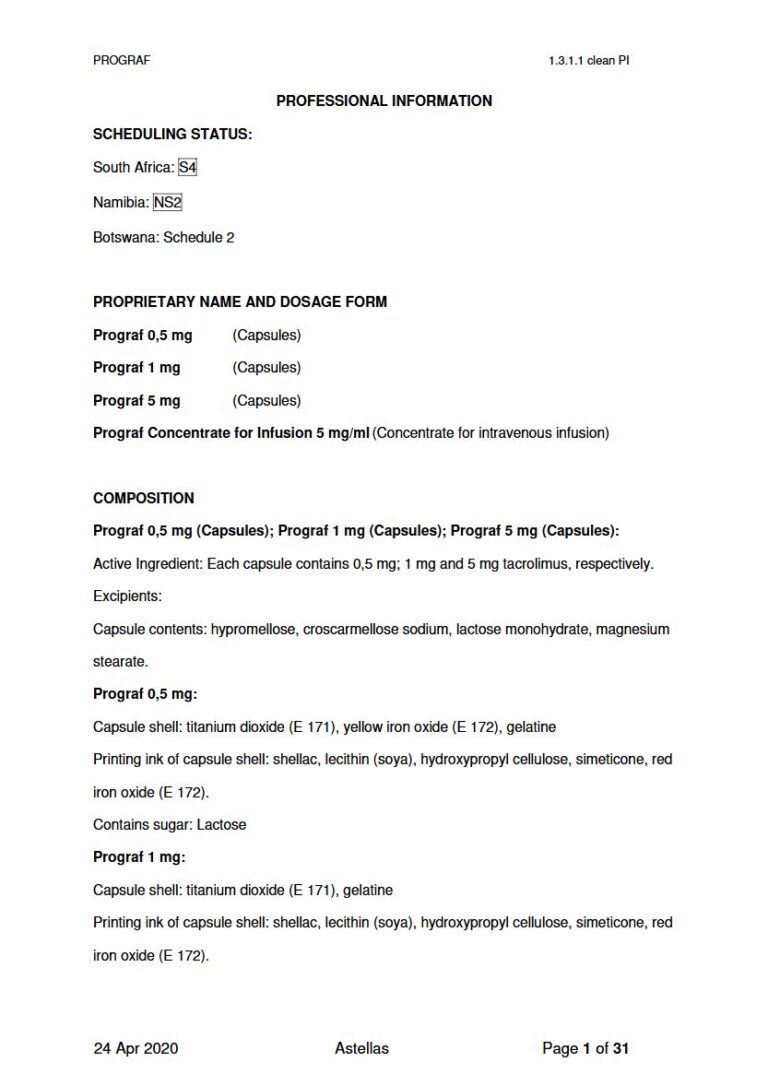
Prograf 0.5mg / 1mg / 5mg capsules
PDF Leaflet Revision Date: 24 April 2020
Clinical Summary
Quick overview from the medicine insert
Indication
Primary immunosuppression in organ transplant recipients.
Dosage (summary)
Initial oral dose: 0.1-0.4 mg/kg/day in two divided doses.
Special Populations
- Liver impairment
- Kidney impairment
- Elderly patients
- Paediatric patients
Pregnancy & Breastfeeding
Contraindicated in pregnancy and breastfeeding.
Key Drug Interactions
- CYP3A4 inhibitors (e.g., ketoconazole, ritonavir)
- CYP3A4 inducers (e.g., rifampicin, St. John's Wort)
- Ciclosporin
Contraindications
- Hypersensitivity to tacrolimus
- Pregnancy and lactation
- Concomitant use with live vaccines
Common side effects
- Infections
- Hypertension
- Diabetes mellitus
- Renal impairment
- Tremor
Counselling Points
- Take on an empty stomach for better absorption.
- Monitor for signs of infection.
- Avoid grapefruit juice.
Serious warnings
- Risk of infections and malignancies
- Careful monitoring required
- Not recommended for children under 18
Important Disclaimer
The Prograf 0.5mg / 1mg / 5mg capsules professional information leaflet below is the property of Astellas and is provided on Medinsert exactly as issued, with no.. alterations or editorial changes. We make every effort to keep content current by updating documents as soon as new versions become available. Medinsert serves as a trusted access point for healthcare professionals, but does not replace official sources or clinical judgement. For more details, please read our full disclaimer. read more>>
 Healthcare Professionals Only
This content is for registered healthcare professionals
Sign in or create a free account to read the full package insert.
Free for HPCSA-registered professionals. Powered by Medinsert.
Clinical Particulars
Section 4 of the official insert — extracted exactly as issued, no alterations
4.1 Therapeutic indications
Primary immunosuppression in liver and kidney allograft recipients and liver, kidney or heart allograft rejection resistant to conventional immunosuppressive regimens.
4.2 Posology and method of administration
Inadvertent, unintentional or unsupervised switching between immediate- and prolonged- release formulations of tacrolimus such as Prograf is unsafe. This can lead to graft rejection or increased incidence of side effects, including under- or overimmunosuppression, due to clinically relevant differences in systemic exposure to tacrolimus. Patients should be maintained on a single formulation of tacrolimus with the corresponding daily dosing regimen; alterations in formulation or regimen should only take place under the close supervision of a transplant specialist. Following conversion to any alternative formulation, therapeutic medicine monitoring must be performed and dose adjustments made to ensure that systemic exposure to tacrolimus is maintained. Absorption of orally administered tacrolimus in the immediate post-operative period in heart transplant patients is problematic and creates difficulties in designing a suitable dosing regimen. Therefore initiation of Prograf therapy via the intravenous route and conversion to oral dosing, when possible, or initiating Prograf orally following antibody induction therapy are the two preferable options for use of Prograf in heart transplant patients.
General statement
The dosage recommendations given below for oral and intravenous administration are intended to act as a guideline. Prograf doses should be adjusted according to individual patient requirements.
Patients receiving Prograf injection should be under continuous observation for at least the first 30 minutes following the start of the infusion and at frequent intervals thereafter. If signs or symptoms of anaphylaxis occur, the infusion should be stopped. Resuscitation facilities must be available at the bedside. Intravenous therapy should not be continued for more than 7 days. If the clinical condition of the patient allows oral dosing, administration of oral Prograf should start as soon as practicable. In some liver transplantation patients, therapy has commenced orally by administering the capsule contents suspended in water via an intranasal gastric tube. Prograf is normally administered together with other immunosuppressive medicines. In isolated cases, successful maintenance therapy with Prograf alone has also been described. Prograf should not be given together with ciclosporin (see Contraindications). If allograft rejection or adverse events occur, alteration in the immunosuppressive regimen should be considered.
Mode of intake
Prograf 0,5 mg/Prograf 1 mg/Prograf 5 mg
It is recommended that the oral daily dose should be taken in two divided doses. The capsules should be swallowed with fluid, preferably water. Based on pharmacokinetic considerations, the capsules should be taken on an empty stomach or at least 1 hour before or 2 to 3 hours after a meal to achieve maximal absorption (see Interactions and Pharmacokinetic properties). The capsules should be taken out of the blister only immediately before intake. After opening the aluminium wrapper, the capsules from the blisters must be used within 12 months. Patients should be cautioned not to swallow the desiccant contained within the aluminium wrapper.
Prograf Concentrate for Infusion 5 mg/ml
Note: Prograf Concentrate for Infusion 5 mg/ml must not be injected undiluted. The concentrate for infusion should be diluted in 5 % glucose solution in polyethylene or glass bottles or in 0,9 % saline solution in polyethylene bottles. The concentration of a solution for final infusion produced in this way should be in the range of 0,004 to 0,1 mg/ml. The total volume of infusion during 24 hours should be in the range of 20 to 250 ml. The solution should not be given as a bolus.
Incompatibilities:
Prograf Concentrate for Infusion 5 mg/ml is incompatible with PVC plastics. Mixed infusions between a solution prepared with Prograf Concentrate for Infusion 5 mg/ml and other medicines should be avoided. In particular, mixed infusions with medicines exhibiting a marked alkaline reaction in solution (e.g. acyclovir, ganciclovir) must not be administered as tacrolimus can disintegrate in this condition.
Duration and onset of intake
For onset of treatment see above. Prograf 0,5 mg/Prograf 1 mg/Prograf 5 mg (Capsules)
To suppress graft rejection, the capsules normally have to be taken continuously. Therefore, no limitation of duration can be given. Prograf Concentrate for Infusion 5 mg/ml
If clinically practicable, duration of treatment with the concentrate for infusion should not exceed 7 days.
4.3 Contraindications
- Known hypersensitivity to tacrolimus, the active ingredient in Prograf, or other macrolides.
- Pregnancy and lactation (see Human Reproduction).
- Prograf 0,5 mg (Capsules), Prograf 1 mg (Capsules) and Prograf 5 mg (Capsules) in addition:
- Known hypersensitivity to other ingredients of the capsules.
- Prograf Concentrate for Infusion 5 mg/ml in addition:
- Known hypersensitivity to polyoxyethylated castor oil (HCO-60) or structurally related compounds.
- As Prograf may alter the metabolism of oral contraceptives, other forms of contraception should be used.
- Concomitant administration of live attenuated vaccines.
- Concomitant administration with ciclosporin.
- Concomitant use with grapefruit juice.
4.4 Special warnings and precautions for use
Prolonged-release formulations of tacrolimus are not inter-changeable with immediate-release formulations of tacrolimus without careful monitoring and supervision by a transplant specialist.
Prograf therapy requires careful monitoring in units equipped and staffed with adequate laboratory and supportive medical resources. Prograf should only be prescribed and changes in immunosuppressive therapy, should only be initiated by medical practitioners experienced in immunosuppressive therapy and the management of transplant patients. The medical practitioner responsible for maintenance therapy should have complete information requisite for the follow-up of the patient. Dose and/or blood level adjustment, should only be undertaken by the transplant centre responsible for the transplant patient. Patients should be thoroughly controlled. In particular, during the first months post-transplant, close monitoring of the patient is required.
Prograf is not recommended for use in children below 18 years due to limited data on safety and/or efficacy.
When substances with a potential for interaction (see Interactions) - particularly strong inhibitors of CYP3A4 (such as ritonavir, telaprevir, boceprevir, ketoconazole, voriconazole, itraconazole, telithromycin or clarithromycin) or inducers of CYP3A4 (such as rifampicin, rifabutin and anti-epileptic medicine) u2013 are being combined with Prograf, tacrolimus blood levels should be monitored to adjust the Prograf dose as appropriate in order to maintain similar tacrolimus exposure.
Herbal preparations containing St. Johnu2019s Wort (Hypericum perforatum) or other herbal preparations should be avoided when taking Prograf due to the risk of interactions that lead to decrease in blood concentrations of tacrolimus and reduced clinical effect of tacrolimus. The combined administration of ciclosporin and tacrolimus should be avoided and care should be taken when administering tacrolimus to patients who have previously received ciclosporin (see Interactions). High potassium intake or potassium-sparing diuretics should be avoided (see Interactions).
Certain combinations of tacrolimus with drugs known to have nephrotoxic or neurotoxic effects may increase the risk of these effects (see Interactions).
4.5 Interactions with other medicines
Systemically available tacrolimus is metabolised by hepatic CYP3A4. There is also evidence of gastrointestinal metabolism by CYP3A4 in the intestinal wall. Concomitant use of substances known to inhibit or induce CYP3A4 may affect the metabolism of tacrolimus and thereby increase or decrease tacrolimus blood levels. It is strongly recommended to closely monitor tacrolimus blood levels, as well as renal function and other side effects, whenever medicines which have the potential to alter CYP3A4 metabolism or otherwise influence tacrolimus blood levels are used concomitantly, and to interrupt or adjust the Prograf dose as appropriate in order to maintain similar tacrolimus exposure (see sections Dosage and Warnings and Special Precautions).
In vivo observations
Limited clinical data on medicine interactions are available. However, Prograf has been administered together with a great variety of other medicines in clinical trials.
CYP3A4 inhibitors potentially leading to increased tacrolimus blood levels
Clinically the following substances have been shown to increase tacrolimus blood levels:
Strong interactions have been observed with antifungal agents such as ketoconazole, fluconazole, itraconazole and voriconazole, the macrolide antibiotic erythromycin, HIV protease inhibitors (e.g. ritonavir, nelfinavir, saquinavir) or HCV protease inhibitors (e.g. telaprevir, boceprevir). Concomitant use of these substances may require decreased tacrolimus doses in nearly all patients. Pharmacokinetics studies have indicated that the increase in blood levels is mainly a result of increase in oral bioavailability of tacrolimus owing to the inhibition of gastrointestinal metabolism. Effect on hepatic clearance is less pronounced. Weaker interactions have been observed with clotrimazole, clarithromycin, josamycin, nifedipine, nicardipine, diltiazem, verapamil, amiodarone, danazol, ethinylestradiol, omeprazole, nefazodone.
In vitro the following substances have been shown to be potential inhibitors of tacrolimus metabolism: bromocriptine, cortisone, dapsone, ergotamine, gestodene, lidocaine, mephenytoin, miconazole, midazolam, nilvadipine, norethindrone, quinidine, tamoxifen, (triacetyl) oleandomycin. Grapefruit juice has been reported to increase the blood level of tacrolimus and should therefore be avoided. Lansoprazole and ciclosporin may potentially inhibit CYP3A4-mediated metabolism of tacrolimus and thereby increase tacrolimus whole blood concentrations.
Other interactions potentially leading to increased tacrolimus blood levels
Tacrolimus is extensively bound to plasma proteins. Possible interactions with other active substances known to have high affinity for plasma proteins should be considered (e.g., NSAIDs, oral anticoagulants, or oral antidiabetics). Other potential interactions that may increase systemic exposure of tacrolimus include prokinetic agents (such as metoclopramide), cimetidine and magnesium-aluminium-hydroxide.
CYP3A4 inducers potentially leading to decreased tacrolimus blood levels
Clinically the following substances have been shown to decrease tacrolimus blood levels:
Strong interactions have been observed with rifampicin, phenytoin, St. Johnu2019s Wort (Hypericum perforatum) which may require increased tacrolimus doses in almost all patients. Clinically significant interactions have also been observed with phenobarbital. Maintenance doses of corticosteroids have been shown to reduce tacrolimus blood levels. High dose prednisolone or methylprednisolone administered for the treatment of acute rejection have the potential to increase or decrease tacrolimus blood levels. Carbamazepine, metamizole and isoniazid have the potential to decrease tacrolimus concentrations.
Effect of tacrolimus on the metabolism of other medicinal products
Tacrolimus is a known CYP3A4 inhibitor; thus concomitant use of tacrolimus with medicinal products known to be metabolised by CYP3A4 may affect the metabolism of such medicinal products. The half-life of ciclosporin is prolonged when tacrolimus is given concomitantly. In addition, synergistic/additive nephrotoxic effects can occur. For these reasons, the combined administration of ciclosporin and tacrolimus is contraindicated and care should be taken when administering tacrolimus to patients who have previously received ciclosporin (see Dosage and Warnings and Special Precautions). Tacrolimus has been shown to increase the blood level of phenytoin. As tacrolimus may reduce the clearance of steroid-based contraceptives leading to increased hormone exposure, particular care should be exercised when deciding upon contraceptive measures. Limited knowledge of interactions between tacrolimus and statins is available. Clinical data suggest that the pharmacokinetics of statins are largely unaltered by the co-administration of tacrolimus.
Animal data have shown that tacrolimus could potentially decrease the clearance and increase the half-life of pentobarbital and antipyrine. Other interactions leading to clinically detrimental effects
Concurrent use of tacrolimus with medicinal products known to have nephrotoxic or neurotoxic effects may increase these effects (e.g., aminoglycosides, gyrase inhibitors, vancomycin, cotrimoxazole, NSAIDs, ganciclovir or aciclovir). Enhanced nephrotoxicity has been observed following the administration of amphotericin B and ibuprofen in conjunction with tacrolimus. As tacrolimus treatment may be associated with hyperkalaemia, or may increase pre-existing hyperkalaemia, high potassium intake, or potassium-sparing diuretics (e.g. amiloride, triamterene, or spironolactone) should be avoided (see Warnings and Special Precautions).
Immunosuppressants may affect the response to vaccination and vaccination during treatment with tacrolimus may be less effective. The use of live attenuated vaccines should be avoided (see Contraindications).
4.6 Fertility, pregnancy and lactation
Pregnancy
Prograf is contraindicated in pregnancy. In animal studies (rats and rabbits), Prograf has been shown to be teratogenic at doses that also demonstrated maternal toxicity. Preclinical and human data show that Prograf is able to cross the placenta. The possibility of pregnancy should therefore be excluded before initiating Prograf therapy.
Lactation
Preclinical data in rats suggest that Prograf is excreted into breast milk. Human data on effects of Prograf during the lactation period are limited. As detrimental effects on the newborn cannot be excluded, women should not breastfeed whilst receiving Prograf.
Fertility
A negative effect of Prograf on male fertility in the form of reduced sperm counts and motility was observed in rats.
4.7 Effects on ability to drive and use machines
Prograf is associated with visual and neurological disturbances. Patients treated with Prograf who are affected by such disorders should not drive a car or operate dangerous machines. This effect may be enhanced when Prograf is given together with alcohol.
4.8 Undesirable effects
The adverse events are listed below in descending order by frequency of occurrence: Very common (u22651/10); common (u22651/100, <1/10); uncommon (u22651/1,000, <1/100); rare (u22651/10,000, <1/1,000); very rare (<1/10,000).
Infections and infestations
Patients receiving Prograf are frequently at increased risk for infections (viral, bacterial, mycobacterial, fungal, protozoal). The course of pre-existing infections may be aggravated. Both generalised and localised infections can occur. Cases of BK virus (a member of the Polyomavirus family) associated nephropathy, as well as cases of John Cunningham (JC) virus associated progressive multifocal leukoencephalopathy (PML), have been reported in patients treated with immunosuppressants, including Prograf.
Neoplasms: benign, malignant and unspecified (incl. cysts and polyps)
Patients receiving immunosuppressive therapy are at increased risk of developing malignancies. Benign as well as malignant neoplasms including Epstein-Barr Virus (EBV)- associated lymphoproliferative disorders and skin malignancies have been reported in association with Prograf treatment.
Blood and lymphatic system disorders
common: anaemia, leukopenia, thrombocytopenia, leukocytosis, abnormal red blood cell analyses
uncommon: coagulopathies, abnormal coagulation and bleeding analyses, pancytopenia, neutropenia
rare: thrombotic thrombocytopenic purpura, hypoprothrombinaemia
not known: pure red cell aplasia, agranulocytosis, haemolytic anaemia
Immune system disorders
Allergic and anaphylactoid reactions have been observed in patients receiving Prograf (see Warnings and Special Precautions).
Endocrine disorders
rare: hirsutism
Metabolism and nutrition disorders
very common: hyperglycaemic conditions, diabetes mellitus, hyperkalaemia
common: hypomagnesaemia, hypophosphataemia, hypokalaemia, hypocalcaemia, hyponatraemia, fluid overload, hyperuricaemia, decreased appetite, anorexia, metabolic acidoses, hyperlipidaemia, hypercholesterolaemia, hypertriglyceridaemia, other electrolyte abnormalities
uncommon: dehydration, hypoproteinaemia, hyperphosphataemia, hypoglycaemia
Psychiatric disorders
very common: insomnia
common: anxiety symptoms, confusion and disorientation, depression, depressed mood, mood disorders and disturbances, nightmare, hallucination, mental disorders
uncommon: psychotic disorder
Nervous system disorders
very common: tremor, headache
common: seizures, disturbances in consciousness, paraesthesias and dysaesthesias, peripheral neuropathies, dizziness, impaired writing, nervous system disorders
uncommon: coma, central nervous system haemorrhages and cerebrovascular accidents, paralysis and paresis, encephalopathy, speech and language abnormalities, amnesia
rare: hypertonia
very rare: myasthenia
Eye disorders
common: blurred vision, photophobia, eye disorders
uncommon: cataract
rare: blindness
Ear and labyrinth disorders
common: tinnitus
uncommon: hypoacusis
rare: neurosensory deafness
very rare: impaired hearing
Cardiac disorders
common: ischaemic coronary artery disorders, tachycardia
uncommon: ventricular dysrhythmias and cardiac arrest, heart failure, cardiomyopathies, ventricular hypertrophy, supraventricular dysrhythmias, palpitations, abnormal ECG investigations, abnormal heart rate and pulse investigations
rare: pericardial effusion
very rare: abnormal echocardiogram, QT prolonged
Vascular disorders
very common: hypertension
common: haemorrhage, thrombembolic and ischaemic events, peripheral vascular disorders, vascular hypotensive disorders
uncommon: infarction, deep limb venous thrombosis, shock
Respiratory, thoracic and mediastinal disorders
common: dyspnoea, parenchymal lung disorders, pleural effusion, pharyngitis, cough, nasal congestion and inflammation
uncommon: respiratory failure, respiratory tract disorders, asthma
rare: acute respiratory distress syndrome
Gastrointestinal disorders
very common: diarrhoea, nausea
common: gastrointestinal inflammatory conditions, gastrointestinal ulceration and perforation, gastrointestinal haemorrhages, stomatitis and ulceration, ascites, vomiting, gastrointestinal and abdominal pains, dyspeptic signs and symptoms, constipation, flatulence, bloating and distension, loose stools, gastrointestinal signs and symptoms
uncommon: paralytic ileus, peritonitis, acute and chronic pancreatitis, increased blood amylase, gastro-oesophageal reflux disease, impaired gastric emptying
rare: subileus, pancreatic pseudocyst
Hepatobiliary disorders
very common: abnormal liver function tests
common: bile duct disorders, hepatocellular damage and hepatitis, cholestasis and jaundice
rare: venoocclusive liver disease, hepatitic artery thrombosis
very rare: hepatic failure
Skin and subcutaneous tissue disorders
common: pruritus, rash, alopecia, acne, increased sweating
uncommon: dermatitis, photosensitivity
rare: toxic epidermal necrolysis (Lyellu2019s syndrome)
very rare: Stevens Johnson syndrome
Musculoskeletal and connective tissue disorders
common: arthralgia, back pain, muscle spasms, pain in extremity
uncommon: joint disorders
Renal and urinary disorders
very common: renal impairment
common: renal failure, acute renal failure, oliguria, renal tubular necrosis, toxic nephropathy, urinary abnormalities, bladder and urethral symptoms
uncommon: anuria, haemolytic uraemic syndrome
very rare: nephropathy, haemorrhagic cystitis
Reproductive system and breast disorders
uncommon: dysmenorrhoea, uterine bleeding
General disorders and administration site conditions
common: febrile disorders, pain and discomfort, asthenic conditions, oedema, body temperature perception disturbed,
uncommon: influenza like illness, feeling jittery, feeling abnormal, multi-organ failure, chest pressure sensation, temperature intolerance
rare: fall, ulcer, chest tightness, thirst
very rare: fat tissue increased
Injury, poisoning and procedural complications
common: primary graft dysfunction
Medication errors, including inadvertent, unintentional or unsupervised substitution of immediate- or prolonged-release tacrolimus formulations, have been observed. A number of associated cases of transplant rejection have been reported (frequency cannot be estimated from available data).
4.9 Overdose
Experience of overdosage is limited. Earlier clinical experience (when initial induction doses were 2 or 3 times greater than those currently recommended) suggested that symptoms of overdosage may include renal, neurological and cardiac disturbances, glucose intolerance, hypertension and electrolyte disorders (e.g. hyperkalaemia). Over-immunosuppression may increase the risk for severe infections. Liver function clearly influences all pre- and post-operative pharmacokinetic variables. Patients with failing liver grafts or those switched from other immunosuppressive therapy to Prograf should be monitored carefully to avoid overdosage. No specific antidote to Prograf therapy is available. If overdosage occurs general supportive measures and symptomatic treatment should be conducted.
Based on the poor aqueous solubility and extensive erythrocyte and plasma protein binding, it is anticipated that Prograf will not be dialysable. In isolated patients with very high plasma concentrations of tacrolimus, haemofiltration and haemodiafiltration have been reported to considerably decrease the tacrolimus levels. In cases of oral intoxication, gastric lavage and/or the use of absorbents (such as activated charcoal) may be helpful.
