
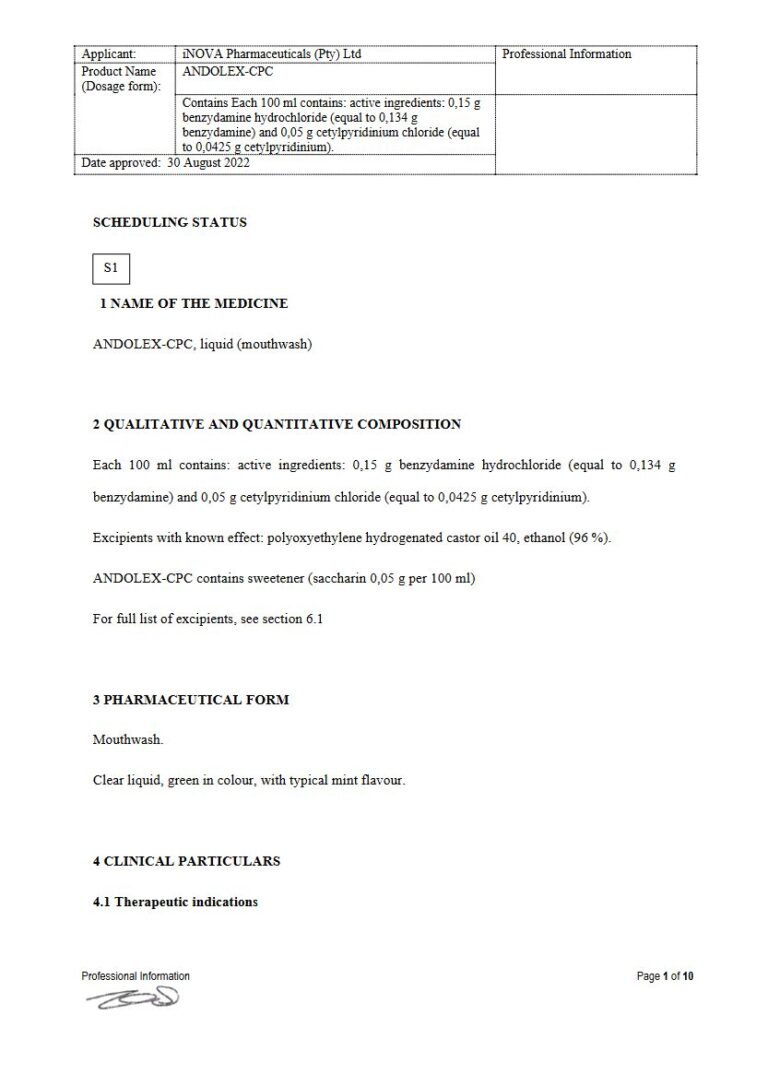
Andolex Liquid Mouthwash
PDF Leaflet Revision Date: 30 August 2022
Clinical Summary
Quick overview from the medicine insert
Indication
Antiseptic, anti-inflammatory and analgesic treatment for mouth and gum irritation.
Dosage (summary)
Rinse with 15 ml, 2-3 times per day for max 5-7 days.
Pregnancy & Breastfeeding
Safety during pregnancy not established; use caution in lactation.
Key Drug Interactions
- Avoid concomitant use of other antiseptics.
Contraindications
- Hypersensitivity to benzydamine or cetylpyridinium.
Common side effects
- Dizziness
- Nausea
- Vomiting
- Abdominal pain
Counselling Points
- Use as directed; do not exceed 7 days without consulting a doctor.
- May interfere with alcohol tests.
Serious warnings
- May cause sensitisation; discontinue if occurs.
- Can affect ability to drive.
Important Disclaimer
The Andolex Liquid Mouthwash professional information leaflet below is the property of Inova Pharmaceuticals and is provided on Medinsert exactly as issued, with no.. alterations or editorial changes. We make every effort to keep content current by updating documents as soon as new versions become available. Medinsert serves as a trusted access point for healthcare professionals, but does not replace official sources or clinical judgement. For more details, please read our full disclaimer. read more>>
 Healthcare Professionals Only
This content is for registered healthcare professionals
Sign in or create a free account to read the full package insert.
Free for HPCSA-registered professionals. Powered by Medinsert.
Clinical Particulars
Section 4 of the official insert — extracted exactly as issued, no alterations
4.1 Therapeutic indications
Antiseptic, anti-inflammatory and analgesic treatment for irritation of the mouth and gums, gingivitis and stomatitis. Also indicated before and after dental extractions.
4.2 Posology and method of administration
Rinse with 15 ml of mouthwash, 2-3 times per day, using the measuring cup supplied. The product can be used at any time of day, as needed. Use for a maximum of 5-7 days. For longer use, consult your doctor.
4.3 Contraindications
Hypersensitivity to benzydamine, cetylpyridinium or to any of the excipients listed in section 6.1
4.4 Special warnings and precautions for use
Administration, especially if prolonged, of preparations for oropharyngeal use may cause sensitisation phenomena. Should this occur, discontinue use and consult your doctor regarding an adequate treatment. For those who participate in sports: the use of medicines containing ethyl alcohol may lead to positive results in anti-doping tests based on blood alcohol concentration limits established by certain sports federations.
Because of the high alcohol concentrations in ANDOLEX-CPC, it may interfere with alcohol test results in subjects.
4.5 Interaction with other medicines and other forms of interaction
No interaction studies have been performed. However, avoiding concomitant use of other antiseptics is recommended.
4.6 Fertility, pregnancy and lactation
Safety of ANDOLEX-CPC during pregnancy has not been established.
4.7 Effects on ability to drive and use machines
ANDOLEX-CPC may cause dizziness and can affect the ability to drive and use machines. Patients should be aware of how ANDOLEX-CPC affects them before engaging in these activities.
4.8 Undesirable effects
The table below shows the undesirable effects, by MedDRA system organ class. The undesirable effects have been categorised using the following frequency rates: very common (u22651/10); common (u22651/100, < 1/10); uncommon (u22651/1 000, <1/100); rare (u22651/10 000, <1/1 000); very rare (<1/10 000); unknown (the frequency cannot be estimated from the available data).
SYSTEM ORGAN CLASS (MedDRA)
Frequency: undesirable effects
- Gastrointestinal disorders Unknown: numbness furry tongue and paraesthesia in the mouth
- General disorders and administration site conditions Unknown: medicine intolerance, that occurs as burning or irritation at the application site
1) associated with local anaesthetic activity of benzydamine 2) phenomena observable with cetylpyridinium, not requiring treatment modification
Reporting of suspected adverse reactions
Reporting suspected adverse reactions after authorisation of the medicine is important. It allows continued monitoring of the benefit/risk balance of the medicine. Healthcare providers are asked to report any suspected adverse reactions to SAHPRA via the u201c6.04 Adverse Drug Reactions Reporting Formu201d, found online under SAHPRAu2019s publications: https://www.sahpra.org.za/Publications/Index/8.
4.9 Overdose
Benzydamine Intoxication is only expected in the event of accidental ingestion of large amounts of benzydamine (> 300 mg). The symptoms associated with overdose of benzydamine ingestion are mainly gastrointestinal in nature and affecting the central nervous system. The most frequent gastrointestinal symptoms are nausea, vomiting, abdominal pain and esophageal irritation. The central nervous system symptoms include dizziness, hallucinations, agitation, anxiety, irritability and psychosis. In case of acute overdose, only symptomatic treatment and supportive with close monitoring are recommended.
Cetylpyridinium Symptoms resulting from the ingestion of significant quantities of cetylpyridinium include nausea, vomiting, dyspnoea, asphyxia cyanosis, CNS depression, hypotension and coma. Treatment of cetylpyridinium overdose is symptomatic.
