
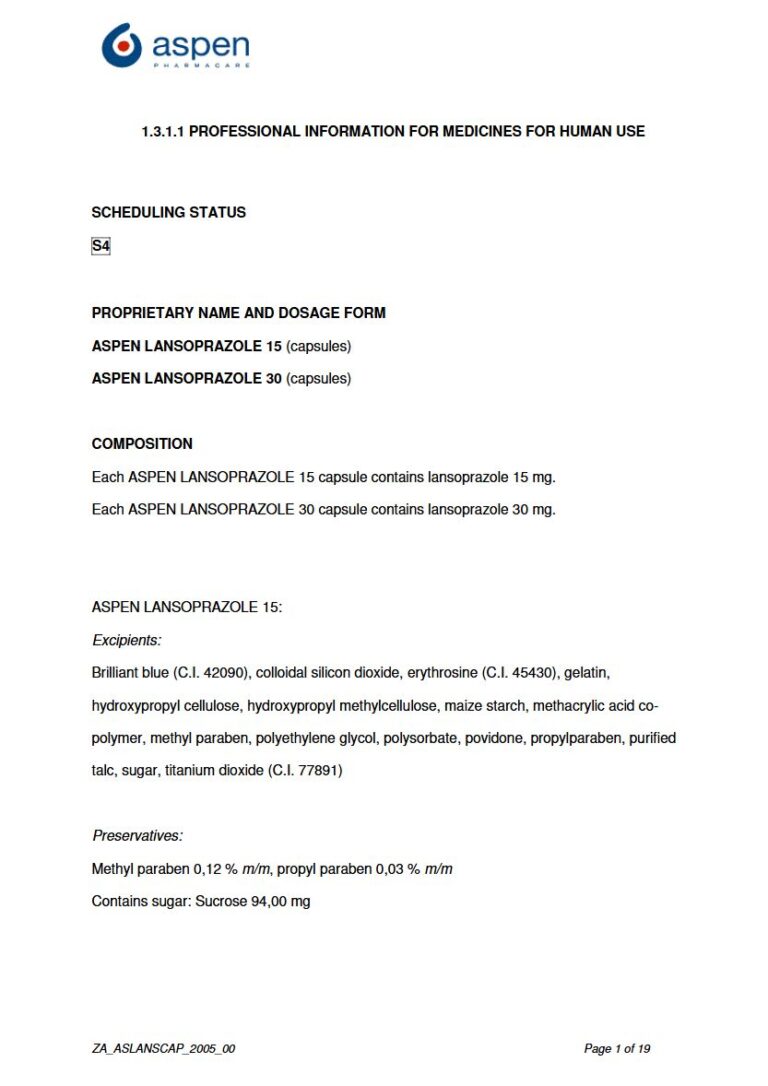
Aspen Lansoprazole Capsules
Clinical Summary
Quick overview from the medicine insert
Indication
Treatment of gastroesophageal reflux disease (GERD), peptic ulcers, and Zollinger-Ellison syndrome.
Dosage (summary)
The usual adult dose is 15 mg to 30 mg once daily before meals, depending on the condition being treated.
Onset of Action / Duration
Onset of action is typically within 1 to 3 hours, with maximum effect occurring after 1 to 4 days of treatment.
Special Populations
- Elderly patients
- Patients with hepatic impairment
- Patients with renal impairment
Pregnancy & Breastfeeding
Lansoprazole should be used during pregnancy only if the potential benefit justifies the potential risk to the fetus. It is excreted in breast milk; caution is advised when administered to nursing mothers.
Key Drug Interactions
- May interact with warfarin, increasing the risk of bleeding.
- May reduce the absorption of drugs requiring an acidic environment for absorption (e.g., ketoconazole, atazanavir).
- Concurrent use with clopidogrel may reduce the effectiveness of clopidogrel.
Contraindications
- Hypersensitivity to lansoprazole or any component of the formulation.
- Concomitant use with rilpivirine-containing products.
Common side effects
- Headache
- Diarrhea
- Nausea
- Abdominal pain
- Constipation
- Dizziness
Counselling Points
- Take the capsule whole, do not crush or chew.
- Take before meals for optimal effect.
- Report any signs of allergic reactions, such as rash or difficulty breathing.
- Inform your healthcare provider of all medications you are taking.
Serious warnings
- Long-term use may increase the risk of gastric cancer.
- May cause Clostridium difficile-associated diarrhea.
- Monitor for signs of liver dysfunction.
Important Disclaimer
The Aspen Lansoprazole Capsules professional information leaflet below is the property of Pharmacare and is provided on Medinsert exactly as issued, with no.. alterations or editorial changes. We make every effort to keep content current by updating documents as soon as new versions become available. Medinsert serves as a trusted access point for healthcare professionals, but does not replace official sources or clinical judgement. For more details, please read our full disclaimer. read more>>
 Healthcare Professionals Only
This content is for registered healthcare professionals
Sign in or create a free account to read the full package insert.
Free for HPCSA-registered professionals. Powered by Medinsert.
Clinical Particulars
Section 4 of the official insert — extracted exactly as issued, no alterations
4.1 Therapeutic indications
ASPEN LANSOPRAZOLE 15 and 30 is indicated for the short-term treatment of active duodenal ulcers and reflux oesophagitis.
ASPEN LANSOPRAZOLE is indicated for Helicobacter pylori-positive duodenal ulcers in conjunction with appropriate antibiotics as part of an eradication program.
ASPEN LANSOPRAZOLE 30 is indicated for the short-term treatment of gastric ulcer.
ASPEN LANSOPRAZOLE 15 is indicated for the short-term management of mild functional dyspepsia and for the prevention of relapse of gastro-oesophageal reflux.
4.2 Posology and method of administration
ASPEN LANSOPRAZOLE should preferably be taken before a meal.
One 30 mg capsule once a day for up to eight weeks.
Duodenal ulcer: The recommended dosage is one 30 mg capsule once a day for 2 to 4 weeks. Patients may respond adequately to 15 mg daily for 2 to 4 weeks, and therefore individual dose adjustments should be considered. ASPEN LANSOPRAZOLE is indicated for Helicobacter pylori-positive duodenal ulcers as part of an eradication program, with appropriate antibiotics.
Oesophagitis due to gastro-oesophageal reflux: The recommended dosage is one 30 mg capsule once a day for 4 weeks. Depending on the endoscopic results, a repeat course of 4 weeks may be necessary. Patients may respond adequately to 15 mg daily for 4 weeks with a second 4 week treatment period, at the same dosage, depending on endoscopic results.
Maintenance treatment for the prevention of gastro-oesophageal reflux: One 15 mg capsule once a day for a maximum period of one year. No clinical information is available for treatment longer than one year.
Functional dyspepsia: Adults: 15 to 30 mg once a day for 2 to 4 weeks. Elderly: No dose adjustment is necessary. However, 30 mg per day is the maximum daily dose. Renal impairment: No dose adjustment is necessary in renal failure. This also applies to patients on dialysis.
4.3 Contraindications
ASPEN LANSOPRAZOLE is contraindicated in:
- Patients with hypersensitivity to lansoprazole or to any of the other ingredients contained in ASPEN LANSOPRAZOLE (see COMPOSITION).
- Pregnancy and lactation (see PREGNANCY AND LACTATION).
- Liver impairment.
- ASPEN LANSOPRAZOLE should not be used concomitantly with atazanavir and nelfinavir (see INTERACTIONS).
4.4 Special warnings and precautions for use
Children: Safety and efficacy in children has not been established.
Malignant disease: Treatment with ASPEN LANSOPRAZOLE may alleviate the symptoms of malignant ulcers and can delay diagnosis. Therefore, the possibility of malignancy of a gastric ulcer or a malignant disease of the oesophagus should be excluded prior to treatment with ASPEN LANSOPRAZOLE.
Malabsorption: Proton pump inhibitors such as ASPEN LANSOPRAZOLE have been reported to result in a substantial reduction in cyanocobalamin (Vitamin B12) absorption, probably related to the increase in gastric pH, and indicating a potential risk of vitamin deficiency with long-term therapy. UK licensed product information recommends that severely ill children, who may have borderline body stores of cyanocobalamin, should have serum vitamin B12 concentrations monitored if they require long-term therapy. Proton pump inhibitors such as ASPEN LANSOPRAZOLE have also been reported to impair the bioavailability of dietary vitamin C. Fat malabsorption, secondary to increased deconjugation of bile acids caused by bacterial overgrowth in the jejunum, has also been reported with proton pump inhibitors such as ASPEN LANSOPRAZOLE treatment. For the suggestion that proton pump inhibitors such as ASPEN LANSOPRAZOLE can cause calcium malabsorption, see Effects on the Musculoskeletal System.
Subacute cutaneous lupus erythematosus (SCLE): Proton pump inhibitors such as ASPEN LANSOPRAZOLE are associated with very infrequent cases of SCLE. If lesions occur, especially in sun-exposed areas of the skin, and if accompanied by arthralgia, the patient should seek medical help promptly and the health care professional should consider stopping ASPEN LANSOPRAZOLE. SCLE after previous treatment with a proton pump inhibitor such as ASPEN LANSOPRAZOLE may increase the risk of SCLE with other proton pump inhibitors.
Alcohol and CNS depressants: ASPEN LANSOPRAZOLE may lead to drowsiness and impaired concentration that may be aggravated by the simultaneous intake of alcohol or other central nervous system depressants.
Hypomagnesaemia: Severe hypomagnesaemia has been reported with the use of PPIs like lansoprazole, as contained in ASPEN LANSOPRAZOLE for at least three months and in most cases for a year. Serious manifestations of hypomagnesaemia such as fatigue, tetany, delirium, convulsions, dizziness and ventricular dysrhythmia can occur but they may begin insidiously and be overlooked. Other serious events include tremors, carpo-pedal spasm, atrial fibrillation, supraventricular tachycardia, and abnormal QT interval. Hypomagnesaemia also produces impaired parathyroid hormone secretion which may lead to hypocalcaemia. In most affected patients, hypomagnesaemia improved after magnesium replacement and discontinuation of the PPI. For patients expected to be on prolonged treatment or who take ASPEN LANSOPRAZOLE with digoxin or medicines that may cause hypomagnesaemia (e.g. diuretics), health care professionals should consider measuring magnesium levels before starting ASPEN LANSOPRAZOLE treatment and periodically during treatment.
Bone fracture: PPIs like lansoprazole, as contained in ASPEN LANSOPRAZOLE, especially if used in high doses and over long periods (over 1 year), may increase the risk of hip, wrist and spine fracture, predominantly in the elderly or in presence of other recognised risk factors. Reports suggest that PPIs may increase the overall risk of fracture by 10 u2013 40 %. Some of this increase may be due to other risk factors. Patients at risk of osteoporosis should receive care according to current clinical guidelines and they should have an adequate intake of vitamin D and calcium.
Clostridium difficile associated diarrhoea (CDAD): PPIs like lansoprazole, as contained in ASPEN LANSOPRAZOLE has been linked to an increased risk of enteric infections such as CDAD. A diagnosis of CDAD should be considered for patients taking ASPEN LANSOPRAZOLE who develop diarrhoea that does not improve. Symptoms include watery stool, abdominal pain, and fever, and patients may go on to develop more serious intestinal conditions. Factors that may predispose an individual to developing CDAD include advanced age, certain chronic medical conditions, and taking broad spectrum antibiotics. Treatment for CDAD includes the replacement of fluids and electrolytes and the use of special antibiotics.
Reflux Oesophagitis gastric glandular cysts: Diagnosis of reflux esophagitis should be confirmed by endoscopy.
Effects related to acid inhibition: During long-term treatment, gastric glandular cysts have been reported in increased frequency. These physiological changes result from pronounced inhibition of gastric acid secretion.
Gastrointestinal infections caused by bacteria: Decreased gastric acidity increases gastric counts of bacteria normally present in the gastrointestinal tract. Treatment with ASPEN LANSOPRAZOLE may lead to an increased risk of gastrointestinal infections such as Salmonella, Campylobacter, Shigella or Clostridium difficile.
Presence of alarm symptoms: In the presence of symptoms such as, significant unintentional weight loss, recurrent vomiting, dysphagia, haematemesis or melaena, and when gastric ulcer is suspected or present, malignancy should be excluded, as treatment with ASPEN LANSOPRAZOLE may alleviate symptoms and delay diagnosis.
H.pylori: In patients suffering from gastro-duodenal ulcers, the possibility of H.pylori infection as an etiological factor should be considered.
Long term use: Because of limited safety data for patients on maintenance treatment for longer than 1 year, regular review of the treatment should be regularly performed in these patients.
Colitis: Colitis has occurred in patients taking lansoprazole as contained in ASPEN LANSOPRAZOLE. Therefore, in the case of severe and/or persistent diarrhoea, discontinuation of therapy should be considered.
4.5 Interactions with other medicines
Effects of ASPEN LANSOPRAZOLE on other medications:
Medicines with pH dependent absorption: ASPEN LANSOPRAZOLE may interfere with the absorption of medicines where gastric pH is critical to bioavailability (e.g. ampicillin esters, iron salts).
HIV medications: ASPEN LANSOPRAZOLE should not be used with atazanavir or nelfinavir, as it substantially reduces exposure to the HIV-protease inhibitor (see CONTRAINDICATIONS).
Ketoconazole and itraconazole: The absorption of ketoconazole and itraconazole from the gastrointestinal tract is enhanced by the presence of gastric acid. Administration of ASPEN LANSOPRAZOLE may result in sub-therapeutic concentrations of ketoconazole and itraconazole and the combination should be avoided.
Digoxin: Co-administration of ASPEN LANSOPRAZOLE and digoxin may lead to increased digoxin plasma levels. The plasma levels of digoxin should therefore be monitored and the dose of digoxin adjusted if necessary when initiating and ending ASPEN LANSOPRAZOLE treatment.
Medicines metabolised by P450 enzymes: ASPEN LANSOPRAZOLE may increase plasma concentrations of medicines that are metabolised by CYP3A4. Caution is advised when combining ASPEN LANSOPRAZOLE with medicines which are metabolised by this enzyme and have a narrow therapeutic window.
Theophylline: An increase in clearance of theophylline may be seen if given concomitantly with ASPEN LANSOPRAZOLE. Patients may require additional titration of their theophylline dosage when ASPEN LANSOPRAZOLE is started or stopped to ensure clinically effective blood levels.
Tacrolimus: Co-administration of ASPEN LANSOPRAZOLE increases the plasma concentrations of tacrolimus (a CYP3A and P-gp substrate). Monitoring of tacrolimus plasma concentrations is advised when concomitant treatment with ASPEN LANSOPRAZOLE is initiated or ended.
Medicines transported by P-glycoprotein: Lansoprazole has been observed to inhibit the transport protein, P-glycoprotein (P-gp) in vitro. The clinical relevance of this is unknown.
Effects of other medicines on ASPEN LANSOPRAZOLE:
Medicines which inhibit CYP2C19: Fluvoxamine: A dose reduction may be considered when combining ASPEN LANSOPRAZOLE with the CYP2C19 inhibitor fluvoxamine.
Medicines which induce CYP2C19 and CYP3A4: Enzyme inducers affecting CYP2C19 and CYP3A4 such as rifampicin, and St Johnu00b4s wort (Hypericum perforatum) can markedly reduce the plasma concentrations of lansoprazole in ASPEN LANSOPRAZOLE.
Others: Warfarin: Monitoring of patients receiving concomitant warfarin is recommended. Increased INR and prothrombin time in patients receiving ASPEN LANSOPRAZOLE and warfarin concomitantly have been reported. Increases in INR and prothrombin time may lead to abnormal bleeding and even death.
Sucralfate/Antacids: The bioavailability and absorption of ASPEN LANSOPRAZOLE may be decreased with concomitant administration of sucralfate/antacids. ASPEN LANSOPRAZOLE should be taken at least 1 hour after taking these medications.
Methotrexate: Lansoprazole as contained in ASPEN LANSOPRAZOLE has been reported not to affect the pharmacokinetics of methotrexate.
4.6 Fertility, pregnancy and lactation
ASPEN LANSOPRAZOLE in contraindicated in pregnancy and lactation (see CONTRAINDICATIONS).
Pregnancy: Adequate and well-controlled studies in humans have not been done.
Lactation: It is not known whether lansoprazole is distributed into breast milk. However, lansoprazole or its metabolites are distributed into the milk of rats. Because lansoprazole has been shown to cause tumorigenic effects in animals, a decision should be made as to whether breastfeeding should be discontinued or the medication withdrawn, taking into account the importance of ASPEN LANSOPRAZOLE to the mother.
4.7 Effects on ability to drive and use machines
ASPEN LANSOPRAZOLE may lead to drowsiness and impaired concentration. Patients should be advised, particularly at the initiation of therapy, against taking charge of vehicles or machinery or performing potentially hazardous tasks where loss of concentration could lead to accidents.
4.8 Undesirable effects
Infections and Infestations: Less frequent: Candidiasis, flu syndrome, infection.
Neoplasms benign, malignant and unspecified (incl. cysts and polyps): Less frequent: Carcinoma, laryngeal neoplasia, skin carcinoma, gastric nodules, fundic polyps.
Blood and the lymphatic system disorders: Less frequent: Thrombocytopenia, anaemia, leucopenia, neutropenia, eosinophilia, haemolysis, lymphadenopathy, agranulocytosis, pancytopenia.
Immune system disorders: Less frequent: Allergic reaction, angioedema, anaphylactic shock.
Metabolism and nutrition disorders: Less frequent: Anorexia, gout, dehydration, hyperglycaemia/hypoglycaemia, peripheral oedema, weight gain/loss, hypomagnesaemia.
Psychiatric disorders: Less frequent: Agitation, anxiety, apathy, confusion, depersonalisation, depression, emotional lability, hallucinations, hostility aggravated, nervousness, neurosis, sleep disorder, thinking abnormality.
Nervous system disorders: Frequent: Headache, dizziness. Less frequent: Somnolence, insomnia, tremor, abnormal dreams, amnesia, convulsion, diplopia, hemiplegia, hyperkinesia, hypertonia, hypoesthesia, paraesthesia, vertigo, restlessness.
Eye disorders: Less frequent: Blurred vision, abnormal vision, conjunctivitis, dry eyes, eye pain, photophobia, retinal degeneration, visual field defect, visual disturbances.
Ear and labyrinth disorders: Less frequent: Deafness, ear disorder, otitis media, tinnitus.
Cardiac disorders: Less frequent: Chest pain, angina, dysrrhythmia, bradycardia, myocardial infarction, palpitations, tachycardia, cardiospasm.
Vascular disorders: Less frequent: Oedema, cerebrovascular accident/cerebral infarction, hypertension/hypotension, migraine, shock (circulatory failure), syncope, vasodilation.
Respiratory, thoracic and mediastinal disorders: Less frequent: Asthma, bronchitis, increased cough, dyspnoea, epistaxis, haemoptysis, hiccough, pharyngitis, pleural disorder, pneumonia, respiratory disorder, upper respiratory inflammation/infection, rhinitis, sinusitis, stridor, parosmia.
Gastrointestinal disorders: Frequent: Diarrhoea, nausea, vomiting, constipation, abdominal pain, flatulence, dry mouth or throat. Less frequent: Glossitis, taste abnormalities, ulcerative colitis, abdomen enlarged, halitosis, abnormal stools, bezoar, colitis, dyspepsia, dysphagia, enteritis, eructation, oesophageal stenosis, oesophageal ulcer, oesophagitis, faecal discolouration, gastritis, gastroenteritis, gastrointestinal anomaly, gastrointestinal disorder, gastrointestinal haemorrhage, gum haemorrhage, haematemesis, increased appetite, increased salivation, melena, mouth ulceration, oral moniliasis, rectal disorder, rectal haemorrhage, stomatitis, tenesmus, thirst, tongue disorder, ulcerative stomatitis, taste loss, taste perversion, candidiasis of the oesophagus, pancreatitis.
Frequency unknown: Collagenous colitis; Gastric glandular cysts.
Hepato-biliary disorders: Frequent: Increase in liver enzymes. Less frequent: Cholelithiasis, jaundice mostly with liver injury (increase in up to twice the upper limit of normal range of hepatic enzymes), hyperbilirubinaemia, hepatitis.
Skin and subcutaneous tissue disorders: Frequent: Skin rash, pruritus, urticaria. Less frequent: Alopecia, acne, contact dermatitis, dry skin, fixed eruption, hair disorder, maculopapular rash, nail disorder, skin disorder, sweating, petechiae, purpura, erythema multiforme, photosensitivity, Steven-Johnson syndrome or toxic-epidermal necrolysis.
Musculoskeletal, connective tissue and bone disorders: Less frequent: Arthralgia, myalgia, back pain, chills, neck pain, neck rigidity, arthritis, bone disorder, joint disorder, leg cramps, musculoskeletal pain, myasthenia, synovitis, fracture of the hip, wrist or spine.
Renal and urinary disorders: Less frequent: Dysuria, kidney calculus, kidney pain, polyuria, urethral pain, urinary frequency, urinary tract infection, urinary urgency, urination impaired, interstitial nephritis.
Reproductive system and breast disorders: Less frequent: Pelvic pain, libido decreased/increased, abnormal menses, breast enlargement, breast pain, breast tenderness, dysmenorrhoea, impotence, leukorrhoea, menorrhagia, menstrual disorder, penis disorder, testis disorder, vaginitis, gynaecomastia, galactorrhoea.
General disorders and administrative site conditions: Frequent: Fatigue. Less frequent: Fever, malaise, pain, asthenia.
Investigations: Less frequent: Increase in cholesterol and triglyceride levels, hyponatraemia.
4.9 Overdose
KNOWN SYMPTOMS OF OVERDOSAGE AND PARTICULARS OF ITS TREATMENT (See SIDE EFFECTS) Treatment is symptomatic and supportive. In the case of suspected overdose the patient should be monitored. Lansoprazole, as contained in ASPEN LANSOPRAZOLE, is not significantly eliminated by haemodialysis.
