
Declozit 200 mg/30 mg FC tablets
PDF Leaflet Revision Date: 17 September 2024
Clinical Summary
Quick overview from the medicine insert
Indication
Relief of symptoms associated with common cold, sinusitis, or flu.
Dosage (summary)
Adults and children 12+: 1 tablet every 4-6 hours, max 6 tablets/24 hours.
Special Populations
- Elderly
- Renal impairment
- Hepatic impairment
Pregnancy & Breastfeeding
Contraindicated in pregnancy and lactation due to risks of fetal harm.
Key Drug Interactions
- Other NSAIDs
- Anticoagulants
- MAOIs
Contraindications
- Hypersensitivity to ibuprofen or pseudoephedrine
- Cardiovascular disease
- Hypertension
- Diabetes mellitus
- Pregnancy
- Lactation
Common side effects
- Gastrointestinal bleeding
- Nausea
- Headache
- Dizziness
Counselling Points
- Take with food and water
- Do not exceed recommended dose
- Monitor for signs of gastrointestinal bleeding
Serious warnings
- Serious skin reactions
- Risk of cardiovascular events
- Gastrointestinal perforation
Important Disclaimer
The Declozit 200 mg/30 mg FC tablets professional information leaflet below is the property of Pharmacare and is provided on Medinsert exactly as issued, with no.. alterations or editorial changes. We make every effort to keep content current by updating documents as soon as new versions become available. Medinsert serves as a trusted access point for healthcare professionals, but does not replace official sources or clinical judgement. For more details, please read our full disclaimer. read more>>
 Healthcare Professionals Only
This content is for registered healthcare professionals
Sign in or create a free account to read the full package insert.
Free for HPCSA-registered professionals. Powered by Medinsert.
Clinical Particulars
Section 4 of the official insert — extracted exactly as issued, no alterations
4.1. Therapeutic indications
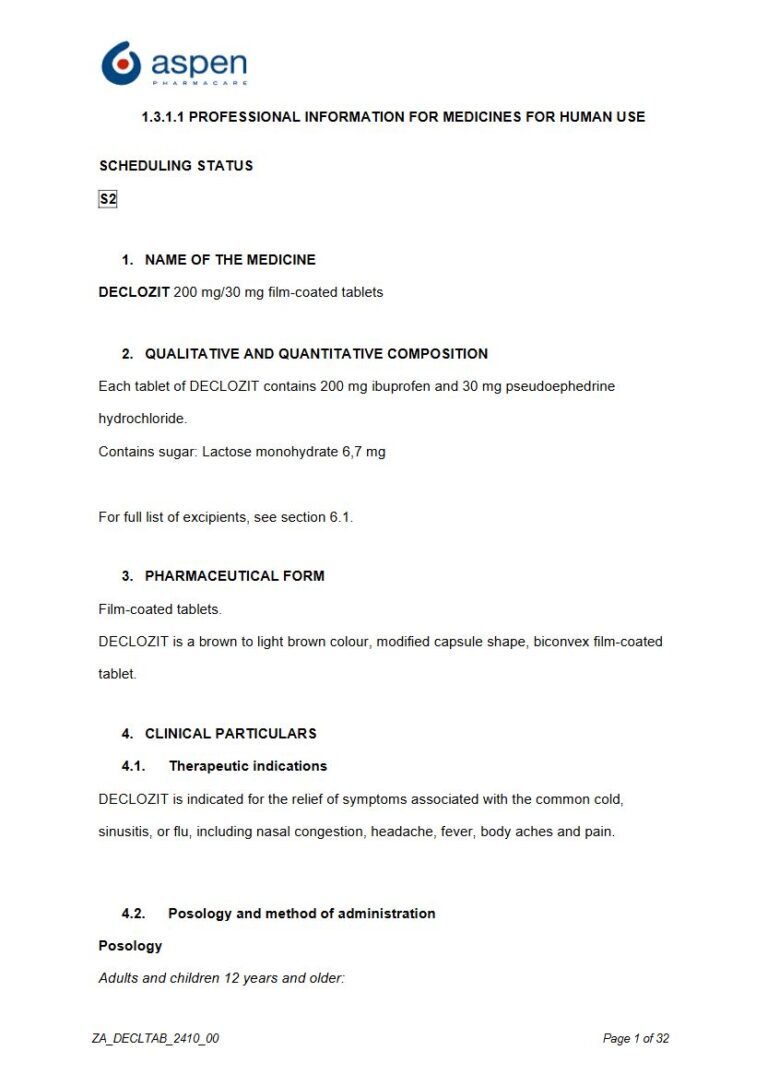
DECLOZIT is indicated for the relief of symptoms associated with the common cold, sinusitis, or flu, including nasal congestion, headache, fever, body aches and pain.
4.2. Posology and method of administration
Posology
Adults and children 12 years and older:
Take one tablet every 4 to 6 hours. If symptoms do not respond to one tablet, a second tablet may be taken. Do not exceed 6 tablets in 24 hours.
Do not take for cold for more than 7 days or for fever for more than 3 days, unless directed by a doctor. If the cold or fever persists or gets worse, or if new symptoms occur, consult a doctor.
Use the lowest effective dose for the shortest possible duration of treatment.
Paediatric population
DECLOZIT is not to be given to children under 12 years.
Method of administration
For oral administration. DECLOZIT should be taken with a glass of water, with food or after meals.
4.3. Contraindications
DECLOZIT is contraindicated in:
- Patients with hypersensitivity to ibuprofen, pseudoephedrine hydrochloride or to any excipients in DECLOZIT (see section 6.1), or to any other Nonsteroidal anti-inflammatory drugs (NSAIDs), or to any other sympathomimetic medicines.
- Patients who have had a severe allergic reaction to aspirin such as asthma, swelling, shock or hives, because even though DECLOZIT contains no aspirin, or salicylates, cross-reactions may occur in patients allergic to aspirin.
- Cardiovascular disease, heart failure, history of myocardial infarction (see section 4.4).
- Hypertension (see section 4.4).
- Diabetes mellitus.
- Hyperthyroidism.
- Hyperexcitability.
- Prostatic hypertrophy.
- Phaeochromocytoma.
- Glaucoma.
- History of seizures.
- Systemic lupus erythematosus (see section 4.4).
- History of stroke or presence of risk factors for stroke (due to the u03b1-sympathomimetic activity of pseudoephedrine hydrochloride, as contained in DECLOZIT).
- Patients with impaired renal and liver functions.
- Patients with a history of gastrointestinal perforation, ulceration or bleeding (PUB) related to previous NSAIDs use.
- Patients with active or history of recurrent ulcer, haemorrhage or perforations.
- Patients with bleeding disorders, haematological disorders.
- Pregnancy and lactation (see section 4.6). NSAID use in women around 30 weeks gestation and later in pregnancy due to the risks of oligohydramnios/foetal renal dysfunction and premature closure of the foetal ductus arteriosus (see section 4.4 and 4.6).
- Children under 12 years (see section 4.2).
- Patients being treated with monoamine oxidase inhibitors (MAOIs), or within 14 days of stopping such treatment (see section 4.5).
- Concomitant use of other vasoconstrictor medicines used as nasal decongestants, whether administered orally or nasally (e.g. phenylpropanolamine, phenylephrine and ephedrine), and methylphenidate (see section 4.5).
4.4. Special warnings and precautions for use
Hypersensitivity
Serious skin reactions, some of them fatal, including exfoliative dermatitis, Stevens Johnson syndrome, and toxic epidermal necrolysis have been reported. DECLOZIT should be discontinued at the first appearance of rash, mucosal lesions, or any other signs of hypersensitivity.
Drug Reaction with Eosinophillia and Systemic symptoms
Drug reaction with Eosinophillia and Systemic Symptoms (DRESS) has been reported in patients taking non-steroidal anti-inflammatory therapy (NSAIDs) such as DECLOZIT. Some of these events have been fatal or life-threatening. DRESS typically, although not exclusively, presents with fever, rash, lymphadenopathy, and/or facial swelling. Other clinical manifestations may include hepatitis, nephritis, haematological abnormalities, myocarditis, or myositis. Sometimes symptoms of DRESS may resemble an acute viral infection. Eosinophillia is often present. Because this disorder is variable in its presentation, other organ systems not noted here may be involved. It is important to note that early manifestations of hypersensitivity, such as fever or lymphadenopathy, may be present even though rash is not evident. If such signs or symptoms are present, discontinue DECLOZIT and evaluate the patient immediately.
Severe skin reactions such as acute generalised exanthematous pustulosis (AGEP) may occur with ibuprofen and pseudoephedrine-containing medicines, such as DECLOZIT (see section 4.8). This acute pustular eruption may occur within the first 2 days of treatment, with fever, and numerous, small, mostly non-follicular pustules arising on a widespread oedematous erythema and mainly localized on the skin folds, trunk, and upper extremities. Patients should be carefully monitored. If signs and symptoms such as pyrexia, erythema, or many small pustules are observed, administration of DECLOZIT should be discontinued and appropriate measures taken if needed.
Other similar medicines
DECLOZIT should not be combined with other non-prescription pain relievers, any other ibuprofen-containing medicines, or other NSAIDs including cyclo-oxygenase (COX)-2 selective inhibitors (see section 4.5).
Hypertension and/or heart failure
Caution is required in patients with a history of hypertension and/or heart failure as fluid retention and oedema have been reported in association with non-steroidal anti-inflammatory therapy, including DECLOZIT. In view of the inherent potential of DECLOZIT to cause fluid retention, heart failure may be precipitated in some compromised patients (see section 4.3).
Gastrointestinal effects
Gastrointestinal perforation, ulceration or bleeding (PUB), which can be fatal, has been reported with all NSAIDs at any time during treatment, with or without warning symptoms or a previous history of gastrointestinal events. The elderly has an increased frequency of adverse reactions to NSAIDs, such as DECLOZIT, especially gastrointestinal PUBs, which may be fatal. The risk of gastrointestinal bleeding or ulceration is higher with increasing doses, in patients with a history of ulcers and the elderly. These patients should commence treatment on the lowest dose available. Combination therapy with protective medicines (e.g. misoprostol or proton pump inhibitors) should be considered for these patients and also for patients taking concomitant low-dose acetylsalicylic acid or other medicines likely to increase gastrointestinal risk (see below and section 4.5). Patients with a history of gastrointestinal toxicity, especially elderly patients, should report any unusual abdominal symptoms (especially gastrointestinal bleeding) particularly in the initial stages of treatment. Particular caution is advised in patients receiving concomitant medicines which could increase the risk of ulceration or bleeding such as oral corticosteroids, anticoagulants such as warfarin, selective serotonin reuptake inhibitors (SSRIs) or antiplatelet medicines such as acetylsalicylic acid (see section 4.5). When gastrointestinal bleeding or ulceration occurs in patients receiving DECLOZIT, treatment should be stopped. DECLOZIT should be given with caution to patients with a history of gastrointestinal disease (e.g. ulcerative colitis, Crohnu2019s disease, peptic ulcer, hiatus hernia, gastro-oesophageal reflux disease, angiodysplasia) as the condition may be exacerbated. Through concomitant consumption of alcohol, undesirable effects may be increased on use of NSAIDs, such as DECLOZIT, particularly those that concern the gastrointestinal tract or the central nervous system.
Ibuprofen: DECLOZIT should be discontinued in patients who experience blurred or diminished vision or changes in colour vision. If visual disturbances occur during the course of treatment, a full ophthalmological examination should be carried out. Aseptic meningitis has occurred in patients with systemic lupus erythematosus who were receiving ibuprofen, as contained in DECLOZIT. Bronchospasm may be precipitated in patients suffering from, or with a history of bronchial asthma or allergic disease. DECLOZIT should not be taken with cases of asthma without prior consultation with a doctor (see section 4.3). Patients who have asthma associated with chronic rhinitis, chronic sinusitis and/or nasal polyposis have a higher risk of allergic reactions when taking acetylsalicylic acid and/or NSAIDs. Administration of DECLOZIT may precipitate an acute asthma attack, particularly in some patients who are allergic to acetylsalicylic acid or an NSAID (see section 4.3). Prolonged use of any type of painkiller for headaches can make them worse. If this situation is experienced or suspected, medical advice should be obtained and treatment should be discontinued. The diagnosis of medicine overuse headache (MOH) should be suspected in patients who have frequent or daily headaches despite (or because of) the regular use of headache medicines. Before using DECLOZIT, patients should consult their doctor in case of a blood clotting disorder.
Cardiovascular and cerebrovascular effects
Clinical studies suggest that use of ibuprofen, as contained in DECLOZIT, particularly at a high dose (2 400 mg/day) may be associated with an increased risk of arterial thrombotic events (e.g. myocardial infarction or stroke), and may increase the risk of a cardiovascular adverse event. Overall, epidemiological studies do not suggest that low dose ibuprofen (e.g. u2264 1 200 mg/day) is associated with an increased risk of arterial thrombotic events. NSAIDs should be avoided in patients with established cardiovascular disease, and patients should be informed of the risk of NSAIDs. Patients with uncontrolled hypertension, congestive heart failure (NYHA II-III), established ischaemic heart disease, peripheral arterial disease, and/or cerebrovascular disease should only be treated with DECLOZIT after careful consideration and high doses (2 400 mg/day) should be avoided. Careful consideration should also be exercised before initiating long-term treatment of patients with risk factors for cardiovascular events (e.g. hypertension, hyperlipidaemia, diabetes mellitus, smoking), particularly if high doses of ibuprofen (2 400 mg/day) are required.
Masking of symptoms of underlying infections
DECLOZIT can mask symptoms of infection, which may lead to delayed initiation of appropriate treatment and thereby worsening the outcome of the infection. This has been observed in bacterial community acquired pneumonia and bacterial complications to varicella. When DECLOZIT is administered for fever or pain relief in relation to infection, monitoring of infection is advised. In non-hospitals settings, the patient should consult a doctor if symptoms persist or worsen.
Elderly
The pharmacokinetics of ibuprofen, as contained in DECLOZIT, is not modified by age. No dose adjustment is necessary in the elderly. However, elderly patients should be carefully monitored as they have an increased frequency of NSAID-related undesirable effects, particularly gastrointestinal bleeding and perforation, which can be fatal. In the initial stages of treatment, careful monitoring of urine output and renal function is required in patients with heart failure, patients with chronically impaired renal or hepatic function, patients taking diuretics, patients who are hypovolaemic as a result of major surgery and, in particular, elderly patients. There is a risk of renal impairment in dehydrated adolescents.
Foetal Toxicity
Regular use of NSAIDs such as DECLOZIT during the third trimester of pregnancy, may result in premature closure of the foetal ductus arteriosus in utero, and possibly, in persistent pulmonary hypertension of the new-born. The onset of labour may be delayed, and its duration increased (see section 4.3 and 4.6).
Pseudoephedrine hydrochloride:
To minimise the possibility of insomnia, the last dose for each day should be administered a few hours before bedtime. Treatment must be discontinued if patients develop hypertension, tachycardia, palpitations, cardiac dysrhythmias, nausea or any neurological signs such as onset or worsening of headache.
4.5. Interactions with other medicines
Ibuprofen:
Other NSAIDs, including salicylates and COX-2 selective inhibitors: The concomitant administration of several NSAIDs may increase the risk of gastrointestinal ulcers and bleeding due to a synergistic effect. The concomitant use of ibuprofen with other NSAIDs should therefore be avoided (see section 4.4).
Digoxin:
The concomitant use of DECLOZIT with digoxin preparations may increase serum levels of these medicines. A check of serum-digoxin is not as a rule required on correct use (maximum over 4 days).
Corticosteroids:
Corticosteroids as these may increase the risk of adverse reactions, especially of the gastrointestinal tract (gastrointestinal ulceration, perforation or bleeding) (see section 4.3).
Anti-platelet medicines:
Increased risk of gastrointestinal bleeding (see section 4.4).
Acetylsalicylic acid:
Concomitant administration of ibuprofen and acetylsalicylic acid is not generally recommended because of the potential of increased adverse effects. Experimental data suggest that ibuprofen may competitively inhibit the effect of low dose acetylsalicylic acid on platelet aggregation when they are dosed concomitantly. Although there are uncertainties regarding extrapolation of these data to the clinical situation, the possibility that regular, long-term use of ibuprofen may reduce the cardioprotective effect of low-dose acetylsalicylic acid cannot be excluded. No clinically relevant effect is for occasional ibuprofen use (see section 5.1).
Anticoagulants:
(e.g.: warfarin, ticlopidine, clopidogrel, tirofiban, eptifibatide, abciximab, iloprost) NSAIDs, as contained in DECLOZIT, may enhance the effect of anticoagulants (see section 4.4). The risk of gastrointestinal bleeding and ulceration associated with DECLOZIT is increased when used with antiplatelets clopidogrel and ticlopidine (see section 4.4).
Phenytoin:
The concomitant use of DECLOZIT with phenytoin medicines may increase serum levels of these medicines. A check of serum-phenytoin is not as a rule required on correct use (maximum over 4 days).
4.6. Fertility, pregnancy and lactation
The use of DECLOZIT is contraindicated in pregnancy and lactation (see section 4.3). Women of childbearing potential: If DECLOZIT is used by a woman attempting to conceive, the dose should be kept as low and duration of treatment as short as possible.
Pregnancy
Ibuprofen: Regular use of NSAIDs, such as DECLOZIT, during the third trimester of pregnancy, may result in premature closure of the foetal ductus arteriosus in utero, and possibly, in persistent pulmonary hypertension of the newborn. The onset of labour may be delayed and its duration increased. Data from epidemiological studies suggest an increased risk of miscarriage and of cardiac malformation and gastroschisis after use of prostaglandin synthesis inhibitors in early pregnancy. The risk is believed to increase with dose and duration of therapy. During the third trimester of pregnancy, all prostaglandin synthesis inhibitors, as contained in DECLOZIT, may expose the foetus to:
- cardiopulmonary toxicity (with premature closure of the ductus arteriosus and pulmonary hypertension),
- renal dysfunction, which may progress to renal failure with oligo-hydroamniosis.
During the third trimester of pregnancy, all prostaglandin synthesis inhibitors, as contained in DECLOZIT, may expose the mother and the child, at the end of pregnancy, to:
- possible prolongation of bleeding time, an anti-aggregating effect which may occur even at very low doses,
- inhibition of uterine contractions resulting in delayed or prolonged labour.
Pseudoephedrine hydrochloride:
The use of pseudoephedrine hydrochloride decreases maternal uterine blood flow but clinical data are insufficient with respect to effects on pregnancy. However, studies in animals have shown pseudoephedrine causes a reduction in average weight, length and rate of bone formation in the animal foetus.
Breastfeeding
Pseudoephedrine hydrochloride: Pseudoephedrine passes into breast milk and may cause unwanted effects in nursing babies. Considering the potential cardiovascular and neurological effects of vasoconstrictors, ingestion of DECLOZIT is contraindicated during breastfeeding (see section 4.3).
Fertility
There is some evidence that medicines which inhibit cyclo-oxygenase/prostaglandin synthesis may cause impairment of female fertility by an effect on ovulation. This is reversible upon withdrawal of treatment.
4.7. Effects on ability to drive and use machines
DECLOZIT has moderate influence on the ability to drive or use machines. Patients who experience dizziness, hallucinations, unusual headaches and visual or hearing disturbances should avoid driving or using machinery (see section 4.8).
4.8. Undesirable effects
a) Summary of the safety profile
The most commonly observed adverse reactions related to ibuprofen, as in DECLOZIT, are gastrointestinal in nature. Peptic ulcers, perforation or gastrointestinal bleeding, sometimes fatal, particularly in the elderly, may occur (see section 4.4). Nausea, vomiting, diarrhoea, flatulence, constipation, dyspepsia, abdominal pain, melaena, haematemesis, ulcerative stomatitis, exacerbation of colitis and Crohn's disease (see section 4.4) have been reported following administration. Less frequently, gastritis has been observed. In general, the risk of development of adverse reactions (in particular the risk of development of serious gastrointestinal complications) increases with increasing dose and with increasing duration of treatment administration. Hypersensitivity reactions have been reported following treatment with ibuprofen, as in DECLOZIT. These may consist of:
- Non-specific allergic reaction and anaphylaxis.
- Respiratory tract reactivity comprising of asthma, aggravated asthma, bronchospasm or dyspnoea.
- Assorted skin disorders, including rashes of various types, pruritis, urticaria, purpura, angioedema and, more rarely, exfoliative and bullous dermatoses (including epidermal necrolysis and erythema multiforme).
b) Tabulated list of adverse reactions
Ibuprofen
System organ class Frequent Less frequent Frequency unknown (cannot be estimated from the available data)
Infections and infestations Exacerbation of infectious inflammations (e.g. necrotising fasciitis), aseptic meningitis (stiffness of the neck, headache, nausea, vomiting, fever or disorientation in patients with pre-existent autoimmune diseases (Systemic Lupus Erythematosus (SLE), mixed connective tissue disease)
Blood and the lymphatic system disorders Agranulocytosis, anaemia, aplastic anaemia, eosinophilia, leukopenia, neutropenia, thrombocytopenia, haemolytic anaemia, Ecchymosis pancytopenia
Immune system disorders Severe generalised hypersensitivity reactions, signs may be facial oedema, angioedema, dyspnoea, tachycardia, drop in blood pressure, anaphylaxis or anaphylactoid reactions, angiitis, bronchospastic allergic reactions, allergic rhinitis, serum sickness-like reaction, systemic lupus erythematosus-like syndrome, hepatotoxicity and aseptic meningitis, urticaria, pruritus and asthma attacks (with drop in blood pressure),
Psychiatric disorders Psychotic reactions, depression
Nervous system disorders Dizziness Mild to moderate headache, nervousness or irritability, confusion, hallucinations, aseptic meningitis, peripheral neuropathy, drowsiness, trouble in sleeping, Convulsions, mood or mental changes agitation, tiredness
Eye disorders Amblyopia (toxic), blurred or double vision or change in vision, conjunctivitis; dry, irritated or swollen eyes
Ear and labyrinth disorders Ringing or buzzing in ears; decrease or change in hearing
Cardiac disorders Oedema, hypertension, unexplained nose bleeds; cardiac dysrhythmias; congestive heart failure or exacerbation of; fast or pounding heartbeat; flushing, Angina pectoris or exacerbation of; pulmonary oedema myocardial infarction
Vascular disorders Arterial hypertension
Respiratory, thoracic and mediastinal disorders Alveolitis, pulmonary eosinophilia, pulmonary oedema
Gastrointestinal disorders Mild to moderate abdominal cramps; pain or discomfort; epigastric pain or discomfort; heartburn, nausea, Decreased appetite or loss of appetite; indigestion, gastritis, melaena, haematemesis, irritation, dryness or soreness of mouth, gingival ulceration or aphthous stomatitis, Enterocolitis Peptic ulcers, perforation or gastrointestinal bleeding, sometimes fatal, dyspepsia, vomiting, flatulence, diarrhoea, constipation ulcerative stomatitis, exacerbation of colitis and Crohn's disease (see section 4.4), oesophagitis, pancreatitis, intestinal diaphragm-like stricture
Hepatobiliary disorders Hepatitis or jaundice (toxic), Abnormalities in liver function tests hepatic dysfunction, hepatic damage, particularly in long-term therapy, hepatic failure
Skin and subcutaneous tissue disorders Skin rash Itching, bullous eruption, hives, Stevens-Johnson syndrome, toxic epidermal necrolysis, Eczema, exfoliative dermatitis, photosensitivity reactions, erythema multiforme, alopecia, severe skin infections and soft-tissue complications in a varicella infection eosinophilia and systemic symptoms (DRESS syndrome), acute generalised exanthematous pustulosis (AGEP)
Renal and urinary disorders Fluid retention; oedema. unexplained vaginal bleeding, blood in urine; cystitis; renal impairment or failure; polyuria, renal papillary or tubular necrosis, Renal calculi or ureteral obstruction elevated uric acid concentrations in the blood, increase in serum creatinine, oedemas (particularly in patients with arterial hypertension or renal insufficiency), nephrotic syndrome, interstitial nephritis
Pseudoephedrine hydrochloride
System organ class Frequent Less frequent Frequency unknown (cannot be estimated from the available data)
Immune system disorders Severe generalised hypersensitivity reactions, signs may be facial oedema, angioedema, dyspnoea, tachycardia, drop in blood pressure, anaphylactic shock
Endocrine disorders Altered metabolism, including disturbances of glucose metabolism
Psychiatric disorders Agitation, anxiety, abnormal behaviour, euphoric mood
Nervous system disorders Nervousness, restlessness, insomnia Giddiness, headache, sweating, muscular weakness, tremor, hallucinations, convulsion Fear, confusion, irritability, psychotic states, tolerance with dependence may occur, haemorrhagic stroke, ischaemic stroke, somnolence
Eye disorders Ischaemic optic neuropathy
Ear and labyrinth disorders Tinnitus
Cardiac disorders Tachycardia Precordial pain, palpitations, hypertension and ventricular dysrhythmias may occur
Vascular disorders Hypertension
Respiratory, thoracic and mediastinal disorders Shortness of breath or troubled breathing, Dyspnoea exacerbation of asthma or hypersensitivity reaction with bronchospasm
Gastrointestinal disorders Vomiting Reduced appetite, thirst, ischaemic colitis Dry mouth, nausea
Skin and subcutaneous tissue disorders Rash, pruritus Angioedema, severe skin reaction including acute generalised exanthematous pustulosis (AGEP), urticaria hyperhidrosis
Renal and urinary disorders Difficult or painful urination Urinary retention, dysuria
4.9. Overdose
Symptoms
Overdosage may result in nausea and vomiting. Symptoms of sympathomimetic effect CNS depression: e.g. sedation, apnoea, cyanosis, coma CNS stimulation (which is more likely in children): e.g. insomnia, hallucinations, convulsions, tremor, mydriasis, anxiety, agitation. Besides the symptoms already mentioned as undesirable effects (see section 4.8), the following symptoms can occur: hypertensive crisis, cardiac dysrhythmias, muscle weakness and tenseness, euphoria, excitement, thirst, chest pain, dizziness, tinnitus, ataxia, blurred vision, hypotension, rhabdomyolysis, hypokalemia, palpitations, hypertension, and ischaemic bowel infarction. Ibuprofen-related symptoms (in addition to the gastrointestinal and neurological symptoms already mentioned as undesirable effects) Drowsiness, nystagmus, tinnitus, hypotension, loss of consciousness, abdominal pain, nausea, vomiting, lethargy, headache, renal failure, fulminant hepatic failure, bradycardia, tachycardia, atrial fibrillation. In serious poisoning, metabolic acidosis may occur.
Treatment
Treatment is symptomatic and supportive. No specific antidote is available. Consider oral administration of activated charcoal if the patient presents within one hour of ingestion of a potentially toxic amount. Electrolytes should be checked and ECG performed. In case of cardiovascular instability and/or symptomatic electrolyte imbalance, symptomatic treatment should be initiated.
