
Lundbeck Vortioxetine FC tablets
PDF Leaflet Revision Date: January 2024
Clinical Summary
Quick overview from the medicine insert
Indication
Treatment of major depressive disorder and relapse prevention.
Dosage (summary)
Starting dose: 10 mg once daily; may adjust to 5-20 mg based on response.
Special Populations
- Elderly: Start at 5 mg
- Renal impairment: No adjustment needed
- Hepatic impairment: No adjustment needed
- Paediatric: Not established for <18 years
Pregnancy & Breastfeeding
Not recommended during pregnancy or breastfeeding; potential risks to newborns.
Key Drug Interactions
- MAOIs: Contraindicated
- CYP2D6 inhibitors: May require dose adjustment
- Serotonergic drugs: Risk of serotonin syndrome
Contraindications
- Hypersensitivity to vortioxetine
- Concomitant use with MAOIs
Common side effects
- Nausea
- Dizziness
- Headache
- Diarrhoea
- Dry mouth
Counselling Points
- Monitor for suicidal thoughts
- Avoid abrupt discontinuation
- Caution when driving or operating machinery
Serious warnings
- Increased risk of suicidal thoughts in young adults
- Risk of serotonin syndrome
- Caution in patients with seizures
Important Disclaimer
The Lundbeck Vortioxetine FC tablets professional information leaflet below is the property of H Lundbeck and is provided on Medinsert exactly as issued, with no.. alterations or editorial changes. We make every effort to keep content current by updating documents as soon as new versions become available. Medinsert serves as a trusted access point for healthcare professionals, but does not replace official sources or clinical judgement. For more details, please read our full disclaimer. read more>>
 Healthcare Professionals Only
This content is for registered healthcare professionals
Sign in or create a free account to read the full package insert.
Free for HPCSA-registered professionals. Powered by Medinsert.
Clinical Particulars
Section 4 of the official insert — extracted exactly as issued, no alterations
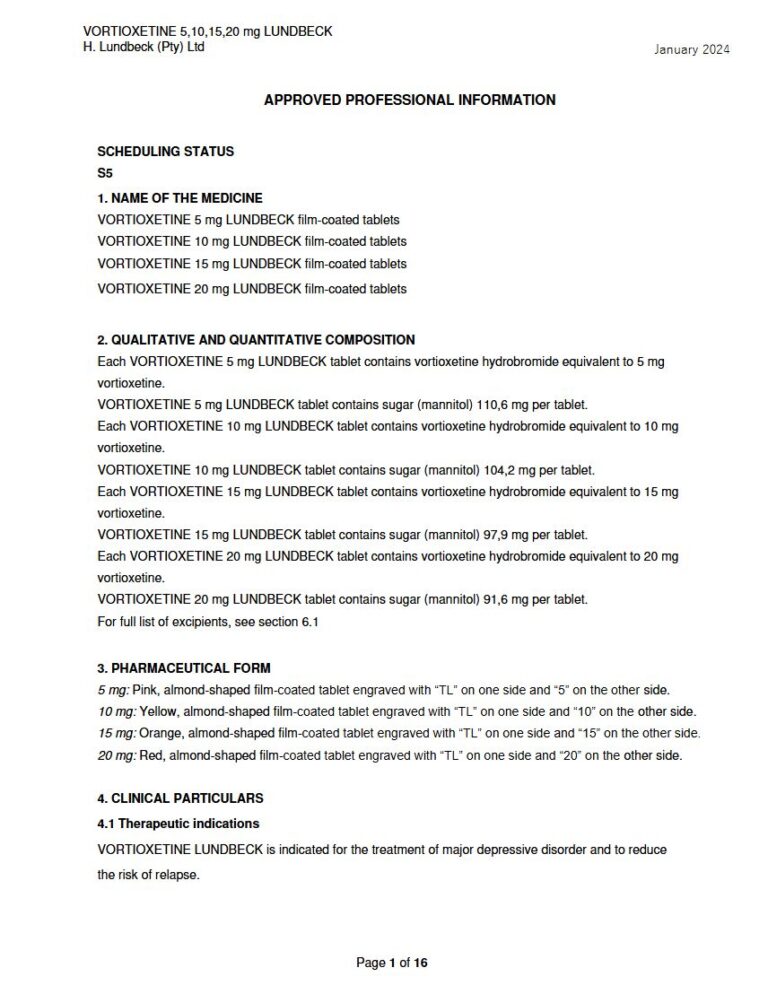
4.1 Therapeutic indications
VORTIOXETINE LUNDBECK is indicated for the treatment of major depressive disorder and to reduce the risk of relapse.
4.2 Posology and method of administration
Posology
VORTIOXETINE LUNDBECK is for oral use in adults. The starting and recommended dose of VORTIOXETINE LUNDBECK is 10 mg once daily. Depending on individual patient response, the dose may be increased to a maximum of 20 mg daily or reduced to a minimum of 5 mg daily. If a dose increase is required, this should be in periods of not less than one week of the treatment. A dose decrease may be considered for patients who do not tolerate higher doses. VORTIOXETINE LUNDBECK can be taken without regard to meals. After the depressive symptoms resolve, treatment for at least 6 months is recommended for consolidation of the antidepressive response. Patients being treated with VORTIOXETINE LUNDBECK can abruptly stop taking VORTIOXETINE LUNDBECK without the need for a gradual reduction in dose.
Special populations
Elderly patients
The safety and efficacy of VORTIOXETINE LUNDBECK have been established in elderly patients. However, caution should be exercised when treating the elderly. Treatment should be initiated with 5 mg daily and, depending on the individual patient response, the dose may be increased to 10 mg daily. Limited data are available with doses exceeding 10 mg daily.
Paediatric patients
The safety and efficacy of VORTIOXETINE LUNDBECK in children aged years and adolescents aged less than 18 years have not been established. No data are available.
Renal or hepatic impairment
No dose adjustment is needed based on renal or hepatic function (see Section 4.4 and 5.2)
Cytochrome P450 inhibitors
Depending on individual patient response, a lower dose of VORTIOXETINE LUNDBECK may be considered if strong CYP2D6 inhibitors (e.g. bupropion, quinidine, fluoxetine, paroxetine) are added to VORTIOXETINE LUNDBECK treatment (see Section 4.5).
Cytochrome P450 inducers
Depending on individual patient response, a dose adjustment of VORTIOXETINE LUNDBECK may be considered if a broad cytochrome P450 inducer (e.g. rifampicin, carbamazepine, phenytoin) is added to VORTIOXETINE LUNDBECK treatment (see Section 4.5).
4.3 Contraindications
Hypersensitivity to vortioxetine or to any of the excipients of VORTIOXETINE LUNDBECK. Concomitant use of VORTIOXETINE LUNDBECK with monoamine oxidase inhibitors (MAOIs) (see Section 4.5).
4.4 Special warnings and precautions for use
Use in paediatric population
VORTIOXETINE LUNDBECK is not recommended for the treatment of depression in patients aged less than 18 years since the safety and efficacy of VORTIOXETINE LUNDBECK have not been established in this age group (see Section 4.2). In clinical studies in children and adolescents treated with other antidepressants, suicide-related behaviour (suicide attempt and suicidal thoughts), and hostility (predominantly aggression, oppositional behaviour, and anger) were more frequently observed than in those treated with placebo.
Suicide, suicidal thoughts or clinical worsening
Depression is associated with an increased risk of suicidal thoughts, self-harm and suicide (suicide-related events). This risk persists until significant remission occurs. As improvement may not occur during the first few weeks or more of treatment with VORTIOXETINE LUNDBECK, patients should be closely monitored until such improvement occurs. It is general clinical experience that the risk of suicide may increase in the early stages of recovery. Patients with a history of suicide-related events or those exhibiting a significant degree of suicidal ideation prior to commencement of treatment are known to be at greater risk of suicidal thoughts or suicide attempts and should receive careful monitoring during treatment with VORTIOXETINE LUNDBECK. A meta-analysis of placebo-controlled clinical trials of antidepressants in adult patients with psychiatric disorders showed an increased risk of suicidal behaviour with antidepressants compared to placebo, in patients less than 25 years old. Close supervision of patients and in particular those at high risk should accompany treatment with VORTIOXETINE LUNDBECK especially in early treatment and following dose changes. Patients (and caregivers of patients) should be alerted to the need to monitor for any clinical worsening, suicidal behaviour or thoughts and unusual changes in behaviour and to seek medical advice immediately if these symptoms present.
Seizures
Seizures are a potential risk with antidepressants, including VORTIOXETINE LUNDBECK. Therefore, VORTIOXETINE LUNDBECK should be introduced cautiously in patients who have a history of seizures or in patients with unstable epilepsy. Treatment with VORTIOXETINE LUNDBECK should be discontinued in any patient who develops seizures or where there is an increase in seizure frequency.
Serotonin syndrome or neuroleptic malignant syndrome
Serotonin Syndrome (SS) or Neuroleptic Malignant Syndrome (NMS), potentially life threatening conditions, may occur with VORTIOXETINE LUNDBECK. The risk of SS or NMS is increased with concomitant use of serotonergic medicines (including opioids and triptans), with medicines which impair metabolism of serotonin (including MAOIs), antipsychotics and other dopamine antagonists. Patients should be monitored for the emergence of signs and symptoms of SS or NMS (see Section 4.3 and Section 4.5). Serotonin syndrome symptoms may include mental status changes (e.g. agitation, hallucinations, coma), autonomic instability (e.g. tachycardia, labile blood pressure, hyperthermia), neuromuscular aberrations (e.g. hyperreflexia, incoordination) and/or gastrointestinal symptoms (e.g. nausea, vomiting, diarrhoea). If this occurs, treatment with VORTIOXETINE LUNDBECK should be discontinued immediately and symptomatic treatment should be initiated.
Hyponatraemia
Hyponatraemia, probably due to inappropriate antidiuretic hormone secretion (SIADH), has been reported with the use of antidepressants with serotonergic effect (SSRIs/SNRIs). Caution should be exercised in patients at risk, such as the elderly, cirrhotic patients or patients concomitantly treated with medications known to cause hyponatraemia. Discontinuation of VORTIOXETINE LUNDBECK should be considered in patients with symptomatic hyponatraemia and appropriate medical intervention should be instituted.
Glaucoma
Mydriasis has been reported in association with use of antidepressants, including VORTIOXETINE LUNDBECK. This mydriatic effect has the potential to narrow the eye angle resulting in increased intraocular pressure and angle-closure glaucoma. Caution is advised when prescribing VORTIOXETINE LUNDBECK to patients with increased intraocular pressure, or those at risk of acute narrow-angle glaucoma.
Activation of hypomania or mania
VORTIOXETINE LUNDBECK treatment should be used with caution in patients with a history of mania/hypomania, and should be discontinued in any patient entering a manic phase.
Aggression/agitation
Patients treated with antidepressants, including VORTIOXETINE LUNDBECK, may also experience feelings of aggression, anger, agitation and irritability. Patientu2019s condition and disease status should be closely monitored. Patients (and caregivers of patients) should be alerted to seek medical advice, if aggressive/agitated behaviour emerges or aggravates.
Haemorrhage
Bleeding abnormalities, such as ecchymoses, purpura and other haemorrhagic events such as gastrointestinal or gynaecological bleeding may occur with VORTIOXETINE LUNDBECK. SSRIs/SNRIs may increase the risk of postpartum haemorrhage, and this risk could potentially apply also to VORTIOXETINE LUNDBECK (see section 4.6). Caution is advised in patients taking anticoagulants and/or medicinal products known to affect platelet function, e.g., atypical antipsychotics and phenothiazines, most tricyclic antidepressants, non-steroidal anti-inflammatory drugs (NSAIDs), or aspirin (see Section 4.5), and in patients with known bleeding tendencies/disorders.
4.5 Interaction with other medicines and other forms of interaction
Vortioxetine is extensively metabolised in the liver primarily through oxidation and subsequent glucuronic acid conjugation. In vitro, the cytochrome P450 isozymes CYP2D6, CYP3A4/5, CYP2C19, CYP2C9, CYP2A6, CYP2C8 and CYP2B6 are involved in the metabolism of vortioxetine (see Section 5.2).
Monoamine Oxidase Inhibitors (MAOIs)
Due to the risk of serotonin syndrome, VORTIOXETINE LUNDBECK is contraindicated in any combination with MAOIs. VORTIOXETINE LUNDBECK must not be initiated for at least 14 days after discontinuation of treatment with an MAOI. VORTIOXETINE LUNDBECK must be discontinued for at least 14 days before starting treatment with an MAOI (see Section 4.3).
Linezolid
The antibiotic linezolid is a weak MAOI and should not be given to patients treated with VORTIOXETINE LUNDBECK. Close monitoring for serotonin syndrome is necessary if used concomitantly (see Section 4.4).
Serotonergic medicines
Co-administration of antidepressants with medicines with a serotonergic effect e.g., opioids (including pethidine, tramadol) and triptans (including sumatriptan) may lead to serotonin syndrome (see Section 4.4).
St. Johnu2019s Wort
Concomitant use of antidepressants with serotonergic effect, and herbal remedies containing. St Johnu00b4s Wort (Hypericum perforatum) may result in a higher incidence of adverse reactions including serotonin syndrome (see Section 4.4).
Medicines lowering the seizure threshold
Antidepressants with serotonergic effect including VORTIOXETINE LUNDBECK can lower the seizure threshold. Caution is advised when concomitantly using VORTIOXETINE LUNDBECK and other medicinal products capable of lowering the seizure threshold (e.g. antidepressants (tricyclics, SSRIs, SNRIs), neuroleptics (phenothiazines, thioxanthenes and butyrophenones), mefloquin, bupropion and tramadol) (see Section 4.4).
ECT (electroconvulsive therapy)
There is no clinical experience with concurrent administration of VORTIOXETINE LUNDBECK and ECT, therefore caution is advisable.
4.6 Fertility, pregnancy and lactation
Pregnancy
VORTIOXETINE LUNDBECK should not be taken during pregnancy or by women with child-bearing potential not using contraception. Safety and efficacy in pregnant women has not been established. The following symptoms may occur in the newborn after maternal use of VORTIOXETINE LUNDBECK in later stages of pregnancy: respiratory distress, cyanosis, apnoea, seizures, temperature instability, feeding difficulty, vomiting, hypoglycaemia, hypertonia, hypotonia, hyperreflexia, tremor, jitteriness, irritability, lethargy, constant crying, somnolence and difficulty sleeping. These symptoms could be due to either discontinuation effects or excess serotonergic activity. In a majority of instances, such complications begin immediately or soon (< 24 hours) after delivery. Epidemiological data have suggested that the use of SSRIs in pregnancy, particularly in late pregnancy, may increase the risk of persistent pulmonary hypertension in the newborn (PPHN). Although no studies have investigated the association of PPHN to VORTIOXETINE LUNDBECK treatment, this potential risk cannot be ruled out taking into account the related mechanism of action (increase in serotonin concentrations). Observational data have provided evidence of an increased risk (less than 2-fold) of postpartum haemorrhage following exposure to an SSRI or SNRI within the month prior to birth. Although no studies have investigated an association between vortioxetine treatment and postpartum haemorrhage, there is a potential risk, taking into account the related mechanism of action (See section 4.4).
Breastfeeding
Mothers should not breastfeed their infants when taking VORTIOXETINE LUNDBECK. The safety of VORTIOXETINE LUNDBECK in breastfeeding women has not been established. Vortioxetine and/or its metabolites are excreted into the milk of lactating rats.
4.7 Effects on ability to drive and use machines
As adverse reactions such as dizziness have been reported, patients should exercise caution when driving or operating hazardous machinery, especially when starting treatment with VORTIOXETINE LUNDBECK or when changing the dose.
4.8 Undesirable effects
The most common adverse reaction was nausea. Table 1 enumerates the incidence of treatment emergent adverse events that occurred in the short-term placebo-controlled studies. Events included are those occurring in 1 % or more of patients treated with VORTIOXETINE LUNDBECK (5 to 20 mg/day), and for which the incidence in patients treated with paroxetine) are added was greater than the incidence in placebo-treated patients. Table 1 Incidence of common adverse events for major depressive disorder, pool of 12 short-term studies Body System / Adverse Event Percentage of Patients Reporting BRINTELLIX 5 mg/day (n=1157) BRINTELLIX 10 mg/day (n=1042) BRINTELLIX 15 mg/day (n=449) BRINTELLIX 20 mg/day (n=812) Placebo (n=1968) Gastrointestinal Disorders Nausea 20,5* 22,6* 31,2* 27,2* 8,1 Diarrhoea 6,6 5,4 9,4* 5,5 5,5 Dry mouth 6,4 5,5 6,0 6,5 5,6 Constipation 3,4 3,6 5,6* 4,4* 2,9 Vomiting 2,7* 3,6* 6,5* 4,4* 1,1 Dyspepsia 1,8 1,7 2,4 2,1 1,9 Flatulence 1,0 1,9 2,0 0,9 1,2 Abdominal discomfort 1,4 0,6 2,0 1,6 1,1 General Disorders and Administration Site Conditions Fatigue 3,1 2,8 3,6 2,6 2,7 Infections and Infestations Naso-pharyngitis 5,3 4,0 3,6 4,9 3,9 Influenza 1,5 1,6 0,9 0,4 1,1 Injury, poisoning and procedural complications Accidental overdose 1,3 1,2 1,3 0,9 1,0 Metabolism and Nutrition Disorders Decreased appetite 2,1* 0,7 0,7 1,6 1,0 Musculoskeletal and Connective Tissue Disorders Back Pain 2,2 2,1 1,8 1,1 1,8 Arthralgia 0,9 0,9 1,8 1,1 0,9 Nervous System Headache 13,7 12,7 14,7 12,4 12,9 Dizziness 5,5 5,2 7,1 6,3 5,3 Somnolence 3,3 2,9 2,7 3,3 2,3 Sedation 1,2 0,5 1,3 1,5* 0,6 Psychiatric Disorders Insomnia 3,1 2,6 1,8 2,7 2,5 Skin and Subcutaneous Tissue Disorders Hyper-hidrosis 2,3 2,3 1,8 0,7 1,7 Pruritus generalised 0,4 1,3* 1,6* 1,8* 0,4 * Adverse events for which the difference to placebo is statistically significant (p<0.05) Adverse reactions are listed below in Table 2 using the following convention: very common (u2265 1/10); common (u2265 1/100 to < 1/10); uncommon (u2265 1/1 000 to < 1/100); rare (u2265 1/10 000 to < 1/1000); very rare (< 1/10 000), not known (cannot be estimated from the available data). The table includes all relevant side effects which occurred more frequently with VORTIOXETINE LUNDBECK treatment than with placebo treatment in clinical trials and post-marketing experience. Table 2 Frequencies of adverse reactions SYSTEM ORGAN CLASS SYSTEM ORGAN CLASS FREQUENCY ADVERSE REACTION Immune system disorders Not known* Anaphylactic reaction Endocrine disorders Not known* Hyperprolactinaemia Metabolism and nutrition disorders Not known* Hyponatraemia Psychiatric disorders Common Abnormal dreams Not known* Insomnia, agitation, aggression (see section 4.4) Nervous system disorders Common Dizziness Not known* Serotonin syndrome Headache
4.9 Overdose
In clinical studies, no patient ingested more than 75 mg VORTIOXETINE LUNDBECK on a single occasion. The clinical studies included subjects who were administered 40 to 75 mg. Ingestion of VORTIOXETINE LUNDBECK in this dose range caused an aggravation of the following adverse reactions: nausea, postural dizziness, diarrhoea, abdominal discomfort, generalised pruritus, somnolence and flushing. Post-marketing experience mainly concerns VORTIOXETINE LUNDBECK overdoses of up to 80 mg. The most frequently reported symptoms were nausea and vomiting. There is limited experience with VORTIOXETINE LUNDBECK overdoses above 80 mg. Following dosages several fold higher than the therapeutic dose range, events of seizure and serotonin syndrome have been reported. Management of overdose should consist of treating clinical symptoms and relevant monitoring. Medical follow-up in a specialised environment is recommended.
