
Naproxen 250 mg/500 mg Tablets
PDF Leaflet Revision Date: 4 May 2023
Clinical Summary
Quick overview from the medicine insert
Indication
Treatment of rheumatoid arthritis, osteoarthrosis, ankylosing spondylitis, acute gout, musculoskeletal disorders, and dysmenorrhoea.
Dosage (summary)
Adults: 500-1000 mg/day in two doses; acute gout: 750 mg then 250 mg every 8 hours.
Special Populations
- Elderly
- Renal impairment
- Hepatic impairment
Pregnancy & Breastfeeding
Contraindicated in pregnancy and breastfeeding; may impair female fertility.
Key Drug Interactions
- Anticoagulants
- Diuretics
- Methotrexate
- ACE inhibitors
Contraindications
- Hypersensitivity to naproxen
- Active gastrointestinal bleeding
- Severe renal impairment
- Pregnancy
Common side effects
- Gastrointestinal bleeding
- Dizziness
- Headache
- Oedema
Counselling Points
- Take with food
- Report unusual abdominal symptoms
- Avoid alcohol
- Monitor for signs of bleeding
Serious warnings
- Risk of GI bleeding
- Cardiovascular events
- Bronchospasm in asthmatics
Important Disclaimer
The Naproxen 250 mg/500 mg Tablets professional information leaflet below is the property of Unimed Healthcare and is provided on Medinsert exactly as issued, with no.. alterations or editorial changes. We make every effort to keep content current by updating documents as soon as new versions become available. Medinsert serves as a trusted access point for healthcare professionals, but does not replace official sources or clinical judgement. For more details, please read our full disclaimer. read more>>
 Healthcare Professionals Only
This content is for registered healthcare professionals
Sign in or create a free account to read the full package insert.
Free for HPCSA-registered professionals. Powered by Medinsert.
Clinical Particulars
Section 4 of the official insert — extracted exactly as issued, no alterations
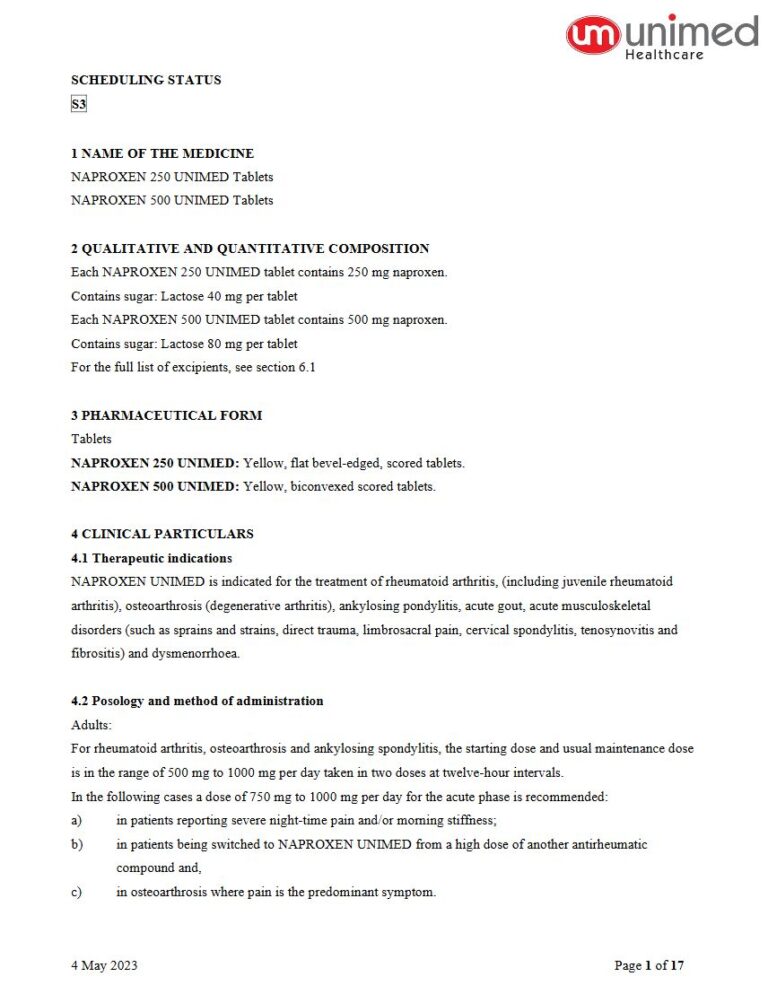
4.1 Therapeutic indications
NAPROXEN UNIMED is indicated for the treatment of rheumatoid arthritis, (including juvenile rheumatoid arthritis), osteoarthrosis (degenerative arthritis), ankylosing pondylitis, acute gout, acute musculoskeletal disorders (such as sprains and strains, direct trauma, limbrosacral pain, cervical spondylitis, tenosynovitis and fibrositis) and dysmenorrhoea.
4.2 Posology and method of administration
Adults: For rheumatoid arthritis, osteoarthrosis and ankylosing spondylitis, the starting dose and usual maintenance dose is in the range of 500 mg to 1000 mg per day taken in two doses at twelve-hour intervals. In the following cases a dose of 750 mg to 1000 mg per day for the acute phase is recommended:
- a) in patients reporting severe night-time pain and/or morning stiffness;
- b) in patients being switched to NAPROXEN UNIMED from a high dose of another antirheumatic compound and,
- c) in osteoarthrosis where pain is the predominant symptom.
For the patient who requires 750 mg per day whose night-time pain and/or morning stiffness are most troublesome, 500 mg should be taken upon retiring and 250 mg upon awakening. For the patient whose day-time pain and reduced mobility are most troublesome, 500 mg should be taken upon awakening and 250 mg upon retiring. In acute gout, the recommended dosage is 750 mg at once, then 250 mg every eight hours until the attack has passed. For the treatment of acute musculo-skeletal disorders, the recommended dosage is 250 mg twice or thrice daily, most patients will require only 7 days treatment, but some patients may require up to 14 days. In dysmenorrhoea, the recommended regime is 500 mg initially, followed by 250 mg every six to eight hours. Children: For juvenile arthritis in children over 5 years of age the usual dosage is 10 mg per kg body-mass per day in two doses at twelve-hour intervals. NAPROXEN UNIMED is not recommended for use in other indications in children under sixteen years of age. Use the lowest effective dose for the shortest possible duration of treatment. NAPROXEN UNIMED should be taken with food.
4.3 Contraindications
- Hypersensitivity to naproxen, naproxen sodium or any of the ingredients listed in section 6.1.
- Hypersensitivity or allergic reactions to aspirin or other non-steroidal anti-inflammatory agents.
- Patients in whom aspirin or other non-steroidal anti-inflammatory / analgesic medicines induce the syndrome of asthma, rhinitis, nasal polyps or urticaria. These reactions have the potential of being fatal. Severe anaphylactic-like reactions to naproxen have been reported in such patients.
- NAPROXEN UNIMED should not be used in pregnant women or mothers breastfeeding their infants.
- Heart failure.
- History of gastrointestinal perforation, ulceration or bleeding (PUBs) related to previous NSAIDs.
- Active or history of recurrent ulcer/haemorrhage/perforations.
- Porphyria.
- Children: NAPROXEN UNIMED is not recommended for use in children under the age of 16 years.
- Severe renal function impairment: NAPROXEN UNIMED is not recommended in patients with baseline creatinine clearance of less than 20 ml/minute because accumulation of naproxen metabolites has been seen in such patients (see section 4.4).
4.4 Special warnings and precautions for use
NAPROXEN UNIMED should be given under close supervision to patients with a history of gastro-intestinal bleeding, with a history of bronchospasm (asthma), with impaired renal or liver function and elderly patients or patients with cardiovascular disease. Patients who have exhibited aspirin hypersensitivity in the past (usually as the angio-oedema/asthma syndrome) may exhibit the same phenomenon on NAPROXEN UNIMED. Bronchospasm may be precipitated in patients suffering from, or with a previous history of bronchial asthma or allergic disease. Undesirable effects may be minimised by using the lowest effective dose for the shortest duration necessary to control symptoms (see section 4.2, and GI cardiovascular risks below).
Cardiovascular and cerebrovascular effects Appropriate monitoring and advice are required for patients with a history of hypertension and/or mild to moderate congestive heart failure as fluid retention, oedema and mild peripheral oedema have been reported in association with NAPROXEN UNIMED therapy. In view of NAPROXEN UNIMEDu2019s inherent potential to cause fluid retention, heart failure may be precipitated in some compromised patient. Clinical trial and epidemiological data suggest that use of coxibs and some NSAIDs (particularly at high doses and in long term treatment) may be associated with a small increased risk of arterial thrombotic events (for example myocardial infarction or stroke). Although data suggest that the use of NAPROXEN UNIMED (1000 mg daily) may be associated with a lower risk, some risk cannot be excluded. Patients with uncontrolled hypertension, congestive heart failure, established ischaemic heart disease, peripheral arterial disease, and/or cerebrovascular disease should only be treated with naproxen after careful consideration. Similar consideration should be made before initiating longer-term treatment of patients with risk factors for cardiovascular disease (e.g. hypertension, hyperlipidaemia, diabetes mellitus, smoking).
Gastrointestinal bleeding, ulceration and perforation GI bleeding, ulceration or perforation, which can be fatal, has been reported with NAPROXEN UNIMED at any time during treatment, with or without warning symptoms or a previous history of serious GI events. The risk of GI bleeding, ulceration or perforation is higher.
- with increasing NAPROXEN UNIMED doses
- in patients with a history of ulcer, particularly if complicated with haemorrhage or perforation (see section 4.3)
- in the elderly
- when used with alcohol
- in smoking
These patients should commence NAPROXEN UNIMED treatment on the lowest dose available. Combination therapy with protective medicine (e.g. misoprostol or proton pump inhibitors) should be considered for these patients, and also for patients requiring concomitant low dose aspirin, or other medicines likely to increase gastrointestinal risk (see below and section 4.5). Patients with a history of GI toxicity, particularly the elderly, should report any unusual abdominal symptoms (especially GI bleeding) particularly in the initial stages of treatment. Caution should be advised in patients receiving concomitant medications which could increase the risk of ulceration or bleeding, such as oral corticosteroids, anticoagulants such as warfarin, selective serotonin-reuptake inhibitors or antiplatelet medicine such as aspirin (see section 4.5). When GI bleeding or ulceration occurs in patients receiving NAPROXEN UNIMED, the treatment should be withdrawn. NAPROXEN UNIMED should be given with caution to patients with a history of gastrointestinal disease (e.g. ulcerative colitis, Crohnu2019s disease, hiatus hernia, gastro-oesophageal reflux disease, angiodysplasia) as these condition may be exacerbated (see section 4.8). The risk of gastrointestinal perforation, ulceration or bleeding (PUBs) is higher with increasing dose and duration of NAPROXEN UNIMED treatment, in patients with a history of ulcers, and the elderly. When gastrointestinal bleeding or ulceration occurs in patients receiving NAPROXEN UNIMED, treatment with NAPROXEN UNIMED should be stopped.
Cardiovascular, Renal and Hepatic Impairment The administration of NAPROXEN UNIMED may cause a dose dependent reduction in prostaglandin formation and precipitate renal failure. Patients at greatest risk of this reaction are those with impaired renal function, cardiac impairment, liver dysfunction, those taking diuretics and the elderly. Renal function should be monitored in these patients (see also section 4.3).
Impaired renal function There have been reports of impaired renal function, renal failure, acute interstitial nephritis, haematuria, proteinuria, renal papillary necrosis and occasionally nephrotic syndrome associated with naproxen-containing products. NAPROXEN UNIMED should be used with caution in patients with impaired renal function or a history of kidney disease, especially if long-term usage is considered as NAPROXEN UNIMED is an inhibitor of prostaglandin synthesis. Caution should be taken in patients with conditions leading to a reduction in blood volume and/or renal blood flow where renal prostaglandins play a supportive role in the maintenance of renal perfusion. In these patientsu2019 administration of NAPROXEN UNIMED may lead to a dose-dependent reduction in renal prostaglandin formation and may cause overt renal decompensation or failure. Patients with the greatest risk of developing this reaction are those with impaired renal function, hypovolaemia, heart failure, liver dysfunction, salt depletion, those taking diuretics and the elderly. Discontinuation of NAPROXEN UNIMED is generally followed by recovery to the pre-treatment state. As naproxen is eliminated to a large extent (95%) by urinary excretion via glomerular filtration it should be used with great caution in patients with impaired renal function and the monitoring of serum creatinine and/or creatinine clearance is advised in these patients. NAPROXEN UNIMED is not recommended in patients having baseline clearance less than 20 ml/minute, because accumulation of naproxen metabolites has been seen in these patients (see section 4.3). Certain patients, specifically those where renal blood flow is compromised, such as in the extracellular volume depletion, cirrhosis of the liver, sodium restriction. congestive heart failure and pre-existing renal disease, should have renal function assessed before and during NAPROXEN UNIMED therapy. Elderly patients in whom impaired renal function may be expected could also fall within this category. A reduction in daily dosage is recommended to avoid the possibility of excessive accumulation of naproxen metabolites in these patients.
Impaired liver function Elevations of one or more liver function tests may occur. Hepatic abnormalities could be the result of hypersensitivity rather than direct toxicity. Severe hepatic reactions, including jaundice and hepatitis (some cases of hepatitis have been fatal) have been reported. Cross-reactivity has been reported. Lines 139 u2013 141 Chronic alcoholic liver disease and probably also other forms of cirrhosis reduce the total plasma concentration of naproxen but the plasma concentration of unbound naproxen is increased. The implication of this finding for NAPROXEN UNIMED dosing is unknown but it is prudent to use the lowest effective dose. Caution is advised when using NAPROXEN UNIMED in patients with hepatic diseases.
Haematological NAPROXEN UNIMED decreases platelet aggregation and prolongs bleeding time. This effect should be brought into consideration when bleeding times are determined. Patients who suffer from coagulation disorders or are receiving medicine therapy that interferes with haemostasis should be carefully monitored if NAPROXEN UNIMED is administered. Patients at high risk of bleeding, and those on full anticoagulation therapy, may be at increased risk of bleeding if given NAPROXEN UNIMED concurrently. As it causes an increased bleeding tendency it should be given with caution to patients receiving coumarin anti-coagulants such as warfarin, and to patients with bleeding disorders and cardiovascular disease. BIO- NAPROXEN may interfere with some tests for 17-ketogenic steroids.
Elderly The elderly has an increased frequency of adverse reactions to NSAIDs including NAPROXEN UNIMED, especially gastrointestinal perforation, ulceration, and bleeding (PUBs) which may be fatal (see section 4.2). Elderly or debilitated patients may be at a greater risk of experiencing undesirable effects than younger patients. In elderly patients the clearance is reduced. Although total plasma concentration of naproxen in unchanged, the unbound plasma fraction of naproxen is increased in the elderly. Caution is advised and lower doses might be required. Use of the lowest possible dose is recommended.
Respiratory disorders Caution is required if NAPROXEN UNIMED is administered to patients suffering from, or with a previous history of, bronchial asthma since NAPROXEN UNIMED have been reported to precipitate bronchospasm in such patients.
Systemic lupus erythematosus (SLE) and mixed connective tissue disease In patients with systemic lupus erythematosus (SLE) and mixed connective tissue disorders there may be an increased risk of aseptic meningitis (see section 4.8).
Dermatological Serious skin reactions, some of them fatal, including exfoliative dermatitis, Stevens-Johnson syndrome and toxic epidermal necrolysis have been reported very rarely in association with the use of NAPROXEN UNIMED (see section 4.8). Patients appear to be at highest risk for these reactions early in the course of therapy: the onset of the reaction occurring in the majority of cases within the first month of treatment. NAPROXEN UNIMED should be discontinued at the first appearance of skin rash, mucosal lesions, or any other sign of hypersensitivity. Drug Reaction with Eosinophillia and Systemic Symptoms (DRESS) has been reported in patients taking NSAIDs such as NAPROXEN UNIMED. Some of these events have been fatal or life-threatening. DRESS typically, although not exclusively, presents with fever, rash, lymphadenopathy, and/or facial swelling. Other clinical manifestations may include hepatitis, nephritis, haematological abnormalities, myocarditis, or myositis. Sometimes symptoms of DRESS may resemble an acute viral infection. Eosinophillia is often present. Because this disorder is variable in its presentation, other organ systems not noted here may be involved. It is important to note that early manifestations of hypersensitivity, such as fever or lymphadenopathy, may be present even though rash is not evident. If such signs or symptoms are present, discontinue NAPROXEN UNIMED and evaluate the patient immediately.
4.5 Interactions with other medicines
Due to the high plasma protein binding of naproxen patients simultaneously receiving hydantoins, anticoagulants or other highly protein-bound sulfonamide should be observed for signs of potentiation or overdosage of these medicines. No interactions have been observed in clinical studies with naproxen or sulfonylureas, but caution is nevertheless advised since interaction has been seen with other non-steroidal medicines of this class.
NSAIDs: use of two or more NSAIDs concomitantly could result in an increase in side effects. Inhibition of renal lithium clearance leading to increases in plasma lithium concentrations has been reported with the use of NSAIDs, including NAPROXEN UNIMED. Decreased elimination of lithium. It is recommended that these levels are monitored whenever initiating, adjusting or discontinuing naproxen.
Anti-hypertensives: NAPROXEN UNIMED can reduce the anti-hypertensive effect of propranolol and possibly other beta-blockers. Concomitant administration of NAPROXEN UNIMED with beta blockers may increase the risk of renal impairment associated with the use of ACE inhibitors or angiotensin II receptor antagonists.
Probenecid: concurrent administration increases naproxen plasma levels and extends its half-life considerably.
Decreased elimination of Methotrexate: Serious interactions have been reported after the use of high-dose methotrexate with NAPROXEN UNIMED. Caution is advice when methotrexate is administered concurrently, due to the possible enhancement of its toxicity as NAPROXEN UNIMED, like other NSAIDs has been reported to reduce tubular secretion of methotrexate in an animal model.
Furosemide: The natriuretic effect of furosemide has been reported to be inhibited by NAPROXEN UNIMED.
Glycosides: NSAIDs may exacerbate cardiac failure, reduce GFR and increase plasma cardiac glycoside levels when co-administered with cardiac glycosides.
Cyclosporin: As with all NSAIDs, caution is advised when ciclosporin is co-administered because of the increased risk of nephrotoxicity.
Mifepristone: NSAIDs should not be used for 8-12 days after mifepristone administration as NSAIDs can reduce the effects of mifepristone.
Corticosteroids: As with all NSAIDs, caution should be taken when co-administered with corticosteroids because of the increased risk of gastrointestinal ulceration or bleeding (see section 4.4).
Other analgesics including cyclooxygenase-2 selective inhibitors: Avoid concomitant use of two or more NSAIDs as this may increase the risk of adverse effects (see section 4.4).
Acetylsalicylic acid: Clinical pharmacodynamic data suggest that concomitant NAPROXEN UNIMED usage for more than one day consecutively may inhibit the effect of low-dose acetylsalicylic acid on platelet activity and this inhibition may persist for up to several days after stopping NAPROXEN UNIMED therapy. The clinical relevance of this interaction is not known.
Diuretics: NSAIDs may reduce the effect of diuretics and antihypertensive medicinal products. The risk of acute renal insufficiency, which is usually reversible, may be increased in some patients with compromised renal function (e.g. dehydrated patients or elderly patients) when angiotensin II receptor antagonists are combined with NSAIDs. Therefore, the combination should be administered with caution, especially in the elderly. Patients should be adequately hydrated, and consideration should be given to monitoring of renal function after initiation of concomitant therapy, and periodically thereafter. Diuretics can increase the risk of nephrotoxicity of NSAIDs.
Anti-coagulants: NAPROXEN UNIMED may enhance the effects of anti-coagulants such as warfarin (see section 4.4).
Quinolone antibiotics: Animal data indicate that NSAIDs can increase the risk of convulsions associated with quinolone antibiotics. Patients taking NSAIDs and quinolone may have an increased risk of developing convulsions.
Anti-platelet medicines and selective serotonin reuptake inhibitors (SSRIs): increased risk of gastrointestinal bleeding (see section 4.4).
Tacrolimus: Possible increased risk of nephrotoxicity when NSAIDs are given with tacrolimus.
Zidovudine: Increased risk of haematological toxicity when NSAIDs are given with zidovudine. There is evidence of an increased risk of haem arthroses and haematoma in HIV (+) haemophiliacs receiving concurrent treatment with zidovudine and ibuprofen.
Bisphosphonates: concomitant use of bisphosphonates and NSAIDs may increase the risk of gastric mucosal damage.
Antacids or cholestyramine: the concurrent administration with NAPROXEN UNIMED can delay the absorption of NAPROXEN UNIMED. NAPROXEN UNIMED should be taken at least one hour before or four to six hours after cholestyramine.
Food: concomitant administration can delay the absorption of NAPROXEN UNIMED but does not affect the extent thereof.
Lithium: inhibition of renal lithium clearance leading to increases in plasma lithium concentrations has been reported.
Cardiac glycosides: increased plasma concentrations of digoxin have been reported.
ACE inhibitors and potassium-sparing diuretics: concomitant administration may increase the risk of hyperkalaemia.
Thyroid function tests: NAPROXEN UNIMED may interfere with thyroid function tests by lowering serum thyroid hormone concentrations.
Adrenal function tests: it is advised that NAPROXEN UNIMED therapy should be temporarily discontinued 48 hours before these tests are performed. NAPROXEN UNIMED may artifactually interfere with some tests for 17-ketogenic steroids. NAPROXEN UNIMED may similarly interfere with some urinary assays of 5-hydroxyindoleacetic acid (5-HIAA).
Aspirin: Plasma concentrations of NAPROXEN UNIMED are significantly decreased by concomitant administration of therapeutic doses of aspirin.
Thiazide diuretics, beta-adrenergic antagonists, prazosin and captopril: NAPROXEN UNIMED may reduce the diuretic, natriuretic and anti-hypertensive effects of these medicines, due to the inhibition of synthesis of renal prostaglandins.
4.6 Fertility, pregnancy and lactation
Pregnancy Inhibition of prostaglandin synthesis may adversely affect the pregnancy and/or the embryo/foetal development. Data from epidemiological studies suggest an increased risk of miscarriage and of cardiac malformation after use of a prostaglandin synthesis inhibitor in early pregnancy. The absolute risk for cardiovascular malformation was increased from less than 1 %, up to approximately 1.5 %. The risk is believed to increase with dose and duration of therapy. In animals, administration of a prostaglandin synthesis inhibitor has been shown to result in increased pre- and post-implantation loss and embryo-foetal lethality. In addition, increased incidences of various malformations, including cardiovascular, have been reported in animals given a prostaglandin synthesis inhibitor during the organogenetic period. During the first and second trimester of pregnancy, NAPROXEN UNIMED should not be given unless clearly necessary. If NAPROXEN UNIMED is used by a woman attempting to conceive, or during the first and second trimester of pregnancy, the dose should be kept as low and duration of treatment as short as possible.
- During the third trimester of pregnancy, all prostaglandin synthesis inhibitors may expose the foetus to: cardiopulmonary toxicity (with premature closure of the ductus arteriosus and pulmonary hypertension);
- renal dysfunction, which may progress to renal failure with oligo-hydramniosis
- the mother and the neonate, at the end of pregnancy to:
- possible prolongation of bleeding time, an anti-aggregating effect which may occur even at very low doses.
- inhibition of uterine contractions resulting in delayed or prolonged labour.
Consequently, NAPROXEN UNIMED is contraindicated during the last trimester of pregnancy.
Breastfeeding NAPROXEN UNIMED crosses the placenta and has been found in the milk of lactating mothers. In limited studies so far available, NAPROXEN UNIMED can appear in breast milk in very low concentrations. NAPROXEN UNIMED should be avoided when breastfeeding.
Fertility If NAPROXEN UNIMED is administered to woman attempting to conceive, or during the first and second trimester of pregnancy, the dose should be kept as low and the duration of treatment as short as possible. See section 4.4 for use regarding female fertility.
4.7 Effects on ability to drive and use machines
Undesirable effects such as drowsiness, dizziness, fatigue and visual disturbances are possible after taking NAPROXEN UNIMED. If affected, patients should not drive or operate machinery.
4.8 Undesirable effects
Tabulated summary of adverse reactions
| System organ class | Adverse Reaction | Frequency |
|---|---|---|
| Blood and lymphatic system disorders | Haemolytic anaemia, granulocytopenia, thrombocytopenia, agranulocytosis. | Less frequent |
| Leukopenia, neutropenia, eosinophilia, anaemias including aplastic anaemia. | Frequency not known | |
| Immune system disorders | Allergic and hypersensitivity reactions anaphylaxis including fever, asthma, rashes, hepatotoxicity, anaphylactoid reaction. | Less frequent |
| Laryngeal oedema, serum sickness-like reaction, lymphadenopathy, Patients who have exhibited aspirin hypersensitivity in the past (usually as the angio - oedema/asthma syndrome) may exhibit the same phenomenon with NAPROXEN UNIMED. | Frequency not known | |
| Metabolism and nutrition disorders | Hyperkalaemia. | Less frequent |
| Psychiatric disorders | Depression, cognitive dysfunction, insomnia, inability to concentrate, dream abnormalities. | Less frequent |
| Hallucinations. | Frequency not known | |
| Nervous system disorders | Confusion,dizziness, drowsiness, headache, light-headedness | Frequent |
| Convulsions, aseptic meningitis* | Less frequent | |
| Nervous system disorders | Malaise, nervousness, headache, vertigo, paraesthesia, exacerbation of Parkinson's Disease. | Frequency not known |
| Eye disorders | Visual disturbances | Frequent |
| Blurred vision and other ocular reactions, corneal opacity, papillitis, retrobulbar, optic neuritis and papilloedema. | Frequency not known | |
| Ear and labyrinth disorders | Hearing disturbance, tinnitus. | Frequent |
| Hearing impairment. | Less frequent | |
| Cardiac disorders | Oedema. | Frequent |
| Palpitations. | Less frequent | |
| Cardiac failure, angioneurotic oedema, congestive heart failure, pericarditis. | Frequency not known | |
| Vascular disorders | Vasculitis arterial thrombotic events e.g. myocardial infarction or stroke (see 4.4). | Less frequent |
| Hypertension. | Frequency not known | |
| Respiratory, thoracic and mediastinal disorders | Aggravated asthma, eosinophilic pneumonitis. | Less frequent |
| Dyspnoea bronchospasm, rhinitis, pulmonary oedema, haemoptysis. | Frequency not known | |
| Gastrointestinal disorders | Pancreatitis. | Less frequent |
| Thirst, peptic ulcers, perforation or gastrointestinal bleeding**, sometimes fatal. nausea, vomiting, diarrhoea, flatulence, constipation, dyspepsia, abdominal pain, melaena, haematemesis, ulcerative stomatitis, exacerbation of colitis and Crohnu2019s disease (see section 4.4), gastritis, colitis, oesophagitis, non -peptic gastrointestinal ulceration, abdominal discomfort | Frequency not known | |
| Hepato-biliary disorders | Hepatitis (some cases of hepatitis have been fatal), jaundice. | Less frequent |
| Abnormalities of liver function tests. | Frequency not known | |
| Skin and subcutaneous tissue disorders | Ecchymoses, itching (pruritus), purpura, skin eruptions, sweating, skin rash. | Frequent |
| Bullous reactions, including Stevens-Johnson syndrome and toxic epidermal necrolysis, erythema multiforme, urticaria, alopecia, photosensitivity reactions, including cases of porphyria cutanea tarda or epidermolysis bullos. If skin fragility, blistering or other symptoms suggestive of pseudoporphyria occur, treatment should be discontinued immediately, and the patient closely monitored. | Less frequent | |
| Erythema nodosum, fixed drug eruption, lichen planus, pustular reaction, SLE, angio -oedema, epidermal necrosis, exfoliative and bullous dermatoses, Drug Reaction with Eosinophillia and Systemic Symptoms (DRESS) (see section 4.4). | Frequency not known | |
| Musculoskeletal and connective tissue disorders | Myalgia, muscle Weakness. | Less frequent |
| Renal and urinary disorders | Glomerular nephritis, haematuria, interstitial nephritis, nephritic syndrome, renal papillary necrosis. | Less frequent |
| Impairment of renal function, hyperkalaemia, renal disease, reversible renal failure, raised serum creatinine and fluid retention may occur, nephropathy, hypokalaemia***, renal tubular acidosis*** | Frequency not known | |
| Reproductive system and breast disorders | Unexplained vaginal bleeding and/or heavy menstrual bleeding. | Less frequent |
| Impaired female fertility (see 4.4). | Frequency not known | |
| General disorders and administration site complications | Fatigue. | Frequent |
| Mild peripheral oedema, pyrexia (chills and fever). | Frequency not known |
*especially in patients with existing auto-immune disorders, such as system lupus erythematosus, mixed connective tissue disease, with symptoms such as stiff neck headache, nausea, vomiting, fever and disorientation.
** sometimes fatal, particularly in the elderly, may occur (See section 4.4).
**Renal tubular acidosis and hypokalaemia have been reported in the post-marketing setting typically following prolonged use of higher than recommended doses.
4.9 Overdose
Symptoms Headache, vomiting, gastrointestinal bleeding, rarely diarrhoea, disorientation, excitation, coma, dizziness, drowsiness, epigastric pain, abdominal discomfort, heartburn, indigestion, nausea, tinnitus, fainting, occasionally convulsions. In cases of significant poisoning acute renal failure and liver damage are possible. NAPROXEN UNIMED may be absorbed rapidly, and high blood levels could be reached quickly.
Treatment Patients should be treated symptomatically as required. Within one hour of ingestion of a potentially toxic amount, activated charcoal should be considered. Alternatively, in adults, gastric lavage should be considered within one hour of ingestion of a potentially life-threatening overdose. Good urine output should be ensured. Renal and liver function should be closely monitored. Patients should be observed for at least four hours after ingestion of potentially toxic amounts. Frequent or prolonged convulsions should be treated with intravenous diazepam. Prolonged use at higher than recommended doses may result in severe hypokalaemia and renal tubular acidosis (see section 4.4 and 4.8).
