
Pearinda 8 Mg/4 mg Tablets
PDF Leaflet Revision Date: 06 June 2023
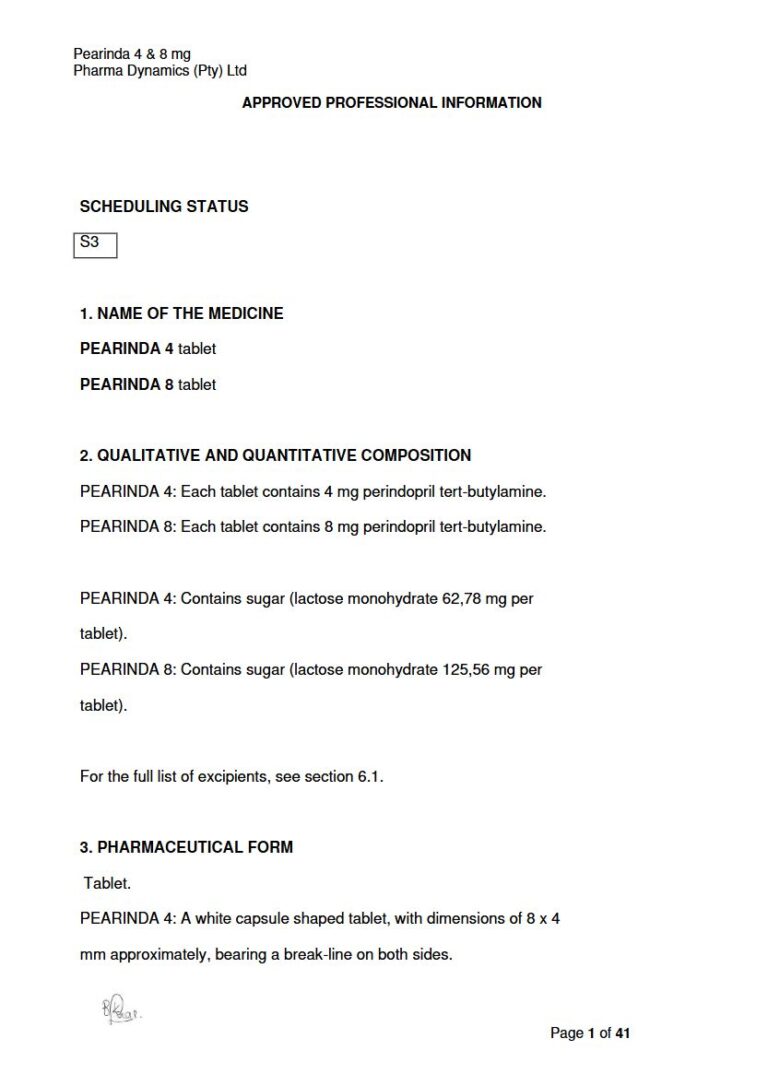
Clinical Summary
Quick overview from the medicine insert
Indication
Mild to moderate hypertension, congestive heart failure, and cardiovascular risk reduction.
Dosage (summary)
Starting at 4 mg once daily, may increase to 8 mg after one month; 2 mg for special populations.
Onset of Action / Duration
Onset: 4-6 hours, Duration: 24 hours
Special Populations
- Elderly
- Renal impairment
- Hepatic impairment
Pregnancy & Breastfeeding
Contraindicated in pregnancy and lactation.
Key Drug Interactions
- Potassium-sparing diuretics
- Lithium
- Fluoroquinolones
Contraindications
- Hypersensitivity to perindopril
- History of angioedema
- Severe renal impairment
Common side effects
- Dizziness
- Cough
- Fatigue
- Hypotension
Counselling Points
- Take in the morning before meals
- Monitor blood pressure regularly
- Report any signs of swelling or difficulty breathing
Serious warnings
- Risk of angioedema
- Monitor renal function
- Caution in hypotension
Important Disclaimer
The Pearinda 8 Mg/4 mg Tablets professional information leaflet below is the property of Pharma Dynamics and is provided on Medinsert exactly as issued, with no.. alterations or editorial changes. We make every effort to keep content current by updating documents as soon as new versions become available. Medinsert serves as a trusted access point for healthcare professionals, but does not replace official sources or clinical judgement. For more details, please read our full disclaimer. read more>>
 Healthcare Professionals Only
This content is for registered healthcare professionals
Sign in or create a free account to read the full package insert.
Free for HPCSA-registered professionals. Powered by Medinsert.
Clinical Particulars
Section 4 of the official insert — extracted exactly as issued, no alterations
4.1 Therapeutic indications
PEARINDA is indicated for:
- mild to moderate hypertension
- congestive heart failure not adequately controlled by conventional therapy with digoxin and diuretics, and where vasodilatation is indicated
- reduction of risk of cardiovascular events in patients with stable coronary artery disease and without heart failure.
4.2 Posology and method of administration
Posology
Mild to moderate hypertension
The recommended starting dosage is 4 mg once daily. This can be increased to 8 mg once daily after one month of treatment, if necessary.
Patients with renovascular hypertension, salt and/or volume depletion, cardiac decompensation or severe hypertension may experience an excessive drop in blood pressure following the initial dose. It is recommended that initiation of treatment should take place under medical supervision, using a starting dose of 2 mg in such patients.
Congestive heart failure
Treatment should be initiated at a low dose under close medical supervision. The initial dose is 2 mg as a single dose in the morning. This may be increased to 4 mg once daily as a maintenance dose, once blood pressure acceptability has been demonstrated.
Special populations
Reduction of risk of cardiovascular events
In patients with stable coronary artery disease, PEARINDA should be introduced at a dose of 4 mg once daily for two weeks, and then increased to 8 mg once daily, depending on renal function.
Elderly
Elderly patients should receive 2 mg once daily for one week, then 4 mg once daily the next week, before increasing the dose up to 8 mg once daily depending on renal function (see table Renal insufficiency for dosage adjustment).
Patients with diabetes type I or type II
Patients with type I and type II diabetes mellitus may be treated with the usual doses.
Concomitant use of diuretics in hypertension
Caution is advised in patients on current diuretic treatment. The effects of PEARINDA may be potentiated in a situation where hypovolaemia may occur. Patients taking diuretics should therefore have the diuretic withdrawn 2 to 3 days before beginning therapy with PEARINDA, and resumed later if required. If this is not possible, an initial dose of 2 mg may be given.
In patients where diuretic therapy cannot be discontinued, it is recommended that a potassium salt or a potassium sparing agent not be prescribed.
Renal insufficiency
The dosage of PEARINDA should be adjusted in relation to the severity of renal insufficiency. The dosage recommendations are:
Creatinine clearance Recommended dosage
Between 30 and 60 mL/min 2 mg per day
The mean dialysis clearance of perindopril is 52 mL/minute and that of perindoprilat 67,2 mL/minute, therefore the dose should be taken after the dialysis.
Hepatic impairment
No dosage adjustment is necessary in patients with hepatic impairment.
Paediatric population
The safety and efficacy of PEARINDA has not been established for use in children.
Method of administration
The usual dose of PEARINDA is one tablet taken once daily in the morning before a meal (see section 5.2).
Missed dose
Doctors should advise patients who forget to take PEARINDA to take a dose as soon as possible and then continue with the normal dose. Patients should not take a double dose to compensate for the missed dose.
4.3 Contraindications
- Hypersensitivity to perindopril tert-butylamine or to any of the ingredients of PEARINDA (see section 6.1).
- Patients with a history of angioedema related to previous ACE- inhibitor therapy, angiotensin receptor blockers (ARBs) or renin inhibitors: These patients should never again be given PEARINDA.
- Hereditary or idiopathic angioedema.
- Concomitant use of fluoroquinolones with ACE inhibitors/ARBs such as PEARINDA is contraindicated in patients with moderate to severe renal impairment (creatinine clearance u2264 30 mL/min) and in elderly patients.
- Aortic stenosis.
- Hypertrophic obstructive cardiomyopathy (HOCM).
- Severe renal function impairment (creatinine clearance below 30 mL/min).
- Bilateral renal stenosis or renal artery stenosis in patients with a single kidney.
- Concomitant therapy with potassium sparing diuretics such as spironolactone, triamterene, amiloride (see section 4.5).
- Porphyria.
- Lithium: Concomitant administration with PEARINDA may lead to a toxic blood concentration of lithium (see section 4.5).
- The concomitant use of PEARINDA and renin inhibitors such as aliskiren is contraindicated (see sections 4.4 and 4.5).
- Pregnancy and lactation (see section 4.6).
- Concomitant use of sacubitril/valsartan (see section 4.5).
- Extracorporeal treatments leading to contact of blood with negatively charged surfaces (see section 4.5).
4.4 Special warnings and precautions for use
Should a woman become pregnant while receiving PEARINDA, the treatment should be stopped promptly and switched to a different class of antihypertensive medicine (see sections 4.3 and 4.6).
PEARINDA should be used with caution in the following conditions:
Concomitant use of fluoroquinolones
Concomitant use of fluoroquinolones and ACE inhibitors / ARBs such as PEARINDA may precipitate acute kidney injury in patients, especially those with moderate to severe renal impairment and in elderly patients (see section 4.3). Renal function should be assessed before initiating treatment, and monitored during treatment, with fluoroquinolones or ACE inhibitors / ARBs, whether used separately and/or concomitantly (see sections 4.3 and 4.5).
Hypersensitivity/Angioedema
Angioedema of the face, extremities, lips, tongue, glottis and/or larynx has been reported in patients treated with angiotensin converting enzyme inhibitors, including PEARINDA. This may occur at any time during treatment. In such cases PEARINDA should be discontinued promptly. These patients should be monitored to ensure complete resolution of symptoms (see section 4.3).
Angioedema associated with laryngeal oedema may be fatal. Where there is involvement of the tongue, glottis or larynx, likely to cause airway obstruction, appropriate emergency therapy should be administered. This may include the administration of epinephrine (adrenaline) and/or the maintenance of a patent airway. The patient should be under close medical supervision until complete and sustained resolution of symptoms has occurred. These patients should never receive any PEARINDA, ACE inhibitors or ARBs again (see section 4.3).
Patients with a history of angioedema unrelated to ACE inhibitor therapy may be at increased risk of angioedema while receiving PEARINDA (see section 4.3). Intestinal angioedema has been reported in patients treated with ACE inhibitors such as PEARINDA. These patients presented with abdominal pain (with or without nausea or vomiting); in some cases, there was no prior facial angioedema and C-1 esterase levels were normal. Intestinal angioedema should be included in the differential diagnosis of patients on ACE inhibitors, such as PEARINDA presenting with abdominal pain.
Aortic or mitral valve stenosis / hypertrophic cardiomyopathy
PEARINDA should not be used in patients with mitral valve stenosis and an obstruction in the outflow tract of the left ventricle, such as aortic stenosis or hypertrophic cardiomyopathy (see section 4.3).
Impaired renal function
In acute myocardial infarction, treatment with PEARINDA should not be initiated in patients with evidence of renal dysfunction (serum creatinine concentrations exceeding 177 mmol/L or proteinuria exceeding 500 mg/24 hours). If renal dysfunction develops during treatment (serum creatinine concentrations exceeding 177 mmol/L or doubling of the pre-treatment value) then PEARINDA may need to be withdrawn (see section 4.3).
PEARINDA should not be used in patients with renovascular disease or suspected renovascular disease but it may be used cautiously in severe resistant hypertension in such patients. In this instance, PEARINDA should only be used under specialist supervision. The elderly and patients with peripheral vascular diseases or generalised atherosclerosis may have asymptomatic renovascular disease (see section 4.2).
In renal artery stenosis, bilateral or in one kidney or renal transplant, there is an increased risk of renal function impairment which may cause increases in blood urea and serum creatinine concentrations, and which may be reversible upon discontinuation of therapy. Routine monitoring of potassium and creatinine are part of normal medical practice for these patients. There is also an increased risk of agranulocytosis and neutropenia when immunosuppressants are concurrently administered (see section 4.3).
In patients with symptomatic heart failure, hypotension following the initiation of therapy with ACE inhibitors may lead to some further impairment in renal function. Acute renal failure has been reported in this situation.
Increases in blood urea and serum creatinine have been seen in patients with no apparent pre-existing vascular disease, especially when PEARINDA has been given concomitantly with a diuretic. This is more likely to occur in patients with pre-existing renal impairment. Dosage reduction or discontinuation of PEARINDA or the diuretic may be required.
Potassium sparing diuretics, potassium supplements or potassium-containing salt substitutes
Concomitant therapy with PEARINDA and potassium sparing diuretics such as spironolactone, triamterene and amiloride, potassium supplements or potassium-containing salt substitutes may lead to hyperkalaemia, which may be severe and lead to cardiac conduction abnormalities, dysrhythmias and cardiac arrest (see sections 4.3 and 4.5).
Hyperkalaemia
Elevations in serum potassium have been observed in some patients treated with PEARINDA. Patients at risk for the development of hyperkalaemia include those with uncontrolled diabetes mellitus, renal insufficiency, worsening of renal function, age (> 70 years), diabetes mellitus, inter-current events, in particular dehydration, acute cardiac decompensation, metabolic acidosis those using concomitant potassium supplements, potassium-sparing diuretics or potassium-containing salt substitutes; or those patients on other medicines associated with increases in serum potassium (e.g. heparin). Regular monitoring of serum potassium is recommended, if concomitant use of the above-mentioned medicines is deemed necessary (see sections 4.3 and 4.5).
Lithium
The combination of lithium and PEARINDA is contraindicated (see sections 4.3 and 4.5).
Dual blockade of the renin-angiotensin-aldosterone system (RAAS)
There is evidence that the concomitant use of ACE inhibitors, Angiotensin II receptor blockers (ARBs) or renin inhibitors such as aliskiren may increase the risk of hypotension, hyperkalaemia and decreases renal function (including acute renal failure). Dual blockade of RAAS through the combined use of PEARINDA and aliskiren is therefore contraindicated (see section 4.3).
PEARINDA is contraindicated with renin inhibitors such as aliskiren (see section 4.3).
Sacubitril/valsartan in combination with perindopril
The combination of perindopril with sacubitril/valsartan is contraindicated due to the increased risk of angioedema (see section 4.3). Sacubitril/valsartan must not be initiated until 36 hours after taking the last dose of perindopril therapy. If treatment with sacubitril/valsartan is stopped, perindopril therapy must not be initiated until 36 hours after the last dose of sacubitril/valsartan (see sections 4.3 and 4.5).
NEP inhibitors (e.g. racecadotril)
Concomitant use of other NEP inhibitors (e.g. racecadotril) and ACE- inhibitors may also increase the risk of angioedema (see section 4.5). Hence, a careful benefit-risk assessment is needed before initiating treatment with NEP inhibitors (e.g. racecadotril) in patients on perindopril.
Concomitant use of mTOR inhibitors (e.g. sirolimus, everolimus, temsirolimus)
Patients taking concomitant mTOR inhibitors (e.g sirolimus, everolimus, temsirolimus) therapy may be at increased risk for angioedema (e.g. swelling of the airways or tongue, with or without respiratory impairment (see section 4.3).
Hepatic failure
ACE inhibitors, such as PEARINDA, have been associated with a syndrome that starts with cholestatic jaundice and progresses to fulminant hepatic necrosis and (sometimes) death. The mechanism of this syndrome is not understood. Patients receiving PEARINDA who develop jaundice or marked elevations of hepatic enzymes should discontinue PEARINDA and receive appropriate medical follow-up (see section 4.8).
Cerebrovascular disease or ischaemic heart disease
Reduction in blood pressure could aggravate cerebrovascular disease (such as atherosclerosis) or ischaemic heart disease and may result in myocardial infarction and cerebrovascular accidents.
Hypotension
Treatment with PEARINDA must not be initiated in acute myocardial infarction patients who are at risk of further serious haemodynamic deterioration after treatment with a vasodilator. These include patients with systolic blood pressure of 100 mmHg or lower or cardiogenic shock. During the first 3 days following the infarction, the dose should be reduced if the systolic blood pressure is 120 mmHg or lower. Maintenance doses should be reduced if systolic blood pressure is 100 mmHg or lower. If hypotension persists (systolic blood pressure less than 90 mmHg for more than 1 hour) then PEARINDA should be withdrawn. In acute myocardial infarction, patients may develop persistent hypotension and/or impaired renal function.
Hypotension is more likely in volume depleted patients (e.g. by diuretic therapy, dietary salt restriction, dialysis, diarrhoea or vomiting or who have severe renin-dependent hypertension), although it may occur in normo-volaemic patients.
In patients with symptomatic heart failure, with or without associated renal insufficiency, symptomatic hypotension has been observed. This is most likely to occur in those patients with more severe degrees of heart failure, as reflected by the use of high doses of loop diuretics, hyponatraemia or functional renal impairment. In patients at increased risk of symptomatic hypotension, initiation of therapy and dose adjustment should be closely monitored.
Patients at a high risk of symptomatic hypotension e.g. patients with salt or volume depletion with or without hyponatraemia should have these conditions corrected before therapy with PEARINDA. Monitoring is required after initiating therapy.
In some patients with congestive heart failure, who have normal or low blood pressure, additional lowering of systemic blood pressure may occur with PEARINDA. If hypotension becomes symptomatic, a reduction of the dose or discontinuation of perindopril may be necessary.
If hypotension occurs, the patient should be placed in the supine position and if necessary, receive an intravenous infusion of 0,9 % saline.
A transient hypotensive response is not a contraindication to further doses, which can usually be given without difficulty once the blood pressure has increased after volume expansion.
Haemodialysis patients
Anaphylactic reactions have been reported in patients dialysed with high flux membranes (e.g. AN 69), and treated concomitantly with an ACE inhibitor, including PEARINDA. In these patients, consideration should be given to using a different type of dialysis membrane or different class of antihypertensive medicine.
Surgery/Anaesthesia
In patients undergoing major surgery or during anaesthesia with medicines that produce hypotension, PEARINDA may block angiotensin II formation secondary to compensatory renin release. The treatment should be discontinued one day prior to the surgery. If hypotension occurs and is considered to be due to this mechanism, it can be corrected by volume expansion.
Diabetic patients
In diabetic patients treated with PEARINDA, an increased risk of hyperkalaemia, as well as hypoglycaemia may occur (see section 4.5). The glycaemia levels should be closely monitored in diabetic patients previously treated with oral antidiabetic medicines or insulin, namely during the first month of treatment with PEARINDA.
Elderly
Renal function and potassium levels should be tested before the start of treatment. The initial dose is subsequently adjusted according to blood pressure response, especially in cases of water and electrolyte depletion, in order to avoid sudden onset of hypotension.
Race
PEARINDA causes a higher rate of angioedema in black patients than in non-black patients. PEARINDA may be less effective in lowering blood pressure in black people than in other ethnic groups, possibly because of a higher prevalence of low-renin levels in the black hypertensive population.
Anaphylactic reactions during low-density lipoproteins (LDL) apheresis
Patients receiving PEARINDA during low density lipoprotein (LDL)- apheresis with dextran sulphate have experienced life-threatening anaphylactoid reactions. These reactions were avoided by temporarily withholding ACE inhibitors, such as PEARINDA therapy, prior to each apheresis.
Anaphylactic reactions during desensitisation
Anaphylactoid reactions have occurred in patients using ACE inhibitors, including PEARINDA, during desensitising protocols involving, for example, hymenoptera venom. These reactions were avoided when the ACE inhibitors were temporarily withheld, but they reappeared upon re-challenge.
Neutropenia/Agranulocytosis/Thrombocytopenia/Anaemia
Neutropenia, agranulocytosis, thrombocytopenia and anaemia have been reported in patients receiving ACE inhibitors such as PEARINDA. In patients with normal renal function and no other complicating factors, neutropenia may occur. PEARINDA should be used with caution in patients with collagen vascular disease, immunosuppressant therapy, treatment with allopurinol or procainamide, or a combination of these complicating factors, especially if there is pre-existing impaired renal function. Some of these patients developed serious infections, which did not respond to intensive antibiotic therapy. If PEARINDA is used in such patients, periodic monitoring of the white blood cell counts is advised and patients should be instructed to report any sign of infection (e.g. sore throat, fever).
Autoimmune disease, especially systemic lupus erythematosus, other collagen vascular disease or scleroderma, increase the risk for development of neutropenia or agranulocytosis.
Anaemia
Anaemia has been observed in patients who have had a kidney transplant or have been undergoing dialysis. The reduction in haemoglobin levels is more apparent if initial values were high. This reduction is slight, occurs within 1 to 6 months, and then remains stable. It is reversible when the treatment is stopped.
Treatment can be confirmed with regular haematological testing.
Bone marrow depression
PEARINDA may cause bone marrow depression, and therefore an increased risk of agranulocytosis and neutropenia.
Cough
A dry cough has been reported with the use of PEARINDA. An iatrogenic aetiology should be considered in the event of this symptom. Characteristically, the cough is non-productive, persistent and resolves after discontinuation of therapy.
Kidney transplantation
There is no experience regarding the administration of PEARINDA in patients with a recent kidney transplant.
Primary aldosteronism
Patients with primary hyperaldosteronism will generally not respond to anti-hypertensive medication acting through inhibition of the renin- angiotensin system. Therefore, the use of PEARINDA is not recommended.
4.5 Interactions with other medicines
Some medicines or therapeutic classes may increase the occurrence of hyperkalaemia: potassium salts, potassium-sparing diuretics, ACE inhibitors, angiotensin II receptor antagonists, NSAIDs, heparins, immunosuppressant agents such as ciclosporin or tacrolimus, trimethoprim. The combination with these medicines increases the risk of hyperkalaemia.
Concomitant use contraindicated (see section 4.3)
- Fluoroquinolones and ACE-inhibitors/Renin angiotensin receptor blockers
- Concomitant use of fluoroquinolones and ACE inhibitors / ARBs such as PEARINDA may precipitate acute kidney injury (see section 4.3 and 4.4). It has been reported that AKI occurred soon after ciprofloxacin was prescribed in patients taking enalapril. The interaction between ACE-inhibitors and fluoroquinolones to precipitate AKI is a class effect for all ACE-inhibitors and not just enalapril and also a class effect of all fluoroquinolones, not just with ciprofloxacin.
- Potassium sparing diuretics, potassium supplements or potassium-containing salt substitutes
- Hyperkalaemia (potentially lethal) may occur in some patients treated with PEARINDA, especially in conjunction with renal impairment. Potassium sparing diuretics (e.g. spironolactone, triamterene or amiloride), potassium supplements or potassium-containing salt substitutes, may lead to significant increases in serum potassium. Therefore, the combination of PEARINDA with the above-mentioned medicines is contraindicated (see section 4.3).
- Lithium
- Reversible increases in serum lithium concentrations and toxicity have been reported during concomitant administration of lithium with PEARINDA. Combination of PEARINDA with lithium is contraindicated, but if the combination proves necessary, careful monitoring of serum lithium levels should be performed (see section 4.3).
Dual blockage of the RAAS with ARBs, ACE inhibitors or renin inhibitors such as aliskiren
Clinical trial data has shown that dual blockade of the renin-angiotensin-aldosterone-system (RAAS) through the combined use of ACE inhibitors, Angiotensin II receptor blockers or aliskiren is associated with a higher frequency of adverse events such as hypotension, hyperkalaemia and decreased renal function (see sections 4.3 and 4.4).
Estramustine
Risk of increased adverse effects such as angioedema.
Aliskiren
In diabetic or impaired renal patients, risk of hyperkalaemia, worsening of renal function and cardiovascular morbidity and mortality increase. In patients other than diabetic or impaired renal patients, risk of hyperkalaemia, worsening of renal function and cardiovascular morbidity and mortality may increase.
Extracorporeal treatments
Extracorporeal treatments leading to contact of blood with negatively charged surfaces such as dialysis or haemofiltration with certain high- flux membranes (e.g. polyacrylonitrile membranes) and low density lipoprotein apheresis with dextran sulphate due to increased risk of severe anaphylactoid reactions (see section 4.3). If such treatment is required, consideration should be given to using a different type of dialysis membrane or a different class of antihypertensive agent.
Sacubitril/Valsartan
The concomitant use of perindopril with sacubitril/valsartan is contra- indicated as the concomitant inhibition of neprilysin and ACE may increase the risk of angioedema. Sacubitril/valsartan must not be started until 36 hours after the last dose of perindopril therapy. Perindopril therapy must not be started until 36 hours after the last dose of sacubitril/valsartan (see sections 4.4 and 4.3).
Concomitant therapy with ACE-inhibitor and angiotensin-receptor blocker
It has been reported in the literature that in patients with established atherosclerotic disease, heart failure, or with diabetes with end organ damage, concomitant therapy with ACE-inhibitor and angiotensin- receptor blocker is associated with a higher frequency of hypotension, syncope, hyperkalaemia, and worsening renal function (including acute renal failure) as compared to use of a single renin-angiotensin- aldosterone system agent. Dual blockade (e.g, by combining an ACE- inhibitor with an angiotensin II receptor antagonist) should be limited to individually defined cases with close monitoring of renal function, potassium levels, and blood pressure.
Co-trimoxazole (trimethoprim/sulphamethoxazole)
Patients taking concomitant co-trimoxazole (trimethoprim/ sulfamethoxazole) may be at increased risk for hyperkalaemia (see section 4.3).
Concomitant use which requires special care
Diuretics
Patients on diuretics, and especially those who are volume and/or salt depleted, may experience excessive reduction in blood pressure after initiation of therapy with PEARINDA. The possibility of hypotensive effects can be reduced by discontinuation of the diuretic, and by increasing volume or salt intake prior to initiating therapy with low and increasing doses of PEARINDA.
In arterial hypertension, when prior diuretic therapy may have caused salt/volume depletion, either the diuretic must be discontinued before initiating PEARINDA, in which case a non-potassium-sparing diuretic can be thereafter reintroduced or PEARINDA must be initiated with a low dosage and progressively increased.
In diuretic-treated congestive heart failure, PEARINDA should be initiated at a very low dosage, possibly after reducing the dosage of the associated non-potassium-sparing diuretic.
In all cases, renal function (creatinine levels) must be monitored during the first few weeks of PEARINDA therapy.
Potassium-sparing diuretics (eplerenone, spironolactone)
With eplerenone or spironolactone at doses between 12,5 mg to 50 mg by day and with low doses of ACE-inhibitors: In the treatment of class II-IV heart failure (NYHA) with an ejection fraction < 40 %, and previously treated with ACE-inhibitors and loop diuretics, risk of hyperkalaemia, potentially lethal, especially in case of non-observance of the prescription recommendations on this combination. Before initiating the combination, check the absence of hyperkalaemia and renal impairment. Close monitoring of the potassium and creatinine is recommended in the first month of the treatment, once a week at the beginning and then, monthly thereafter.
Non-steroidal anti-inflammatory drugs (NSAIDs) including aspirin
u2265 3 g/ day
The administration of non-steroidal anti-inflammatory drugs (NSAIDs) (i.e. acetylsalicylic acid at anti-inflammatory dosage regimens, COX-2 inhibitors and non-selective NSAIDs) may reduce the antihypertensive effect of PEARINDA. Concomitant use of PEARINDA and NSAIDs may lead to an increased risk of worsening of renal function, including possible acute renal failure, and an increase in serum potassium, especially in patients with poor pre-existing renal function. The combination should be administered with caution, especially in the elderly. Patients should be adequately hydrated and consideration should be given to monitoring renal function after initiation of concomitant therapy, and periodically thereafter. Blood pressure monitoring should be increased when any NSAID is added or discontinued in a patient treated with PEARINDA.
Racecadotril
ACE-inhibitors (e.g. perindopril) are known to cause angioedema. This risk may be elevated when used concomitantly with racecadotril (a medicine used against acute diarrhoea).
mTOR inhibitors (e.g. sirolimus, everolimus, temsirolimus)
Patients taking concomitant mTOR inhibitors therapy may be at increased risk for angioedema (see section 4.4).
Antidiabetic medicines
Concomitant administration of PEARINDA and antidiabetic medicines (insulins, oral hypoglycaemic medicines) may cause an increased blood-glucose lowering effect with the risk of hypoglycaemia. This phenomenon is more likely during the first weeks of combined treatment and in patients with renal impairment.
Baclofen
Increased antihypertensive effect. Monitor blood pressure and adapt antihypertensive dosage if necessary.
Concomitant use which requires some care
Antihypertensive medicines and vasodilators
Concomitant use of these medicines may increase the hypotensive effects of PEARINDA. Concomitant use with nitro-glycerine and other nitrates, or other vasodilators, may further reduce blood pressure.
Gliptins (saxagliptin, vildagliptin)
Increased risk of angioedema, due to dipeptidyl peptidase IV (DPP-IV) decreased activity by the gliptin, in patients co-treated with an ACE inhibitor such as PEARINDA.
Aspirin (acetylsalicylic acid), thrombolytics, beta-blockers and nitrates
PEARINDA may be used concomitantly with acetylsalicylic acid (when used as a thrombolytic), thrombolytics, beta-blockers and/or nitrates.
Tricyclic antidepressants/Antipsychotics/Anaesthetics
Concomitant use of certain anaesthetic medicines, tricyclic antidepressants and antipsychotics with PEARINDA may result in further reduction of blood pressure (see section 4.4).
Sympathomimetics
Sympathomimetics may reduce the antihypertensive effects of PEARINDA.
Ciclosporin
An additive hyperkalaemic effect with PEARINDA and ciclosporin is possible.
Digoxin
PEARINDA increases serum-digoxin concentrations.
General anaesthetics
Marked hypotension may occur during general anaesthesia in patients taking PEARINDA.
Epoetins
An additive hyperkalaemic effect may occur when PEARINDA is given with epoetins. PEARINDA may antagonise the haematopoietic effects of epoetin.
Interleukin-3
Marked hypotension may occur in patients taking PEARINDA and who are given interleukin-3 after chemotherapy.
Gold
Nitritoid reactions (symptoms include facial flushing, nausea, vomiting and hypotension) have been reported less frequently in patients on therapy with injectable gold (sodium aurothiomalate) and concomitant ACE inhibitor therapy including PEARINDA.
4.6 Fertility, pregnancy and lactation
Pregnancy
The use of PEARINDA is contraindicated during pregnancy. Pregnant women should be informed of the potential hazards to the foetus and must not take PEARINDA during pregnancy (see section 4.3). Patients planning pregnancy should be changed to alternative anti-hypertensive treatments which have an established safety profile for use in pregnancy. When pregnancy is diagnosed, treatment with PEARINDA should be stopped immediately and if appropriate, alternative therapy should be started.
Foetal exposure to ACE inhibitors during the first trimester of pregnancy has been reported to be associated with an increased risk of malformations of the cardiovascular (atrial and/or ventricular septal defect, pulmonic stenosis, patent ductus arteriosus) and central nervous system (microcephaly spina bifida) and of kidney malformations.
PEARINDA passes through the placenta and can be presumed to cause disturbance in foetal blood pressure regulatory mechanisms. Oligohydramnios as well as hypotension, oliguria and anuria in newborns, have been reported after administration of PEARINDA during the second and third trimester. Cases of defective skull ossification have been observed. Prematurity and low birth mass can occur (see section 4.3). Therefore, PEARINDA is contraindicated during pregnancy and lactation.
Breastfeeding
Safety in lactation has not been established (see section 4.3).
4.7 Effects on ability to drive and use machines
PEARINDA has no direct influence on the ability to drive and use machines. PEARINDA can cause side effects such as dizziness, particularly at the start of treatment or in combination with another antihypertensive medicine. Caution is advised when driving or performing tasks requiring alertness until the patient knows how PEARINDA affects them.
4.8 Undesirable effects
Tabulated summary of adverse reactions
System Organ Class Frequency Side effects
Blood and lymphatic system disorders Less frequent Frequency unknown Decreases in haemoglobin and haematocrit, leukopenia/neutropenia, thrombocytopenia, agranulocytosis, pancytopenia, eosinophilia Decreases in white blood cell count, bone marrow depression, anaemia, haemolytic anaemia, aplastic anaemia (sometimes fatal), G-6PDH haemolytic anaemia
Immune system disorders Less frequent Frequency unknown Hypersensitivity/angioedema reactions: angioedema of the face, extremities, lips, tongue, glottis and/or larynx, which may be fatal Intestinal angioedema, a symptom complex has been reported which may include: fever, vasculitis, myalgia, arthritis/arthralgia, a positive antinuclear antibodies (ANA), elevated erythrocyte sedimentation rate, eosinophilia and leucocytosis
Endocrine disorders Frequency unknown Hyperkalaemia, hyponatraemia, increases in blood urea, increases in serum creatinine
Metabolism and nutrition disorders Less frequent Hypoglycaemia
Psychiatric disorders Less frequent Mood alterations, sleep disturbances, mental confusion
Nervous system disorders Frequent Dizziness, headache, paraesthesia, vertigo, fatigue
Eye disorders Frequent Vision disturbance
Ear and labyrinth disorders Frequent Tinnitus
Cardiac disorders Frequency unknown Myocardial infarction, cerebrovascular accident, palpitations, tachycardia, chest pain, dysrhythmia, angina pectoris, stroke, possibly secondary to excessive hypotension in high-risk patients
Vascular disorders Frequent Less frequent Orthostatic effects, including hypotension Vasculitis, stroke possibly secondary to excessive hypotension in high-risk patients (see section 4.4).
Respiratory, thoracic and mediastinal disorders Frequent Less frequent Frequency unknown Cough, dyspnoea Bronchospasm, rhinitis, pneumonia Sinusitis, eosinophilic
Gastrointestinal disorders Frequent Less frequent Diarrhoea, nausea, abdominal pain, indigestion, vomiting, taste disturbances, constipation, dyspepsia Dry mouth, pancreatitis
Hepatobiliary disorders Less frequent Jaundice, increases in liver enzymes, increases in serum bilirubin, hepatitis (hepatocellular or cholestatic)
Skin and subcutaneous tissue disorders Frequent Less frequent Frequency unknown Rash, pruritus Urticaria, sweating, erythema multiforme Diaphoresis, alopecia, psoriasis, severe skin disorders including pemphigus, toxic epidermal necrolysis, Stevens- Johnson syndrome and rash, photosensitivity or other dermatological manifestations
Musculoskeletal, connective tissue and bone disorders Frequent Less frequent Muscle cramps Arthralgia, myalgia
Renal and urinary disorders Less frequent Frequency unknown Renal insufficiency, acute renal failure Uraemia, oligouria, anuria, proteinuria, renal dysfunction
Reproductive system and breast disorders Less frequent Impotence
General disorders and administrative site conditions Frequent Less frequent Asthenia Chest pain, malaise, peripheral oedema, pyrexia, sweating
Investigations Less frequent Frequency unknown Elevation of liver enzymes and serum bilirubin In the presence of renal insufficiency, severe heart failure and renovascular hypertension there may be an increase in blood urea, plasma creatinine and hyperkalaemia
Injury and poisoning Less frequent Fall
Reporting of suspected adverse reactions
Reporting suspected adverse reactions after authorisation of the medicine is important. It allows continued monitoring of the benefit/risk balance of the medicine. Healthcare professionals are asked to report any suspected adverse reactions to SAHPRA via the online service for adverse drug reaction reporting by following the link: https://www.sahpra.org.za/Publications/Index/8 .
An email can be sent directly to the company, [email protected] , to ensure safety of the product.
4.9 Overdose
Signs and symptoms
Severe hypotension, circulatory shock, electrolyte disturbances, renal failure, hyperventilation, tachycardia, palpitations, bradycardia, dizziness, anxiety and cough.
Management of overdose
Treatment is symptomatic and supportive. Activated charcoal may be given in severe overdosage if the patient presents within 1 hour of ingestion. The recommended treatment of an overdose is an intravenous infusion of normal saline solution. If hypotension occurs, the patient should be placed in the shock position. If available, treatment with angiotensin II infusion and/or intravenous catecholamines may also be considered. PEARINDA may be removed from the general circulation by haemodialysis. Pacemaker therapy is indicated for therapy-resistant bradycardia. Vital signs, serum electrolytes and creatinine concentrations should be monitored continuously. Expected symptoms and signs would be linked to hypotension. Further treatment is symptomatic and supportive.
