
Redifarg XR 5 Mg/500 Mg/1000 Mg/10 Mg Tablets
PDF Leaflet Revision Date: 27 January 2026
Clinical Summary
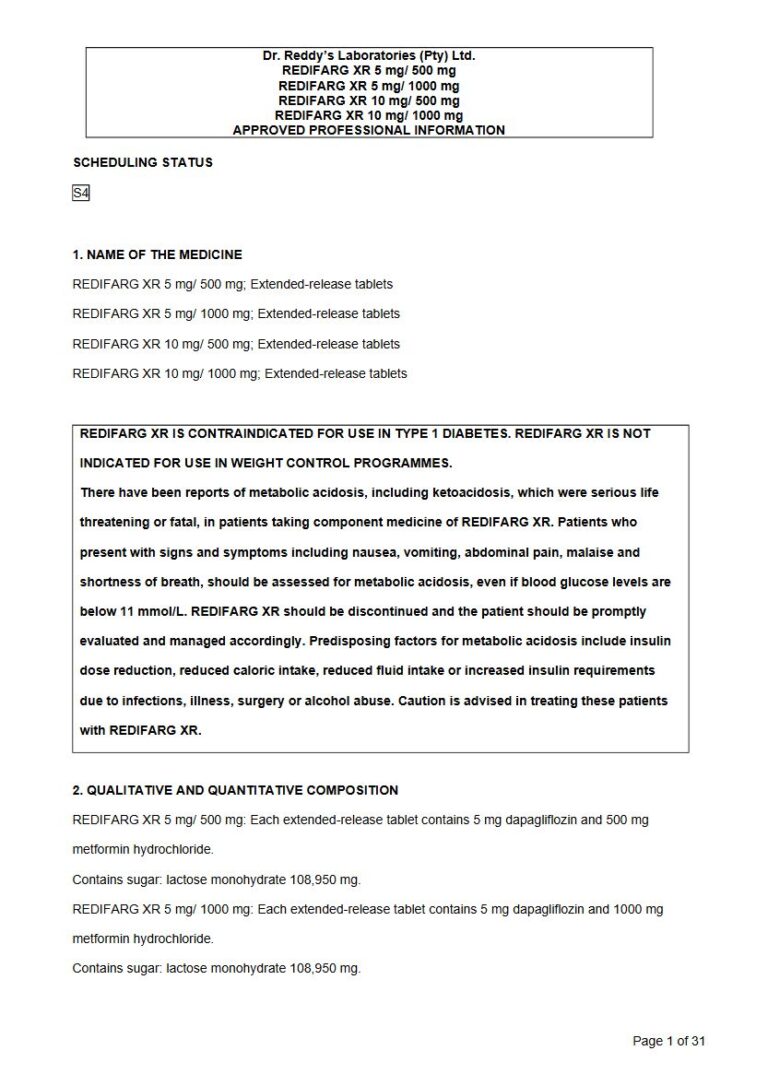
Quick overview from the medicine insert
Indication
For treatment of Type 2 diabetes mellitus as an adjunct to diet and exercise.
Dosage (summary)
Dapagliflozin 10 mg once daily; Metformin starting at 500 mg once daily, titrated to 2000 mg.
Special Populations
- Renal impairment
- Hepatic impairment
- Elderly patients
Pregnancy & Breastfeeding
Contraindicated in pregnancy and breastfeeding.
Key Drug Interactions
- Insulin and insulin secretagogues may increase hypoglycemia risk.
- Cationic medicines may interact with metformin.
Contraindications
- Type 1 diabetes
- Severe renal impairment
- Acute or chronic metabolic acidosis
- Pregnancy and breastfeeding
Common side effects
- Hypoglycemia
- Genital infections
- Urinary tract infections
- Gastrointestinal symptoms
Counselling Points
- Take with evening meal.
- Do not crush or chew tablets.
- Monitor for signs of lactic acidosis.
Serious warnings
- Risk of lactic acidosis
- Risk of ketoacidosis
- Necrotising fasciitis of the perineum
Important Disclaimer
The Redifarg XR 5 Mg/500 Mg/1000 Mg/10 Mg Tablets professional information leaflet below is the property of Dr Reddy’S Laboratories and is provided on Medinsert exactly as issued, with no.. alterations or editorial changes. We make every effort to keep content current by updating documents as soon as new versions become available. Medinsert serves as a trusted access point for healthcare professionals, but does not replace official sources or clinical judgement. For more details, please read our full disclaimer. read more>>
 Healthcare Professionals Only
This content is for registered healthcare professionals
Sign in or create a free account to read the full package insert.
Free for HPCSA-registered professionals. Powered by Medinsert.
Clinical Particulars
Section 4 of the official insert — extracted exactly as issued, no alterations
4.1 Therapeutic indications
REDIFARG XR is indicated in adults with type 2 diabetes mellitus when treatment with both dapagliflozin and metformin is appropriate:
- for the treatment of Type 2 diabetes mellitus as an adjunct to diet and exercise.
4.2 Posology and method of administration
Posology
The recommended dose of dapagliflozin is 10 mg once daily. The recommended starting dose of metformin is 500 mg once daily, which can be titrated to 2000 mg once daily, with gradual dose escalation to reduce the gastrointestinal side effects due to metformin. In patients treated with metformin, the dose of REDIFARG XR should provide metformin at the dose already being taken, or the nearest therapeutically appropriate dose. If no adequate strength of REDIFARG XR is available, individual mono-components should be used instead of the fixed dose combination. It is recommended to not exceed a dose of dapagliflozin 10 mg daily (two tablets of 5 mg dapagliflozin/500 mg metformin or two tablets of 5 mg dapagliflozin/1000 mg metformin).
Special populations
Patients with renal impairment
Assess renal function prior to initiation of REDIFARG XR and periodically thereafter (see sections 4.4 and 5.2). Renal impaired patients may have a higher incidence of adverse events.
Table 1: Dosage in patients with renal impairment
| eGFR mL/min/1,73 m2 | Metformin XR | Dapagliflozin |
|---|---|---|
| 60 - 89 | Maximum daily dose is 2000 mg. Dose reduction may be considered in relation to declining renal function. | Maximum total daily dose is 10 mg. |
| 45 - 59 | Maximum daily dose is 2000 mg. The starting dose is at most half of the maximum dose. | Maximum total daily dose is 10 mg. |
| 30 - 44 | Maximum daily dose is 1000 mg. The starting dose is at most half of the maximum dose. | Dapagliflozin is not recommended when eGFR is persistently below 45 L/min/1,73 m2. |
| < 30 | Metformin is contraindicated | Dapagliflozin is contraindicated. |
Mild renal impairment
No dose adjustment of REDIFARG XR is required for patients with mild renal impairment (eGFR 60 - 89 mL/min/1,73 m2 by Modified Diet in Renal Disease [MDRD] eGFR equation).
Moderate renal impairment
REDIFARG XR is not recommended for the treatment of diabetes in patients with eGFR persistently below 45 mL/min/1,73 m2 (see section 4.4). No dose adjustment is required for patients with eGFR u2265 45 mL/min/1,73 m2.
Severe renal impairment
Due to the metformin component, REDIFARG XR is contraindicated in patients with severe renal impairment (eGFR < 30 mL/min/1,73 m2) (see section 4.3).
Patients with hepatic impairment
Since impaired hepatic function has been associated with some cases of lactic acidosis in patients taking metformin, REDIFARG XR should generally be avoided in patients with clinical or laboratory evidence of hepatic impairment (see section 4.4).
Elderly patients
Because metformin is eliminated by the kidneys, and because elderly patients are more likely to have decreased renal function, REDIFARG XR should be used with caution as age increases. The renal function recommendations provided for all patients also apply to elderly patients (see section 4.4).
Patients at risk for volume depletion
For patients at risk for volume depletion due to co-existing conditions, a 5 mg starting dose of dapagliflozin may be appropriate (see sections 4.4 and 5.1).
Paediatric population
The safety and efficacy of REDIFARG XR in paediatric and adolescent patients have not been established. No data are available.
Method of administration
REDIFARG XR should be taken orally, once daily with the evening meal. Patients should be informed that REDIFARG XR tablets must be swallowed whole and never crushed, cut, or chewed. Occasionally, the inactive ingredients of REDIFARG XR will be eliminated in the faeces as a soft, hydrated mass that may resemble the original tablet.
4.3 Contraindications
REDIFARG XR is contraindicated in patients with:
- Patients with a history of any serious hypersensitivity reaction to dapagliflozin, metformin hydrochloride or to any of the excipients.
- Severe renal impairment [(metformin component)] (eGFR < 30 mL/min/1,73 m2).
- Acute or chronic metabolic acidosis including diabetic ketoacidosis.
- Diabetes mellitus Type 1.
- Pregnant women or women who are breast-feeding their infants (see section 4.6).
4.4 Special warnings and precautions for use
Lactic acidosis
Metformin hydrochloride
Lactic acidosis is a very rare, but serious and potentially fatal in the absence of prompt treatment, metabolic complication that can occur due to metformin accumulation (metformin plasma levels generally > 5 mcg/L). Metformin decreases liver uptake of lactate increasing lactate blood levels which may increase the risk of lactic acidosis. Reported cases of lactic acidosis in patients on metformin have occurred primarily in diabetic patients with significant renal failure. The incidence of lactic acidosis can and should be reduced by also assessing other associated risk factors such as poorly controlled diabetes, ketosis, prolonged fasting, excessive alcohol intake, hepatic insufficiency, dehydration, any acute conditions associated with hypoxia or impacting renal function (see section 4.4). Medicines that can acutely impair renal function, such as antihypertensives, diuretics and NSAIDs, should be initiated with caution in metformin-treated patients (see section 4.5). Patients and/or caregivers should be informed on the risk of lactic acidosis. Lactic acidosis is characterized by symptoms such as acidotic dyspnoea, abdominal pain, muscle cramps, asthenia and hypothermia followed by coma. Diagnostic laboratory findings are decreased blood pH, plasma lactate levels above 5 mmol/L, and an increased anion gap and lactate/pyruvate ratio. If metabolic acidosis is suspected, treatment with REDIFARG XR should be discontinued and the patient hospitalized immediately.
Use in patients with renal impairment
REDIFARG XR is not recommended for the treatment of diabetes in patients with eGFR persistently below 45 mL/min/1,73 m2 as the glycaemic efficacy of dapagliflozin is dependent on renal function (see section 4.2). The maximum dose of metformin in patients with an eGFR of 30 to less than 45 mL/min/1,73 m2 is 1000 mg once daily. Due to metformin, REDIFARG XR is contraindicated in patients with severe renal impairment (eGFR < 30 mL/min/1,73 m2) (see section 4.3). Metformin is excreted by the kidney and the risk of metformin accumulation and lactic acidosis increases with the degree of impairment of renal function (see section 4.4). Assess renal function prior to initiation of REDIFARG XR and then periodically thereafter:
- at least annually
- at least two to four times a year in patients with renal function where eGFR levels are approaching 45 mL/min/1,73 m2 and in elderly patients.
Acute conditions associated with hypoxia or impacting renal function
Metformin hydrochloride
Cardiovascular collapse (shock), acute congestive heart failure, acute myocardial infarction, and other conditions characterized by hypoxemia have been associated with lactic acidosis and may also cause pre-renal azotemia. Acute conditions such as dehydration, severe infections, and hypoperfusion, have potential to alter renal function. In these situations, metformin must be discontinued.
Radiologic studies with intravascular iodinated contrast materials
Metformin hydrochloride
Intravascular administration of iodinated contrast medicines in radiological studies can lead to an acute decrease in renal function and has been associated with lactic acidosis in patients receiving metformin. REDIFARG XR should temporarily be discontinued prior to, or at the time of the procedure and not reinstituted until 48 hours afterwards and only after renal function has been re-evaluated and found to be stable.
Surgical procedures
Metformin hydrochloride
Use of REDIFARG XR should be temporarily suspended before any surgical procedure (except minor procedures not associated with restricted intake of food and fluids) and should not be restarted until the patientu2019s oral intake has resumed and renal function has been evaluated as stable. The patient should receive regular monitoring of their blood glucose with the administration of soluble insulin perioperatively as indicated.
Use in patients with hepatic impairment
Metformin hydrochloride
Since impaired hepatic function has been associated with some cases of metformin-associated lactic acidosis, REDIFARG XR should be avoided in patients with clinical or laboratory evidence of hepatic disease.
Excessive alcohol intake
Metformin hydrochloride
Alcohol potentiates the effect of metformin on lactate metabolism. Patients should be warned against excessive alcohol intake while receiving REDIFARG XR.
Ketoacidosis
Dapagliflozin
There have been reports of ketoacidosis, including diabetic ketoacidosis, in patients with type 1 and type 2 diabetes mellitus taking dapagliflozin and other SGLT2 inhibitors. REDIFARG XR is not indicated for the treatment of patients with type 1 diabetes mellitus. Patients treated with REDIFARG XR who present with signs and symptoms consistent with ketoacidosis, including nausea, vomiting, abdominal pain, malaise and shortness of breath should be assessed for ketoacidosis, even if blood glucose levels are below 14 mmol/L (250 mg/dL). If ketoacidosis is suspected, discontinuation or temporary interruption of REDIFARG XR should be considered and the patient should be promptly evaluated. Predisposing factors to ketoacidosis include a low beta-cell function reserve resulting from pancreatic disorders (e.g., type 1 diabetes, history of pancreatitis or pancreatic surgery), insulin dose reduction, reduced caloric intake or increased insulin requirements due to infections, illness, surgery or alcohol abuse. REDIFARG XR should be used with caution in these patients.
Change in clinical status of patients with previously controlled type 2 diabetes
Metformin hydrochloride
A patient with type 2 diabetes previously well controlled on REDIFARG XR who develops laboratory abnormalities or clinical illness (especially vague and poorly defined illness) should be evaluated promptly for evidence of lactic acidosis. Evaluation should include serum electrolytes, urine and serum ketones, blood glucose, blood pH, lactate, pyruvate, and metformin levels. If acidosis occurs, REDIFARG XR must be stopped immediately and other appropriate corrective measures initiated.
Use in patients at risk for volume depletion
Dapagliflozin
Due to its mechanism of action, dapagliflozin induces osmotic diuresis which may lead to the decrease in blood pressure observed in studies (see section 5.1). For patients at risk for volume depletion due to co-existing conditions, a starting dose of dapagliflozin 5 mg once daily may be appropriate as REDIFARG XR or individual components. Temporary interruption of REDIFARG XR should be considered for patients who develop volume depletion.
Use with medications known to cause hypoglycaemia
Dapagliflozin
Insulin and insulin secretagogues, such as sulfonylureas, cause hypoglycaemia. Therefore, a lower dose of insulin or the insulin secretagogue may be required to reduce the risk of hypoglycaemia when used in combination with dapagliflozin (see section 5.1).
Metformin
Hypoglycaemia does not occur in patients receiving metformin alone under usual circumstances of use, but could occur when caloric intake is deficient, when strenuous exercise is not compensated by caloric supplementation, or during concomitant use with other glucose-lowering medicines (such as sulfonylureas and insulin) or ethanol. Elderly, debilitated, or malnourished patients, and those with adrenal or pituitary insufficiency or alcohol intoxication are particularly susceptible to hypoglycaemic effects. Hypoglycaemia may be difficult to recognize in the elderly and in people who are taking beta-adrenergic blocking medicines.
Necrotising fasciitis of the perineum (Fournier's gangrene)
Post-marketing cases of necrotising fasciitis of the perineum (also known as Fournier's gangrene) have been reported in female and male patients taking SGLT2 inhibitors (see section 4.8). This is a rare but serious and potentially life-threatening event that requires urgent surgical intervention and antibiotic treatment. Patients should be advised to seek medical attention if they experience a combination of symptoms of pain, tenderness, erythema, or swelling in the genital or perineal area, with fever or malaise. Be aware that either uro-genital infection or perineal abscess may precede necrotising fasciitis. If Fournier's gangrene is suspected, dapagliflozin and metformin HCl should be discontinued and prompt treatment (including antibiotics and surgical debridement) should be instituted.
Urinary tract infections
Urinary glucose excretion may be associated with an increased risk of urinary tract infection; therefore, temporary interruption of treatment should be considered when treating pyelonephritis or urosepsis.
Elderly (u2265 65 years)
Elderly patients may be at a greater risk for volume depletion and are more likely to be treated with diuretics. Elderly patients are more likely to have impaired renal function, and/or to be treated with anti-hypertensive medicines that may cause changes in renal function such as angiotensin-converting enzyme inhibitors (ACE-I) and angiotensin II type 1 receptor blockers (ARB). The same recommendations for renal function apply to elderly patients as to all patients (see sections 4.2, 4.4, 4.8).
Lower limb amputations
An increase in cases of lower limb amputation (primarily of the toe) has been observed in ongoing long-term studies with another SGLT2 inhibitor. It is unknown whether this constitutes a class effect. Like for all diabetic patients it is important to counsel patients on routine preventative foot care.
Lactose
REDIFARG XR contains lactose. Patients with rare hereditary problems of galactose intolerance, e.g., galactosaemia, Lapp lactase deficiency, glucose-galactose malabsorption or fructose intolerance should not take REDIFARG XR.
4.5 Interaction with other medicines and other forms of interaction
Interaction with dapagliflozin and metformin
Coadministration of multiple doses of dapagliflozin and metformin did not meaningfully alter the pharmacokinetics of either dapagliflozin or metformin in healthy subjects. There have been no formal interaction studies for REDIFARG XR. The following statements reflect the information available on the individual active substances.
Medicine interactions with dapagliflozin
The metabolism of dapagliflozin is primarily mediated by UGT1A9-dependent glucuronide conjugation. The major metabolite, dapagliflozin 3-O-glucuronide, is not an SGLT2 inhibitor. In vitro studies, dapagliflozin and dapagliflozin 3-O-glucuronide neither inhibited CYP1A2, 2C9, 2C19, 2D6, 3A4, nor induced CYP1A2, 2B6 or 3A4. Therefore, dapagliflozin is not expected to alter the metabolic clearance of co-administered medicines that are metabolized by these enzymes, and medicines that inhibit or induce these enzymes are not expected to alter the metabolic clearance of dapagliflozin. Dapagliflozin is a weak substrate of the P-glycoprotein (P-gp) active transporter and dapagliflozin 3-O-glucuronide is a substrate for the OAT3 active transporter. Dapagliflozin or dapagliflozin 3-O-glucuronide did not meaningfully inhibit P-gp, OCT2, OAT1, or OAT3 active transporters. Overall, dapagliflozin is unlikely to affect the pharmacokinetics of concurrently administered medications that are P-gp, OCT2, OAT1, or OAT3 substrates.
Effect of other medicines on dapagliflozin
In interaction studies conducted in healthy subjects, using mainly single dose design, the pharmacokinetics properties of dapagliflozin were not altered by metformin (an hOCT-1 and hOCT-2 substrate), pioglitazone (a CYP2C8 [major] and CYP3A4 [minor] substrate), sitagliptin (an hOAT-3 substrate and P-glycoprotein substrate), glimepiride (a CYP2C9 substrate), voglibose (an u03b1-glucosidase inhibitor), hydrochlorothiazide, bumetanide, valsartan, or simvastatin (a CYP3A4 substrate). Therefore, meaningful interaction of dapagliflozin with other substrates of hOCT-1, hOCT-2, hOAT-3, P-gp, CYP2C8, CYP2C9, CYP3A4, and other u03b1-glucosidase inhibitors would not be expected.
Following coadministration of dapagliflozin with rifampicin (an inducer of various active transporters and medicine-metabolizing enzymes) or mefenamic acid (an inhibitor of UGT1A9), a 22% decrease and a 51% increase, respectively, in dapagliflozin systemic exposure was seen, but with no clinically meaningful effect on 24-hour urinary glucose excretion in either case. Coadministration of dapagliflozin and bumetanide did not meaningfully change the pharmacodynamic effect of dapagliflozin to increase urinary glucose excretion in healthy subjects.
Effect of dapagliflozin on other medicines
In interaction studies conducted in healthy subjects, using mainly a single dose design, dapagliflozin did not alter the pharmacokinetics of metformin, pioglitazone, sitagliptin, glimepiride, hydrochlorothiazide, bumetanide, valsartan, simvastatin, digoxin (a P-gp substrate), or warfarin (S-warfarin is a CYP2C substrate). Therefore, dapagliflozin is not a clinical meaningful inhibitor of hOCT-1, hOCT-2, hOAT-3, P-gp transporter pathway, and CYP2C8, CYP2C9, CYP2C19 and CYP3A4 mediated metabolism. Coadministration of dapagliflozin and bumetanide did not meaningfully alter the steady-state pharmacodynamic responses (urinary sodium excretion, urine volume) to bumetanide in healthy subjects. Dapagliflozin did not affect the anticoagulant activity of warfarin as measured by the prothrombin time (International Normalized Ratio [INR]).
Interactions between metformin hydrochloride and other medicines
Cationic medicines
Cationic medicines (e.g., amiloride, digoxin, morphine, procainamide, quinidine, quinine, ranitidine, triamterene, trimethoprim, or vancomycin) that are eliminated by renal tubular secretion theoretically have the potential for interaction with metformin by competing for common renal tubular transport systems. Such interaction between metformin and oral cimetidine has been observed in normal healthy volunteers in both single- and multiple-dose, metformin-cimetidine medicine-interaction studies, with a 60% increase in peak metformin plasma and whole blood concentrations and a 40% increase in plasma and whole blood metformin AUC. There was no change in elimination half-life in the single-dose study. Metformin had no effect on cimetidine pharmacokinetics. Although such interactions remain theoretical (except for cimetidine), careful patient monitoring and dose adjustment of metformin and/or the interfering medicine is recommended in patients who are taking cationic medications that are excreted via the proximal renal tubular secretory system.
Glyburide
In a single-dose interaction study in type 2 diabetic patients, coadministration of metformin and glyburide did not result in any changes in either metformin pharmacokinetics or pharmacodynamics. Decreases in glyburide AUC and maximum concentration (C max) were observed but were highly variable. The single dose nature of this study and the lack of correlation between glyburide blood levels and pharmacodynamic effects make the clinical significance of this interaction uncertain.
Furosemide
A single-dose, metformin-furosemide medicine-interaction study in healthy subjects demonstrated that pharmacokinetic parameters of both compounds were affected by coadministration. Furosemide increased the metformin plasma and blood C max by 22% and blood AUC by 15%, without any significant change in metformin renal clearance. When administered with metformin, the C max and AUC of furosemide were 31% and 12% smaller, respectively, than when administered alone, and the terminal half-life was decreased by 32%, without any significant change in furosemide renal clearance. No information is available about the interaction of metformin and furosemide when co-administered chronically.
Nifedipine
A single-dose, metformin-nifedipine medicine-interaction study in normal healthy volunteers demonstrated that coadministration of nifedipine increased plasma metformin C max and AUC by 20% and 9%, respectively, and increased the amount excreted in the urine. T max and half-life were unaffected. Nifedipine appears to enhance the absorption of metformin. Metformin had minimal effects on nifedipine.
Use with other medicines
Certain medicines tend to produce hyperglycaemia and may lead to loss of glycaemic control. These medicines include the thiazides and other diuretics, corticosteroids, phenothiazines, thyroid products, oestrogens, oral contraceptives, phenytoin, nicotinic acid, sympathomimetics, calcium channel blocking medicines, and isoniazid. When such medicines are administered to a patient receiving metformin, the patient should be closely observed for loss of blood glucose control. When such medicines are withdrawn from a patient receiving metformin, the patient should be observed closely for hypoglycaemia.
In healthy volunteers, the pharmacokinetics of metformin and propranolol, and metformin and ibuprofen was not affected when co-administered in single-dose interaction studies. Metformin is negligibly bound to plasma proteins and, therefore, is less likely to interact with highly protein-bound medicines such as salicylates, sulphonamides, chloramphenicol, and probenecid, as compared to the sulfonylureas, which are extensively bound to serum proteins.
Concomitant use not recommended
Iodinated contrast medicines
Intravascular administration of iodinated contrast medicines may lead to contrast induced nephropathy, resulting in metformin accumulation and increased risk of lactic acidosis. REDIFARG XR must be discontinued prior to, or at the time of the imaging procedure and not restarted until at least 48 hours after, provided that renal function has been re-evaluated and found to be stable (see sections 4.2 and 4.4).
Combination requiring precautions for use
Some medicines can adversely affect renal function which may increase the risk of lactic acidosis, e.g., NSAIDs, including selective cyclo-oxygenase (COX) II inhibitors, ACE inhibitors, angiotensin II receptor antagonists and diuretics, especially loop diuretics. When starting or using such products in combination with metformin, close monitoring of renal function is necessary.
Insulin and insulin secretagogues
Insulin and insulin secretagogues, such as sulphonylureas, cause hypoglycaemia. Therefore, a lower dose of insulin or an insulin secretagogue may be required to reduce the risk of hypoglycaemia when used in combination with metformin (see sections 4.2 and 4.8).
Other interactions
The effects of smoking, diet, herbal products, and alcohol use on the pharmacokinetics of dapagliflozin have not been specifically studied.
Interference with 1,5-anhydroglucitol (1,5-AG) Assay
Monitoring glycaemic control with 1,5-AG assay is not recommended as measurements of 1,5-AG are unreliable in assessing glycaemic control in patients taking SGLT2 inhibitors. Use alternative methods to monitor glycaemic control.
4.6 Fertility, pregnancy and lactation
Pregnancy
REDIFARG XR is contraindicated in pregnancy. When pregnancy is detected REDIFARG XR should be discontinued. In the time period corresponding to second and third trimester of pregnancy with respect to human renal maturation, maternal exposure to dapagliflozin in rat studies was associated with increased incidence and/or severity of renal pelvic and tubular dilatations in progeny. There are no adequate and well-controlled studies of REDIFARG XR in pregnant women.
Breastfeeding
REDIFARG XR must not be used by a nursing woman. No studies in lactating animals have been conducted with the combined components of REDIFARG XR. In studies performed with the individual components, both dapagliflozin and metformin are excreted in the milk of lactating rats. Direct and indirect exposure of dapagliflozin to weanling juvenile rats and during late pregnancy are each associated with increased incidence and/or severity of renal pelvic and tubular dilatations in progeny, although the long-term functional consequences of these effects are unknown. These periods of exposure coincide with a critical window of renal maturation in rats. As functional maturation of the kidneys in humans continues in the first 2 years of life, dapagliflozin-associated dilated renal pelvis and tubules noted in juvenile rats could constitute potential risk for human renal maturation during the first 2 years of life. Additionally, the negative effects on body-weight gain associated with lactational exposure in weanling juvenile rats suggest that dapagliflozin must be avoided during the first 2 years of life.
Fertility
The effect of REDIFARG XR on human fertility has not been studied.
4.7 Effects on ability to drive and use machines
REDIFARG XR has no or negligible influence on the ability to drive and use machines. Patients should be alerted to the risk of hypoglycaemia when this medicine is used in combination with other glucose-lowering medicines known to cause hypoglycaemia.
4.8 Undesirable effects
Tabulated summary of adverse reactions
Tabulated list of adverse reactions
Adverse reactions listed below are classified according to frequency and system organ class (SOC). Frequency categories are defined according to the following convention: within each frequency grouping, and listed in the table below.
Adverse reaction Frequency of adverse reaction
| Infections and infestations | Vulvovaginitis, balanitis * b | Genital infection a,b | Urinary tract infection * a,c | Frequent | Fungal infection** | Necrotising fasciitis of the perineum (Fournieru2019s gangrene) | Less frequent | |
|---|---|---|---|---|---|---|---|---|
| Metabolism and nutrition disorders | Hypoglycaemia | Frequent | Volume depletion i | Thirst** | Lactic acidosis | Vitamin B12 deficiency g | Less frequent | |
| Nervous system disorders | Taste disturbance | Frequent | ||||||
| Gastrointestinal disorders | Gastro-intestinal symptoms h | Frequent | Constipation** | Dry mouth** | Less frequent | |||
| Hepatobiliary disorders | Liver function disorders, hepatitis | Less frequent | ||||||
| Skin and subcutaneous tissue disorders | Urticaria, erythema, pruritus | Less frequent | ||||||
| Rash ( Rash, generalized rash, pruritic rash, macular rash, maculo-papular rash, pustular rash, vesicular rash, erythematous rash.) | Frequent | |||||||
| Musculoskeletal and connective tissue disorders | Back pain d | Frequent | ||||||
| Renal and urinary disorders | Pollakiuria a , polyuria a,e and Dysuria | Frequent | Nocturia** | Less frequent | ||||
| Reproductive system and breast disorders | Vulvovaginal pruritus** | Pruritus genital** | Less frequent | |||||
| Investigations | Haematocrit increased | Creatinine renal clearance decreased during initial treatment | Dyslipidaemia | Frequent | Blood creatinine increased during initial treatment** | Blood urea increased** | Weight decreased** | Less frequent |
a Identified from 8 placebo-controlled studies, including 2 initial combination with metformin, 2 add-on to metformin, 1 add-on to insulin, 1 add-on to sitagliptin, and 2 studies with combination add-on therapy.
b Multiple adverse events terms, including vulvovaginal infections and candidiasis, balanoposthitis, balanitis candida, penile abscess, penile infection, vulval abscess and vaginitis bacterial.
c Multiple adverse events terms, including genitourinary tract infection, cystitis, pyelonephritis, trigonitis, urethritis and prostatitis.
d Additional events identified from 13 placebo-controlled studies with dapagliflozin 10 mg in type 2 diabetes mellitus including 3 monotherapy, 1 initial combination with metformin, 2 add-on to metformin, 2 add-on to insulin, 1 add-on to pioglitazone, 1 add-on to sitagliptin, 1 add-on to glimepiride, and 2 studies with combination add-on therapy.
e Represents multiple adverse events terms, including polyuria, urine output increased.
g Long-term treatment with metformin has been associated with a decrease in vitamin B12 absorption which may very rarely result in clinically significant vitamin B12 deficiency. Consideration of such etiology is recommended if a patient presents with megaloblastic anaemia.
h Gastrointestinal symptoms such as nausea, vomiting, diarrhoea, abdominal pain, and loss of appetite occur most frequently during initiation of therapy and resolve spontaneously in most cases.
i volume depletion includes, e.g., the predefined preferred terms: dehydration, hypovolaemia, hypotension.
*Reported in u2265 2 % of subjects and u2265 1 % more and at least 3 more subjects treated with dapagliflozin 10 mg compared to placebo.
**Reported by the investigator as possibly related, probably related or related to study treatment and reported in u2265 0,2 %of subjects and u2265 0,1 % more and at least 3 more subjects treated with dapagliflozin 10 mg compared to placebo.
Description of selected adverse reactions
Genital Infections
Events of genital infections were reported in 5,5 % and 0,6 % of patients who received dapagliflozin 10 mg and placebo, respectively, in the 13-study, short-term, placebo-controlled pool. The events of genital infections reported in patients treated with dapagliflozin 10 mg were all mild to moderate. Most events of genital infection responded to an initial course of standard treatment and rarely resulted in discontinuation from the study (0,2 % dapagliflozin 10 mg vs. 0 % in placebo). Infections were reported more frequently in females (8,4 % dapagliflozin 10 mg vs. 1,2 % placebo) than in males (3,4 % dapagliflozin 10 mg vs. 0,2 % placebo). The most frequently reported genital infections were vulvovaginal mycotic infections in females, and balanitis in males.
Urinary Tract Infections
Events of urinary tract infections (UTI) were reported in 4,7 % and 3,5 % of patients who received dapagliflozin 10 mg and placebo, respectively, in the 13-study, short-term, placebo-controlled pool. Most events of urinary tract infections reported in patients treated with dapagliflozin 10 mg were mild to moderate. Most patients responded to an initial course of standard treatment, and urinary tract infections rarely caused discontinuation from the study (0,2 % dapagliflozin 10 mg vs. 0,1 % placebo). Infections were more frequently reported in females (8,5 % dapagliflozin 10 mg vs. 6,7 % placebo) than in males (1,8 % dapagliflozin 10 mg vs. 1,3 % placebo).
Reporting of suspected adverse reactions
Reporting suspected adverse reactions after authorisation of the medicine is important. It allows continued monitoring of the benefit/risk balance of the medicine. Health care providers are requested to report any suspected adverse drug reactions to SAHPRA via Med Safety APP (Medsafety X SAHPRA) and eReporting platform (who-umc.org) found on SAHPRA website. For any information about this medicine, please contact the local representative of the Holder of Certificate of Registration: Dr. Reddyu2019s Laboratories (Pty) Ltd. Tel: +27 11 324 2100
4.9 Overdose
Dapagliflozin
Orally administered dapagliflozin has been shown to be safe and well-tolerated in healthy subjects at single doses up to 500 mg (50 times the MRHD). In the event of an overdose, appropriate supportive treatment should be initiated as dictated by the patientu2019s clinical status. The removal of dapagliflozin by haemodialysis has not been studied.
Metformin hydrochloride
High overdose or concomitant risks of metformin may lead to lactic acidosis. Lactic acidosis is a medical emergency and must be treated in a hospital. The most effective method to remove lactate and metformin is haemodialysis. Events of hypoglycaemia have been reported with overdoses of metformin.
