
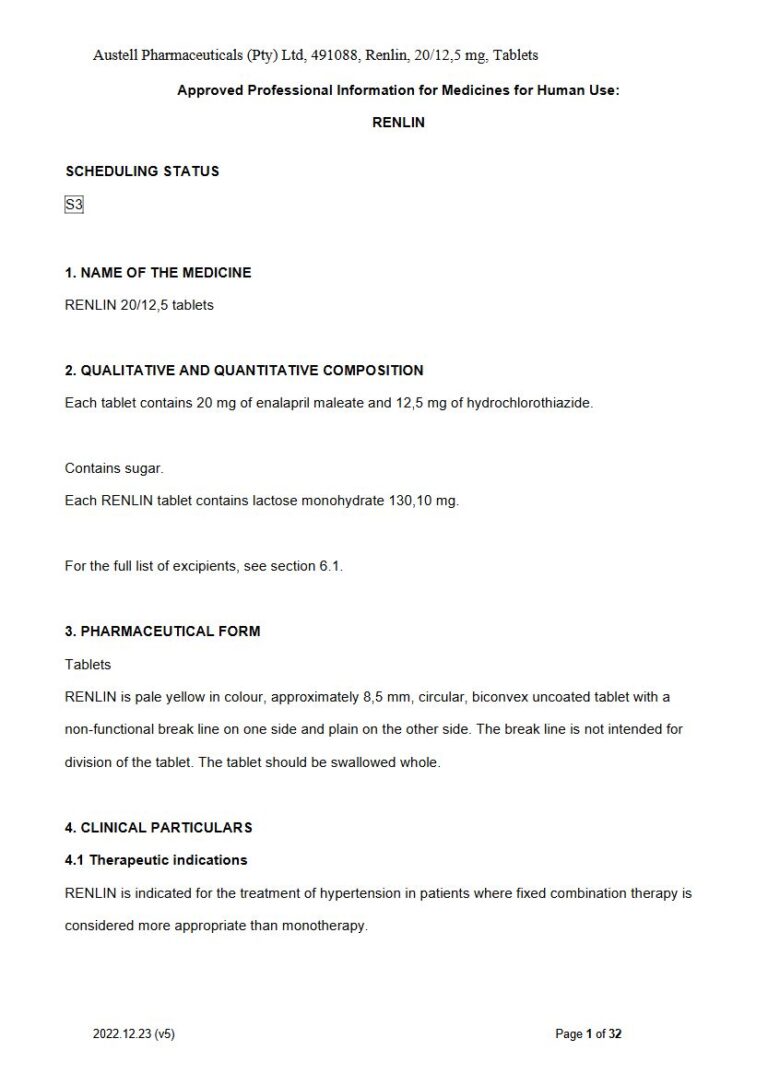
Renlin 20/12,5 mg, Tablets
PDF Leaflet Revision Date: 23 December 2022
Clinical Summary
Quick overview from the medicine insert
Indication
Treatment of hypertension where fixed combination therapy is preferred.
Dosage (summary)
1 tablet once daily, may increase to 2 tablets once daily if needed.
Special Populations
- Renal impairment
- Elderly
Pregnancy & Breastfeeding
Contraindicated in pregnancy and breastfeeding.
Key Drug Interactions
- Lithium
- NSAIDs
- Potassium-sparing diuretics
Contraindications
- Hypersensitivity
- Angioedema history
- Anuria
- Severe renal impairment
Common side effects
- Hypotension
- Cough
- Dizziness
- Hyperkalaemia
Counselling Points
- Monitor blood pressure regularly
- Report signs of angioedema
- Avoid potassium supplements
Serious warnings
- Risk of hypotension
- Dual blockade of RAAS contraindicated
Important Disclaimer
The Renlin 20/12,5 mg, Tablets professional information leaflet below is the property of Austell Pharmaceuticals and is provided on Medinsert exactly as issued, with no.. alterations or editorial changes. We make every effort to keep content current by updating documents as soon as new versions become available. Medinsert serves as a trusted access point for healthcare professionals, but does not replace official sources or clinical judgement. For more details, please read our full disclaimer. read more>>
 Healthcare Professionals Only
This content is for registered healthcare professionals
Sign in or create a free account to read the full package insert.
Free for HPCSA-registered professionals. Powered by Medinsert.
Clinical Particulars
Section 4 of the official insert — extracted exactly as issued, no alterations
4.1 Therapeutic indications
RENLIN is indicated for the treatment of hypertension in patients where fixed combination therapy is considered more appropriate than monotherapy.
4.2 Posology and method of administration
Posology
Hypertension
The usual dosage is one tablet, administered once daily. If necessary, the dosage may be increased to a maximum of two tablets, administered once daily.
Special populations
Dosage in Renal Insufficiency
Thiazides may not be appropriate diuretics for use in patients with renal impairment and are ineffective at creatinine clearance values of 30 mL /min or below (i.e. moderate or severe renal insufficiency). RENLIN is not to be used as initial therapy in any patient with renal insufficiency. In patients with creatinine clearance of greater than 30 and less than 80 mL/min, RENLIN may be used but only after titration of the individual components.
Use in the elderly
In clinical studies the efficacy and tolerability of enalapril maleate and hydrochlorothiazide, administered concomitantly, were similar in both elderly and younger hypertensive patients.
Paediatric population
Safety and efficacy in children have not been established.
Method of administration
Oral use. The tablet should be swallowed whole.
4.3 Contraindications
- Hypersensitivity to any of the active substances or to any of the ingredients of RENLIN (see section 6.1).
- A history of angioedema related to previous therapy with ACE inhibitors or angiotensin receptor blockers (ARBs): These patients must never again be given these medicines.
- Anuria
- Hereditary or idiopathic angioedema.
- Hypertrophic obstructive cardiomyopathy (HOCM).
- Severe renal function impairment (creatinine clearance less than 30 mL/min).
- Hypersensitivity to sulfonamide-derived medicines.
- Bilateral renal artery stenosis.
- Renal artery stenosis in patients with a single kidney.
- Aortic stenosis
- Concomitant therapy with potassium sparing diuretics such as spironolactone, triamterene, amiloride (see section 4.5).
- Porphyria
- Lithium therapy: Concomitant administration with RENLIN may lead to toxic blood concentrations of lithium (see section 4.5).
- Pregnancy and lactation (see section 4.6).
- The concomitant use of RENLIN with aliskiren-containing products is contraindicated (see sections 4.4 and 4.5).
- Severe hepatic impairment.
- Combination with sacubitril/valsartan due to the increased risk of angioedema. Do not administer RENLIN within 36 hours of switching to or from sacubitril/valsartan, a product containing a neprilysin inhibitor. (See sections 4.4 and 4.5).
- Concomitant use of fluoroquinolones with ACE inhibitors/angiotensin receptor blockers in patients with moderate to severe renal impairment and in the elderly (see section 4.4).
- Patients with a history of previous and/or current basal cell carcinomas and/or squamous cell carcinomas of the skin and lip.
4.4 Special warnings and precautions for use
Should a woman become pregnant while receiving RENLIN, the treatment should be stopped promptly and switched to a different class of antihypertensive medicine (see section 4.3 and section 4.6).
Enalapril Maleate - Hydrochlorothiazide
Dual blockade of the renin-angiotensin-aldosterone system (RAAS): There is evidence that the concomitant use of ACE-inhibitors such as enalapril, angiotensin II receptor blockers or aliskiren increases the risk of hypotension, hyperkalaemia, and decreased renal function (including acute renal failure). Dual blockade of RAAS through the combined use of ACE-inhibitors, angiotensin II receptor blockers and aliskiren is therefore contraindicated (see sections 4.3, 4.5 and 5.1). RENLIN should not be used concomitantly with aliskiren (see section 4.3).
Hypotension and Electrolyte Fluid Imbalance
Symptomatic hypotension may occur following the initial dose of RENLIN. In hypertensive patients receiving RENLIN, symptomatic hypotension is more likely to occur if the patient has been volume-depleted, e.g., by diuretic therapy, dietary salt restriction, diarrhoea or vomiting (see sections 4.5 and 4.8). Regular determination of serum electrolytes should be performed at appropriate intervals in such patients. Special attention should be paid to patients with ischemic heart or cerebrovascular disease in whom an excessive fall in blood pressure could result in a myocardial infarction or cerebrovascular accident. In hypertensive patients with heart failure, with or without associated renal insufficiency, symptomatic hypotension has been observed. This is most likely to occur in those patients with more severe degrees of heart failure, as reflected by the use of high doses of loop diuretics, hyponatraemia or functional renal impairment. In these patients, therapy should be started under medical supervision and the patients should be followed closely whenever the dose of RENLIN and/or diuretic is adjusted. Similar considerations may apply to patients with ischaemic heart or cerebrovascular disease in whom an excessive fall in blood pressure could result in a myocardial infarction or cerebrovascular accident. If hypotension occurs, the patient should be placed in the supine position and, if necessary, should receive an intravenous infusion of normal saline. A transient hypotensive response is not a contraindication to further doses, which can be given usually without difficulty once the blood pressure has increased after volume expansion. In some patients with heart failure who have normal or low blood pressure, additional lowering of systemic blood pressure may occur with RENLIN. This effect is anticipated, and usually is not a reason to discontinue treatment. If hypotension becomes symptomatic, a reduction of dose and/or discontinuation of the diuretic and/or RENLIN may be necessary.
Renal Function Impairment
Renal failure has been reported in association with enalapril, as contained in RENLIN, and has been mainly in patients with severe heart failure or underlying renal disease, including renal artery stenosis. If recognised promptly and treated appropriately, renal failure when associated with therapy with enalapril is usually reversible. RENLIN should not be administered to patients with renal insufficiency (creatinine clearance 30 mL/min) until titration of enalapril has shown the need for the dose present in this formulation (see section 4.2). Some hypertensive patients with no apparent pre-existing renal disease have developed increases in blood urea and creatinine when enalapril has been given concurrently with a diuretic (see Special warnings and precautions for use, Enalapril Maleate, Renal Function Impairment; Hydrochlorothiazide, Renal Function Impairment in section 4.4). If this occurs, therapy with RENLIN should be discontinued. This situation should raise the possibility of underlying renal artery stenosis (see Special warnings and precautions for use, Enalapril Maleate, Renovascular Hypertension in section 4.4).
Hyperkalaemia
The combination of enalapril and a low-dose diuretic cannot exclude the possibility of a hyperkalaemia to occur (see Special warnings and precautions for use, Enalapril Maleate, Hyperkalaemia in section 4.4).
Lithium
The combination of lithium with enalapril and diuretic medicines is generally not recommended (see sections 4.3 and 4.5).
Lactose
RENLIN contains less than 200 mg of lactose per tablet. Patients with rare hereditary problems of galactose intolerance, the total lactase deficiency or glucose-galactose malabsorption should not take this medicine.
Paediatric population
Safety and efficacy in children has not been established.
Enalapril Maleate
Aortic Stenosis/Hypertrophic Cardiomyopathy: RENLIN should be given with caution in patients with left ventricular valvular outflow tract obstruction and avoided in cases of cardiogenic shock and haemodynamically significant obstruction.
Renal Function Impairment
Renal failure has been reported in association with enalapril and has been mainly in patients with severe heart failure or underlying renal disease, including renal artery stenosis. If recognised promptly and treated appropriately, renal failure when associated with therapy with enalapril is usually reversible (see section 4.2 and Special warnings and precautions for use, Enalapril Maleate - Hydrochlorothiazide, Renal Function Impairment; Hydrochlorothiazide, Renal Function Impairment in section 4.4).
Renovascular Hypertension
There is an increased risk of hypotension and renal insufficiency when patients with bilateral renal artery stenosis or stenosis of the artery to a single functioning kidney are treated with ACE inhibitors such as enalapril. Loss of renal function may occur with only mild changes in serum creatinine. RENLIN is contraindicated in these patients (see section 4.3).
Haemodialysis Patients
The use of enalapril is not indicated in patients requiring dialysis for renal failure. Anaphylactoid reactions have been reported in patients dialysed with high-flux membranes (e.g., AN 69u00ae) and treated concomitantly with an ACE inhibitor such as enalapril. In these patients consideration should be given to using a different type of dialysis membrane or a different class of antihypertensive medicine.
Kidney Transplantation
There is no experience regarding the administration of enalapril in patients with a recent kidney transplantation. Treatment with enalapril is therefore not recommended.
Hepatic failure
ACE inhibitors such as enalapril, have been associated with a syndrome that starts with cholestatic jaundice or hepatitis and progresses to fulminant hepatic necrosis and (sometimes) death. The mechanism of this syndrome is not understood. Patients receiving ACE inhibitors such as enalapril, who develop jaundice or marked elevations of hepatic enzymes should discontinue the ACE inhibitor such as enalapril and receive appropriate medical follow-up (see Special warnings and precautions for use, Hydrochlorothiazide, Hepatic Disease in section 4.4).
RENLIN is contraindicated in patients with severe hepatic impairment (see section 4.3).
Neutropenia/Agranulocytosis
Neutropenia/agranulocytosis, thrombocytopenia and anaemia have been reported in patients receiving ACE inhibitors such as enalapril. In patients with normal renal function and no other complicating factors, neutropenia occurs rarely. Enalapril should be used with extreme caution in patients with collagen vascular disease, immunosuppressant therapy, treatment with allopurinol or procainamide, or a combination of these complicating factors, especially if there is pre-existing impaired renal function. Some of these patients developed serious infections which in a few instances did not respond to intensive antibiotic therapy. If enalapril is used in such patients, periodic monitoring of white blood cell counts is advised and patients should be instructed to report any sign of infection.
Hyperkalaemia
Elevations in serum potassium have been observed in some patients treated with ACE inhibitors, including enalapril. Risk factors for the development of hyperkalaemia include those with renal insufficiency, worsening of renal function, age (>70 years), diabetes mellitus, inter-current events in particular dehydration, acute cardiac decompensation, metabolic acidosis and concomitant use of potassium-sparing diuretics (e.g., spironolactone, eplerenone, triamterene, or amiloride), potassium supplements or potassium-containing salt substitutes; or those patients taking other medicines associated with increases in serum potassium (e.g., heparin, trimethoprim-containing products such as cotrimoxazole). The use of potassium supplements, potassium-sparing diuretics, potassium-containing salt substitutes, or other medicines that may increase serum potassium, particularly in patients with impaired renal function may lead to a significant increase in serum potassium. Hyperkalaemia can cause serious, sometimes fatal, dysrhythmias. If concomitant use of enalapril and any of the above-mentioned medicines is deemed appropriate, they should be used with caution and with frequent monitoring of serum potassium (see Special warnings and precautions for use, Enalapril Maleate - Hydrochlorothiazide, Hyperkalaemia; Hydrochlorothiazide, Metabolic and Endocrine Effects in section 4.4 and section 4.5).
Hypoglycaemia
Diabetic patients treated with oral antidiabetic medicines or insulin starting an ACE inhibitor such as enalapril, should be told to closely monitor for hypoglycaemia, especially during the first month of combined use (see Special warnings and precautions for use, Hydrochlorothiazide, Metabolic and Endocrine Effects in section 4.4 and section 4.5).
Hypersensitivity/Angioneurotic Oedema
Angioneurotic oedema of the face, extremities, lips, tongue, glottis and/or larynx has been reported in patients treated with enalapril maleate. This may occur at any time during treatment. In such cases, RENLIN should be discontinued promptly and appropriate monitoring should be instituted to ensure complete resolution of symptoms prior to dismissing the patient. Even in those instances where swelling of only the tongue is involved, without respiratory distress, patients may require prolonged observation since treatment with antihistamines and corticosteroids may not be sufficient. Fatalities have been reported due to angioedema associated with laryngeal oedema or tongue oedema. Patients with involvement of the tongue, glottis or larynx are likely to experience airway obstruction, especially those with a history of airway surgery. Where there is involvement of the tongue, glottis or larynx, likely to cause airway obstruction, appropriate therapy, which may include subcutaneous epinephrine solution 1:1 000 (0,3 mL to 0,5 mL) and/or measures to ensure a patent airway, should be administered promptly. Black patients receiving ACE inhibitors such as enalapril, have been reported to have a higher incidence of angioedema compared to Whites. However, in general it appears that Blacks have an increased risk for angioedema. Patients with a history of angioedema unrelated to ACE inhibitor therapy such as enalapril, may be at increased risk of angioedema while receiving an ACE inhibitor such as enalapril (see section 4.3). Patients receiving coadministration of ACE inhibitor such as enalapril and mTOR (mammalian target of rapamycin) inhibitor (e.g., temsirolimus, sirolimus, everolimus) therapy may be at increased risk for angioedema. Patients receiving concomitant ACE inhibitor such as enalapril and neprilysin inhibitor therapy (e.g., sacubitril, racecadotril) may be at increased risk for angioedema (see section 4.5). The combination of enalapril with sacubitril/valsartan is contraindicated due to the increased risk of angioedema (see section 4.3). Sacubitril/valsartan must not be initiated until 36 hours after taking the last dose of enalapril therapy. If treatment with sacubitril/valsartan is stopped, enalapril therapy must not be initiated until 36 hours after the last dose of sacubitril/valsartan (see sections 4.3 and 4.5).
Anaphylactoid Reactions during Hymenoptera Desensitisation
Patients receiving ACE inhibitors such as enalapril during desensitisation with hymenoptera venom have experienced life-threatening anaphylactoid reactions. These reactions were avoided by temporarily withholding ACE inhibitor therapy such as enalapril prior to each desensitisation.
Anaphylactoid Reactions during LDL - Apheresis
Patients receiving ACE inhibitors such as enalapril during low density lipoprotein (LDL) - apheresis with dextran sulfate have experienced life-threatening anaphylactic reactions. These reactions were avoided by temporarily withholding ACE inhibitor therapy such as enalapril prior to each apheresis.
Cough
Cough has been reported with the use of ACE inhibitors such as enalapril. Characteristically, the cough is non-productive, persistent and resolves after discontinuation of therapy. ACE inhibitor-induced cough such as with enalapril, should be considered as part of the differential diagnosis of cough.
Surgery/Anaesthesia
Enalapril blocks angiotensin II formation and therefore impairs the ability of patients undergoing major surgery or anaesthesia with medicines that produce hypotension to compensate via the renin-angiotensin system. Hypotension which occurs due to this mechanism can be corrected by volume expansion (see section 4.5).
Ethnic Differences
Enalapril is apparently less effective in lowering blood pressure in black people than in non-blacks, possibly because of a higher prevalence of low-renin states in the black hypertensive population.
Use with Fluoroquinolones
Concomitant use of fluoroquinolones and ACE inhibitors such as enalapril/angiotensin receptor blockers may precipitate acute kidney injury in patients, especially those with moderate to severe renal impairment and elderly patients (see section 4.3).
4.5 Interactions with other medicines
Enalapril Maleate - Hydrochlorothiazide
Dual blockade of the renin-angiotensin-aldosterone system (RAAS): Clinical trial data have shown that dual blockade of the renin angiotensin-aldosterone - system (RAAS) through the combined use of ACE-inhibitors such as enalapril, angiotensin II receptor blockers or aliskiren is associated with a higher frequency of adverse events such as hypotension, hyperkalaemia and decreased renal function (including acute renal failure) compared to the use of a single RAAS-acting medicines (see sections 4.3, 4.4 and 5.1).
Other Antihypertensive Medicines
Concomitant use of these medicines may increase the hypotensive effects of enalapril and hydrochlorothiazide. Concomitant use with nitroglycerin and other nitrates, or other vasodilators, may further reduce blood pressure.
Lithium
Reversible increases in serum lithium concentrations and toxicity have been reported during concomitant administration of lithium with ACE inhibitors such as enalapril. Concomitant use of hydrochlorothiazide diuretics may further increase lithium levels and enhance the risk of lithium toxicity with ACE inhibitors such as enalapril. Use of RENLIN with lithium is contraindicated (see section 4.3).
Non-Steroidal Anti-Inflammatory Medicines including selective cyclooxygenase - 2 (COX - 2) inhibitors
Non-steroidal anti-inflammatory drugs (NSAIDs) including selective cyclooxygenase - 2 inhibitors (COX - 2 inhibitors) may reduce the effect of diuretics and other antihypertensive medicines. Therefore, the antihypertensive effect of angiotensin II receptor antagonists, ACE inhibitors such as enalapril or diuretics may be attenuated by NSAIDs including selective COX - 2 inhibitors. The coadministration of NSAIDs (including COX - 2 inhibitors) and angiotensin II receptor antagonists or ACE inhibitors such as enalapril, exert an additive effect on the increase in serum potassium, and may result in a deterioration of renal function. These effects are usually reversible. Acute renal failure may occur, especially in patients with compromised renal function (such as the elderly or patients who are volume-depleted, including those on diuretic therapy). Therefore, the combination should be administered with caution in patients with compromised renal function.
Enalapril Maleate
Potassium-sparing Diuretics, Potassium Supplements, or other medicines that may increase serum potassium
ACE inhibitors such as enalapril, attenuate diuretic induced potassium loss. Potassium sparing diuretics (e.g., spironolactone, eplerenone, triamterene or amiloride), potassium supplements, potassium-containing salt substitutes, or other medicines that may increase serum potassium (e.g., heparin, trimethoprim-containing products such as cotrimoxazole) may lead to significant increases in serum potassium. See also section 4.3.
Diuretics (hydrochlorothiazide or loop diuretics)
Prior treatment with high dose diuretics may result in volume depletion and a risk of hypotension when initiating therapy with enalapril (see sections 4.2 and 4.4). The hypotensive effects can be reduced by discontinuation of the diuretic or by increasing volume or salt intake.
Tricyclic Antidepressants/Antipsychotics/Anaesthetics
Concomitant use of certain anaesthetic medicines, tricyclic antidepressants and antipsychotics with ACE inhibitors such as enalapril, may result in further reduction of blood pressure (see section 4.4).
Gold
Nitritoid reactions (symptoms include facial flushing, nausea, vomiting and hypotension) have been reported rarely in patients on therapy with injectable gold (sodium aurothiomalate) and concomitant ACE inhibitor therapy including enalapril.
Mammalian Target of Rapamycin (mTOR) inhibitors
Patients taking concomitant mTOR inhibitor (e.g., temsirolimus, sirolimus, everolimus) therapy may be at increased risk for angioedema (see section 4.4).
Neprilysin Inhibitors
Patients receiving concomitant ACE inhibitor such as enalapril and neprilysin inhibitor therapy (e.g., sacubitril, racecadotril) may be at increased risk for angioedema (see section 4.4). The concomitant use of enalapril with sacubitril/valsartan is contraindicated, as the concomitant inhibition of neprilysin and ACE may increase the risk of angioedema. Sacubitril/valsartan must not be started until 36 hours after taking the last dose of enalapril therapy. Enalapril therapy must not be started until 36 hours after the last dose of sacubitril/valsartan. (See sections 4.3 and 4.4).
Sympathomimetics
Sympathomimetics may reduce the antihypertensive effects of ACE inhibitors such as enalapril (see section 4.5).
Alcohol
Alcohol enhances the hypotensive effect of ACE inhibitors such as enalapril.
Antidiabetics
Epidemiological studies have suggested that concomitant administration of ACE inhibitors such as enalapril and antidiabetic medicines (insulins, oral hypoglycaemic medicines) may cause an increased blood-glucose-lowering effect with risk of hypoglycaemia. This phenomenon appeared to be more likely to occur during the first weeks of combined treatment and in patients with renal impairment (see sections 4.4 and 4.8).
Acetyl Salicylic Acid (Aspirin), Thrombolytics and u03b2-blockers
Enalapril can be safely administered concomitantly with acetyl salicylic acid (at cardiologic doses), thrombolytics and u03b2-blockers.
Fluoroquinolones
Concomitant use of fluoroquinolones and ACE inhibitors/angiotensin receptor blockers may precipitate acute kidney injury (see sections 4.3 and 4.4).
Hydrochlorothiazide
Non-depolarising Muscle Relaxants
Hydrochlorothiazide may increase the responsiveness to tubocurarine.
Alcohol, Barbiturates, or Opioid Analgesics
Potentiation of orthostatic hypotension may occur.
Antidiabetic Medicines (Oral Medicines and Insulin)
Dosage adjustment of the antidiabetic medicine may be required (see sections 4.4 and 4.8).
Cholestyramine and Colestipol Resins
Absorption of hydrochlorothiazide is impaired in the presence of anionic exchange resins. Single doses of either cholestyramine or colestipol resins bind the hydrochlorothiazide and reduce its absorption from the gastro-intestinal tract by up to 85 and 43 percent, respectively.
Increasing the QT Interval (e.g., quinidine, procainamide, amiodarone, sotalol)
Increased risk of torsades de pointes.
Digitalis Glycosides
Hypokalaemia can sensitise or exaggerate the response of the heart to the toxic effects of digitalis (e.g., increased ventricular irritability).
Corticosteroids, ACTH
Intensified electrolyte depletion, particularly hypokalaemia.
Kaliuretic Diuretics (e.g., Furosemide), Carbenoxolone, or Laxative Abuse
Hydrochlorothiazide may increase the loss of potassium and/or magnesium.
Pressor Amines (e.g., Noradrenaline (Norepinephrine))
The effect of pressor amines may be decreased.
Cytostatics (e.g., Cyclophosphamide, Methotrexate)
Hydrochlorothiazide may reduce the renal excretion of cytotoxic medicines and potentiate their myelosuppressive effects.
Paediatric population
Interaction studies have only been performed in adults.
4.6 Fertility, pregnancy and lactation
Pregnancy
The use of RENLIN is contraindicated during pregnancy. Pregnant women should be informed of the potential hazards to the foetus and must not take RENLIN during pregnancy (see section 4.3). Patients planning pregnancy should be changed to alternative anti-hypertensive treatments which have an established safety profile for use in pregnancy. When pregnancy is diagnosed, treatment with RENLIN should be stopped immediately and if appropriate, alternative therapy should be started.
ACE inhibitors:
Foetal exposure to ACE inhibitors during the first trimester of pregnancy has been reported to be associated with an increased risk of malformations of the cardiovascular (atrial and/or ventricular septal defect, pulmonic stenosis, patent ductus arteriosus) and central nervous system (microcephaly spins bifida) and of kidney malformations. RENLIN passes through the placenta and can be presumed to cause disturbance in foetal blood pressure regulatory mechanisms. Oligohydramnios as well as hypotension, oliguria and anuria in new-borns, have been reported after administration of RENLIN during the second and third trimester. Cases of defective skull ossification have been observed. Prematurity and low birth mass can occur (see section 4.3).
Hydrochlorothiazide:
There is limited experience with hydrochlorothiazide during pregnancy, especially during the first trimester. Animal studies are insufficient. Hydrochlorothiazide crosses the placenta. Based on the pharmacological mechanism of action of hydrochlorothiazide its use during the second and third trimester may compromise foeto-placental perfusion and may cause foetal and neonatal effects like icterus, disturbance of electrolyte balance and thrombocytopenia. Hydrochlorothiazide should not be used for gestational oedema, gestational hypertension or preeclampsia due to the risk of decreased plasma volume and placental hypoperfusion, without a beneficial effect on the course of the disease. Hydrochlorothiazide should not be used for essential hypertension in pregnant women except in rare situations where no other treatment could be used.
Breastfeeding
This medicine is contraindicated in lactating women (see section 4.3).
4.7 Effects on ability to drive and use machines
When driving vehicles or operating machines it should be taken into account that occasionally dizziness or somnolence/fatigue may occur (see section 4.8).
4.8 Undesirable effects
Side effects reported with enalapril/hydrochlorothiazide combination RENLIN, enalapril alone or hydrochlorothiazide alone either during clinical studies or after the medicine was marketed include:
System Organ Class
Frequency
Frequent
Less Frequent
Not known
Infections and Infestations
sialadenitis
Neoplasms benign, malignant and unspecified (incl cysts and polyps)
non-melanoma skin cancer (basal cell carcinoma and squamous cell carcinoma)
Blood and lymphatic system disorders
anaemia (including aplastic and haemolytic), neutropenia, decreases in haemoglobin, decreases in haematocrit, thrombocytopenia, agranulocytosis, bone marrow depression, leukopenia, pancytopenia, lymphadenopathy, autoimmune diseases
Immune system disorders
anaphylactic reactions
Endocrine disorders
syndrome of inappropriate antidiuretic hormone secretion (SIADH)
Metabolism and nutrition disorders
hypokalaemia, increase of cholesterol, increase of triglycerides, hyperuricaemia
hypoglycaemia (see section 4.4), hypomagnesemia, gout*, increase in blood glucose, hypercalcaemia (see section 4.4)
electrolyte imbalance, including hyponatraemia
Nervous system and psychiatric disorders
headache, depression, syncope, taste alteration
confusion, somnolence, insomnia, nervousness, paraesthesia, vertigo, decreased libido**, Dream abnormality, sleep disorders, paresis (due to hypokalaemia), restlessness
Eye disorders
blurred vision
xanthopsia
Ear and labyrinth disorders
tinnitus
Cardiac and vascular disorders
dizziness, hypotension, orthostatic hypotension, rhythm disturbances, angina pectoris, tachycardia
flushing, palpitations, myocardial infarction or cerebrovascular accident*, possibly secondary to excessive hypotension in high-risk patients (see section 4.4)
Raynaudu2019s phenomenon
necrotising angiitis (vasculitis)
Respiratory, thoracic and mediastinal disorders
cough, dyspnoea
rhinorrhoea, sore throat and hoarseness, bronchospasm/asthma
pulmonary infiltrates, respiratory distress (including pneumonitis and pulmonary oedema), rhinitis, allergic alveolitis/eosinophilic pneumonia
Gastrointestinal disorders
nausea, diarrhoea, abdominal pain
ileus, pancreatitis, vomiting, dyspepsia, constipation, anorexia
gastric irritations, dry mouth, peptic ulcer, flatulence**, stomatitis/aphthous ulcerations, glossitis, intestinal angioedema
Hepatobiliary disorders
hepatic failure, hepatic necrosis (may be fatal), hepatitis u2013 either hepatocellular or cholestatic, jaundice, cholecystitis (in particular in patients with pre-existing cholelithiasis)
Skin and subcutaneous tissue disorders
rash (exanthema), hypersensitivity/angioneurotic oedema: angioneurotic oedema of the face, extremities, lips, tongue, glottis and/or larynx has been reported (see section 4.4).
diaphoresis, pruritus, urticaria, alopecia
erythema multiforme, stevens-johnson syndrome, exfoliative dermatitis, toxic epidermal necrolysis, purpura, cutaneous lupus erythematosus, erythroderma, pemphigus
a symptom complex has been reported which may include some or all of the following: fever, serositis, vasculitis, myalgia/myositis, arthralgia/arthritis, a positive ANA (antinuclear antibody), elevated ESR (erythrocyte sedimentation rate), eosinophilia, and leukocytosis. rash, photosensitivity or other dermatologic manifestations may occur.
Musculoskeletal and connective tissue disorders
muscle crampsu2020
arthralgia**
Renal and urinary disorders
renal dysfunction, renal failure, proteinuria, oliguria, interstitial nephritis
glycosuria
Reproductive system and breast disorders
impotence, gynecomastia
General disorders and administration site conditions
asthenia, chest pain, fatigue
malaise, fever
Investigations
hyperkalaemia, increases in serum creatinine
increases in blood urea, hyponatraemia
elevations of liver enzymes, elevations of serum bilirubin
* Incidence rates were comparable to those in the placebo and active control groups in the clinical trials.
** Only seen with doses of hydrochlorothiazide 12,5 mg and 25 mg
u2020 The frequency of muscle cramps as common pertains to doses of hydrochlorothiazide 12,5 mg and 25 mg, whereas, the frequency of the event is uncommon as it pertains to 6 mg doses of hydrochlorothiazide.
Description of Selected Adverse Reactions
Non-melanoma skin cancer: Based on available data from epidemiological studies, cumulative dose-dependent association between hydrochlorothiazide and NMSC has been observed. (See also sections 4.4 and 5.1).
Reporting of suspected adverse reactions
Reporting suspected adverse reactions after authorisation of the medicine is important. It allows continued monitoring of the benefit/risk balance of the medicine. Healthcare professionals are asked to report any suspected adverse reactions to SAHPRA via the u201c6.04 Adverse Medicine Reaction Reporting Formu201d, found online under SAHPRAu2019s publications: https://www.sahpra.org.za/Publications/Index/8
4.9 Overdose
No specific information is available on the treatment of overdosage with RENLIN. Treatment is symptomatic and supportive. Suggested measures include induction of emesis and/or gastric lavage and correction of dehydration, electrolyte imbalance and hypotension by established procedures introduced within 2 hours after ingestion.
Enalapril Maleate
The most prominent feature of overdosage is hypotension, beginning some six hours after ingestion of tablets, concomitant with blockade of the renin-angiotensin system, and stupor. The recommended treatment of overdosage is intravenous infusion of normal saline solution. If available, angiotensin II infusion may be beneficial. Enalapril may be removed from the general circulation by haemodialysis (see section 4.4, Haemodialysis patients).
Hydrochlorothiazide
The most common signs and symptoms observed are those caused by electrolyte depletion (hypokalaemia, hypochloraemia, hyponatremia) and dehydration resulting from excessive diuresis. If digitalis has also been administered hypokalaemia may accentuate cardiac dysrhythmias.
