
Strepsils Intensive 8.75mg Lozenger
PDF Leaflet Revision Date: 25 April 2003
Clinical Summary
Quick overview from the medicine insert
Indication
Relief of pain or sore throats.
Dosage (summary)
Adults and children over 12: 1 lozenge every 3-6 hours, max 5/day. Not for use >3 days.
Onset of Action / Duration
Onset: 30-40 mins, Duration: 3-6 hours
Special Populations
- Renal impairment
- Hepatic impairment
- Elderly
Pregnancy & Breastfeeding
Caution in pregnancy; appears in breast milk.
Key Drug Interactions
- May reduce diuretic response to furosemide
- Interference with anticoagulants
- May diminish antihypertensive effects
Contraindications
- Hypersensitivity to flurbiprofen or NSAIDs
- Peptic ulceration
- History of bronchospasm
- Pregnancy and lactation
- Children under 12
Common side effects
- Changes in taste sensation
- Dyspepsia
- Nausea
- Vomiting
- Mouth ulcers
Counselling Points
- Do not exceed recommended dose
- Consult doctor if symptoms persist
- Avoid use with other NSAIDs
Serious warnings
- Risk of premature closure of foetal ductus arteriosus in late pregnancy
- Caution in patients with bleeding disorders
Important Disclaimer
The Strepsils Intensive 8.75mg Lozenger professional information leaflet below is the property of Reckitt Benckiser and is provided on Medinsert exactly as issued, with no.. alterations or editorial changes. We make every effort to keep content current by updating documents as soon as new versions become available. Medinsert serves as a trusted access point for healthcare professionals, but does not replace official sources or clinical judgement. For more details, please read our full disclaimer. read more>>
 Healthcare Professionals Only
This content is for registered healthcare professionals
Sign in or create a free account to read the full package insert.
Free for HPCSA-registered professionals. Powered by Medinsert.
Clinical Particulars
Section 4 of the official insert — extracted exactly as issued, no alterations
4.1 Therapeutic indications
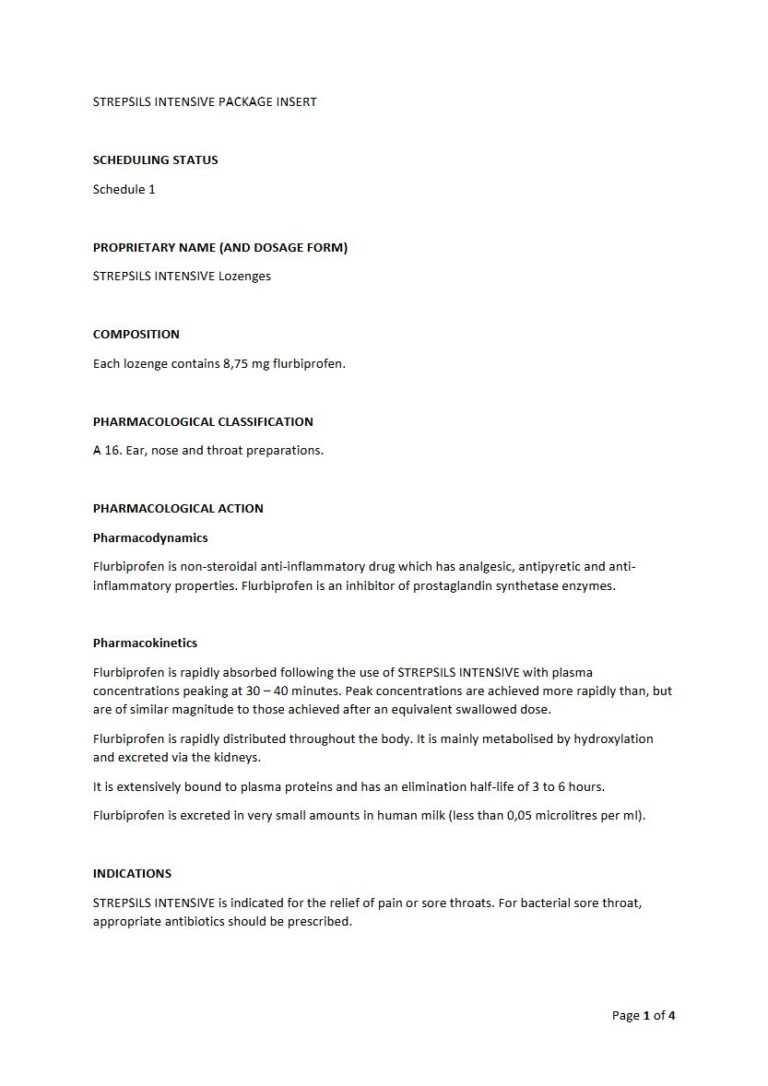
STREPSILS INTENSIVE is indicated for the relief of pain or sore throats. For bacterial sore throat, appropriate antibiotics should be prescribed.
4.2 Posology and method of administration
Adults and children over 12 years: One lozenge sucked/dissolved slowly in the mouth every 3-6 hours as required. Maximum of 5 lozenges in a 24 hour period. It is recommended that this product should not be used for more than 3 days. If symptoms persist, talk to your doctor. Children: Not indicated for children under 12 years. Elderly: No dose modification is required. To avoid local irritation, STREPSILS INTENSIVE lozenges should be moved around the mouth whilst sucking.
4.3 Contraindications
Hypersensitivity to flurbiprofen, aspirin or other NSAIDs. Existing or history of peptic ulceration. History of bronchospasm, rhinitis or urticaria associated with aspirin or other NASIDs. Pregnancy and lactation. Children under the age of 12 years.
4.4 Special warnings and precautions for use
Use of NSAIDs during the third trimester of pregnancy may result in premature closure of the foetal ductus arteriosus in utero and persistent pulmonary hypertension of the newborn. Flurbiprofen appears in the breast milk.
Bronchospasm may be precipitated in patients suffering from or with a previous history of bronchial asthma. Asthmatics and patients allergic to any other pain relievers should only take STREPSILS INTENSIVE on the advice of a doctor. NSAIDs have been reported to cause nephrotoxicity in various forms including interstitial nephritis, nephrotic syndrome and renal failure. In patients with renal, cardiac or hepatic impairment, caution is required since the use of NSAIDs may result in the deterioration of renal function. Caution is required in patients with hypertension. Flurbiprofen can prolong bleeding time and caution is required in patients with a potential for abnormal bleeding (such as patients on anticoagulant therapy). Caution is advised in patients with bleeding disorders. STREPSILS INTENSIVE should not be taken with other NSAIDs.
4.5 Interactions with other medicines
Studies have shown that the diuretic response to furosemide can occasionally be reduced by flurbiprofen. Similarly, interference with the action of anticoagulants has occasionally been reported. Other studies failed to show any interaction between flurbiprofen and digoxin, tolbutamide or antacids. NSAIDs may diminish the effect of antihypertensive drugs.
4.8 Undesirable effects
Side-effects: Changes in taste sensation and paraesthesia in the mouth are a common side effect. Dyspepsia, nausea, vomiting, gastrointestinal haemorrhage, diarrhoea, mouth ulcers, fluid retention and oedema may occur. Urticaria, angioedema and rashes of varying description have been reported. Very rarely jaundice and thrombocytopenia have been reported. These are usually reversible on withdrawal of the medicine.
Very rarely aplastic anaemia and agranulocytosis have been reported in association with the use of flurbiprofen. Undesirable effects may be diminished by using the minimum effective dose for the shortest possible duration.
4.9 Overdose
Keep to the stated dose. Symptoms of overdosage may include nausea, vomiting, headache, drowsiness, blurred vision and dizziness. Treatment should consist of gastric lavage and if necessary, correction of serum electrolytes. There is no specific antidote to flurbiprofen.
