
Zymib 3,5 mg Powder for solution for injection
PDF Leaflet Revision Date: 10 September 2024
Clinical Summary
Quick overview from the medicine insert
Indication
Treatment of multiple myeloma and relapsed mantle cell lymphoma.
Dosage (summary)
1.3 mg/mu00b2 twice weekly for 2 weeks, followed by a 10-day rest; adjust for toxicity.
Special Populations
- Elderly
- Renal impairment
- Hepatic impairment
Pregnancy & Breastfeeding
Not established; avoid breastfeeding during treatment.
Key Drug Interactions
- CYP3A4 inhibitors
- CYP3A4 inducers
Contraindications
- Hypersensitivity to bortezomib
- Acute diffuse infiltrative pulmonary disease
Common side effects
- Nausea
- Diarrhoea
- Fatigue
- Thrombocytopenia
- Peripheral neuropathy
Counselling Points
- Use effective contraception
- Monitor for signs of neuropathy
- Report any severe side effects
Serious warnings
- Do not administer intrathecally
- Risk of herpes zoster reactivation
- Monitor for PML
Important Disclaimer
The Zymib 3,5 mg Powder for solution for injection professional information leaflet below is the property of Zydus Healthcare Sa and is provided on Medinsert exactly as issued, with no.. alterations or editorial changes. We make every effort to keep content current by updating documents as soon as new versions become available. Medinsert serves as a trusted access point for healthcare professionals, but does not replace official sources or clinical judgement. For more details, please read our full disclaimer. read more>>
 Healthcare Professionals Only
This content is for registered healthcare professionals
Sign in or create a free account to read the full package insert.
Free for HPCSA-registered professionals. Powered by Medinsert.
Clinical Particulars
Section 4 of the official insert — extracted exactly as issued, no alterations
4.1 Therapeutic indications
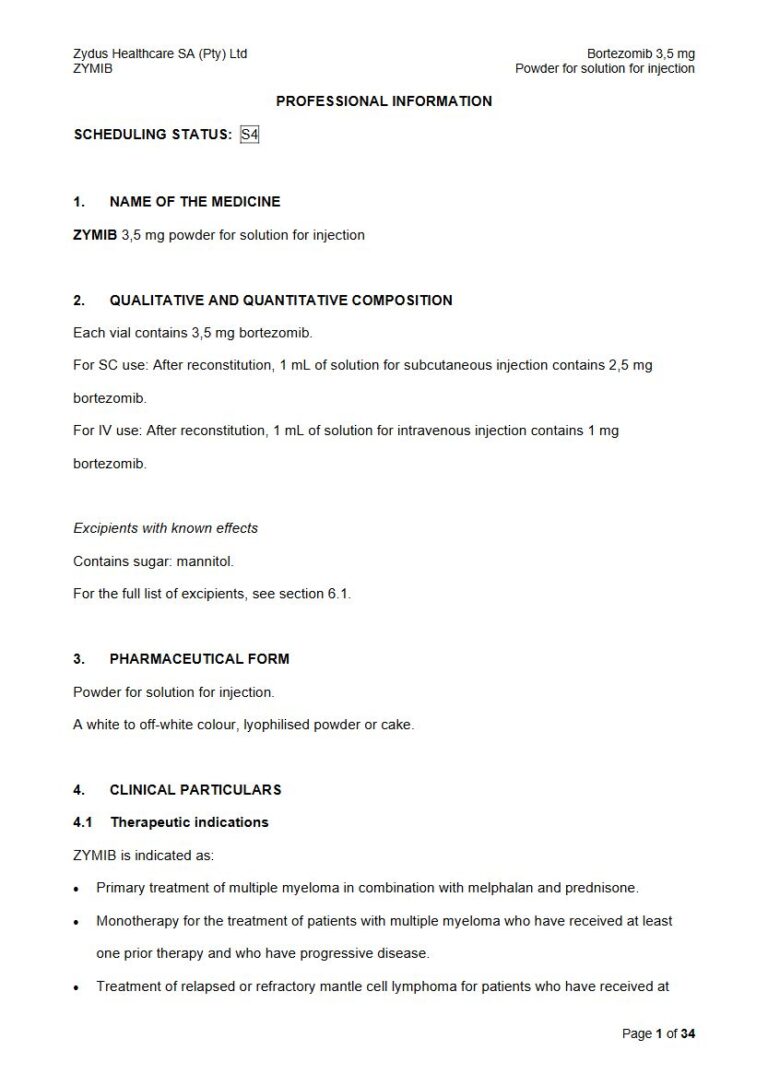
ZYMIB is indicated as:
- Primary treatment of multiple myeloma in combination with melphalan and prednisone.
- Monotherapy for the treatment of patients with multiple myeloma who have received at least one prior therapy and who have progressive disease.
- Treatment of relapsed or refractory mantle cell lymphoma for patients who have received at least 1 prior line of therapy, one of which should have included an anthracycline (or mitoxantrone) and/or rituximab as part of their chemotherapy regimen.
4.2 Posology and method of administration
Posology
ZYMIB 3,5 mg powder for solution for injection is available for:
- intravenous administration at a concentration of 1 mg/mL (as a 3 u2013 5 second bolus injection), or
- subcutaneous administration at a concentration of 2,5 mg/mL. Because each route of administration has a different reconstituted concentration, caution should be used when calculating the volume to be administered. ZYMIB should not be given by other routes. Intrathecal administration has resulted in death.
Monotherapy
The recommended starting dose of ZYMIB is 1,3 mg/mu00b2 body surface area twice weekly for two weeks (Day 1, 4, 8 and 11) followed by a 10-day rest period (Day 12 u2013 21). This 3-week period is considered a treatment cycle. At least 72 hours should elapse between consecutive doses of ZYMIB.
It is recommended that patients with a confirmed complete response receive 2 additional cycles of ZYMIB beyond a confirmation. It is also recommended that responding patients who do not achieve a complete remission receive a total of 8 cycles of ZYMIB therapy. There are limited data concerning retreatment with ZYMIB.
Recommended dosage adjustments during treatment and reinitiation of treatment
ZYMIB treatment must be withheld at the onset of any Grade 3 non-haematological or any Grade 4 haematological toxicities, excluding neuropathy as discussed below (see also section 4.4). Once the symptoms of the toxicity have resolved, ZYMIB treatment may be reinitiated at a 25 % reduced dose (1,3 mg/mu00b2 reduced to 1,0 mg/mu00b2; 1,0 mg/mu00b2 reduced to 0,7 mg/mu00b2). If the toxicity is not resolved or if it recurs at the lowest dose, discontinuation of ZYMIB must be considered. Patients who experience ZYMIB-related neuropathic pain and/or peripheral neuropathy are to be managed as presented in Table 1. Patients with pre-existing severe neuropathy may be treated with ZYMIB only after careful risk/benefit assessment.
Table 1: Recommended* dose modifications for ZYMIB-related neuropathic pain and/or peripheral sensory neuropathy
Severity of peripheral neuropathy Modification of dose and regimen
- Grade 1 (paraesthesia, weakness and/or loss of reflexes) with no pain or loss of function. No action.
- Grade 1 with pain or Grade 2 (interfering with function but not activities of daily living). Reduce to 1,0 mg/mu00b2.
- Grade 2 with pain or Grade 3 (interfering with activities of daily living). Withhold ZYMIB treatment until symptoms of toxicity have resolved. When toxicity resolves re-initiate ZYMIB treatment and reduce dose to 0,7 mg/mu00b2 and change treatment schedule to once per week.
- Grade 4 (sensory neuropathy which is disabling or motor neuropathy that is life-threatening or leads to paralysis). Discontinue ZYMIB.
*Based on dose modifications in phase II and III multiple myeloma studies.
Special populations
Paediatric patients
ZYMIB has not been studied in children and adolescents. Therefore, it should not be used in the paediatric age group until further data become available.
Elderly patients
There is no evidence to suggest that dose adjustments are necessary in the elderly.
Patients with renal impairment
The pharmacokinetics of ZYMIB are not influenced by the degree of renal impairment. Therefore, dosing adjustments of ZYMIB are not necessary for patients with renal insufficiency. Since dialysis may reduce ZYMIB concentrations, ZYMIB should be administered after the dialysis procedure (see section 5.2).
Patients with hepatic impairment
Patients with mild hepatic impairment do not require a starting dose adjustment and should be treated per the recommended ZYMIB dose. Patients with moderate or severe hepatic impairment should be started on ZYMIB at a reduced dose of 0,7 mg/mu00b2 per injection during the first cycle, and a subsequent dose escalation to 1,0 mg/mu00b2 or further dose reduction to 0,5 mg/mu00b2 may be considered based on patient tolerance (see Table 2).
Table 2: Recommended starting dose modification for ZYMIB in patients with hepatic impairment
Grade of hepatic impairment* Bilirubin level SGOT (AST) levels Modification of starting dose
- Mild u2264 1,0 x ULN > ULN None
- > 1,0 x u2013 1,5 x ULN Any None
- Moderate > 1,5 x u2013 3 x ULN Any Reduce ZYMIB to 0,7 mg/mu00b2 in the first cycle. Consider dose escalation to 1,0 mg/mu00b2 or further dose reduction to 0,5 mg/mu00b2 in subsequent cycles
- Severe > 3 x ULN Any based on patient tolerability.
* Based on NCI organ dysfunction working group classification for categorising hepatic impairment (mild, moderate, severe).
** SGOT = serum glutamic oxaloacetic transaminase *** AST = aspartate aminotransferase **** ULN = upper limit of the normal range.
Combination therapy
Recommended dosage
ZYMIB for injection is administered in combination with oral melphalan and oral prednisone for nine 6-week treatment cycles as shown in Table 3. In Cycles 1 u2013 4, ZYMIB is administered twice weekly (Day 1, 4, 8, 11, 22, 25, 29 and 32). In Cycles 5 u2013 9, ZYMIB is administered once weekly (Day 1, 8, 22 and 29).
Table 3: Recommended dosage regimen for ZYMIB when used in combination with melphalan and prednisone for patients with previously untreated multiple myeloma
Twice weekly ZYMIB (Cycles 1 u2013 4)
Week 1 2 3 4 5 6
ZYMIB (1,3 mg/mu00b2) Day 1 Day 4 Day 8 Day 11 Rest period Day 22 Day 25 Day 29 Day 32 Rest period
m (9 mg/mu00b2) p (60 mg/mu00b2) Day 1 Day 2 Day 3 Day 4 -- -- Rest period -- -- Rest period
Once weekly ZYMIB (Cycles 5 u2013 9)
Week 1 2 3 4 5 6
ZYMIB (1,3 mg/mu00b2) Day 1 Day 8 Rest period Day 22 Day 29 Rest period
m (9 mg/mu00b2) p (60 mg/mu00b2) Day 1 Day 2 Day 3 Day 4 -- Rest period -- -- Rest period
m = melphalan, p = prednisone
Dose management guidelines for combination therapy
Dose modification and reinitiation of therapy when ZYMIB is administered in combination with melphalan and prednisone
Prior to initiating a new cycle of therapy:
- Platelet count should be u2265 70 x 109/L and the ANC should be u2265 1,0 x 10⁹/L.
- Non-haematological toxicities should have resolved to Grade 1 or baseline.
Table 4: Dose modifications during subsequent cycles
Toxicity Dose modification or delay
- Haematological toxicity during a cycle: u2022 If prolonged Grade 4 neutropenia or thrombocytopenia, or thrombocytopenia with bleeding is observed in the previous cycle Consider reduction of the melphalan dose by 25 % in the next cycle.
- If platelet count u2265 30 u00d7 109/L or ANC u2264 0,75 x 10⁹/L on a ZYMIB dosing day (other than Day 1) ZYMIB dose should be withheld.
- If several ZYMIB doses in a cycle are withheld ZYMIB dose should be reduced by 1 (u2265 3 doses during twice weekly administration or u2265 2 doses during weekly administration) dose level (from 1,3 mg/mu00b2 to 1 mg/mu00b2, or from 1 mg/mu00b2 to 0,7 mg/mu00b2).
- Grade u2265 3 non-haematological toxicities ZYMIB therapy should be withheld until symptoms of the toxicity have resolved to Grade 1 or baseline. Then, ZYMIB may be reinitiated with one dose level reduction (from 1,3 mg/mu00b2 to 1 mg/mu00b2, or from 1 mg/mu00b2 to 0,7 mg/mu00b2). For ZYMIB-related neuropathic pain and/or peripheral neuropathy, hold and/or modify ZYMIB as outlined in Table 1.
For additional information concerning melphalan and prednisone, refer to their respective professional information leaflets.
Method of administration
Administration precautions
There have been fatal cases of inadvertent intrathecal administration of ZYMIB. DO NOT ADMINISTER ZYMIB INTRATHECALLY. See section 6.6 for reconstitution instructions.
Intravenous (IV) injection
The reconstituted solution is administered as a 3 u2013 5 second bolus intravenous injection through a peripheral or central intravenous catheter followed by a flush with 0,9 % sodium chloride solution for injection. At least 72 hours should elapse between consecutive doses of ZYMIB.
Subcutaneous injection
The reconstituted solution is injected into the thighs (right or left) or abdomen (right or left). Injection sites should be rotated for successive injections. If local injection site reactions occur following ZYMIB injection subcutaneously, a less concentrated ZYMIB solution (1 mg/mL instead of 2,5 mg/mL) may be administered subcutaneously or changed to IV injection.
4.3 Contraindications
- Hypersensitivity to bortezomib, boron or to any of the excipients listed in section 6.1.
- Acute diffuse infiltrative pulmonary and pericardial disease.
4.4 Special warnings and precautions for use
Treatment must be initiated and administered under the supervision of a medical practitioner experienced in the use of chemotherapeutic medicines.
Intrathecal administration
There have been fatal cases of inadvertent intrathecal administration of ZYMIB. ZYMIB is for intravenous or subcutaneous use. DO NOT ADMINISTER INTRATHECALLY.
Herpes zoster virus reactivation
Medical practitioners should reconsider using antiviral prophylaxis in patients being treated with ZYMIB. In studies in patients with previously untreated multiple myeloma, the overall incidence of herpes zoster reactivation was very common in patients treated with bortezomib + melphalan + prednisone (VcMP) compared with melphalan + prednisone.
Hepatitis B virus (HBV) reactivation and infection
When rituximab is used in combination with ZYMIB, HBV screening must always be performed in patients at risk of infection with HBV before initiation of treatment. Carriers of hepatitis B and patients with a history of hepatitis B must be closely monitored for clinical and laboratory signs of active HBV infection during and following rituximab combination treatment with ZYMIB. Antiviral prophylaxis should be considered.
Progressive multifocal leukoencephalopathy (PML)
Cases with unknown causality of John Cunningham (JC) virus infection, resulting in PML and death, have been reported in patients treated with bortezomib. Patients diagnosed with PML had prior or concurrent immunosuppressive therapy. Most cases of PML were diagnosed within 12 months of their first dose of bortezomib. Patients should be monitored at regular intervals for any new or worsening neurological symptoms or signs that may be suggestive of PML as part of the differential diagnosis of CNS problems. If a diagnosis of PML is suspected, patients should be referred to a specialist in PML and appropriate diagnostic measures for PML should be initiated. Discontinue ZYMIB if PML is diagnosed.
Patients with mantle cell lymphoma
Safety data for patients with mantle cell lymphoma were similar to that observed in patients with multiple myeloma. Notable differences between the two patient populations were that thrombocytopenia, neutropenia, anaemia, nausea, vomiting and pyrexia were reported more often in the patients with multiple myeloma than in those with mantle cell lymphoma; whereas peripheral neuropathy, rash and pruritus were higher among patients with mantle cell lymphoma compared to patients with multiple myeloma.
Based on the integrated safety database from patients with relapsed and/or refractory multiple myeloma, the following special precautions are suggested: Overall, the safety profile of patients treated with bortezomib in monotherapy was similar to that observed in patients treated with bortezomib in combination with melphalan and prednisone.
Laboratory tests
Complete blood counts (CBC) including platelet counts should be frequently monitored throughout treatment with ZYMIB.
Gastrointestinal toxicity
Gastrointestinal toxicity, including nausea, diarrhoea, vomiting and constipation occur very frequently with ZYMIB treatment (see section 4.8). Reactions usually occur early in treatment (Cycles 1 and 2) and may persist for several cycles. Patients experiencing treatment emergent gastrointestinal toxicity may benefit from administration of antemetics and anti-diarrhoeals. Fluid and electrolyte replacement should be administered to prevent or treat dehydration. Cases of ileus have been reported and therefore patients who experience constipation should be closely monitored.
Haematological toxicity
ZYMIB treatment is frequently associated with haematological toxicities (thrombocytopenia and neutropenia). However, febrile neutropenia is a less frequent undesirable effect. The most frequent haematologic toxicity is transient thrombocytopenia, which generally resolves between treatment cycles. Platelets were lowest at Day 11 of each cycle of ZYMIB treatment and typically recovered to baseline by the next cycle. The cyclical pattern of platelet decrease and recovery remained consistent over the 8 cycles of twice weekly dosing and there was no evidence of cumulative thrombocytopenia. The mean platelet count nadir measured was approximately 40 % of baseline. Severe bleeding, including central nervous system (CNS) and gastrointestinal bleeding, associated with thrombocytopenia, has been reported. In patients with advanced myeloma, the severity of thrombocytopenia was related to pre-treatment platelet count. Platelet counts should be monitored prior to each dose of ZYMIB. Therapy should be held when the platelet count is < 25 000/u03bcL and re-initiated at a reduced dose after resolution (see section 4.8). Platelet transfusions, red blood cell (RBC) transfusions and administration of growth factors may be utilised in the management of haematologic toxicities. Prophylactic platelet transfusions should be considered in thrombocytopenic patients at high risk of bleeding.
Peripheral neuropathy
ZYMIB causes a peripheral neuropathy that is predominantly sensory. However, cases of severe motor neuropathy with or without sensory peripheral neuropathy have been reported. Patients with pre-existing symptoms (numbness, pain or a burning feeling in the feet or hands) and/or signs of peripheral neuropathy are likely to experience worsening peripheral neuropathy (including u2265 Grade 3) during treatment with ZYMIB. The incidence of peripheral neuropathy increases early in the treatment and has been observed to peak during cycle 5. It is recommended that patients be carefully monitored for symptoms of neuropathy, such as a burning sensation, hyperaesthesia, hypaesthesia, paraesthesia, discomfort or neuropathic pain. Patients experiencing new or worsening peripheral neuropathy may require a change in the dose schedule of ZYMIB (see section 4.2). Neuropathy has been managed with supportive care and other therapies. Peripheral neuropathy may not be reversible. Improvement in, or resolution of, peripheral neuropathy was reported in 51 % of patients with u2265 grade 2 peripheral neuropathy in a single medicine phase III multiple myeloma study and 71 % of patients with grade 3 or 4 peripheral neuropathy or peripheral neuropathy leading to discontinuation of treatment in phase II studies, respectively. In addition to peripheral neuropathy, there may be a contribution of autonomic neuropathy to some adverse reactions, such as postural hypotension and severe constipation with ileus. Information on autonomic neuropathy and its contribution to these undesirable effects is limited.
Seizures
Seizures have been reported in patients without previous history of seizures or epilepsy. Special care is required when treating patients with any risk factors for seizures.
Hypotension
ZYMIB treatment is frequently associated with orthostatic/postural hypotension. Most patients required treatment for their orthostatic hypotension. Patients with orthostatic hypotension may experience syncopal events. The mechanism of this event is unknown although a component may be due to autonomic neuropathy. Autonomic neuropathy may be related to ZYMIB or ZYMIB may aggravate an underlying condition such as diabetic neuropathy. Caution is advised when treating patients with a history of syncope receiving medicines known to be associated with hypotension; or who are dehydrated due to recurrent diarrhoea or vomiting. Management of orthostatic/postural hypotension is symptomatic and may include adjustment of antihypertensive medicines, rehydration or administration of mineralocorticosteroids and/or sympathomimetics. Patients should be instructed to seek medical advice if they experience symptoms of dizziness, light-headedness or fainting spells.
Cardiac disorders
Development or exacerbation of congestive heart failure, and/or new onset of decreased left ventricular ejection fraction has been reported. Patients with risk factors for, or existing heart disease should be closely monitored. Fluid retention may be a predisposing factor for signs and symptoms of heart failure. There have been isolated cases of QT interval prolongation in clinical studies; causality has not been established. Patients using angiotensin-converting enzyme inhibitors, beta-blockers, antihypertensives, calcium channel blockers, angiotensin receptor blockers and diuretics may have a higher incidence of cardiac failure during ZYMIB treatment.
Pulmonary disorders
There have been reports of acute diffuse infiltrative pulmonary disease of unknown aetiology, such as pneumonitis, interstitial pneumonia, lung infiltration and acute respiratory distress syndrome (ARDS) in patients receiving bortezomib (ZYMIB). Some of these events have been fatal. A higher proportion of these events have been reported in Japan. In the event of new or worsening pulmonary symptoms, a prompt diagnostic evaluation should be performed and patients treated appropriately. In a clinical trial, the first two patients given high-dose cytarabine (2 g/mu00b2 per day) by continuous infusion in combination with daunorubicin and bortezomib (ZYMIB) for relapsed acute myelogenous leukaemia died of ARDS early in the course of therapy. The trial was discontinued subsequently.
Renal events
Renal complications are frequent in patients with multiple myeloma. Such patients should be monitored closely.
Hepatic events
Cases of hepatic failure have been reported. Other reported hepatic events include asymptomatic increases in liver enzymes, hyperbilirubinaemia and hepatitis. Such changes may be reversible upon discontinuation of ZYMIB. There is limited rechallenge information in these patients.
Hepatic impairment
Bortezomib is metabolised by liver enzymes (see section 5.2). Bortezomib exposure is increased in patients with moderate or severe hepatic impairment; these patients should be treated with ZYMIB at reduced doses and closely monitored for toxicities (see section 4.2).
4.5 Interaction with other medicines and other forms of interaction
In vitro studies indicate that bortezomib is a weak inhibitor of the cytochrome P450 (CYP) isozymes 1A2, 2C9, 2C19, 2D6 and 3A4. Based on the limited contribution (7 %) of CYP2D6 to the metabolism of bortezomib, the CYP2D6 poor metaboliser phenotype is not expected to affect the overall disposition of bortezomib.
An interaction study assessing the effect of ketoconazole, a potent CYP3A4 inhibitor, on the pharmacokinetics of bortezomib (injected intravenously), showed a mean bortezomib AUC increase. Therefore, patients should be closely monitored when given bortezomib in combination with potent CYP3A4 inhibitors (e.g. ketoconazole, ritonavir). In an interaction study assessing the effect of omeprazole, a potent CYP2C19 inhibitor, on the pharmacokinetics of bortezomib (injected intravenously), there was no significant effect on the pharmacokinetics of bortezomib. An interaction study assessing the effect of rifampicin, a potent CYP3A4 inducer, on the pharmacokinetics of bortezomib (injected intravenously), showed a mean bortezomib AUC reduction. Therefore, the concomitant use of bortezomib with strong CYP3A4 inducers (e.g. rifampicin, carbamazepine, phenytoin, phenobarbital and St Johnu2019s wort) is not recommended, as efficacy may be reduced. In the same interaction study assessing the effect of dexamethasone, a weaker CYP3A4 inducer, on the pharmacokinetics of bortezomib (injected intravenously), there was no significant effect on the pharmacokinetics of bortezomib. Concomitant exposure to narcotics may increase the incidence of constipation, nausea and vomiting. An interaction study assessing the effect of melphalan-prednisone on the pharmacokinetics of bortezomib (injected intravenously), showed a mean bortezomib AUC increase. This is not considered clinically relevant.
During clinical trials, hypoglycaemia and hyperglycaemia were uncommonly and commonly reported in diabetic patients receiving oral hypoglycaemic medicines. Patients on oral antidiabetic medicines receiving ZYMIB may require close monitoring of their blood glucose levels and adjustment of the dose of their antidiabetic medicines.
4.6 Fertility, pregnancy and lactation
Contraception in males and females
Males and females of childbearing capacity should use effective contraceptive measures during treatment and for 3 months following ZYMIB therapy.
Pregnancy
Safety in pregnancy has not been established. The teratogenic potential of bortezomib has not been fully investigated. If ZYMIB is used during pregnancy, or if the patient becomes pregnant while receiving ZYMIB, the patient needs to be informed of potential for hazards to the fetus.
Breastfeeding
Safety in lactation has not been established. It is not known whether ZYMIB is excreted in human milk. Because of the potential for serious undesirable effects in breastfed infants from mothers on ZYMIB, women should not breastfeed their infants while receiving ZYMIB.
Fertility
Fertility studies have not been conducted.
4.7 Effects on ability to drive and use machines
ZYMIB may have a moderate influence on the ability to drive a vehicle and use machines. ZYMIB may cause side effects, such as fatigue, dizziness, syncope, orthostatic/postural hypotension or blurred vision. Caution is advised before driving a vehicle or operating machinery until the effects of ZYMIB are known.
4.8 Undesirable effects
Summary of the safety profile
Serious adverse reactions reported less frequently during treatment with ZYMIB, include cardiac failure, tumour lysis syndrome, pulmonary hypertension, posterior reversible encephalopathy syndrome, acute diffuse infiltrative pulmonary disorders and rarely autonomic neuropathy. The most frequently reported adverse reactions during treatment with ZYMIB are nausea, diarrhoea, constipation, vomiting, fatigue, pyrexia, thrombocytopenia, anaemia, neutropenia, peripheral neuropathy (including sensory), headache, paraesthesia, decreased appetite, dyspnoea, rash, herpes zoster and myalgia.
Tabulated summary of adverse reactions
System organ class Incidence Adverse reaction
Infections and infestations Frequent herpes zoster (including disseminated and ophthalmic), pneumonia*, herpes simplex*, fungal infection*
Less frequent infection*, bacterial infections*, viral infections*, sepsis (including septic shock)*, bronchopneumonia, herpes virus infection*, meningoencephalitis herpetic # , bacteraemia (including staphylococcal), hordeolum, influenza, cellulitis, device-related infection, skin infection*, ear infection*, staphylococcal infection, tooth infection*, meningitis (including bacterial), Epstein-Barr virus infection, genital herpes, tonsillitis, mastoiditis, post-viral fatigue syndrome, upper and lower respiratory tract infection, catheter-related infection, pleural infection, Haemophilus infection, cytomegalovirus infection, infectious mononucleosis, varicella, urinary tract infection, gastroenteritis, Candida infection, fungal infection, post-herpetic neuralgia, oral candidiasis, blepharitis
Neoplasms benign, malignant and unspecified (including cysts and polyps) Less frequent neoplasm malignant, leukaemia plasmacytic, renal cell carcinoma, mass, mycosis fungoides, neoplasm benign*
Blood and lymphatic system disorders Frequent thrombocytopenia*, neutropenia*, anaemia*, leukopenia*, lymphopenia*
Less frequent pancytopenia*, febrile neutropenia, coagulopathy*, leucocytosis*, lymphadenopathy, haemolytic anaemia # , disseminated intravascular coagulation, thrombocytosis*, hyperviscosity syndrome, platelet disorder NOS, thrombotic microangiopathy (including thrombocytopenic purpura) # , blood disorder NOS, haemorrhagic diathesis, lymphocytic infiltration
Immune system disorders Less frequent angioedema # , hypersensitivity*, polyarthritis with rash and proliferative glomerulonephritis, anaphylactic shock, amyloidosis, type III immune complex-mediated reaction, potentially immunocomplex-mediated reactions, such as serum sickness-type reaction
Endocrine disorders Less frequent Cushing's syndrome*, hyperthyroidism*, inappropriate antidiuretic hormone secretion, hypothyroidism
Metabolism and nutrition disorders Frequent decreased appetite, dehydration, hypokalaemia*, hyponatraemia*, abnormal blood glucose*
Less frequent tumour lysis syndrome (see section 4.4), failure to thrive*, hypomagnesaemia*, hypophosphataemia*, hyperkalaemia*, hypercalcaemia*, hypernatraemia*, abnormal uric acid*, diabetes mellitus*, fluid retention, hypermagnesaemia*, acidosis, electrolyte imbalance*, fluid overload, hypochloraemia*, hypovolaemia, hyperchloraemia*, hyperphosphataemia*, metabolic disorder, vitamin B complex deficiency, vitamin B12 deficiency, gout, increased appetite, alcohol intolerance
Psychiatric disorders Frequent mood disorders and disturbances*, anxiety disorder*, sleep disorders and disturbances*, mental disorder*, psychotic disorder*, confusion*
Less frequent suicidal ideation*, adjustment disorder, delirium, decreased libido, restlessness, hallucinations
Nervous system disorders Frequent neuropathies*, peripheral sensory neuropathy, dysaesthesia*, neuralgia*, motor neuropathy*, loss of consciousness (including syncope), dizziness*, dysgeusia*, lethargy, headache*, tremor
Less frequent peripheral sensorimotor neuropathy, dyskinesia*, cerebellar coordination and balance disturbances*, memory loss (excluding dementia)*, encephalopathy*, posterior reversible encephalopathy syndrome # , neurotoxicity, seizure disorders*, post-herpetic neuralgia, speech disorder*, restless legs syndrome, migraine, sciatica, disturbance in attention, abnormal reflexes*, parosmia, cerebral haemorrhage*, haemorrhage intracranial (including subarachnoid)*, brain oedema, transient ischaemic attack, coma, autonomic nervous system imbalance, autonomic neuropathy, cranial palsy*, paralysis*, paresis*, presyncope, brain stem syndrome, cerebrovascular disorder, nerve root lesion, psychomotor hyperactivity, spinal cord compression, cognitive disorder NOS, motor dysfunction, nervous system disorder NOS, radiculitis, drooling, hypotonia
Eye disorders Frequent eye swelling*, abnormal vision*, conjunctivitis*
Less frequent eye haemorrhage*, eyelid infection*, chalazion # , blepharitis # , eye inflammation*, diplopia, dry eye*, eye irritation*, eye pain, lacrimation increased, eye discharge, corneal lesion*, exophthalmos, retinitis, scotoma, eye disorder (including eyelid) NOS, dacryoadenitis acquired, photophobia, photopsia, optic neuropathy # , different degrees of visual impairment (up to blindness)*
Ear and labyrinth disorders Frequent vertigo*
Less frequent dysacusis (including tinnitus)*, hearing impaired (up to and including deafness), ear discomfort*, ear haemorrhage, vestibular neuronitis, ear disorder NOS
Cardiac disorders Less frequent cardiac tamponade # , cardio-pulmonary arrest*, cardiac fibrillation (including atrial), cardiac failure (including left and right ventricular)*, dysrhythmia*, tachycardia*, palpitations, angina pectoris, pericarditis (including pericardial effusion)*, cardiomyopathy*, ventricular dysfunction*, bradycardia, atrial flutter, myocardial infarction*, atrioventricular block*, cardiovascular disorder (including cardiogenic shock), torsades de pointes, unstable angina, cardiac valve disorders*, coronary artery insufficiency, sinus arrest, new onset of decreased left ventricular ejection fraction
Vascular disorders Frequent hypotension*, orthostatic hypotension, hypertension*, haematoma (including perirenal)*, phlebitis
Less frequent cerebrovascular incident # , deep vein thrombosis*, haemorrhage*, thrombophlebitis (including superficial), circulatory collapse (including hypovolaemic shock), flushing*, poor peripheral circulation*, vasculitis, hyperaemia (including ocular)*, peripheral embolism, lymphoedema, pallor, erythromelalgia, vasodilatation, vein discolouration, venous insufficiency
Respiratory, thoracic and mediastinal disorders Frequent dyspnoea*, epistaxis, upper/lower respiratory tract infection*, cough*
Less frequent pulmonary embolism, pleural effusion, pulmonary oedema (including acute), pulmonary alveolar haemorrhage # , bronchospasm, chronic obstructive pulmonary disease*, hypoxaemia*, respiratory tract congestion*, hypoxia, pleurisy*, hiccups, rhinorrhoea, dysphonia, wheezing, respiratory failure, acute respiratory distress syndrome, apnoea, pneumothorax, atelectasis, pulmonary hypertension, haemoptysis, hyperventilation, orthopnoea, pneumonitis, respiratory alkalosis, tachypnoea, pulmonary fibrosis, bronchial disorder*, hypocapnia*, interstitial lung disease, lung infiltration, throat tightness, dry throat, increased upper airway secretion, throat irritation, upper airway cough syndrome
Gastrointestinal disorders Frequent nausea and vomiting symptoms*, diarrhoea*, constipation, gastrointestinal haemorrhage (including mucosal)*, dyspepsia, stomatitis*, abdominal distension, oropharyngeal pain*, abdominal pain (including gastrointestinal and splenic pain)*, oral disorder*, flatulence, loose stools, oral ulceration
Less frequent pancreatitis (including chronic)*, haematemesis, lip swelling*, gastrointestinal obstruction (including small intestinal obstruction, ileus)*, abdominal discomfort, enteritis*, gastritis*, gingival bleeding, gastroesophageal reflux disease*, colitis (including Clostridium difficile)*, colitis ischaemic # , gastrointestinal inflammation*, dysphagia, irritable bowel syndrome, gastrointestinal disorder NOS, tongue coated, gastrointestinal motility disorder*, salivary gland disorder*, pancreatitis acute, peritonitis*, tongue oedema*, ascites, oesophagitis, cheilitis, faecal incontinence, anal sphincter atony, faecaloma*, gastrointestinal ulceration and perforation*, gingival hypertrophy, megacolon, rectal discharge, oropharyngeal blistering*, lip pain, periodontitis, anal fissure, change of bowel habit, proctalgia, abnormal faeces
Hepatobiliary disorders Frequent hepatic enzyme abnormality*
Less frequent hepatotoxicity (including liver disorder), hepatitis*, cholestasis, hepatic failure, hepatomegaly, Budd-Chiari syndrome, cytomegalovirus hepatitis, hepatic haemorrhage, cholelithiasis, hypoproteinaemia, hyperbilirubinaemia
Skin and subcutaneous tissue disorders Frequent rash*, pruritus*, erythema, dry skin, periorbital oedema, eczema, increased sweating
Less frequent erythema multiforme, urticaria, acute febrile neutrophilic dermatosis, toxic skin eruption, toxic epidermal necrolysis # , Stevens-Johnson syndrome # , dermatitis*, hair disorder*, petechiae, ecchymosis, skin lesion, purpura, skin mass*, psoriasis, hyperhidrosis, night sweats, decubitus ulcer # , acne*, blister*, pigmentation disorder*, skin reaction, Jessner's lymphocytic infiltration, palmar-plantar erythrodysaesthesia syndrome, haemorrhage subcutaneous, livedo reticularis, skin induration, papule, photosensitivity reaction, seborrhoea, cold sweat, skin disorder NOS, erythrosis, skin ulcer, nail disorder
Musculoskeletal and connective tissue disorders Frequent musculoskeletal pain*, muscle spasms*, pain in extremity, muscular weakness, bone pain, peripheral swelling, muscle cramps, myalgia, back pain
Less frequent muscle twitching, joint swelling, arthritis*, joint stiffness, myopathies*, sensation of heaviness, rhabdomyolysis, temporomandibular joint syndrome, fistula, joint effusion, pain in jaw, bone disorder, musculoskeletal and connective tissue infections and inflammations*
Renal and urinary disorders Frequent renal impairment*, dysuria
Less frequent renal failure acute, renal failure chronic*, urinary tract infection*, urinary tract signs and symptoms*, haematuria*, urinary retention, micturition disorder*, proteinuria, azotaemia, oliguria*, pollakiuria, bladder irritation, renal colic, urinary frequency, loin pain, urinary incontinence
Reproductive system and breast disorders Less frequent vaginal haemorrhage, genital pain*, erectile dysfunction, testicular disorder*, prostatitis, breast disorder female, epididymal tenderness, epididymitis, pelvic pain, vulval ulceration
Congenital, familial and genetic disorders Less frequent aplasia, gastrointestinal malformation, ichthyosis
General disorders and administration site conditions Frequent pyrexia*, fatigue, asthenia, oedema (including peripheral), chills, pain*, malaise*
Uncommon general physical health deterioration*, face oedema*, injection site reaction*, mucosal disorder*, chest pain, gait disturbance, feeling cold, extravasation*, catheter-related complication*, change in thirst*, chest discomfort, feeling of body temperature change*, injection site pain*, death (including sudden), multi-organ failure, injection site haemorrhage*, hernia (including hiatus)*, impaired healing*, inflammation, injection site phlebitis*, tenderness, ulcer, irritability, non-cardiac chest pain, catheter site pain, sensation of foreign body
Investigations Frequent decreased body mass, blood lactate dehydrogenase increased
Less frequent hyperbilirubinaemia*, protein analyses abnormal*, increased body mass, abnormal blood test*, increased C-reactive protein, abnormal blood gases*, electrocardiogram abnormalities (including QT prolongation)*, abnormal international normalised ratio*, decreased gastric pH, increased platelet aggregation, increased troponin I, virus identification and serology*, abnormal urine analysis*, increased blood alkaline phosphatase, increased blood creatinine, increased blood urea, increased gamma glutamyl transferase, increased blood amylase, abnormal liver function tests, decreased red blood cell count, decreased white blood cell count, decreased blood bicarbonate, irregular heart rate, decreased blood phosphate
Injury, poisoning and procedural complications Less frequent fall, contusion, transfusion reaction, fractures*, rigors*, face injury, joint injury*, burns, laceration, procedural pain, radiation injuries*
Surgical and medical procedures Less frequent macrophage activation
NOS = not otherwise specified. * Grouping of more than one MedDRA preferred term. # Post-marketing adverse reaction regardless of indication.
4.9 Overdose
In patients, overdose with more than twice the recommended dose has been associated with the acute onset of symptomatic hypotension and thrombocytopenia, with fatal outcomes. One case of overdosage (more than twice the recommended dose) in the setting of concurrent sepsis has been reported with ZYMIB.
Management
There is no known specific antidote for ZYMIB overdose. In the event of an overdose, the patientu2019s vital signs should be monitored, and appropriate supportive care given to maintain blood pressure (such as fluids, pressors and/or inotropic medicines) and body temperature (see sections 4.2 and 4.4).
