
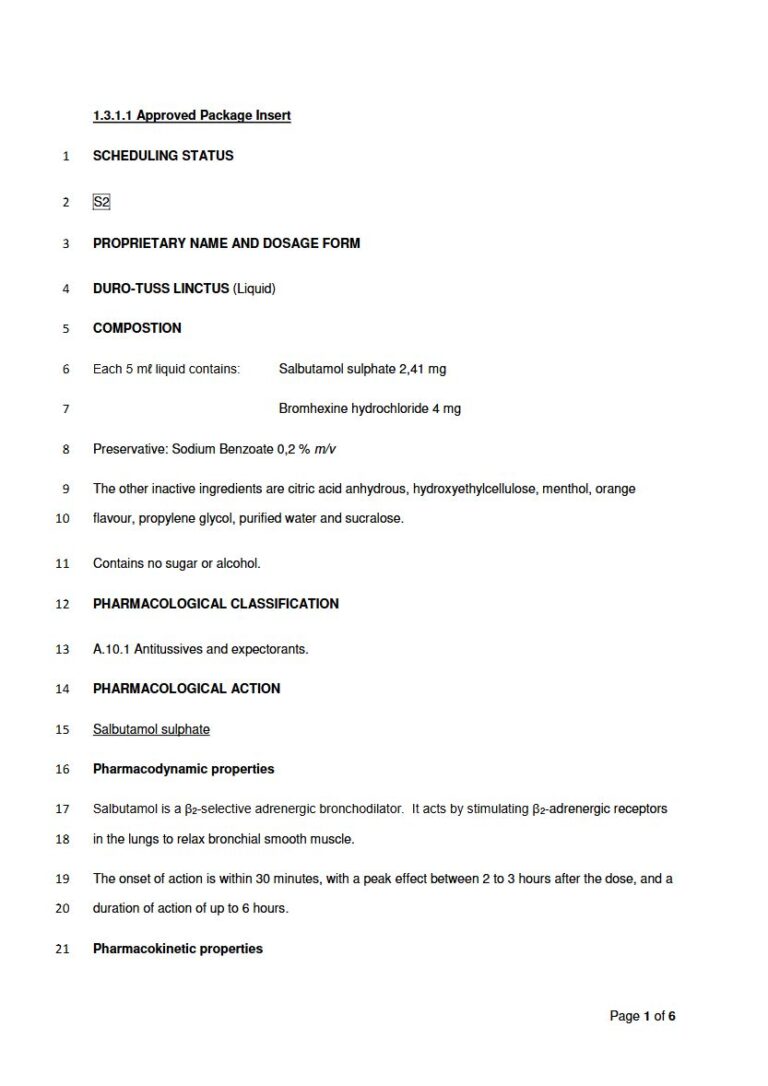
Duro-Tuss Linctus 4 mg/5 ml/2.41 mg Syrup
PDF Leaflet Revision Date: 23 November 2017
Clinical Summary
Quick overview from the medicine insert
Indication
Relief of cough associated with bronchospasm.
Dosage (summary)
Adults: 10 mu2113 three to four times a day.
Onset of Action / Duration
Onset: 30 mins, Duration: up to 6 hours
Special Populations
- Elderly
- Diabetics
- Children
Pregnancy & Breastfeeding
Safety in pregnancy and lactation not established; may delay labor.
Key Drug Interactions
- Sympathomimetics
- Diuretics
- Corticosteroids
- Xanthines
Contraindications
- Hypersensitivity to ingredients
- Cardiac dysrhythmias
- MAOIs
Common side effects
- Hypersensitivity reactions
- Tachycardia
- Hypokalaemia
- Headache
Counselling Points
- Do not exceed recommended dose
- Report any hypersensitivity reactions
- Use with caution in asthma
Serious warnings
- Use with caution in hyperthyroidism
- Monitor plasma potassium in severe asthma
Important Disclaimer
The Duro-Tuss Linctus 4 mg/5 ml/2.41 mg Syrup professional information leaflet below is the property of Inova Pharmaceuticals and is provided on Medinsert exactly as issued, with no.. alterations or editorial changes. We make every effort to keep content current by updating documents as soon as new versions become available. Medinsert serves as a trusted access point for healthcare professionals, but does not replace official sources or clinical judgement. For more details, please read our full disclaimer. read more>>
 Healthcare Professionals Only
This content is for registered healthcare professionals
Sign in or create a free account to read the full package insert.
Free for HPCSA-registered professionals. Powered by Medinsert.
Clinical Particulars
Section 4 of the official insert — extracted exactly as issued, no alterations
4.1 Therapeutic indications
DURO-TUSS LINCTUS is indicated for the relief of cough associated with bronchospasm (wheezing).
4.3 Contraindications
DURO-TUSS LINCTUS is contra-indicated in:
- Patients with known hypersensitivity to salbutamol, bromhexine or to any other ingredients in DURO-TUSS LINCTUS.
- Patients with cardiac dysrhythmias or tachycardia.
- Patients receiving monoamine oxidase inhibitors (MAOIu2019s) or within 14 days of MAOIu2019s termination.
4.4 Special warnings and precautions for use
Salbutamol Sulphate
Use with caution in hyperthyroidism, myocardial insufficiency, susceptibility to QT-interval prolongation, hypertension, diabetes mellitus, and in severe asthma.
Plasma-potassium concentrations should be monitored in severe asthma as hypokalaemia may occur. The risk can be potentiated by hypoxia and acidosis, or the concomitant use with other medicines that cause hypokalaemia or cardiac dysrhythmias. (see INTERACTIONS and SIDE EFFECTS)
High doses may increase the risk of serious side effects, including cardiac dysrhythmias, the maximum dose should not be exceeded.
Bromhexine hydrochloride
Use with care in patients with a history of peptic ulceration.
Care is also advisable in asthmatic patients.
Clearance of bromhexine or its metabolites may be reduced in patients with severe hepatic or renal impairment.
4.5 Interactions with other medicines
Salbutamol Sulphate
Concomitant administration of DURO-TUSS LINCTUS with sympathomimetics, diuretics, corticosteroids or xanthines e.g. theophylline, increases the risk of hypokalaemia. (see WARNINGS AND SPECIAL PRECAUTIONS)
4.6 Fertility, pregnancy and lactation
The safety of DURO-TUSS LINCTUS in pregnancy and lactating women has not been established.
DURO-TUSS LINCTUS may delay onset of labour.
Small amounts of bromhexine cross the placenta.
4.8 Undesirable effects
The following side effects have been reported:
Salbutamol Sulphate
Immune system disorders
Frequency unknown: Hypersensitivity reactions, including paradoxical bronchospasm, angioedema, urticaria, hypotension, and collapse.
Metabolism and nutrition disorders
Frequency unknown: Hyperglycaemia. Hypokalaemia that may be potentiated by concomitant therapy with corticosteroids, diuretics, or xanthines and by hypoxia and acidosis. (see WARNINGS AND SPECIAL PRECAUTIONS)
Nervous system disorders
Frequency unknown: Hallucinations in children, hyperactivity and restlessness.
Cardiac disorders
Frequency unknown: Tachycardia due to increased sympathetic effects on the cardiovascular system, palpitations. Myocardial ischaemia.
Vascular disorders
Frequency unknown: Peripheral vasodilation with flushing, hypotension.
Musculoskeletal, connective tissue and bone disorders
Frequency unknown: Fine tremor of skeletal muscle particularly the hands. Less frequent: Cramps.
General disorders and administrative site conditions
Frequency unknown: Headache and nervous tension.
Bromhexine Hydrochloride
Gastrointestinal disorders
Less frequent: Gastrointestinal side effects.
Hepato-biliary disorders
Frequency unknown: Transient rise in serum aminotransferase values.
Skin and subcutaneous tissue disorders
Frequency unknown: Skin rashes.
General disorders and administrative site conditions
Frequency unknown: Headache, dizziness, sweating.
4.9 Overdose
See SIDE EFFECTS. Salbutamol overdosage may result in tachycardia, central nervous system stimulation, tremor, hypokalaemia and hyperglycaemia. Treatment is symptomatic and supportive. Activated charcoal may be considered in patients who present within 1 hour of overdosage.
