
Lenizak 75 mg FC tablet.
PDF Leaflet Revision Date: 26 September 2025
Clinical Summary
Quick overview from the medicine insert
Indication
Short-term treatment of moderate to severe acute pain.
Dosage (summary)
1 tablet every 8 hours, max 3 tablets/day for adults; max 2 tablets/day for elderly.
Onset of Action / Duration
Onset: 30 mins, Duration: 6-8 hours
Special Populations
- Elderly
- Hepatic impairment
- Renal impairment
Pregnancy & Breastfeeding
Contraindicated in pregnancy and lactation.
Key Drug Interactions
- Other NSAIDs
- Anticoagulants
- MAO inhibitors
- CNS depressants
Contraindications
- Hypersensitivity to components
- Severe hepatic impairment
- Moderate to severe renal impairment
- Active gastrointestinal bleeding
Common side effects
- Nausea
- Dizziness
- Constipation
- Vomiting
Counselling Points
- Take with water 30 mins before meals.
- Do not exceed recommended dose.
- Report any signs of gastrointestinal bleeding.
Serious warnings
- Risk of gastrointestinal bleeding
- Potential for respiratory depression
- Risk of addiction and dependence
Important Disclaimer
The Lenizak 75 mg FC tablet. professional information leaflet below is the property of Menarini South Africa and is provided on Medinsert exactly as issued, with no.. alterations or editorial changes. We make every effort to keep content current by updating documents as soon as new versions become available. Medinsert serves as a trusted access point for healthcare professionals, but does not replace official sources or clinical judgement. For more details, please read our full disclaimer. read more>>
 Healthcare Professionals Only
This content is for registered healthcare professionals
Sign in or create a free account to read the full package insert.
Free for HPCSA-registered professionals. Powered by Medinsert.
Clinical Particulars
Section 4 of the official insert — extracted exactly as issued, no alterations
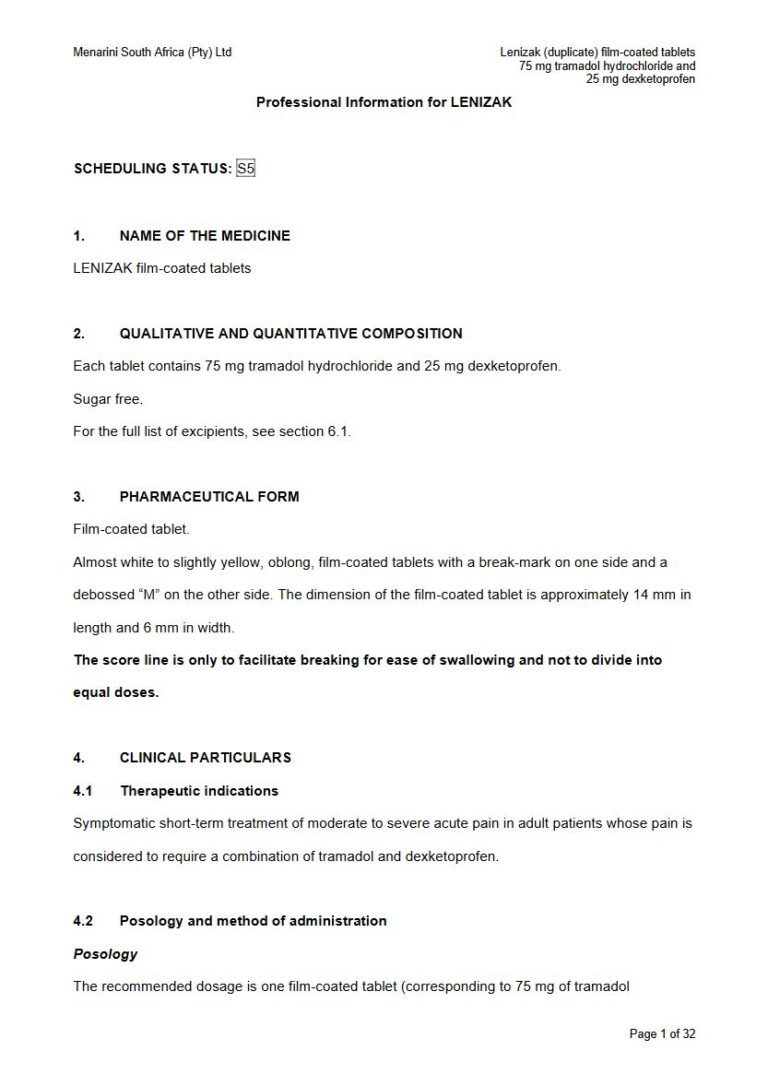
4.1 Therapeutic indications
Symptomatic short - term treatment of moderate to severe acute pain in adult patients whose pain is considered to require a combination of tramadol and dexketoprofen.
4.2 Posology and method of administration
Posology
The recommended dosage is one film - coated tablet (corresponding to 75 mg of tramadol hydrochloride and 25 mg of dexketoprofen). Additional doses can be taken as needed, with a minimum dosing interval of 8 hours. The total daily dose should not exceed three film - coated tablets per day (corresponding to 225 mg of tramadol hydrochloride and 75 mg of dexketoprofen). LENIZAK is intended for short - term use only and the treatment must be strictly limited to the symptomatic period, with a maximum duration of 5 days. Switching to a single component medicine for analgesia should be considered according to pain intensity and response of the patient. Undesirable effects may be minimised by using the lowest number of doses for the shortest duration necessary to control symptoms (see section 4.4).
Elderly patients (u2265 65 years of age)
In elderly patients the starting recommended dosage is one film - coated tablet; additional doses can be taken as needed with the minimum dose interval of 8 hours and not exceeding the total daily dose of two film - coated tablets (corresponding to 150 mg of tramadol hydrochloride and 50 mg of dexketoprofen). The dosage may be increased to a maximum of 3 daily film - coated tablets as for adults < 65 years of age only after good general tolerance has been ascertained. Limited data are available in patients over 75 years, therefore LENIZAK should be used with caution in these patients (see section 4.4).
Hepatic impairment
Patients with mild to moderate hepatic dysfunction should not exceed a total daily dose of two film - coated tablets LENIZAK and be closely monitored. LENIZAK should not be used in patients with severe hepatic impairment (see section 4.3).
Renal impairment
The total daily dosage should be reduced to two film - coated tablets LENIZAK in patients with mildly impaired renal function (creatinine clearance 60 u2013 89 mL/min) (see section 4.4). LENIZAK should not be used in patients with moderate to severe renal impairment (creatinine clearance u2264 59 mL/min) (see section 4.3).
Paediatric population
The safety and efficacy of LENIZAK in children and adolescents < 18 years of age have not been established. No data are available. Therefore LENIZAK should not be used in children and adolescents < 18 years of age.
Method of administration
Oral use. LENIZAK should be swallowed with a sufficient amount of fluid (e.g. one glass of water) at least 30 minutes before a meal as concomitant administration with food delays the absorption rate of LENIZAK (see section 5.2).
4.3 Contraindications
The contraindications reported for dexketoprofen and tramadol as single medicines, are contraindications for the use of LENIZAK. Dexketoprofen must not be administered in the following cases:
u2022 Hypersensitivity to dexketoprofen, to any other NSAID, or to any of the excipients listed in section 6.1.
u2022 Patients in whom medicines with a similar action (e.g. acetylsalicylic acid, or other NSAIDs) precipitate attacks of asthma, bronchospasm, acute rhinitis, or cause nasal polyps, urticaria or angioedema.
u2022 Known photoallergic or phototoxic reactions during treatment with ketoprofen or fibrates.
u2022 Patients with active peptic ulcer/gastrointestinal haemorrhage or any history of gastrointestinal bleeding, ulceration or perforation.
u2022 Patients with history of gastrointestinal bleeding or perforation, related to previous NSAIDs therapy.
u2022 Patients with chronic dyspepsia.
u2022 Patients who have other active bleedings or bleeding disorders.
u2022 Patients with Crohnu2019s disease or ulcerative colitis.
u2022 Patients with severe heart failure.
u2022 Patients with moderate to severe renal dysfunction (creatinine clearance u2264 59 mL/min).
u2022 Patients with severe hepatic impairment (Child - Pugh score 10 u2013 15).
u2022 Patients with haemorrhagic diathesis and other coagulation disorders.
u2022 Patients with severe dehydration (caused by vomiting, diarrhoea or insufficient fluid intake).
Tramadol must not be administered in the following cases:
u2022 Hypersensitivity to tramadol or to any of the excipients listed in section 6.1.
u2022 In acute intoxication with alcohol, hypnotics, analgesics, opioids or psychotropic medicines.
u2022 In patients receiving MAO inhibitors, or who have taken them within the last 14 days (see section 4.5).
u2022 In patients with epilepsy not adequately controlled by treatment (see section 4.4).
u2022 Severe respiratory depression.
u2022 In patients with a head injury and a decreased level of consciousness. LENIZAK is contraindicated during pregnancy and lactation (see section 4.6).
4.4 Special warnings and precautions for use
The special warnings and precautions reported for dexketoprofen and tramadol as single medicines, apply to the use of LENIZAK. Dexketoprofen
Administer with caution in patients with a history of allergic conditions. The use of dexketoprofen with concomitant other NSAIDs including cyclooxygenase - 2 selective inhibitors should be avoided (see section 4.5). Undesirable effects may be minimised by using the lowest effective dose for the shortest duration necessary to control symptoms (see section 4.2, and gastrointestinal and cardiovascular risks below).
Gastrointestinal safety
Gastrointestinal bleeding, ulceration or perforation which can be fatal, have been reported with NSAIDs such as contained in LENIZAK at any time during treatment, with or without warning symptoms or a previous history of serious gastrointestinal events. When gastrointestinal bleeding or ulceration occurs in patients receiving LENIZAK, the treatment should be discontinued. The risk of gastrointestinal bleeding, ulceration or perforation is higher with increasing doses, in patients with a history of ulcer, particularly if complicated with haemorrhage or perforation (see section 4.3), and in older people. Any history of oesophagitis, gastritis and/or peptic ulcer must be sought in order to ensure their total cure before starting treatment with LENIZAK. Patients with gastrointestinal symptoms or history of gastrointestinal disease should be monitored for digestive disturbances, especially gastrointestinal bleeding. LENIZAK should not be given to patients with a history of inflammatory bowel disease (ulcerative colitis, Crohnu2019s disease) (see section 4.3) as their condition may be exacerbated (see section 4.8). Patients with a history of gastrointestinal toxicity, particularly when elderly, should report any abdominal symptoms (especially gastrointestinal bleeding) during treatment with LENIZAK. Caution should be advised in patients receiving concomitant medicines which could increase the risk of ulceration or bleeding, such as oral corticosteroids, anticoagulants such as warfarin, selective serotonin - reuptake inhibitors or antiplatelet medicines such as acetylsalicylic acid (see section 4.5).
Renal safety
Caution should be exercised in patients with impairment of renal function. In these patients, the use of LENIZAK may result in deterioration of renal function, fluid retention and oedema. The risk of nephrotoxicity is increased in patients on diuretic therapy and patients with hypovolaemia. Adequate fluid intake should be ensured during treatment to prevent dehydration/hypovolaemia. LENIZAK can increase plasma urea and creatinine and is associated with nephrotoxicity which may present as glomerular nephritis, interstitial nephritis, renal papillary necrosis, nephrotic syndrome and acute kidney injury (AKI) (acute renal failure). Elderly patients are more likely to be suffering from impaired renal function (see section 4.2).
Liver safety
Caution should be exercised in patients with impairment of hepatic function. LENIZAK can cause increases in liver function parameters, such as significant increases in aspartate transaminase (AST) also known as serum glutamic oxaloacetic transaminase (SGOT) and alanine transaminase (ALT), also known as serum glutamic - pyruvic transaminase (SGPT). Progressive significant increases in liver function parameters indicate deterioration of liver function, necessitating discontinuation of treatment.
Cardiovascular and cerebrovascular safety
Appropriate monitoring and advice are required for patients with a history of hypertension and/or mild to moderate congestive heart failure as fluid retention and oedema have been reported in association with NSAIDs such as contained in LENIZAK. Special caution should be exercised in patients with a history of cardiac disease, in particular those with previous episodes of heart failure as there is an increased risk of precipitating heart failure. LENIZAK should not be used in patients with severe cardiac failure (see section 4.3). Clinical trial and epidemiological data suggest that use of NSAIDs such as contained in LENIZAK may be associated with an increased risk of arterial thrombotic events (for example myocardial infarction or stroke). There are insufficient data to exclude such a risk for dexketoprofen. Patients with uncontrolled hypertension, congestive heart failure, established ischaemic heart disease, peripheral arterial disease, and/or cerebrovascular disease should only be treated with LENIZAK after careful consideration. LENIZAK can inhibit platelet aggregation and prolong bleeding time via inhibition of prostaglandin synthesis. Therefore, the use of LENIZAK in patients who are receiving other therapy that interferes with haemostasis, such as warfarin, other anticoagulants or heparins is not recommended (see section 4.5).
Skin reactions
Serious skin reactions, some of them fatal, including exfoliative dermatitis, Stevens - Johnson syndrome, and toxic epidermal necrolysis, have been reported in association with the use of NSAIDs, such as contained in LENIZAK (see section 4.8). Patients appear to be at highest risk of these reactions early in the course of therapy. LENIZAK should be discontinued at the first appearance of skin rash, mucosal lesions, or any other sign of hypersensitivity.
Elderly patients
The elderly has an increased frequency of adverse reactions to NSAIDs, such as contained in LENIZAK especially gastrointestinal bleeding and perforation which may be fatal (see section 4.2). These patients should commence treatment on the lowest dose available. Elderly patients are more likely to be suffering from impaired renal cardiovascular or hepatic function (see section 4.2).
Other information
Particular caution is required in patients with:
u2022 congenital disorder of porphyrin metabolism (e.g. acute intermittent porphyria)
u2022 dehydration/hypovolaemia
u2022 directly after major surgery.
Severe acute hypersensitivity reactions (anaphylactic shock, for example) have been observed. Treatment must be discontinued and appropriate therapy initiated at the first signs of severe hypersensitivity reactions following intake of LENIZAK. Patients with asthma combined with chronic rhinitis, chronic sinusitis, and/or nasal polyposis have a higher risk of allergy to acetylsalicylic acid and/or NSAIDs than the rest of the population. Administration of LENIZAK can cause asthma attacks or bronchospasm, particularly in subjects allergic to acetylsalicylic acid or NSAIDs (see section 4.3). Varicella can cause serious cutaneous and soft tissues infectious complications. A contributing role of NSAIDs, such as contained in LENIZAK in the worsening of these infections cannot be ruled out. Thus, it is advisable to avoid use of LENIZAK in case of varicella. LENIZAK should be administered with caution to patients suffering from haematopoietic disorders, systemic lupus erythematosus or mixed connective tissue disease. LENIZAK can mask the symptoms of infectious diseases. Aggravation of soft tissue infections have been described in temporal connection with the use of NSAIDs, such as contained in LENIZAK. Paediatric population
The safety and efficacy of LENIZAK in children and adolescents < 18 years of age have not been established. Therefore LENIZAK should not be used in children and adolescents < 18 years of age.
Tramadol - related special warnings and precautions
Due to the tramadol component, LENIZAK should be used with particular caution in addicted patients, patients with head injury, shock, a reduced level of consciousness of uncertain origin, disorders of the respiratory centre or function, or increased intracranial pressure. In patients sensitive to opiates LENIZAK should be used with caution. Care should be taken when treating patients with respiratory depression, or if concomitant CNS depressant medicines are being administered (see section 4.5), or if the recommended dosage is exceeded (see section 4.9) as the possibility of respiratory depression cannot be excluded in these situations. Convulsions have been reported in patients receiving tramadol at the recommended dose levels. The risk may be increased when doses of tramadol exceed the recommended upper daily dose limit (400 mg). In addition tramadol may increase the seizure risk in patients taking other medicines that lower the seizure threshold (see section 4.5). Patients with a history of epilepsy or those susceptible to seizures should only be treated with tramadol if there are compelling circumstances (see section 4.3). Tolerance, psychic and physical addiction may develop with the use of LENIZAK. There is an increased risk of addiction in patients with a personal or family history of substance abuse or mental health disorders. In patients with a tendency to drug abuse or dependence, treatment with LENIZAK should only be carried out for short periods under strict medical supervision. LENIZAK has a maximum treatment duration of 5 days.
Risk from concomitant use of sedative medicines such as benzodiazepines or related medicines
Concomitant use of LENIZAK and sedative medicines such as benzodiazepines or related medicines may result in sedation, respiratory depression, coma and death. Because of these risks, concomitant prescribing with these sedative medicines should be reserved for patients for whom alternative treatment options are not possible. If a decision is made to prescribe LENIZAK concomitantly with sedative medicines, the lowest effective dose should be used, and the duration of treatment should be as short as possible. The patients should be followed closely for signs and symptoms of respiratory depression and sedation. In this respect, it is strongly recommended to inform patients and their caregivers to be aware of these symptoms (see section 4.5).
4.5 Interactions with other medicines
No clinical studies have been performed to evaluate the potential impact of interactions on safety profile of LENIZAK. However, those reported for dexketoprofen and tramadol as single medicines apply to the use of LENIZAK.
Dexketoprofen
The following interactions apply to nonsteroidal anti - inflammatory drugs (NSAIDs) such as dexketoprofen in LENIZAK:
Concomitant use not recommended
u2022 Other NSAIDs (including cyclooxygenase - 2 selective inhibitors) and high doses of salicylates (u2265 3 g/day): Administration of several NSAIDs together may increase the risk of gastrointestinal ulcers and bleeding, via a synergistic effect.
u2022 Anticoagulants: NSAIDs may enhance the effects of anticoagulants, such as warfarin (see section 4.4), due to the high plasma protein binding of dexketoprofen and the inhibition of platelet function and damage to the gastroduodenal mucosa. If the combination cannot be avoided, close clinical observation and monitoring of appropriate laboratory indicators should be carried out.
u2022 Heparins: Increased risk of haemorrhage (due to the inhibition of platelet function and damage to the gastroduodenal mucosa). If the combination cannot be avoided, close clinical observation and monitoring of laboratory values should be carried out.
u2022 Corticosteroids: There is an increased risk of gastrointestinal ulceration or bleeding.
u2022 Lithium (described with several NSAIDs): NSAIDs increase blood lithium levels, which may reach toxic levels (decreased renal excretion of lithium). Lithium levels should be monitored during the initiation, adjustment and withdrawal of treatment with dexketoprofen as contained in LENIZAK.
u2022 Methotrexate, used at high doses of 15 mg/week or more: Increased haematological toxicity of methotrexate may occur due to a decrease in its renal clearance by anti - inflammatory medicines such as dexketoprofen contained in LENIZAK.
u2022 Hydantoins and sulphonamides: The toxic effects of these substances may be increased.
Combinations requiring precautions
u2022 Diuretics, ACE inhibitors, antibacterial aminoglycosides and angiotensin II receptor antagonists: Dexketoprofen may reduce the effect of diuretics and antihypertensive medicines. In some patients with compromised renal function (e.g. dehydrated patients or elderly patients with compromised renal function), the coadministration of medicines that inhibit cyclo - oxygenase and ACE inhibitors, angiotensin II receptor antagonists or antibacterial aminoglycosides may result in further deterioration of renal function, which is usually reversible. In case of combined prescription of LENIZAK and a diuretic, it is essential to ensure that the patient is adequately hydrated and to monitor renal function at the start of the treatment (see section 4.4).
u2022 Methotrexate, used at low doses, less than 15 mg/week: Increased haematological toxicity of methotrexate may occur due to a decrease in its renal clearance by anti - inflammatory medicines, such as dexketoprofen contained in LENIZAK. Frequent monitoring of the full blood count and renal function is indicated especially in elderly patients.
u2022 Pentoxifylline: An increased risk of bleeding. Frequent clinical monitoring and checking of the bleeding time are required.
u2022 Zidovudine: An increased risk of red cell line toxicity via action on reticulocytes, with severe anaemia during treatment with LENIZAK. Check complete blood count and reticulocyte count during treatment with LENIZAK.
u2022 Sulfonylureas: LENIZAK can increase the hypoglycaemic effect of sulfonylureas by displacement from plasma protein binding sites.
Combinations needing to be taken into account
u2022 Beta - blockers: Treatment with LENIZAK may decrease their antihypertensive effect via inhibition of prostaglandin synthesis.
u2022 Ciclosporin and tacrolimus: Nephrotoxicity may be enhanced by LENIZAK via renal prostaglandin mediated effects. During combination therapy, renal function should be monitored.
u2022 Thrombolytics: Increased risk of bleeding.
u2022 Antiplatelet medicines and selective serotonin reuptake inhibitors (SSRIs): Increased risk of gastrointestinal bleeding (see section 4.4).
u2022 Probenecid: Plasma concentrations of dexketoprofen may be increased due to an inhibitory mechanism at the site of renal tubular secretion and of glucurono - conjugation. This may require adjustment of the dose of LENIZAK.
u2022 Cardiac glycosides (digoxin): LENIZAK may increase plasma digoxin concentration.
u2022 Mifepristone: Because of a theoretical risk that prostaglandin synthetase inhibitors may alter the efficacy of mifepristone, NSAIDs such as dexketoprofen in LENIZAK should not be used for 8 - 12 days after mifepristone administration. Limited evidence suggests that co - administration of NSAIDs on the day of prostaglandin administration does not adversely influence the effects of mifepristone or the prostaglandin on cervical ripening or uterine contractility and does not reduce the clinical efficacy of medical termination of pregnancy.
u2022 Quinolone antibiotics: Animal data indicate that high doses of quinolones in combination with NSAIDs such as contained in LENIZAK can increase the risk of developing convulsions.
u2022 Tenofovir: Concomitant use with LENIZAK, may increase plasma urea and creatinine, renal function should be monitored in order to detect impairment of renal function or deterioration thereof.
u2022 Deferasirox: Concomitant use with LENIZAK can increase the risk of gastrointestinal toxicity. Close clinical monitoring is required when deferasirox is combined with NSAID containing medicines such as LENIZAK.
u2022 Pemetrexed: Concomitant use with NSAIDs such as dexketoprofen may decrease pemetrexed elimination, therefore caution is advised when administering higher doses of LENIZAK. In patients with mild to moderate renal insufficiency (creatinine clearance from 45 to 79 mL/min), the concomitant administration of pemetrexed with LENIZAK should be avoided for 2 days before and 2 days following pemetrexed administration.
Tramadol
Concomitant use not recommended
u2022 Due to the tramadol component LENIZAK should not be combined with monoamine oxidase (MAO) inhibitors (see section 4.3). In patients treated with MAO inhibitors in the 14 days prior to the use of the opioid pethidine, life - threatening interactions on the central nervous system, respiratory and cardiovascular function have been observed. The same interactions with MAO inhibitors cannot be ruled out during treatment with tramadol.
u2022 Caution should be exercised during concomitant treatment with tramadol and coumarin derivatives (e.g. warfarin) due to reports of elevated international normalised ratio (INR) with major bleeding and ecchymoses in some patients.
u2022 The combination of mixed opioid receptor agonist/antagonist medicines (e.g. buprenorphine, nalbuphine, pentazocine) and tramadol is not advisable because the analgesic effect of a pure agonist may theoretically be reduced in such circumstances.
Combinations requiring precautions
u2022 Tramadol as contained in LENIZAK can induce convulsions and increase the potential for selective serotonin reuptake inhibitors (SSRIs), serotonin - norepinephrine reuptake inhibitors (SNRIs), tricyclic antidepressants, antipsychotics and other seizure threshold - lowering medicines (such as bupropion and mirtazapine) and including substances such as tetrahydrocannabinol to cause convulsions.
u2022 Concomitant use of tramadol as contained in LENIZAK and serotonergic medicines, such as selective serotonin reuptake inhibitors (SSRIs), serotonin - norepinephrine reuptake inhibitors (SNRIs), MAO inhibitors (see section 4.3), tricyclic antidepressants and mirtazapine may cause serotonin toxicity. Serotonin syndrome is likely when one of the following is observed: spontaneous clonus, inducible or ocular clonus with agitation or diaphoresis, tremor and hyperreflexia, hypertonia and body temperature > 38 u00b0C and inducible ocular clonus. Withdrawal of the serotonergic medicines usually brings about a rapid improvement. Treatment depends on the type and severity of the symptoms.
u2022 The concomitant use of opioids with sedative medicines such as benzodiazepines or related medicines increases the risk of sedation, respiratory depression, coma and death because of additive CNS depressant effect. The dose and duration of concomitant use should be limited (see section 4.4).
Combinations needing to be taken into account
u2022 Concomitant administration of tramadol as contained in LENIZAK with other centrally depressant medicines or alcohol may potentiate the central nervous system effects (see section 4.8).
u2022 The results of pharmacokinetic studies have shown no clinically relevant interactions relating to previous administration or concomitant administration with cimetidine (enzyme inhibitor).
u2022 Simultaneous or previous administration of carbamazepine (enzyme inducer) may reduce the analgesic effect and shorten the duration of action.
u2022 In a limited number of studies, the pre - or postoperative administration of the antiemetic 5 - HT3 antagonist ondansetron increased the requirement of tramadol in patients with postoperative pain.
u2022 Other active substances known to inhibit CYP3A4, such as ketoconazole and erythromycin, might inhibit the metabolism of tramadol (N - demethylation) and probably also the metabolism of the active O - demethylated metabolite. The clinical importance of such an interaction has not been studied.
4.6 Fertility, pregnancy and lactation
Pregnancy
LENIZAK is contraindicated during pregnancy and lactation (see section 4.3).
Dexketoprofen
Inhibition of prostaglandin synthesis may adversely affect the pregnancy and/or the embryo/fetal development. Data from epidemiological studies raise concern about an increased risk of miscarriage and of cardiac malformation and gastroschisis after use of a prostaglandin synthesis inhibitor in early pregnancy. The absolute risk for cardiovascular malformation was increased from less than 1 %, up to approximately 1,5 %. In animals, administration of a prostaglandin synthesis inhibitor has been shown to result in increased pre - and post - implantation loss and embryo - fetal lethality. In addition, increased incidences of various malformations including cardiovascular, have been reported in animals given a prostaglandin synthesis inhibitor during the organogenetic period. During the third trimester of pregnancy, prostaglandin synthesis inhibitors such as contained in LENIZAK may expose the fetus to:
u2022 cardiopulmonary toxicity (with premature closure of the ductus arteriosus and pulmonary hypertension);
u2022 renal dysfunction, which may progress to renal failure with oligohydramnios;
At the end of pregnancy, the mother and the neonate may be exposed to:
u2022 possible prolongation of bleeding time, an anti - aggregating effect which may occur even at very low doses;
u2022 inhibition of uterine contractions resulting in delayed or prolonged labour.
Tramadol
Animal studies with tramadol as contained in LENIZAK revealed at high doses effects on organ development, ossification and neonatal mortality. Teratogenic effects were not observed. Tramadol crosses the placenta and may induce respiratory depression in the neonate. Chronic use during pregnancy may lead to neonatal withdrawal symptoms.
Breastfeeding
LENIZAK is contraindicated during breastfeeding (see section 4.3).
Dexketoprofen
It is not known whether dexketoprofen is excreted in human milk.
Tramadol
Tramadol and its metabolites are found in human breast milk. For this reason, tramadol should not be used during lactation or alternatively, breast - feeding should be discontinued during treatment with tramadol.
Fertility
The use of LENIZAK may impair female fertility and is not recommended in women attempting to conceive.
4.7 Effects on ability to drive and use machines
The effects known for the single components of LENIZAK apply to the fixed combination.
Dexketoprofen
Dexketoprofen may cause dizziness and somnolence which impair the patientu2019s ability to drive or to use machines.
Tramadol
Tramadol may cause effects such as somnolence and dizziness and therefore may impair the reactions of drivers and machine operators.
4.8 Undesirable effects
The adverse events reported in the clinical trials performed with LENIZAK and the adverse reactions reported in dexketoprofen and tramadol oral formulations are tabulated below, classified by system organ class. The frequencies are defined as follows: Very common: u2265 1/10 Common: u2265 1/100 to < 1/10 Uncommon: u2265 1/1 000 to < 1/100 Rare: u2265 1/10 000 to < 1/1 000 Very rare (< 1/10 000) Not known: cannot be estimated from the available data.
MedDRA SYSTEM ORGAN CLASS
Adverse Reaction Frequency LENIZAK Dexketoprofen Tramadol
Blood and lymphatic system disorders Thrombocytosis Uncommon Neutropenia Very rare Thrombocytopenia Very rare
Immune system disorders Hypersensitivity (e.g. dyspnoea, bronchospasm, wheezing, angioedema) Very rare Rare Anaphylactic reaction, including anaphylactic shock Very rare Rare Laryngeal oedema Uncommon Rare
Metabolism and nutrition disorders Appetite disorder Rare Decreased appetite Rare Hypoglycaemia Not known Hypokalaemia Uncommon
Psychiatric disorders Anxiety Uncommon Rare Cognitive disorder Rare Confusional state Rare Dependence Rare Hallucination Rare Insomnia Uncommon Mood altered Rare Nightmare Rare Psychotic disorder Uncommon Sleep disorder Rare
Nervous system disorders Coordination abnormal Rare Dizziness Common Uncommon Very common Epilepsy Rare Headache Uncommon Uncommon Common Muscle contractions involuntary Rare Paraesthesia Rare Rare Sensory disturbance Rare Somnolence Uncommon Uncommon Common
Speech disorder Not known Syncope Rare Rare Tremor Rare
Eye disorders Blurred vision Very rare Rare Mydriasis Not known Miosis Rare Periorbital oedema Uncommon
Ear and labyrinth disorders Tinnitus Very rare Vertigo Uncommon Uncommon
Cardiac disorders Bradycardia Rare Palpitations Uncommon Uncommon Tachycardia Uncommon Very rare Uncommon
Vascular disorders Circulatory collapse Uncommon Flushing Uncommon Hypertensive crisis Uncommon Hypotension Uncommon Very rare
Orthostatic hypotension Uncommon
Respiratory, thoracic and mediastinal disorders Bradypnoea Rare Bronchospasm Very rare Dyspnoea Very rare Rare Respiratory depression Uncommon
Gastrointestinal disorders Abdominal discomfort Uncommon Abdominal distension Uncommon Uncommon Abdominal pain Common Constipation Uncommon Uncommon Common Diarrhoea Common Uncommon Dry mouth Uncommon Common Dyspepsia Uncommon Common Flatulence Uncommon Gastritis Uncommon Gastrointestinal tract irritation Uncommon Nausea Common Common Very common Pancreatitis Very rare Peptic ulcer haemorrhage Rare Peptic ulcer perforation Rare Peptic ulcer Rare Retching Uncommon Vomiting Common Common Common
Hepatobiliary disorders Hepatitis Rare Hepatocellular injury Rare Hepatic enzyme increased, including liver function test abnormal and Gamma - glutamyl transferase increased Uncommon Rare Very rare
Skin and subcutaneous tissue disorders Acne Rare Face oedema Uncommon Very rare Hyperhidrosis Uncommon Rare Common Photosensitivity reaction Very rare Pruritus Very rare Uncommon Rash Uncommon Uncommon Stevens - Johnson syndrome Very rare Toxic epidermal necrolysis (Lyell's syndrome) Very rare Urticaria Uncommon Rare Uncommon
Musculoskeletal and connective tissue disorders Back pain Rare Weakness Rare
Renal and urinary disorders Dysuria Rare Haematuria Uncommon Micturition disorder Rare Nephritis Very rare Nephrotic syndrome Very rare Polyuria Rare Renal failure acute Rare Urinary retention Rare
Reproductive system and breast disorders Menstrual disorder Rare Prostatic disorder Rare
General disorders and administration site conditions Asthenia Uncommon Uncommon Chills Uncommon Uncommon Discomfort Uncommon Feeling abnormal Uncommon Drug withdrawal syndrome (agitation, anxiety, nervousness, insomnia, hyperkinesia, tremor and gastrointestinal symptoms: rare; panic attacks, severe anxiety, hallucinations, paraesthesias, tinnitus, and unusual CNS symptoms e.g. confusion, delusions, depersonalisation, derealisation, paranoia) Rare/very rare Fatigue Uncommon Common Malaise Uncommon Oedema peripheral Rare Pain Uncommon
Investigations Increased blood pressure Uncommon Rare Rare Increased blood alkaline phosphatase Uncommon Increased blood lactate dehydrogenase Uncommon
Dexketoprofen - tramadol combination LENIZAK In clinical studies the most commonly observed adverse reactions were vomiting, nausea and dizziness (2,9 %, 2,7 % and 1,1 % of patients, respectively).
Dexketoprofen Gastrointestinal: The most commonly observed adverse events are gastrointestinal in nature. Peptic ulcers, perforation or gastrointestinal bleeding, sometimes fatal, particularly in elderly patients, may occur (see section 4.4). Nausea, vomiting, diarrhoea, flatulence, constipation, dyspepsia, abdominal pain, melaena, haematemesis, ulcerative stomatitis, exacerbation of ulcerative colitis and Crohnu2019s disease (see section 4.4) have been reported following administration. Less frequently, gastritis has been observed. Oedema, hypertension and cardiac failure have been reported in association with NSAIDs such as contained in LENIZAK. The following undesirable effects may appear: aseptic meningitis, which might predominantly occur in patients with systemic lupus erythematosus or mixed connective tissue disease; haematological reactions (purpura, aplastic and haemolytic anaemia, and rarely agranulocytosis and medullar hypoplasia). Bullous reactions including Stevens - Johnson syndrome and toxic epidermal necrolysis (very rare). Clinical trial and epidemiological data suggest that use of NSAIDs such as contained in LENIZAK (particularly at high doses and in long - term treatment) may be associated with an increased risk of arterial thrombotic events (for example myocardial infarction or stroke) (see section 4.4).
Tramadol The most commonly reported adverse reactions due to tramadol are nausea and dizziness, both occurring in more than 10 % of patients. If the recommended doses are exceeded or if other centrally depressant substances are administered concomitantly (see section 4.5) respiratory depression may occur. Worsening of asthma has been reported, though a causal relationship has not been established. Epileptiform convulsions have occurred especially after administration of high doses of tramadol or after concomitant treatment with medicines, which can lower the seizure threshold or themselves induce cerebral convulsions (see section 4.4 and section 4.5). Symptoms of withdrawal reactions, similar to those occurring during opiate withdrawal, may occur as follows; agitation, anxiety, nervousness, insomnia, hyperkinesia, tremor and gastrointestinal symptoms. Other symptoms that have very rarely been seen with tramadol discontinuation include panic attacks, severe anxiety, hallucinations, paraesthesias, tinnitus, and unusual CNS symptoms (i.e. confusion, delusions, depersonalisation, derealisation, paranoia).
Post - marketing experience The following side effects have been reported for opioid containing medicines as contained in LENIZAK: Gastrointestinal disorders: Increased risk of abdominal pain, including pancreatitis. Reporting of suspected adverse reactions Reporting suspected adverse reactions after authorisation of LENIZAK is important. It allows continued monitoring of the benefit/risk balance of LENIZAK. Health care providers are requested to report any suspected adverse drug reactions to SAHPRA via the Med Safety APP (Medsafety X SAHPRA) and eReporting platform (who - umc.org) found on SAHPRA website.
4.9 Overdose
Data reported for dexketoprofen and tramadol as single medicines should be taken into account.
Symptoms
Dexketoprofen
In dexketoprofen overdose symptoms included gastrointestinal (vomiting, anorexia, abdominal pain) and neurological (somnolence, vertigo, disorientation, headache) adverse events.
Tramadol
In tramadol overdose, symptoms included miosis, vomiting, cardiovascular collapse, consciousness disorders, coma, convulsions, respiratory depression and respiratory arrest.
Management
Dexketoprofen
In case of accidental or excessive intake, immediately initiate symptomatic and supportive therapy according to the patientu2019s clinical condition. If more than 5 mg/kg has been ingested by an adult or a child, activated charcoal should be administered within the first hour after ingestion. Dexketoprofen may be removed by dialysis.
Tramadol
Keep the respiratory tract open (and avoid aspiration), maintain respiration and circulation depending on the symptoms. The antidote for respiratory depression is naloxone. In animal experiments naloxone had no effect on convulsions. When convulsions occur, a benzodiazepine such as diazepam should be given intravenously. In case of orally intoxication, gastrointestinal decontamination with activated charcoal is recommended within two hours after tramadol intake. Tramadol may be removed by dialysis, but it is minimally eliminated from the serum by haemodialysis or haemofiltration. Therefore, haemodialysis or haemofiltration alone is not suitable for detoxification.
