
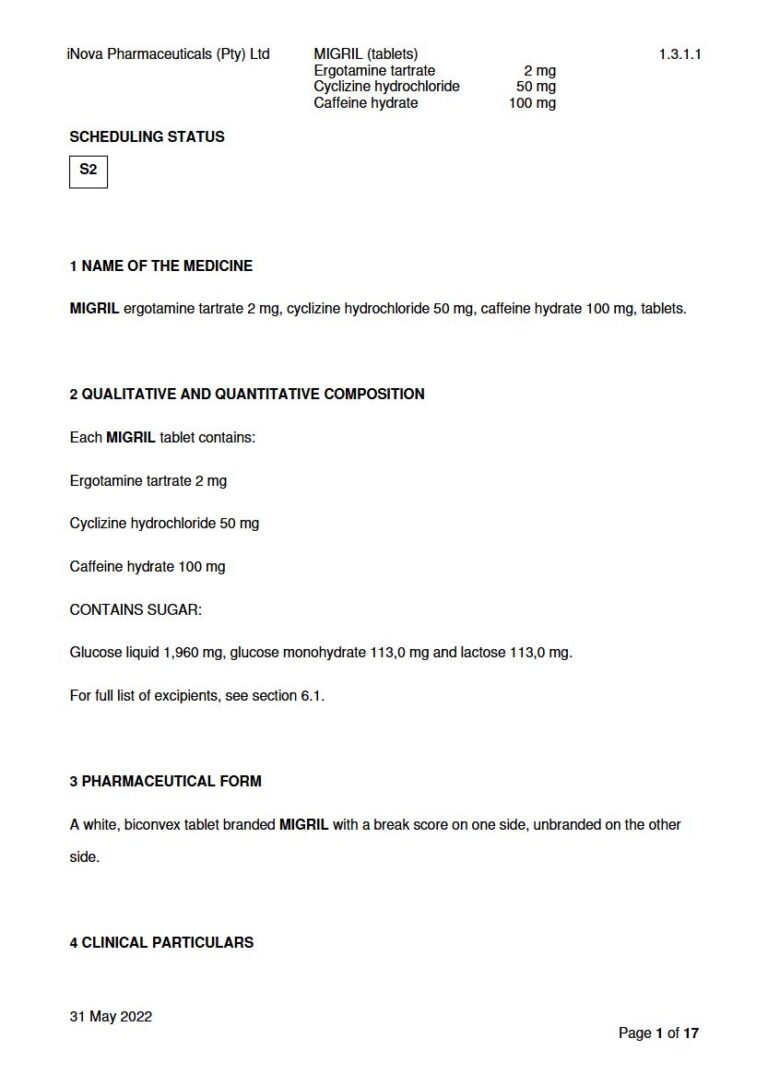
Migril 2 mg, 50 mg, 100 mg Tablet.
PDF Leaflet Revision Date: 15 July 2022
Clinical Summary
Quick overview from the medicine insert
Indication
Relief of acute migraine attacks.
Dosage (summary)
Initial dose: 1 tablet; may repeat half to 1 tablet every 30 mins as needed.
Special Populations
- Elderly
- Children
Pregnancy & Breastfeeding
Contraindicated in pregnancy and lactation.
Key Drug Interactions
- CYP3A4 inhibitors
- Beta-blockers
- CNS depressants
Contraindications
- Sensitivity to components
- Vascular disease
- Pregnancy
- Lactation
Common side effects
- Dizziness
- Drowsiness
- Nausea
- Vomiting
Counselling Points
- Avoid alcohol
- Do not exceed recommended dose
- Lie down in a dark room after taking
Serious warnings
- Risk of ergotism
- Dependence with habitual use
Important Disclaimer
The Migril 2 mg, 50 mg, 100 mg Tablet. professional information leaflet below is the property of Inova Pharmaceuticals and is provided on Medinsert exactly as issued, with no.. alterations or editorial changes. We make every effort to keep content current by updating documents as soon as new versions become available. Medinsert serves as a trusted access point for healthcare professionals, but does not replace official sources or clinical judgement. For more details, please read our full disclaimer. read more>>
 Healthcare Professionals Only
This content is for registered healthcare professionals
Sign in or create a free account to read the full package insert.
Free for HPCSA-registered professionals. Powered by Medinsert.
Clinical Particulars
Section 4 of the official insert — extracted exactly as issued, no alterations
4.1 Therapeutic indication
MIGRIL is indicated for the relief of acute migraine attacks.
4.2 Posology and method of administration
MIGRIL is best administered in the early stages of the attack, i.e. in the prodromal stage. In order to minimise side-effects, the smallest effective dose should be used. With subsequent attacks the patient can take in one dose the number of tablets that were found necessary to relieve the previous attack. Tolerance to the compound does not develop and therefore continued use will not result in diminished efficacy in subsequent attacks, provided adequate dosage is employed. It is recommended that the patient should lie down in a quiet, darkened room after taking the tablets as this materially facilitates relief of symptoms.
The usual initial dose is one tablet, which should be given with a little water upon the first warning of an attack. Additional doses of a half to one tablet may then be required at half hourly intervals (see 4.4).
The use of MIGRIL in children is not recommended. See section 4.3.
4.3 Contraindications
MIGRIL should not be taken if there is a sensitivity to ergotamine tartrate, cyclizine hydrochloride, caffeine anhydrous or any of its inactive ingredients. See 6.1.
MIGRIL is contraindicated during pregnancy and lactation. See 4.6.
The use of MIGRIL in children is not recommended.
MIGRIL is contraindicated in pre-existing vascular disease including coronary disease, obliterative vascular disease, angina, claudication, peripheral ischaemia, Raynaud's Syndrome, severe high blood pressure, recent or contemplated angioplasty or vascular surgery.
MIGRIL should not be used in patients with hyperthyroidism, sepsis, kidney and liver disease, porphyria, malnutrition and anaemia.
4.4 Special warnings and precautions for use
MIGRIL should not be used for migraine prophylaxis or taken regularly, even if the dosage recommendations are adhered to because of the risk of inducing ergotism or ergotamine dependence.
Ergotamine dependence can develop with habitual use and a syndrome of non-migrainous rebound headache can develop, in which case MIGRIL should be discontinued. See 4.8.
No more than 4 tablets (8 mg ergotamine) should be given in any one attack.
No more than 6 tablets (12 mg ergotamine) should be given in any one week.
The use of ergotamine-containing compounds carries the risk of precipitating arterial constriction and other manifestations of ergotism.
Co-administration of ergotamine with potent CYP3A4 inhibitors has been associated with serious adverse events. See 4.3.
While these serious adverse events have not been reported with less potent CYP3A4 inhibitors, there is a potential risk for developing serious toxicity including vasospasm when these medicines are used with ergotamine. Less potent CYP3A4 inhibitors include: grapefruit juice, saquinavir, nefazodone, fluoxetine, fluvoxamine, metronidazole, fluconazole and clotrimazole. This list is not exhaustive and the prescriber should consider the effects on CYP3A4 of other agents being considered for concomitant use with ergotamine. See 4.5.
Individual sensitivity to the effects of ergotamine varies, and the signs and symptoms of toxicity may occur in some patients with usual doses. Therapy should be withdrawn if symptoms of arterial insufficiency develop, these could include coldness, numbness or tingling of the extremities. Arterial vasospasm, severe enough to threaten the viability of the limbs, has been reported after routine therapy but is more normally to be expected after prolonged overdosage.
MIGRIL should be used with caution in patients with infective hepatitis because of an increased risk of precipitating peripheral ischaemia.
Care should be taken in the elderly, as they may be especially susceptible to complications associated with ergotamine.
Ergotamine should be used with care when anaemia is present.
There have been a few reports of patients on ergotamine developing retroperitoneal and/or pleuropulmonary fibrosis. There have also been rare reports of fibrotic thickening of aortic, mitral, tricuspid and/or pulmonary valves with long-term continuous use of ergotamine.
Caffeine: Caffeine has central nervous system stimulant activity and may therefore inhibit sleep. Because sleep contributes to the relief of migraine this action may be detrimental to the patient.
MIGRIL should be used with caution in patients with cardiac disease (increased risk of caffeine-induced arrhythmias).
Patients should be warned to avoid caffeine for at least 12 hours before dipyridamole-assisted myocardial perfusion studies. Caffeine may cause false-positive elevations of serum urate determinations to occur when measured by the Bittner method.
Cyclizine hydrochloride: Caution is advised in patients with gastrointestinal tract obstructive disease, glaucoma, prostatic hypertrophy or urinary retention as these conditions may be aggravated by cyclizine. See 4.5.
The elderly: There have been no specific studies of MIGRIL in the elderly, however caution is recommended in elderly patients, who may be more susceptible to complications associated with vasospasm and hypothermia.
Contains lactose. Patients with the rare hereditary conditions of galactose intolerance e.g. galactosaemia, Lapp lactase deficiency, glucose-galactose malabsorption or fructose intolerance should not take MIGRIL.
Contains glucose which may have an effect on the glycaemic control of patients with diabetes mellitus.
4.5 Interactions with other medicines and other forms of interactions
Ergotamine tartrate: The concomitant use of the ergot alkaloids and beta-blocking agents, increases the risks of constriction of the veins and arteries of the extremities. Macrolide antibacterial agents such as clarithromycin, erythromycin ethylsuccinate may enhance the effect of ergotamine. See 4.3. Increased risk of ergotism with tetracycline antibacterials.
The action of other systemic vasoconstrictors and local anaesthetic solutions containing vasoconstrictors may be potentiated by ergotamine. The vasoconstrictive effect of ergotamine may oppose the vasodilating effect of nitroglycerine. The administration of ergotamine to a patient who smokes heavily may increase the risk of peripheral ischemia.
Antimigraine drugs: Increased risk of arterial occlusion with methysergide and vasospasm with 5-HT1 agonists. Ergotamine should be avoided for six hours after almotriptan, sumatriptan, rizatriptan and zolmitriptan, and for 24 hours after eletriptan. Almotriptan, eletriptan, sumatriptan and rizatriptan should be avoided for 24 hours, and zolmitriptan for six hours, after ergotamine.
Antivirals: The concomitant use of certain HIV-protease inhibitors which are potent CYP 3A4 inhibitors (amprenavir, indinavir, nelfinavir, ritonavir) is contraindicated, due to an increased risk of ergotism (see 4.3).
Antimuscarinics: Increased antimuscarinic effects, e.g. with atropine or medicines with antimuscarinic activity.
Nicotine: Nicotine may provoke vasoconstriction in some patients, predisposing to a greater ischaemic response to ergot therapy.
Sympathomimetics (pressor agents): Concomitant use may cause extreme elevation of blood pressure and vasoconstriction, including ergotism.
Cyclizine hydrochloride: Cyclizine may have additive effects with alcohol and other central nervous system depressants e.g. hypnotics, tranquillisers. Because of its anticholinergic activity cyclizine may enhance the side effects of other anticholinergic medicines. Concomitant tricyclic or MAOI antidepressants may increase sedative effects and antimuscarinic effects of cyclizine.
Caffeine: Excessive central nervous system stimulation, which may lead to nervousness, irritability, insomnia, or possibly convulsions or cardiac arrhythmias, may occur when caffeine is co-administered with other CNS stimulating medications. When caffeine is taken with monoamine-oxidase inhibitors, tachycardia and a slight increase in blood pressure may occur.
Antiarrhythmics: Mexiletine may reduce the clearance of caffeine.
Quinoline antibacterials such as ciprofloxacin may reduce caffeine clearance.
Antidepressant: Reduced clearance of caffeine by fluvoxamine.
Antiepileptics: Increased clearance of caffeine by phenytoin.
Anxiolytics and hypnotics: Increased sedative effects, although sedative effects of diazepam may be reduced by caffeine.
Disulfiram: Reduced clearance of caffeine.
Lithium: Caffeine may increase clearance of lithium.
Oestrogens and progesterones: May reduce clearance of caffeine.
Phenylpropanolamine: May increase serum caffeine levels causing excess stimulation. Manic psychosis and hypertensive crises have been reported.
Theophylline: Possibility of increased plasma theophylline levels and caffeine levels.
4.6 Fertility, pregnancy and lactation
Pregnancy MIGRIL is contraindicated in pregnancy. See 4.3.
Breastfeeding MIGRIL is contraindicated in lactation. See 4.3.
Fertility No data available.
4.7 Effects on ability to drive and use machines
This medicine may lead to drowsiness and impaired concentration, which may be aggravated by the simultaneous intake of alcohol or other central nervous system depressant agents. Patients should not operate hazardous machinery or drive motor vehicles or perform potentially hazardous tasks where loss of concentration may lead to accidents.
4.8 Undesirable effects
Side-effects seen with MIGRIL are usually due to the ergotamine component of the preparation and are more common if the dosage recommendations are exceeded.
Blood and the lymphatic system disorders: Less frequent: blood disorders including agranulocytosis, leucopenia, haemolytic anaemia, thrombocytopenia
Immune system disorders: Less frequent: hypersensitivity reactions
Psychiatric disorders: Frequency unknown: anxiety, depression, confusion, hallucinations, psychomotor impairment
Nervous system disorders: Frequent: dizziness, drowsiness, headache Frequency unknown: dysaesthesia, paraesthesiae, formication, tremor, convulsions, extrapyramidal effects
Eye disorders: Frequent: blurred vision Less frequent: ocular vasospasm (changes in vision, miosis)
Cardiac disorders: Less frequent: coronary vasospasm-induced angina pectoris, dysrhythmias including bradycardia and tachycardia, increase or decrease in blood pressure, and rapid, weak pulse. Myocardial infarction (heart attack) and cerebral infarction have also been reported and may be signs of acute or chronic overdosage. Precordial pain, coronary infarction, fibrotic thickening of the heart valves. See 4.4.
Vascular disorders: Less frequent: cerebral ischemia (anxiety, confusion); peripheral, vasospasm-induced ischemia (itching of skin, numbness and tingling of fingers, toes or face; pain in the arms, legs or lower back, especially pain in the calves and/or heels on exertion; pale, bluish-coloured or cold hands or feet; weak or absent pulses; weakness in legs, gangrene, thrombotic complications); arterial insufficiency Frequency unknown: intermittent claudication, thrombophlebitis, peripheral arterial thrombosis, arterial vasospasm. See 4.4.
Respiratory, thoracic and mediastinal disorders: Frequency unknown: apnoea (shortness of breath)
Gastrointestinal disorders: Frequent: diarrhoea, nausea and vomiting, stomach pain or bloating, dryness of the mouth, nose and throat
Skin and subcutaneous tissue disorders: Frequent: localised oedema Less frequent: pruritus
Musculoskeletal, connective tissue and bone disorders: Frequency unknown: muscle cramps, joint pains
Renal and urinary disorders: Frequent: urinary retention Less frequent: renal artery spasm, loss of renal function
General disorders and administration site conditions: Frequent: dizziness, drowsiness Frequency unknown: sleep disturbances including insomnia, retroperitoneal and/or pleuropulmonary fibrosis.
See 4.4
Investigations: Frequency unknown: positive results of skin tests may be suppressed
The side effects described above have mostly occurred following habitual chronic use exceeding the recommended dose; they may occasionally occur however at the therapeutic dose.
Reporting of suspected adverse reactions Reporting suspected adverse reactions after authorisation of the medicine is important. It allows continued monitoring of the benefit/risk balance of the medicine. Health care providers are asked to report any suspected adverse reactions to SAHPRA via the u201c6.04 Adverse Drug Reactions Reporting Formu201d, found online under SAHPRAu2019s publications: https://www.sahpra.org.za/Publications/Index/8
4.9 Overdose
Symptoms: The symptoms of acute overdosage with an ergotamine containing preparation such as MIGRIL is characterised by nausea, vomiting, diarrhoea, extreme thirst, coldness, weakness, tingling and itching of the skin, a rapid and weak pulse, hypotension, shock, confusion, convulsions and unconsciousness.
It may be difficult to measure blood pressure; there have been reports of fatalities. Further symptoms of peripheral vasoconstriction or of cardiovascular disturbances, as seen in chronic ergotamine poisoning, may also occur but could be delayed.
The possibility of severe symptoms associated with the anticholinergic activity of cyclizine must be considered.
Treatment of acute overdosage: Treatment of overdosage with MIGRIL is supportive. Following recent ingestion, the stomach should be emptied by gastric lavage or emesis. Activated charcoal may be used to reduce absorption. Maintain respiration as well as circulation to the affected parts in order to prevent gangrene. Convulsions should be controlled in the usual way with parenteral anticonvulsant therapy. Intravenous vasodilators, such as sodium nitroprusside infusion may be necessary to relieve vasospasm. Peritoneal dialysis and forced diuresis may help to eliminate ergotamine from the body. The latest information regarding the treatment of overdosage can be obtained from the nearest poison centre.
Chronic overdosage: Symptoms: Chronic overdosage with ergotamine containing preparations usually presents as peripheral ischaemia threatening the viability of the affected limb. The extremities, especially the feet and legs, become numb, cold, tingling, and pale or cyanotic, with muscle pain; there may be no pulse in the affected limb. Eventually gangrene develops in the toes and sometimes the fingers. Anginal pain, tachycardia or bradycardia and hypertension or hypotension have been reported. Myocardial infarction has occurred rarely. Pleural and peritoneal fibrosis may occur with excessive use. Chronic, intractable headache (rebound headache) may occur and is also a major withdrawal symptom following the development of ergotamine dependence. Other adverse effects include confusion and convulsions. On rare occasions symptoms of vasoconstriction of blood vessels in the brain, eye, intestines and kidneys occur.
Treatment of chronic overdosage: Withdraw MIGRIL immediately. Intravenous vasodilators such as nitroprusside and nitroglycerin may be used to re-establish normal blood flow. Captopril has also been used to reverse the effects of chronic overdosage with ergotamine. Re-establishment of blood flow may be associated with intense burning sensations in the affected areas but these usually resolve after several weeks.
