
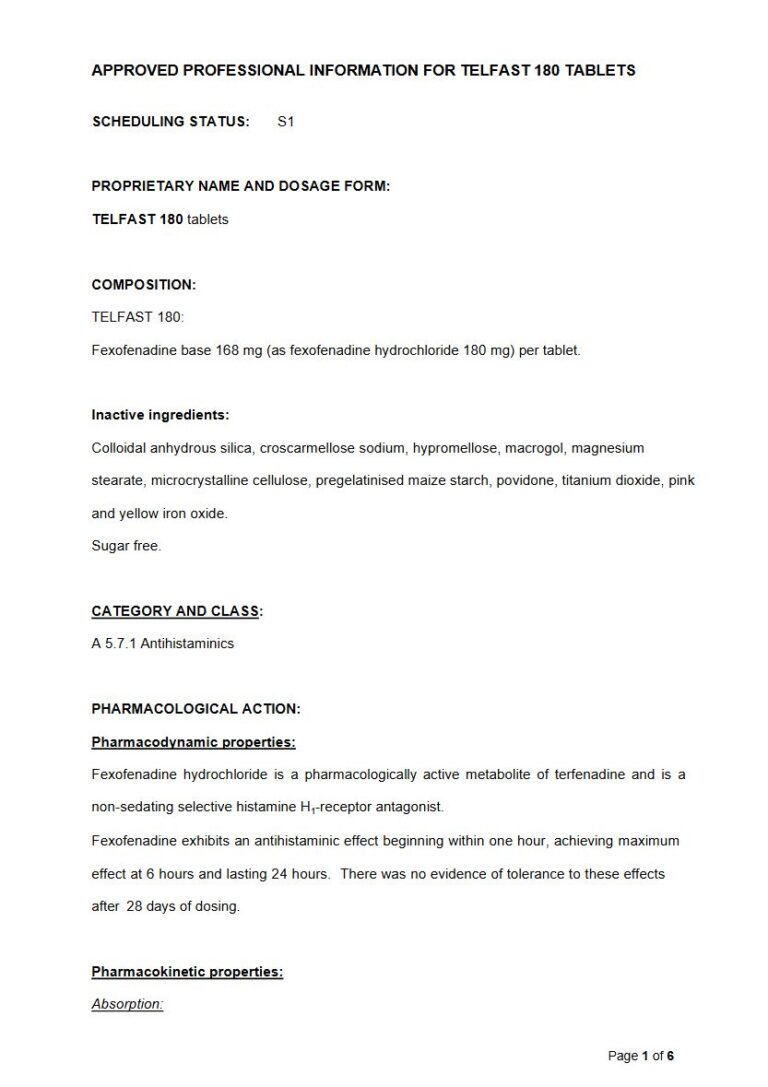
Telfast 180 180 mg TABLETS
PDF Leaflet Revision Date: 11 May 2022
Clinical Summary
Quick overview from the medicine insert
Indication
Relief of symptoms associated with chronic idiopathic urticaria and seasonal allergic rhinitis.
Dosage (summary)
One 180 mg tablet daily for adults and children aged 12 years and over.
Onset of Action / Duration
Onset: 1 hour, Duration: 24 hours
Special Populations
- Elderly
- Renal impairment
- Hepatic impairment
Pregnancy & Breastfeeding
Not recommended during pregnancy or breastfeeding.
Key Drug Interactions
- Erythromycin
- Ketoconazole
- Aluminium and magnesium hydroxide antacids
Contraindications
- Hypersensitivity to fexofenadine or inactive ingredients
Common side effects
- Headache
- Drowsiness
- Dizziness
- Nausea
Counselling Points
- May cause drowsiness in some individuals
- Avoid alcohol and CNS depressants
Serious warnings
- Limited data in elderly and renally/hepatically impaired patients
- Potential for tachycardia and palpitations
Important Disclaimer
The Telfast 180 180 mg TABLETS professional information leaflet below is the property of Sanofi-Aventis South Africa and is provided on Medinsert exactly as issued, with no.. alterations or editorial changes. We make every effort to keep content current by updating documents as soon as new versions become available. Medinsert serves as a trusted access point for healthcare professionals, but does not replace official sources or clinical judgement. For more details, please read our full disclaimer. read more>>
 Healthcare Professionals Only
This content is for registered healthcare professionals
Sign in or create a free account to read the full package insert.
Free for HPCSA-registered professionals. Powered by Medinsert.
Clinical Particulars
Section 4 of the official insert — extracted exactly as issued, no alterations
4.1 Therapeutic indications
TELFAST 180 is indicated for the relief of symptoms associated with chronic idiopathic urticaria (CIU). TELFAST 180 is indicated for the relief of symptoms associated with Seasonal allergic rhinitis (SAR), where TELFAST 120 has been Insufficient to control the symptoms.
4.2 Posology and method of administration
Adults and children aged 12 years and over: One 180 mg tablet daily. Children under 12 years of age: The efficacy and safety of TELFAST 180 has not been studied in children under 12. Special risk groups: (See Pharmacokinetics and Warnings)
4.3 Contraindications
TELFAST 180 is contraindicated in patients with known hypersensitivity to fexofenadine hydrochloride or any of its inactive ingredients (see COMPOSITION). There is no experience with TELFAST 180 in pregnant women. TELFAST 180 should not be taken during pregnancy or by mothers breastfeeding their babies (see HUMAN REPRODUCTION).
4.4 Special warnings and precautions for use
There is only limited data for the use in elderly and renally or hepatically impaired patients. TELFAST 180 should be administered with care in these special risk groups. Patients with a history of or ongoing cardiovascular disease should be warned that, antihistamines as a medicine class have been associated with the adverse reactions, tachycardia and palpitations (see section 4.8).
4.5 Interactions with other medicines
Fexofenadine does not undergo hepatic biotransformation. Coadministration of TELFAST 180 with erythromycin or ketoconazole has been found to result in 2 - 3 times increase in the level of fexofenadine in plasma. The changes were not accompanied by any effects on the QT interval and were not associated with any increase in adverse events compared to the medicines given singly. Animal studies have shown that the increase in plasma levels of fexofenadine observed after coadministration of erythromycin or ketoconazole, appears to be due to an increase in gastrointestinal absorption and either a decrease in biliary excretion or gastrointestinal secretion, respectively. No interaction between [fexofenadine] TELFAST 180 and omeprazole was observed. However, the administration of an antacid containing aluminium and magnesium hydroxide gels 15 minutes prior to TELFAST 180 caused a reduction in bioavailability, most likely due to binding in the gastrointestinal tract. It is advisable to leave 2 hours between administration of TELFAST 180 and aluminium and magnesium hydroxide containing antacids.
4.6 Fertility, pregnancy and lactation
There is no experience with TELFAST 180 in pregnant women. TELFAST 180 should not be taken during pregnancy or by mothers breastfeeding their babies.
4.7 Effects on ability to drive and use machines
Fexofenadine lacks sedative effects. Patients should, however, be warned that a small number of individuals may experience sedation. It is therefore advisable to determine individual response before driving or performing complicated tasks. This effect may be compounded by simultaneous intake of alcohol or other central nervous system depressants.
4.8 Undesirable effects
The following frequency rating has been used, where relevant: Very common (>1/10); common (>1/100, 1/1 000, 1/10 000, <1/1 000); very rare (<1/10 000), including u2018isolated reportsu2019. Common: Headache, drowsiness, dizziness. Common: Nausea. Uncommon: Fatigue. Uncommon: Hypersensitivity reactions with manifestations such as angioedema, chest tightness, dyspnoea, flushing and systemic anaphylaxis. Uncommon: Insomnia, nervousness and sleep disorders. Uncommon: Paroniria. Uncommon: Rash, urticaria, pruritus. Uncommon: Cardiac disorders Tachycardia, palpitations.
4.9 Overdose
Most reports of TELFAST 180 overdose contain limited information. However, dizziness, drowsiness and dry mouth have been reported. Standard measures should be considered to remove any unabsorbed medicine. Haemodialysis does not effectively remove fexofenadine hydrochloride from blood.
