
Tizaglenn Co Capsules
PDF Leaflet Revision Date: 27 November 2024
Clinical Summary
Quick overview from the medicine insert
Indication
Regular treatment of bronchial asthma in adults over 18 years.
Dosage (summary)
One capsule by oral inhalation every 12 hours for adults.
Onset of Action / Duration
Onset: 1-3 mins, Duration: at least 12 hours
Special Populations
- Elderly patients
- Renal impairment
- Hepatic impairment
Pregnancy & Breastfeeding
Not recommended during pregnancy; unknown if excreted in breast milk.
Key Drug Interactions
- CYP3A4 inhibitors
- Non-potassium sparing diuretics
- Beta blockers
Contraindications
- Hypersensitivity to components
Common side effects
- Oral candidiasis
- Headache
- Tremor
- Palpitations
Counselling Points
- Use regularly even when asymptomatic
- Rinse mouth after use
- Monitor for worsening asthma symptoms
Serious warnings
- Not for acute asthma symptoms
- Risk of paradoxical bronchospasm
- Potential for hypokalaemia
Important Disclaimer
The Tizaglenn Co Capsules professional information leaflet below is the property of Glenmark Pharmaceuticals South Africa and is provided on Medinsert exactly as issued, with no.. alterations or editorial changes. We make every effort to keep content current by updating documents as soon as new versions become available. Medinsert serves as a trusted access point for healthcare professionals, but does not replace official sources or clinical judgement. For more details, please read our full disclaimer. read more>>
 Healthcare Professionals Only
This content is for registered healthcare professionals
Sign in or create a free account to read the full package insert.
Free for HPCSA-registered professionals. Powered by Medinsert.
Clinical Particulars
Section 4 of the official insert — extracted exactly as issued, no alterations
4.1 Therapeutic indications
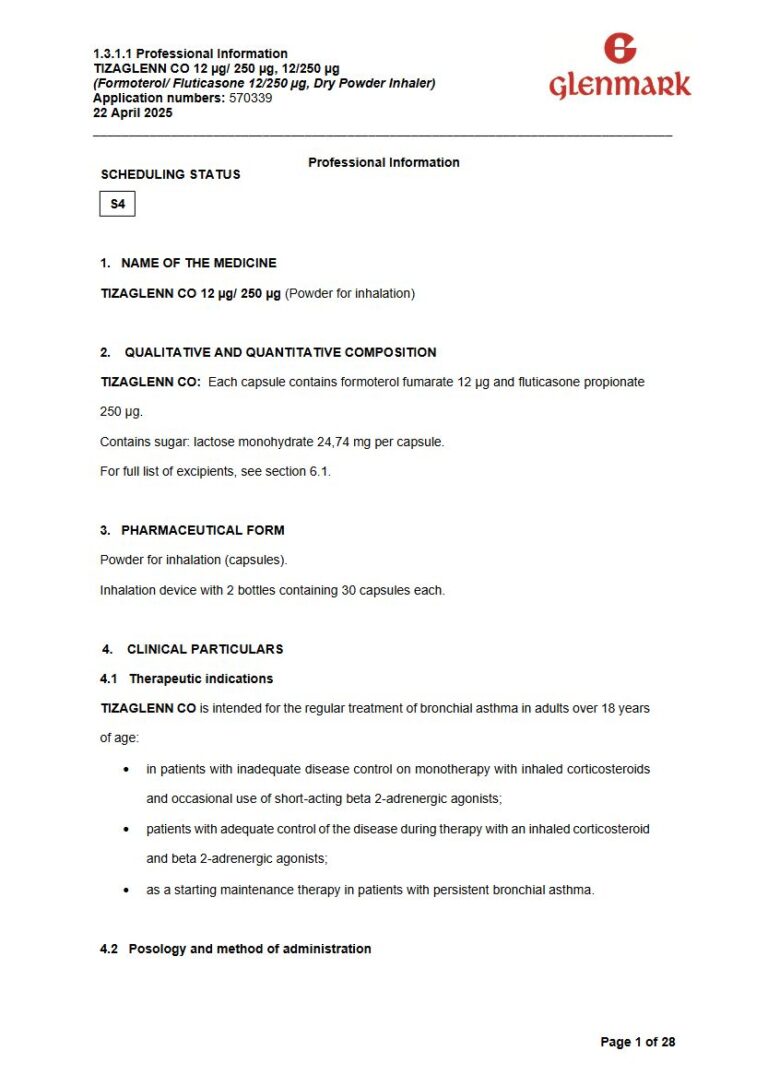
TIZAGLENN CO is intended for the regular treatment of bronchial asthma in adults over 18 years of age:
- in patients with inadequate disease control on monotherapy with inhaled corticosteroids and occasional use of short-acting beta 2-adrenergic agonists;
- patients with adequate control of the disease during therapy with an inhaled corticosteroid and beta 2-adrenergic agonists;
- as a starting maintenance therapy in patients with persistent bronchial asthma.
4.2 Posology and method of administration
Posology: TIZAGLENN CO is for oral inhalation use only. The recommended dose for adults over 18 years of age is one TIZAGLENN CO capsule by oral inhalation 12 hourly. There are no data available for use in children.
Special populations
- Elderly patients The normal adult dosage is applicable.
- Renal patients The normal adult dosage is applicable.
- Hepatic patients No dose adjustment is required in patients with hepatic impairment. As formoterol is primarily eliminated via hepatic metabolism, an increased exposure can be expected in patients with severe liver diseases (see section 5.2).
Method of administration: Do not swallow capsules as the intended effects on the lungs will not be obtained, capsules should only be used with the inhaler device. The amount of medicine delivered to the lungs will depend on patient factors, such as inspiratory flow and peak inspiratory flow (PIF) through the delivery system, which may vary for COPD and other patient populations under posology and method of administration.
4.3 Contraindications
TIZAGLENN CO is contraindicated in patients with:
- known hypersensitivity to formoterol fumarate or fluticasone propionate or to any of the excipients in the TIZAGLENN CO formulation (see section 6.1)
4.4 Special warnings and precautions for use
The management of asthma should normally follow a stepwise programme and patients' responses should be monitored clinically and by lung function tests.
TIZAGLENN CO should not be used to treat acute asthma symptoms. Patients should be advised to have their u2018relieveru2019 medicine available at all times, in case required for relief in an acute asthma attack. The prophylactic use of TIZAGLENN CO in exercise-induced asthma has not been studied. For such use, a separate rapid-acting bronchodilator should be considered. Patients should be reminded to take their TIZAGLENN CO maintenance dose as prescribed, even when asymptomatic. Patients should not be initiated on TIZAGLENN CO during an exacerbation, or if they have significantly worsening or acutely deteriorating asthma.
Serious asthma-related adverse events and exacerbations may occur during treatment with TIZAGLENN CO. Patients should be asked to continue treatment but to seek medical advice if asthma symptoms remain uncontrolled or worsen after initiation on TIZAGLENN CO. If increasing use of short-acting bronchodilators to relieve asthma is required, if short-acting bronchodilators become less effective, or ineffective or if asthma symptoms persist, the patient should be reviewed by their doctor as soon as possible as any of these may indicate a deterioration in asthma control and their treatment may need to be changed. Sudden and progressive deterioration in control of asthma is potentially life-threatening and the patient should undergo urgent medical assessment. Consideration should be given to increasing corticosteroid therapy. The patient should also be medically reviewed when the current dosage of TIZAGLENN CO has failed to give adequate control of asthma. Consideration should be given to additional corticosteroid therapies.
Once asthma symptoms are controlled, consideration may be given to gradually reducing the dose of TIZAGLENN CO. Regular review of patients as treatment is stepped down is important. The lowest effective dose of TIZAGLENN CO should be used (see section 4.2). Treatment with TIZAGLENN CO should not be stopped abruptly due to risk of exacerbation. Therapy should be downtitrated under the supervision of a doctor.
An exacerbation of the clinical symptoms of asthma may be due to an acute respiratory tract bacterial infection and treatment may require appropriate antibiotics, increased inhaled corticosteroids and a short course of oral corticosteroids. A rapid-acting inhaled bronchodilator should be used as rescue medication. As with all inhaled medication containing corticosteroids, TIZAGLENN CO should be administered with caution in patients with pulmonary tuberculosis, quiescent tuberculosis or patients with fungal, viral or other infections of the airway. Any such infections must always be adequately treated if TIZAGLENN CO is being used.
TIZAGLENN CO should be used with caution in patients with thyrotoxicosis, phaeochromocytoma, diabetes mellitus, uncorrected hypokalaemia or patients predisposed to low levels of serum potassium, hypertrophic obstructive cardiomyopathy, idiopathic subvalvular aortic stenosis, severe hypertension, aneurysm or other severe cardiovascular disorders, such as ischaemic heart disease, cardiac arrhythmias or severe heart failure.
Potentially serious hypokalaemia may result from high doses of u03b22 agonists. Concomitant treatment of u03b22 agonists with medicines which can induce hypokalaemia or potentiate a hypokalaemic effect, e.g. xanthine derivatives, steroids and diuretics, may add to a possible hypokalaemic effect of the u03b22 agonist. Particular caution is recommended in unstable asthma with variable use of rescue bronchodilators, in acute severe asthma as the associated risk may be augmented by hypoxia and in other conditions when the likelihood for hypokalaemia adverse effects is increased. It is recommended that serum potassium levels are monitored during these circumstances.
Caution must be observed when treating patients with existing prolongation of the QTc interval. Formoterol itself may induce prolongation of the QTc interval.
As for all u03b22 agonists, additional blood sugar controls should be considered in diabetic patients. Care should be taken when transferring patients to TIZAGLENN CO therapy, particularly if there is any reason to suppose that adrenal function is impaired from previous systemic steroid therapy.
Paradoxical bronchospasm may occur with an immediate increase in wheezing and shortness of breath after dosing. Paradoxical bronchospasm responds to a rapid-acting inhaled bronchodilator and should be treated straight away. TIZAGLENN CO should be discontinued immediately, the patient assessed and alternative therapy instituted if necessary.
Visual disturbance may be reported with systemic and topical corticosteroid use. If a patient presents with symptoms such as blurred vision or other visual disturbances, the patient should be considered for referral to an ophthalmologist for evaluation of possible causes which may include cataract, glaucoma or rare diseases such as central serous chorioretinopathy (CSCR) which have been reported after use of systemic and topical corticosteroids.
Systemic effects may occur with any inhaled corticosteroid, particularly at high doses prescribed for long periods. These effects are much less likely to occur than with oral corticosteroids. Possible systemic effects include Cushing's syndrome, Cushingoid features, adrenal suppression, growth retardation in children and adolescents, decrease in bone mineral density, cataract glaucoma and more rarely, a range of psychological or behavioural effects including psychomotor hyperactivity, sleep disorders, anxiety, depression or aggression (particularly in children). It is important, therefore, that the patient is reviewed regularly and the dose of inhaled corticosteroid is reduced to the lowest dose at which effective control of asthma is maintained.
Prolonged treatment of patients with high doses of inhaled corticosteroids may result in adrenal suppression and acute adrenal crisis. Situations, which could potentially trigger acute adrenal crisis include trauma, surgery, infection or any rapid reduction in dosage. Presenting symptoms are typically vague and may include anorexia, abdominal pain, weight loss, tiredness, headache, nausea, vomiting, hypotension, decreased level of consciousness, hypoglycaemia, and seizures. Additional systemic corticosteroid treatment should be considered during periods of stress or elective surgery. The benefits of inhaled fluticasone propionate therapy should minimise the need for oral steroids, but patients transferring from oral steroids may remain at risk of impaired adrenal reserve for a considerable time. Patients who have required high dose emergency corticosteroid therapy in the past may also be at risk. This possibility of residual impairment should always be borne in mind in emergency and elective situations likely to produce stress, and appropriate corticosteroid treatment must be considered. The extent of the adrenal impairment may require specialist advice before elective procedures. In situations of possible impaired adrenal function hypothalamic pituitary adrenocortical (HPA) axis function should be monitored regularly.
There is an increased risk of systemic side effects when combining fluticasone propionate with potent CYP3A4 inhibitors (see section 4.5). The patient should be made aware that this fixed-dose combination inhaler is a prophylactic therapy and as such, for optimum benefit, has to be used regularly even when asymptomatic.
4.5 Interactions with other medicines
No formal drug interaction studies have been performed with TIZAGLENN CO. Fluticasone propionate: Fluticasone propionate is a substrate of CYP 3A4. Co-treatment with CYP3A inhibitors (e.g. ritonavir, atazanavir, clarithromycin, indinavir, itraconazole, nelfinavir, saquinavir, ketoconazole, telithromycin, cobicistat) is expected to increase the risk of systemic side-effects.
The ECG changes and/or hypokalaemia that may result from the administration of non-potassium sparing diuretics (such as loop or thiazide diuretics) can be acutely worsened by u03b2 agonists, especially when the recommended dose of the u03b2 agonist is exceeded. Although the clinical significance of these effects is not known, caution is advised in the co-administration of a u03b2 agonist with non-potassium sparing diuretics. Xanthine derivates and glucocorticosteroids may add to a possible hypokalaemic effect of the u03b2 agonists.
In addition, L-Dopa, L-thyroxine, oxytocin and alcohol can impair cardiac tolerance towards u03b22 sympathomimetics. Concomitant treatment with monoamine oxidase inhibitors, including agents with similar properties such as furazolidone and procarbazine, may precipitate hypertensive reactions. There is an elevated risk of arrhythmias in patients receiving concomitant anaesthesia with halogenated hydrocarbons. Concomitant use of other u03b2 adrenergic medicines can have a potentially additive effect. Hypokalaemia may increase the risk of arrhythmias in patients who are treated with digitalis glycosides.
Formoterol fumarate: Formoterol fumarate should be administered with caution to patients being treated with tricyclic antidepressants or monoamine oxidase inhibitors, and during the immediate two week period following their discontinuation, or other medicines known to prolong the QTc interval such as antipsychotics (including phenothiazines), quinidine, disopyramide, procainamide, and antihistamines. Medicines that are known to prolong the QTc interval can increase the risk of ventricular arrhythmias. If additional adrenergic medicines are to be administered by any route, they should be used with caution, because the pharmacologically predictable sympathetic effects of formoterol may be potentiated. Beta adrenergic receptor antagonists (u03b2 blockers) and formoterol fumarate may inhibit the effect of each other when administered concurrently. Beta blockers may also produce severe bronchospasm in asthmatic patients. Therefore, patients with asthma should not normally be treated with u03b2 blockers and this includes u03b2 blockers used as eye drops for treatment of glaucoma. However, under certain circumstances, e.g. as prophylaxis after myocardial infarction, there may be no acceptable alternatives to the use of u03b2 blockers in patients with asthma. In this setting, cardioselective u03b2 blockers could be considered, although they should be administered with caution.
4.6 Fertility, pregnancy and lactation
Pregnancy There are limited data on the use of fluticasone propionate and formoterol fumarate, either administered alone or together but administered from separate inhalers, or on the use of this fixed-dose combination, in pregnant women. The use of TIZAGLENN CO is not recommended during pregnancy. Because of the potential for u03b2 agonist interference with uterine contractility, use of TIZAGLENN CO for management of asthma during labour should be restricted.
Breastfeeding It is not known whether fluticasone propionate or formoterol fumarate are excreted in human breast milk. A risk to the suckling child cannot be excluded.
Fertility There are no data available on effects of TIZAGLENN CO on fertility. In animal studies, no effects on fertility have been seen following administration of the individual active substances at clinically relevant doses.
4.7 Effects on ability to drive and use machines
TIZAGLENN CO is unlikely to produce an effect, as it has no or negligible influence on the ability to drive and use machines.
4.8 Undesirable effects
a. Tabulated summary of adverse reactions Undesirable effects which have been associated with TIZAGLENN CO during clinical development are given in the table below, listed by system organ class. The following frequency categories form the basis for classification of the undesirable effects as: very common (u22651/10), common (u22651/100 and <1/10), uncommon (u22651/1,000 and <1/100), rare (u22651/10,000 < 1/1,000), very rare (<1/10,000) and not known (cannot be estimated from the available data).
Table 1: TIZAGLENN CO adverse reactions
| MedDRA SOC | Frequency | Adverse events |
|---|---|---|
| Infections and Infestations | Rare | Oral candidiasis, Oral fungal infections, Sinusitis |
| Metabolism and Nutrition Disorders | Rare | Hyperglycaemia |
| Psychiatric Disorders | Uncommon | Sleep disorders including insomnia |
| Rare | Abnormal dreams, Agitation | |
| Not known | Psychomotor hyperactivity, anxiety, depression, aggression, behavioural changes (predominantly in children) | |
| Nervous System Disorders | Uncommon | Headache, Tremor, Dizziness |
| Rare | Dysgeusia | |
| Eye disorders | Not known | Vision blurred |
| Ear and labyrinth disorders | Rare | Vertigo |
| Cardiac Disorders | Uncommon | Palpitations, Ventricular extrasystoles |
| Rare | Angina pectoris, Tachycardia | |
| Vascular disorders | Rare | Hypertension |
| Respiratory, Thoracic and Mediastinal Disorders | Uncommon | Exacerbation of asthma, Dysphonia, Throat irritation |
| Rare | Dyspnoea, Cough | |
| Gastrointestinal disorders | Uncommon | Dry mouth |
| Rare | Diarrhoea, Dyspepsia | |
| Skin and subcutaneous tissue disorders | Uncommon | Rash |
| Rare | Pruritus | |
| Musculoskeletal and Connective Tissue Disorders | Rare | Muscle spasms |
| General disorders and administration site conditions | Rare | Peripheral oedema, Asthenia |
Description of selected adverse reactions Since TIZAGLENN CO contains both fluticasone propionate and formoterol fumarate, the same pattern of undesirable effects as reported for these individual medicines may occur. The following undesirable effects are associated with fluticasone propionate and formoterol fumarate, but have not been seen during the clinical development of TIZAGLENN CO:
Fluticasone propionate: Hypersensitivity reactions including urticaria, pruritus, angioedema (mainly facial and oropharyngeal), anaphylactic reactions. Systemic effects of inhaled corticosteroids may occur, particularly at high doses prescribed for prolonged periods. These may include Cushing's Syndrome, Cushingoid features, adrenal suppression, growth retardation in children and adolescents, decrease in bone mineral density, cataract and glaucoma, contusion, skin atrophy and susceptibility to infections. The ability to adapt to stress may be impaired. The systemic effects described, however, are much less likely to occur with inhaled corticosteroids than with oral corticosteroids. Prolonged treatment with high doses of inhaled corticosteroids may result in clinically significant adrenal suppression and acute adrenal crisis. Additional systemic corticosteroid cover may be required during periods of stress (trauma, surgery, infection).
Formoterol fumarate: Hypersensitivity reactions (including hypotension, urticaria, angioneurotic oedema, pruritus, exanthema), QTc interval prolongation, hypokalaemia, nausea, myalgia, increased blood lactate levels. Treatment with u03b22 agonists such as formoterol may result in an increase in blood levels of insulin, free fatty acids, glycerol and ketone bodies. In the event of a hypersensitivity reaction to TIZAGLENN CO treatment should be initiated in accordance with standard treatment for any other hypersensitivity reaction, which may include the use of antihistamines and other treatment as required. TIZAGLENN CO may need to be discontinued immediately and an alternative asthma therapy may need to be initiated if necessary. Dysphonia and candidiasis may be relieved by gargling or rinsing the mouth with water or brushing the teeth after using the product. Symptomatic candidiasis can be treated with topical anti-fungal therapy whilst continuing the treatment with TIZAGLENN CO.
4.9 Overdose
There are no data available from clinical trials on overdose with TIZAGLENN CO, however, data on overdose with both individual components are given below:
Formoterol fumarate: An overdose of formoterol would likely lead to an exaggeration of effects that are typical for u03b22 agonists; in which case the following adverse experiences may occur: angina, hypertension or hypotension, palpitations, tachycardia, arrhythmia, prolonged QTc-interval, headache, tremor, nervousness, muscle cramps, dry mouth, insomnia, fatigue, malaise, seizures, metabolic acidosis, hypokalaemia, hyperglycaemia, nausea and vomiting. Treatment of formoterol overdose consists of discontinuation of the medication together with institution of appropriate symptomatic and/or supportive therapy. The judicious use of cardio selective u03b2 receptor blockers may be considered, bearing in mind that such medication can induce bronchospasm. There is insufficient evidence to determine if dialysis is beneficial in cases of formoterol overdose. Cardiac monitoring is recommended. If TIZAGLENN CO has to be withdrawn due to overdose of the u03b2 agonist component of the medicine, provision of appropriate replacement steroid therapy should be considered. Serum potassium levels should be monitored as hypokalaemia can occur. Potassium replacement should be considered.
Fluticasone propionate: Acute overdose with fluticasone propionate usually does not constitute a clinical problem. The only harmful effect after inhalation of a large amount of the drug over a short period is suppression of hypothalamic pituitary adrenocortical (HPA) axis function. HPA axis function usually recovers in a few days, as verified by plasma cortisol measurements. Treatment with the inhaled corticosteroid should be continued at the recommended dose to control asthma. There are reports of rare cases of acute adrenal crisis. Children and adolescents <16 years taking high doses of fluticasone propionate: (typically u22651000 microgram/day) may be at particular risk. Presenting symptoms can be vague (anorexia, abdominal pain, weight loss, tiredness, headache, nausea, vomiting and hypotension). Typical symptoms of an adrenal crisis are decreased level of consciousness, hypoglycaemia and/or seizures. Following chronic use of very high doses a degree of atrophy of the adrenal cortex and HPA axis suppression may occur. Monitoring of adrenal reserve may be necessary. Possible systemic effects include Cushing's syndrome, Cushingoid features, adrenal suppression, growth retardation in children and adolescents, decrease in bone mineral density, cataract and glaucoma. In the management of chronic overdose, oral or systemic corticosteroids may be required in situations of stress. All patients deemed to be chronically overdosed should be treated as if steroid dependent with a suitable maintenance dose of a systemic corticosteroid. When stabilised, treatment should be continued with an inhaled corticosteroid at the recommended dose for symptom control.
