
Mivesta 100 mg & 400 mg; FC tablets
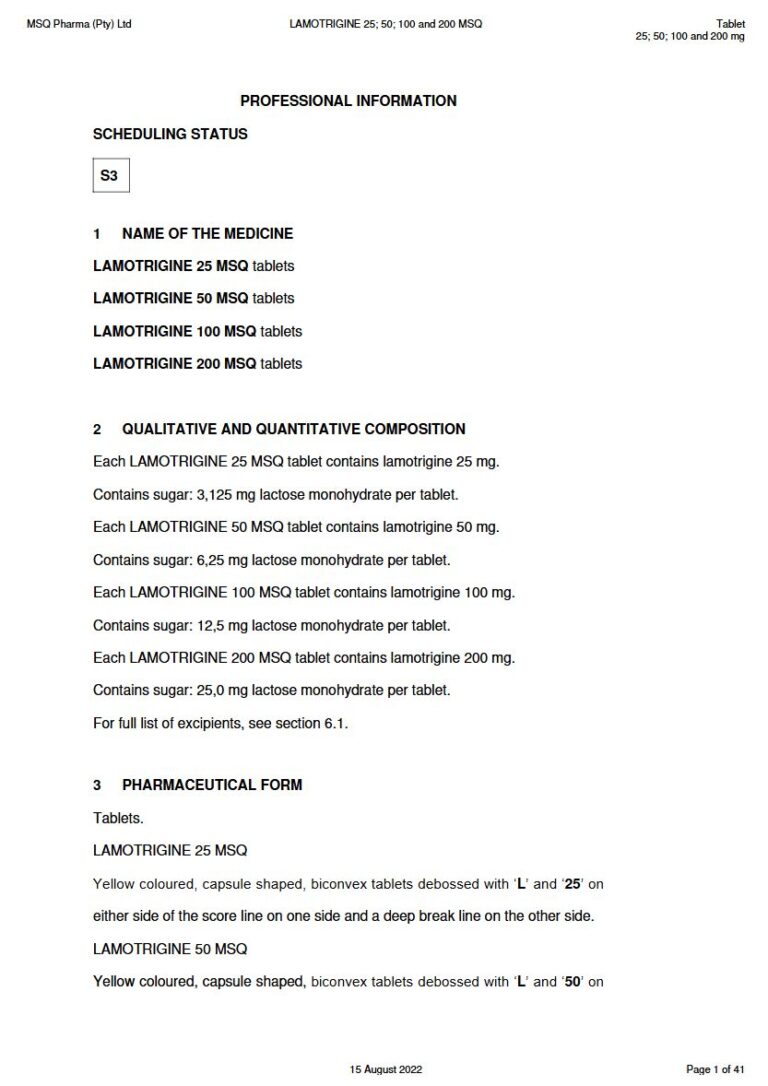
PDF Leaflet Revision Date: 15 August 2022
Clinical Summary
Quick overview from the medicine insert
Indication
Indicated for epilepsy and bipolar disorder.
Dosage (summary)
Adults: Start 25 mg daily, increase as needed. Max 500 mg/day. Children: Dosing based on weight.
Special Populations
- Elderly
- Renal impairment
- Hepatic impairment
Pregnancy & Breastfeeding
Not recommended in pregnancy; passes into breast milk.
Key Drug Interactions
- Valproate increases lamotrigine levels
- Carbamazepine decreases lamotrigine levels
Contraindications
- Hypersensitivity to lamotrigine
Common side effects
- Skin rash
- Headache
- Dizziness
- Nausea
Counselling Points
- Monitor for rash and flu-like symptoms
- Avoid abrupt withdrawal
- Use caution with hormonal contraceptives
Serious warnings
- Risk of serious skin reactions
- Suicidal ideation
- Aseptic meningitis
Important Disclaimer
The Mivesta 100 mg & 400 mg; FC tablets professional information leaflet below is the property of Eurolab and is provided on Medinsert exactly as issued, with no.. alterations or editorial changes. We make every effort to keep content current by updating documents as soon as new versions become available. Medinsert serves as a trusted access point for healthcare professionals, but does not replace official sources or clinical judgement. For more details, please read our full disclaimer. read more>>
 Healthcare Professionals Only
This content is for registered healthcare professionals
Sign in or create a free account to read the full package insert.
Free for HPCSA-registered professionals. Powered by Medinsert.
Clinical Particulars
Section 4 of the official insert — extracted exactly as issued, no alterations
4.1 Therapeutic indications
EPILPSY
Adults and children over 12 years
LAMOTRIGINE MSQ is indicated as monotherapy or add-on treatment of partial epilepsy with or without secondary generalised tonic-clonic seizures and in primary generalised tonic-clonic seizures.
Children 2 to 12 years
LAMOTRIGINE MSQ is indicated as add-on treatment of partial epilepsy with or without secondary generalised tonic-clonic seizures not satisfactorily controlled with other antiepileptic medicines. Monotherapy in children under 12 years of age is not recommended until such time as adequate information is made available from controlled trials in this particular target population.
Lennox-Gastaut Syndrome
LAMOTRIGINE MSQ is indicated as add-on treatment for seizures associated with Lennox-Gastaut Syndrome.
BIPOLAR DISORDER
Adults 18 years of age and over
LAMOTRIGINE MSQ is indicated for the prevention of mood episodes in patients with bipolar disorder, predominantly by preventing depressive episodes.
4.2 Posology and method of administration
Posology
It is important to adhere to the recommended dosages especially in combination therapy with valproate where one-tenth of the normal LAMOTRIGINE MSQ dose is used. Do not exceed the maximum dosage (see Warnings section 4.4).
General dosing recommendations
Administration: To ensure a therapeutic dose is maintained the weight of a child must be monitored and the dose reviewed if necessary. If the doses calculated dose (for children and patients with hepatic impairment) does not equate to whole tablets, the dose to be administered is that equal to the lower number of whole tablets. Restarting therapy: Prescribers should assess the need for escalation to maintenance dose when restarting LAMOTRIGINE MSQ in patients who have discontinued LAMOTRIGINE MSQ for any reason, since the risk of serious rash is associated with high initial doses and exceeding the recommended dose escalation for LAMOTRIGINE MSQ (see section 4.4). The greater the interval of time since the previous dose, the more consideration should be given to escalation to the maintenance dose. When the interval since discontinuing LAMOTRIGINE MSQ exceeds five half-lives (see section 5.2), LAMOTRIGINE MSQ should generally be escalated to the maintenance dose according to the appropriate schedule. It is recommended that LAMOTRIGINE MSQ not be restarted in patients who have discontinued due to rash associated with prior treatment with LAMOTRIGINE MSQ.
Epilepsy
When concomitant antiepileptic medicines are withdrawn to achieve LAMOTRIGINE MSQ monotherapy or other AEDs/medicines are added-on to treatment regimens containing lamotrigine as in LAMOTRIGINE MSQ, consideration should be given to the effect this may have on lamotrigine pharmacokinetics (see section 4.5). To ensure a therapeutic dose is maintained, the weight of a child must be monitored, and the dose reviewed as weight changes occur. If a calculated dose of LAMOTRIGINE MSQ (e.g., for use in children and patients with hepatic impairment) does not equate to whole tablets the dose to be administered is that equal to the lower number of whole tablets.
Dosage in epilepsy monotherapy
Adults and children over 12 years of age
Initial dose in monotherapy is 25 mg once daily for two weeks, followed by 50 mg once daily for two weeks. Thereafter, the dose may be increased by a maximum of 50 mg u2013 100 mg every 1 - 2 weeks until the optimal response is achieved. Maintenance dose in monotherapy: The usual maintenance dose to achieve optimal response is 100 - 200 mg per day given in one dose or two divided doses. Some patients have required 500 mg/day of LAMOTRIGINE MSQ to achieve the desired response.
Dosage in epilepsy add-on therapy
Adults and children over 12 years of age
In those patients taking concomitant antiepileptic medicines (AEMs) or other medicines (see section 4.5) that induce lamotrigine glucorinidation with/without other AEMs (except valproate), the initial LAMOTRIGINE MSQ dose is 50 mg once a day for two weeks, followed by 100 mg a day, given in two divided into two doses, for two weeks. Thereafter, the dose may be increased be by a maximum of 100 mg every 1 - 2 weeks until the optimal response is achieved. The usual maintenance dose is 200 - 400 mg/day given in two divided doses. In those patients taking sodium valproate with/without any other AEM, the initial LAMOTRIGINE MSQ dose is 25 mg every alternate day for two weeks, then 25 mg once a day for two weeks. Thereafter, the dose may be increased by a maximum of 25 - 50 mg a day every 1 - 2 weeks until the optimal response is achieved. The usual maintenance dose to achieve optimal response is 100 - 200 mg/day given once a day or in two divided doses. In those patients taking oxcarbazepine 1 200 mg daily, without any other inducers or inhibitors of lamotrigine glucuronidation, the initial LAMOTRIGINE MSQ dose is 25 mg once a day for 2 weeks, followed by 50 mg once a day for two weeks. Thereafter, the dose should be increased by a maximum of 50 - 100 mg every 1 - 2 weeks until optimal response is achieved, or a dose of 200 mg is reached. The usual maintenance dose to achieve an optimal response is 100 - 200 mg/day given once a day or as two divided doses.
4.3 Contraindications
- Hypersensitivity to lamotrigine or to any of the excipients of LAMOTRIGINE MSQ (see section 6.1).
4.4 Special warnings and precautions for use
Severe convulsive seizures including status epilepticus may lead to rhabdomyolysis, multiorgan dysfunction and disseminated intravascular coagulation, usually with fatal outcome. Similar cases have occurred in association with the use of lamotrigine as in LAMOTRIGINE MSQ. Patients receiving LAMOTRIGINE MSQ should be closely monitored and changes in hepatic, renal and clotting parameters looked for. Patients should be warned to consult their doctors immediately if rashes or flu-like symptoms associated with hypersensitivity develop, especially within the first month of starting treatment with LAMOTRIGINE MSQ. Withdrawal of therapy should be considered if unexplained rashes, fever, flu-like symptoms, drowsiness or worsening of seizure control occur. Dosage recommendations should not be exceeded to minimise the risk of developing rash requiring withdrawal of therapy. Abrupt withdrawal of LAMOTRIGINE MSQ may provoke rebound seizures. The risk may be reduced by tapering off the withdrawal of LAMOTRIGINE MSQ over a period of two weeks. The weight of a child must be monitored, and the dose reviewed as weight changes occur. If the dose calculated for children, according to bodyweight, do not equate to whole tablets, the dose to be administered is that equal to the lower number of whole tablets.
Skin reactions have been reported which have generally occurred within the first 8 weeks of starting lamotrigine, as in LAMOTRIGINE MSQ. Although the majority of rashes usually resolve when LAMOTRIGINE MSQ is discontinued, irreversible scarring and cases of associated death have been reported. A mild rash may subside even with continuation of LAMOTRIGINE MSQ therapy; however, close monitoring is essential. Serious and potentially life-threatening skin rashes including Stevens-Johnson syndrome (SJS), toxic epidermal necrolysis (TEN) and Drug Reaction with Eosinophilia and Systemic Symptoms (DRESS); also known as hypersensitivity syndrome (HSS) have been reported especially in children and in patients (adults and children) using valproate (see section 4.8). Isolated cases have been reported after prolonged treatment (6 months). The estimated incidence of serious skin rashes in adults is 1 in 1 000. The risk is higher in children than in adults. Some children may require hospitalisation because of the seriousness of skin rashes. In children, the initial presentation of a rash can be mistaken for an infection. Medical practitioners should consider the possibility of a medicine reaction in children that develop symptoms of rash and fever during the first eight weeks of therapy. The overall risk of rash appears to be strongly associated with:
u2022 High initial doses of LAMOTRIGINE MSQ and exceeding the recommended dose escalation of LAMOTRIGINE MSQ (see section 4.2).
u2022 Concomitant use of valproate, which increases the mean half-life of LAMOTRIGINE MSQ nearly two-fold (see section 4.2 and 5.2). Caution is also required when treating patients with a history of allergy or rash to other AEMs as the frequency of non-serious rash after treatment with lamotrigine was approximately three times higher in these patients than in those without such history. As it cannot be predicted reliably which rashes will prove to be life-threatening, all patients (adults and children) who develop a rash should be promptly evaluated and LAMOTRIGINE MSQ withdrawn immediately unless the rash is clearly not medicine related. It is recommended that LAMOTRIGINE MSQ not be restarted in patients who have discontinued due to rash associated with prior treatment with LAMOTRIGINE MSQ. If the patient has developed SJS, TEN or DRESS with the use of lamotrigine, treatment with LAMOTRIGINE MSQ must not be re-started in this patient at any time. Rash has also been reported as part of a hypersensitivity syndrome associated with a variable pattern of systemic symptoms including fever, lymphadenopathy, pruritus, facial oedema, abnormalities of the blood, liver, kidney and aseptic meningitis (see section 4.8). The syndrome has shown a wide spectrum of clinical severity and may lead to disseminated intravascular coagulation and multiorgan failure. It is important that early manifestations of hypersensitivity (e.g., fever, lymphadenopathy) may be present even though rash is not evident. If such signs and symptoms are present the patient should be evaluated immediately, and LAMOTRIGINE MSQ therapy discontinued if an alternative aetiology cannot be immediately established. Aseptic meningitis was reversible on withdrawal of the medicine in most cases but recurred in a number of cases on re-exposure to lamotrigine. Re-exposure resulted in a rapid return of symptoms that were frequently more severe. Lamotrigine should not be restarted in patients who have discontinued due to aseptic meningitis associated with prior treatment of lamotrigine, as in LAMOTRIGINE MSQ. There have also been reports of photosensitivity reactions associated with lamotrigine use (see section 4.8). In several cases, the reaction occurred with a high dose (400 mg or more), upon dose escalation or rapid up-titration. If lamotrigine-associated photosensitivity is suspected in a patient showing signs of photosensitivity (such as an exaggerated sunburn), treatment discontinuation should be considered. If continued treatment with lamotrigine, as in LAMOTRIGINE MSQ is considered clinically justified, the patient should be advised to avoid exposure to sunlight and artificial UV light and take protective measures (e.g., use of protective clothing and sunscreens).
Haemophagocytic lymphohistiocytosis (HLH) has been reported in patients taking lamotrigine, as in LAMOTRIGINE MSQ (see section 4.8). HLH is characterised by signs and symptoms, like fever, rash, neurological symptoms, hepatosplenomegaly, lymphadenopathy, cytopenias, high serum ferritin, hypertriglyceridaemia and abnormalities of liver function and coagulation. Symptoms occur generally within 4 weeks of treatment initiation, HLH can be life threatening. Patients should be informed of the symptoms associated with HLH and should be advised to seek medical attention immediately if they experience these symptoms while on lamotrigine therapy. Immediately evaluate patients who develop these signs and symptoms and consider a diagnosis of HLH. Lamotrigine, as in LAMOTRIGINE MSQ should be promptly discontinued unless an alternative aetiology can be established.
Clinical worsening and suicide risk: Suicidal ideation and behaviour have been reported in patients treated with AEMs in several indications, and data available has also shown a small increased risk of suicidal ideation and behaviour. The mechanism of this risk is not known, and the available data do not exclude the possibility of an increased risk for lamotrigine, as in LAMOTRIGINE MSQ. In patients with bipolar disorder, worsening of depressive symptoms and/or the emergence of suicidality may occur whether or not they are taking medicines for bipolar disorder, including LAMOTRIGINE MSQ. Therefore, patients receiving LAMOTRIGINE MSQ for bipolar disorder should be closely monitored for clinical worsening (including development of new symptoms) and suicidality, especially at the beginning of a course of treatment, or at the time of dose changes. Certain patients, such as those with a history of suicidal behavior or thoughts, young adults, and those patients exhibiting a significant degree of suicidal ideation prior to commencement of treatment, may be at a greater risk of suicidal thoughts or suicide attempts, and should receive careful monitoring during treatment. Consideration should be given to changing the therapeutic regimen, including possibly discontinuing the medication, inpatients who experience clinical worsening (including development of new symptoms) and/or the emergence of suicidal ideation/behavior, especially if these symptoms are severe, abrupt in onset, or were not part of the patient's presenting symptoms.
4.5 Interactions with other medicines
Uridine 5'-diphospho (UDP) glucuronyl transferases (UGTs) have been identified as the enzymes responsible for metabolism of lamotrigine. Medicines that induce or inhibit glucuronidation may, therefore, affect the apparent clearance of lamotrigine. Strong or moderate inducers of the cytochrome P450 3A4 (CYP3A4) enzyme, which are also known to induce UGTs, may also enhance the metabolism of lamotrigine.
Effects of other medicines on glucuronidation of lamotrigine as in LAMOTRIGINE MSQ
Medicines that significantly induce glucuronidation of lamotrigine (such as phenytoin, carbamazepine, phenobarbitone, primidone, rifampicin, lopinavir/ritonavir, atazanavir/ritonavir, ethinyl oestradiol/levonorgestrel combination (other oral contraceptive and HRT treatments have not been studied, though they may similarly affect lamotrigine pharmacokinetic parameters) and primidone, enhance the metabolism of LAMOTRIGINE MSQ leading to an increased clearance and subsequent reduction of the elimination half-life of LAMOTRIGINE MSQ. There is no evidence that lamotrigine causes clinically significant induction or inhibition of cytochrome P450 enzymes.
Interactions involving antiepileptic medicines (AEMs)
Concomitant use of valproate, which inhibits the glucuronidation of lamotrigine, significantly reduces the metabolism of lamotrigine and increases the mean half-life and plasma concentrations of LAMOTRIGINE MSQ. Plasma concentrations of valproic acid may decrease slightly when LAMOTRIGINE MSQ is added (see section 5.20). Certain AEMs (such as phenytoin, carbamazepine, phenobarbitone and primidone) which induce cytochrome P450 enzymes also induce the metabolism glucuronidation of lamotrigine and, therefore, enhance the metabolism of lamotrigine.
4.6 Fertility, pregnancy and lactation
The safety of LAMOTRIGINE MSQ, in pregnancy and lactation has not been established.
Pregnancy
There are insufficient data available on the use of lamotrigine as in LAMOTRIGINE MSQ in human pregnancy to evaluate its safety. LAMOTRIGINE MSQ should not be used in pregnancy. Physiological changes during pregnancy may affect lamotrigine levels and/or therapeutic effect. There have been reports of decreased lamotrigine levels during pregnancy. Appropriate clinical management of pregnant women during LAMOTRIGINE MSQ therapy should be ensured.
Breastfeeding
There is limited information on the use of lamotrigine as in LAMOTRIGINE MSQ in lactation. Preliminary data indicate that it passes into breast milk in concentrations usually of the order of 40-60 % of the serum concentration. In a small number of infants known to have been breastfed, the serum concentrations of lamotrigine reached levels at which pharmacological effects may occur.
Fertility
Animal experiments did not reveal impairment of fertility by lamotrigine.
4.7 Effects on ability to drive and use machines
Adverse events of a neurological character such as dizziness and diplopia have been reported. Therefore, patients should see how LAMOTRIGINE MSQ therapy affects them before driving or operating machinery.
4.8 Undesirable effects
a. Summary of the safety profile
The undesirable effects for epilepsy and bipolar disorder indications are based on available data from controlled clinical studies and other clinical experience and are listed in the table below.
b. Tabulated summary of adverse reactions
All known ADRs are listed by system organ class and frequency: more frequent, frequent, less frequent or frequency unknown. Frequency categories are derived from controlled clinical studies (epilepsy monotherapy (identified by u2020 ) and bipolar disorder (identified by u00a7 )). Where frequency categories differ between clinical trial data from epilepsy and bipolar disorder the most conservative frequency is shown. However, where no controlled clinical trial data are available, frequency categories have been obtained from other clinical experience.
4.9 Overdose
Symptoms and signs
Acute ingestion of doses in excess of 10-20 times the maximum therapeutic dose has been reported. Overdose has resulted in symptoms including nystagmus, ataxia, impaired consciousness and coma.
Treatment
In the event of overdosage, the patient should be admitted to hospital and given appropriate supportive therapy. Gastric lavage should be performed if indicated.
