
Impilo Milk Of Magnesia 425 mg/5 ml Suspension
PDF Leaflet Revision Date: 21 August 2024
Clinical Summary
Quick overview from the medicine insert
Indication
Antacid and occasional constipation relief.
Dosage (summary)
Adults: 5-10 ml (antacid), 20-40 ml (laxative); Children: 2.5-20 ml depending on age.
Onset of Action / Duration
Onset: 30 mins, Duration: 6-8 hours
Special Populations
- Renal impairment
- Debility
Pregnancy & Breastfeeding
Safety in pregnancy and lactation not established.
Key Drug Interactions
- ACE inhibitors
- Beta-blockers
- Antibacterials
- Antivirals
- Antihistamines
- Corticosteroids
- Digoxin
Contraindications
- Severe renal failure
- Dehydration
- Sensitivity to ingredients
Common side effects
- Hypermagnesaemia
- Abdominal pain
- Diarrhoea
Counselling Points
- Shake bottle before use.
- Take with sufficient water as a laxative.
- Do not exceed recommended dosage.
Serious warnings
- Caution in renal impairment
- Not for use in diarrhoea or abdominal pain
- Consult doctor for sudden bowel habit changes
Important Disclaimer
The Impilo Milk Of Magnesia 425 mg/5 ml Suspension professional information leaflet below is the property of Avid Brands SA and is provided on Medinsert exactly as issued, with no.. alterations or editorial changes. We make every effort to keep content current by updating documents as soon as new versions become available. Medinsert serves as a trusted access point for healthcare professionals, but does not replace official sources or clinical judgement. For more details, please read our full disclaimer. read more>>
 Healthcare Professionals Only
This content is for registered healthcare professionals
Sign in or create a free account to read the full package insert.
Free for HPCSA-registered professionals. Powered by Medinsert.
Clinical Particulars
Section 4 of the official insert — extracted exactly as issued, no alterations
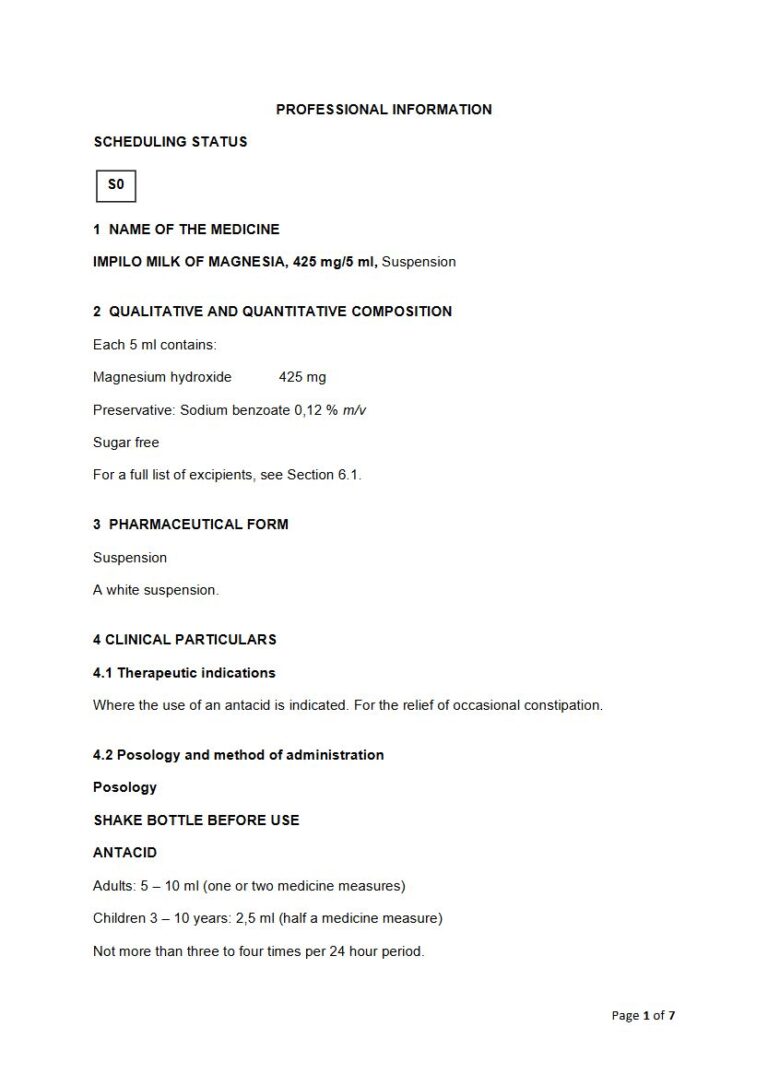
4.1 Therapeutic indications
Where the use of an antacid is indicated. For the relief of occasional constipation.
4.2 Posology and method of administration
Posology
SHAKE BOTTLE BEFORE USE
ANTACID
Adults: 5 u2013 10 ml (one or two medicine measures)
Children 3 u2013 10 years: 2,5 ml (half a medicine measure)
Not more than three to four times per 24 hour period.
S0
LAXATIVE
When used as a laxative, the medicine should be followed with sufficient water to prevent nett loss of body water. Take as a single dose, or as directed by a doctor. This product generally produces bowel movement in half to six hours.
Adults: 20 u2013 40 ml (four to eight medicine measures)
Children 2 u2013 6 years: 5 u2013 10 ml (one to two medicine measures)
6 u2013 12 years: 10 u2013 20 ml (two to four medicine measures)
The dosage recommended above should not be exceeded in a 24 hour period. Do not use the maximum daily dosage of this product for more than one week except under the advice and supervision of a doctor.
Method of administration
Oral administration only.
4.3 Contraindications
- Not to be taken by patients with severe renal failure or dehydration.
- Must not be given to patients who are sensitive to any of the ingredients.
4.4 Special warnings and precautions for use
Use with caution in patients with impaired renal function and debility. Not to be taken by persons suffering from diarrhoea, abdominal pain, nausea or vomiting, unless directed by a doctor. If a sudden change in bowel habits is noticed, that persists over a period of 2 weeks, consult a doctor before using the laxative. Rectal bleeding or failure to have a bowel movement after the use of a laxative may indicate a serious condition. Discontinue use and consult a doctor.
4.5 Interaction with other medicines and other forms of interaction
This preparation may interfere with the absorption of other medicines if taken concomitantly by increasing gastric pH. This can be avoided by giving other medicines 2-3 hours before the administration of magnesium hydroxide. Magnesium salts reduce the absorption of a number of other medicines taken concomitantly. These include:
- ACE inhibitors (captopril, enalapril, fosinapril);
- beta-blockers (propranolol, atenolol);
- antibacterials and antifungals (azithromycin, cefaclor, cefpodoxime, isoniazid, itraconazole, nitrofurantoin, rifampicin, tetracyclines, ketoconazole capsules and the quinolone group of antibacterials);
- antivirals (atazanavir, fosamprenavir, tipranavir, delavirdine, rilpivirine);
- antihistamines (fexofenadine);
- bisphosphonates (alendronate, tiludronate, clodronate, risedronate, etidronate);
- corticosteroids (prednisone, prednisolone, dexamethasone);
- digoxin;
- dipyridamole;
- antiepileptics (gabapentin and phenytoin);
- ulcer healing drugs (lansoprazole);
- levothyroxine;
- mycophenolate;
- iron preparations;
- lipid regulating drugs (rosuvastatin);
- antipsychotics (sulpiride, phenothiazines, chlorpromazine);
- antimalarials (chloroquine, hydrochloroquine, proguanil);
- penicillamine.
Magnesium hydroxide may increase the absorption of ibuprofen. Urine alkalinisation secondary to administration of magnesium hydroxide may modify excretion of some drugs; thus, increased excretion of salicylates has been seen.
4.6 Fertility pregnancy and lactation
The safety of this preparation in pregnancy and lactation has not been established. No fertility data available.
4.7 Effects on ability to drive and use machines
No effects are expected on the ability to drive or use machines.
4.8 Undesirable effects
MedDRA system organ class
Frequency
Adverse reactions
Metabolism and nutrition disorders
Less frequent
Hypermagnesaemia. Observed after prolonged administration of magnesium hydroxide to patients with renal impairment.
Gastrointestinal disorders
Frequency unknown
Abdominal pain, diarrhoea (a dose-dependent effect), colic.
4.9 Overdose
Overdosage may be characterised by excessive purging. If symptoms of hypermagnesaemia (such as flushing of the skin, thirst, hypotension, drowsiness, confusion, loss of tendon reflexes, muscle weakness, respiratory depression, cardiac dysrhythmias, coma and cardiac arrest) are observed, consult a doctor. Respiratory depression or heart block can be counteracted with intravenous administration of calcium gluconate injection 10 % in a dose of 10 - 20 ml. If renal function is normal, adequate fluids should be given to assist removal of magnesium from the body. Dialysis may be necessary in patients with renal impairment or severe hypermagnesaemia.
