
Avoxa 400mg FC tablets
Clinical Summary
Quick overview from the medicine insert
Indication
Treatment of bacterial infections including respiratory tract infections, skin and soft tissue infections, and intra-abdominal infections.
Dosage (summary)
The usual adult dosage is 400 mg once daily, administered orally, with or without food.
Onset of Action / Duration
Onset of action typically occurs within 1 to 2 hours after administration.
Special Populations
- Elderly patients
- Patients with renal impairment
- Patients with hepatic impairment
Pregnancy & Breastfeeding
Moxifloxacin should be avoided during pregnancy and lactation unless the potential benefit justifies the potential risk to the fetus or infant.
Key Drug Interactions
- Antacids containing magnesium or aluminum may reduce the absorption of Moxifloxacin.
- Concurrent use with anticoagulants may increase the risk of bleeding.
- Caution with other QT-prolonging drugs.
Contraindications
- Hypersensitivity to Moxifloxacin or any other quinolone antibiotics.
- History of tendon disorders related to fluoroquinolone use.
- Pregnancy and lactation.
Common side effects
- Nausea
- Diarrhea
- Dizziness
- Headache
- QT interval prolongation
Counselling Points
- Take the medication at the same time each day.
- Avoid taking with dairy products or calcium-fortified juices.
- Report any signs of tendon pain or swelling immediately.
- Stay hydrated and report any severe diarrhea.
Serious warnings
- May cause serious allergic reactions.
- Risk of Clostridium difficile-associated diarrhea.
- Use with caution in patients with a history of seizures.
Important Disclaimer
The Avoxa 400mg FC tablets professional information leaflet below is the property of Austell Pharmaceuticals and is provided on Medinsert exactly as issued, with no.. alterations or editorial changes. We make every effort to keep content current by updating documents as soon as new versions become available. Medinsert serves as a trusted access point for healthcare professionals, but does not replace official sources or clinical judgement. For more details, please read our full disclaimer. read more>>
 Healthcare Professionals Only
This content is for registered healthcare professionals
Sign in or create a free account to read the full package insert.
Free for HPCSA-registered professionals. Powered by Medinsert.
Clinical Particulars
Section 4 of the official insert — extracted exactly as issued, no alterations
4.1 Therapeutic indications
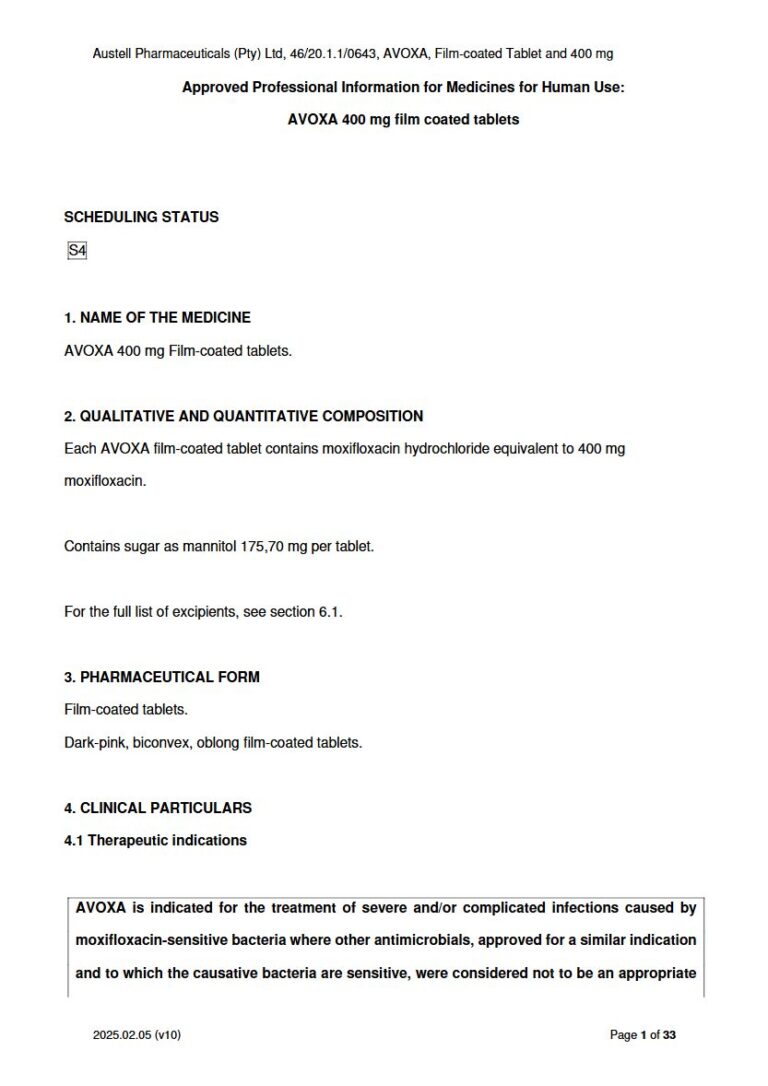
AVOXA is indicated for the treatment of severe and/or complicated infections caused by moxifloxacin-sensitive bacteria where other antimicrobials, approved for a similar indication and to which the causative bacteria are sensitive, were considered not to be an appropriate treatment option, have failed, are contraindicated or not tolerated. AVOXA is not indicated/ approved for the initiation of treatment (first line treatment) of infections described as mild/ moderate/ acute and uncomplicated, caused by bacteria sensitive to moxifloxacin, unless treatment with other appropriate antimicrobials, approved for a similar indication and to which the causative bacteria are sensitive, have failed, are contraindicated or not tolerated.
- Respiratory tract infections: AVOXA tablets are indicated for the treatment of the following bacterial respiratory tract infections where treatment with other appropriate antimicrobials approved for a similar indication and to which the causative bacteria are sensitive have failed, are contraindicated or not tolerated.
- Acute exacerbations of chronic obstructive pulmonary disease (COPD) including chronic bronchitis (AECB) caused by Streptococcus pneumoniae, Haemophilus influenzae, Haemophilus parainfluenzae, Klebsiella pneumoniae, methicillin-sensitive Staphylococcus aureus or Moraxella catarrhalis.
- Community acquired pneumonia (CAP) (of mild to moderate severity) caused by Streptococcus pneumoniae (including penicillin-resistant strains and multi-drug resistant strains), Haemophilus influenzae, Mycoplasma pneumoniae, Chlamydophila pneumoniae, Klebsiella pneumoniae, methicillin-sensitive Staphylococcus aureus, or Moraxella catarrhalis.
- Acute bacterial sinusitis caused by Streptococcus pneumoniae, Haemophilus influenzae or Moraxella catarrhalis.
- Uncomplicated pelvic inflammatory disease (i.e. infections of the female upper genital tract, including salpingitis and endometritis), (not caused by Neisseria gonorrhoea) where these infections are compliant with the indication statement, with special reference to the second part of the statement.
- Severe and/or complicated skin and skin structure infections (including diabetic foot infections) caused by methicillin sensitive Staphylococcus aureus, Streptococcus pyogenes, Enterococcus faecalis, Escherichia coli, Streptococcus agalactiae, Klebsiella pneumoniae, Proteus mirabilis or Enterobacter cloacae.
- Severe and/or complicated intra-abdominal infections including polymicrobial infections such as abscesses.
Appropriate culture and susceptibility tests should be performed before treatment, in order to isolate and identify organisms causing infection and to determine their susceptibility to AVOXA. Therapy with AVOXA may be initiated in severe and/or complicated infections before results of these tests are known; once results become available, appropriate therapy should be continued.
4.2 Posology and method of administration
Posology
The recommended dose for AVOXA is 400 mg once-daily for all indications.
Duration of treatment
The duration of treatment to contain and eradicate an infection depends upon the type and severity of the infection, immunological status, clinical response and bacteriological findings. In general, antibiotic therapy should continue for 3 to 4 days after the manifestations of the infection have cleared.
The recommended duration of treatment for the treatment of upper and lower respiratory tract infections is as follows:
- Acute exacerbation of chronic obstructive pulmonary disease (COPD) including chronic bronchitis 5 days
- Community acquired pneumonia 7 to 14 days*
- Acute sinusitis 10 days
The recommended duration of treatment in skin and soft tissue infections is as follows:
- Uncomplicated skin and skin structure infections 7 days
- Complicated skin and skin structure infections 7 to 21 days*
The recommended duration of treatment for other infections is as follows:
- Uncomplicated pelvic inflammatory disease 14 days
- Complicated intra-abdominal infections total treatment duration for sequential therapy (intravenous followed by oral therapy) 5 to 14 days*
The recommended duration of treatment for the indication being treated should not be exceeded.
*Therapy may be initial intravenous administration, followed by oral tablet administration (sequential therapy), when clinically indicated.
Special Populations
- Elderly patients
No adjustment of dosage is required in the elderly. - Children and adolescents
The use of AVOXA in children and adolescents below the age of 18 years is contraindicated. - Hepatic impairment
No dosage adjustment is required in patients with mild or moderate hepatic insufficiency (Child Pugh A and B). No pharmacokinetic data is available for patients with severely impaired liver function (Child-Pugh C). Due to the lack of data, AVOXA is not recommended in patients with severe hepatic impairment (see section 4.3). - Renal impairment
No dose adjustment is required in patients with any degree of renal impairment (including creatinine clearance u2264 30 m [l]L/min/1,73mu00b2). There is no pharmacokinetic data available in patients on dialysis treatment, or in patients with advanced renal impairment who are not on a dialysis programme. AVOXA should therefore not be used in these patients. - Gender
Dosage adjustments based on gender are not necessary.
Method of administration
u2013 Adults
The tablets are swallowed whole with a glass of water. They can be taken independent of food intake; fluid should be consumed liberally.
4.3 Contraindications
- Known hypersensitivity to AVOXA, other quinolones or any of the excipients listed in section 6.1.
- Patients with severe hepatic insufficiency (Child-Pugh C) and in patients with transaminases increase > 5 fold ULN. No dosage adjustment is required in patients with mild to moderate hepatic insufficiency (Child-Pugh A and B).
- Patients with a history of tendon, muscle, joint, nerve, central nervous system or psychiatric disorders, especially those related to previous quinolone/ fluoroquinolone use where alternative appropriate antibiotic choices are available.
- A history of convulsions, epilepsy or difficult to control epilepsy disorders.
- Congenital or documented acquired QT prolongation.
- AVOXA should not be used concurrently with other medicines that prolong the QT interval; (see section 4.5).
- Electrolyte disturbances, particularly in uncorrected hypokalaemia.
- Clinically relevant heart failure with reduced left-ventricular ejection fraction.
- Clinically relevant bradycardia.
- Previous history of symptomatic dysrhythmias.
- Aortic aneurysm and/or dissection or in patients with risk factors or conditions predisposing for aortic aneurysm and/or dissection where alternative antibiotic choices are available.
- Concomitant use of fluoroquinolones, such as AVOXA, with ACE inhibitors/ angiotensin receptor blockers is contraindicated in patients with moderate to severe renal impairment (creatinine clearance u226430mL/min) and in the elderly.
- Myasthenia gravis.
- Patients with confirmed mitral valve and/aortic valve regurgitation unless no safer appropriate alternative antibiotic is available, has failed or is not well tolerated.
- Use in pregnancy and lactation (see section 4.6).
- Patients below 18 years of age. AVOXA is contraindicated in patients under 18 years and in growing adolescents. Reversible lesions of the cartilage of weight bearing joints in immature members of certain animal species have been reported.
4.4 Special warnings and precautions for use
THE SAFETY AND EFFECTIVENESS OF AVOXA IN PAEDIATRIC PATIENTS, ADOLESCENTS (LESS THAN 18 YEARS OF AGE), PREGNANT AND LACTATING WOMEN HAVE NOT BEEN ESTABLISHED (see sections 4.3 and 4.6).
Prolongation of QTc interval and potentially QTc-prolongation-related clinical conditions
AVOXA HAS BEEN SHOWN TO PROLONG THE QTc INTERVAL ON THE ELECTROCARDIOGRAM (ECG) IN SOME PATIENTS (SEE SECTION 4.3).
AVOXA SHOULD BE AVOIDED IN PATIENTS WITH KNOWN PROLONGATION OF THE QT INTERVAL, PATIENTS WITH UNCORRECTED HYPOKALAEMIA AND PATIENTS RECEIVING CLASS IA (E.G. QUINIDINE, PROCAINAMIDE) OR CLASS III (E.G. AMIODARONE, SOTALOL) ANTI-DYSRHYTHMIC MEDICINES (SEE SECTION 4.3).
As women tend to have a longer baseline QTc interval compared with men, they may be more sensitive to QTc-prolonging medications. Elderly patients may also be more susceptible to AVOXA- associated effects on the QT interval (see section 4.3).
AVOXA should be used with caution in patients with on-going prodysrhythmic conditions (especially women and elderly patients), such as acute myocardial ischaemia or QT prolongation as this may lead to an increased risk for ventricular dysrhythmias (incl. torsade de pointes) and cardiac arrest (see section 4.3).
The magnitude of QT prolongation may increase with increasing concentrations of AVOXA. Therefore, the recommended dose should not be exceeded. If signs of cardiac dysrhythmia occur during treatment with AVOXA, treatment should be stopped and an ECG should be performed.
Hypersensitivity / allergic reactions
Serious and occasionally fatal hypersensitivity (anaphylactic) reactions have been reported for AVOXA, even following a single dose. Some reactions were accompanied by cardiovascular collapse, loss of consciousness, tingling, pharyngeal or facial oedema, dyspnoea, urticaria and itching. Serious anaphylactic reactions require immediate emergency treatment with epinephrine (adrenaline). At the first sign of a skin rash or other signs of an allergic reaction AVOXA should be discontinued and suitable treatment (e.g. treatment for shock) initiated. Hypersensitivity events may be severe and generally occur following the administration of multiple doses. Clinical manifestations may include one or more of the following: rash, fever, eosinophilia, jaundice, and hepatic necrosis.
Severe liver disorders
AVOXA may be associated with a risk for potentially serious hepatic injury (including hepatic failure and fatal cases). Patients should be advised to discontinue use and contact their doctor immediately if signs and symptoms of fulminant hepatic disease develop, such as abdominal pain, loss of appetite, pale coloured stools, severe itching or rapidly developing asthenia associated with jaundice, dark urine, bleeding tendency or hepatic encephalopathy. Liver function tests/investigations should be performed in cases where indications of liver dysfunction occur.
Tendon inflammation and tendon rupture
Tendon inflammation and rupture may occur with quinolone therapy such as AVOXA, particularly in elderly patients and in those treated concurrently with corticosteroids. It most frequently involves the Achilles tendon. At the first sign of pain or inflammation, patients should discontinue treatment with AVOXA, rest the affected limb(s) and consult their doctor immediately in order to initiate appropriate treatment (e.g. immobilisation) for the affected tendon. Tendon rupture may occur within 48 hours after starting treatment with AVOXA and may be bilateral. Tendon inflammation and rupture may occur even up to several months after discontinuing AVOXA. The oral administration of moxifloxacin (as contained in AVOXA) caused lameness in immature dogs. Histopathological examination of the weight-bearing joints of these dogs revealed permanent lesions of the cartilage.
Antibiotic-associated diarrhoea including colitis
Antibiotic-associated diarrhoea (AAD) and antibiotic-associated colitis (AAC), including pseudomembranous colitis and Clostridium difficile-associated diarrhoea, has been reported with the use of AVOXA and may range in severity from mild diarrhoea to fatal colitis. Therefore it is important to consider this diagnosis in patients who develop serious diarrhoea during or after the use of AVOXA. If AAD or AAC is suspected or confirmed, on-going treatment with AVOXA should be discontinued and adequate therapeutic measures should be initiated immediately. Furthermore, appropriate infection control measures should be undertaken to reduce the risk of transmission. Medicines inhibiting peristalsis are contraindicated in patients who develop serious diarrhoea.
Serious bullous skin reactions
Cases of bullous skin reactions like Stevens-Johnson syndrome (SJS), toxic epidermal necrolysis (TEN: also known as Lyellu2019s syndrome) or Acute Generalised Exanthematous Pustulosis (AGEP) have been reported with AVOXA, which could be life-threatening or fatal, have been reported with AVOXA (see section 4.8). At the time of prescription, patients should be advised of the signs and symptoms of severe skin reactions and be closely monitored. Patients should be advised to contact their doctor immediately prior to continuing treatment if skin and/or mucosal reactions occur. If signs and symptoms suggestive of these reactions appear, AVOXA should be discontinued immediately, and an alternative treatment should be considered. If the patient has developed a serious reaction such as SJS, TEN or AGEP with the use of AVOXA, treatment must not be restarted in this patient at any time.
Psychiatric reactions
Psychiatric reactions may occur even after the first administration of quinolones, including AVOXA. In some cases depression or psychotic reactions have progressed to suicidal thoughts and self-endangering behaviour such as suicide attempts (see section 4.8). In the event that the patient develops these reactions, AVOXA should be discontinued and appropriate measures instituted. Caution is recommended if AVOXA is to be used in psychotic patients or in patients with history of psychiatric disease.
Central nervous system disorders
AVOXA may also cause central nervous system (CNS) events including: dizziness, confusion, tremors, and hallucinations. These reactions may occur following the first dose. If these reactions occur in patients receiving AVOXA, the medicine should be discontinued and appropriate measures instituted. AVOXA should be used with caution in patients with known or suspected CNS disorders (e.g. severe cerebral arteriosclerosis, epilepsy) or in the presence of other risk factors that may predispose to seizures or lower the seizure threshold (see section 4.8). In case of seizures, treatment with AVOXA should be discontinued and appropriate measures instituted.
Prolonged, disabling and potentially irreversible serious adverse drug reactions
Very rare cases of prolonged, disabling and potentially irreversible serious adverse drug reactions affecting different, sometimes multiple, body systems (e.g. musculoskeletal, nervous, psychiatric and senses) have been reported in patients receiving quinolones and fluoroquinolones irrespective of their age and pre-existing risk factors. AVOXA should be discontinued immediately at the first signs or symptoms of any serious adverse reaction and patients should be advised to contact their doctor for advice.
Peripheral neuropathy
Cases of sensory or sensorimotor polyneuropathy resulting in paraesthesias, hypoaesthesias, dysaesthesias, or weakness have been reported in patients receiving quinolones such as in AVOXA. Patients under treatment with AVOXA should be advised to inform their doctor prior to continuing treatment if symptoms of neuropathy such as pain, burning, tingling, numbness, or weakness develop (see section 4.8).
Patients with myasthenia gravis
AVOXA should be used with caution in patients with myasthenia gravis because the symptoms can be exacerbated (see section 4.3).
Aortic aneurysm and dissection
There is some evidence of an increased risk of aortic aneurysm and dissection after intake of fluoroquinolones particularly in the elderly population. Therefore, fluoroquinolones, such as AVOXA, should only be used after careful benefit-risk assessment and after consideration of other therapeutic options in patients with positive family history of aneurysmal disease, or in patients diagnosed with pre-existing aortic aneurysm and/or aortic dissection, or in presence of other risk factors or conditions predisposing for aortic aneurysm and dissection (e.g. Marfan syndrome, vascular Ehlers-Danlos syndrome, Takayasu arteritis, giant cell arteritis, Behcet's disease, hypertension, known atherosclerosis) (see section 4.3). The risk of aortic aneurysm and dissection, and their rupture may also be increased in patients treated concurrently with systemic corticosteroids.
In case of acute dyspnoea, new onset of heart palpitations development of oedema in the abdomen or lower extremities, or sudden abdominal, chest or back pain, patients should be advised to immediately consult a medical practitioner in an emergency department.
Mitral valve and/or aortic valve regurgitation
There is some evidence, although inconclusive, of a possible association between fluoroquinolone use and mitral valve and/or aortic valve regurgitation. A thorough cardiovascular examination including an echocardiogram, should be performed before oral fluoroquinolones are prescribed. Fluoroquinolones such as AVOXA should not be prescribed to patients with mitral valve and/or aortic valve regurgitation (see section 4.3).
Patients with renal impairment
Elderly patients with renal disorders should use AVOXA with caution if they are unable to maintain adequate fluid intake, because dehydration may increase the risk of renal failure.
Vision disorders
If vision becomes impaired or any effects on the eyes are experienced, an eye specialist should be consulted immediately (see section 4.8).
Prevention of photosensitivity reactions
Quinolones such as AVOXA have been shown to cause photosensitivity reactions in patients. There was however no phototoxicity reported with AVOXA at the recommended dose. Nevertheless, patients should be advised to avoid exposure to either UV irradiation (including artificial ultraviolet light such as tanning beds) or extensive and/or strong sunlight during treatment with AVOXA. The patient should be informed to immediately contact his/her attending physician if sunburn-like reaction or skin eruptions occur.
Patients with glucose-6-phosphate dehydrogenase deficiency
Patients with a family history of, or actual glucose-6-phosphate dehydrogenase deficiency are prone to haemolytic reactions when treated with quinolones, therefore, AVOXA should be used with caution in these patients.
Patients with pelvic inflammatory disease
For patients with complicated pelvic inflammatory disease (e.g. associated with a tubo-ovarian or pelvic abscess), for whom an intravenous treatment is considered necessary, treatment with AVOXA is not recommended. Pelvic inflammatory disease may be caused by fluoroquinolone-resistant Neisseria gonorrhoeae. Therefore in such cases AVOXA should be co-administered with another appropriate antibiotic (e.g. a cephalosporin) unless moxifloxacin-resistant Neisseria gonorrhoeae can be excluded. If clinical improvement is not achieved after 3 days of treatment, the therapy should be reconsidered.
Patients with MRSA infections
AVOXA, is not recommended for the treatment of MRSA (methicillin resistant Staphylococcus aureus) infections. In case of a suspected or confirmed infection due to MRSA, treatment with an appropriate antibacterial medicine should be started.
Paediatric population
Due to adverse effects on the cartilage in juvenile animals the use of AVOXA is contraindicated in children (see section 4.3).
Fluid intake
An adequate fluid intake should be maintained during treatment with AVOXA and excessive alkalinity of the urine avoided because of crystalluria.
Dysglycaemia
Disturbances in blood glucose, including both hyperglycaemia and hypoglycaemia have been reported with AVOXA. In moxifloxacin-treated patients, dysglycaemia occurred predominantly in elderly diabetic patients receiving treatment concomitantly with an oral hypoglycaemic agent (e.g. sulphonylurea) or with insulin. Careful monitoring of blood glucose is recommended in diabetic patients (see section 4.8).
Interference with biological tests
Treatment with AVOXA, may interfere with the Mycobacterium spp. culture test by suppression of mycobacterial growth causing false negative results in samples taken from patients currently receiving AVOXA.
Concomitant use with ACE inhibitors/ angiotensin receptor blockers
Concomitant use of fluoroquinolones, such as AVOXA, and ACE inhibitors/ angiotensin receptor blockers may precipitate acute kidney injury in patients, especially those with moderate to severe renal impairment and elderly patients (see section 4.3). Renal function should be assessed before initiating treatment and monitored during concomitant treatment with fluoroquinolones and ACE inhibitors/ angiotensin receptor blockers.
4.5 Interaction with other medicines and other forms of interaction
Antidysrhythmic medicines
AVOXA should be avoided in patients receiving Class IA (e.g. quinidine, hydroquinidine, disopyramide, procainamide) or Class III (e.g. amiodarone, sotalol, dofetilide, ibutilide) antidysrhythmic medicines. Information should be obtained from patients regarding any other medications taken concurrently with AVOXA, including over-the-counter medicines.
AVOXA may add to the QTc prolonging effects of other medicines such as cisapride, erythromycin, antipsychotics and tricyclic antidepressants.
ACE inhibitors/ angiotensin receptor blockers
Concomitant use of fluoroquinolones, such as AVOXA, and ACE inhibitors/ angiotensin receptor blockers may precipitate acute kidney injury in patients with moderate to severe renal impairment (creatinine clearance u2264 30 mL/min) and the elderly (see section 4.3). Renal function should be assessed before initiating treatment and monitored during concomitant treatment with fluoroquinolones and ACE inhibitors/ angiotensin receptor blockers.
Histamine H2 antagonists
Possibly due to changes caused in gastric pH if histamine H2 antagonists are taken, these medicines may influence the pharmacokinetics of AVOXA, but do not seem to be of clinical significance. The concomitant administration with ranitidine did not change the absorption characteristics of AVOXA significantly.
Antacids, minerals and multivitamins
Concomitant ingestion of AVOXA together with antacids, minerals and multi-vitamins may result in impaired absorption of AVOXA due to formation of chelate complexes with the multivalent cations contained in these preparations. This may lead to plasma concentrations considerably lower than desired. Hence, antacids, anti-retroviral medicines and other preparations containing magnesium, aluminium and other minerals such as iron should be administered at least 4 hours before or 2 hours after ingestion of an oral AVOXA dose.
Warfarin
Changes in INR (International Normalized Ratio): Cases of increased anticoagulant activity have been reported in patients receiving oral anticoagulants concurrently with AVOXA. Infectious and inflammatory conditions, advanced age and poor general status of the patient are risk factors. International Normalised Ratio (INR) monitoring should be performed, and if necessary, the oral anticoagulant dosage should be adjusted as appropriate.
Digoxin
The pharmacokinetics of digoxin are significantly influenced by AVOXA. After repeated dosing in healthy volunteers AVOXA increased Cmax of digoxin by approximately 30 % at steady state without affecting AUC or trough levels. Increased clinical and laboratory monitoring of patients on digitalis therapy is advised.
Itraconazole
The pharmacokinetics of moxifloxacin are not significantly altered by itraconazole. No dose adjustment is necessary for itraconazole when given with AVOXA and vice versa.
Theophylline
No influence of AVOXA on theophylline pharmacokinetics (and vice versa) at steady is reported. Hence, no recommendations with respect to theophylline dosing need to be given.
Probenecid
No significant effect on apparent total body clearance and renal clearance of AVOXA, is reported. Therefore, dosing adjustments need not be made when both medicines are administered concomitantly.
Antidiabetics
Concomitant administration of AVOXA tablets with glibenclamide may result in a decrease of approximately 21 % in the peak plasma concentrations of glibenclamide.
Oral Contraceptives
No interaction has occurred following concomitant oral administration of AVOXA with oral contraceptives.
Calcium supplements
No interaction has occurred following concomitant oral administration of AVOXA with calcium supplements.
Morphine
Parenteral administration of morphine with AVOXA did not reduce the oral bioavailability of moxifloxacin.
Medicines metabolised by Cytochrome P450 enzymes
It is reported that moxifloxacin does not inhibit CYP3A4, CYP2D6, CYP2C9, CYP2C19, or CYP1A2, suggesting that AVOXA is unlikely to alter the pharmacokinetics of medicines metabolised by these enzymes (e.g. midazolam, ciclosporin, warfarin, theophylline).
Nonsteroidal anti-inflammatory drugs (NSAIDs)
Concomitant administration of a nonsteroidal anti-inflammatory drug with a quinolone may increase the risks of CNS stimulation and convulsions. (see section 4.4)
Charcoal
Concomitant administration of charcoal with a dose of 400 mg oral moxifloxacin will reduce systemic availability of AVOXA by more than 80 %.
Atenolol: The pharmacokinetics of atenolol are not significantly altered by AVOXA. Following single dose administration in healthy subjects, the AUC was marginally increased (by approximately 4 %) and peak concentrations were decreased by 10 %.
Food and dairy products
Absorption of AVOXA was not altered by food intake. Therefore, AVOXA can be taken with or without food.
Interference with biological tests
AVOXA may interfere with the Mycobacterium spp. culture test by suppression of mycobacterial growth, causing false negative results.
4.6 Fertility, pregnancy and lactation
The use of AVOXA during pregnancy and lactation is contraindicated (see section 4.3).
Pregnancy
The use of AVOXA during pregnancy is contraindicated (see section 4.3). The safe use of AVOXA in pregnancy has not been established.
Lactation
The use of AVOXA is contraindicated in lactation (see section 4.3). Mothers taking AVOXA should not breastfeed their babies as quinolones are excreted in human milk. AVOXA has been shown to cause lesions in the cartilage of the weight-bearing joints of immature animals.
4.7 Effects on ability to drive and use machines
AVOXA may cause dizziness and light-headedness; patients should know how they react to AVOXA before they operate a vehicle or machinery or engage in activities requiring mental alertness or coordination. No studies on the effects of AVOXA on the ability to drive and use machines have been performed. However, fluoroquinolones (such as AVOXA) may result in an impairment of the patient's ability to drive or operate machinery due to CNS reactions (e.g. dizziness; acute, transient loss of vision) or acute and short lasting loss of consciousness (syncope).
4.8 Undesirable effects
a) Tabulated list of adverse reactions
| System Organ Class | Frequency | Frequent | Less Frequent | Not known | |||||||||||||
|---|---|---|---|---|---|---|---|---|---|---|---|---|---|---|---|---|---|
| Infections and infestations | Superinfections due to resistant bacteria or fungi e.g. oral and vaginal candidiasis | ||||||||||||||||
| Blood and lymphatic system disorders | Anaemia | Leukopenia | Neutropenia | Thrombocytopenia | Thrombocythemia | Blood eosinophilia | Prolonged prothrombin time | Increased INR | Increased prothrombin level | Abnormal/decreased INR | Agranulocytosis | Abnormal partial thromboplastin time (aPTT) | Pancytopenia | ||||
| Immune system disorders | Allergic reaction | Pruritus | Rash | Urticaria | Anaphylactic/anaphylactoid reaction | Anaphylaxis including in some cases life-threatening shock | Allergic oedema / angioedema (including laryngeal oedema, potentially life-threatening | ||||||||||
| Endocrine disorders | Syndrome of inappropriate antidiuretic hormone secretion (SIADH) | ||||||||||||||||
| Metabolism and nutrition disorders | Hyperlipidaemia | Hyperglycaemia | Hyperuricaemia | Hypoglycaemia (particularly in diabetic patients) | Hypoglycaemic coma | ||||||||||||
| Psychiatric disorders | Anxiety reactions | Psychomotor hyperactivity/ agitation | Emotional lability | Depression (in some cases potentially culminating in self-injurious behaviour, such as suicidal ideation/ thoughts, or suicide attempts) | Hallucinations, Depersonalisation | Psychotic reactions (potentially culminating in self-injurious behaviour, such as suicidal ideation/ thoughts, or suicide attempts) | |||||||||||
| Nervous system disorders | Headache | Dizziness | Paraesthesia and dysaesthesia | Taste disorders (incl. aguesia in some cases) | Confusion and disorientation | Sleep disorders (predominantly insomnia) | Tremor | Vertigo | Somnolence | Hypoaesthesia | Smell disorders (incl. anosmia) | Abnormal dreams | Disturbed coordination (incl. gait disturbances, esp. due to dizziness or Guillain-Barru00e9 Syndrome vertigo; leading to fall with injuries, especially in the elderly) | Seizures incl. grand mal convulsions | Disturbed attention, Speech disorders, Amnesia | Peripheral neuropathy and polyneuropathy | Hyperaesthesia |
| Eye disorders | Visual disturbances incl. diplopia and blurred vision (especially in the course of CNS reactions) | Transient loss of vision (especially in the course of CNS reactions) | Photophobia | Uveitis and bilateral acute iris transillumination | |||||||||||||
| Ear and labyrinth disorders | Tinnitus | Hearing impairment incl. deafness (usually reversible). | |||||||||||||||
| Cardiac disorders* | QT prolongation in patients with hypokalaemia. | QT prolongation | Palpitations | Tachycardia | Atrial fibrillation | Angina pectoris | Ventricular tachydysrhythmia | Syncope (i.e., acute and short lasting loss of consciousness) | Unspecified dysrhythmias | Torsade de Pointes | Cardiac arrest | Aortic aneurysm and dissection. | |||||
| Vascular disorders* | Vasodilatation | Hypertension | Hypotension | Vasculitis | |||||||||||||
| Respiratory, thoracic and mediastinal disorders | Dyspnoea including asthmatic conditions. | ||||||||||||||||
| Gastrointestinal disorders | Nausea | Vomiting | Gastrointestinal and abdominal pains | Diarrhoea | Decreased appetite and food intake | Constipation | Dyspepsia | Flatulence | Gastritis | Increased amylase | Dysphagia | Stomatitis | Antibiotic-associated colitis (incl. pseudomembranous colitis in some cases associated with life-threatening complications) | Clostridium difficile-associated disease (CDAD) | |||
| Hepatobiliary disorders | Increase in transaminases | Hepatic impairment (incl. LDH isozyme increase) | Increased bilirubin | Increased gamma-glutamyl-transferase (gGT) | Increase in blood alkaline phosphatase | Jaundice | Hepatitis (predominantly cholestatic) | Fulminant hepatitis potentially leading to life-threatening liver failure (incl. fatality) | |||||||||
| Skin and subcutaneous tissue disorders | Pruritus | Rash | Urticaria | Dry skin | Bullous skin reactions like Stevens-Johnson syndrome or toxic epidermal necrolysis (potentially life-threatening) | Acute generalised exanthematous pustulosis (AGEP) | |||||||||||
| Musculoskeletal, connective tissue and bone disorders | Arthralgia | Myalgia | Tendinitis | Tendon rupture | Muscle cramps | Muscle twitching, Muscle weakness, Arthritis | Muscle rigidity | Exacerbation of symptoms of myasthenia gravis | Rhabdomyolysis | ||||||||
| Renal and urinary disorders | Dehydration | Renal impairment (including increase in BUN and creatinine) | Renal failure | ||||||||||||||
| General disorders and administration site conditions | Feeling unwell (predominantly asthenia or fatigue) | Painful conditions (incl. pain in back, chest, pelvic and extremities) | Sweating | Oedema |
* Cases of mitral valve and/or aortic regurgitation were reported in patients treated with oral fluoroquinolones. AVOXA should not be prescribed to patients with mitral valve and or aortic valve regurgitation (see section 4.3).
Reporting of suspected adverse reactions
Reporting suspected adverse reactions after authorisation of the medicine is important. It allows continued monitoring of the benefit/risk balance of the medicine. Healthcare professionals are asked to report any suspected adverse reactions to SAHPRA via the Med Safety APP (Medsafety X SAHPRA) and eReporting platform (who-umc.org) found on SAHPRA website. Suspected adverse reactions can also be reported directly to the HCR via [email protected]
4.9 Overdose
Symptoms of overdose are expected to be the same as the side effect profile of AVOXA and may include nausea, vomiting and diarrhoea (see section 4.8). No specific countermeasures after accidental overdosage are recommended. General symptomatic therapy should be initiated. ECG monitoring should be undertaken, because of the possibility of QT interval prolongation. The application of charcoal early during absorption may be useful to prevent excessive increase of systemic exposure to moxifloxacin in cases of oral overdose.
