
Lipocomb 10 Mg/20 Mg Capsules
PDF Leaflet Revision Date: 12 May 2023
Clinical Summary
Quick overview from the medicine insert
Indication
Adjunct to diet for primary hypercholesterolemia in adults.
Dosage (summary)
One capsule daily; not suitable for initial therapy.
Onset of Action / Duration
Onset: 1 week, Duration: 4 weeks
Special Populations
- Elderly
- Renal impairment
- Hepatic impairment
- Asian ancestry
Pregnancy & Breastfeeding
Contraindicated in pregnancy and breastfeeding; use contraception.
Key Drug Interactions
- Ciclosporin
- Gemfibrozil
- Protease inhibitors
Contraindications
- Hypersensitivity
- Active liver disease
- Severe renal impairment
- Pregnancy
- Breastfeeding
- Myopathy
Common side effects
- Myalgia
- Increased hepatic transaminases
- Gastrointestinal issues
Counselling Points
- Report unexplained muscle pain or weakness.
- Take at the same time daily.
- Avoid alcohol and monitor liver function.
Serious warnings
- Risk of myopathy/rhabdomyolysis
- Liver function monitoring required
- Discontinue if muscle symptoms occur
Important Disclaimer
The Lipocomb 10 Mg/20 Mg Capsules professional information leaflet below is the property of Servier Laboratories Sa and is provided on Medinsert exactly as issued, with no.. alterations or editorial changes. We make every effort to keep content current by updating documents as soon as new versions become available. Medinsert serves as a trusted access point for healthcare professionals, but does not replace official sources or clinical judgement. For more details, please read our full disclaimer. read more>>
 Healthcare Professionals Only
This content is for registered healthcare professionals
Sign in or create a free account to read the full package insert.
Free for HPCSA-registered professionals. Powered by Medinsert.
Clinical Particulars
Section 4 of the official insert — extracted exactly as issued, no alterations
4.1 Therapeutic indications
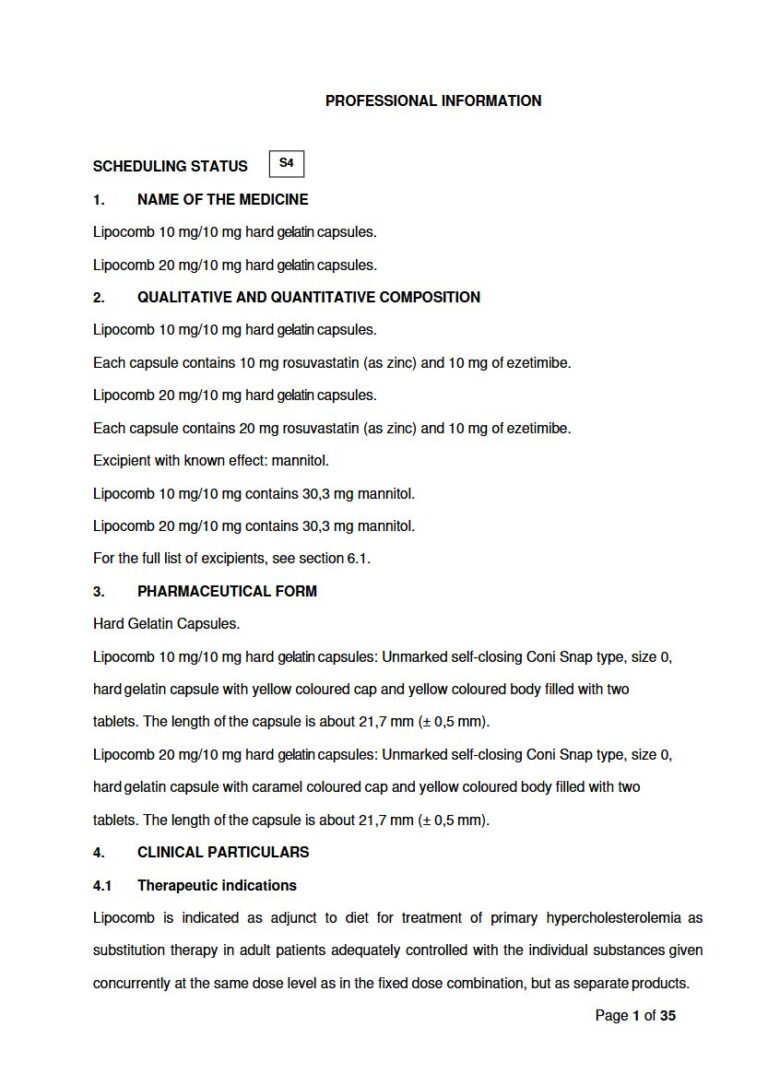
Lipocomb is indicated as adjunct to diet for treatment of primary hypercholesterolemia as substitution therapy in adult patients adequately controlled with the individual substances given concurrently at the same dose level as in the fixed dose combination, but as separate products.
4.2 Posology and method of administration
Posology
Lipocomb is indicated in adult patients whose hypercholesterolemia is adequately controlled with separately administered monocomponent preparations of the same doses as the recommended combination. The patient should be on an appropriate lipid-lowering diet and should continue on this diet during treatment with Lipocomb. The recommended daily dose is one capsule daily. Lipocomb is not suitable for initial therapy. Treatment initiation or dose adjustment if necessary should only be done with the monocomponents and after setting the appropriate doses the switch to the fixed dose combination of the appropriate strength is possible. Lipocomb 10 mg/10 mg and 20 mg/10 mg hard gelatin capsules are not suitable for the treatment of patients requiring 40 mg dose of rosuvastatin.
Special populations
Elderly
A start dose of 5 mg rosuvastatin is recommended in patients > 70 years (see section 4.4). The combination is not suitable for initial therapy. Treatment initiation or dose adjustment if necessary, should only be done with the monocomponents and after setting the appropriate doses the switch to the fixed dose combination of the appropriate strength is possible.
Renal impairment
No dose adjustment is necessary in patients with mild to moderate renal impairment. The recommended start dose is rosuvastatin 5 mg in patients with moderate renal impairment (creatinine clearance < 60 ml/min). The fixed dose combination is not suitable for initial therapy. Monocomponent preparations should be used to start the treatment or to modify the dose. The use of Lipocomb in patients with severe renal impairment is contraindicated for all doses (see sections 4.3 and 5.2).
Hepatic impairment
No dose adjustment is required in patients with mild hepatic impairment (Child Pugh score 5 to 6). Treatment with Lipocomb is not recommended in patients with moderate (Child Pugh score 7 to 9) or severe (Child Pugh score > 9) liver dysfunction (see sections 4.4 and 5.2.). Lipocomb is contraindicated in patients with active liver disease (see section 4.3).
Race
Increased systemic exposure of rosuvastatin has been seen in Asian subjects (see sections 4.4 and 5.2). The recommended start dose is rosuvastatin 5 mg for patients of Asian ancestry. The fixed dose combination is not suitable for initial therapy. Monocomponent preparations should be used to start the treatment or to modify the dose.
Genetic polymorphisms
Specific types of genetic polymorphisms are known that can lead to increased rosuvastatin exposure (see section 5.2). For patients who are known to have such specific types of polymorphisms, a lower daily dose of Lipocomb is recommended.
Dosage in patients with pre-disposing factors to myopathy
The recommended start dose is rosuvastatin 5 mg in patients with predisposing factors to myopathy (see section 4.4). The fixed dose combination is not suitable for initial therapy. Monocomponent preparations should be used to start the treatment or to modify the dose.
Concomitant therapy
Rosuvastatin is a substrate of various transporter proteins (e.g. OATP1B1 and BCRP). The risk of myopathy (including rhabdomyolysis) is increased when Lipocomb is administered concomitantly with certain medicines that may increase the plasma concentration of rosuvastatin due to interactions with these transporter proteins (certain protease inhibitors including combinations of ritonavir with atazanavir, lopinavir, and/or tipranavir; see sections 4.4 and 4.5). Whenever possible, alternative medications should be considered, and, if necessary, consider temporarily discontinuing Lipocomb therapy. In situations where co-administration of these medicines with Lipocomb is unavoidable, the dose of Lipocomb should not exceed 10 mg + 10 mg once daily.
Dosage in patients taking other medicines
Lipocomb should be taken either u2265 2 hours before or u2265 4 hours after administration of a bile acid sequestrant. Co-administration with elbasvir or grazoprevir The dose of Lipocomb should not exceed 10 mg + 10 mg once daily. Co-administration with gemfibrozil Increased systemic exposure to rosuvastatin has been observed in patients taking concomitant rosuvastatin and gemfibrozil. If Lipocomb is taken in combination with gemfibrozil, the dose of Lipocomb should be limited to 10 mg + 10 mg once daily.
Paediatric population
The safety and efficacy of Lipocomb in children below the age of 18 years have not yet been established. Currently available data are described in sections 4.8, 5.1.and 5.2 but no recommendation on a posology can be made.
Method of administration
For oral use. Lipocomb should be taken each day once at the same time of the day with or without food. The capsule should be swallowed whole with a drink of water.
4.3 Contraindications
Lipocomb is contraindicated:
u2212 in patients with hypersensitivity to the active substances (rosuvastatin, ezetimibe) or to any of the excipients listed in section 6.1.
u2212 in patients with active liver disease including unexplained, persistent elevations of serum transaminases and any serum transaminase elevation exceeding 3 times the upper limit of normal (ULN).
u2212 during pregnancy and breast-feeding and in women of childbearing potential not using appropriate contraceptive measures.
u2212 in patients with severe renal impairment (creatinine clearance < 30 ml/min).
u2212 moderate to severe hepatic impairment (Child Pugh score 7 or more).
u2212 in patients with myopathy.
u2212 in patients receiving concomitant ciclosporin. (see sections 4.4, 4.5 and 5.2).
u2212 combination with fenofibrate in patients with gall bladder disease (see section 4.4).
4.4 Special warnings and precautions for use
Skeletal Muscle Effects
Effects on skeletal muscle e.g. myalgia, myopathy, and, rarely rhabdomyolysis have been reported in rosuvastatin-treated patients with all doses and in particular with doses > 20 mg. In post-marketing experience with ezetimibe, cases of myopathy and rhabdomyolysis have been reported. However, rhabdomyolysis has been reported with ezetimibe monotherapy and with the addition of ezetimibe to other medicines known to be associated with increased risk of rhabdomyolysis. If myopathy is suspected based on muscle symptoms or is confirmed by a creatine kinase level, ezetimibe, any statin, and any of these medicines known to be associated with increased risk of rhabdomyolysis, that the patient is taking concomitantly should be immediately discontinued. All patients starting should be told to report promptly any unexplained muscle pain, tenderness or weakness (see section 4.8).
Creatine Kinase Measurement
Creatine kinase (CK) should not be measured following strenuous exercise or in the presence of a plausible alternative cause of CK increase, which may confound interpretation of the results. If CK levels are significantly elevated at baseline (> 5 x ULN) a confirmatory test should be carried out within 5 - 7 days. If the repeat test confirms a baseline CK > 5 x ULN, treatment should not be started.
Before treatment
Lipocomb, as other HMG-CoA reductase inhibitors, should be prescribed with caution in patients with pre-disposing factors for myopathy/rhabdomyolysis. Such factors include:
u2212 renal impairment
u2212 hypothyroidism
u2212 personal or family history of hereditary muscular disorders
u2212 previous history of muscular toxicity with another HMG-CoA reductase inhibitor or fibrate
u2212 alcohol abuse
u2212 age > 70 years
u2212 situations where an increase in plasma levels may occur (see section 5.2)
u2212 concomitant use of fibrates.
In such patients the risk of treatment should be considered in relation to possible benefit and clinical monitoring is recommended. If CK levels are significantly elevated at baseline (> 5 x ULN) treatment should not be started.
Whilst on treatment
Patients should be asked to report inexplicable muscle pain, weakness or cramps immediately, particularly if associated with malaise or fever. CK levels should be measured in these patients. Therapy should be discontinued if CK levels are markedly elevated (> 5 x ULN) or if muscular symptoms are severe and cause daily discomfort (even if CK levels are > 5 x ULN). Routine monitoring of CK levels in asymptomatic patients is not warranted.
There have been reports of an immune-mediated necrotising myopathy (IMNM) during or after treatment with statins, including rosuvastatin. IMNM is clinically characterized by proximal muscle weakness and elevated serum creatine kinase, which persist despite discontinuation of statin treatment. In clinical trials there was no evidence of increased skeletal muscle effects in the small number of patients dosed with rosuvastatin and concomitant therapy. However, an increase in the incidence of myositis and myopathy has been seen in patients receiving other HMG-CoA reductase inhibitors together with fibric acid derivatives including gemfibrozil, ciclosporin, nicotinic acid, azole antifungals, protease inhibitors and macrolide antibiotics. Gemfibrozil increases the risk of myopathy when given concomitantly with some HMG-CoA reductase inhibitors. Therefore, the combination of Lipocomb and gemfibrozil is not recommended.
Lipocomb should not be used in any patient with an acute, serious condition suggestive of myopathy or predisposing to the development of renal failure secondary to rhabdomyolysis (e.g. sepsis, hypotension, major surgery, trauma, severe metabolic, endocrine and electrolyte disorders; or uncontrolled seizures).
Fusidic acid
Lipocomb must not be co-administered with systemic formulations of fusidic acid or within 7 days of stopping fusidic acid treatment. In patients where the use of systemic fusidic acid is considered essential, statin treatment should be discontinued throughout the duration of fusidic acid treatment. There have been reports of rhabdomyolysis (including some fatalities) in patients receiving fusidic acid and statins in combination (see section 4.5). The patient should be advised to seek medical advice immediately if they experience any symptoms of muscle weakness, pain or tenderness.
Statin therapy may be re-introduced seven days after the last dose of fusidic acid. In exceptional circumstances, where prolonged systemic fusidic acid is needed, e.g., for the treatment of severe infections, the need for co-administration of Lipocomb and fusidic acid should only be considered on a case by case basis and under close medical supervision.
Liver effects
In patients receiving ezetimibe with a statin, consecutive transaminase elevations (u2265 3 times the upper limit of normal [ULN]) have been observed. It is recommended that liver functions tests be carried out 3 months following the initiation of rosuvastatin treatment. Rosuvastatin should be discontinued or the dose reduced if the level of serum transaminases is greater than 3 times the upper limit of normal. In patients with secondary hypercholesterolaemia caused by hypothyroidism or nephrotic syndrome, the underlying disease should be treated prior to initiating therapy with Lipocomb.
Due to the unknown effects of the increased exposure to ezetimibe in patients with moderate or severe hepatic impairment, Lipocomb is not recommended (see section 5.2).
Renal effects
Proteinuria, detected by dipstick testing and mostly tubular in origin, has been observed in patients treated with higher doses of rosuvastatin, in particular 40 mg, where it was transient or intermittent in most cases. Proteinuria has not been shown to be predictive of acute or progressive renal disease (see section 4.8).
Race
Rosuvastatin pharmacokinetic studies show an increase in exposure in Asian subjects compared with Caucasians (see sections 4.2 and 5.2).
Protease inhibitors
Increased systemic exposure to rosuvastatin has been observed in subjects receiving rosuvastatin concomitantly with various protease inhibitors in combination with ritonavir. Consideration should be given both to the benefit of lipid lowering by use of Lipocomb in HIV patients receiving protease inhibitors and the potential for increased rosuvastatin plasma concentrations when initiating and up titrating rosuvastatin in patients treated with protease inhibitors. The concomitant use with certain protease inhibitors is not recommended unless the dose of Lipocomb is adjusted (see sections 4.2 and 4.5).
Interstitial lung disease
Exceptional cases of interstitial lung disease have been reported with some statins, especially with long term therapy (see section 4.8). Presenting features can include dyspnoea, non-productive cough and deterioration in general health (fatigue, weight loss and fever). If it is suspected a patient has developed interstitial lung disease, statin therapy should be discontinued.
Diabetes mellitus
Increases in HbA1c and serum glucose levels have been observed in patients treated with rosuvastatin. An increased frequency of diabetes mellitus has been reported with rosuvastatin, as in Lipocomb, in patients with risk factors for diabetes mellitus. Patients at risk (fasting glucose 5,6 to 6,9 mmol/L, BMI > 30 kg/m2, raised triglycerides, hypertension) should be monitored both clinically and biochemically according to national guidelines.
Fibrates
The safety and efficacy of ezetimibe administered with fibrates have not been established. If cholelithiasis is suspected in a patient receiving Lipocomb and fenofibrate, gallbladder investigations are indicated and this therapy should be discontinued (see sections 4.5 and 4.8).
Anticoagulants
If Lipocomb is added to warfarin, another coumarin anticoagulant, or fluindione, the International Normalised Ratio (INR) should be appropriately monitored (see section 4.5).
Ciclosporin
See sections 4.3 and 4.5.
Liver disease and alcohol
Lipocomb should be used with caution in patients who consume excessive quantities of alcohol and/or have a history of liver disease.
Paediatric population
The safety and efficacy of Lipocomb in children below the age of 18 years have not yet been established, therefore its use is not recommended in this age group.
4.5 Interactions with other medicines
Contraindications
Ciclosporin
During concomitant treatment with rosuvastatin and ciclosporin, rosuvastatin AUC values were on average 7 times higher than those observed in healthy volunteers (see section 4.3). Concomitant administration did not affect plasma concentrations of ciclosporin. Co-administration of Lipocomb with ciclosporin is contraindicated (see section 4.3).
In a study of post-renal transplant patients with creatinine clearance of > 50 ml/min on a stable dose of ciclosporin, a single 10-mg dose of ezetimibe resulted in a 3,4-fold (range 2,3 to 7,9-fold) increase in the mean AUC for total ezetimibe compared to a healthy control population, receiving ezetimibe alone, from another study. In a different study, a renal transplant patient with severe renal impairment who was receiving ciclosporin and multiple other medications, demonstrated a 12 - fold greater exposure to total ezetimibe compared to concurrent controls receiving ezetimibe alone. In a study in healthy subjects, daily administration of 20 mg ezetimibe for 8 days with a single 100-mg dose of ciclosporin on Day 7 resulted in a mean 15 % increase in ciclosporin AUC (range 10 % decrease to 51 % increase) compared to a single 100 mg dose of ciclosporin alone. A controlled study on the effect of co-administered ezetimibe on ciclosporin exposure in renal transplant patients has not been conducted.
Combinations not recommended
Protease inhibitors
Although the exact mechanism of interaction is unknown, concomitant protease inhibitor use may strongly increase rosuvastatin exposure (see section 4.5 Table). For instance, in a pharmacokinetic study, co-administration of 10 mg rosuvastatin and a combination product of two protease inhibitors (300 mg atazanavir / 100 mg ritonavir) in healthy volunteers was associated with an approximately three-fold and seven-fold increase in rosuvastatin AUC and Cmax respectively. The concomitant use of rosuvastatin and some protease inhibitor combinations may be considered after careful consideration of rosuvastatin dose adjustments based on the expected increase in rosuvastatin exposure (see sections 4.2, 4.4, and 4.5 Table). The combination is not suitable for initial therapy. Treatment initiation or dose adjustment if necessary should only be done with the monocomponents and after setting the appropriate doses the switch to the fixed dose combination of the appropriate strength is possible.
Transporter protein inhibitors
Rosuvastatin is a substrate for certain transporter proteins including the hepatic uptake transporter OATP1B1 and efflux transporter BCRP. Concomitant administration of Lipocomb with medicines that are inhibitors of these transporter proteins may result in increased rosuvastatin plasma concentrations and an increased risk of myopathy (see sections 4.2, 4.4, and 4.5 Table).
Gemfibrozil and other lipid-lowering products
Concomitant use of rosuvastatin and gemfibrozil resulted in a 2-fold increase in rosuvastatin Cmax and AUC (see section 4.4). Based on data from specific interaction studies no pharmacokinetic relevant interaction with fenofibrate is expected, however a pharmacodynamic interaction may occur. Gemfibrozil, fenofibrate, other fibrates and lipid lowering doses (> or equal to 1 g/day) of niacin (nicotinic acid) increase the risk of myopathy when given concomitantly with HMG-CoA reductase inhibitors, probably because they can produce myopathy when given alone. In patients receiving fenofibrate and ezetimibe, medical practitioners should be aware of the possible risk of cholelithiasis and gallbladder disease (see section 4.4 and 4.8). If cholelithiasis is suspected in a patient receiving ezetimibe and fenofibrate, gallbladder investigations are indicated and this therapy should be discontinued (see section 4.8). Concomitant fenofibrate or gemfibrozil administration modestly increased total ezetimibe concentrations (approximately 1,5- and 1,7-fold respectively). Co-administration of ezetimibe with other fibrates has not been studied. Fibrates may increase cholesterol excretion into the bile, leading to cholelithiasis. In animal studies, ezetimibe sometimes increased cholesterol in the gallbladder bile, but not all species (see section 5.3). A lithogenic risk associated with the therapeutic use of ezetimibe cannot be ruled out.
Fusidic Acid
The risk of myopathy including rhabdomyolysis may be increased by the concomitant administration of systemic fusidic acid with statins. The mechanism of this interaction (whether it is pharmacodynamic or pharmacokinetic, or both) is yet unknown. There have been reports of rhabdomyolysis (including some fatalities) in patients receiving this combination. If treatment with systemic fusidic acid is necessary, rosuvastatin treatment should be discontinued throughout the duration of the fusidic acid treatment. Also see section 4.4.
Other interactions
Antacid
The simultaneous dosing of rosuvastatin with an antacid suspension containing aluminium and magnesium hydroxide resulted in a decrease in rosuvastatin plasma concentration of approximately 50 %. This effect was mitigated when the antacid was dosed 2 hours after rosuvastatin. The clinical relevance of this interaction has not been studied. Concomitant antacid administration decreased the rate of absorption of ezetimibe but had no effect on the bioavailability of ezetimibe. This decreased rate of absorption is not considered clinically significant.
Erythromycin
Concomitant use of rosuvastatin and erythromycin resulted in a 20 % decrease in AUC0-t and a 30 % decrease in Cmax of rosuvastatin. This interaction may be caused by the increase in gut motility caused by erythromycin.
Cytochrome P450 enzymes
Results from in vitro and in vivo studies show that rosuvastatin is neither an inhibitor nor an inducer of cytochrome P450 isoenzymes. In addition, rosuvastatin is a poor substrate for these isoenzymes. Therefore, drug interactions resulting from cytochrome P450-mediated metabolism are not expected. No clinically relevant interactions have been observed between rosuvastatin and either fluconazole (an inhibitor of CYP2C9 and CYP3A4) or ketoconazole (an inhibitor of CYP2A6 and CYP3A4).
Vitamin K antagonists
As with other HMG-CoA reductase inhibitors, the initiation of treatment or dosage up-titration of rosuvastatin in patients treated concomitantly with vitamin K antagonists (e.g. warfarin or another coumarin anticoagulant) may result in an increase in International Normalised Ratio (INR). Discontinuation or down-titration of rosuvastatin may result in a decrease in INR. In such situations, appropriate monitoring of INR is desirable. Concomitant administration of ezetimibe (10 mg once daily) had no effect on bioavailability of warfarin and prothrombin time in a study of twelve healthy adult males. However, there have been post-marketing reports of increased International Normalised Ratio (INR) in patients who had ezetimibe added to warfarin or fluindione. If Lipocomb are added to warfarin, another coumarin anticoagulant, or fluindione, INR should be appropriately monitored (see section 4.4).
Oral contraceptive/hormone replacement therapy (HRT)
Concomitant use of rosuvastatin and oral contraceptive resulted in an increase in ethinyl oestradiol and norgestrel AUC of 26 % and 34 %, respectively. These increased plasma levels should be considered when selecting oral contraceptive doses. There are no pharmacokinetic data available in subjects taking concomitant rosuvastatin and HRT and therefore a similar effect cannot be excluded. However, the combination has been extensively used in women in clinical trials and was well tolerated. In clinical interaction studies, ezetimibe had no effect on the pharmacokinetics of oral contraceptives (ethinyl oestradiol and levonorgestrel).
Colestyramine
Concomitant colestyramine administration decreased the mean area under the curve (AUC) of total ezetimibe (ezetimibe + ezetimibe glucuronide) approximately 55 %. The incremental low-density lipoprotein cholesterol (LDL-C) reduction due to adding ezetimibe to colestyramine may be lessened by this interaction (see section 4.2).
4.6 Fertility, pregnancy and lactation
Lipocomb is contraindicated in pregnancy and breastfeeding. Women of childbearing potential should use appropriate contraceptive measures.
Pregnancy
Rosuvastatin
Since cholesterol and other products of cholesterol biosynthesis are essential for the development of the foetus, the discontinuation of lipid-lowering medicines during pregnancy should have little impact on the outcome of long-term therapy of primary hypercholesterolemia. Animal studies provide limited evidence of reproductive toxicity (see section 5.3). If a patient becomes pregnant during use of Lipocomb, treatment should be discontinued immediately.
Ezetimibe
No clinical data are available on the use of ezetimibe during pregnancy. Animal studies on the use of ezetimibe in monotherapy have shown no evidence of direct or indirect harmful effects on pregnancy, embryofoetal development, birth or postnatal development (see section 5.3). The use of ezetimibe is not recommended in pregnancy.
Breastfeeding
Rosuvastatin
Rosuvastatin is excreted in the milk of rats. There are no data with respect to excretion of rosuvastatin in milk in humans (see section 4.3).
Ezetimibe
Studies on rats have shown that ezetimibe is secreted into milk. It is not known if ezetimibe is secreted into human breast milk.
Fertility
No clinical trial data are available on the effects of ezetimibe on human fertility. Ezetimibe had no effect on the fertility of male or female rats (see section 5.3). No studies on the effect on fertility have been conducted with rosuvastatin and ezetimibe in combination.
4.7 Effects on ability to drive and use machines
Lipocomb has no or negligible influence on the ability to drive and use machines. Studies to determine the effect of rosuvastatin and/or ezetimibe on the ability to drive and use machines have not been conducted. However, when driving vehicles or operating machines, it should be taken into account that dizziness may occur during treatment.
4.8 Undesirable effects
Summary of the safety profile.
According to available data 1 200 patients took the rosuvastatin and ezetimibe combination in clinical studies. As reported in the published literature, the most frequent common adverse events related to rosuvastatin-ezetimibe combination treatment in hypercholesterolemic patients are increased hepatic transaminases, gastrointestinal problems and muscle pain. However, a pharmacodynamic interaction, in terms of adverse effects, between rosuvastatin and ezetimibe cannot be ruled out (see section 5.2).
Tabulated list of adverse reactions
Organ class Frequent Less frequent
Blood and lymphatic system disorders Thrombocytopenia 2, 5
Immune system disorders Hypersensitivity reactions including angioedema 2 Hypersensitivity (including rash, urticaria, anaphylaxis and angioedema) 5
Endocrine disorders Diabetes mellitus 1, 2
Metabolism and nutrition disorders Decreased appetite
Psychiatric disorders Depression 2, 5
Nervous system disorders Headache 2, 4 Dizziness 2 Paraesthesia 4 Polyneuropathy 2 Memory loss 2 Peripheral neuropathy 2 Sleep disturbances (including insomnia and nightmares) 2 Dizziness 5 Paraesthesia 5
Vascular disorders Hot flush 3 , Hypertension 3
Respiratory, thoracic and mediastinal disorders Cough 2, 3 Dyspnoea 2, 5
Gastrointestinal disorders Constipation 2 Nausea 2 A bdominal pain 2, 3 Diarrhoea 3 Flatulence 3 Dyspepsia 3 Gastro-oesophageal reflux disease 3 Nausea 3 Dry mouth 4 Gastritis 4 Pancreatitis 2, 5
Renal and urinary disorders Haematuria 2
Reproductive system and breast disorders Gynecomastia 2
General disorders and administration site conditions Asthenia 2 , Fatigue 3 Chest pain 3 Pain 3 Asthenia 4, 5 Peripheral oedema 4 Oedema 2
Investigations ALT and/or AST Increased 4 ALT and/or AST increased 3 Blood CPK increased 3 Gamma-glutamyltransferase increased 3 Liver function test abnormal 3
1 Frequency will depend on the presence or absence of risk factors (fasting blood glucose u2265 5 ,6 mmol/L, BMI > 30 kg/m2, raised triglycerides, history of hypertension) u2013 for rosuvastatin.
2 Adverse reaction profile for rosuvastatin based on data from clinical studies and extensive post-marketing experience.
3 Ezetimibe in monotherapy. Adverse reactions were observed in patients treated with ezetimibe (N=2 396) and at a greater incidence than placebo (N = 1 159).
4 Ezetimibe co-administered with a statin. Adverse reactions were observed in patients with ezetimibe co-administered with a statin (N = 11 308) and at a greater incidence than statin administered alone (N = 9 361).
5 Additional adverse reactions of ezetimibe, reported in post-marketing experience. Because these adverse experiences have been identified from spontaneous reports, their true frequencies are not known and cannot be estimated. As with other HMG-CoA reductase inhibitors, the incidence of adverse drug reactions tends to be dose dependent.
4.9 Overdose
There is no published literature data on rosuvastatin overdose. There is no specific treatment in the event of overdose with rosuvastatin. In clinical studies, administration of ezetimibe, 50 mg/day, to 15 healthy subjects for up to 14 days, or 40 mg/day to 18 patients with primary hypercholesterolemia for up to 56 days, was generally well tolerated. In the event of an overdose, symptomatic and supportive measures should be employed. Liver function and CK levels should be monitored. Haemodialysis is unlikely to be of benefit.
