
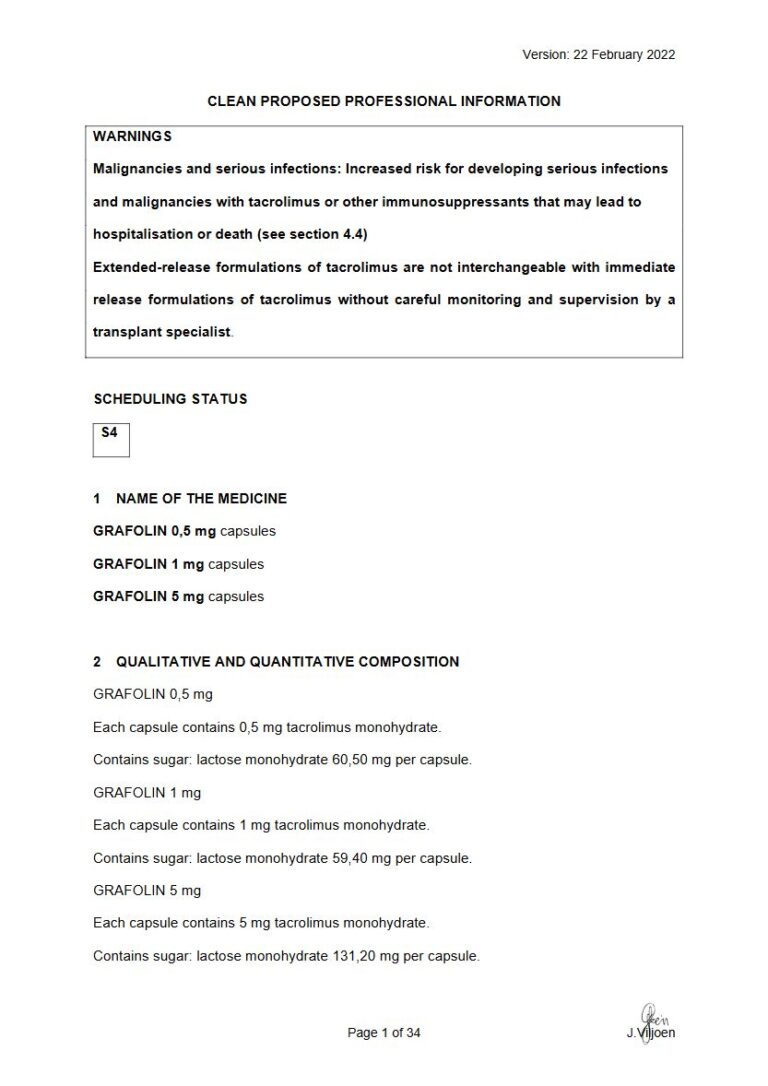
Grafolin Capsules
PDF Leaflet Revision Date: 22 February 2022
Clinical Summary
Quick overview from the medicine insert
Indication
Primary immunosuppression in organ transplant recipients.
Dosage (summary)
Initial oral dose: 0.10-0.40 mg/kg/day in two divided doses.
Special Populations
- Renal impairment
- Hepatic impairment
- Elderly patients
- Paediatric patients
Pregnancy & Breastfeeding
Contraindicated in pregnancy; not recommended during breastfeeding.
Key Drug Interactions
- CYP3A4 inhibitors
- CYP3A4 inducers
- Ciclosporin
- Grapefruit juice
Contraindications
- Hypersensitivity to tacrolimus
- Pregnancy
- Lactation
- Live vaccines
- Ciclosporin
Common side effects
- Increased risk of infections
- Hypertension
- Hyperglycaemia
- Nephrotoxicity
- Neurotoxicity
Counselling Points
- Take on an empty stomach
- Avoid grapefruit juice
- Monitor blood glucose levels
- Report signs of infection
Serious warnings
- Increased risk of malignancies
- Medication errors with tacrolimus formulations
- Careful monitoring required
Important Disclaimer
The Grafolin Capsules professional information leaflet below is the property of Strides Pharma Sa and is provided on Medinsert exactly as issued, with no.. alterations or editorial changes. We make every effort to keep content current by updating documents as soon as new versions become available. Medinsert serves as a trusted access point for healthcare professionals, but does not replace official sources or clinical judgement. For more details, please read our full disclaimer. read more>>
 Healthcare Professionals Only
This content is for registered healthcare professionals
Sign in or create a free account to read the full package insert.
Free for HPCSA-registered professionals. Powered by Medinsert.
Clinical Particulars
Section 4 of the official insert — extracted exactly as issued, no alterations
4.1 Therapeutic indications
Primary immunosuppression in liver and kidney allograft recipients and liver, kidney, or heart allograft rejection resistant to conventional immunosuppressive regimens.
4.2 Posology and method of administration
Posology
Inadvertent, unintentional, or unsupervised switching between immediate- and prolonged- release formulations of tacrolimus is unsafe. This can lead to graft rejection, or increased incidence of side effects, including under- or over-immunosuppression, due to clinically relevant differences in systemic exposure to tacrolimus. Patients should be maintained on a single formulation of tacrolimus with the corresponding daily dosing regimen; alterations in formulation or regimen should only take place under the close supervision of a transplant specialist.
Following conversion to any alternative formulation, therapeutic medicine monitoring must be performed, and dose adjustments made to ensure that systemic exposure to tacrolimus is maintained. Absorption of orally administered tacrolimus in the immediate post-operative period in heart transplant patients is problematic and creates difficulties in designing a suitable dosing regimen. Therefore, initiation of tacrolimus therapy via the intravenous route and conversion to oral dosing, when possible, or initiating GRAFOLIN orally following antibody induction therapy are the two preferable options for use of GRAFOLIN in heart transplant patients.
General statement
The dosage recommendations given below are intended to act as a guideline. GRAFOLIN doses should be adjusted according to individual patient requirements. If the clinical condition of the patient allows oral dosing, administration of oral GRAFOLIN should start as soon as practicable. In some liver transplantation patients, therapy has commenced orally by administering the capsule contents suspended in water via an intranasal gastric tube. GRAFOLIN is normally administered together with other immunosuppressive medicine. In isolated cases, successful maintenance therapy with GRAFOLIN alone has also been described. GRAFOLIN should not be given together with ciclosporin (see section 4.3). If allograft rejection or adverse events occur, alteration in the immunosuppressive regimen should be considered.
Duration and onset of intake
For onset of treatment see above. To suppress graft rejection, the capsules normally have to be taken continuously. Therefore, no limitation of duration can be given.
Maintenance therapy in liver and kidney transplant recipients (adults and children)
General considerations
Continuous immunosuppression with GRAFOLIN is recommended to maintain graft survival. If progression of disease occurs (e.g., signs of acute rejection), alteration of the immunosuppressive regimen should be considered. Increase in the amount of corticosteroids, introduction of short courses of monoclonal antibodies and increase in the dose of GRAFOLIN have all been used to manage rejection episodes. If signs of toxicity are noted, the dose of GRAFOLIN should be reduced. Patients should be instructed not to decrease the dose without the consent of the treating medical practitioner. During the course of the post-transplant improvement of the patient, it is likely that the pharmacokinetics of GRAFOLIN may be altered, requiring adjustment of the GRAFOLIN dose.
Primary immunosuppression - adult patients
Liver transplantation
Patients should be converted from intravenous to oral medication as soon as the individual circumstances permit. Oral administration
Initially an oral dose in a range from 0,10 to 0,20 mg/kg/day should be administered in two divided doses. Initial oral doses have been administered in a range from 0,02 to 0,30 mg/kg/day.
Kidney transplantation
Initial administration
Initially, an oral dose in a range from 0,15 to 0,40 mg/kg/day should be administered in two divided doses.
Primary immunosuppression dose levels - paediatric patients
Paediatric patients generally require doses 1u00bd to 2 times higher than the recommended adult doses to achieve the same blood levels Experience with initial oral administration in paediatric patients is limited.
Liver and kidney transplantation
An initial dose of 0,30 mg/kg/day for liver and kidney transplantation should be administered in two divided doses.
Maintenance therapy with GRAFOLIN in liver or kidney transplant recipients
It is necessary to continue immunosuppression with GRAFOLIN to maintain graft survival. Dosage recommendations should be based on individual patient experience (see introductory remarks above). There is a trend towards the use of lower doses of GRAFOLIN during maintenance therapy. Dosing should be primarily based on clinical assessments of rejection and tolerability.
Rescue therapy with GRAFOLIN
In patients experiencing rejection episodes that are unresponsive to conventional immunosuppressive therapy, GRAFOLIN treatment should begin with the initial dose recommended for primary immunosuppression in that particular allograft. The combined administration of ciclosporin and GRAFOLIN is not recommended as GRAFOLIN may increase the half-life of ciclosporin and exacerbate any toxic effects (see section 4.5). Therefore, care should be taken when converting patients from ciclosporin to GRAFOLIN-based therapy. It is recommended that ciclosporin blood levels are monitored prior to the administration of GRAFOLIN. The most appropriate time to initiate GRAFOLIN therapy should be based upon information on ciclosporin blood levels and the clinical condition of the patient. Dosing may be delayed in the presence of elevated ciclosporin levels e.g., in patients experiencing renal failure. Monitoring of ciclosporin blood levels should be continued following conversion as the clearance of ciclosporin may be affected.
Heart allograft rejection
An initial oral dose of 0,30 mg/kg/day should be administered in two divided doses (e.g., morning and evening).
DOSAGE ADJUSTMENTS IN SPECIFIC PATIENT POPULATIONS
Patients with liver impairment
A dose reduction may be necessary in patients with pre- and/or post-operative impairment, e.g., early graft dysfunction.
Patients with renal impairment
No adjustment in dose is regarded as necessary on pharmacokinetic principles. However, careful monitoring of renal function, including serial creatinine estimations, calculations of creatinine clearance and monitoring of urine output, is recommended.
Elderly patients
There is no evidence presently available to suggest that doses should be altered in elderly patients.
Paediatric patients
The safety and efficacy of GRAFOLIN in children under 18 years of age have not been established. Limited data are available but no recommendation on a dosage can be made.
Conversion from ciclosporin to GRAFOLIN
Care should be taken when converting patients from ciclosporin-based to tacrolimus-based therapy. GRAFOLIN therapy should be initiated after considering ciclosporin blood concentrations and the clinical condition of the patient. Dosing should be delayed in the presence of elevated ciclosporin blood levels. In practice, GRAFOLIN therapy has been initiated 12 to 24 hours after discontinuation of ciclosporin. Monitoring of ciclosporin blood levels should be continued following conversion as the clearance of ciclosporin might be affected.
Whole blood concentration monitoring
Various assays have been used to measure blood or plasma levels of GRAFOLIN. Monitoring of tacrolimus blood concentrations in conjunction with other laboratory and clinical parameters is considered an essential aid to patient management for the evaluation of rejection, toxicity, dose adjustments and compliance. Factors influencing frequency of monitoring include but are not limited to hepatic or renal dysfunction, the addition or discontinuation of potentially interacting medicines and the post-transplant time interval. Blood concentration monitoring is not a replacement for renal and liver function monitoring and tissue biopsies. Whole blood specimens should be collected into tubes containing ethylene diamine tetra acetic acid (EDTA) anticoagulant. Heparin anticoagulation is not recommended because of the tendency to form clots on storage. Samples that are not analysed immediately should be stored at room temperature or in a refrigerator and assayed within 7 days; if samples are to be kept longer, they should be deep frozen at -20 u00b0C for up to 12 months, GRAFOLIN whole blood trough levels should be monitored periodically during maintenance therapy. The frequency of blood level monitoring should be based on clinical needs, but in general, because of its long half-life, it is unnecessary to measure blood levels on a daily basis. Medicine level monitoring (therapeutic outcomes monitoring - TOM) is recommended during the early post-transplantation period, following dose adjustment, after switching from another immunosuppressive regimen, and following co-administration of medicines which are likely to lead to interactions. Clinical experience suggests that the majority of patients can be successfully managed if the blood concentrations of GRAFOLIN are maintained below 25 ng/ml. It is necessary to consider the clinical condition of the patient when interpreting whole blood level concentrations. If the blood levels are below the limit of quantification of the assay and the patient's clinical condition is satisfactory, then the dose should not be adjusted.
Method of administration
It is recommended that the oral daily dose should be taken in two divided doses. The capsules should be swallowed with fluid, preferably water. Based on pharmacokinetic considerations, the capsules should be taken on an empty stomach or at least 1 hour before or 2 to 3 hours after a meal to achieve maximal absorption (see sections 4.4 and 5.2). The capsules should be taken out of the blister only immediately before intake. After opening the aluminium wrapper, the capsules from the blisters must be used within 12 months.
4.3 Contraindications
- Hypersensitivity to tacrolimus, other macrolides or to any of the excipients (see section 6.1)
- Pregnancy and lactation (see section 4.6).
- As GRAFOLIN may alter the metabolism of oral contraceptives, other forms of contraception should be used.
- Concomitant administration of live attenuated vaccines.
- Concomitant administration with ciclosporin.
- Concomitant use with grapefruit juice. (see section 4.6).
4.4 Special warnings and precautions for use
Not interchangeable with extended-release tacrolimus products medication errors
Medication errors, including substitution and dispensing errors, between tacrolimus immediate release products and tacrolimus extended-release products were reported. This led to serious adverse reactions, including graft rejection, or other adverse reactions due to under-or overexposure to tacrolimus. Tacrolimus is not interchangeable or substitutable for tacrolimus extended-release products. (see Boxed Warning). Changes between tacrolimus immediate release and extended-release dosage forms must occur under physician supervision. Instruct patients and caregivers to recognize the appearance of tacrolimus dosage forms (see section 2) and to confirm with the healthcare provider if a different medicine is dispensed.
GRAFOLIN therapy requires careful monitoring in units equipped and staffed with adequate laboratory and supportive medical resources. GRAFOLIN should only be prescribed and changes in immunosuppressive therapy, should only be initiated by medical practitioners experienced in immunosuppressive therapy and the management of transplant patients. The medical practitioner responsible for maintenance therapy should have complete information requisite for the follow-up of the patient. Dose and/or blood level adjustment, should only be undertaken by the transplant centre responsible for the transplant patient. Patients should be thoroughly controlled. In particular, during the first months post-transplant, close monitoring of the patient is required.
GRAFOLIN is not recommended for use in children below 18 years due to limited data on safety and/or efficacy. Herbal preparations containing St. Johnu2019s Wort (Hypericum perforatum) or other herbal preparations should be avoided when taking GRAFOLIN due to the risk of interactions that lead to decrease in blood concentrations of tacrolimus and reduced clinical effect of tacrolimus.
The combined administration of ciclosporin and tacrolimus should be avoided, and care should be taken when administering tacrolimus to patients who have previously received ciclosporin (see section 4.5).
High potassium intake or potassium-sparing diuretics should be avoided (see section 4.5).
Since levels of tacrolimus in blood may significantly change during diarrhoea episodes, extra monitoring of GRAFOLIN concentrations are recommended during episodes of diarrhoea.
Lymphoma and other malignancies
Patients receiving immunosuppressants, including tacrolimus, are at increased risk of developing lymphomas and other malignancies, particularly of the skin (see Boxed Warning). The risk appears to be related to the intensity and duration of immunosuppression rather than to the use of any specific medicine. As usual for patients with increased risk for skin cancer, examine patients for skin changes; exposure to sunlight and UV light should be limited by wearing protective clothing and using a broad-spectrum sunscreen with a high protection factor.
Post-transplant lymphoproliferative disorder (PTLD) has been reported in immunosuppressed organ transplant recipients. The majority of PTLD events appear related to Epstein-Barr Virus (EBV) infection. The risk of PTLD appears greatest in those individuals who are EBV seronegative, a population which includes many young children. Monitor EBV serology during treatment.
Serious infections
Patients receiving immunosuppressants, including tacrolimus, are at increased risk of developing bacterial, viral, fungal, and protozoal infections, including opportunistic infections. These infections may lead to serious, including fatal, outcomes. Serious viral infections reported include:
- Polyoma virus-associated nephropathy (PVAN), mostly due to BK virus infection.
- JC virus-associated progressive multifocal leukoencephalopathy (PML).
- Cytomegalovirus infections: CMV seronegative transplant patients who receive an organ from a CMV seropositive donor disease are at higher risk of developing CMV viremia and CMV disease.
Monitor for the development of infection and adjust the immunosuppressive regimen to balance the risk of rejection with the risk of infection (see section 4.8). Tuberculosis must be excluded prior to GRAFOLIN treatment.
New onset diabetes after transplant
Tacrolimus was shown to cause new onset diabetes mellitus in clinical trials of kidney, liver, and heart transplantation. New onset diabetes after transplantation may be reversible in some patients. African-American and Hispanic kidney transplant patients are at an increased risk. Blood glucose concentrations should be monitored closely in patients using GRAFOLIN (see section 4.8).
Nephrotoxicity
Tacrolimus, like other calcineurin inhibitors, can cause acute or chronic nephrotoxicity. Nephrotoxicity was reported in clinical trials (see section 4.8). Consider dosage reduction in patients with elevated serum creatinine and tacrolimus whole blood trough concentrations greater than the recommended range. The risk for nephrotoxicity may increase when tacrolimus is concomitantly administered with CYP3A inhibitors (by increasing tacrolimus whole blood concentrations) or medicines associated with nephrotoxicity (e.g., aminoglycosides, ganciclovir, amphotericin B, cisplatin, nucleotide reverse transcriptase inhibitors, protease inhibitors) (see section 4.5). Monitor renal function and consider dosage reduction if nephrotoxicity occurs.
Neurotoxicity
Tacrolimus may cause a spectrum of neurotoxicities. The most severe neurotoxicities include posterior reversible encephalopathy syndrome (PRES), delirium, seizure, and coma; others include tremors, paraesthesia, headache, mental status changes, and changes in motor and sensory functions (see section 4.8). As symptoms may be associated with tacrolimus whole blood trough concentrations at or above the recommended range, monitor for neurologic symptoms and consider dosage reduction or discontinuation of GRAFOLIN if neurotoxicity occurs.
Hyperkalaemia
Hyperkalaemia has been reported with tacrolimus use. Serum potassium levels should be monitored. Careful consideration should be given prior to use of other medicine also associated with hyperkalaemia (e.g., potassium-sparing diuretics, ACE inhibitors, angiotensin receptor blockers) during tacrolimus therapy (see section 4.8). Monitor serum potassium levels periodically during treatment.
Hypertension
Hypertension is a frequent adverse effect of tacrolimus therapy and may require antihypertensive therapy (see section 4.8). The control of blood pressure can be accomplished with any of the common antihypertensive medicine, though careful consideration should be given prior to use of antihypertensive medicine associated with hyperkalaemia (e.g., potassium-sparing diuretics, ACE inhibitors, angiotensin receptor blockers) (see section 4.4). Calcium-channel blocking medicine may increase tacrolimus blood concentrations and therefore require dosage reduction of GRAFOLIN (see section 4.5).
Not recommended for use with sirolimus
GRAFOLIN is not recommended for use with sirolimus:
- The use of sirolimus with tacrolimus in studies of de novo liver transplant patients was associated with an excess mortality, graft loss, and hepatic artery thrombosis (HAT) and is not recommended.
- The use of sirolimus (2 mg per day) with tacrolimus in heart transplant patients was associated with increased risk of renal function impairment, wound healing complications, and insulin-dependent post-transplant diabetes mellitus, and is not recommended.
Interactions with CYP3A4 Inhibitors and Inducers
When co-administering tacrolimus with strong CYP3A4 inhibitors (e.g., telaprevir, boceprevir, ritonavir, ketoconazole, itraconazole, voriconazole, clarithromycin) and strong inducers (e.g., rifampin, rifabutin), adjustments in the dosing regimen of tacrolimus and subsequent frequent monitoring of tacrolimus whole blood trough concentrations and tacrolimus-associated adverse reactions.
QT prolongation
Tacrolimus may prolong the QT/QTc interval and may cause Torsade de Pointes. Avoid tacrolimus in patients with congenital long QT syndrome. In patients with congestive heart failure, bradydysrhythmias, those taking certain antidysrhythmic medications or other medicinal products that lead to QT prolongation, and those with electrolyte disturbances such as hypokalaemia, hypocalcaemia, or hypomagnesaemia, consider obtaining electrocardiograms and monitoring electrolytes (magnesium, potassium, calcium) periodically during treatment. When co-administering tacrolimus with other substrates and/or inhibitors of CYP3A4 that also have the potential to prolong the QT interval, a reduction in tacrolimus dose, frequent monitoring of tacrolimus whole blood concentrations, and monitoring for QT prolongation is recommended. Use of tacrolimus with amiodarone has been reported to result in increased tacrolimus whole blood concentrations with or without concurrent QT prolongation (see section 4.5).
Myocardial hypertrophy
Myocardial hypertrophy has been reported in infants, children, and adults, particularly those with high tacrolimus trough concentrations, and is generally manifested by echocardiographically demonstrated concentric increases in left ventricular posterior wall and interventricular septum thickness. This condition appears reversible in most cases following dose reduction or discontinuance of therapy. In patients who develop renal failure or clinical manifestations of ventricular dysfunction while receiving tacrolimus therapy, echocardiographic evaluation should be considered. If myocardial hypertrophy is diagnosed, dosage reduction or discontinuation of GRAFOLIN should be considered (see section 4.8).
Immunisations
Whenever possible, administer the complete complement of vaccines before transplantation and treatment with GRAFOLIN. The use of live vaccines should be avoided during treatment with GRAFOLIN; examples include (not limited to) the following: intranasal influenza, measles, mumps, rubella, oral polio, BCG, yellow fever, varicella, and TY21a typhoid vaccines. Inactivated vaccines noted to be safe for administration after transplantation may not be sufficiently immunogenic during treatment with GRAFOLIN.
Pure red cell aplasia
Cases of pure red cell aplasia (PRCA) have been reported in patients treated with tacrolimus. A mechanism for tacrolimus induced PRCA has not been elucidated. All patients reported risk factors for PRCA such as parvovirus B19 infection, underlying disease, or concomitant medications associated with PRCA. If PRCA is diagnosed, discontinuation of GRAFOLIN should be considered (see section 4.8).
Contains lactose monohydrate
GRAFOLIN contains lactose monohydrate which may have an effect on the glycaemic control of patients with diabetes mellitus. Patients with rare hereditary conditions of galactose intolerance total lactase deficiency, glucose-galactose malabsorption should not take GRAFOLIN.
4.5 Interaction with other medicines and other forms of interaction
Mycophenolic acid
When tacrolimus is prescribed with a given dose of a mycophenolic acid (MPA), exposure to MPA is higher with tacrolimus co-administration with MPA than with ciclosporin co-administration because ciclosporin interrupts the enterohepatic recirculation of MPA while tacrolimus does not. Monitor for MPA associated adverse reactions and reduce the dose of concomitantly administered mycophenolic acid medicines as needed.
Effect of other medicines on tacrolimus
Table 1 displays the effects of other medicines on tacrolimus
Table 1: Effects of Other Medicines /Substances on Tacrolimus *
Medicine/substance class or name Interaction effect Recommendations
Grapefruit or grapefruit juiceu2020 May increase tacrolimus whole blood trough concentrations and increase the risk of serious adverse reactions (e.g., neurotoxicity, QT prolongation) (see section 4.4). Avoid grapefruit or grapefruit juice.
Strong CYP3A inducersu2021: Antimycobacterials (e.g., rifampin, rifabutin), anticonvulsants (e.g., phenobarbitone), St John's Wort May decrease tacrolimus whole blood trough concentrations and increase the risk of rejection (see section 4.4). Increase tacrolimus dose and monitor tacrolimus whole blood trough concentrations (see section 4.2).
Strong CYP3A inhibitorsu2021: Protease inhibitors (e.g., nelfinavir, telaprevir, boceprevir, ritonavir), azole antifungals (e.g., voriconazole, posaconazole, itraconazole, ketoconazole), antibiotics (e.g., clarithromycin, troleandomycin, chloramphenicol), May increase tacrolimus whole blood trough concentrations and increase the risk of serious adverse reactions (e.g., neurotoxicity, QT prolongation) (see section 4.4). Reduce tacrolimus dose (for give one-third of the original dose) and adjust dose based on tacrolimus whole blood trough concentrations (see section 4.2).
Mild or moderate CYP3A Inhibitors: Clotrimazole, antibiotics (e.g., erythromycin, fluconazole), calcium channel blockers (e.g., verapamil, diltiazem, nifedipine, nicardipine), amiodarone, danazol, ethinyl oestradiol, cimetidine, lansoprazole, and omeprazole. May increase tacrolimus whole blood trough concentrations and increase the risk of serious adverse reactions (e.g., neurotoxicity, QT prolongation) (see section 4.4). Monitor tacrolimus whole blood trough concentrations and reduce tacrolimus dose if needed (see section 4.2).
Other medicines, such as: Magnesium and aluminium hydroxide antacids, metoclopramide May increase tacrolimus whole blood trough concentrations and increase the risk of serious adverse reactions (e.g., neurotoxicity, QT prolongation) (see section 4.4). Monitor tacrolimus whole blood trough concentrations and reduce tacrolimus dose if needed (see section 4.2).
Mild or moderate CYP3A inducers, methylprednisolone, prednisone if needed (see section 4.2).
*Tacrolimus dosage adjustment recommendation based on observed effect of co-administered medicine on tacrolimus exposures, literature reports of altered tacrolimus exposures, or the other medicineu2019s known CYP3A inhibitor/inducer status.
u2020 High dose or double strength grapefruit juice is a strong CYP3A inhibitor; low dose or single strength grapefruit juice is a moderate CYP3A inhibitor.
u2021 Strong CYP3A inhibitor/inducer, based on reported effect on exposures to tacrolimus along with supporting in vitro CYP3A inhibitor/inducer data, or based on medicine-medicine interaction studies with midazolam (sensitive CYP3A probe substrate).
Tacrolimus has been shown to increase the blood level of phenytoin. As tacrolimus may reduce the clearance of steroid-based contraceptives leading to increased hormone exposure, particular care should be exercised when deciding upon contraceptive measures. Limited knowledge of interactions between tacrolimus and statins is available. Clinical data suggest that the pharmacokinetics of statins are largely unaltered by the co-administration of tacrolimus.
Other interactions leading to clinically detrimental effects
Concurrent use of tacrolimus with medicinal products known to have nephrotoxic or neurotoxic effects may increase these effects (e.g., aminoglycosides, gyrase inhibitors, vancomycin, cotrimoxazole, NSAIDs, ganciclovir or aciclovir). Enhanced nephrotoxicity has been observed following the administration of amphotericin B and ibuprofen in conjunction with tacrolimus. Immunosuppressants may affect the response to vaccination and vaccination during treatment with tacrolimus may be less effective. The use of live attenuated vaccines should be avoided (see section 4.3).
4.6 Fertility, pregnancy and lactation
Pregnancy
GRAFOLIN is contraindicated in pregnancy (see section 4.3). In animal studies (rats and rabbits), tacrolimus has been shown to be teratogenic at doses that also demonstrated maternal toxicity. Preclinical and human data show that tacrolimus is able to cross the placenta. The possibility of pregnancy should therefore be excluded before initiating GRAFOLIN therapy.
Breastfeeding
Preclinical data in rats suggest that tacrolimus is excreted into breast milk. Human data on effects of tacrolimus during the lactation period are limited. As detrimental effects on the newborn cannot be excluded, women should not breastfeed whilst receiving GRAFOLIN.
Fertility
A negative effect of GRAFOLIN on male fertility in the form of reduced sperm counts and motility was observed in rats.
4.7 Effects on ability to drive and use machines
GRAFOLIN is associated with visual and neurological disturbances. Patients treated with GRAFOLIN who are affected by such disorders should not drive a car or operate dangerous machines. This effect may be enhanced when GRAFOLIN is given together with alcohol.
4.8 Undesirable effects
a. Summary of the safety profile
The adverse event profile associated with immunosuppressive medicine is often difficult to establish owing to the underlying disease and the concurrent use of multiple medicines. There is evidence that some of the events stated below are reversible and respond to dose reduction.
b. Tabulated summary of adverse reactions
The following adverse reactions were reported during clinical studies and/or post-marketing use:
MedDRA system organ class Frequency Adverse reactions Infections and infestations Frequent Increased risk for infections (viral, bacterial, mycobacterial, fungal, protozoal). The course of pre-existing infections may be aggravated. Both generalised and localised infections can occur (see section 4.4) Frequency unknown Cases of progressive multifocal leukoencephalopathy (PML), sometimes fatal; -polyoma virus- associated nephropathy, (PVAN) including graft loss (see section 4.4) Neoplasms: benign, malignant and unspecified (incl. cysts and polyps) Less frequent Increased risk of developing malignancies. Benign as well as malignant neoplasms including Epstein-Barr Virus (EBV)-associated lymphoproliferative disorders and skin malignancies (see section 4.4) Blood and lymphatic system disorders Frequent Anaemia, leukopenia, thrombocytopenia, leukocytosis, abnormal red blood cell analyses Less frequent Coagulopathies, abnormal coagulation and bleeding analyses, pancytopenia, neutropenia, thrombotic thrombocytopenic purpura, hypoprothrombinaemia (see section 4.4) Frequency unknown Agranulocytosis, disseminated intravascular coagulation, haemolytic anaemia, pure red cell aplasia (see section 4.4) Immune system disorders Less frequent Allergic and anaphylactoid reactions Endocrine disorders Less frequent Hirsutism Metabolism and nutrition disorders Frequent Hyperglycaemic conditions, diabetes mellitus, hyperkalaemia, hypomagnesaemia, hypophosphataemia, hypokalaemia, hypocalcaemia, hyponatraemia, fluid overload, hyperuricaemia, decreased appetite, anorexia, metabolic acidosis, hyperlipidaemia, hypercholesterolaemia, hypertriglyceridaemia, other electrolyte abnormalities Less frequent Dehydration, hypoproteinaemia, hyperphosphataemia, hypoglycaemia Frequency unknown Glycosuria, increased amylase including pancreatitis, weight decreased Psychiatric disorders Frequent Insomnia, anxiety symptoms, confusion and disorientation, depression, depressed mood, mood disorders and disturbances, nightmare, hallucination, mental disorders Less frequent Psychotic disorder Nervous system disorders Frequent Tremor, headache, seizures, disturbances in consciousness, paraesthesias and dysaesthesias, peripheral neuropathies, dizziness, impaired writing, nervous system disorders Less frequent Coma, central nervous system haemorrhages and cerebrovascular accidents, paralysis and paresis, encephalopathy, speech and language abnormalities, amnesia, hypertonia, myasthenia Frequency unknown Carpal tunnel syndrome, cerebral infarction, hemiparesis, leukoencephalopathy, mental disorder, mutism, posterior reversible encephalopathy syndrome (PRES) (see section 4.4), progressive multifocal leukoencephalopathy (PML) (see section 4.4), quadriplegia, syncope Eye disorders Frequent Blurred vision, photophobia, eye disorders Less frequent Cataract, blindness Ear and labyrinth disorders Frequent Tinnitus Less frequent Hypoacusis, neurosensory deafness, impaired hearing Cardiac disorders Frequent Ischaemic coronary artery disorders, tachycardia Less frequent Ventricular dysrhythmias and cardiac arrest, heart failure, cardiomyopathies, ventricular hypertrophy, supraventricular dysrhythmias, palpitations, abnormal ECG investigations, abnormal heart rate and pulse investigations; pericardial effusion, abnormal echocardiogram Frequency unknown Atrial fibrillation, atrial flutter, electrocardiogram T wave abnormal, flushing, pericardial effusion, QT prolongation, Torsade de Pointes, ventricular extrasystoles, ventricular fibrillation (see section 4.4) Vascular disorders Frequent Hypertension, haemorrhage, thromboembolic and ischaemic events, peripheral vascular disorders, vascular hypotensive disorders Less frequent Myocardial infarction, deep vein thrombosis shock, myocardial ischaemia, myocardial hypertrophy Respiratory, thoracic and mediastinal disorders Frequent Dyspnoea, parenchymal lung disorders, pleural effusion, pharyngitis, cough, nasal congestion and inflammation Less frequent Respiratory failure, acute respiratory distress syndrome, respiratory tract disorders, asthma Frequency unknown Interstitial lung disease, lung infiltration Gastrointestinal disorders Frequent Diarrhoea, nausea, gastrointestinal inflammatory conditions, gastrointestinal ulceration and perforation, gastrointestinal haemorrhages, ascites, vomiting, gastrointestinal and abdominal pains, dyspeptic signs and symptoms, constipation, flatulence, bloating and distension, loose stools, gastrointestinal signs and symptoms, stomatitis and ulceration Less frequent Paralytic ileus, peritonitis, acute and chronic pancreatitis, increased blood amylase, gastro-oesophageal reflux disease, impaired gastric emptying, subileus, pancreatic pseudocyst Frequency unknown Colitis, enterocolitis, gastroenteritis, pancreatitis haemorrhagic, pancreatitis necrotising Hepato-biliary disorders Frequent Hepatic enzymes and function abnormalities, cholestasis and jaundice, hepatocellular damage and hepatitis, cholangitis Less frequent Hepatic artery thrombosis, veno-occlusive liver disease, hepatic failure, bile duct stenosis Frequency unknown Hepatic cytolysis, hepatic necrosis, hepatotoxicity, liver fatty Skin and subcutaneous tissue disorders Frequent Pruritus, rash, alopecia, acne, increased sweating Less frequent Dermatitis, photosensitivity, toxic epidermal necrolysis (Lyell's syndrome), Stevens Johnson syndrome Musculoskeletal and connective tissue disorders Frequent Arthralgia, muscle cramps, pain in limb, back pain Less frequent Joint disorders Frequency unknown Pain in extremity including Calcineurin-Inhibitor Induced Pain Syndrome (CIPS). Renal and urinary disorders Frequent Acute renal failure, renal impairment, renal failure, oliguria, renal tubular necrosis, toxic nephropathy, urinary abnormalities, bladder and urethral symptoms Less frequent Haemolytic uraemic syndrome, haemorrhagic cystitis, nephropathy, anuria Reproductive system and breast disorders Less frequent Dysmenorrhoea and uterine bleeding General disorders and administration site conditions Frequent Disturbed body temperature perception, asthenic conditions, febrile disorders, oedema, pain and discomfort, increased blood alkaline phosphatase, increased weight Less frequent Feeling jittery, multi-organ failure, influenza like illness, temperature intolerance, chest pressure sensation, feeling abnormal, increased blood lactate dehydrogenase, decreased weight, thirst, fall, chest tightness, decreased mobility, ulcer, increased fat tissue Frequency unknown Hot flushes Investigations Frequency unknown Regular monitoring of the following parameters should be undertaken on a routine basis: blood pressure, ECG, neurological and visual status, fasting blood glucose levels, electrolytes (particularly potassium), liver and renal function tests, haematology parameters, coagulation values, and plasma protein determinations Injury, poisoning and procedural complications Frequent Primary graft dysfunction, medication errors, including inadvertent, unintentional or unsupervised substitution of immediate - or extended - release tacrolimus formulations, have been observed (see 4.4). Frequency unknown A number of associated cases of transplant rejection have been reported Reporting of suspected adverse reactions Reporting suspected adverse reactions after authorisation of the medicine is important. It allows continued monitoring of the benefit/risk balance of the medicine. Health care providers are asked to report any suspected adverse reactions to SAHPRA via the u201c6.04 Adverse Drug Reactions Reporting Formu201d, found online under SAHPRAu2019s publications: https://www.sahpra.org.za/Publications/Index/8
4.9 Overdose
Experience of overdosage is limited. Earlier clinical experience (when initial induction doses were 2 or 3 times greater than those currently recommended) suggested that symptoms of overdosage may include renal, neurological and cardiac disturbances, glucose intolerance, hypertension and electrolyte disorders (e.g., hyperkalaemia). Over-immunosuppression may increase the risk for severe infections. Liver function clearly influences all pre- and post-operative pharmacokinetic variables. Patients with failing liver grafts or those switched from other immunosuppressive therapy to GRAFOLIN should be monitored carefully to avoid overdosage. No specific antidote to GRAFOLIN therapy is available. If overdosage occurs general supportive measures and symptomatic treatment should be conducted. Based on the poor aqueous solubility and extensive erythrocyte and plasma protein binding, it is anticipated that GRAFOLIN will not be dialysable. In isolated patients with very high plasma concentrations of tacrolimus, haemofiltration and haemodiafiltration have been reported to considerably decrease the tacrolimus levels. In cases of oral intoxication, the use of absorbents (such as activated charcoal) may be helpful.
