
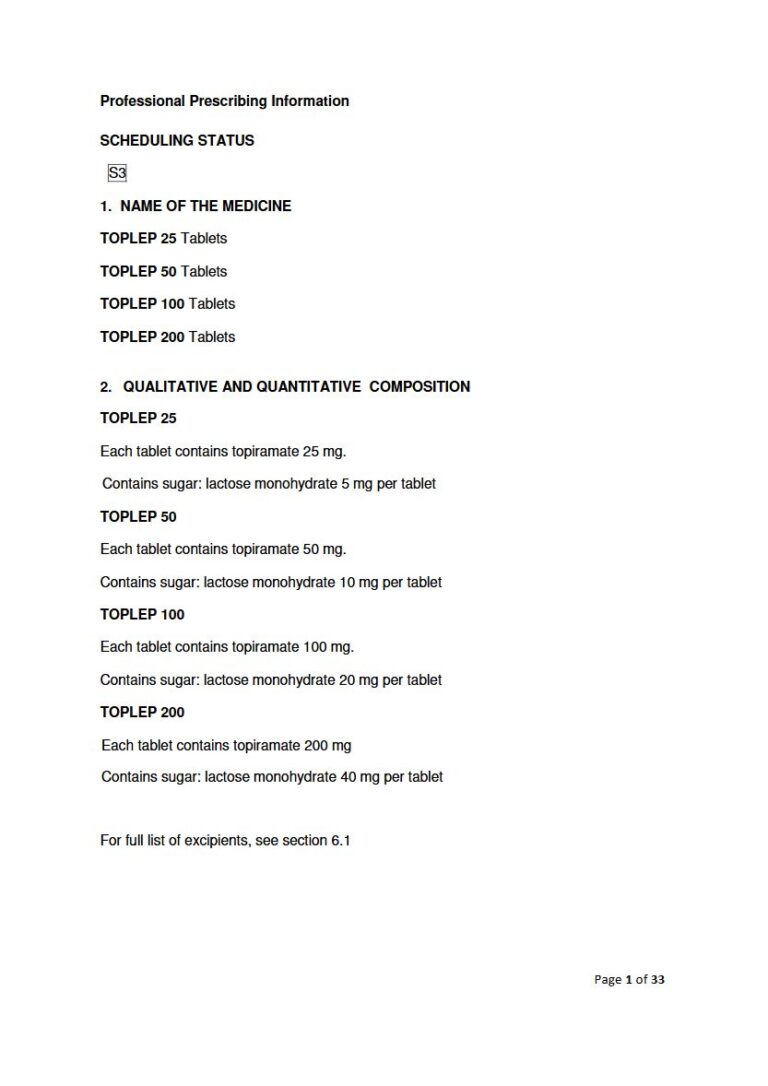
Toplep 25/50/100/200 25mg/50mg/100mg/200mg Tablet. Oral Solution
PDF Leaflet Revision Date: 16 May 2022
Clinical Summary
Quick overview from the medicine insert
Indication
Monotherapy and adjunctive therapy for epilepsy.
Dosage (summary)
Adults: Start at 25-50 mg nightly, titrate to 200-400 mg/day; max 800 mg. Children: Start at 25 mg, titrate to 5-9 mg/kg/day.
Special Populations
- Renal impairment
- Hepatic impairment
Pregnancy & Breastfeeding
Teratogenic effects in animals; use only if benefits outweigh risks. Excretion in breast milk not well studied.
Key Drug Interactions
- Phenytoin
- Carbamazepine
- Valproic acid
- Oral contraceptives
- Lithium
Contraindications
- Hypersensitivity
- Children under 2 years
- Pregnancy
Common side effects
- Drowsiness
- Dizziness
- Nausea
- Weight loss
- Mood disturbances
Counselling Points
- Monitor for mood changes
- Stay hydrated
- Avoid CNS depressants
- Gradual withdrawal recommended
Serious warnings
- Acute myopia and glaucoma
- Metabolic acidosis
- Hyperammonemia
- Suicidal ideation
Important Disclaimer
The Toplep 25/50/100/200 25mg/50mg/100mg/200mg Tablet. Oral Solution professional information leaflet below is the property of Ranbaxy Pharmaceuticals {Pty) Ltd and is provided on Medinsert exactly as issued, with no.. alterations or editorial changes. We make every effort to keep content current by updating documents as soon as new versions become available. Medinsert serves as a trusted access point for healthcare professionals, but does not replace official sources or clinical judgement. For more details, please read our full disclaimer. read more>>
 Healthcare Professionals Only
This content is for registered healthcare professionals
Sign in or create a free account to read the full package insert.
Free for HPCSA-registered professionals. Powered by Medinsert.
Clinical Particulars
Section 4 of the official insert — extracted exactly as issued, no alterations
4.1 Therapeutic indication
Epilepsy
TOPLEP is indicated as monotherapy in patients with newly diagnosed epilepsy or for conversion to monotherapy in patients with epilepsy. TOPLEP tablets are indicated as adjunctive therapy for adults and children over 4 years old who are inadequately controlled on conventional first line antiepileptic medicines for:
- partial onset seizures with or without secondarily generalised seizures.
- seizures associated with Lennox-Gastaut syndrome.
- primary generalized tonic clonic seizures
4.2 Posology and Method of Administration
ADJUNCTIVE THERAPY
Adults
Therapy should begin at 25-50 mg nightly for one week. Subsequently, the dose should be increased at weekly intervals by 25-50 mg/day and taken in two divided doses. Dose titration should be guided by clinical outcome. Some patients may achieve efficacy with once-a-day dosing. The effective dose is usually within the range of 200 mg (minimum dose) to 400 mg daily taken in two divided doses; some patients may require up to 800 mg (maximum dose) daily. It is recommended that therapy be initiated at a low dose, followed by titration to an effective dose.
Since TOPLEP is removed from plasma by haemodialysis, an additional dosage equal to approximately one-half of the daily dose should be administered on haemodialysis days. The additional dose should be administered in divided doses at the beginning and completion of the haemodialysis procedure. The additional doses may vary based on the dialysis equipment being used. No dosage adjustment is necessary in elderly patients. For patients with underlying renal disease (see Section 4.4).
Children 4 years and over
The initial dose for children is 25 mg for the first week. Titration should begin at 25 mg, based on a range of 1 u2013 3 mg/kg/day nightly for the first week. The dose is then increased at 1 or 2 week intervals by increments of 1 u2013 3 mg/kg/day administered in two doses, to achieve optimal clinical response. The recommended dose thereafter is about 5 u2013 9 mg/kg/day in two divided doses. Dose titration should be guided by clinical outcome.
The recommended initial target dose range of TOPLEP monotherapy in children aged four years and above is 3 to 6 mg/kg/day. Children with recently diagnosed partial onset seizures have received doses of up to 500 mg/day.
MONOTHERAPY
When concomitant antiepileptic medicines (AEMs) are withdrawn to achieve monotherapy with TOPLEP consideration should be given to the effects this may have on seizure control. Unless safety concerns require an abrupt withdrawal of the concomitant AEM, a gradual discontinuation at the rate of approximately one third of the concomitant AEM dose every 2 weeks is recommended. When enzyme inducing medicines are withdrawn TOPLEP levels will increase. A reduction in TOPLEP may be required if clinically indicated.
Adults
Titration should begin at 25 mg nightly for 1 week. The dosage should then be increased at 1 or 2 week intervals at 25 or 50 mg/day, administered in two divided doses. If the patient is unable to tolerate the titration regimen, smaller increments or longer intervals between increments can be used. Dose and titration rate should be guided by clinical outcome. The recommended initial target dose for TOPLEP monotherapy in adults is 100 mg/day and the maximum dose is 500 mg. Some patients with refractory forms of epilepsy have tolerated doses of topiramate monotherapy at doses of 1 g per day. These dosing recommendations apply to adults including the elderly in the absence of underlying renal disease.
Special populations
Renal impairment
Patients with moderate and severe renal impairment may require a dose reduction. Half of the usual starting and maintenance dose is recommended (see section 5.2).
Haemodialysis
Since TOPLEP is removed from plasma by haemodialysis, a supplemental dose of TOPLEP equal to approximately one-half the daily dose should be administered on haemodialysis days. The supplemental dose should be administered in divided doses at the beginning and completion of the haemodialysis procedure. The supplemental dose may differ based on the characteristics of the dialysis equipment being used. (see Section 5.2).
Hepatic impairment
TOPLEP should be administered with caution and at reduced dosages in patients with hepatic impairment (see section 5.2).
Method of administration
For optimal seizure control, in both adults and children, it is recommended that therapy be initiated at a low dose, followed by titration to an effective dose. It is recommended that film-coated tablets not be broken. TOPLEP can be taken without meals.
4.3 Contraindications
TOPLEP tablets are contra-indicated in the following conditions:
- Hypersensitivity to the active substance or to any of the excipients listed in section 6 .1
- The safety and efficacy of TOPLEP in children under 2 years has not yet been established.
- Pregnancy and lactation, as topiramate is teratogenic in animals, whilst there are no adequate data in humans.
4.4 Special warnings and precautions for use
Acute Myopia and Secondary Angle Closure Glaucoma
A syndrome consisting of acute myopia associated with secondary angle closure glaucoma has been reported in patients receiving TOPLEP. Symptoms include acute onset of decreased visual acuity and/or ocular pain. Ophthalmologic findings can include myopia, anterior chamber shallowing, ocular hyperemia (redness) and increased intraocular pressure. Mydriasis may or may not be present. This syndrome may be associated with supraciliary effusion resulting in anterior displacement of the lens and iris, with secondary angle closure glaucoma. Symptoms typically occur within 1 month of initiating TOPLEP therapy. In contrast to primary narrow angle glaucoma, which is rare under 40 years of age, secondary angle closure glaucoma associated with topiramate has been reported in paediatric patients as well as adults. Treatment includes discontinuation of TOPLEP, as rapidly as possible in the judgment of the treating physician, and appropriate measures to reduce intraocular pressure. These measures generally result in a decrease in intraocular pressure.
Oral contraceptives
Contraceptive efficacy can be decreased even in the absence of breakthrough bleeding, see u201csection 4.5u201d.
Visual field defects
Visual field defects have been reported in patients receiving TOPLEP independent of elevated intraocular pressure. In clinical trials, most of these events were reversible after TOPLEP discontinuation. If visual problems occur at any time during TOPLEP treatment, consideration should be given to discontinuing the medicine.
Metabolic Acidosis
Hyperchloraemic, non-anion gap, metabolic acidosis (i.e. decreased serum bicarbonate below the normal reference range in the absence of respiratory alkalosis) is associated with topiramate treatment. This decrease in serum bicarbonate is due to the inhibitory effect of topiramate on renal carbonic anhydrase and consequent renal bicarbonate wasting. These decreases are usually mild to moderate (average decrease of 4 mmol/L at doses of 100 mg/day or above in adults and at approximately 6 mg/kg/day in paediatric patients. However, patients have experienced decreases to values below 10 mmol/L. Conditions or therapies that redispose to acidosis (such as renal disease, severe respiratory disorders, status epilepticus, diarrhoea, surgery, ketogenic diet, or certain medicines) may be additive to the bicarbonate lowering effects of topiramate. Chronic, untreated metabolic acidosis may increase the risk of nephrolithiasis or nephrocalcinosis (see Section 4.4 - Nephrolithiasis). Chronic metabolic acidosis in paediatric patients can reduce growth rates. Chronic metabolic acidosis can lead to nephrolithiasis and increased risk for fractures. Evaluation of serum bicarbonate levels is recommended with topiramate therapy. If metabolic acidosis develops and persists, consideration should be given to reducing the dose or discontinuing topiramate (using dose tapering).
Hyperammonemia and encephalopathy
Hyperammonemia with or without encephalopathy has been reported with topiramate treatment (see Section 4.8). The risk for hyperammonemia with topiramate appears dose related. Hyperammonemia has been reported more frequently when topiramate is used concomitantly with valproic acid (see Section 4.5). Clinical symptoms of hyperammonemic encephalopathy often include acute alterations in level of consciousness and/or cognitive function with lethargy. In most cases, hyperammonemic encephalopathy abated with discontinuation of treatment. In patients who develop unexplained lethargy, or changes in mental status associated with topiramate monotherapy or adjunctive therapy, it is recommended to consider hyperammonemic encephalopathy and measuring ammonia levels.
Women of childbearing potential
TOPLEP may cause foetal harm when administered to a pregnant woman. There is an increased risk of pre-term labour and premature delivery associated with the use of Antiepileptic Medicines (AEMs) including topiramate.
Withdrawal of TOPLEP
In patients with or without a history of seizures or epilepsy, antiepileptic medicines, including TOPLEP, should be gradually withdrawn to minimise the potential for seizures or increased seizure frequency. In clinical trials, daily dosages were decreased in weekly intervals by 50 u2013 100 mg in adults with epilepsy. In clinical trials of children, TOPLEP was gradually withdrawn over a 2 u2013 8 week period. In situations where rapid withdrawal of TOPLEP is medically required, appropriate monitoring is recommended.
Renal impairment
Renal elimination is dependent on renal function and is independent of age. Patients with moderate or severe renal impairment may take 10 to 15 days to reach steady-state plasma concentrations as compared to 4 to 8 days in patients with normal renal function. As with all patients, the titration schedule should be guided by clinical outcome (i.e. seizure control, avoidance of side-effects) with the knowledge that subjects with known renal impairment may require a longer time to reach steady state at each dose.
Hydration
Oligohidrosis (decreased sweating) and anhidrosis have been reported in association with the use of TOPLEP. Decreased sweating and hyperthermia (rise in body temperature) may occur especially in young children exposed to high ambient temperatures. Adequate hydration while using TOPLEP is very important. Hydration can reduce the risk of nephrolithiasis (see below). Proper hydration prior to and during activities such as exercise or exposure to warm temperatures may reduce the risk of heat-related adverse events (see Section 4.8). Patients should be warned about this.
Mood Disturbances/Depression
An increased incidence of mood disturbances and depression has been observed during topiramate treatment.
Suicide / Suicidal Ideation
In double-blind clinical trials with TOPLEP, suicide related events (suicidal ideation, suicide attempts and suicide) occurred at a frequency of 0,5 % in topiramate treated patients (46 out of 8 652 patients treated) compared to 0,2 % treated with placebo (8 out of 4 045 patients treated). One completed suicide was reported in a bipolar disorder double-blind trial in a patient on topiramate. Patients therefore should be monitored for signs of suicidal ideation and behaviour and appropriate treatment should be considered. Patients (and, when appropriate, caregivers of patients) should be advised to seek immediate medical advice should signs of suicidal ideation or behaviour emerge.
Nephrolithiasis
Some patients, especially those with a predisposition to nephrolithiasis, are at increased risk for renal stone formation and associated signs and symptoms such as renal colic, renal pain or flank pain. Risk factors for nephrolithiasis include stone formation, a family history of nephrolithiasis and hypercalciuria (see Section 4.4 u2013 Metabolic Acidosis). None of these risk factors can reliably predict stone formation during topiramate treatment. In addition, patients taking other medication associated with nephrolithiasis may be at increased risk. Concomitant use of TOPLEP with agents predisposing to nephrolithiasis (renal stone formation) should be avoided.
Hepatic impairment
In hepatically impaired patients, topiramate should be administered with caution as the clearance of topiramate may be decreased. Reports of hepatotoxicity and less commonly liver failure in patients taking TOPLEP with and without other medications have been received. Isolated reports have been received of hepatitis and hepatic failure occurring in patients taking multiple medications while being treated with TOPLEP.
TOPLEP may be more sedating than other antiepileptic medicines.
Lactose
Patients with rare hereditary problems of galactose intolerance, total lactase deficiency or glucose-galactose malabsorption should not take this medicine.
Sodium
This medicine contains less than 1 mmol sodium (23 mg) per the maximum recommended dose, that is to say essentially u2018sodium - freeu2019.
4.5 Interaction with other medicines and other forms of Interaction
Effects of TOPLEP on Other Antiepileptic Medicines
The addition of TOPLEP to other antiepileptic medicines (phenytoin, carbamazepine, valproic acid, phenobarbital, primidone) has no effect on their steady-state plasma concentrations, except in the occasional patient, where the addition of TOPLEP to phenytoin may result in an increase of plasma concentrations of phenytoin. This is possibly due to inhibition of a specific enzyme polymorphic isoform (CYP2C19). Consequently, any patient on phenytoin should have phenytoin levels monitored. A pharmacokinetic interaction study of patients with epilepsy indicated the addition of TOPLEP to lamotrigine had no effect on steady state plasma concentration of lamotrigine at TOPLEP doses of 100 to 400 mg/day. In addition, there was no change in steady state plasma concentration of TOPLEP during or after removal of lamotrigine treatment (mean dose of 327 mg/day). However the incidence of adverse effects was meaningfully increased on the combination.
Effects of Other anti-epileptic medicines on TOPLEP
Phenytoin and carbamazepine decrease the plasma concentration of TOPLEP. The addition or withdrawal of phenytoin or carbamazepine to TOPLEP therapy may require an adjustment in dosage of the latter. This should be done by titrating to clinical effect. The addition or withdrawal of valproic acid does not produce clinically significant changes in plasma concentrations of TOPLEP and, therefore, does not warrant dosage adjustment of TOPLEP.
The above interactions are summarised in the following table:
| AEM Coadministered | TOPLEP Concentration |
|---|---|
| Phenytoin | uf0ab ** uf0af (48 %) |
| Carbamazepine (CBZ) | uf0ab uf0af (40 %) |
| Valproic acid | uf0ab uf0ab |
| Lamotrigine | uf0ab uf0ab |
| Phenobarbital | uf0ab NS |
| Primidone | uf0ab NS |
uf0ab = No effect on plasma concentration (u2264 15 % change) ** = Plasma concentrations increase in individual patients uf0af = Plasma concentrations decrease NS = Not studied AEM = Antiepileptic medicine
Other Medicine Interactions
Digoxin: Concomitant administration has shown a decrease in serum digoxin. When TOPLEP is added or withdrawn in patients on digoxin therapy, careful attention should be given to the routine monitoring of serum digoxin.
Oral Contraceptives: In a pharmacokinetic interaction study in healthy volunteers with a concomitantly administered combination oral contraceptive product containing 1 mg norethindrone (NET) plus 35 mcg ethinyl estradiol (EE), TOPLEP given in the absence of other medications at doses of 50 to 200 mg/day was not associated with statistically significant changes in mean exposure (AUC) to either component of the oral contraceptive. In another study, exposure to EE was statistically significantly decreased at doses of 200, 400 and 800 mg/day (18 %, 21 %, and 30 %, respectively) when given as adjunctive therapy in patients taking valproic acid. In both studies, TOPLEP (50 mg/day to 800 mg/day) did not significantly effect exposure to NET. Although there was a dose dependent decrease in EE exposure for doses between 200-800 mg/day, there was no significant dose dependent change in EE exposure for doses of 50-200 mg/day. The clinical significance of the changes observed is not known. The possibility of decreased contraceptive efficacy and increased breakthrough bleeding should be considered in patients taking combination oral contraceptive products with TOPLEP. Patients taking estrogen-containing contraceptives should be asked to report any change in their bleeding patterns. Contraceptive efficacy can be decreased even in the absence of breakthrough bleeding.
Lithium: In patients with bipolar disorder, the pharmacokinetics of lithium were unaffected during treatment with TOPLEP at doses of 200 mg/day; however, there was an observed increase in systemic exposure (26 % for AUC) following TOPLEP doses of up to 600 mg/day. Lithium levels should be monitored when co-administered with TOPLEP.
Risperidone: Interaction studies conducted under single and multiple dose conditions in healthy volunteers and patients with bipolar disorder yielded similar results. When administered concomitantly with TOPLEP at escalating doses of 100, 250 and 400 mg/day there was a reduction in risperidone (administered at doses ranging from 1 to 6 mg/day) systemic exposure (16 % and 33 % for steady-state AUC at the 250 and 400 mg/day doses, respectively). Minimal alterations in the pharmacokinetics of the total active moiety (risperidone plus 9-hydroxyrisperidone) and no alterations for 9-hydroxyrisperidone were observed. There were no clinically significant changes in the systemic exposure of the risperidone total active moiety or of TOPLEP, therefore this interaction is not likely to be of clinical significance.
Hydrochlorothiazide (HCTZ): An interaction study conducted in healthy volunteers evaluated the steady-state pharmacokinetics of HCTZ (25 mg q24h) and TOPLEP (96 mg q12h) when administered alone and concomitantly. The results of this study indicate that TOPLEP Cmax increased by 27 % and AUC increased by 29 % when HCTZ was added to TOPLEP. The clinical significance of this change is unknown. The addition of HCTZ to TOPLEP therapy may require an adjustment of the TOPLEP dose.
Metformin: An interaction study conducted in healthy volunteers evaluated the steady-state pharmacokinetics of metformin and TOPLEP in plasma when metformin was given alone and when metformin and TOPLEP were given simultaneously. The results of this study indicated that metformin mean Cmax and mean AUC0-12h increased by 18 % and 25 %, respectively, while mean CL/F decreased 20 % when metformin was coadministered with TOPLEP. TOPLEP did not affect metformin tmax. The clinical significance of the effect of TOPLEP on metformin pharmacokinetics is unclear. Oral plasma clearance of TOPLEP appears to be reduced when administered with metformin. The extent of change in the clearance is unknown. The clinical significance of the effect of metformin on TOPLEP pharmacokinetics is unclear. When TOPLEP is added or withdrawn in patients on metformin therapy, careful attention should be given to the routine monitoring for adequate control of their diabetic disease state.
Pioglitazone: An interaction study conducted in healthy volunteers evaluated the steady-state pharmacokinetics of TOPLEP and pioglitazone when administered alone and concomitantly. ss was observed. This finding was not statistically significant. When TOPLEP is added to pioglitazone therapy or pioglitazone is added to TOPLEP therapy, careful attention should be given to the routine monitoring of patients for adequate control of their diabetic disease state.
Glyburide: An interaction study conducted in patients with type 2 diabetes evaluated the steady-state pharmacokinetics of glyburide (5 mg/day) alone and concomitantly with TOPLEP (150 mg/day). There was a 25 % reduction in glyburide AUC24 during TOPLEP administration. Systemic exposure of the active metabolites, 4-trans-hydroxy-glyburide (M1) and 3-cis-hydroxyglyburide (M2), were also reduced by 13 % and 15 %, respectively. The steady-state pharmacokinetics of TOPLEP were unaffected by concomitant administration of glyburide. When TOPLEP is added to glyburide therapy or glyburide is added to TOPLEP therapy, careful attention should be given to the routine monitoring of patients for adequate control of their diabetic disease state.
CNS Depressants: Concomitant use of TOPLEP with alcohol or other central nervous system (CNS) depressant medicines should be avoided.
Other forms of interactions: Agents predisposing to nephrolithiasis TOPLEP, when used concomitantly with other agents predisposing to nephrolithiasis, may increase the risk of nephrolithiasis. While using TOPLEP, agents like these should be avoided since they may create a physiological environment that increases the risk of renal stone formation.
4.6 Fertility, pregnancy and lactation
Pregnancy
TOPLEP can cause fetal harm when administered to a pregnant woman. Data from pregnancy registries indicate that infants exposed to topiramate in utero have an increased risk of congenital malformations (e.g., craniofacial defects, such as cleft lip/palate, hypospadias, and anomalies involving various body systems). This has been reported with topiramate monotherapy and topiramate as part of a polytherapy regimen. In addition, data from other studies indicate that, compared with monotherapy, there is an increased risk of teratogenic effects associated with the use of AEMs (Anti-epileptic medications) in combination therapy. The risk has been observed in all doses and effects were reported to be dose-dependent. In women treated with topiramate who have had a child with congenital malformation, there appears to be an increased risk of malformations in subsequent pregnancies when exposed to topiramate. There is an increased risk of pre-term labour and premature delivery associated with the use of AEMs, including topiramate.
Compared with a reference group not taking antiepileptic medicines, registry data for TOPLEP monotherapy showed a higher prevalence of low birth weight (< 2 500 grams). One pregnancy registry reported an increased frequency of infants who were small for gestational age (SGA; defined as birth weight below the 10th percentile corrected for their gestational age, stratified by sex) among those exposed to TOPLEP monotherapy in utero. SGA has been observed in all doses and is dose-dependent. The prevalence of SGA is greater in women who received higher doses of topiramate during pregnancy. In addition, the prevalence of SGA for women who continued topiramate use later in pregnancy is higher compared to women who stopped its use before the third trimester. The long-term consequences of the SGA findings could not be determined. A causal relationship for low birth weight and SGA has not been established. TOPLEP should be used during pregnancy only if potential benefit justifies the potential risk to the foetus. In treating and counselling women of childbearing potential, the prescribing physician should weigh the benefits of therapy against the risks and consider alternative therapeutic options. If this medicine is used during pregnancy or if the patient becomes pregnant while taking this medicine, the patient should be apprised of the potential hazard to the foetus.
Lactation
The excretion of topiramate in human milk has not been evaluated in controlled studies. Limited observations in patients suggest an extensive excretion of topiramate into breast milk. Diarrhoea and somnolence have been reported in breastfed infants whose mothers receive topiramate treatment.
Fertility
Animal studies did not reveal impairment of fertility by topiramate. The effect of topiramate on human fertility has not been established.
4.7 EFFECTS ON ABILITY TO DRIVE AND USE MACHINES
Toplep may produce central nervous system related events such as: drowsiness, dizziness or other related symptoms. It may also cause visual disturbances and/or blurred vision. These adverse events could potentially be dangerous in patients driving a vehicle or operating machinery, particularly until such time as the individual patientu2019s experience with the medicine is established. Toplep may be more sedating than other antiepileptic medicines.
4.8 Undesirable effects
System Organ Class
Frequent
Less Frequent
Frequency Unknown
Infections and infestations
Nasopharyngitis, infections, viral infection, moniliasis, otitis media, genital moniliasis, pneumonia, upper respiratory tract infection, urinary tract infection.
Blood and lymphatic system disorders
Anaemia
Leucopenia, thrombocytopenia lymphadenopathy eosinophilia Neutropenia, hyperammonaemia
Immune system disorders
Hypersensitivity, allergy (allergic reaction).
Allergic oedema, conjunctival oedema, angioedema.
Endocrine disorders
Hyperthyroidism
Metabolism and nutritional disorders
Anorexia/decreased appetite, decrease in weight, hypoglycaemia.
Metabolic acidosis, hypokalaemia, increased appetite, polydipsia, acidosis hyperchloraemic, hypocalcaemia, hyperlipidaemia, hyperglycaemia, xerophthalmia, diabetes mellitus, hypernatraemia, hypocholesterolaemia.
Hyperammonaemia
Psychiatric disorders
Nervousness, psychomotor slowing, difficulty with memory not otherwise specified, confusion (confusional state), difficulty with concentration/attention, depression, aggravated depression, mood affect lability, apathy, psychosis/psychotic symptoms, hallucinations (auditory & visual), suicidal ideas / behaviour or attempts, lack of spontaneous speech, sleep disorder, decreased libido/loss of libido or increased libido, restlessness, crying, dysphemia, problems (mood altered, agitation, mood swings, depressed mood, anger), personality changes/disorder, insomnia, bradyphrenia, expressive language disorder, anxiety, disorientation, aggression, abnormal behaviour, cognitive problems, emotional lability, impotence, depersonalisation, neurosis euphoric mood, paranoia, perseveration, panic attack, tearfulness, reading disorder, initial insomnia, flat affect, abnormal thinking, listless, middle insomnia, distractibility, early morning awakening, panic reaction/panic disorder, elevated mood, mania, feeling of despair, hypomania, euphoria, paranoid reaction, delusion, delirium, abnormal dreaming, manic reaction.
Nervous system disorders
Paraesthesia, ataxia, dizziness, speech disorders/related speech problems, language problems, tremor, hyperkinesias, co-ordination problems (abnormal co-ordination), somnolence, attention disturbances, memory impairment, amnesia, cognitive disorder, mental impairment, impaired psychomotor skills, convulsion, lethargy, hypoaesthesia, nystagmus, dysgeusia, balance disorder, dysarthria, intention tremor, sedation, hypertonia, leg cramps, hyporeflexia, aggravated migraine dysaesthesia, hypogeusia, stupor, clumsiness, aura, ageusia, dysgraphia, dysphasia, peripheral neuropathy, presyncope, dystonia, formication, ptosis, abnormal EEG, upper motor neuron lesion, tongue paralysis, apraxia, circadian rhythm sleep disorder, hyperaesthesia, hyposmia, anosmia, essential tremor, akinesia, unresponsive to stimuli.
Eye disorders
Abnormal vision, blurred vision, diplopia, nystagmus, secondary angle closure glaucoma, visual disturbance, u201cabnormalu201d lacrimation, conjunctivitis, eye abnormality, eye pain.
Reduced visual acuity, scotoma, acute myopia, abnormal sensation in eye, dry eye, photophobia, blepharospasm, increased lacrimation, photopsia, mydriasis, presbyopia, unilateral blindness, transient blindness, glaucoma, abnormal accommodation disorder, altered visual depth perception, scintillating eyelid oedema, night blindness, amblyopia, strabismus, iritis.
Angle closure glaucoma, maculopathy, eye movement disorder, conjunctival oedema, eyelid oedema, maculopathy, myopia.
Ear and labyrinth disorders
Vertigo, tinnitus, ear pain, decreased hearing.
Deafness, unilateral deafness, neurosensory deafness, ear discomfort, impaired hearing.
Cardiac disorders
Bradycardia, sinus bradycardia, palpitations, angina pectoris, AV block.
Vascular disorders
Hypertension
Hypotension, orthostatic/postural hypotension, flushing, hot flush, Raynaud's phenomenon, vasodilation, deep vein thrombosis, phlebitis, vasospasm.
Respiratory, thoracic and mediastinal disorders
Dyspnoea, epistaxis, nasal congestion, rhinorrhoea, pharyngitis, rhinitis, bronchitis, sinusitis, asthma.
Exertional dyspnoea, paranasal sinus hypersecretion, dysphonia, pulmonary embolism.
Cough
Gastro-intestinal disorders
Nausea, diarrhoea, vomiting, constipation, upper abdominal pain, dyspepsia, abdominal pain, dry mouth, stomach discomfort, oral paraesthesia, gastritis, abdominal discomfort, gastroenteritis, GI disorder, faecal incontinence.
Pancreatitis, flatulence, gastroesophageal reflux disease, lower abdominal pain, oral hypoaesthesia, gingival bleeding, abdominal distension, epigastric discomfort, abdominal tenderness, salivary hypersecretion (increased saliva production), oral pain, breath odour, glossodynia, haemorrhoids, stomatitis, dysphagia, glossitis, gum hyperplasia, pharynx oedema.
melaena, oesophagitis, tongue oedema, enlarged abdomen.
Hepato-biliary disorders
Increased Gamma-GT
Hepatic failure, hepatitis, and hepatotoxicity.
Skin and subcutaneous tissue disorders
Alopecia, rash, pruritus, gingivitis, increased sweating, acne, skin disorder, rash erythematous, pallor, hypertrichosis, eczema, seborrhoea.
Anhidrosis, facial hypoaesthesia, urticaria, erythema, macular rash, skin discolouration, allergic dermatitis, swelling face, abnormal skin odour, periorbital oedema, photosensitivity reaction, abnormal hair texture, chloasma.
Bullous skin and mucosal reactions, including pemphigus, and toxic epidermal necrolysis, erythema multiforme, periorbital oedema, Steven-Johnson syndrome, toxic epidermal necrosis.
Musculoskeletal and subcutaneous tissue disorders
Arthralgia, muscle spasms, myalgia, muscle twitching, muscular weakness, musculoskeletal chest pain, muscle weakness, skeletal pain.
musculoskeletal stiffness, flank pain, muscle fatigue, arthrosis.
Joint swelling, limb discomfort.
Renal and urinary disorders
Nephrolithiasis (kidney stones), pollakiuria, dysuria, cystitis, frequent micturition, prostatic disorder, abnormal urine, nocturia.
Incontinence, urinary calculus (ureteric calculus), urinary retention, haematuria, micturition urgency, renal colic, renal pain, albuminuria, polyuria, oliguria.
Renal failure, renal tubular acidosis, nephrocalcinosis.
Reproductive system and breast disorders
Intermenstrual bleeding, vaginal haemorrhage, dysmenorrhoea, breast pain, amenorrhoea, menorrhagia, leucorrhoea, premature ejaculation.
Erectile dysfunction, sexual dysfunction, ejaculation disorder, breast discharge.
General disorders and administration site conditions
Asthenia, fatigue, fever or pyrexia, irritability, gait disturbance/abnormal, feeling abnormal, malaise, injury, leg pain, taste perversion, back pain, body odour, rigor, pain, neoplasm.
Hyperthermia, thirst, sluggishness, peripheral coldness, feeling drunk, feeling jittery, face calcinosis, alcohol intolerance, dehydration, taste loss.
Oligohydrosis, hypothermia with concomitant valproic acid, influenza-like illness, generalised oedema.
Investigations
Decreased weight, hyperammonaemia and encephalopathy without and with concomitant valproic acid. Crystaluria, hypercalcuria, abnormal tandem gait test, decreased white blood cell count, increase in liver enzymes (AST, ALT), decreased blood bicarbonate.
increased weight.
Social circumstances
Learning disability.
Reporting of suspected adverse reactions
Reporting suspected adverse reactions after authorisation of the medicine is important. It allows continued monitoring of the benefit/risk balance of the medicine. Healthcare professionals are asked to report any suspected adverse reactions to SAHPRA via the u201c6.04 Adverse Drug Reaction Reporting Formu201d, found online under SAHPRAu2019s publications: https://www.sahpra.org.za/Publications/Index/.
4.9 Overdose
Overdoses of TOPLEP have been reported. Signs and symptoms include headache, severe metabolic acidosis and hypokalaemia, convulsions, drowsiness, speech disturbance, blurred vision, diplopia, impaired mentation, lethargy, abnormal coordination, stupor, hypotension, abdominal pain, agitation, dizziness and depression. The clinical consequences were not severe in most cases, but deaths have been reported after polydrug overdoses involving topiramate. Topiramate overdose can result in severe metabolic acidosis (see section 4.4). The highest topiramate overdose reported was calculated to be between 96 and 110 g and resulted in coma lasting 20 to 24 hours followed by full recovery after 3 to 4 days. Treatment is symptomatic and supportive. An attempt should be made to remove undigested TOPLEP from the gastro-intestinal tract using induction of emesis or activated charcoal. Haemodialysis has been shown to be an effective means to remove TOPLEP from the body. The patient should be well hydrated.
