
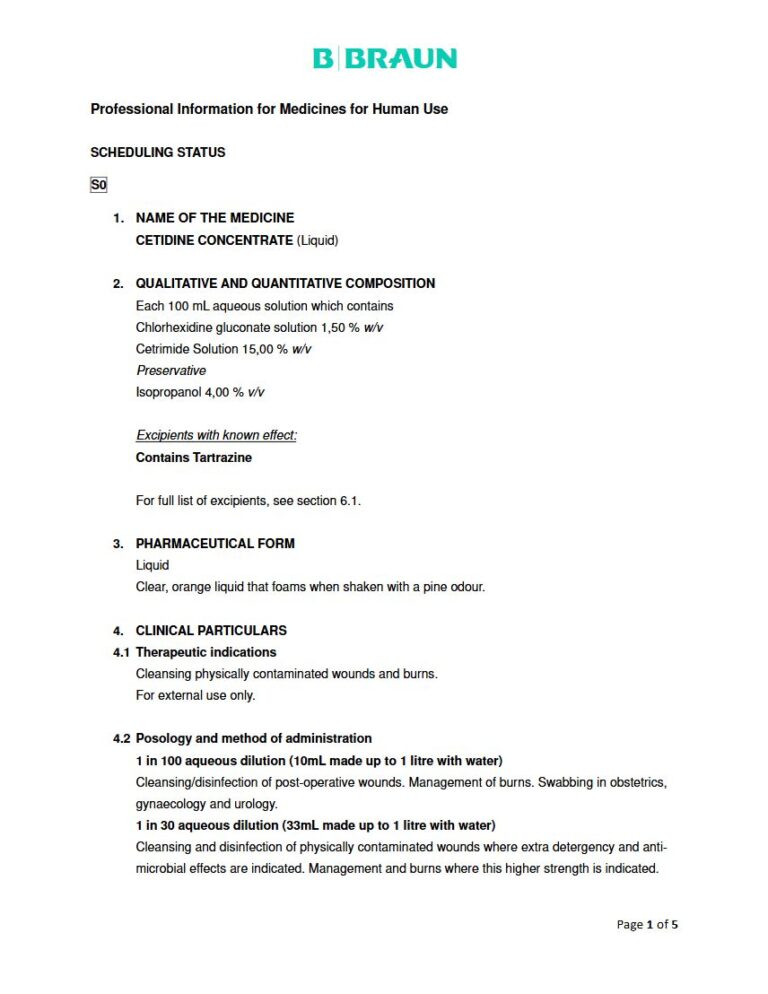
Cetidine Concentrate 100 mL Liquid
PDF Leaflet Revision Date: 17 December 2025
Clinical Summary
Quick overview from the medicine insert
Indication
Cleansing physically contaminated wounds and burns.
Dosage (summary)
1 in 100 or 1 in 30 aqueous dilution for cleansing; 1 in 30 in 70% alcohol for skin disinfection.
Pregnancy & Breastfeeding
No studies in pregnant or lactating women.
Contraindications
- Hypersensitivity to active substance or ingredients.
- Contact with eyes, brain, meninges, or middle ear.
- Not for use in body cavities.
Common side effects
- Idiosyncratic skin reactions.
- Hypersensitivity including anaphylaxis.
- Ototoxicity.
Counselling Points
- For external use only.
- Avoid excessive application.
- Do not use around ears, eyes, nose, or mouth.
Serious warnings
- May cause allergic reaction due to Tartrazine.
- Discontinue if hypersensitivity occurs.
- Incompatible with anionic agents.
Important Disclaimer
The Cetidine Concentrate 100 mL Liquid professional information leaflet below is the property of B Braun Medical and is provided on Medinsert exactly as issued, with no.. alterations or editorial changes. We make every effort to keep content current by updating documents as soon as new versions become available. Medinsert serves as a trusted access point for healthcare professionals, but does not replace official sources or clinical judgement. For more details, please read our full disclaimer. read more>>
 Healthcare Professionals Only
This content is for registered healthcare professionals
Sign in or create a free account to read the full package insert.
Free for HPCSA-registered professionals. Powered by Medinsert.
Clinical Particulars
Section 4 of the official insert — extracted exactly as issued, no alterations
4.1 Therapeutic indications
Cleansing physically contaminated wounds and burns. For external use only.
4.2 Posology and method of administration
1 in 100 aqueous dilution (10mL made up to 1 litre with water) Cleansing/disinfection of post-operative wounds. Management of burns. Swabbing in obstetrics, gynaecology and urology.
1 in 30 aqueous dilution (33mL made up to 1 litre with water) Cleansing and disinfection of physically contaminated wounds where extra detergency and anti-microbial effects are indicated. Management and burns where this higher strength is indicated.
1 in 30 in 70% alcohol (33mL with 200mL water made up to 1 litre with 95% alcohol or white industrial methylated spirits) Skin disinfection for pre-operative and other invasive procedures.
4.3 Contraindications
- Hypersensitivity to the active substance or to any of the ingredients. excipients listed in section 6.1.
- Cetidine Concentrate should not come into contact with the eyes, brain, meninges or middle ear.
- Do not use in body cavities.
4.4 Special warnings and precautions for use
Cetidine Concentrate contains Tartrazine and may cause allergic reaction. Cetidine Concentrate should not be applied to the skin in excessive amount either undiluted or diluted, and wet dressings should not be left in contact as hypersensitivity may occur. Discontinue use if hypersensitivity reactions develop. Hypochlorite bleaches may cause brown stains to develop in fabrics which have been in contact with Cetidine Concentrate solutions. An oxidising bleach such as sodium perborate should be used in laundering. Cetidine is incompatible with anionic agents and its activity is reduced in the presence of organic matter and soap. Do not use around the ears, eyes, nose or mouth to avoid contact with the eardrum, eyes and mucous membranes. Do not use in body cavities.
4.5 Interaction with other medicines and other forms of interaction
No interaction studies have been performed.
4.6 Fertility, pregnancy, and lactation
There are no studies have been established in pregnant or lactating women.
4.7 Effects on ability to drive and use machines.
Cetidine Concentrate is for external use only and is not expected to have an effect on the ability to drive and use machinery.
4.8 Undesirable effects
System Organ Class Frequency Category Undesirable effects Skin and subcutaneous tissues disorders Frequency not known Idiosyncratic skin reactions may occur. Immune system disorders Less Frequent Hypersensitivity including anaphylactic Ear and labyrinth disorders Frequency not known Ototoxicity Reporting of suspected adverse reactions Reporting suspected adverse reactions after authorisation of the medicine is important. It allows continued monitoring of the benefit/risk balance of the medicine. Health care providers are requested to report any suspected adverse drug reactions to SAHPRA via the Med Safety APP (Medsafety X SAHPRA) and eReporting platform (who-umc.org) found on the SAHPRA website.
4.9 Overdose
Accidental ingestion could cause nausea and vomiting, dyspnoea and cyanosis due to paralysis of respiratory muscles, possibly leading to asphyxia. Depression of the central nervous system with convulsions, hypotension and coma may occur. Treatment is symptomatic and supportive. Emesis and lavage should be avoided because of the irritant properties of Cetrimide.
