
Dolvidin 50 mg, 600 mg, 300 mg Tablet
PDF Leaflet Revision Date: 19 August 2024
Clinical Summary
Quick overview from the medicine insert
Indication
Treatment of HIV infection in adults and adolescents.
Dosage (summary)
One tablet once daily for adults and adolescents over 40 kg.
Special Populations
- Elderly
- Renal impairment
- Hepatic impairment
Pregnancy & Breastfeeding
Contraindicated in pregnancy (peri-conception and first trimester) and breastfeeding.
Key Drug Interactions
- Dofetilide
- Metformin
- Polyvalent cation-containing antacids
Contraindications
- Hypersensitivity to abacavir, dolutegravir, or lamivudine
- Moderate and severe hepatic impairment
- Creatinine clearance < 50 mL/min
Common side effects
- Hypersensitivity reactions
- Nausea
- Diarrhoea
- Fatigue
- Rash
Counselling Points
- Inform about hypersensitivity risks and symptoms.
- Never restart DOLVIDIN after hypersensitivity.
- Regular monitoring for opportunistic infections is necessary.
Serious warnings
- Risk of life-threatening hypersensitivity reactions
- Lactic acidosis
- Immune reconstitution inflammatory syndrome
Important Disclaimer
The Dolvidin 50 mg, 600 mg, 300 mg Tablet professional information leaflet below is the property of Novagen Pharma and is provided on Medinsert exactly as issued, with no.. alterations or editorial changes. We make every effort to keep content current by updating documents as soon as new versions become available. Medinsert serves as a trusted access point for healthcare professionals, but does not replace official sources or clinical judgement. For more details, please read our full disclaimer. read more>>
 Healthcare Professionals Only
This content is for registered healthcare professionals
Sign in or create a free account to read the full package insert.
Free for HPCSA-registered professionals. Powered by Medinsert.
Clinical Particulars
Section 4 of the official insert — extracted exactly as issued, no alterations
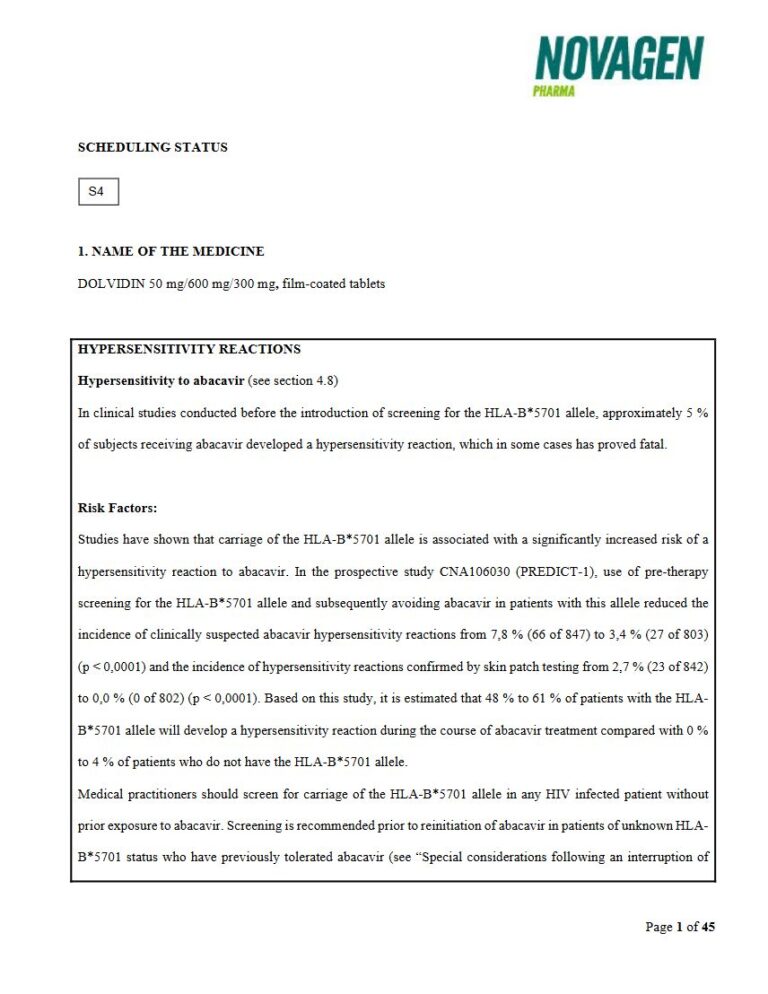
1. NAME OF THE MEDICINE
DOLVIDIN 50 mg/600 mg/300 mg, film-coated tablets
HYPERSENSITIVITY REACTIONS
Hypersensitivity to abacavir (see section 4.8) In clinical studies conducted before the introduction of screening for the HLA-B*5701 allele, approximately 5 % of subjects receiving abacavir developed a hypersensitivity reaction, which in some cases has proved fatal. Risk Factors: Studies have shown that carriage of the HLA-B*5701 allele is associated with a significantly increased risk of a hypersensitivity reaction to abacavir. In the prospective study CNA106030 (PREDICT-1), use of pre-therapy screening for the HLA-B*5701 allele and subsequently avoiding abacavir in patients with this allele reduced the incidence of clinically suspected abacavir hypersensitivity reactions from 7,8 % (66 of 847) to 3,4 % (27 of 803) (p < 0,0001) and the incidence of hypersensitivity reactions confirmed by skin patch testing from 2,7 % (23 of 842) to 0,0 % (0 of 802) (p < 0,0001). Based on this study, it is estimated that 48 % to 61 % of patients with the HLA-B*5701 allele will develop a hypersensitivity reaction during the course of abacavir treatment compared with 0 % to 4 % of patients who do not have the HLA-B*5701 allele. Medical practitioners should screen for carriage of the HLA-B*5701 allele in any HIV infected patient without prior exposure to abacavir. Screening is recommended prior to reinitiation of abacavir in patients of unknown HLA-B*5701 status who have previously tolerated abacavir (see u201cSpecial considerations following an interruption of abacavir therapyu201d). Use of abacavir in patients known to carry the HLA-B*5701 allele is not recommended. In any patient treated with abacavir, the clinical diagnosis of suspected hypersensitivity reaction must remain the basis of clinical decision making. Even in the absence of the HLA-B*5701 allele, it is important to permanently discontinue abacavir and not rechallenge with abacavir if a hypersensitivity reaction cannot be ruled out on clinical grounds, due to the potential for a severe or even fatal reaction.
Clinical Description: The hypersensitivity reaction is characterised by the appearance of symptoms indicating multi-organ involvement. The majority of patients have fever and/or rash as part of the syndrome. Some of the other symptoms of hypersensitivity may include fatigue, malaise, gastrointestinal symptoms, such as nausea, vomiting, diarrhoea, or abdominal pain, and respiratory signs and symptoms such as dyspnoea, sore throat, cough and abnormal chest x-ray findings (predominantly infiltrates, which can be localised). The symptoms of this hypersensitivity reaction can occur at any time during treatment with abacavir, but usually occur within the first six weeks of therapy. The symptoms worsen with continued therapy and can be life-threatening. These symptoms usually resolve upon discontinuation of abacavir.
Clinical Management: Regardless of their HLA-B*5701 status, any patient developing signs or symptoms of hypersensitivity MUST contact their medical practitioner immediately for advice. If a hypersensitivity reaction is diagnosed DOLVIDIN MUST be discontinued immediately. DOLVIDIN, or any other medicinal product containing abacavir, MUST NEVER be restarted following a hypersensitivity reaction, as more severe symptoms will recur within hours and may include life-threatening hypotension and death.
To avoid a delay in diagnosis and minimise the risk of a life-threatening hypersensitivity reaction, DOLVIDIN should be permanently discontinued if hypersensitivity cannot be ruled out, even when other diagnoses are possible (respiratory diseases, flu-like illness, gastroenteritis or reactions to other medications). DOLVIDIN, or any other medicinal product containing abacavir, should not be restarted even if a recurrence of symptoms occurs following rechallenge with alternative medication(s). An Alert Card with information for the patient about this hypersensitivity reaction is included in the DOLVIDIN pack.
Special considerations following an interruption of DOLVIDIN therapy:
Regardless of a patientu2019s HLA-B*5701 status, if therapy with any abacavir containing product has been discontinued and restarting therapy with DOLVIDIN is under consideration, the reason for discontinuation should be evaluated to ensure that the patient did not have symptoms of a hypersensitivity reaction. If a hypersensitivity reaction cannot be ruled out, DOLVIDIN or any other medicine containing abacavir should not be restarted. There have been infrequent reports of hypersensitivity reaction following re-introduction of abacavir, where the interruption was preceded by a single key symptom of hypersensitivity (rash, fever, malaise/fatigue, gastrointestinal symptoms or a respiratory symptom). If a decision is made to restart DOLVIDIN in these patients, this should be done only under direct medical supervision. On very rare occasions hypersensitivity reactions have been reported in patients who have restarted therapy and who had no preceding symptoms of a hypersensitivity reaction. If a decision is made to restart DOLVIDIN, this must be done only if medical care can be accessed readily by the patient or others. Screening for carriage of the HLA-B*5701 allele is recommended prior to re-initiation of abacavir in patients of unknown HLA-B*5701 status who have previously tolerated abacavir. Re-initiation of abacavir in such patients who test positive for the HLA-B*5701 allele is not recommended.
Essential patient information:
Prescribers must ensure that patients are fully informed regarding the following information on the hypersensitivity reaction:
- Patients must be made aware of the possibility of a hypersensitivity reaction to abacavir that may result in a life-threatening reaction or death and that the risk of a hypersensitivity reaction is increased if they are HLA-B*5701 positive.
- Patients must also be informed that HLA-B*5701 negative patients can also experience abacavir hypersensitivity reaction. Therefore, ANY patient who develops signs or symptoms consistent with a possible hypersensitivity reaction to abacavir MUST CONTACT their medical practitioner IMMEDIATELY.
- Patients who are hypersensitive to abacavir should be reminded that they must never take DOLVIDIN or any other medicine containing abacavir again, regardless of their HLA-B*5701 status.
- In order to avoid restarting DOLVIDIN, patients who have experienced a hypersensitivity reaction should be asked to return the remaining DOLVIDIN tablets to the pharmacy.
- Patients who have stopped DOLVIDIN for any reason and particularly due to possible adverse reactions or illness, must be advised to contact their medical practitioner before restarting.
Each patient should be reminded to read the package leaflet included in the DOLVIDIN pack. They should be reminded of the importance of removing the Alert Card included in the pack and keeping it with them at all times.
2. QUALITATIVE AND QUANTITATIVE COMPOSITION
Each film-coated tablet contains 50 mg dolutegravir (as dolutegravir sodium), 600 mg abacavir (as abacavir sulphate) and 300 mg lamivudine. DOLVIDIN contains 275,02 mg mannitol.
For the full list of excipients, see section 6.1.
3. PHARMACEUTICAL FORM
Film-coated tablets. White to off white, oval shaped, biconvex, film-coated tablets and debossed with u201cNu201d on one side and with u201c17u201d on other side.
4. CLINICAL PARTICULARS
4.1 Therapeutic indications DOLVIDIN is indicated for the treatment of Human Immunodeficiency Virus (HIV) infection in adults and adolescents from 18 years of age, who are antiretroviral treatment-nau00efve or are infected with HIV without documented or clinically suspected resistance to any of the three antiretroviral medicines in DOLVIDIN.
4.2 Posology and method of administration DOLVIDIN therapy should be initiated by a medical practitioner experienced in the management of HIV infection. DOLVIDIN should not be administered to patients younger than 18 years. DOLVIDIN is a fixed-dose tablet and should not be prescribed for patients requiring dosage adjustments, such as those with creatinine clearance less than 50 mL/min. Separate preparations of dolutegravir, abacavir or lamivudine should be administered in cases where discontinuation or dose adjustment is indicated. In these cases, the medical practitioner should refer to the Professional Information for these medicines.
Since the recommended dose of dolutegravir is 50 mg twice daily for patients with reference to integrase inhibitors, the use of DOLVIDIN is not recommended for patients with integrase inhibitor resistance.
Special Populations Adults and adolescents The recommended dose of DOLVIDIN in adults and adolescents weighing more than 40 kg is one tablet once daily. Elderly There are limited data available on the use of dolutegravir, abacavir and lamivudine in patients aged 65 years and over. However, there is no evidence that elderly patients require a different dose than younger adult patients (see section 5.2). When treating elderly patients, consideration needs to be given to the greater frequency of decreased hepatic, renal and cardiac function, concomitant medicines of disease. Renal Impairment Whilst no dosage adjustment of dolutegravir or abacavir is necessary in patients with renal impairment, a dose reduction of lamivudine is required due to decreased clearance. Therefore, DOLVIDIN should not be used in patients with a creatinine clearance less than 50 mL/min (see sections 4.3 and 5.2). Hepatic Impairment A dose reduction of abacavir may be required for patients with mild hepatic impairment (Child-Pugh grade A). As dose reduction is not possible with DOLVIDIN, the separate preparations of dolutegravir, abacavir or lamivudine should be used when this is judged necessary. DOLVIDIN is not recommended in patients with moderate and severe hepatic impairment (Child-Pugh grade B or C) (see sections 4.3 and 5.2).
Method of administration For oral use DOLVIDIN can be taken with or without food.
4.3 Contraindications u2022 Hypersensitivity reaction to abacavir, dolutegravir or lamivudine or to any of the excipients of DOLVIDIN listed in section 6.1. u2022 DOLVIDIN is contraindicated in combination with dofetilide or pilsicainide. u2022 DOLVIDIN is contraindicated for patients with moderate and severe hepatic impairment due to the abacavir component (see section 5.1). u2022 DOLVIDIN is contraindicated in the peri-conception period and during the first trimester of pregnancy or in mothers who are breastfeeding their infants (see section 4.6). u2022 DOLVIDIN is contraindicated in patients with renal impairment with a creatinine clearance of < 50 mL/min due to the lamivudine component (see section 5.1). u2022 Metformin is contraindicated in patients taking DOLVIDIN.
4.4 Special warnings and precautions for use Safety and efficacy of the individual active ingredients in various ART combination regimes with similar dosages as contained in DOLVIDIN have been established in clinical studies for the treatment of HIV patients. However, safety and efficacy of the actives combined in a fixed drug combination (FDC) as in DOLVIDIN have not been established. Warnings relevant to dolutegravir, abacavir and lamivudine are included in this section. There are no additional warnings relevant to DOLVIDIN.
Hypersensitivity to abacavir (refer to boxed warning in section 4.8) Lipodystrophy and metabolic abnormalities Combination antiretroviral therapy has been associated with the redistribution/accumulation of body fat, including central obesity, dorso-cervical fat, enlargement (buffalo hump), peripheral wasting, facial wasting, breast enlargement, and elevated serum lipid and glucose levels in HIV patients. Clinical examination should include evaluation for physical signs of fat redistribution. Patients with evidence of lipodystrophy should have a thorough cardiovascular risk assessment. An increase in weight may occur during antiretroviral therapy. For monitoring of glucose reference is made to established HIV treatment guidelines. Lipid disorders should be managed as clinically appropriate. Immune Reconstitution Inflammatory Syndrome Immune reconstitution inflammatory syndrome (IRIS) is an immunopathological response resulting from the rapid restoration of pathogen-specific immune responses to pre-existing antigens combined with immune dysregulation, which occurs shortly after starting combination Anti-Retroviral Therapy (cART). Typically, such reaction presents by paradoxical deterioration of opportunistic infections being treated or with unmasking of an asymptomatic opportunistic disease, often with an atypical inflammatory presentation. IRIS usually develops within the first three months of initiation of ART and occurs more commonly in patients with low CD4 counts. Common examples of IRIS reactions to opportunistic diseases are tuberculosis, cytomegalovirus retinitis, and cryptococcal meningitis. Appropriate treatment of the opportunistic disease should be instituted, and ART continued. Inflammatory manifestations generally subside after a few weeks. Severe cases may respond to glucocorticoids, but there is only limited evidence for this in patients with tuberculosis IRIS. Autoimmune disorders (such as Graves' disease) have also been reported as IRIS reactions; however, the reported time to onset is more variable and these events can occur many months after initiation of treatment.
Osteonecrosis Although the aetiology is considered to be multifactorial (including corticosteroid use, alcohol consumption, severe immunosuppression, higher body mass index), cases of osteonecrosis have been reported, particularly in patients with advanced HIV-disease and/or long-term exposure to combination antiretroviral therapy (cART). Patients should be advised to seek medical advice if they experience joint aches and pain, joint stiffness or difficulty in movement. Opportunistic infections Patients receiving DOLVIDIN should be advised that they may continue to develop opportunistic infections and other complications of HIV infection, and therefore they should remain under close observation by healthcare professionals experienced in the treatment of patients with associated HIV disease. Regular monitoring of viral load and CD4 counts needs to be done. The risk of HIV transmission to others Patients should be advised that current antiretroviral therapy, including DOLVIDIN, does not prevent the risk of transmission of HIV to others through sexual contact or blood contamination. Appropriate precautions should continue to be employed. Lactic acidosis / hyperlactataemia Use of DOLVIDIN can result in potentially fatal lactic acidosis as a consequence of mitochondrial dysfunction. Clinical features are non-specific, and include nausea, vomiting, abdominal pain, dyspnoea, fatigue and weight loss. In patients with suspicious symptoms or biochemistry, measure the venous lactate level (normal 10 mmol/L: STOP all therapy (80 % mortality). Diagnosis of lactic acidosis is confirmed by demonstrating metabolic acidosis with an increased anion gap and raised lactate level. Therapy should be stopped in any patient with a raised lactate level. Blood for lactate assay should be heparinised and stored on ice. After recovery, NRTIs should be avoided. Seek expert advice on medicine selection. The above lactate values may not be applicable to paediatric patients. Lactic acidosis and severe hepatomegaly with steatosis, including fatal cases, have been reported with the use of DOLVIDIN alone or in combination. The above lactate values may not be applicable to paediatric patients. Caution should be exercised when administering DOLVIDIN to patients with known risk factors for liver disease. Treatment with DOLVIDIN should be suspended in any patient who develops clinical or laboratory findings suggestive of lactic acidosis or hepatotoxicity. Mitochondrial dysfunction Nucleoside and nucleotide analogues have been demonstrated in vitro and in vivo to cause a variable degree of mitochondrial damage. There have been reports of mitochondrial dysfunction in HIV negative infants exposed in utero and/or postnatally to nucleoside analogues. Apart from lactic acidosis/hyperlactataemia (see above) other manifestations of mitochondrial dysfunction include haematological disorders (anaemia, neutropenia), and peripheral neuropathy. Some late-onset neurological disorders have been reported (hypertonia, convulsion, abnormal behaviour). It is not known whether the neurological disorders are transient or permanent. Any foetus exposed in utero to nucleoside and nucleotide analogues, even HIV negative infants/ children, should have clinical and laboratory follow-up and should be fully investigated for possible mitochondrial dysfunction in case of relevant sign and symptoms. Cardiovascular events Observational studies with abacavir show inconsistent results, several studies suggest an increased risk of cardiovascular events (notably myocardial infarction) in patients treated with abacavir. When prescribing DOLVIDIN, action should be taken to try to minimise all modifiable risk factors (e.g. smoking, hypertension, and hyperlipidaemia). In addition, alternative treatment options to the abacavir containing regimen as contained in DOLVIDIN, should be considered when treating patients with a high cardiovascular risk. Pancreatitis Pancreatitis has been observed in some patients receiving DOLVIDIN. Pancreatitis must be considered whenever a patient develops abdominal pain, nausea, vomiting or elevated biochemical markers. Discontinue use of DOLVIDIN until diagnosis of pancreatitis is excluded. Hypersensitivity to dolutegravir Hypersensitivity reactions have been reported with dolutegravir and were characterised by rash, constitutional findings and sometimes organ dysfunction, including liver injury. Discontinue DOLVIDIN immediately if signs or symptoms of hypersensitivity reactions develop (including, but not limited to, severe rash or rash accompanied by fever, general malaise, fatigue, muscle or joint aches, blisters, oral lesions, conjunctivitis, facial oedema, hepatitis, eosinophilia, angioedema). Clinical status including liver aminotransferase should be monitored and appropriate therapy initiated. Delay in stopping treatment with DOLVIDIN after the onset of hypersensitivity may result in a life-threatening reaction. Patients with moderate to severe renal impairment In patients with moderate to severe renal impairment, the terminal half-life of DOLVIDIN is increased due to decreased clearance. The dose of DOLVIDIN should therefore be adjusted* (see section 4.2). [*not applicable to abacavir] Liver disease Use of DOLVIDIN can result in hepatomegaly due to non-alcoholic fatty liver disease (hepatic steatosis). The safety and efficacy of DOLVIDIN has not been established in patients with significant underlying liver disorders/diseases. In case of concomitant antiviral therapy for hepatitis B or C, please also consult the relevant package inserts for these medicines. Patients with pre-existing liver dysfunction including chronic active hepatitis have an increased frequency of liver function abnormalities during combination antiretroviral therapy and should be monitored. If there is evidence of worsening liver disease in such patients, temporary or permanent discontinuation of treatment must be considered. Patients with HIV and hepatitis B or C virus co-infection Patients with chronic hepatitis B or C and treated with antiretroviral therapy are at an increased risk for severe and potentially fatal hepatic adverse reactions. Medical practitioners should refer to current HIV treatment guidelines for the optimal management of HIV infection in patients co-infected with hepatitis B virus (HBV). In case of concomitant antiviral therapy for hepatitis B or C, please refer also to the relevant professional information for these medicines. Patients co-infected with HIV and HBV who discontinue DOLVIDIN should be closely monitored with both clinical and laboratory follow-up after stopping treatment. In patients with advanced liver disease or cirrhosis, treatment discontinuation is not recommended since post-treatment exacerbation of hepatitis may lead to hepatic decompensation. Discontinuation of DOLVIDIN therapy in patients co-infected with HIV and HBV may be associated with severe, acute exacerbations of hepatitis.
Medicine interactions Since the recommended dose of dolutegravir is 50 mg twice daily when co-administered with etravirine (without boosted protease inhibitors), efavirenz, nevirapine, rifampicin, tipranavir/ritonavir, carbamazepine, phenytoin, phenobarbitone and St. John's wort, the use of DOLVIDIN is not recommended for patients taking these medicines (see section 4.5). DOLVIDIN should not be co-administered with polyvalent cation-containing antacids. DOLVIDIN is recommended to be administered 2 hours before or 6 hours after these medicines (see section 4.5). DOLVIDIN is recommended to be administered 2 hours before or 6 hours after taking calcium or iron supplements (see section 4.5). Dolutegravir increased metformin concentrations. Metformin is contraindicated in patients taking DOLVIDIN (see section 4.3). The combination of lamivudine with cladribine is not recommended (see section 4.5).
4.5 Interaction with other medicines and other forms of interaction DOLVIDIN contains dolutegravir, abacavir and lamivudine, therefore any interactions identified for these individually are relevant to DOLVIDIN. No clinically significant medicine interactions are expected between dolutegravir, abacavir and lamivudine. Effect of dolutegravir, abacavir and lamivudine on the pharmacokinetics of other medicines In vitro, dolutegravir demonstrated no direct, or weak inhibition (IC 50 > 50 u03bcM) of the enzymes cytochrome P450 (CYP)1A2, CYP2A6, CYP2B6, CYP2C8, CYP2C9, CYP2C19, CYP2D6 CYP3A, uridine diphosphate glucuronosyl transferase (UGT)1A1 or UGT2B7, or the transporters Pgp, BCRP, BSEP, OATP1B1, OATP1B3, OCT1, MRP2, or MRP4. In vitro, dolutegravir did not induce CYP1A2, CYP2B6 or CYP3A4. In vivo, dolutegravir did not have an effect on midazolam, a CYP3A4 probe. Based on these data, dolutegravir is not expected to affect the pharmacokinetics of medicines that are substrates of these enzymes or transporters.
In medicine interaction studies, dolutegravir did not have a clinically relevant effect on the pharmacokinetics of the following: tenofovir, ritonavir, methadone, efavirenz, lopinavir, atazanavir, darunavir, etravirine, fosamprenavir, rilpivirine, bocepravir, telaprevir, and oral contraceptives containing norgelgestromin and ethinyl estradiol. In vitro, dolutegravir inhibited the renal organic cation transporter 2 (OCT2) (IC 50 = 1,93 u03bcM), multidrug and toxin extrusion transporter (MATE) 1 (IC50 = 6,34 u03bcM) and MATE2-K (IC 50 = 24,8 u03bcM). Given dolutegraviru2019s in vivo exposure, it has a low potential to affect the transport of MATE2-K substrates in vivo. In vivo, dolutegravir may increase plasma concentrations of medicines in which excretion is dependent upon OCT2 or MATE1 (dofetilide, pilsicainide or metformin) (see Table 1). In vitro, dolutegravir inhibited the basolateral renal transporters: organic anion transporter (OAT) 1 (IC 50 = 2,12 u03bcM) and OAT3 (IC 50 = 1,97 u03bcM). However, dolutegravir had no notable effect on the pharmacokinetics in vivo of the OAT substrates tenofovir and para aminohippurate, and therefore has low propensity to cause medicine interactions via inhibition of OAT transporters. Abacavir and lamivudine do not inhibit or induce CYP enzymes (such as CYP 3A4, CYP2C9 or CYP 2D6). Effect of other medicines on the pharmacokinetics of dolutegravir, abacavir and lamivudine Dolutegravir is eliminated mainly through metabolism by UGT1A1. Dolutegravir is also a substrate of UGT1A3, UGT1A9, CYP3A4, Pgp, and BCRP; therefore, medicines that induce these enzymes or transporters may theoretically decrease dolutegravir plasma concentration and reduce the therapeutic effect of dolutegravir. Co-administration of dolutegravir and other medicines that inhibit UGT1A1, UGT1A3, UGT1A9, CYP3A4, and/or Pgp may increase dolutegravir plasma concentration (see Table 1).
Efavirenz, nevirapine, rifampicin and tipranavir/ritonavir each reduced the plasma concentrations of dolutegravir significantly and require dolutegravir dose adjustment to 50 mg twice daily. Etravirine also reduced plasma concentrations, but the effect of etravirine was mitigated by co-administration of the CYP3A4 inhibitors lopinavir/ritonavir, darunavir/ritonavir and is expected to be mitigated by atazanavir/ritonavir. Therefore, no dolutegravir dose adjustment is necessary when co-administered with etravirine and either lopinavir/ritonavir, darunavir/ritonavir, or atazanavir/ritonavir. Another inducer, fosamprenavir in combination with ritonavir decreased plasma concentrations of dolutegravir but does not require a dosage adjustment of dolutegravir. A medicine interaction study with the UGT1A1 inhibitor, atazanavir, did not result in a clinically meaningful increase in the plasma concentrations of dolutegravir. Tenofovir, ritonavir, lopinavir/ritonavir, darunavir/ritonavir, rilpivirine, bocepravir, telaprevir, prednisone, rifabutin and omeprazole had no or a minimal effect on dolutegravir pharmacokinetics, therefore no dolutegravir dose adjustment is required when co-administered with these medicines. The likelihood of metabolic interactions with abacavir and lamivudine is low. Abacavir and lamivudine are not significantly metabolised by CYP enzymes. The primary pathways of abacavir metabolism in human are by alcohol dehydrogenase and by glucuronidation to produce the 5u2019-carboxylic acid and 5u2019-glucuronide which account for about 66 % of the administered dose. These metabolites are excreted in the urine. The likelihood of metabolic interactions with lamivudine is low due to limited metabolism and plasma protein binding, and almost complete renal clearance. Lamivudine is predominantly eliminated by active organic cationic secretion.
Interaction table Interactions between dolutegravir, abacavir, lamivudine and co-administered medicines are listed in Table 1-3 (increase is indicated as u201cu2191u201d, decrease as u201cu2193u201d, no change as u201cu2194 u201d, area under the concentration versus time curve as u201cAUCu201d, maximum observed concentration as u201cC max u201d). Table 1: Medicine interactions study reports with dolutegravir Concomitant Medicine Class: Medicine Name Effect on Concentration of dolutegravir or Concomitant Medicine Clinical comment HIV-1 Antiviral medicines Non - nucleoside reverse transcriptase inhibitors Etravirine (ETR) Dolutegravir u2193 Etravirine decreased plasma dolutegravir concentration, which may result in loss of virologic response and possible resistance to dolutegravir. DOLVIDIN should not be used with etravirine without co-administration of atazanavir/ritonavir, darunavir/ritonavir or lopinavir/ritonavir. AUC u2193 71 % C max u2193 52 % C ud835udf0fud835udf0f u2193 88 % Etravirine u2194 Non-nucleoside Reverse Transcriptase Inhibitor: Efavirenz (EFV) Dolutegravir u2193 Efavirenz decreased dolutegravir plasma concentrations. Since the dose of dolutegravir is 50 mg twice daily when co-administered with efavirenz the co-administration of efavirenz with DOLVIDIN is not recommended. AUC u2193 57 % C max u2193 39 % Cu03c4 u2193 75 % EFV u2194 Non-nucleoside Reverse Transcriptase Inhibitor: Nevirapine Dolutegravir u2193 Co-administration with nevirapine has the potential to decrease dolutegravir plasma concentration due to enzyme induction and has not been studied. Effect of nevirapine on dolutegravir exposure is likely similar to or less than that of efavirenz. Since the dose of dolutegravir is 50 mg twice daily when co-administered with nevirapine, the co-administration of nevirapine with DOLVIDIN is not recommended. Rilpivirine Dolutegravir u2194 No dose adjustment is necessary. AUC u2191 12 % C max u2191 13 % Cu03c4 u2191 22 % Rilpivirine u2194 Protease Inhibitor: Atazanavir (ATV) Dolutegravir u2191 Atazanavir increased dolutegravir plasma concentration. No dose adjustment is necessary. AUC u2191 91 % C max u2191 49 % Cu03c4 u2191 180 % ATV u2194 Protease Inhibitor: Atazanavir/ritonavir (ATV + RTV) Dolutegravir u2191 Atazanavir/ritonavir increased dolutegravir plasma concentration. No dose adjustment is necessary. AUC u2191 62 % C max u2191 33 % Cu03c4 u2191 121 % ATV u2194 RTV u2194 Protease Inhibitor: Tipranavir/ritonavir (TPV + RTV) Dolutegravir u2193 Tipranavir/ritonavir decreases dolutegravir concentrations. Since the dose of dolutegravir is 50 mg twice daily when co-administered with tipranavir/ritonavir, the co-administration of tipranavir/ritonavir with DOLVIDIN is not recommended. AUC u2193 59 % C max u2193 47 % Cu03c4 u2193 76 % TPV u2194 RTV u2194 Protease Inhibitor: Fosamprenavir/ritonavir (FPV + RTV) Dolutegravir u2193 Fosamprenavir/ritonavir decreases dolutegravir concentrations, but based on limited data, did not result in decreased efficacy in Phase III studies. No dose adjustment is necessary in INI-nau00efve patients. AUC u2193 35 % C max u2193 24 % Cu03c4 u2193 49 % FPV u2194 RTV u2194 Protease Inhibitor: Nelfinavir Dolutegravir u2194 This interaction has not been studied. Although an inhibitor of CYP3A4, based on data from other inhibitors, an increase is not expected. No dose adjustment is necessary. Protease Inhibitor: Lopinavir/ritonavir (LPV + RTV) DTG u2194 Lopinavir/ritonavir did not change dolutegravir plasma concentration to a clinically relevant extent. No dose adjustment is necessary. AUC u2194 C max u2194 C u03c4 u2194 LPV u2194 RTV u2194 Protease Inhibitor: Darunavir/ritonavir (DRV/RTV) Dolutegravir u2193 Darunavir/ritonavir did not change dolutegravir plasma concentration to a clinically relevant extent. No dose adjustment is necessary. AUC u2193 32 % C max u2193 11 % Cu03c4 u2193 38 % DRV u2194 RTV u2194 Nucleoside Reverse Transcriptase Inhibitor: Tenofovir (TDV) Dolutegravir u2194 Tenofovir did not change dolutegravir plasma concentration to a clinically relevant extent. No dose adjustment is necessary. TDV u2194 Emtricitabine, didanosine, stavudine, zidovudine. Interaction not studied DOLVIDIN is not recommended for use in combination with emtricitabine containing products, since both lamivudine (in DOLVIDIN) and emtricitabine are cytidine analogues (i.e. risk for intracellular interactions, (see section4.4)) Protease Inhibitor: Lopinavir/ritonavir + Etravirine (LPV/RTV + ETR) Dolutegravir u2194 Lopinavir/ritonavir and etravirine did not change dolutegravir plasma concentration to a clinically relevant extent. No dose adjustment is necessary. AUC u2191 10 % C max u2191 7 % Cu03c4 u2191 28 % LPV u2194 RTV u2194 ETR u2194 Protease Inhibitor: Darunavir/ritonavir + Etravirine (DRV/RTV + ETR) Dolutegravir u2193 Darunavir/ritonavir and etravirine did not change dolutegravir plasma concentration to a clinically relevant extent. No dose adjustment is necessary. AUC u2193 25 % C max u2193 12 % Cu03c4 u2193 36 % DRV u2194 RTV u2194 Other medicines Dofetilide Dofetilide u2191 Co-administration of dolutegravir has the potential to increase dofetilide or pilsicainide plasma concentration via inhibition of OCT2 transporter; co-administration has not been studied. Dofetilide or pilsicainide co-administration with dolutegravir is contraindicated due to the potential life-threatening toxicity caused by high dofetilide or pilsicainide concentration (see section 4.3). Oxcarbazepine Phenytoin Phenobarbitone Carbamazepine St. Johnu2019s wort Dolutegravir u2193 Co-administration may decrease dolutegravir plasma concentration and has not been studied. Co-administration with these metabolic inducers should be avoided. Antacids containing polyvalent cations (e.g., Mg, Al or Ca) Dolutegravir u2193 Co-administration of antacids containing polyvalent cations decreased dolutegravir plasma concentration. DOLVIDIN is recommended to be administered 2 hours before or 6 hours after taking antacid products containing polyvalent cations. AUC u2193 74 % C max u2193 72 % C 24 u2193 74 % Calcium supplements Dolutegravir u2193 DOLVIDIN is recommended to be administered 2 hours before or 6 hours after taking products containing calcium, or alternatively, administer with food. AUC u2193 39 % C max u2193 37 % C 24 u2193 39 % Iron supplements Dolutegravir u2193 DOLVIDIN is recommended to be administered 2 hours before or 6 hours after taking products containing iron, or alternatively, administer with food. AUC u2193 54 % C max u2193 57 % C24 u2193 56 % Multivitamins (containing calcium, iron and magnesium) /Dolutegravir Dolutegravir u2193 AUC u2193 33 % C max u2193 35 % C 24 u2193 32 % Prednisone Dolutegravir u2194 No dose adjustment is necessary. AUC u2191 11 % C max u2191 6 % Cu03c4 u2191 17 % Metformin Metformin u2191 Co-administration of dolutegravir increased metformin plasma concentration. Metformin is contraindicated in patients taking DOLVIDIN (see section 4.3). Rifampicin Dolutegravir u2193 Rifampicin decreased dolutegravir plasma concentration. Since the dose of dolutegravir is 50 mg twice daily when co-administered with rifampicin, the co-administration of rifampicin with DOLVIDIN is not recommended. AUC u2193 54 % C max u2193 43 % Cu03c4 u2193 72% Rifabutin Dolutegravir u2194 No dose adjustment is necessary. AUC u2193 5 % Cmax u2191 16 % Cu03c4 u2193 30 % (induction of UGT1A1 and CYP3A enzymes) Oral contraceptives (Ethinyl estradiol (EE) and Norgestromin (NGMN)) Effect of dolutegravir: EE u2194 AUC u2191 3 % C max u2193 1 % Cu03c4 u2191 2 % Effect of dolutegravir: Dolutegravir did not change ethinyl estradiol and norgestromin plasma concentrations to a clinically relevant extent. No dose adjustment of oral contraceptives is necessary when co-administered with dolutegravir.
4.6 Fertility, pregnancy and lactation
Women of childbearing potential Women of childbearing potential should not use DOLVIDIN, unless they are on highly effective contraception Pregnancy DOLVIDIN is contraindicated in the peri-conception period and the first trimester of pregnancy. (see section 4.3). Treatment with DOLVIDIN should not be started without a medically supervised negative pregnancy test (urine and blood), repeated at frequent intervals as needed. There is some evidence of neural tube defects with the use of dolutegravir as contained in DOLVIDIN, if started at the time of conception or in early pregnancy. Dolutegravir as contained in DOLVIDIN should not be prescribed to women who plan to become pregnant. Late-onset neurological disorders relating to mitochondrial dysfunction have been observed in children who have been exposed in utero to dolutegravir, an active ingredient of DOLVIDIN. Breastfeeding HIV infected women should not breastfeed their infants in order to avoid transmission of HIV. It is expected that abacavir and dolutegravir will be secreted into human milk. Lamivudine is excreted in human milk at similar concentrations to those found in serum. Therefore, mothers breastfeeding their infants should not use DOLVIDIN. Fertility There are no data on the effects of dolutegravir, abacavir or lamivudine on human male or female fertility. Animal studies indicate no effects of dolutegravir, abacavir or lamivudine on male or female fertility (see section 5.3).
4.7 Effects on ability to drive and use machines
Patients should be informed that dizziness has been reported during treatment with dolutegravir. The clinical status of the patient and the adverse reaction profile of DOLVIDIN should be borne in mind when considering the patient's ability to drive or operate machinery.
4.8 Undesirable effects
Summary of the safety profile DOLVIDIN contains dolutegravir, abacavir and lamivudine, therefore the adverse events associated with these may be expected. Hypersensitivity to abacavir (see also Boxed Warning). In clinical studies conducted before the introduction of screening for the HLA-B*5701 allele, approximately 5 % of subjects receiving abacavir developed a hypersensitivity reaction, which in some cases has proved fatal. This reaction is characterised by the appearance of symptoms indicating multi-organ/body-system involvement. Almost all patients developing hypersensitivity reactions will have fever and/or rash (usually maculopapular or urticarial) as part of the syndrome, however reactions have occurred without rash or fever. Symptoms can occur at any time while being treated with abacavir, but usually appear within the first six weeks of initiation of treatment (median time to onset 11 days). The signs and symptoms of this hypersensitivity reaction are listed below. Those reported in at least 10 % of patients with a hypersensitivity reaction are in bold text. Skin and subcutaneous tissue disorders: rash (usually maculopapular or urticarial) Gastrointestinal disorders: nausea, vomiting, diarrhoea, abdominal pain, mouth ulceration Respiratory, thoracic and mediastinal disorders: dyspnoea, cough, sore throat, adult respiratory distress syndrome, respiratory failure. General disorders and administrative site conditions: fever, fatigue, malaise, oedema, lymphadenopathy, hypotension, conjunctivitis, anaphylaxis Nervous system disorders: headache, paraesthesia Blood and the lymphatic system disorders: lymphopenia Hepato-biliary disorders: elevated liver function tests, hepatic failure Musculoskeletal connective tissue and bone disorders: myalgia, rarely myolysis, arthralgia, elevated creatine phosphokinase Renal and urinary disorders: elevated creatinine, renal failure Some patients with hypersensitivity were initially thought to have respiratory disease (pneumonia, bronchitis, pharyngitis), a flu-like illness, gastroenteritis or reactions to other medications. This delay in diagnosis of hypersensitivity has resulted in abacavir being continued or re-introduced, leading to a more severe hypersensitivity reaction or death. Therefore, the diagnosis of hypersensitivity reaction should be carefully considered for patients presenting with symptoms of these diseases. If hypersensitivity reaction cannot be ruled out, DOLVIDIN, or any other medicine containing abacavir should not be restarted. The symptoms related to this hypersensitivity reaction worsen with continued therapy and usually resolve upon discontinuation of abacavir. Restarting abacavir following a hypersensitivity reaction results in a prompt return of symptoms within hours. This recurrence of the hypersensitivity reaction may be more severe than on initial presentation and may include life-threatening hypotension and death. Regardless of their HLA-B*5701 status, patients who develop this hypersensitivity reaction must discontinue DOLVIDIN and must never be rechallenged with DOLVIDIN, or any other medicine containing abacavir. There have been reports of hypersensitivity reactions following re-introduction of abacavir, where the interruption was preceded by a single key symptom of hypersensitivity (rash, fever, malaise/fatigue, gastrointestinal or a respiratory symptom). Hypersensitivity reactions have been reported in patients who have restarted therapy and who had no preceding symptoms of a hypersensitivity reaction. Many of the side effects listed occur commonly (nausea, vomiting, diarrhoea, fever, lethargy, rash) in patients with abacavir hypersensitivity. Therefore, patients with any of these symptoms should be carefully evaluated for the presence of this hypersensitivity reaction. If DOLVIDIN has been discontinued in patients due to experiencing any one of these symptoms and a decision is made to restart abacavir, this must be done only under direct medical supervision (see Special considerations following an interruption of DOLVIDIN therapy in Boxed Warning).
Side effects for dolutegravir, abacavir or lamivudine are listed in the tables below by MedDRA system organ class and by frequency. Clinical Trial Data: Clinical safety data with DOLVIDIN are limited. The side effects observed for the combination of the three components of this medicine in analysis of pooled data from clinical trials were generally consistent with the side effect profiles for the individual components dolutegravir, abacavir and lamivudine. However, the following common treatment-emergent side effects were observed with the combination but were not listed in the prescriber information for any of the individual components: Gastrointestinal disorders: abdominal distension, gastro-oesophageal reflux disease, dyspepsia Nervous system disorders: somnolence Psychiatric disorders: depression, nightmare and sleep disorder Metabolism and nutrition disorders: hypertriglyceridemia and hyperglycaemia. In addition, fatigue and insomnia were observed at a greater frequency with the combination when compared with the individual components. The frequency category for fatigue and insomnia was u2018very commonu2019 with the combination (previously u2018commonu2019 with each individual component or with dolutegravir, respectively). In addition, fatigue and insomnia were observed at a greater frequency with the combination when compared with the individual components. The frequency category for fatigue and insomnia was u2018very commonu2019 with the combination (previously u2018commonu2019 with each individual component or with dolutegravir, respectively). There was no difference between the combination and the individual components in severity for any observed side effects.
Table 4: Tabulated summary of adverse reactions associated with the individual components of DOLVIDIN System organ class Dolutegravir Abacavir Lamivudine Blood and lymphatic system disorders Less frequent Neutropenia, anaemia, thrombocytopenia Immune system disorders Less frequent Hypersensitivity, immune reconstitution syndrome (see section 4.4) Frequent Medicine hypersensitivity (see section 4.4) Metabolism and nutrition disorders Frequent Anorexia Psychiatric disorders Frequent Insomnia, abnormal dreams Nervous system disorders Frequent Headache, dizziness Frequent Headache Frequent Headache Gastrointestinal disorders Frequent Nausea, diarrhoea, vomiting, flatulence, abdominal pain, upper abdominal pain, abdominal discomfort Frequent Nausea, vomiting, diarrhoea Frequent Nausea, vomiting, upper abdominal pain, diarrhoea Hepato - biliary disorders Less frequent Hepatitis Less frequent Transient rises in liver enzymes (AST, ALT) Skin and subcutaneous tissue disorders Frequent Rash, pruritus Frequent Rash General disorders and administration site conditions Frequent Fatigue Frequent Lethargy, fever, fatigue Frequent Fatigue, malaise, fever
Table 5: Side effects based on post - marketing experience System Organ Class Abacavir Lamivudine Blood and lymphatic system disorders Pure red cell aplasia Metabolism and nutrition disorders Hyperlactataemia, lactic acidosis 1 Hyperlactataemia, lactic acidosis 1 Nervous system disorders Paraesthesia, peripheral neuropathy has been reported although a causal relationship to treatment is uncertain Gastrointestinal disorders Pancreatitis, but a causal relationship to abacavir is uncertain Rises in serum amylase, pancreatitis, although a causal relationship to lamivudine is uncertain Skin and subcutaneous tissue disorders Rash (without systemic symptoms) erythema multiforme, Stevens-Johnson syndrome and toxic epidermal necrolysis Alopecia Musculoskeletal and connective tissue disorders Arthralgia, muscle disorders, rhabdomyolysis 1 Lactic acidosis (see section 4.4) Redistribution/accumulation of body fat has been observed in some patients receiving combination antiretroviral therapy (see section 4.4).
Description of selected adverse reactions Hypersensitivity reactions Both abacavir and dolutegravir are associated with a risk for hypersensitivity reactions (HSR), which were observed more commonly with abacavir. Hypersensitivity reaction observed for each of these medicines (described below) share some common features such as fever and/or rash with other symptoms indicating multi-organ involvement. Time to onset was typically 10-14 days for both abacavir and dolutegravir-associated reactions, although reactions to abacavir may occur at any time during therapy. Treatment with DOLVIDIN must be stopped without delay if HSR cannot be ruled out on clinical grounds, and therapy with DOLVIDIN or other abacavir or dolutegravir containing products must never be re-initiated. Please refer to section 4.4 for further details on patient management in the event of a suspected HSR to DOLVIDIN.
Metabolic parameters Weight and levels of blood lipids and glucose may increase during antiretroviral therapy (see section 4.4) Osteonecrosis Cases of osteonecrosis have been reported, particularly in patients with generally acknowledged risk factors, advanced HIV disease or long-term exposure to CART. The frequency of this is unknown (see section 4.4). Immune reactivation syndrome In HIV-infected patients with severe immune deficiency at the time of initiation of CART, an inflammatory reaction to asymptomatic or residual opportunistic infections may arise. Autoimmune disorders (such as Graves' disease and autoimmune hepatitis) have also been reported; however, the reported time to onset is more variable and these events can occur many months after initiation of treatment (see section 4.4). Co - infection with Hepatitis B or C In dolutegravir Phase III studies patients with hepatitis B and/or C co-infection were permitted to enrol provided that baseline liver chemistry tests did not exceed 5 times the upper limit of normal (ULN). Overall, the safety profile inpatients co-infected with hepatitis B and/or C was similar to that observed in patients without hepatitis B or C co-infection, although the rates of AST and ALT abnormalities were higher in the subgroup with hepatitis B and/or C co-infection for all treatment groups. Changes in laboratory chemistries: Increases in serum creatinine occurred within the first week of treatment with dolutegravir and remained stable through 96 weeks. A mean change from baseline of 12,6 u03bcmol/l was observed after 96 weeks of treatment. These changes are not considered to be clinically relevant since they do not reflect a change in glomerular filtration rate (see section 5.1 - Effects on Renal Function). Small increases in total bilirubin (without clinical jaundice) were observed on dolutegravir. These changes are not considered clinically relevant as they likely reflect competition between dolutegravir and unconjugated bilirubin for a common clearance pathway (UGT1A1) (see section 5.2 - Metabolism). Asymptomatic creatine phosphokinase (CPK) elevations mainly in association with exercise have also been reported with dolutegravir therapy. Paediatric population There are no clinical study data on the effects of DOLVIDIN in the paediatric population. Individual components have been investigated in adolescents (12 to 17 years).
4.9 Overdose
No specific symptoms or signs have been identified following acute overdose with dolutegravir, abacavir or lamivudine, apart from those listed as adverse reactions. Treatment: The patient should be treated symptomatically and supportively with appropriate monitoring, as necessary. Since lamivudine is dialysable, continuous haemodialysis could be used in the treatment of overdose, although this has not been studied. It is not known whether abacavir can be removed by peritoneal dialysis or haemodialysis. As dolutegravir is highly bound to plasma proteins, it is unlikely that it will be significantly removed by dialysis.
5. PHARMACOLOGICAL PROPERTIES
5.1 Pharmacodynamic properties Category and class: A 20.2.8 Antiviral agents Pharmacotherapeutic group: Antivirals for systemic use, antivirals for treatment of HIV infections, combinations. ATC code: J05AR13 Mechanism of action Dolutegravir inhibits HIV integrase by binding to the integrase active site and blocking the strand transfer step of retroviral deoxyribonucleic acid (DNA) integration which is essential for the HIV replication cycle. Strand transfer biochemical assays using purified HIV-1 integrase and pre-processed substrate DNA resulted in IC50 values of 2,7 nM and 12,6 nM in vitro, dolutegravir dissociates slowly from the active site of the wild type integrase-DNA complex (t 1/2 71 hours). Abacavir and lamivudine are nucleoside reverse transcriptase inhibitors (NRTIs) and are selective inhibitors of HIV-1 and HIV-2. Both abacavir and lamivudine are metabolised sequentially by intracellular kinases to the respective triphosphate (TP) which are the active moieties with extended intracellular half-lives supporting once daily dosing (see section 5.2). Lamivudine-TP and carbovir-TP (the active triphosphate form of abacavir) are substrates for and competitive inhibitors of HIV reverse transcriptase (RT). However, their main antiviral activity is through incorporation of the monophosphate form into the viral DNA chain, resulting in chain termination. Abacavir and lamivudine triphosphates show significantly less affinity for host cell DNA polymerases.
Resistance Resistance in vivo: (dolutegravir) No integrase inhibitor-resistant mutations or treatment emergent resistance to the NRTI backbone therapy were isolated with dolutegravir 50 mg once daily in treatment-nau00efve studies (SPRING-1, SPRING-2 and SINGLE studies). In the SAILNG study for treatment experienced (and integrase nau00efve) patients (n=354 in the dolutegravir arm), treatment emergent integrase resistance was observed in 2 of 9 subjects with virologic failure. In both cases, a unique R263K integrase substitution was observed, with a maximum fold change (FC) of 1,93. Resistance in vitro and in vivo: (abacavir and lamivudine) Abacavir-resistant isolates of HIV-1 have been selected in vitro and in vivo and are associated with specific genotypic changes in the RT codon region (codons M184V, K65R, L74V and Y115F). During in vitro abacavir selection the M184V mutation occurred first and resulted in about a 2-fold increase in IC50, below the abacavir clinical cut-off of 4.5-fold change. Continued passage in increasing concentrations of medicine resulted in selection for double RT mutants 65R/184V and 74V/184V or triple RT mutant 74V/115Y/184V. Two mutations conferred a 7 to 8-fold change in abacavir susceptibility and combinations of three mutations were required to confer more than an 8-fold change in susceptibility. HIV-1 resistance to lamivudine involves the development of a M184I or M184V amino acid change close to the active site of the viral RT. This variant arises both in vitro and in HIV-1 infected patients treated with lamivudine-containing antiretroviral therapy. M184V mutants display greatly reduced susceptibility to lamivudine and show diminished viral replicative capacity in vitro. M184V is associated with about a 2-fold increase in abacavir resistance but does not confer clinical resistance for abacavir. Isolates resistant to abacavir may also show reduced sensitivity to lamivudine. The combination of abacavir/lamivudine has demonstrated decreased susceptibility to viruses with the substitutions K65R with or without the M184V/I substitution, and to viruses with L74V plus the M184V/I substitution.
Effects on renal function A decrease of 10-14 % in mean serum creatinine clearance (CrCl) was observed with dolutegravir within the first week of treatment. Dolutegravir had no significant effect on the glomerular filtration rate (GFR) or the effective renal plasma flow (ERPF). In vitro studies suggest that the increase in serum creatinine observed in clinical studies are due to the nonpathological inhibition of the organic cation transporter 2 (OCT2) in the proximal renal tubules, which mediates the tubular secretion of creatinine.
5.2 Pharmacokinetic properties The DOLVIDIN tablet has been shown to be bioequivalent to dolutegravir single entity tablet and abacavir/lamivudine fixed dose combination tablet (ABC/3TC FDC) administered separately. There was no clinically significant effect of a high fat meat on the exposure of abacavir or lamivudine with dolutegravir; a high fat meal increased the C max by 37 % and the AUC by 48 %. These results indicate that DOLVIDIN can be taken with or without food.
The pharmacokinetic properties of dolutegravir, lamivudine and abacavir are described below. Absorption Dolutegravir, abacavir and lamivudine are absorbed following oral administration. The absolute bioavailability of dolutegravir has not been established. The absolute bioavailability of oral abacavir and lamivudine in adults is about 83 % and 80 to 85 % respectively. The mean time to maximal serum concentrations (T max) is about 2 to 3 hours (post dose for tablet formulation) for dolutegravir, 1,5 hours for abacavir and 1,0 hours for lamivudine. Following multiple oral doses of dolutegravir 50 mg once daily, the geometric mean steady state pharmacokinetic parameter estimates are 53,6 u03bc/L for C max and 1,11 u03bc/L for C 24. Following multiple dose oral administration of lamivudine 300 mg once daily for seven days the mean steady state C max is 2,04 u03bc/L and the mean AUC 24 is 8,87 u03bch/mL. Distribution The apparent volume of distribution of dolutegravir is estimated at 12,5 litre. Intravenous studies with abacavir and lamivudine showed that the mean apparent volume of distribution is 0,8 and 1,3 litre/kg respectively. Dolutegravir is highly bound (> 99 %) to human plasma proteins based on in vitro data. Binding of dolutegravir to plasma proteins is independent of dolutegravir concentration. Total blood and plasma medicine-related radioactivity concentration ratios averaged between 0,441 to 0,535, indicating minimal association of radioactivity with blood cellular components. Dolutegravir, abacavir and lamivudine are present in cerebrospinal fluid (CSF). Studies with abacavir demonstrate a cerebrospinal fluid to plasma AUC ratio of between 30 to 44 %. The observed values of the peak concentrations are 9-fold greater than the IC50 of abacavir of 0,08 u03bcg/ml or 0,26 u03bcM when abacavir is given at 600 mg twice daily. The mean ratio of CSF/serum lamivudine concentrations 2-4 hours after oral administration was approximately 12 %. Dolutegravir is present in the female and male genital tract. AUC in cervicovaginal fluid, cervical tissue and vaginal tissue were 6-10 % of those in corresponding plasma at steady state. AUC in semen was 7 % and 17 % in rectal tissue of those in corresponding plasma at steady state. Biotransformation Dolutegravir is primarily metabolised via UGT1A1 with a minor CYP3A component (9,7 % of total dose administered in a human mass balance study). Dolutegravir is the predominant circulating compound in plasma; renal elimination of unchanged active substance is low (< 1 % of the dose). Fifty-three percent of total oral dose is excreted unchanged in the faeces. It is unknown if all or part of this is due to unabsorbed active substance or biliary excretion of the glucuronidate conjugate, which can be further degraded to form the parent compound in the gut lumen. Thirty-two percent of the total oral dose is excreted in the urine, represented by ether glucuronide of dolutegravir (18,9 % of total dose), N-dealkylation metabolite (3,6 % of total dose), and a metabolite formed by oxidation at the benzylic carbon (3,0 % of total dose). Abacavir is primarily metabolised by the liver with approximately 2 % of the administered dose being renally excreted, as unchanged compound. The primary pathways of metabolism in man are by alcohol dehydrogenase and by glucuronidation to produce the 5'-carboxylic acid and 5'-glucuronide which account for about 66 % of the administered dose. These metabolites are excreted in the urine.
Metabolism of lamivudine is a minor route of elimination. Lamivudine is predominately cleared by renal excretion of unchanged lamivudine. The likelihood of metabolic medicine interactions with lamivudine is low due to the small extent of hepatic metabolism (5-10 %).
Elimination Dolutegravir has a terminal half-life of ~14 hours. The apparent oral clearance (CL/F) is approximately 1 l/hr in HIV infected patients based on a population pharmacokinetic analysis. The mean half-life of abacavir is about 1,5 hours. The geometric mean terminal half-life of intracellular active moiety carbovirtriphosphate (TP) at steady-state is 20,6 hours. Following multiple oral doses of abacavir 300 mg twice a day there is no significant accumulation of abacavir. Elimination of abacavir is via hepatic metabolism with subsequent excretion of metabolites primarily in the urine. The metabolites and unchanged abacavir account for about 83 % of the administered abacavir dose in the urine. The reported lamivudine half-life of elimination is 5 to 7 hours. For patients receiving lamivudine 300 mg once daily, the terminal intracellular half-life of lamivudine-TP was prolonged to 16 to 19 hours. The mean systemic clearance of lamivudine is approximately 0,32 l/h/kg, predominately by renal clearance (greater than 70 %) via the organic cationic transport system.
Special populations Children Reports from a paediatric study on 10 antiretroviral treatment-experienced HIV-1 infected adolescents aged 12 to 18 years of age, showed that dolutegravir 50 mg once daily resulted in dolutegravir exposure in adolescent subjects comparable to that observed in adults who received dolutegravir 50 mg once daily. Limited data are available in adolescents receiving a daily dose of 600 mg of abacavir and 300 mg of lamivudine. Pharmacokinetic parameters are comparable to those reported in adults. Elderly Pharmacokinetic data for dolutegravir, abacavir and lamivudine in subjects of > 65 years old are limited. Renally impaired Pharmacokinetic data have been obtained for dolutegravir, abacavir and lamivudine alone. DOLVIDIN should not be used in patients with creatinine clearance of less than 50 ml/min because, whilst no dosage adjustment of dolutegravir or abacavir is necessary in patients with renal impairment, dose reduction is required for the lamivudine component. Therefore, the separate preparation of lamivudine should be used to treat these patients. Study reports with lamivudine show that plasma concentrations (AUC) are increased in patients with renal dysfunction due to decreased clearance. Abacavir is primarily metabolised by the liver, with approximately 2 % of abacavir excreted unchanged in the urine. The pharmacokinetics of abacavir in patients with end-stage renal disease is similar to patients with normal renal function. Renal clearance of unchanged medicine is a minor pathway of elimination for dolutegravir. A study report of the pharmacokinetics of dolutegravir was performed in subjects with severe renal impairment (CrCl < 30 ml/min). No clinically important pharmacokinetic differences between subjects with severe renal impairment (CrCl < 30 ml/min) and matching healthy subjects were reported. Dolutegravir has not been studied in patients on dialysis, though differences in exposure are not expected. Hepatically impaired Pharmacokinetic data has been obtained for dolutegravir, abacavir and lamivudine alone. Based on data obtained for abacavir, DOLVIDIN is not recommended in patients with moderate and severe hepatic impairment. Abacavir is metabolised primarily by the liver. The pharmacokinetics of abacavir have been reported in patients with hepatic impairment (Child-Pugh score 5 to 6). The results showed that there was a mean increase of 1,89-fold in the abacavir AUC and 1,58-fold in the half-life of abacavir. The AUCs of the metabolites were not modified by the liver disease. However, the rates of formation and elimination of these were decreased. Dosage reduction of abacavir may be required in patients with mild hepatic impairment. The separate preparation of abacavir should therefore be used to treat these patients. The pharmacokinetics of abacavir have not been studied in patients with moderate or severe hepatic impairment. Plasma concentrations of abacavir are expected to be variable and substantially increased in these patients. DOLVIDIN is therefore not recommended in patients with moderate and severe hepatic impairment. Data obtained for lamivudine in patients with moderate to severe hepatic impairment and for dolutegravir in patients with moderate hepatic impairment show that the pharmacokinetics are not significantly affected by hepatic dysfunction. Dolutegravir is primarily metabolised and eliminated by the liver. Polymorphisms in drug metabolising enzymes There is no evidence that common polymorphisms in medicine metabolising enzymes alter dolutegravir pharmacokinetics to a clinically meaningful extent. Co - infection with hepatitis B or C Population PK analysis indicated that hepatitis C virus co-infection had no clinically relevant effect on the exposure to dolutegravir. There are limited pharmacokinetic data on subjects with hepatitis B co-infection.
6. PHARMACEUTICAL PARTICULARS
6.1 List of excipients Tablet core Mannitol USP Microcrystalline Cellulose Povidone Sodium Starch Glycollate Purified water Tablet coating Opadry II White 85F18422 containing: Macrogol/PEG 3350 Polyvinyl alcohol u2013 part. hydrolysed Talc Titanium dioxide Purified water
6.2 Incompatibilities Not applicable.
6.3 Shelf life 2 years
6.4 Special precautions for storage Store at or below 30 u00b0C. Keep HDPE containers tightly closed.
6.5 Nature and contents of container DOLVIDIN tablets are packed in round wide mouth white opaque 100 ml HDPE container closed with white opaque polypropylene 38 mm u2013 400 continuous thread closure with wad having TEKNIPLEX HS 123 induction sealing liner. The HDPE container also contains 2 g of silica gel sachet. The HDPE bottles is further packed in a carton. Pack size: 30u2019s - One HDPE container contains 30 tablets.
6.6 Special precautions for disposal and other handling of the product No special requirements.
7. HOLDER OF CERTIFICATE OF REGISTRATION
Novagen Pharma (Pty) Ltd Office 2 100 Sovereign Drive Route 21 Corporate Park Nellmapius Drive Irene Pretoria 0157
8. REGISTRATION NUMBER(S)
54/20.2.8/0188
9. DATE OF FIRST AUTHORISATION/RENEWAL OF THE AUTHORISATION
28 February 2023
10. DATE OF REVISION OF THE TEXT
19 August 2024
