
Femax 70 mg Tablets
PDF Leaflet Revision Date: 21 November 2022
Clinical Summary
Quick overview from the medicine insert
Indication
Treatment of post-menopausal and primary hypogonadal osteoporosis.
Dosage (summary)
70 mg once weekly, taken on an empty stomach with plain water.
Special Populations
- Elderly
- Renal impairment
Pregnancy & Breastfeeding
Not to be used in pregnancy or lactation.
Key Drug Interactions
- Calcium supplements
- Iron
- Magnesium
- Antacids
Contraindications
- Hypersensitivity
- Oesophageal abnormalities
- Inability to sit upright
- Severe renal insufficiency
- Hypocalcaemia
- Pregnancy
- Lactation
- Paediatrics
Common side effects
- Abdominal pain
- Dyspepsia
- Oesophageal ulcer
- Bone pain
- Hypocalcaemia
Counselling Points
- Take with a full glass of water
- Remain upright for 30 mins after taking
- Do not take at bedtime
- Report any symptoms of oesophageal irritation
Serious warnings
- Risk of oesophageal irritation
- Low-energy femoral fractures
- Osteonecrosis of the jaw
Important Disclaimer
The Femax 70 mg Tablets professional information leaflet below is the property of Astral Pharma and is provided on Medinsert exactly as issued, with no.. alterations or editorial changes. We make every effort to keep content current by updating documents as soon as new versions become available. Medinsert serves as a trusted access point for healthcare professionals, but does not replace official sources or clinical judgement. For more details, please read our full disclaimer. read more>>
 Healthcare Professionals Only
This content is for registered healthcare professionals
Sign in or create a free account to read the full package insert.
Free for HPCSA-registered professionals. Powered by Medinsert.
Clinical Particulars
Section 4 of the official insert — extracted exactly as issued, no alterations
4.1 Therapeutic indications
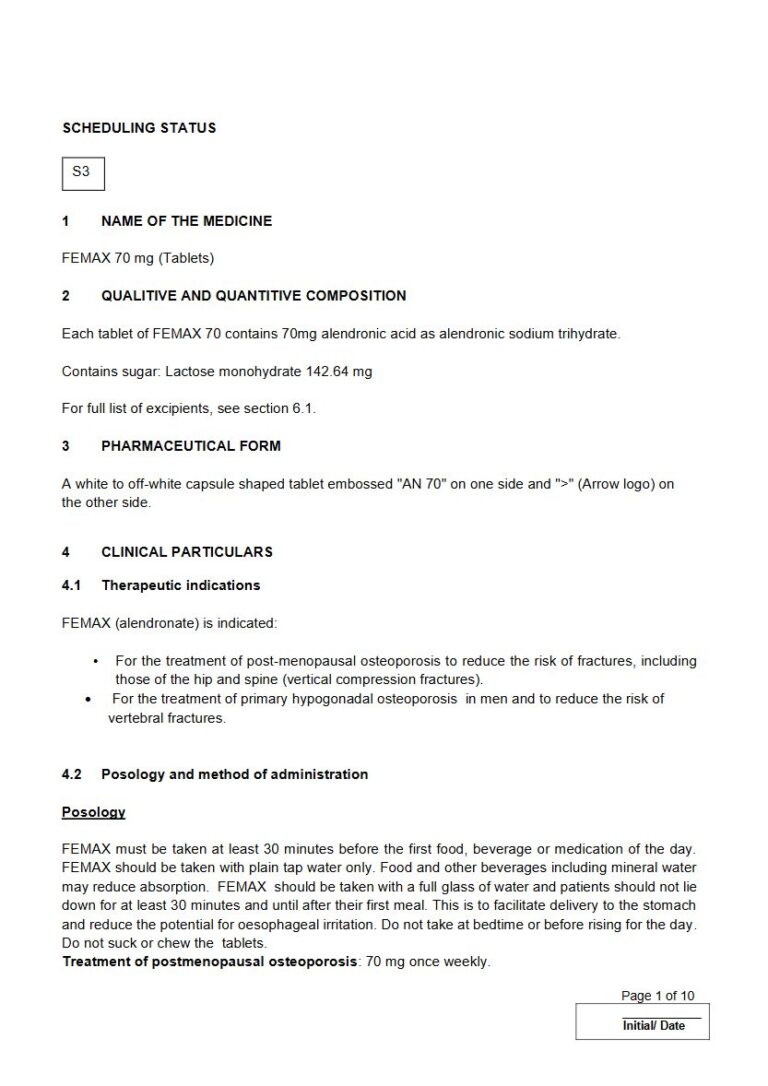
FEMAX (alendronate) is indicated:
- For the treatment of post-menopausal osteoporosis to reduce the risk of fractures, including those of the hip and spine (vertical compression fractures).
- For the treatment of primary hypogonadal osteoporosis in men and to reduce the risk of vertebral fractures.
4.2 Posology and method of administration
Posology
FEMAX must be taken at least 30 minutes before the first food, beverage or medication of the day. FEMAX should be taken with plain tap water only. Food and other beverages including mineral water may reduce absorption. FEMAX should be taken with a full glass of water and patients should not lie down for at least 30 minutes and until after their first meal. This is to facilitate delivery to the stomach and reduce the potential for oesophageal irritation. Do not take at bedtime or before rising for the day. Do not suck or chew the tablets.
Treatment of postmenopausal osteoporosis: 70 mg once weekly.
Treatment of primary/hypogonadal osteoporosis in men: 70 mg once weekly. Patients should receive supplemental calcium and vitamin D if dietary intake is inadequate (see Special warnings and precautions for use).
Special populations
Elderly population: No dosage adjustment is necessary in the elderly.
Renal impairment: No dosage adjustment in patients with mild to moderate renal impairment (creatinine clearance 35 u2013 60 ml/min).
Method of administration
For oral use.
4.3 Contraindications
- Hypersensitivity to alendronate or any other component of the product
- Abnormalities of the oesophagus that delay oesophageal emptying such as stricture or achalasia (an oesophageal motility disorder)
- Inability to stand or sit upright for at least 30 minutes.
- Severe renal insufficiency (creatinine clearance< 35 ml/minute)
- Hypocalcaemia (see Special warnings and precautions for use)
- Pregnancy and lactation
- Paediatrics
4.4 Special warnings and precautions for use
- Fractures of the subtrochanteric and proximal shaft of the femur with minimal trauma (a fall from a standing height) after prolonged use (see Special warnings and precautions for use)
- Potential for oesophageal neoplastic change
Special Precautions
Low energy fractures of the femur
Low-energy fractures of the subtrochanteric and proximal femoral shaft have been reported in long-term (usually longer than three years) bisphosphonate-treated patients. Some were stress fractures (some of which were reported as insufficiency fractures) occurring in the absence of apparent trauma. Some patients experienced prodromal pain in the affected area, often associated with imaging features of stress fracture, weeks to months before a complete fracture occurred. Approximately one third of these fractures were bilateral; therefore the contralateral femur should be examined in patients who have sustained a femoral shaft stress fracture. Biphosphonate therapy in patients with stress fractures should be discontinued.
FEMAX can cause local irritation to the mucous membrane in the upper part of the gastrointestinal tract. As there is a risk of worsening of the underlying disease, caution should be observed if FEMAX is given to patients with active upper gastrointestinal tract problems, such as dysphagia, oesophageal disease (including known Barretu2019s oesophagus), gastritis, duodenitis or ulcers, or in cases of recent (during the last year) severe gastrointestinal disease such as gastric ulcer, active gastrointestinal bleeding or surgery in the upper gastrointestinal tract other than pyloroplasty.
Oesophageal side effects (in some cases severe and requiring hospitalisation) such as oesophagitis, oesophageal ulcers or oesophageal erosions, in rare cases followed by oesophageal stricture, have been reported in patients receiving treatment with alendronate as in FEMAX. The medical practitioner should therefore be alert to any signs or symptoms of possible oesophageal reaction. Patients should be instructed to discontinue FEMAX and seek medical attention if they develop symptoms of oesophageal irritation such as dysphagia, pain on swallowing, retrosternal pain or new/worsened heartburn. The risk of severe oesophageal side effects is thought to be greater in patients who do not take FEMAX correctly and/or continue to take FEMAX tablets after developing symptoms indicative of oesophageal irritation. It is very important that complete administration instructions are given to, and understood, by the patient (see *below and Dosage and directions for use). Patients should be informed that the risk of oesophageal problems may increase if they do not follow these instructions.
There have been post-marketing reports of gastric and duodenal ulcers, some of them severe and with complications. A causal connection cannot be excluded (see Undesirable effects).
Hypocalcaemia must be corrected before initiating therapy with FEMAX (see Contraindications). Other disturbances of mineral metabolism (such as vitamin D deficiency) should also be effectively treated.
Causes of osteoporosis other than oestrogen deficiency, aging and glucocorticoid use should be investigated.
*To facilitate delivery to the stomach and thus minimise the risk of oesophageal reactions, patients should be instructed to swallow the tablets whole with a full glass of water, in an upright position (standing or sitting).
Tablets should be taken on rising for the day, on an empty stomach, at least 30 minutes before breakfast and any other medication. Patients should remain upright after taking the tablets and should not lie down before eating the first meal of the day. Patients should be instructed to not suck or chew the tablets because of a potential for orophyryngeal ulceration. Patients should be informed that failure to follow these instructions may increase their risk of oesophageal problems. Patients should be instructed that if they develop symptoms of oesophageal disease (such as difficulty or pain upon swallowing, retrosternal pain or new or worsening heartburn) they should stop taking FEMAX and consult their medical practitioner.
Since NSAID use is associated with gastrointestinal irritation, caution is advised with the concomitant use of FEMAX and NSAIDs.
Localised osteonecrosis of the jaw (ONJ), generally associated with tooth extraction and/or local infection (including osteomyelitis) with delayed healing, has been reported with oral bisphosphonates (see SIDE UNDESIRABLE EFFECTS). Most reported cases of bisphosphonates-associated ONJ have been in cancer patients treated with intravenous bisphosphonates. Known risk factors for ONJ include a diagnosis of cancer, concomitant therapies (e.g., chemotherapy, radiotherapy, corticosteroids), poor oral hygiene, and co-morbid disorders (e.g., periodontal and/or other pre-existing dental disease, anaemia, coagulopathy, infection and smoking). Patients who develop ONJ should receive appropriate care by dental practitioner and discontinuation of bisphosphonate therapy should be considered based on individual benefit/risk assessment. Dental surgery may exacerbate the condition. For patients requiring invasive dental surgery (e.g. tooth extraction, dental implants), clinical judgement of the prescribing medical practitioner and treating dental practitioner should guide the management plan, including FEMAX treatment, of each patient based on individual benefit/risk assessment.
Bone, joint, and/or muscle pain has been reported in patients taking bisphosphonates. In post-marketing experience, these symptoms have been severe and/or incapacitating (see SIDE UNDESIRABLE EFFECTS). The time to onset of symptoms varied from one day to several months after starting treatment. Most patients had relief of symptoms after stopping treatment. A subset had recurrence of symptoms when rechallenged with the same medicine or another bisphosphonate.
Milk or antacids should be administered to bind the alendronate. Due to the risk of oesophageal irritation, vomiting should not be induced and the patient should remain upright (sitting or standing).
Lactose warning: FEMAX contains lactose monohydrate which may have an effect on the glycaemic control of patients with diabetes mellitus. FEMAX contains lactose. Patients with the rare hereditary conditions of galactose intolerance e.g. galactosaemia, Lapp lactase deficiency, glucose-galactose malabsorption or fructose intolerance should not take FEMAX.
4.5 Interaction with other medicines and other forms of Interaction
Concomitant administration of calcium supplements, iron or magnesium, including antacids and mineral supplements and some osmotic laxatives, will interfere with the absorption of FEMAX. Patients must wait at least 30 minutes after taking FEMAX before taking any other oral medication.
4.6 Fertility, pregnancy and lactation
Women of childbearing potential/ Contraception in males and females
No information available.
Pregnancy
FEMAX should not be administered to pregnant women (see Contraindications).
Breastfeeding
FEMAX should not be administered to lactating women (see Contraindications).
Fertility
No information available.
4.7 Effects on ability to drive and use machines
There are no data to suggest that FEMAX 70 mg affects the ability to drive or use machines.
4.8 Undesirable effects
Tabulated list of adverse reactions
Body System Undesirable effect Frequent Less frequent Frequency not known
Immune system disorders: Hypersensitivity reactions including urticaria and angio-oedema
Metabolism and nutrition disorders: Symptomatic hypocalcaemia generally in association with predisposing conditions
Nervous system disorders: Headache Dizziness Vertigo Dysgeusia
Eye disorders: Uveitis Scleritis Episcleritis Diplopia with conjunctival swelling Eyelid oedema Non-specific conjunctivitis Blurred vision
Cardiac disorders: Increased risk of arterial fibrillation
Gastrointes- tinal disorders: Abdominal pain Dyspepsia Constipation Diarrhoea Flatulence Oesophageal ulcer Dysphagia Abdominal distention Acid regurgitation Oesophageal stricture Nausea Gastritis Melaena Oropharyngeal ulceration Gastric or duodenal ulcers Oesophageal erosions Peptic ulceration Oesophagitis Oesophageal perforations
Hepato- biliary disorders: Hepatitis
Skin and subcutaneo us tissue disorders: Rash Erythema Pruritus Isolated cases of severe skin reactions including Stevens-Johnson syndrome and toxic epidermal necrolysis Skin rash with photosensitivity Toxic epidermal necrolysis
Musculoske- letal, connective tissue and bone disorders: Bone, muscle and joint pain Joint swelling Localised osteonecrosis of the jaw, generally associated with tooth extraction and/or local infection, with delayed healing Low-energy femoral shaft fracture
General disorders and administra- tive site conditions: Transient symptoms as in acute phase response (myalgia, malaise, asthenia and rarely fever), usually in association with initiation of treatment, peripheral oedema.
Laboratory values: In clinical trials, asymptomatic, slight transient decreases in serum calcium and serum phosphate were observed. Reductions in serum calcium < 2,0 mmol/l and serum phosphate to u2264 0,65 mmol/l were seen in clinical trials.
Reporting of suspected adverse reactions
Reporting suspected adverse reactions after authorisation of the medicine is important. It allows continued monitoring of the benefit/risk balance of the medicine. Healthcare professionals are asked to report any suspected adverse reactions to SAHPR A via the u201cReport Drug Reaction Processu201d, found online under SAHPRAu2019s safety publications: https://www.sahpra.org.za/
4.9 Overdose
No specific information is available on the treatment of overdose of alendronate. Hypocalcaemia, hypophosphataemia and upper gastrointestinal side effects such as upset stomach, heartburn, oesophagitis, gastritis or ulcer may result from an oral overdosage. Milk or antacids, should be given to bind alendronate. Due to the risk of oesophageal irritation, vomiting should not be induced and the patient should remain fully upright.
