
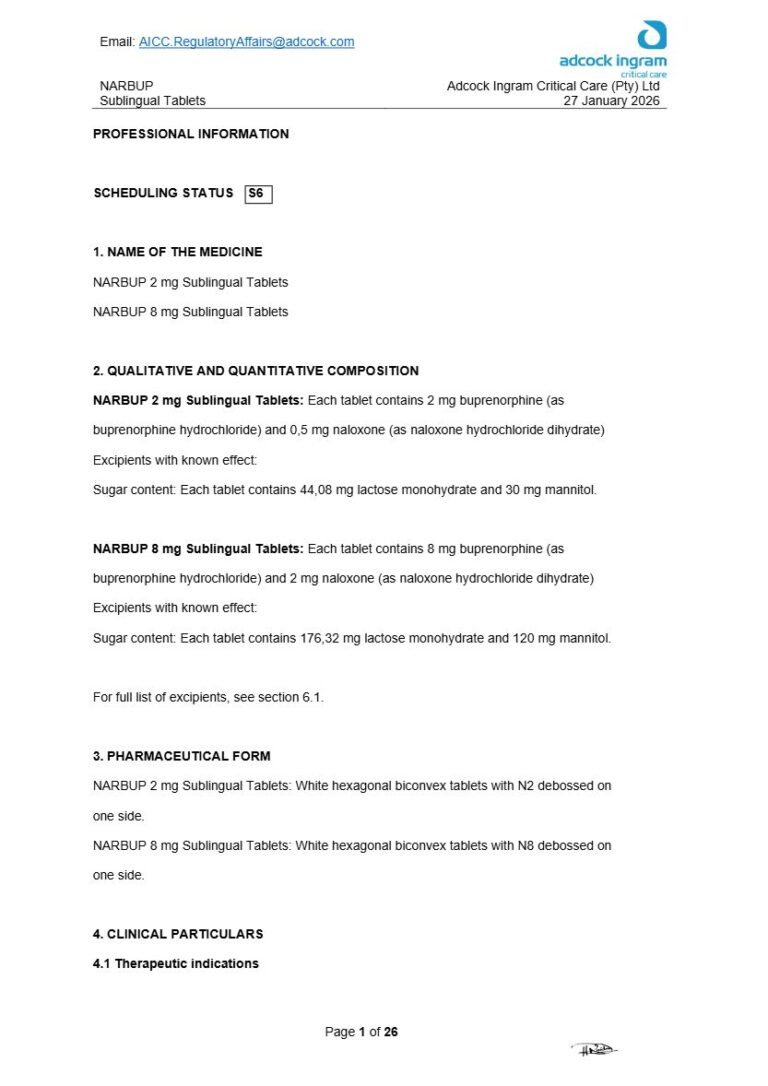
Narbup 8 Mg/2 mg Tablets
PDF Leaflet Revision Date: 27 January 2026
Clinical Summary
Quick overview from the medicine insert
Indication
Substitution treatment for opioid drug dependence.
Dosage (summary)
Starting dose: 1-2 tablets of NARBUP 2 mg/0.5 mg; max daily dose: 24 mg.
Special Populations
- Elderly
- Hepatic impairment
- Renal impairment
Pregnancy & Breastfeeding
Not recommended during pregnancy; breastfeeding should be discontinued.
Key Drug Interactions
- Benzodiazepines
- CNS depressants
- Serotonergic agents
- CYP3A4 inhibitors/inducers
Contraindications
- Hypersensitivity to buprenorphine or naloxone
- Severe respiratory insufficiency
- Severe hepatic insufficiency
- Acute alcoholism
Common side effects
- Withdrawal symptoms
- Constipation
- Nausea
- Dizziness
- Sweating
Counselling Points
- Use only as prescribed.
- Avoid alcohol and CNS depressants.
- Monitor for signs of withdrawal or overdose.
Serious warnings
- Risk of respiratory depression
- Potential for misuse and dependence
- Caution in patients with compromised respiratory function
Important Disclaimer
The Narbup 8 Mg/2 mg Tablets professional information leaflet below is the property of Adcock Ingram Critical Care and is provided on Medinsert exactly as issued, with no.. alterations or editorial changes. We make every effort to keep content current by updating documents as soon as new versions become available. Medinsert serves as a trusted access point for healthcare professionals, but does not replace official sources or clinical judgement. For more details, please read our full disclaimer. read more>>
 Healthcare Professionals Only
This content is for registered healthcare professionals
Sign in or create a free account to read the full package insert.
Free for HPCSA-registered professionals. Powered by Medinsert.
Clinical Particulars
Section 4 of the official insert — extracted exactly as issued, no alterations
4.1 Therapeutic indications
Substitution treatment for opioid drug dependence, within a framework of medical, social and psychological treatment. The intention of the naloxone component is to deter intravenous misuse. NARBUP is indicated in adults and adolescents over 15 years of age who have agreed to be treated for addiction.
4.2 Posology and method of administration
Posology Each NARBUP sublingual tablet contains buprenorphine and naloxone. NARBUP containing 2 mg buprenorphine and 0,5 mg naloxone is referred to as the u201c2 mgu201d tablets. NARBUP containing 8 mg buprenorphine and 2 mg naloxone is referred to as the u201c8 mgu201d tablets.
Physicians must warn patients that the sublingual route is the only effective and safe route of administration for this medicinal product (see section 4.4). NARBUP sublingual tablets are to be placed under the tongue until dissolved, which usually requires 5 to 10 minutes. The dose is made up from NARBUP 2 mg/0,5 mg and NARBUP 8 mg/2 mg sublingual tablets, which may be taken all at the same time or in two divided portions; the second portion to be taken directly after the first portion has dissolved.
Adults: Baseline liver function tests and documentation of viral hepatitis status is recommended prior to commencing therapy. Patients who are positive for viral hepatitis, on concomitant medicines (see section 4.5) and/or have existing liver dysfunction are at risk of accelerated liver injury. Regular monitoring of liver function is recommended (see section 4.4).
Induction: Prior to treatment induction, consideration should be given to the type of opioid dependence (i.e. long or short-acting opioid), the time since the last opioid use and the degree of opioid dependence.
To avoid precipitating withdrawal, induction with NARBUP or buprenorphine only tablets should be undertaken when objective and clear signs of withdrawal are evident.
Initiation therapy: The recommended starting dose is one to two tablets of NARBUP 2 mg/0,5 mg sublingual tablets. An additional one to two tablets of NARBUP 2 mg/0,5 mg sublingual tablets may be administered on day one depending on the individual patientu2019s requirements.
- Opioid-dependent drug addicts who have not undergone withdrawal: When treatment starts, the first dose of NARBUP should be taken when signs of withdrawal appear, but not less than 6 hours after the patient last used the opioids (e.g. heroin; short acting opioids).
- Patients receiving methadone: Before beginning NARBUP therapy, the dose of methadone should be reduced to a maximum of 30 mg/day. The first dose of NARBUP should be taken when the signs of withdrawal appear, but not less than 24 hours after the patient last used methadone. Buprenorphine may precipitate symptoms of withdrawal in patients dependent on methadone.
Dosage adjustment and maintenance: The dose of NARBUP should be increased progressively according to the clinical effect of the individual patient and should not exceed a maximum single daily dose of 24 mg. The dosage is titrated according to reassessment of the clinical and psychological status of the patient and should be made in steps of 2 to 8 mg.
During the initiation of treatment, daily dispensing of NARBUP is recommended. After stabilisation, a reliable patient may be given a supply of NARBUP sufficient for several days of treatment. It is recommended that the amount of NARBUP be limited to 7 days or according to local requirements.
Less than daily dosing: In some patients, after a satisfactory stabilisation has been achieved, the frequency of NARBUP dosing may be decreased to 3 times a week (for example on Monday, Wednesday and Friday). The dose on Monday and Wednesday should be twice the individually titrated daily dose, and the dose on Friday should be three times the individually titrated daily dose, with no dose on the intervening days. For example, a patient stabilised to receive a daily dose of 8 mg may be given 16 mg on alternate days, with no medication on the intervening days. However, the dose given on any one day should not exceed 24 mg. Patients requiring a titrated daily dose > 8 mg/day may not find this regimen adequate.
Dosage reduction and termination of treatment: After a satisfactory stabilisation has been achieved, if the patient agrees, the dosage may be reduced gradually to a lower maintenance dose; in some favourable cases, treatment may be discontinued. The availability of the sublingual tablet in doses of 2 mg and 8 mg, allows for a downward titration of the dosage. Patients should be monitored following termination of buprenorphine treatment because of the potential for relapse.
Special populations
Elderly The safety and efficacy of NARBUP in elderly patients over 65 years of age has not been established.
Patients with impaired hepatic function The effects of hepatic impairment on the pharmacokinetics of buprenorphine and naloxone were evaluated in a post-marketing study. Since both active medicines are extensively metabolised, the plasma levels were found to be higher in patients with moderate and severe hepatic impairment compared with healthy subjects. Patients should be monitored for signs and symptoms of precipitated opioid withdrawal, toxicity or overdose caused by increased levels of naloxone and/or buprenorphine. As NARBUP pharmacokinetics may be altered in patients with hepatic insufficiency, lower initial doses and careful dose titration in patients with mild to moderate hepatic impairment are recommended (see section 5).
Patients with impaired renal function Modification of the NARBUP dose is not required in patients with renal insufficiency. Caution is recommended when dosing patients with severe renal impairment (CLcr < 30 ml/min) (see section 5).
Paediatric population NARBUP is not recommended for use in children below age 15 years due to lack of data on safety and efficacy.
Method of administration Administration is sublingual. Treatment must be under the supervision of a physician experienced in the management of opiate dependence/addiction.
4.3 Contraindications
NARBUP is contraindicated in the following instances:
- hypersensitivity to buprenorphine, to naloxone, or to any of the excipients,
- severe respiratory insufficiency,
- severe hepatic insufficiency,
- acute alcoholism or delirium tremens.
4.4 Special warnings and precautions for use
Due to the lack of data in adolescents (age 15 to < 18 years), NARBUP should be used only with caution in this age group. Patients should be closely monitored during the switching period from buprenorphine or methadone to NARBUP since withdrawal symptoms have been reported.
Diversion: Diversion refers to the introduction of buprenorphine into the illicit market either by patients or by individuals who obtain the medicinal product through theft from patients or pharmacies. This diversion may lead to new drug dependent individuals using buprenorphine as the primary drug of abuse, with the risks of overdose, spread of blood borne viral infections, respiratory depression and hepatic injury. Sub-optimal treatment with NARBUP may prompt misuse by the patient, leading to overdose or treatment dropout. A patient who is under-dosed with NARBUP may continue responding to uncontrolled withdrawal symptoms by self-medicating with opioids, alcohol or other sedative-hypnotics such as benzodiazepines.
To minimise the risk of misuse, abuse and diversion, appropriate precautions should be taken when prescribing and dispensing NARBUP such as avoiding prescribing multiple refills early in treatment, and conducting patient follow-up visits with clinical monitoring that is appropriate to the patient's level of stability.
Because the naloxone in the combination tablet precipitated immediate and intense withdrawal symptoms in individuals dependent on heroin, methadone, or other opioid full agonists, NARBUP is expected to be less likely to be diverted for intravenous use. Patients dependent upon concomitant CNS-active substances, including alcohol, should not be treated with the increased doses required by the less-than-daily dosing regimen intended for use in a supervised dose setting. Patients with sporadic use of concomitant non-opioid medications should be monitored closely, and all patients dosed on a less-than-daily basis should be observed for at least 1,5 hours following the first multi-dose administration initiating less-than-daily dosing or whenever treated with doses higher than 48 mg.
Sleep-related breathing disorders: Opioids can cause sleep-related breathing disorders including central sleep apnoea (CSA) and sleep related hypoxemia. Opioid use increases the risk of CSA in a dose-dependent fashion. In patients who present with CSA, consider decreasing the total opioid dosage.
Respiratory Depression: A number of cases of death due to respiratory depression have been reported, particularly when NARBUP was used in combination with benzodiazepines (see section 4.5), when high dose NARBUP was administered to non-opioid dependent individuals who had not developed a tolerance to the effects of opioids or when NARBUP was not used according to the prescribing information. Deaths have been reported in association with concomitant administration of NARBUP and other CNS depressants such as alcohol or other opioids. NARBUP may cause severe, possibly fatal, respiratory depression in children who accidentally ingest it. Protect children against exposure. NARBUP should be used with caution in patients with compromised respiratory function (e.g. chronic obstructive pulmonary disease, asthma, cor pulmonale, decreased respiratory reserve, hypoxia, hypercapnia, pre-existing respiratory depression, or kyphoscoliosis). Patients with the physical and/or pharmacological risk factors above should be monitored, and dose reduction may be considered.
CNS depression: NARBUP may cause drowsiness, particularly when used together with alcohol or other central nervous system depressants (such as benzodiazepines, tranquilisers, sedatives or hypnotics) (see sections 4.5 and 4.7).
Risk from concomitant use of sedative medicines such as benzodiazepines or related drugs: Concomitant use of NARBUP and sedative medicines such as benzodiazepines or related medicines may result in sedation, respiratory depression, coma and death. Because of these risks, concomitant prescribing with these sedative medicines should be reserved for patients for whom alternative treatment options are not possible. If a decision is made to prescribe NARBUP concomitantly with sedative medicines, the lowest effective dose should be used, and the duration of treatment should be as short as possible. The patients should be followed closely for signs and symptoms of respiratory depression and sedation. In this respect, it is strongly recommended to inform patients and their caregivers to be aware of these symptoms (see section 4.5).
Serotonin syndrome: Concomitant administration of NARBUP and other serotonergic agents, such as MAO inhibitors, selective serotonin re-uptake inhibitors (SSRIs), serotonin norepinephrine re-uptake inhibitors (SNRIs) or tricyclic antidepressants may result in serotonin syndrome, a potentially life-threatening condition (see section 4.5). If concomitant treatment with other serotonergic medicines is clinically warranted, careful observation of the patient is advised, particularly during treatment initiation and dose increases. Symptoms of serotonin syndrome may include mental-status changes, autonomic instability, neuromuscular abnormalities, and/or gastrointestinal symptoms. If serotonin syndrome is suspected, a dose reduction or discontinuation of therapy should be considered depending on the severity of the symptoms.
Dependence: Buprenorphine is a partial agonist of the u03bc-opiate receptor and chronic administration produces dependence of the opioid type. Studies in animals, as well as clinical experience, have demonstrated that buprenorphine may produce dependence but at a lower level than morphine. Discontinuation of treatment may result in a withdrawal syndrome that may be delayed.
Hepatitis, hepatic events: Cases of acute hepatic injury have been reported in opioid-dependent patients both in clinical trials and in post-marketing adverse event reports. The spectrum of abnormalities ranges from transient asymptomatic elevations in hepatic transaminases to case reports of cytolytic hepatitis, hepatic failure, hepatic necrosis, hepatorenal syndrome and hepatic encephalopathy and death. In many cases the presence of pre-existing mitochondrial impairment (genetic disease, liver enzyme abnormalities, viral infection such as hepatitis B and chronic hepatitis C, alcohol abuse, anorexia, concomitant use of other potentially hepatotoxic medicines, or ongoing drug use by injection) may have a causative or contributory role. Patients who are positive for viral hepatitis, on concomitant medicinal products (see section 4.5) and/or have existing liver dysfunction are at greater risk of liver injury, and these underlying factors must be taken into consideration before prescribing NARBUP and during treatment (see section 4.2). When a hepatic event is suspected, further biological and etiological evaluation is required. Depending upon these findings, the medicinal product may be discontinued cautiously so as to prevent withdrawal symptoms and to prevent return to illicit drug use. If the drug treatment is continued, hepatic function should be monitored closely.
Precipitated withdrawal: When initiating treatment with buprenorphine, it is important to be aware of the partial agonist profile of buprenorphine and that it can precipitate withdrawal in opioid-dependent patients particularly if administered less than 6 hours after the last use of heroin or other short acting opioid, or if administered less than 24 hours after the last dose of methadone (see section 4.2). Conversely withdrawal symptoms may also be associated with suboptimal dosing.
Hepatic impairment: The effects of hepatic impairment on the pharmacokinetics of buprenorphine and naloxone were evaluated in a post-marketing study. Since both buprenorphine and naloxone are extensively metabolized, plasma levels were found to be higher for both buprenorphine and naloxone in patients with moderate and severe hepatic impairment which may require dose adjustments. Patients should be monitored for signs and symptoms of precipitated opioid withdrawal, toxicity or overdose caused by increased levels of naloxone and/or buprenorphine. NARBUP Sublingual Tablets should be used with caution in patients with moderate to severe hepatic impairment (see section 5).
Renal impairment: Renal elimination plays a relatively small role in the overall clearance of buprenorphine; therefore, no dose modification based on renal function is generally required. Metabolites of buprenorphine accumulate in patients with renal failure. Caution is recommended when dosing patients with severe renal impairment (CLcr <30 ml/min) (see section 4.2 and section 5).
Allergic reactions: Cases of acute and chronic hypersensitivity to buprenorphine have been reported both in clinical trials and in the post-marketing experience. The most common signs and symptoms include rashes, urticaria, and pruritus. Cases of bronchospasm, angioedema, and anaphylactic shock have been reported. A history of hypersensitivity to buprenorphine or naloxone is a contraindication to NARBUP use.
General opioid class warnings:
- Opioids may produce orthostatic hypotension in ambulatory patients.
- Opioids may elevate cerebrospinal fluid pressure, which may cause seizures, so opioids should be used with caution in patients with head injury, intracranial lesions, in other circumstances where cerebrospinal pressure may be increased, or in patients with a history of seizure.
- Opioid-induced miosis, changes in the level of consciousness, or changes in the perception of pain as a symptom of disease and may interfere with patient evaluation or obscure the diagnosis or clinical course of concomitant disease.
- Opioids should be used with caution in patients with myxoedema, hypothyroidism, or adrenal cortical insufficiency (e.g. Addison's disease).
- Opioids should be used with caution in patients with toxic psychoses, acute alcoholism, or delirium tremens.
- Opioids should be used with caution in patients with hypotension, prostatic hypertrophy or urethral stricture.
- Opioids have been shown to increase intracholedochal pressure, and should be used with caution in patients with dysfunction of the biliary tract.
- Opioids should be administered with caution to elderly or debilitated patients.
Athletes must be aware that this medicine may cause a positive reaction to u2018anti-dopingu2019 tests. The concomitant use of monoamine oxidase inhibitors (MAOI) might produce exaggeration of the effects of opioids, based on experience with morphine. Excipients: NARBUP contains lactose. Patients with the rare hereditary conditions of galactose intolerance e.g., galactosaemia, Lapp lactase deficiency, glucose-galactose malabsorption or fructose intolerance should not take this medicine. This medicine contains less than 1 mmol sodium (23 mg) per tablet, that is to say essentially 'sodium-free'.
4.5 Interaction with other medicines and other forms of interaction
NARBUP should not be taken together with alcoholic drinks or medications containing alcohol as alcohol increases the sedative effect of buprenorphine (see section 4.4). NARBUP should be used cautiously when co-administered with:
- Benzodiazepines: The concomitant use of opioids with sedative medicines such as benzodiazepines or related medicines increases the risk of sedation, respiratory depression, coma and death because of additive CNS depressant effect. Therefore, dosages must be limited and this combination must be avoided in cases where there is a risk of misuse (see section 4.4). Patients should be warned that it is extremely dangerous to self-administer non-prescribed benzodiazepines while taking this product, and should also be cautioned to use benzodiazepines concurrently with this product only as prescribed (see section 4.4).
- Other central nervous system depressants, other opioid derivatives (e.g. methadone, analgesics and antitussives), certain antidepressants, sedative H1-receptor antagonists, barbiturates, anxiolytics other than benzodiazepines, neuroleptics, clonidine and related substances. These combinations increase central nervous system depression. The reduced level of alertness can make driving and using machines hazardous.
- Opioid analgesics: The analgesic properties of other opioids such as methadone and level III analgesics may be reduced in patients receiving treatment with NARBUP for opioid dependence. Adequate analgesia may be difficult to achieve when administering a full opioid agonist in patients receiving NARBUP. Conversely, the potential for overdose should be considered with higher than usual doses of full agonist opioids, such as methadone or level III analgesics, especially when attempting to overcome buprenorphine partial agonist effects, or when buprenorphine plasma levels are declining.
- Patients with a need for analgesia and opioid dependence treatment may be best managed by multidisciplinary teams that include both pain and opioid dependence treatment specialists (see section 4.4).
- Serotonergic medicinal products, such as MAO inhibitors, selective serotonin re-uptake inhibitors (SSRIs), serotonin norepinephrine re-uptake inhibitors (SNRIs) or tricyclic antidepressants as the risk of serotonin syndrome, a potentially life-threatening condition, is increased (see section 4.4).
- Naltrexone: Naltrexone is an opioid antagonist that can block the pharmacological effects of buprenorphine. For opioid dependent patients currently receiving NARBUP treatment, the naltrexone antagonist may precipitate a sudden onset of prolonged and intense opioid withdrawal symptoms. For patients currently receiving naltrexone treatment, the intended therapeutic effects of NARBUP administration may be blocked by the naltrexone antagonist.
- CYP3A4 inhibitors: An interaction study of buprenorphine with ketoconazole (a potent inhibitor of CYP3A4) resulted in an increased Cmax and AUC (area under the curve) of buprenorphine (approximately 50 % and 70% respectively) and, to a lesser extent, of norbuprenorphine. Patients receiving NARBUP should be closely monitored, and may require dose-reduction if combined with potent CYP3A4 inhibitors (e.g. protease inhibitors like ritonavir, nelfinavir or indinavir, macrolide antibiotics or azole antifungals such as ketoconazole or itraconazole).
- CYP3A4 inducers: Concomitant use of CYP3A4 inducers with buprenorphine may decrease buprenorphine plasma concentrations, potentially resulting in under-treatment of opioid dependence with buprenorphine. Therefore it is recommended that patients receiving NARBUP should be closely monitored if inducers (e.g. phenobarbital, carbamazepine, phenytoin, rifampicin) are co-administered, and the dose of buprenorphine or CYP3A4 inducer may need to be adjusted accordingly.
To date, no notable interaction has been observed with cocaine, the agent most frequently used by multi-drug abusers in association with opioids.
4.6 Fertility, pregnancy and lactation
Pregnancy There is very limited experience with NARBUP in pregnant women. Studies in animals have shown reproductive toxicity. The potential risk for humans is unknown. Towards the end of pregnancy high doses of buprenorphine may produce respiratory depression in the neonate even after a short period of administration. Long-term administration of buprenorphine during the last three months of pregnancy may cause a withdrawal syndrome (e.g. hypertonia, neonatal tremor, neonatal agitation, myoclonus, or convulsions) in the neonate. The syndrome is generally delayed for several hours to several days after birth. Due to the long half-life of buprenorphine, neonatal monitoring for several days should be considered at the end of pregnancy to prevent the risk of respiratory depression or withdrawal syndrome in neonates. NARBUP should not be used during pregnancy. In case pregnancy occurs while on NARBUP treatment, the mother and the unborn child should be closely monitored and switched to buprenorphine if further treatment is required.
Breastfeeding It is unknown whether naloxone is excreted in human breast milk. Buprenorphine and its metabolites are excreted in human breast milk. In rats buprenorphine has been found to inhibit lactation. Therefore, breast-feeding should be discontinued during treatment with NARBUP.
Fertility No data on male and female fertility is available.
4.7 Effects on ability to drive and use machines
In general NARBUP has minor to moderate influence on the ability to move safely in traffic, use machines, or perform other hazardous activities. NARBUP may cause drowsiness, dizziness, or impaired thinking, particularly when taken together with alcohol or central nervous system depressants. Therefore, caution is advised when performing the above-mentioned activities (see section 4.4 and section 4.5).
4.8 Undesirable effects
a. Summary of the safety profile Clinical Trial Data: The most common treatment related undesirable effects reported during clinical studies with NARBUP were those related to withdrawal symptoms (e.g. abdominal pain, diarrhoea, muscle aches, anxiety, sweating). In the pivotal clinical study of NARBUP, 342 of 472 patients (72,5 %) reported treatment related adverse events. These reactions are listed in Table 1 by system, organ class and frequency. Within each frequency grouping, undesirable effects are presented in order of decreasing seriousness.
b. Tabulated summary of adverse reactions System organ class Frequency Adverse Event Infections and infestations Common Infection Uncommon Vaginitis Blood and lymphatic system disorders Uncommon Anaemia, thrombocytopenia, leucopenia, Lymphadenopathy, leukocytosis Immune system disorders Uncommon Allergic reaction Metabolism and Nutrition disorders Common Peripheral oedema, weight decreased Uncommon Hyperglycaemia, hyperlipemia, hypoglycaemia Psychiatric disorders Common Anxiety, nervousness, depression, libido decreased, thinking abnormal Uncommon Drug dependence, amnesia, hostility; speech disorder, depersonalisation, abnormal dreams, apathy, euphoria Nervous System disorders Very common Insomnia Common Somnolence, dizziness, paresthesia, hypertonia Convulsion, agitation, tremor, hyperkinesia Eye disorders Common Lacrimation disorder, amblyopia Uncommon Miosis, conjunctivitis Cardiac disorders Uncommon Myocardial infarction, angina pectoris, palpitation, tachycardia, bradycardia Vascular disorders Common Vasodilation, hypertension, migraine Uncommon Hypotension, heat stroke Respiratory thoracic and mediastinal disorders Common Rhinitis, pharyngitis, cough increased Uncommon Dyspnoea, asthma, yawn Gastrointestinal disorders Very common Constipation, nausea Common Vomiting, dyspepsia, diarrhoea, anorexia, flatulence Uncommon Ulcerative stomatitis, tongue discolouration Hepatobiliary system disorders Common Liver function abnormal Skin and subcutaneous tissue disorders Very common Sweating Common Rash, pruritis, urticaria Uncommon Exfoliative dermatitis, acne, skin nodule, alopecia, dry skin Musculoskeletal, connective tissue and bone disorders Common Arthralgia, myalgia, leg cramps Uncommon Arthritis Renal and urinary system disorders Common Albuminuria, urine abnormality Uncommon Haematuria, kidney calculus, increased creatinine, urinary tract infection, dysuria, urinary retention Reproductive system and breast disorders Uncommon Impotence, amenorrhoea, abnormal ejaculation, menorrhagia, metrorrhagia General disorders and administrative site conditions Very common Withdrawal syndrome, headache Common Asthenia, fever, flu syndrome, malaise, accidental injury, chills, chest pain, abdominal pain, back pain, pain Injury, poisoning and procedural complications Uncommon Hypothermia
Post-Marketing Data: Table 2 lists the most commonly reported adverse reactions reported during post-marketing surveillance. Events occurring in at least 1 % of reports by healthcare professionals and considered to be at least possibly related to treatment are included. Table 2 : Spontaneous adverse drug reactions collected through post-marketing surveillance reported by body system System Organ Class Preferred term Psychiatric disorders Anxiety Nervous system disorders Headache Gastrointestinal disorders Nausea Vomiting Acute Pancreatitis* Skin and subcutaneous disorders Rash Urticaria Hyperhidrosis
*Frequency not known
c. Description of selected adverse reactions The following is a summary of other post-marketing adverse event reports that are considered serious or otherwise noteworthy, some of which may have only been observed with buprenorphine alone in the treatment of opioid dependence:
- In cases of drug abuse or intentional drug misuse, some adverse experiences attributed to the act of misuse rather than the medicinal product have included: local reactions, such as cellulitis or abscess that are sometimes septic, potentially serious acute hepatitis, pneumonia, endocarditis, and other serious infections (see section 4.4).
- Respiratory depression has occurred. Death due to respiratory depression has been reported, particularly when buprenorphine products were used in combination with benzodiazepines (see section 4.5), or when buprenorphine products were not used according to prescribing information. Deaths have also been reported in association with concomitant administration of buprenorphine products and other CNS depressants such as alcohol or other opioids (see section 4.4 and section 4.5).
- Hypersensitivity reactions such as bronchospasm, angioedema, or anaphylactic shock have been reported (see section 4.3).
- Transaminase increase, hepatitis, acute hepatitis, cytolytic hepatitis, jaundice, hepatorenal syndrome, hepatic encephalopathy, and hepatic necrosis have occurred (see section 4.4).
Table 2 : Spontaneous adverse drug reactions collected through post-marketing surveillance reported by body system System Organ Class Preferred term General disorders and administration site conditions Drug withdrawal syndrome Oedema peripheral Oedema
A neonatal abstinence syndrome had been reported among newborns of women who have received buprenorphine during pregnancy. The syndrome may be milder and more protracted than that from short acting full u03bc-opioid agonists. The nature of the syndrome may vary depending upon the motheru2019s drug use history (see section 4.6).
Hallucination, orthostatic hypotension, syncope, and vertigo, have been reported (see section 4.4). In patients presenting with marked drug dependence, initial administration of buprenorphine can produce a withdrawal effect similar to that associated with naloxone. Spontaneous abortion has been reported with both buprenorphine and NARBUP. It is not possible to establish a causal relationship since cases typically involve other drug use of risk factors for spontaneous abortion (see section 4.6).
Reporting of suspected adverse reactions Reporting suspected adverse reactions after authorisation of the medicine is important. It allows continued monitoring of the benefit/risk balance of the medicine. Health care providers are asked to report any suspected adverse reactions to SAHPRA via the u201c6.04 Adverse Drug Reaction Reporting Formu201d, found online under SAHPRAu2019s publications: https://www.sahpra.org.za/Publications/Index/8. For reporting of side effects directly to the HCR, contact +27 11 635 0134 or email [email protected].
4.9 Overdose
In the event of overdose, general supportive measures should be instituted, including close monitoring of respiratory and cardiac status of the patient. The major symptom requiring intervention is respiratory depression, which could lead to respiratory arrest and death. If the patient vomits, care must be taken to prevent aspiration of the vomitus.
Treatment: Symptomatic treatment of respiratory depression, and standard intensive care measures, should be implemented. A patent airway and assisted or controlled ventilation must be assured. The patient should be transferred to an environment within which full resuscitation facilities are available. Use of an opioid antagonist (i.e. naloxone) is recommended, despite the modest effect it may have in reversing the respiratory symptoms of buprenorphine compared with its effects on full agonist opioid agents. The long duration of action of NARBUP should be taken into consideration when determining the length of treatment and medical surveillance needed to reverse the effects of an overdose.
