
Septolete Cherry/ Lemon Lozenges 1,2 mg
PDF Leaflet Revision Date: 20 December 2022
Clinical Summary
Quick overview from the medicine insert
Indication
Symptomatic relief of sore throat for up to two days.
Dosage (summary)
Dissolve 1 lozenge every 4 hours, max 6 lozenges in 24 hours for adults and children over 12.
Special Populations
- Children
- Patients with rare hereditary fructose intolerance
Pregnancy & Breastfeeding
Safety in pregnancy and lactation not established.
Key Drug Interactions
- Milk reduces antimicrobial efficacy
- Surfactant anions reduce efficacy
Contraindications
- Hypersensitivity to cetylpyridinium chloride
- Known sensitivity to Septolete
- Contraindicated in children
Common side effects
- Nausea
- Vomiting
- Dyspnoea
- Asphyxia
- Angioedema
Counselling Points
- Dissolve lozenge slowly
- Do not exceed recommended dosage
- Consult doctor if symptoms persist
Serious warnings
- Severe sore throat with high fever or persistent symptoms requires medical consultation
- Do not use if open wounds in the mouth
Important Disclaimer
The Septolete Cherry/ Lemon Lozenges 1,2 mg professional information leaflet below is the property of Lhc Pharmaceuticals and is provided on Medinsert exactly as issued, with no.. alterations or editorial changes. We make every effort to keep content current by updating documents as soon as new versions become available. Medinsert serves as a trusted access point for healthcare professionals, but does not replace official sources or clinical judgement. For more details, please read our full disclaimer. read more>>
 Healthcare Professionals Only
This content is for registered healthcare professionals
Sign in or create a free account to read the full package insert.
Free for HPCSA-registered professionals. Powered by Medinsert.
Clinical Particulars
Section 4 of the official insert — extracted exactly as issued, no alterations
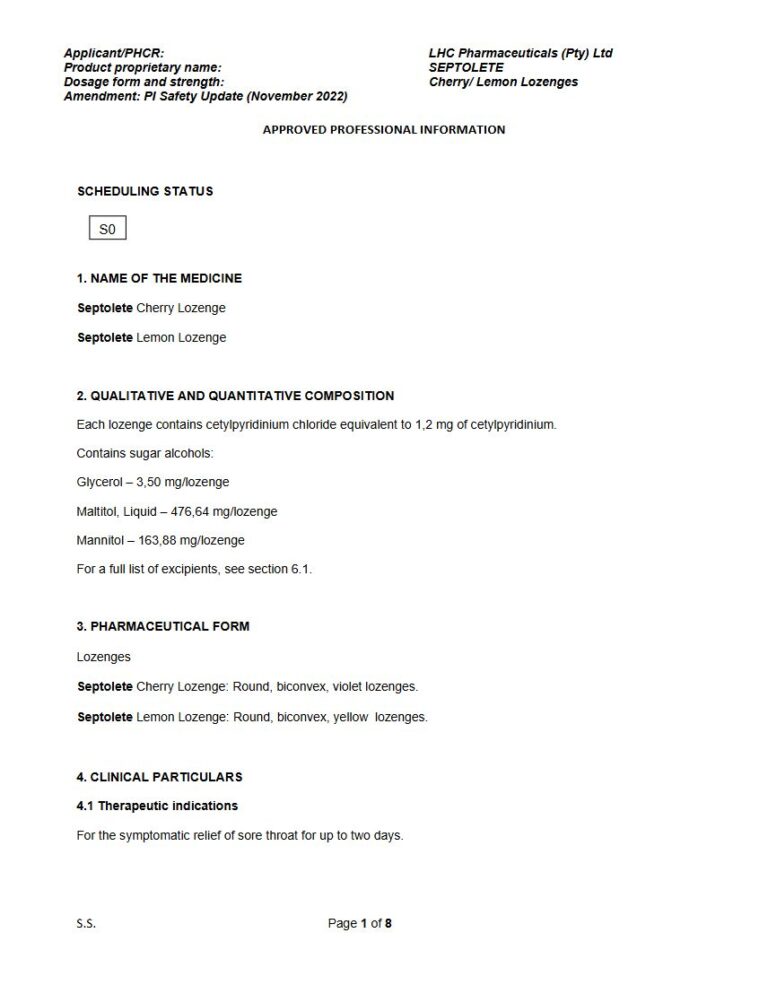
4.1 Therapeutic indications
For the symptomatic relief of sore throat for up to two days.
4.2 Posology and method of administration
Adults and children over 12 years: Dissolve one lozenge slowly in the mouth every 4 hours when necessary. Do not exceed 6 lozenges in 24 hours.
4.3 Contraindications
Hypersensitivity to cetylpyridinium chloride or any of the ingredients.
Known sensitivity to Septolete.
Contraindicated in children.
4.4 Special warnings and precautions for use
Severe sore throat or sore throat accompanied by high fever or headache or nausea and vomiting or any sore throat persisting for more than two days may be serious. In such cases, consult a doctor.
Patients should not take Septolete if they have open wounds in the mouth because cetylpyridinium chloride slows the healing of wounds.
If a patient suffers from chronic cough or hoarseness, a doctor should be consulted.
Use in Children: Insufficient evidence is available to establish safety and efficacy of Septolete in children.
Septolete lozenges contain glycerol, liquid maltitol and mannitol. Patients with rare hereditary problems of fructose intolerance should not take this medicine.
4.5 Interaction with other medicines and other forms of interaction
Septolete should not be taken together with milk because milk reduces the antimicrobial efficacy of cetylpyridinium chloride.
The use of surfactant anions (e.g. toothpaste) reduces the efficacy of cetylpyridinium chloride.
No formal interaction studies in humans have been performed.
4.6 Fertility, pregnancy and lactation
Safety in pregnancy and lactation has not been established.
4.7 Effects on ability to drive and use machines
There are no formal studies done on the effects of Septolete on the ability to drive or use machinery.
4.8 Undesirable effects
a) Tabulated summary of adverse reactions
System Organ Class Adverse Events Frequency
Gastrointestinal disorders Nausea Vomiting Frequency unknown
Respiratory, thoracic and mediastinal disorders Dyspnoea Frequency unknown
Nervous system disorders Asphyxia and depression of the central nervous system resulting in convulsions, hypotension and coma. Frequency unknown
System Organ Class Adverse Events Frequency
Skin and subcutaneous tissue disorders Angioedema Frequency unknown
Hypersensitivity reaction Less frequent
Reporting of suspected adverse reactions
Reporting suspected adverse reactions after authorisation of the medicine is important. It allows continued monitoring of the benefit/risk balance of the medicine. Health care providers are asked to report any suspected adverse reactions to SAHPRA via the u201c 6.04 Adverse Drug Reaction Reporting Form u201d, found online under SAHPRAu2019s publications: https://www.sahpra.org.za/Publications/Index/8.
4.9 Overdose
Symptoms
Overdosage may cause nausea and vomiting. It has depolarising muscle relaxant properties and toxic symptoms include dyspnoea and cyanosis due to paralysis of the respiratory muscles, possibly leading to asphyxia. Depression of the central nervous system with convulsions, hypotension and coma may occur.
Management
Treatment is symptomatic and supportive.
