
Sonke-Lamivudine+Zidovudine 150 mg, 300 mg FC tablets
PDF Leaflet Revision Date: 21 November 2022
Clinical Summary
Quick overview from the medicine insert
Indication
Treatment of HIV infection in adults and children over 12 years.
Dosage (summary)
One tablet twice daily.
Special Populations
- Renal impairment
- Hepatic impairment
- Elderly
Pregnancy & Breastfeeding
Not recommended during pregnancy; avoid breastfeeding.
Key Drug Interactions
- Avoid with ribavirin and stavudine
- Caution with trimethoprim
Contraindications
- Hypersensitivity to components
- Low neutrophil or hemoglobin counts
- Children under 12 years
Common side effects
- Neutropenia
- Anaemia
- Nausea
- Fatigue
- Rash
Counselling Points
- Monitor for signs of lactic acidosis
- Avoid alcohol
- Adhere to dosing schedule
Serious warnings
- Risk of lactic acidosis
- Hepatotoxicity
- Immune reconstitution inflammatory syndrome
Important Disclaimer
The Sonke-Lamivudine+Zidovudine 150 mg, 300 mg FC tablets professional information leaflet below is the property of Ranbaxy Pharmaceuticals and is provided on Medinsert exactly as issued, with no.. alterations or editorial changes. We make every effort to keep content current by updating documents as soon as new versions become available. Medinsert serves as a trusted access point for healthcare professionals, but does not replace official sources or clinical judgement. For more details, please read our full disclaimer. read more>>
 Healthcare Professionals Only
This content is for registered healthcare professionals
Sign in or create a free account to read the full package insert.
Free for HPCSA-registered professionals. Powered by Medinsert.
Clinical Particulars
Section 4 of the official insert — extracted exactly as issued, no alterations
4.1 Therapeutic indications
Sonke-Lamivudine+Zidovudine is indicated as part of anti-retroviral therapy for the treatment of HIV infected adults and children over 12 years of age, with progressive immunodeficiency (CD4+ Count u2264 500 cells/mm3).
Post Exposure Prophylaxis in Adults following Occupational Exposure
The best prophylaxis against occupational exposure is adherence to universal precautions including, amongst others, careful disposal of sharp objects e.g. needles and scalpels and the use of protective barriers (e.g. gloves, eyeglasses etc). Sonke-Lamivudine+Zidovudine is indicated for initial prophylactic treatment (until results of serology tests are available) in HIV negative adults whenever there has been exposure to material known to be, or strongly suspected to be, infected with HIV. This includes:
- percutaneous injury (from needles, instruments, bone fragments, etc);
- exposure of broken skin (abrasions, cuts, eczema etc);
- exposure of mucous membranes including the eye.
No randomised clinical studies on the use of Sonke-Lamivudine+Zidovudine following occupational exposure have been performed. It has been reported that a retrospective case-controlled study has concluded that the use of zidovudine for post exposure prophylaxis reduces the rate of infection. Reports have shown that the use of zidovudine and lamivudine in combination has demonstrated a greater reduction in viral load than either medicine used alone.
The addition of a protease inhibitor to the combination regimen is recommended in the following cases:
- when a large volume of inoculation has occurred;
- when the source material has a high viral titre; or
- when inoculation has occurred from a patient with HIV resistant to Sonke-Lamivudine+Zidovudine, zidovudine and/or lamivudine.
4.2 Posology and method of administration
Posology
Adults and children over the age of 12 years
The recommended dose: One tablet twice daily. Sonke-Lamivudine+Zidovudine may be administered with or without food. A medical practitioner experienced in the management of HIV infection should initiate therapy. During combination therapy with other anti-retroviral agents, the package insert of the particular agent should be consulted for information.
For situations where discontinuation of therapy with one of the active constituents of Sonke-Lamivudine+Zidovudine, or dose reduction, is necessary, separate preparations of lamivudine and zidovudine are available in tablets/capsules and oral solution.
Post Exposure Prophylaxis following Exposure:
The course of medication should be begun as soon as possible (preferably within 1 - 2 hours) after the exposure has occurred and continue until confirmation of HIV-status of source material. In cases where the source material is confirmed to be infected with HIV, it is recommended that the prophylactic course be continued for a period of 4 weeks.
The following dosing guidelines are based on the recommendations of the CDC (Centres for Disease Control) in the USA:
Duration Sonke-Lamivudine+Zidovudine Dosage
Days 1-3 1 Sonke-Lamivudine+Zidovudine tablet taken twice daily. This equates to a daily dose of 600 mg zidovudine and 300 mg lamivudine.
Days 4-28 1 Sonke-Lamivudine+Zidovudine tablet taken twice daily. This equates to a daily dose of 600 mg zidovudine and 300 mg lamivudine.
If the use of a protease inhibitor is necessary (see section 4.1) the CDC guidelines should be consulted for dosing requirements. Treatment should be discontinued as soon as the source material is confirmed not to be infected with HIV.
Special populations
Renal impairment
Due to decreased clearance in patients with renal impairment, the concentrations of lamivudine and zidovudine are elevated. Therefore, as dosage adjustment of these may be required, it is advised that separate preparations of lamivudine and zidovudine be administered to patients with reduced renal function (creatinine clearance u2264 50 ml/min). The package inserts of the separate preparations should be consulted for full details of these dosage adjustments.
Hepatic impairment
The influence of hepatic impairment on lamivudine levels has not been fully elucidated. Lamivudine clearance is largely renal. Based on preliminary safety data, no dosage adjustment is necessary. Lamivudine should be used with caution in patients with hepatomegaly or other risk factors for hepatic disease. Limited data in patients with cirrhosis suggest that accumulation of zidovudine may occur in patients with hepatic impairment because of decreased glucuronidation. Therefore, as dosage adjustments for zidovudine may be necessary, it is recommended that separate preparations of lamivudine and zidovudine be administered to patients with severe hepatic impairment. The package inserts of the separate preparations should be consulted for full details of the dosage adjustments.
Dosage adjustments in patients with haematological adverse reactions
Dosage adjustment of zidovudine may be necessary if the haemoglobin level falls below 9 g/dl or 5,59 mmol/l or the neutrophil count falls below 1,0 x 10 9 /l (see section 4.3). This is more likely in patients with poor bone marrow reserve prior to treatment, particularly in patients with advanced HIV disease. As dosage adjustment may be necessary, separate preparations of lamivudine and zidovudine should be used. Medical practitioners should refer to the individual package inserts of these medicines.
Dosage in the elderly
Special care is advised in geriatric patients due to age-related changes such as the decrease in renal function and alteration of haematological parameters.
4.3 Contraindications
- Hypersensitivity to lamivudine and zidovudine or to any of the excipients listed in section 6.1.
- Patients with abnormally low neutrophil counts (less than 0,75 x 10 9 /l) or abnormally low haemoglobin levels (less than 7,5 g/dl or 4,65 mmol/l).
- Children below the age of 12 years as appropriate dose reduction for the weight of the child cannot be made. Insufficient data available.
- The combination of zidovudine with either ribavirin or stavudine is antagonistic in vitro. The concomitant use of either ribavirin or stavudine with Sonke-Lamivudine+Zidovudine should be avoided.
- Concomitant use with zalcitabine.
4.4 Special warnings and special precautions for use
Opportunistic infections
Opportunistic infections and other complications of HIV infection may continue to develop in patients receiving Sonke-Lamivudine+Zidovudine. Patients should, therefore, remain under close clinical supervision by physicians experienced in the treatment of HIV infection. Regular monitoring of viral load and CD4 counts needs to be done.
Sonke-Lamivudine+Zidovudine should not be taken with any other medicines containing lamivudine or medicines containing emtricitabine.
The risk of HIV transmission to others
Sonke-Lamivudine+Zidovudine have not been proven to prevent the risk of transmission of HIV to others through sexual contact or blood contamination. Patients should be advised that appropriate precautions should continue to be employed.
Haematological:
Anaemia, neutropenia and leucopenia (usually secondary to neutropenia) can be expected to occur in patients with advanced symptomatic HIV disease receiving zidovudine, therefore, haematological parameters should be carefully monitored (see section 4.3 and 4.8) in patients receiving Sonke-Lamivudine+Zidovudine. These haematological effects are not usually observed before four to six weeku2019s therapy. It is generally recommended that blood test be performed for patients with advanced symptomatic HIV disease on at least a bi-weekly basis for the first three months of therapy and thereafter at least monthly. In patients with early HIV disease, haematological adverse reactions are infrequent. Blood tests may be performed less often, for example, every one to three months depending on the overall condition of the patient. If haemoglobin levels are decreased by more than 25 % from baseline and falls in the neutrophil count of more than 50 % from baseline, more monitoring may be required. If severe anaemia or myelosuppression occurs during treatment with Sonke-Lamivudine+Zidovudine or in patients with pre-existing bone marrow compromise e.g. haemoglobin <9 g/dl (5,59 mmol/l) or neutrophil count less than 1,0 x 10 9 /l (see section 4.2), dosage adjustment of zidovudine may be required. As dosage adjustment of Sonke-Lamivudine+Zidovudine is not possible, separate preparations of zidovudine and lamivudine should be used. Medical practitioners should refer to the individual package inserts of these agents for dosage specifications.
Sero-conversion to HIV-positive status may still occur despite the prompt use of Sonke-Lamivudine+Zidovudine. The recommended prophylactic dose must be strictly adhered to (see section 4.2).
Pancreatitis
Pancreatitis has been observed in some patients receiving Sonke-Lamivudine+Zidovudine. Pancreatitis must be considered whenever a patient develops abdominal pain, nausea, vomiting or elevated biochemical markers. Discontinue use of Sonke-Lamivudine+Zidovudine until diagnosis of pancreatitis is excluded.
Both lamivudine and zidovudine were shown to cross the placenta in reproductive animal studies and have demonstrated evidence of causing an increase in early embryonic deaths in the rabbit (lamivudine) or rat and rabbit (zidovudine). Lamivudine was not teratogenic in animal studies. Zidovudine given to rats during organogenesis at maternally toxic doses resulted in an increased incidence of malformations. Foetal abnormalities did not occur at lower doses.
A carcinogenic risk to humans cannot be excluded due to the animal carcinogenicity and mutagenicity data (see Special Precautions). Although the results of rodent carcinogenicity studies cannot always be extrapolated to humans, late-occurring vaginal tumours (appearing after 19 months of continuous daily oral dosing) have been seen in rodents following lifetime dosing with zidovudine. The relevance of these findings to both infected and uninfected infants exposed to zidovudine is unknown. However, pregnant women considering using Sonke-Lamivudine+Zidovudine during pregnancy should be informed of these findings.
Lactic acidosis / hyperlactataemia
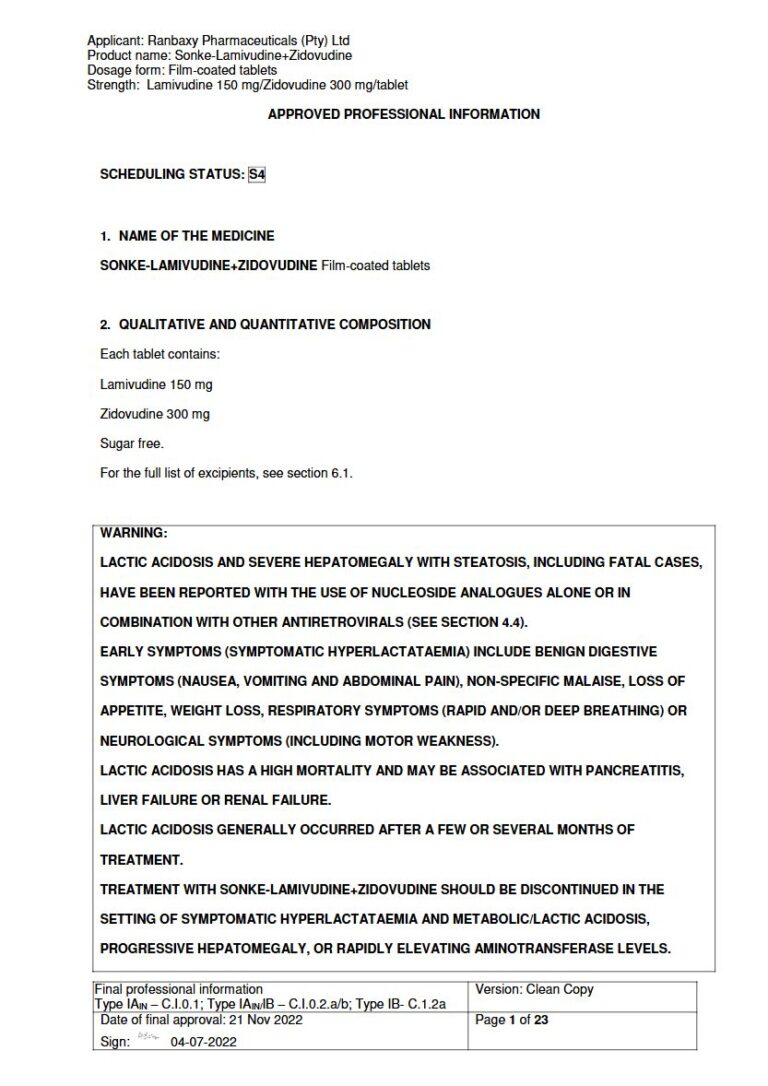
Use of Sonke-Lamivudine+Zidovudine can result in potentially fatal lactic acidosis as a consequence of mitochondrial dysfunction. Clinical features are non-specific, and include nausea, vomiting, abdominal pain, dyspnoea, fatigue and weight loss. In patients with suspicious symptoms or biochemistry, measure the venous lactate level (normal < 2 mmol/) and the serum bicarbonate and respond as follows:
- Lactate 2-5 mmol/ with minimum symptoms: switch to medicines that are less likely to cause lactic acidosis.
- Lactate 5-10 mmol/ with symptoms and/or with reduced standard bicarbonate: Stop NRTIs and change treatment option. Once lactate has settled, use medicines that are less likely to cause lactic acidosis. Exclude other causes, (e.g. sepsis, uraemia, diabetic ketoacidosis, thyrotoxicosis and hyperthyroidism).
- Lactate > 10 mmol/: STOP all therapy (80 % mortality).
The above lactate values may not be applicable to paediatric patients. Caution should be exercised when administering Sonke-Lamivudine+Zidovudine to patients with known risk factors for liver disease.
Treatment with Sonke-Lamivudine+Zidovudine should be suspended in any patient who develops clinical or laboratory findings suggestive of lactic acidosis or hepatotoxicity.
Mitochondrial dysfunction
Nucleoside and nucleotide analogues have been demonstrated in vitro and in vivo to cause a variable degree of mitochondrial damage. There have been reports of mitochondrial dysfunction in HIV negative infants exposed in utero and/or postnatally to nucleoside analogues. Apart from lactic acidosis/hyperlactataemia (see above) other manifestations of mitochondrial dysfunction include haematological disorders (anaemia, neutropenia), and peripheral neuropathy. Some late-onset neurological disorders have been reported (hypertonia, convulsion, abnormal behaviour). It is not known whether the neurological disorders are transient or permanent. Any foetus exposed in utero to nucleoside and nucleotide analogues, even HIV negative infants/children, should have clinical and laboratory follow-up and should be fully investigated for possible mitochondrial dysfunction in case of relevant sign and symptoms.
4.5 Interaction with other medicines and other forms of interaction
Any interactions that have been identified with lamivudine and zidovudine individually may occur with Sonke-Lamivudine+Zidovudine. The interactions listed below should not be considered exhaustive but are representative of the classes of medicines where caution should be exercised.
Interactions relevant to lamivudine
The likelihood of metabolic interactions with lamivudine is low due to limited metabolism and plasma protein binding, and almost complete renal clearance. Possible interactions with other medicines administered concurrently with Sonke-Lamivudine+Zidovudine should be investigated, particularly when the main route of elimination is active renal secretion especially via the cationic transport system e.g. trimethoprim. The nucleoside analogues (e.g. zidovudine, didanosine) and other medicines (e.g. ranitidine, cimetidine) are eliminated partly by this mechanism and were shown not to interact with lamivudine. Please refer to the Pharmacokinetics section for full details on the interaction of lamivudine with other anti-retroviral agents.
Trimethoprim:
Administration of prophylactic doses of co-trimoxazole results in a 40 % increase in lamivudine exposure, because of trimethoprim component; the sulphamethoxazole component did not interact. However, unless the patient has renal impairment, no dosage adjustment of lamivudine (see section 4.2). When concomitant administration with co-trimoxazole is warranted, patients should be monitored clinically. Co-administration of Sonke-Lamivudine+Zidovudine with high doses of co-trimoxazole for the treatment of Pneumocystis carinii pneumonia (PCP) and toxoplasmosis should be avoided. Lamivudine has no effect on the pharmacokinetics of co-trimoxazole at doses studied.
Zalcitabine:
Lamivudine may inhibit the intracellular phosphorylation of zalcitabine when the two medicines are used concurrently. Sonke-Lamivudine+Zidovudine is therefore not recommended to be used in combination with zalcitabine (see section 4.3).
Miscellaneous:
Until further information is available, co-administration of lamivudine with intravenous ganciclovir or foscarnet is not recommended. Lamivudine metabolism does not involve CYP3A, making interactions with medicines metabolised by this system (e.g. protease inhibitors) unlikely.
Cladribine:
In vitro lamivudine inhibits the intracellular phosphorylation of cladribine leading to a potential risk of cladribine loss of efficacy in case of combination in the clinical setting. Some clinical findings also support a possible interaction between lamivudine and cladribine, therefore the concomitant use of lamivudine with cladribine is not recommended.
Medicines containing sorbitol or other osmotic acting poly-alcohols or monosaccharide alcohols (e.g. xylitol, mannitol, lactitol, maltitol):
Avoid chronic co-administration of Sonke-Lamivudine+Zidovudine with medicines containing sorbitol or other osmotic acting poly-alcohols or monosaccharide alcohols (e.g. xylitol, mannitol, lactitol, maltitol).
Interactions relevant to zidovudine:
Zidovudine has limited protein binding but is eliminated primarily by hepatic conjugation to an inactive glucuronidated metabolite.
Lamivudine:
Zidovudine has no effect on the pharmacokinetics of lamivudine. A slight increase in C max (28 %) was observed for zidovudine when administered with lamivudine, however, overall exposure (AUC) was not significantly changed.
Rifampicin:
The co-administration of zidovudine and rifampicin decreases the AUC of zidovudine by 48 % u00b1 34 %. However, the clinical significance of this is unknown.
Valproic acid:
The co-administration of zidovudine and valproic acid increases the AUC of zidovudine by 80 %. Monitor for signs of zidovudine toxicity.
Phenytoin:
In some patients receiving zidovudine, the phenytoin blood levels have been reported to be low, while in one patient a high level was noted. These observations imply that phenytoin concentrations should be carefully monitored in patients receiving Sonke-Lamivudine+Zidovudine in combination with phenytoin.
Probenecid:
Limited data suggest that probenecid increases the mean half-life and area under the plasma concentration curve of zidovudine by decreasing glucuronidation. Renal excretion of the glucuronide (and possibly zidovudine itself) is reduced in the presence of probenecid.
Ribavirin:
Zidovudine in combination with ribavirin is antagonistic in vitro. The concomitant use of ribavirin with Sonke-Lamivudine+Zidovudine should be avoided.
Stavudine:
Zidovudine may inhibit the intracellular phosphorylation of stavudine when the two medicinal products are used concurrently. Stavudine is therefore not recommended to be used in combination with Sonke-Lamivudine+Zidovudine (see section 4.3).
Paracetamol:
Paracetamol use during treatment with zidovudine in a placebo-controlled trial was associated with an increased incidence of neutropenia especially following chronic therapy. However, the available pharmacokinetic data indicate that paracetamol at the doses studied does not increase plasma levels of zidovudine nor of its glucuronide metabolite.
Atovaquone:
The co-administration of zidovudine (750 mg twice daily with food / 200 mg three times per day) and atovaquone increases the AUC of zidovudine by 33 %.
Miscellaneous:
The following medicines, including but not limited to, may alter the metabolism of zidovudine by competitively inhibiting glucuronidation or directly inhibiting hepatic microsomal metabolism: Aspirin, codeine, morphine, indomethacin, ketoprofen, naproxen, oxazepam, lorazepam, cimetidine, clofibrate, dapsone and isoprinosine. The possibilities of medicine interaction before using such medicines, particularly for chronic therapy, in combination with Sonke-Lamivudine+Zidovudine, should be considered. The risk of adverse reactions to zidovudine may also increase, with concomitant treatment, especially acute therapy, with potentially nephrotoxic or myelosuppressive medicines (e.g. systemic pentamidine, dapsone, pyrimethamine, co-trimoxazole, amphotericin, flucytosine, ganciclovir, interferon, vincristine, vinblastine and doxorubicin). Extra care should be taken in monitoring renal function and haematological parameters and, if required, the dosage of one or more agents should be reduced if concomitant therapy with Sonke-Lamivudine+Zidovudine and any of these medicines is necessary. The concomitant use of prophylactic antimicrobial therapy may have to be considered, since some patients receiving Sonke-Lamivudine+Zidovudine may continue to experience opportunistic infections. This named prophylaxis has included pyrimethamine, co-trimoxazole, aerolised pentamidine and aciclovir. The limited data from clinical trials do not indicate a significantly increased risk of adverse reactions to zidovudine with these medicines.
4.6 Fertility, pregnancy and lactation
Pregnancy
The safety of lamivudine in human pregnancy has not been established. Therefore, the use of Sonke-Lamivudine+Zidovudine during pregnancy is not recommended. The use of zidovudine in pregnant women, with subsequent treatment of the newborn infants, has been shown to reduce the rate of maternal-foetal transmission of HIV. However, no such data are available for lamivudine.
There have been reports of mild and transient elevations in serum lactate levels, which may be due to mitochondrial dysfunction, in neonates and infants exposed in utero or peri-partum to nucleoside reverse transcriptase inhibitors (NRTIs), such as Sonke-Lamivudine+Zidovudine. The clinical relevance of transient elevations in serum lactate is unknown. There have also been reports of developmental delay and seizures. However, a causal relationship between these events and NRTI exposure in utero or peri-partum has not been established.
Late onset of neurological disorders relating to mitochondrial dysfunction have been observed in children who have been exposed in utero and/or postnatally to nucleoside analogues as contained in Sonke-Lamivudine+Zidovudine.
Breastfeeding
Both lamivudine and zidovudine are excreted into human milk at similar concentrations to those found in serum. Since lamivudine, zidovudine and HIV pass into breast milk it is recommended that mothers taking Sonke-Lamivudine+Zidovudine do not breastfeed their infants.
Fertility
With regard to fertility studies in male and female rats, neither zidovudine nor lamivudine have shown evidence of impairment. No data is available on their effect of this combination on human female fertility. Sperm count, morphology or motility has not been affected in men as a result of zidovudine.
4.7 Effects on ability to drive and use machines
No studies on the effects on the ability to drive and use machines have been performed. Sonke-Lamivudine+Zidovudine can cause dizziness, fatigue, loss of mental acuity and drowsiness. Patients should be advised not to drive a vehicle or use machines until they know how they are affected.
4.8 Undesirable effects
During therapy for HIV disease with lamivudine and zidovudine separately or in combination, adverse events have been reported. With many of these events, it is unclear whether they are related to lamivudine, zidovudine or to the wide range of medicines used in the management of HIV disease or are as a result of the underlying disease process. As Sonke-Lamivudine+Zidovudine contains lamivudine and zidovudine, the type and severity of adverse reactions associated with each of the compounds may be expected. There is no evidence of synergistic toxicity following concomitant administration of the two compounds.
Side effects related to Lamivudine:
MedDRA System organ class Frequency Adverse reactions
Blood and lymphatic system disorders Less frequent Neutropenia and anaemia, (both occasionally severe), thrombocytopenia, pure red cell aplasia
Immune system disorders Frequent Angioedema, immune reconstitution inflammatory syndrome
Metabolism and nutrition disorders Frequent Hyperlactatemia Less frequent Lactic acidosis, lipodystrophy (redistribution/ accumulation of body fat (see section 4.4).
Nervous system disorders Frequent iInsomnia and headache. Less frequent Paraesthesia. Peripheral neuropathy has been reported although a causal relationship to treatment is uncertain. Late-onset neurological disorders.
Respiratory, thoracic and mediastinal disorders Frequent Cough, nasal symptoms.
Gastro-intestinal disorders Frequent Abdominal pain or cramps, nausea, vomiting and diarrhoea. Less frequent Pancreatitis
Hepato-biliary disorders Less frequent Transient rises in liver enzymes (AST, ALT), hepatitis
Skin and subcutaneous tissue disorders Frequent Rash, alopecia
Musculoskeletal, connective tissue and bone disorders Frequent Arthralgia, muscle disorders including musculoskeletal pain Less frequent Rhabdomyolysis
General disorders and administrative site conditions Frequent Malaise and fatigue
Side effects related to Zidovudine:
Blood and lymphatic system disorders Frequent Anaemia (which may require transfusions), leucopenia and neutropenia. These occur more frequently at higher dosages (1 200 u2013 1 500 mg/day) and in patients with advanced HIV disease (especially when there is poor bone marrow reserve prior to treatment), and particularly in patients with CD4+ cell counts < 100/mm 3. Dosage reduction or cessation of therapy may become necessary (see section 4.2). The incidence of neutropenia was also increased in those patients whose neutrophil counts, haemoglobin levels and serum vitamin B 12 levels were low at the start of zidovudine therapy, and in those patients taking paracetamol concurrently (see section 4.5).
Blood and lymphatic system disorders Less frequent Aplastic anaemia, pure red cell aplasia, pancytopenia (with marrow hypoplasia), and thrombocytopenia.
4.9 Overdose
See section 4.8. There is no experience of overdosage with Sonke-Lamivudine+Zidovudine. Limited data is available on the consequences of ingestion of acute overdoses of lamivudine and zidovudine in humans. All patients recovered, no fatalities occurred. Following such overdosage, no specific signs or symptoms have been identified.
Treatment of overdose
In the event of overdosage, the patient should be monitored for evidence of toxicity (see section 4.8) and standard supportive treatment be applied as necessary. Continuous haemodialysis could be used in the treatment of overdosage since lamivudine is dialysable, although this has not been studied. Haemodialysis and peritoneal dialysis appear to have a limited effect on the elimination of zidovudine but enhance the elimination of the glucuronide metabolite. Medical practitioners should refer to the individual package inserts of lamivudine and zidovudine for more details. Patients, in whom intentional overdose is confirmed or suspected, should be referred for psychiatric consultation.
