
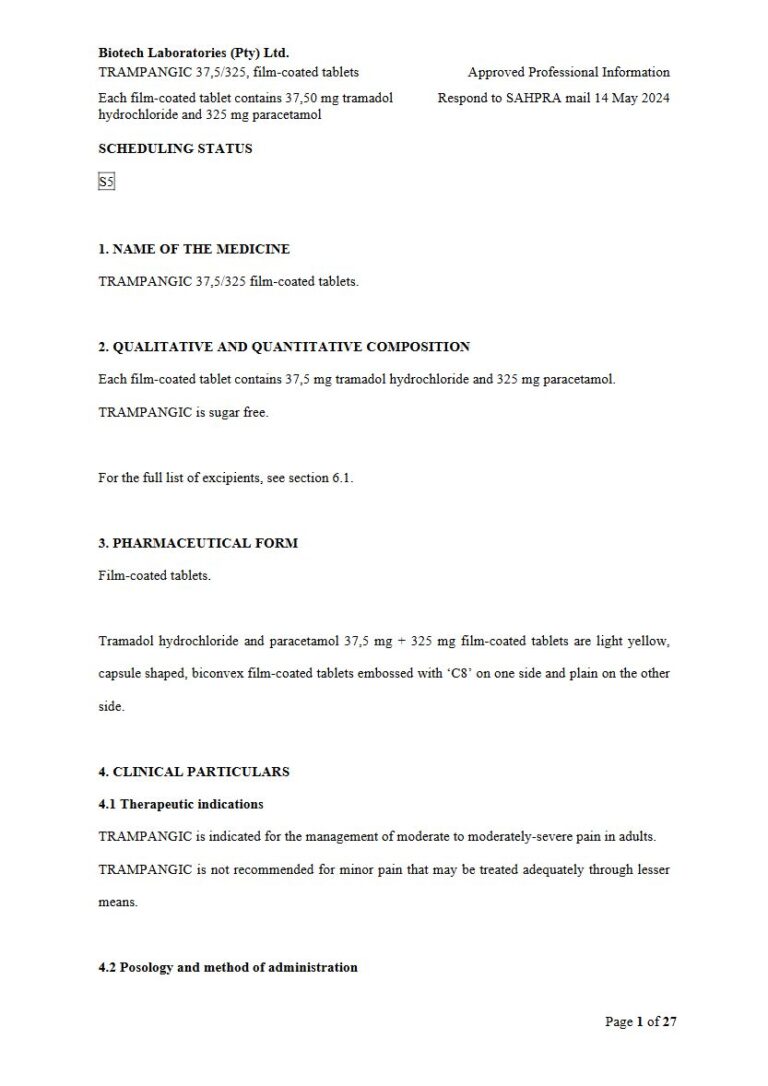
Trampangic 37,5/325 37,5 mg, 325 mg FC tablets
PDF Leaflet Revision Date: 23 April 2024
Clinical Summary
Quick overview from the medicine insert
Indication
Management of moderate to moderately-severe pain in adults.
Dosage (summary)
1-2 tablets every 4-6 hours as needed, max 8 tablets/day.
Special Populations
- Renal impairment
- Hepatic impairment
- Elderly
Pregnancy & Breastfeeding
Not recommended in pregnancy or breastfeeding due to potential risks.
Key Drug Interactions
- Serotonergic medicines
- Alcohol
- CYP2D6 inhibitors
- CYP3A4 inducers
- Monoamine Oxidase Inhibitors
Contraindications
- Hypersensitivity to tramadol or paracetamol
- Acute intoxication with CNS depressants
- Respiratory depression
- Seizure disorders
- Severe hepatic impairment
- Children under 12 years
Common side effects
- Nausea
- Dizziness
- Somnolence
- Constipation
Counselling Points
- Do not exceed recommended dose.
- Avoid alcohol and CNS depressants.
- Monitor for signs of overdose.
- Inform about potential for dependence.
Serious warnings
- Risk of respiratory depression
- Potential for dependence and withdrawal symptoms
- Serotonin syndrome risk
Important Disclaimer
The Trampangic 37,5/325 37,5 mg, 325 mg FC tablets professional information leaflet below is the property of Biotech Laboratories and is provided on Medinsert exactly as issued, with no.. alterations or editorial changes. We make every effort to keep content current by updating documents as soon as new versions become available. Medinsert serves as a trusted access point for healthcare professionals, but does not replace official sources or clinical judgement. For more details, please read our full disclaimer. read more>>
 Healthcare Professionals Only
This content is for registered healthcare professionals
Sign in or create a free account to read the full package insert.
Free for HPCSA-registered professionals. Powered by Medinsert.
Clinical Particulars
Section 4 of the official insert — extracted exactly as issued, no alterations
4.1 Therapeutic indications
TRAMPANGIC is indicated for the management of moderate to moderately-severe pain in adults. TRAMPANGIC is not recommended for minor pain that may be treated adequately through lesser means.
4.2 Posology and method of administration
DO NOT EXCEED THE RECOMMENDED DOSE. TRAMPANGIC is indicated in adults and children over 16 years of age.
Adults
For the management of pain, the recommended maximum single dose of TRAMPANGIC is 1 or 2 tablets every 4 to 6 hours as needed for pain relief up to a maximum of 8 tablets per day. The lowest effective dose should be used for the shortest period of time. A titration period of several days with gradual dose increases at the initiation of TRAMPANGIC therapy may be beneficial for some patients. Clinical studies with tramadol in patients with moderate to moderately severe chronic pain indicate that the tolerability of tramadol can be improved by starting tramadol at a low dose with gradual upward dose titration to reach doses that provide sufficient pain relief.
Special populations
Renal impairment
For patients with creatinine clearance < 30 ml/min, the dosing interval of TRAMPANGIC should be increased not to exceed 2 tablets every 12 hours.
Elderly (65 years of age and older)
No overall differences with regard to safety or pharmacokinetics were noted between subjects u2265 65 years of age and younger subjects.
Hepatic impairment
The use of TRAMPANGIC in patients with moderate to severe hepatic impairment is contraindicated.
Paediatric population
Children below 16 years of age
The use of TRAMPANGIC is contraindicated in children below 12 years of age (see section 4.3) The safety and effectiveness of TRAMPANGIC in children aged 12 to below 16 years of age has not been established (see section 4.3 and section 4.4),
Method of administration
Oral use. Tablets must be swallowed whole, with a sufficient quantity of liquid. They must not be broken or chewed. TRAMPANGIC can be administered without regard to food.
4.3 Contraindications
- TRAMPANGIC is contraindicated in patients with a known hypersensitivity to tramadol, paracetamol or other opioids such as codeine or to any of the excipients listed in section 6.1.
- Acute intoxication with alcohol, hypnotic medicines, centrally acting analgesics, opioids or psychotropic medicines.
- TRAMPANGIC must not be used for narcotic withdrawal treatment.
- TRAMPANGIC should not be given to patients with respiratory depression especially in the presence of cyanosis and excessive bronchial secretions.
- TRAMPANGIC should not be given to patients with head injury or cerebral disease, with or without increased intracranial pressure or central nervous system depression due to head injury or cerebral disease.
- Moderate to severe hepatic impairment.
- In patients who are receiving monoamine oxidase inhibitors or within two weeks of their withdrawal (see section 4.5).
- TRAMPANGIC can cause seizures (convulsions) and should not be used in patients with epilepsy or seizures of any cause (see section 4.4).
- TRAMPANGIC is contraindicated in children younger than 12 years of age.
- TRAMPANGIC is contraindicated in children younger than 18 years of age following tonsillectomy and/or adenoidectomy.
4.4 Special warnings and precautions for use
This product contains paracetamol which may be fatal in overdose. In the event of overdosage or suspected overdose and notwithstanding the fact that the person may be asymptomatic, the nearest doctor, hospital or Poison Centre must be contacted immediately. Dosages in excess of those recommended may cause severe liver damage. Patients suffering from liver or kidney disease should only take paracetamol containing products under medical supervision. The hazards of paracetamol overdose are greater in patients with non-cirrhotic alcoholic liver disease. Patients with moderate to severe hepatic impairment should not use TRAMPANGIC (see section 4.3). Chronic heavy alcohol abusers may be at increased risk of liver toxicity from excessive paracetamol use.
In adults and adolescents 16 years and older, the maximum dose of 8 tablets of TRAMPANGIC should not be exceeded. In order to avoid inadvertent overdose, patients should be advised not to exceed the recommended dose and not to use any other paracetamol (including over the counter) or tramadol hydrochloride containing products concurrently without the advice of a medical practitioner.
Tramadol may only be taken with special care in opioid dependence, reduced level of consciousness of uncertain origin and disorders of the respiratory function. TRAMPANGIC has not been studied in patients with impaired renal function. In patients with creatinine clearance of less than 30 ml/min, it is recommended that the dosing interval of TRAMPANGIC be increased not to exceed 2 tablets every 12 hours. In severe respiratory insufficiency, TRAMPANGIC is not recommended (see section 4.3).
Tramadol, as contained in TRAMPANGIC, is not suitable as a substitute in opioid-dependent patients. Although it is an opioid agonist, tramadol cannot suppress morphine withdrawal symptoms (see section 4.3). TRAMPANGIC should not be used in patients with a history of epilepsy or those susceptible to seizures (see section 4.3). Convulsions have been reported in tramadol-treated patients susceptible to seizures or taking other medications that lower the seizure threshold, especially selective serotonin re-uptake inhibitors, tricyclic antidepressants, antipsychotics, centrally acting analgesics or local anaesthesia. Convulsions have been reported in patients receiving tramadol at the recommended dose levels. The risk may be increased when doses of tramadol exceed the recommended upper dose limit. The risk of seizures may also be increased in patients with epilepsy, those with a history of seizures or in patients with a recognised risk for seizures e.g., drug and alcohol withdrawal, intracranial infections, head trauma, metabolic disorders and naloxone administration with tramadol overdose.
Concomitant use of opioid agonists-antagonists (nalbuphine, buprenorphine, pentazocine) is not recommended (see section 4.5).
Anaphylactic reactions
Patients with a history of anaphylactic reactions to codeine and other opioids may be at increased risk and therefore should not receive TRAMPANGIC. Serious and fatal anaphylactic reactions have been reported in patients receiving therapy with tramadol. Advise patients to seek immediate medical attention if they experience any symptoms of a hypersensitivity reaction.
Sleep-related breathing disorders
Opioids can cause sleep-related breathing disorders including central sleep apnoea (CSA) and sleep-related hypoxemia. Patients should be evaluated on an ongoing basis for the onset of new sleep apnoea or worsening of an existing sleep apnoea. Opioid use increases the risk of CSA in a dose-dependent fashion. In patients who present with CSA, consider decreasing the total opioid dosage or stopping the opioid treatment if appropriate, using best practices for tapering of opioids (see section 4.4).
Precautions for use
Risk from concomitant use of sedative medicines such as benzodiazepines or related medicines
Concomitant use of TRAMPANGIC and sedative medicines such as benzodiazepines or related medicines may result in sedation, respiratory depression, coma and death. Because of these risks, concomitant prescribing with these sedative medicines should be reserved for patients for whom alternative treatment options are not possible. If a decision is made to prescribe TRAMPANGIC concomitantly with sedative medicines, the lowest effective dose should be used, and the duration of the concomitant treatment should be as short as possible. The patients should be followed closely for signs and symptoms of respiratory depression and sedation. In this respect, it is strongly recommended to inform patients and their caregivers to be aware of these symptoms (see section 4.5).
Drug abuse and Dependence
Tramadol has a dependence potential and tolerance, psychic and physical dependence of the morphine-type (u03bc opioid) may develop with long-term use. The medicine has been associated with craving drug-seeking behaviour and tolerance development. Cases of abuse and dependence on tramadol have been reported. TRAMPANGIC should not be used in patients, with a tendency to drug abuse and patients with a history of dependence. TRAMPANGIC can reinstate physical dependence in patients that have been previously dependent or chronically using other opioids. TRAMPANGIC should not be given to patients who are suicidal or prone to addiction.
Withdrawal: Symptoms of withdrawal reaction, similar to those occurring during opiate withdrawal, may occur even at therapeutic doses and for short term treatment (see section 4.8). Panic attacks, severe anxiety, hallucinations, paraesthesia, tinnitus, and unusual CNS symptoms have been reported with abrupt discontinuation of tramadol hydrochloride. Withdrawal symptoms may be avoided by tapering it at the time of discontinuation especially after long treatment periods.
Use of tramadol with anaesthesia: In one study, use of tramadol during general anaesthesia with enflurane and nitrous oxide was reported to enhance intra-operative recall. Until further information is available, use of tramadol during light planes of anaesthesia should be avoided.
CYP2D6 ultra-rapid metabolism of tramadol: Tramadol is metabolised by the liver enzyme CYP2D6. If a patient has a deficiency or is completely lacking this enzyme an adequate analgesic effect may not be obtained. However, if the patient is an ultra-rapid metaboliser there is a risk of developing side effects of opioid toxicity, such as respiratory depression, even at commonly prescribed doses due to higher than expected serum M1 levels as a result of rapid conversion of tramadol to its active metabolite, M1. General symptoms of opioid toxicity include confusion, somnolence, shallow breathing, small pupils, nausea, vomiting, constipation and lack of appetite. In severe cases this may include symptoms of circulatory and respiratory depression, which may be life threatening and fatal. Even at labelled dosage regimens, individuals who are ultra-rapid metabolisers may have life-threatening or fatal respiratory depression or experience signs of toxicity such as extreme sleepiness, confusion, or shallow breathing (see section 4.9). Alternative medication, dose reduction and/or increased monitoring for signs of tramadol overdose, such as respiratory depression is recommended in patients known to be CYP2D6 ultra-rapid metabolisers.
Serious skin reactions: Serious skin reactions such as acute generalised exanthematous pustulosis (AGEP), Stevens-Johnson syndrome (SJS), and toxic epidermal necrolysis (TEN), have been reported in patients receiving paracetamol. Patients should be informed about the signs of serious skin reactions, and use of TRAMPANGIC, should be discontinued at the first appearance of skin rash or any other sign of hypersensitivity.
Hyponatraemia: Hyponatraemia has been reported with the use of tramadol/paracetamol tablets, usually in patients with predisposing risk factors, such as elderly patients and/or patients using concomitant medications that may cause hyponatraemia. This hyponatraemia appeared to be the result of the syndrome of inappropriate antidiuretic hormone secretion (SIADH) and resolved with discontinuation of the medicine and appropriate treatment (e.g., fluid restriction). During TRAMPANGIC treatment, monitoring signs and symptoms of hyponatraemia is recommended for patients with predisposing risk factors.
Other risk factors for life-threatening respiratory depression in children
Life-threatening respiratory depression and death have occurred in children who received tramadol. Tramadol is subject to variability in metabolism based upon CYP2D6 genotype, which can lead to increased exposure to an active metabolite. Children younger than 12 years of age may be more susceptible to the respiratory depressant effects of tramadol (see section 4.3). Furthermore, children with obstructive sleep apnoea who are treated with opioids for post tonsillectomy and/or adenoidectomy pain may be particularly sensitive to their respiratory depressant effect (see section 4.3). Because of the risk of life-threatening respiratory depression and death, TRAMPANGIC should not be used in adolescents younger than 18 years of age who have other risk factors that may increase their sensitivity to the respiratory depressant effects of tramadol. Risk factors include conditions associated with hypoventilation such as postoperative status, obstructive sleep apnoea and concomitant use of other medicines that cause respiratory depression. As with adults, when prescribing opioids for adolescents, healthcare providers should choose the lowest effective dose for the shortest period of time and inform patients and caregivers about these risks and signs of opioid overdose (see section 4.2 and section 4.9).
Use with serotonergic medicines
Use TRAMPANGIC with great caution in patients taking serotonergic medicines including SSRIs. Concomitant use of tramadol with serotonergic medicines including SSRIs increases the risk of adverse events, including seizure and serotonin syndrome (see section 4.5). Symptoms of serotonin syndrome may include mental status changes, autonomic instability, neuromuscular abnormalities and/or gastrointestinal symptoms. If serotonin syndrome is suspected, a dose reduction or discontinuation of therapy should be considered depending on the severity of the symptoms. Withdrawal of the serotonergic medicine usually brings about a rapid improvement.
Adrenal insufficiency
Opioid analgesics may occasionally cause reversible adrenal insufficiency requiring monitoring and glucocorticoid replacement therapy. Symptoms of acute or chronic adrenal insufficiency may include e.g., severe abdominal pain, nausea and vomiting, low blood pressure, extreme fatigue, decreased appetite, and weight loss.
Caution is advised if paracetamol is administered concomitantly with flucloxacillin due to increased risk of high anion gap metabolic acidosis (HAGMA), particularly in patients with severe renal impairment, sepsis, malnutrition and other sources of glutathione deficiency (e.g., chronic alcoholism), as well as those using maximum daily doses of paracetamol. Close monitoring, including measurement of urinary 5-oxoproline, is recommended. This medicine contains less than 1 mmol sodium (23 mg) per tablet, essentially 'sodium-free'.
4.5 Interaction with other medicines and other forms of interaction
- Concomitant therapeutic use of tramadol and serotonergic medicines such as selective serotonin re-uptake inhibitors (SSRIs) serotonin-noradrenaline reuptake inhibitors (SNRIs), MAO inhibitors, tricyclic antidepressants and mirtazapine may cause serotonin toxicity. Serotonin Syndrome is likely when one of the following is observed:
- Spontaneous clonus
- Inducible or ocular clonus with agitation or diaphoresis
- Tremor and hyperreflexia
- Hypertonia
- Fever > 38 u00b0C and increased body temperature
- Alcohol
Alcohol increases the sedative effect of opioid analgesics. The effect on alertness can make driving of vehicles and the use of machines dangerous. Avoid intake of alcoholic drinks and of medicines containing alcohol. - Carbamazepine and other CYP3A4 enzyme inducers (examples, rifampin, phenytoin)
Risk of reduced efficacy and shorter duration due to decreased plasma concentrations of tramadol and M1 concentrations. Patients receiving carbamazepine may have significantly reduced analgesic effect from the tramadol component of TRAMPANGIC or onset of withdrawal syndrome in patients who have developed physical dependence to tramadol. After stopping an inducer of CYP3A4, as the effects of the inducer decline, the tramadol plasma concentration will increase, which could increase or prolong both the therapeutic effects and adverse reactions, and may cause serious respiratory depression, seizures and serotonin syndrome. If concomitant use is necessary, consider increasing the TRAMPANGIC dosage until stable medicine effects are achieved. Monitor patients for signs of opioid withdrawal. If an inducer of CYP3A4 is discontinued, consider TRAMPANGIC dosage reduction and monitor for seizures and serotonin syndrome, and signs of sedation and respiratory depression. - CYP2D6-inhibitors such as fluoxetine, paroxetine, quinidine, amitriptyline and bupropion could result in some inhibition of the metabolism of tramadol, resulting in an increase in plasma concentration of tramadol and decrease in concentration of M1. Since M1 is a more potent u03bc-opioid agonist, decreased M1 exposure could result in decreased therapeutic effects, and may result in signs and symptoms of opioid withdrawal in patients who had developed physical dependence to tramadol. Increased tramadol exposure can result in increased or prolonged therapeutic effects and increased risk for serious adverse events including seizures and serotonin syndrome. After stopping an inhibitor of CYP2D6, as the effects of the inhibitor decline, the tramadol plasma concentration will decrease and the M1 plasma concentration will increase which could increase or prolong therapeutic effects but also increase adverse reactions related to opioid toxicity and may cause potentially fatal respiratory depression. If concomitant use of an inhibitor of CYP2D6 is necessary, follow patients closely for adverse reactions including opioid withdrawal, seizures and serotonin syndrome (see section 4.4). If an inhibitor of CYP2D6 is discontinued, consider lowering TRAMPANGIC dosage until stable medicine effects are achieved. Follow patients closely for adverse events including respiratory depression and sedation.
- Opioid agonists-antagonists (buprenorphine, nalbuphine, pentazocine)
Decrease of the analgesic effect by competitive blocking effect at the receptors, with the risk of occurrence of withdrawal syndrome. - Tramadol can induce convulsions and increase the potential for selective serotonin reuptake inhibitors (SSRIs), serotonin-noradrenaline reuptake inhibitors (SNRIs), tricyclic antidepressants, antipsychotics and seizure threshold lowering medicines (such as bupropion and mirtazapine) to cause convulsions.
- Other opioid derivatives (including antitussive medicines and substitutive treatments). Increased risk of respiratory depression which can be fatal in cases of overdose.
- Other central nervous system depressants, such as other opioid derivatives (including antitussive medicine), other anxiolytics, hypnotics, sedative antidepressants, sedative antihistamines, neuroleptics, centrally-acting antihypertensive medicines, thalidomide and baclofen. These medicines can cause increased central depression.
- Sedating medicines such as benzodiazepines or related substances: The concomitant use of opioids with sedative medicines such as benzodiazepines or related medicines increases the risk of sedation, respiratory depression, coma and death because of additive CNS depressant effects. The dose and duration of the concomitant use should be limited (see section 4.4). Reserve concomitant prescribing of these medicines for use in patients for whom alternate treatment options are inadequate.
- Post-marketing surveillance of tramadol has revealed reports of digoxin toxicity and alterations of warfarin effect including elevation of prothrombin/INR times. As medically appropriate, periodic evaluation of prothrombin/INR should be performed when TRAMPANGIC and warfarin-like compounds are administered concurrently. Paracetamol may produce hypoprothrombinaemia when administered with warfarin-like medicines. Monitor the prothrombin time of patients on warfarin for signs of an interaction and adjust the dosage of warfarin as needed.
- In a limited number of studies, the pre- or postoperative application of the antiemetic 5-HT3 antagonist ondansetron increased the requirement of tramadol in patients with postoperative pain.
- Concomitant administration of diflunisal and paracetamol produces a 50 % increase in paracetamol levels in normal volunteers. TRAMPANGIC should be used cautiously and patients should be monitored carefully.
- CYP3A4 inhibitors such as macrolide antibiotics (e.g., erythromycin), azole-antifungal medicines (e.g., ketoconazole), protease inhibitors (e.g., ritonavir)
The concomitant use of TRAMPANGIC and an inhibitor of CYP3A4 can increase the plasma concentration of tramadol and may result in a greater amount of metabolism via CYP2D6 and greater levels of M1. After stopping an inhibitor of CYP3A4, as the effects of the inhibitor decline, the tramadol plasma concentration will decrease, resulting in decreased opioid efficacy and possibly signs and symptoms of opioid withdrawal in patients who had developed physical dependence to tramadol. If concomitant use is necessary, consider dosage reduction of TRAMPANGIC until stable medicine effects are achieved. Follow patients closely for increased risk of serious adverse events including seizures and serotonin syndrome, and adverse reactions related to opioid toxicity including potentially fatal respiratory depression, particularly when an inhibitor is added after a stable dose of TRAMPANGIC is achieved. If an inhibitor of CYP3A4 is discontinued, consider increasing the TRAMPANGIC dosage until stable medicine effects are achieved and follow patients for signs and symptoms of opioid withdrawal. - Monoamine Oxidase Inhibitors (MAOIs) such as phenelzine, tranylcypromine, linezolid
The concomitant use of TRAMPANGIC with MAOIs, or use within 14 days of their discontinuation, is contraindicated due to the increased risk of seizures and serotonin syndrome (see section 4.3). MAOI interactions with opioids may manifest as serotonin syndrome (see section 4.4) or opioid toxicity (e.g., respiratory depression, coma) (see section 4.4). Do not use TRAMPANGIC in patients taking MAOIs or within 14 days of stopping such treatment. - Cimetidine
Concomitant administration of tramadol with cimetidine does not result in clinically significant changes in tramadol pharmacokinetics. In a limited number of studies the pre- or postoperative application of the antiemetic 5-HT3 antagonist ondansetron increased the requirement of tramadol in patients with postoperative pain. Caution should be taken when paracetamol is used concomitantly with flucloxacillin, as concurrent intake has been associated with high anion gap metabolic acidosis, especially in patients with risk factors (see section 4.4).
4.6 Fertility, pregnancy and lactation
Pregnancy
Safe use in pregnancy has not been established. TRAMPANGIC is not recommended for pregnant mothers because tramadol has been shown to cross the placenta. The use of opioids during childbirth might result in respiratory depression in the newborn infant. Prolonged use of TRAMPANGIC, or other opioids, during pregnancy may lead to neonatal opioid withdrawal syndrome. This risk is particularly increased during the last trimester of pregnancy.
Breastfeeding
Safe use in breastfeeding has not been established. TRAMPANGIC is not recommended for mothers breastfeeding their infants, as tramadol appears in breast milk.
Fertility
No study on fertility was accomplished with the combination of tramadol and paracetamol.
4.7 Effects on ability to drive and use machines
Tramadol as in TRAMPANGIC may cause drowsiness or dizziness, which may be enhanced by alcohol or other CNS depressants. If affected, the patient should not drive or operate machinery. TRAMPANGIC can impair cognitive function and can affect a patient's ability to drive safely.
4.8 Undesirable effects
Summary of the safety profile
The most frequently reported undesirable effects were nausea, dizziness and somnolence.
Tabulated list of adverse reactions
System Organ Class Frequency Description
Blood and lymphatic system disorders Less frequent Anaemia Frequency unknown Blood dyscrasias including thrombocytopenia and agranulocytosis, elevation of prothrombin times (tramadol) or hypoprothrombinaemia (paracetamol) when administered with warfarin- like compounds Immune system disorders Less frequent Hypersensitivity including skin rash, allergic reactions with respiratory symptoms (e.g., dyspnoea, bronchospasm, wheezing, angioneurotic oedema) and anaphylaxis Cardiac disorders Less frequent Palpitations, tachycardia, dysrhythmia Frequency unknown Postural hypotension, bradycardia, collapse Vascular disorders Less frequent Hypertension, aggravated hypertension, hypotension Frequency unknown Hot flush
Eye disorders Less frequent Blurred vision, miosis, mydriasis, abnormal vision Ear and labyrinth disorders Less frequent Tinnitus, vertigo Gastrointestinal disorders Frequent Nausea, vomiting, constipation, dry mouth, diarrhoea abdominal pain, dyspepsia, flatulence Less frequent Dysphagia, melaena, tongue oedema, changes in appetite Investigations Less frequent Transaminases increased Metabolism and nutrition disorders Less frequent Weight decrease Frequency unknown Hyponatraemia/ syndrome of inappropriate antidiuretic hormone, hypoglycaemia Nervous system disorders Frequent Dizziness, somnolence, headache, tremor Less frequent Involuntary muscular contractions, paraesthesia, amnesia, ataxia, convulsions, syncope, speech disorders, hypertonia, aggravated migraine, stupor, vertigo, motor weakness Psychiatric disorders Frequent Confusion, mood altered, anxiety, nervousness, euphoric mood, dysphoria, sleep disorders, anorexia Less frequent Depression, hallucinations, nightmares, delirium, drug dependence, depersonalisation, emotional lability, abnormal thinking, bad dreams, impotence Frequency unknown Suicidal tendency, changes in activity (usually suppression occasionally increase) and changes in cognitive and sensorial capacity (e.g., decision behaviour perception disorders) Hepato-biliary disorders Less frequent Liver test abnormalities ( included elevated creatinine) , hepatitis Respiratory, thoracic and mediastinal disorders Less frequent Respiratory depression Frequency unknown Dyspnoea, worsening of asthma Renal and urinary disorders Frequency unknown Albuminuria, micturition disorder (dysuria and urinary retention), oliguria Skin and subcutaneous tissue disorders Frequent Pruritus, rash, increased sweating Less frequent Serious skin reactions Frequency unknown Dermal reactions (e.g., rash, urticaria), allergic reactions (including anaphylaxis and urticaria, Stevens Johnson Syndrome/ TENS) General disorders and administration site conditions Frequent Asthenia, fatigue Less frequent Chest pain, rigors, withdrawal syndrome*, chills * Symptoms of drug withdrawal syndrome, similar to those occurring during opiate withdrawal may occur as follows: agitation, anxiety, nervousness, insomnia, hyperkinesia, tremor and gastrointestinal symptoms. Other symptoms that have been seen if tramadol hydrochloride is discontinued abruptly include: panic attacks, severe anxiety, hallucinations, paraesthesia, tinnitus and unusual CNS symptoms.
4.9 Overdose
TRAMPANGIC is a fixed combination of active ingredients. In case of overdose, the symptoms may include the signs and symptoms of toxicity of tramadol or paracetamol or of both these active ingredients. A single or multiple overdose with TRAMPANGIC may be a potentially lethal polymedication overdose and appropriate expert consultation, if available, is recommended.
Tramadol : The symptoms of tramadol overdosage include in particular, miosis, vomiting, cardiovascular collapse, consciousness disorders up to coma, convulsions and respiratory depression up to respiratory arrest, cardiac arrest, death and/or seizures. Cases of QT prolongation have been reported during overdose. Fatalities due to tramadol overdose have been reported.
While naloxone will reverse some, but not all symptoms caused by overdosage with tramadol, the risk of seizures is also increased with naloxone administration. Based on experience with tramadol, haemodialysis is not expected to be helpful in an overdose because it removes less than 7 % of the administered dose in a 4-hour dialysis period. Primary attention should be given to maintaining adequate ventilation and circulatory functions along with general supportive treatment.
Paracetamol:
Prompt treatment is essential. In the event of an overdosage, consult a medical practitioner immediately, or take the person directly to a hospital. A delay in starting treatment may mean that antidote is given too late to be effective. Evidence of liver damage is often delayed until after the time for effective treatment has lapsed. Susceptibility to paracetamol toxicity is increased in patients who have taken repeated high doses (greater than 5 - 10 g/day) of paracetamol for several days, in chronic alcoholism, chronic liver disease, AIDS, malnutrition, and with the use of medicines that induce liver microsomal oxidation such as barbiturates, isoniazid, rifampicin, phenytoin and carbamazepine.
Symptoms of paracetamol overdosage in the first 24 hours are pallor, nausea, vomiting, anorexia and possibly abdominal pain. Mild symptoms during the first two days of acute poisoning, do not reflect the potential seriousness of the overdosage. Liver damage may become apparent 12 to 48 hours, or later after ingestion, initially by elevation of the serum transaminase and lactic dehydrogenase activity, increased serum bilirubin concentration and prolongation of the prothrombin time. Liver damage may lead to encephalopathy, coma and death. Acute renal failure with acute tubular necrosis may develop even in the absence of severe liver damage. Abnormalities of glucose metabolism and metabolic acidosis may occur. Cardiac dysrhythmias have been reported.
Treatment for paracetamol overdosage: Although evidence is limited it is recommended that any adult person who has ingested 5 - 10 grams or more of paracetamol (or a child who has had more than 140 mg/kg) within the preceding four hours, should have a single dose of 50 g activated charcoal. Ingestion of amounts of paracetamol smaller than this may require treatment in patients susceptible to paracetamol poisoning (see above). In patients who are stuporous or comatose endotracheal intubation should precede gastric lavage in order to avoid aspiration.
N-acetylcysteine should be administered to all cases of suspected overdose as soon as possible preferably within eight hours of overdosage, although treatment up to 36 hours after ingestion may still be of benefit, especially if more than 150 mg/kg of paracetamol was taken. An initial dose of 150 mg/kg N-acetylcysteine in 200 ml dextrose injection given intravenously over 15 minutes, followed by an infusion of 50 mg/kg in 500 ml dextrose injection over the next four hours, and then 100 mg/kg in 1 000 ml dextrose injection over the next sixteen hours. The volume of intravenous fluid should be modified for children. Although the oral formulation is not the treatment of choice, 140 mg/kg dissolved in water may be administered initially, followed by 70 mg/kg every four hours for seventeen doses. A plasma paracetamol level should be determined four hours after ingestion in all cases of suspected overdosage. Levels done before four hours may be misleading. Patients at risk of liver damage, and hence requiring continued treatment with N-acetylcysteine, can be identified according to their 4-hour plasma paracetamol level. The plasma paracetamol level can be plotted against time since ingestion in the nomogram below. The nomogram should be used only in relation to a single acute ingestion. Those whose plasma paracetamol levels are above the u201cnormal treatment lineu201d, should continue N-acetylcysteine treatment with 100 mg/kg IV over sixteen hours repeatedly until recovery. Patients with increased susceptibility to liver damage as identified above, should continue treatment if concentrations are above the u201chigh risk treatment lineu201d. Prothrombin index correlates best with survival. Monitor all patients with significant ingestions for at least ninety six hours.
