
Valazyd Co 80 mg/160 mg/12,5 mg/25 mg Film-Coated Tablets
PDF Leaflet Revision Date: 03 September 2024
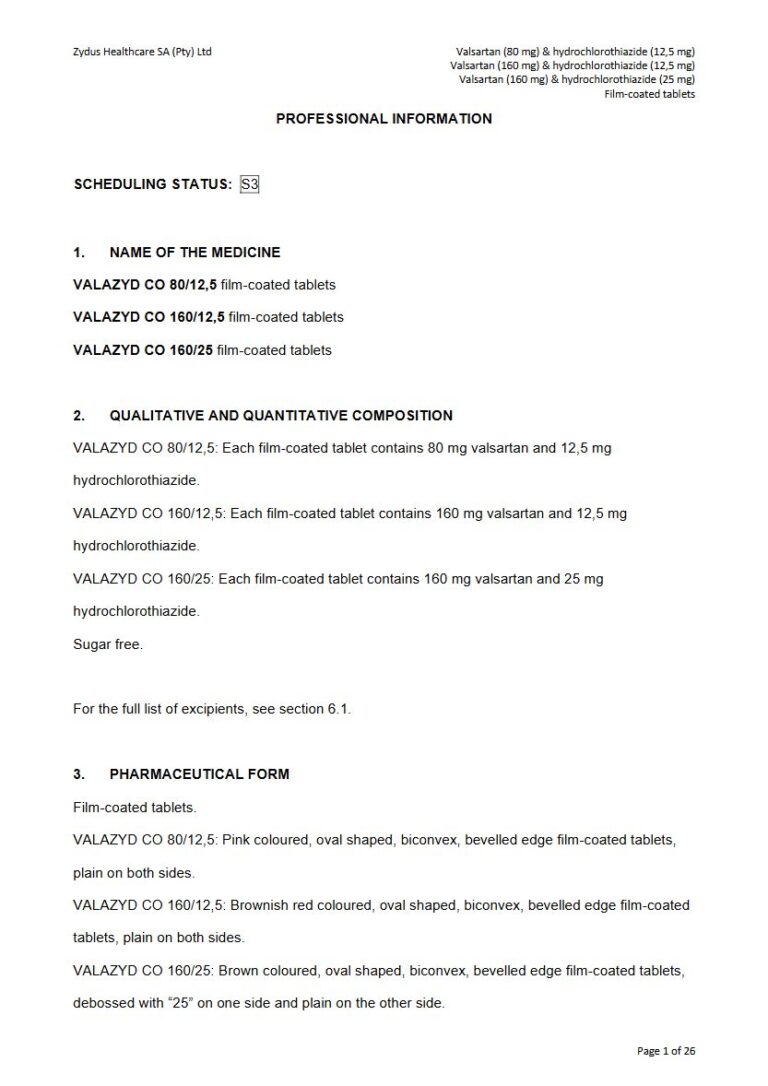
Clinical Summary
Quick overview from the medicine insert
Indication
Treatment of mild to moderate hypertension.
Dosage (summary)
1 tablet daily; adjust based on clinical response.
Onset of Action / Duration
Onset: 2 hours, Duration: 24 hours
Special Populations
- Renal impairment
- Hepatic impairment
Pregnancy & Breastfeeding
Contraindicated in pregnancy and breastfeeding.
Key Drug Interactions
- Lithium
- NSAIDs
- Potassium-sparing diuretics
Contraindications
- Hypersensitivity to components
- Severe renal impairment
- Pregnancy
- Bilateral renal artery stenosis
Common side effects
- Dizziness
- Hypotension
- Hypokalaemia
Counselling Points
- Monitor blood pressure regularly
- Report any signs of allergic reactions
- Avoid potassium supplements without consulting
Serious warnings
- Risk of angioedema
- Monitor potassium levels
- Dual blockade of RAAS contraindicated
Important Disclaimer
The Valazyd Co 80 mg/160 mg/12,5 mg/25 mg Film-Coated Tablets professional information leaflet below is the property of Zydus Healthcare Sa and is provided on Medinsert exactly as issued, with no.. alterations or editorial changes. We make every effort to keep content current by updating documents as soon as new versions become available. Medinsert serves as a trusted access point for healthcare professionals, but does not replace official sources or clinical judgement. For more details, please read our full disclaimer. read more>>
 Healthcare Professionals Only
This content is for registered healthcare professionals
Sign in or create a free account to read the full package insert.
Free for HPCSA-registered professionals. Powered by Medinsert.
Clinical Particulars
Section 4 of the official insert — extracted exactly as issued, no alterations
4.1 Therapeutic indications
Treatment of mild to moderate hypertension. VALAZYD CO is indicated for the treatment of hypertension in patients whose blood pressure has been stabilised at the same dosages of the individual components given together.
4.2 Posology and method of administration
Posology
The recommended dose is 1 tablet per day. When clinically appropriate either VALAZYD CO 80/12,5 or VALAZYD CO 160/12,5 may be used. When necessary VALAZYD CO 160/25 may be used. The maximum antihypertensive effect is seen within 2 to 4 weeks.
Special populations
Renal impairment
No dosage adjustment is required for patients with mild renal impairment (creatinine clearance > 70 mL/min).
Hepatic impairment
No dosage adjustment is required in patients with mild to moderate hepatic insufficiency of non-biliary origin and without cholestasis.
Paediatric population
The safety and efficacy of VALAZYD CO have not been established in children.
Method of administration
Oral use. VALAZYD CO is given orally with or without food.
4.3 Contraindications
- Known hypersensitivity to valsartan, hydrochlorothiazide or to any of the excipients of VALAZYD CO (see section 6.1).
- A history of angioedema related to previous therapy with angiotensin-converting enzyme (ACE) inhibitors or angiotensin receptor blockers (ARBs); these patients must never again be given these medicines.
- Hereditary or idiopathic angioedema.
- Hypertrophic obstructive cardiomyopathy (HOCM).
- Severe renal function impairment (creatinine clearance less than 30 mL/min).
- Bilateral renal artery stenosis.
- Renal artery stenosis in patients with a single kidney.
- Aortic stenosis.
- Concomitant therapy with potassium-sparing diuretics, such as spironolactone, triamterene, amiloride (see section 4.4).
- Concomitant use of fluoroquinolones with ACE inhibitors/angiotensin receptor blockers is contraindicated in patients with moderate to severe renal impairment (creatinine clearance u2264 30 mL/min) and in elderly patients.
- Porphyria.
- Lithium therapy: concomitant administration with VALAZYD CO may lead to toxic blood concentrations of lithium (see section 4.5).
- Pregnancy and lactation (see section 4.6).
- The concomitant use of VALAZYD CO with aliskiren-containing medicines is contraindicated (see section 4.4).
- Refractory hypokalaemia, hyponatraemia, hypercalcaemia and symptomatic hyperuricaemia.
- Patients with a history of previous and/or current basal cell carcinomas and/or squamous cell carcinomas of the skin and lip.
4.4 Special warnings and precautions for use
Pregnancy
Should a woman become pregnant while receiving VALAZYD CO, the treatment should be stopped promptly and switched to a different class of antihypertensive medicine (see sections 4.3 and 4.6).
Serum electrolyte changes
Valsartan
Concomitant use with potassium supplements, potassium-sparing diuretics, salt substitutes containing potassium, or other medicines that may increase potassium levels (heparin, etc.) is not recommended. Monitoring of potassium should be undertaken as appropriate.
Hydrochlorothiazide
Hypokalaemia has been reported under treatment with thiazide diuretics, including hydrochlorothiazide. Frequent monitoring of serum potassium is recommended. Treatment with thiazide diuretics, including hydrochlorothiazide, has been associated with hyponatraemia and hypochloraemic alkalosis. Thiazides, including hydrochlorothiazide, increase the urinary excretion of magnesium, which may result in hypomagnesaemia. Calcium excretion is decreased by thiazide diuretics. This may result in hypercalcaemia. As for any patient receiving diuretic therapy, periodic determination of serum electrolytes should be performed at appropriate intervals.
Sodium and/or volume-depleted patients
Patients receiving thiazide diuretics, including hydrochlorothiazide, should be observed for clinical signs of fluid or electrolyte imbalance. In severely sodium-depleted and/or volume-depleted patients, such as those receiving high doses of diuretics, symptomatic hypotension may occur after initiation of therapy with VALAZYD CO. Sodium and/or volume depletion should be corrected before starting treatment with VALAZYD CO.
Patients with severe chronic heart failure or other conditions with stimulation of the renin-angiotensin-aldosterone system
In patients whose renal function may depend on the activity of the renin-angiotensin-aldosterone system (e.g. patients with severe congestive heart failure), treatment with angiotensin-converting enzyme inhibitors has been associated with oliguria and/or progressive azotaemia, and in some cases with acute renal failure and/or death. Evaluation of patients with heart failure or post-myocardial infarction should always include assessment of renal function. The use of VALAZYD CO in patients with severe chronic heart failure has not been established. Hence it cannot be excluded that because of the inhibition of the renin-angiotensin-aldosterone system the application of VALAZYD CO as well may be associated with impairment of the renal function. VALAZYD CO should not be used in these patients.
Renal artery stenosis
VALAZYD CO should not be used to treat hypertension in patients with unilateral or bilateral renal artery stenosis or stenosis of the artery to a solitary kidney, since blood urea and serum creatinine may increase in such patients.
Primary hyperaldosteronism
Patients with primary hyperaldosteronism should not be treated with VALAZYD CO as their renin-angiotensin system is not activated.
Aortic and mitral valve stenosis, hypertrophic obstructive cardiomyopathy
Special caution is indicated in patients suffering from aortic or mitral stenosis, or hypertrophic obstructive cardiomyopathy (HOCM).
Renal impairment
No dosage adjustment is required for patients with renal impairment with a creatinine clearance u2265 30 mL/min (see section 4.2). Periodic monitoring of serum potassium, creatinine and uric acid levels is recommended when VALAZYD CO is used in patients with renal impairment.
Kidney transplantation
There is currently no experience on the safe use of VALAZYD CO in patients who have recently undergone kidney transplantation.
Hepatic impairment
In patients with mild to moderate hepatic impairment without cholestasis, VALAZYD CO should be used with caution (see sections 4.2 and 5.2). Thiazides should be used with caution in patients with impaired hepatic function or progressive liver disease, since minor alterations of fluid and electrolyte balance may precipitate hepatic coma.
History of angioedema
Angioedema, including swelling of the larynx and glottis, causing airway obstruction and/or swelling of the face, lips, pharynx, and/or tongue has been reported in patients treated with valsartan; some of these patients previously experienced angioedema with other medicines including ACE inhibitors. VALAZYD CO should be immediately discontinued in patients who develop angioedema, and VALAZYD CO should not be readministered (see section 4.8).
Systemic lupus erythematosus
Thiazide diuretics, including hydrochlorothiazide, have been reported to exacerbate or activate systemic lupus erythematosus.
Other metabolic disturbances
Thiazide diuretics, including hydrochlorothiazide as in VALAZYD CO, may alter glucose tolerance and raise serum levels of cholesterol, triglycerides and uric acid. In diabetic patients, dosage adjustments of insulin or oral hypoglycaemic medicines may be required. Thiazides may reduce urinary calcium excretion and cause an intermittent and slight elevation of serum calcium in the absence of known disorders of calcium metabolism. Marked hypercalcaemia may be evidence of underlying hyperparathyroidism. Thiazides should be discontinued before carrying out tests for parathyroid function.
Photosensitivity
Cases of photosensitivity reactions have been reported with thiazide diuretics (see section 4.8). If photosensitivity reaction occurs during treatment, it is recommended to stop the treatment. If a readministration of the diuretic is deemed necessary, it is recommended to protect areas exposed to the sun or to artificial UVA.
General
Caution should be exercised in patients who have shown prior hypersensitivity to other angiotensin II receptor antagonists. Hypersensitivity reactions to hydrochlorothiazide are more likely in patients with allergy and asthma.
Choroidal effusion, acute myopia and secondary angle-closure glaucoma
Hydrochlorothiazide, a sulphonamide, has been associated with an idiosyncratic reaction resulting in choroidal effusion with visual defect, acute transient myopia and acute angle-closure glaucoma. Symptoms include acute onset of decreased visual acuity or ocular pain and typically occur within hours to weeks of a medicine initiation. Untreated acute angle-closure glaucoma can lead to permanent vision loss. The primary treatment is to discontinue hydrochlorothiazide as rapidly as possible. Prompt medical or surgical treatment may need to be considered if the intraocular pressure remains uncontrolled. Risk factors for developing acute angle closure glaucoma may include a history of sulphonamide or penicillin allergy.
Dual blockade of the renin-angiotensin-aldosterone system (RAAS)
There is evidence that the concomitant use of ACE inhibitors, angiotensin II receptor blockers or aliskiren increases the risk of hypotension, hyperkalaemia and decreased renal function (including acute renal failure). Dual blockade of the RAAS through the combined use of ACE inhibitors, angiotensin II receptor blockers or aliskiren is therefore contraindicated (see section 4.3). VALAZYD CO should not be used concomitantly with aliskiren (see section 4.3).
Concomitant use of fluoroquinolones and ACE inhibitors/angiotensin receptor blockers
Concomitant use of fluoroquinolones and ACE inhibitors/angiotensin receptor blockers may precipitate acute kidney injury in patients, especially those with moderate to severe renal impairment and elderly patients (see section 4.3). Renal function should be assessed before initiating treatment and monitored during treatment with fluoroquinolones or ACE inhibitors/angiotensin receptor blockers whether used separately and/or concomitantly.
Non-melanoma skin cancer
An increased risk of non-melanoma skin cancer (NMSC) (basal cell carcinoma [BCC] and squamous cell carcinoma [SCC]) with increasing cumulative dose of hydrochlorothiazide exposure has been observed in two epidemiological studies based on the Danish National Cancer Registry. Photosensitising actions of hydrochlorothiazide could act as a possible mechanism for NMSC. Patients taking VALAZYD CO should be informed of the risk of NMSC and advised to regularly check their skin for any new lesions and promptly report any suspicious skin lesions. Possible preventive measures such as limited exposure to sunlight and UV rays and, in case of exposure, adequate protection should be advised to the patients in order to minimize the risk of skin cancer. Suspicious skin lesions should be promptly examined, potentially including histological examinations of biopsies. VALAZYD CO should not be used by patients who have had previous and/or current basal cell carcinomas and/or squamous cell carcinomas of the skin and/or lip (see section 4.3).
4.5 Interaction with other medicines and other forms of interaction
Interactions related to both valsartan and hydrochlorothiazide
Concomitant use not recommended
Lithium
Reversible increases in serum lithium concentrations and toxicity have been reported during concomitant administration of lithium with ACE inhibitors, angiotensin II receptor antagonists or thiazides, including hydrochlorothiazide. Since renal clearance of lithium is reduced by thiazides, the risk of lithium toxicity may presumably be increased further with VALAZYD CO. If the combination proves necessary, a careful monitoring of serum lithium levels is recommended.
Concomitant use requiring caution
Other antihypertensive medicines
VALAZYD CO may increase the effects of other medicines with antihypertensive properties (e.g. guanethidine, methyldopa, vasodilators, ACEI, angiotensin receptor blockers [ARBs], beta blockers, calcium channel blockers and direct renin inhibitors [DRIs]).
Pressor amines (e.g. noradrenaline [norepinephrine], adrenaline [epinephrine])
Possible decreased response to pressor amines. The clinical significance of this effect is uncertain and not sufficient to preclude their use.
Nonsteroidal anti-inflammatory drugs (NSAIDs), including selective COX-2 inhibitors, acetylsalicylic acid (> 3 g/day) and nonselective NSAIDs
NSAIDs can attenuate the antihypertensive effect of both angiotensin II antagonists and hydrochlorothiazide, as in VALAZYD CO, when administered simultaneously. Furthermore, concomitant use of VALAZYD CO and NSAIDs may lead to worsening of renal function and an increase in serum potassium. Therefore, monitoring of renal function at the beginning of the treatment is recommended, as well as adequate hydration of the patient.
Interactions related to valsartan
Dual blockade of the renin-angiotensin-aldosterone system (RAAS) with ARBs, ACEIs or aliskiren
Clinical trial data has shown that dual blockade of the renin-angiotensin-aldosterone system (RAAS) through the combined use of ACE inhibitors, angiotensin II receptor blockers or aliskiren is associated with a higher frequency of adverse events such as hypotension, hyperkalaemia and decreased renal function (see sections 4.3 and 4.4).
Concomitant use not recommended
Potassium-sparing diuretics, potassium supplements, salt substitutes containing potassium and other substances that may increase potassium levels
If a medicine that affects potassium levels is considered necessary in combination with valsartan, monitoring of potassium plasma levels is advised.
Transporters
In vitro data indicates that valsartan is a substrate of the hepatic uptake transporter OATP1B1/OATP1B3 and the hepatic efflux transporter MRP2. The clinical relevance of this finding is unknown. Co-administration of inhibitors of the uptake transporter (e.g. rifampin, ciclosporin) or efflux transporter (e.g. ritonavir) may increase the systemic exposure to valsartan. Exercise appropriate care when initiating or ending concomitant treatment with such medicines.
Concomitant use of fluoroquinolones and ACE inhibitors/angiotensin receptor blockers
Concomitant use of fluoroquinolones and ACE inhibitors/angiotensin receptor blockers may precipitate acute kidney injury. The mechanism of the possible interaction between the different classes of medicines, over and above different mechanisms of kidney damage, is unknown (see section 4.3).
No interaction
In interaction studies with valsartan, no interactions of clinical significance have been found with valsartan or any of the following substances: cimetidine, warfarin, furosemide, digoxin, atenolol, indometacin, hydrochlorothiazide, amlodipine or glibenclamide. Digoxin and indometacin could interact with the hydrochlorothiazide component of VALAZYD CO (see Interactions related to hydrochlorothiazide).
Interactions related to hydrochlorothiazide
Concomitant use requiring caution
Medicines affecting serum potassium level
The hypokalaemic effect of hydrochlorothiazide may be increased by concomitant administration of kaliuretic diuretics, corticosteroids, laxatives, adrenocorticotropic hormone (ACTH), amphotericin, carbenoxolone, penicillin G, salicylic acid and derivatives. If these medicines are to be prescribed with the hydrochlorothiazide-valsartan combination, as in VALAZYD CO, monitoring of potassium plasma levels is advised (see section 4.4).
Medicines that could induce torsades de pointes
Due to the risk of hypokalaemia, hydrochlorothiazide should be administered with caution when associated with medicines that could induce torsades de pointes, in particular Class Ia and Class III antidysrhythmic medicines and some antipsychotics.
Medicines affecting serum sodium level
The hyponatraemic effect of diuretics may be intensified by concomitant administration of medicines such as antidepressants, antipsychotics, antiepileptics, etc. Caution is advised in long-term administration of these medicines.
Digitalis glycosides
Thiazide-induced hypokalaemia or hypomagnesaemia may occur as undesirable effects favouring the onset of digitalis-induced cardiac dysrhythmias (see section 4.4).
Calcium salts and vitamin D
Administration of thiazide diuretics, including hydrochlorothiazide as in VALAZYD CO, with vitamin D or with calcium salts may potentiate the rise in serum calcium. Concomitant use of thiazide-type diuretics with calcium salts may cause hypercalcaemia in patients predisposed for hypercalcaemia (e.g. hyperparathyroidism, malignancy or vitamin D-mediated conditions) by increasing tubular calcium reabsorption.
Antidiabetic medicines (oral medicines and insulin)
Thiazides may alter glucose tolerance. Dose adjustment of the antidiabetic medicine may be necessary. Metformin should be used with caution because of the risk of lactic acidosis induced by possible functional renal failure linked to hydrochlorothiazide.
Beta blockers and diazoxide
Concomitant use of thiazide diuretics, including hydrochlorothiazide as in VALAZYD CO, with beta blockers may increase the risk of hyperglycaemia. Thiazide diuretics, including hydrochlorothiazide, may enhance the hyperglycaemic effect of diazoxide.
Medicines used in the treatment of gout (probenecid, sulfinpyrazone and allopurinol)
Dose adjustment of uricosuric medicines may be necessary as hydrochlorothiazide may raise the level of serum uric acid. Increase of dosage of probenecid or sulfinpyrazone may be necessary. Co-administration of thiazide diuretics, including hydrochlorothiazide as in VALAZYD CO, may increase the incidence of hypersensitivity reactions to allopurinol.
Anticholinergic medicines and other medicines affecting gastric motility
The bioavailability of thiazide-type diuretics may be increased by anticholinergic medicines (e.g. atropine, biperiden), apparently due to a decrease in gastrointestinal motility and the stomach emptying rate. Conversely, it is anticipated that prokinetic medicines such as cisapride may decrease the bioavailability of thiazide-type diuretics.
Amantadine
Thiazides, including hydrochlorothiazide as in VALAZYD CO, may increase the risk of adverse effects caused by amantadine.
Ion exchange resins
Absorption of thiazide diuretics, including hydrochlorothiazide as in VALAZYD CO, is decreased by colestyramine or colestipol. This could result in sub-therapeutic effects of thiazide diuretics. However, staggering the dosage of hydrochlorothiazide and resin such that hydrochlorothiazide is administered at least 4 hours before or 4 u2013 6 hours after the administration of resins would potentially minimise the interaction.
Cytotoxic medicines
Thiazides, including hydrochlorothiazide as in VALAZYD CO, may reduce renal excretion of cytotoxic medicines (e.g. cyclophosphamide, methotrexate) and potentiate their myelosuppressive effects.
Nondepolarising skeletal muscle relaxants (e.g. tubocurarine)
Thiazides, including hydrochlorothiazide as in VALAZYD CO, potentiate the action of skeletal muscle relaxants such as curare derivatives.
Ciclosporin
Concomitant treatment with ciclosporin may increase the risk of hyperuricaemia and gout-type complications.
Alcohol, barbiturates or narcotics
Concomitant administration of thiazide diuretics with substances that also have a blood pressure-lowering effect (e.g. by reducing sympathetic central nervous system activity or direct vasodilatation activity) may potentiate orthostatic hypotension.
Methyldopa
There have been isolated reports of haemolytic anaemia in patients receiving concomitant treatment with methyldopa and hydrochlorothiazide.
Iodine contrast media
In case of diuretic-induced dehydration, there is an increased risk of acute renal failure, especially with high doses of the iodine product. Patients should be rehydrated before the administration.
4.6 Fertility, pregnancy and lactation
Women of childbearing potential
Women of childbearing age should ensure effective contraception.
Pregnancy
Safety in pregnancy has not been established and therefore VALAZYD CO is contraindicated during pregnancy (see section 4.3). When pregnancy is planned or confirmed VALAZYD CO should be discontinued. Medicines affecting the renin-angiotensin system, such as VALAZYD CO, can cause embryonal toxicity, fetal and neonatal morbidity and mortality when administered to pregnant women.
Breastfeeding
No information is available regarding the use of valsartan during breastfeeding. Hydrochlorothiazide is excreted in human milk. Therefore, the use of VALAZYD CO during breastfeeding is contraindicated (see section 4.3). Alternative treatments with better established safety profiles during breastfeeding are preferable, especially while nursing a newborn or preterm infant.
Fertility
No fertility data are available.
4.7 Effects on ability to drive and use machines
No studies on the effect of VALAZYD CO on the ability to drive and use machines have been performed. When driving vehicles or operating machines it should be taken into account that occasionally dizziness or weariness may occur.
4.8 Undesirable effects
Tabulated summary of adverse reactions
Table 1. Frequency of adverse reactions with valsartan/hydrochlorothiazide
| MedDRA system organ class | Frequency | Adverse reactions |
|---|---|---|
| Metabolism and nutrition disorders | Less frequent | Dehydration |
| Nervous system disorders | Less frequent | Dizziness, paraesthesia |
| Frequency unknown | Syncope | |
| Eye disorders | Less frequent | Vision blurred |
| Ear and labyrinth disorders | Less frequent | Tinnitus |
| Vascular disorders | Less frequent | Hypotension |
| Respiratory, thoracic and mediastinal disorders | Less frequent | Cough |
| Frequency unknown | Noncardiogenic pulmonary oedema |
Additional information on the individual components
Adverse reactions previously reported with one of the individual components may be potential undesirable effects with VALAZYD CO as well, even if not observed in clinical trials or during post-marketing period.
Table 2. Frequency of adverse reactions with valsartan
| MedDRA system organ class | Frequency | Adverse reactions |
|---|---|---|
| Blood and lymphatic system disorders | Frequency unknown | Decrease in haemoglobin, decrease in haematocrit, thrombocytopenia |
| Immune system disorders | Frequency unknown | Other hypersensitivity/allergic reactions including serum sickness |
| Metabolism and nutrition disorders | Frequency unknown | Increase of serum potassium, hyponatraemia |
| Psychiatric disorders | Frequency unknown | Decreased libido |
| Ear and labyrinth disorders | Less frequent | Vertigo |
| Vascular disorders | Frequency unknown | Vasculitis |
| Gastrointestinal disorders | Less frequent | Abdominal pain |
| Hepatobiliary disorders | Frequency unknown | Elevation of liver function values |
| Skin and subcutaneous tissue disorders | Frequency unknown | Angioedema, dermatitis bullous, rash, pruritus |
| Renal and urinary disorders | Frequency unknown | Renal failure |
Table 3. Frequency of adverse reactions with hydrochlorothiazide
| MedDRA system organ class | Frequency | Adverse reactions |
|---|---|---|
| Neoplasms benign, malignant and unspecified (including cysts and polyps) | Frequency unknown | Non-melanoma skin cancer (basal cell carcinoma and squamous cell carcinoma) |
| Blood and lymphatic system disorders | Less frequent | Thrombocytopenia sometimes with purpura, agranulocytosis, leucopenia, haemolytic anaemia, bone marrow failure |
| Frequency unknown | Aplastic anaemia | |
| Immune system disorders | Less frequent | Hypersensitivity reactions |
| Metabolism and nutrition disorders | Frequent | Hypokalaemia, increased blood lipids (mainly at higher doses), hyponatraemia, hypomagnesaemia, hyperuricaemia |
| Less frequent | Hypercalcaemia, hyperglycaemia, glycosuria and worsening of diabetic metabolic state, hypochloraemic alkalosis | |
| Psychiatric disorders | Less frequent | Depression, sleep disturbances |
| Nervous system disorders | Less frequent | Headache, dizziness, paraesthesia |
| Eye disorders | Less frequent | Visual impairment |
| Frequency unknown | Acute angle-closure glaucoma | |
| Cardiac disorders | Less frequent | Cardiac dysrhythmias |
| Vascular disorders | Frequent | Postural hypotension |
| Respiratory, thoracic and mediastinal disorders | Less frequent | Respiratory distress including pneumonitis and pulmonary oedema |
| Gastrointestinal disorders | Frequent | Loss of appetite, mild nausea and vomiting |
| Less frequent | Constipation, gastrointestinal discomfort, diarrhoea, pancreatitis | |
| Hepatobiliary disorders | Less frequent | Intrahepatic cholestasis or jaundice |
| Renal and urinary disorders | Frequency unknown | Renal dysfunction, acute renal failure |
| Skin and subcutaneous tissue disorders | Frequent | Urticaria and other forms of rash |
| Less frequent | Photosensitisation, necrotising vasculitis and toxic epidermal necrolysis, cutaneous lupus erythematosus-like reactions, reactivation of cutaneous lupus erythematosus | |
| Frequency unknown | Erythema multiforme | |
| Musculoskeletal and connective tissue disorders | Frequency unknown | Muscle spasm |
| Reproductive system and breast disorders | Frequent | Impotence |
| General disorders and administration site conditions | Frequency unknown | Pyrexia, asthenia |
4.9 Overdose
Symptoms
Overdose with valsartan may result in marked hypotension, which could lead to depressed level of consciousness, circulatory collapse and/or shock. In addition, the following signs and symptoms may occur due to an overdose of the hydrochlorothiazide component: nausea, somnolence, hypovolaemia, and electrolyte disturbances associated with cardiac dysrhythmias and muscle spasms.
Treatment
The therapeutic measures depend on the time of ingestion and the type and severity of the symptoms, stabilisation of the circulatory condition being of prime importance. If hypotension occurs, the patient should be placed in the supine position and salt and volume supplementation should be given rapidly. Valsartan cannot be eliminated by means of haemodialysis because of its strong plasma binding behaviour whereas clearance of hydrochlorothiazide will be achieved by dialysis.
