
Covovax 5,0 μg Injection
PDF Leaflet Revision Date: 16 August 2022
Clinical Summary
Quick overview from the medicine insert
Indication
Active immunization to prevent COVID-19 in individuals 12 years and older.
Dosage (summary)
2 doses of 0.5 ml each, second dose 3 weeks after the first.
Special Populations
- Elderly (no dose adjustment required)
- Immunocompromised individuals
Pregnancy & Breastfeeding
Limited experience in pregnancy; use only if benefits outweigh risks. Unknown if excreted in breast milk.
Key Drug Interactions
- Lower antibody response when co-administered with inactivated influenza vaccines
Contraindications
- Hypersensitivity to active substance or excipients
Common side effects
- Injection site pain
- Fatigue
- Headache
- Myalgia
- Nausea
Counselling Points
- Complete vaccination course with COVOVAX
- Report any adverse reactions
- Monitor for allergic reactions
Serious warnings
- Risk of anaphylaxis; observe for 15 mins post-vaccination
- Postpone in acute febrile illness
Important Disclaimer
The Covovax 5,0 μg Injection professional information leaflet below is the property of Cipla Medpro and is provided on Medinsert exactly as issued, with no.. alterations or editorial changes. We make every effort to keep content current by updating documents as soon as new versions become available. Medinsert serves as a trusted access point for healthcare professionals, but does not replace official sources or clinical judgement. For more details, please read our full disclaimer. read more>>
 Healthcare Professionals Only
This content is for registered healthcare professionals
Sign in or create a free account to read the full package insert.
Free for HPCSA-registered professionals. Powered by Medinsert.
Clinical Particulars
Section 4 of the official insert — extracted exactly as issued, no alterations
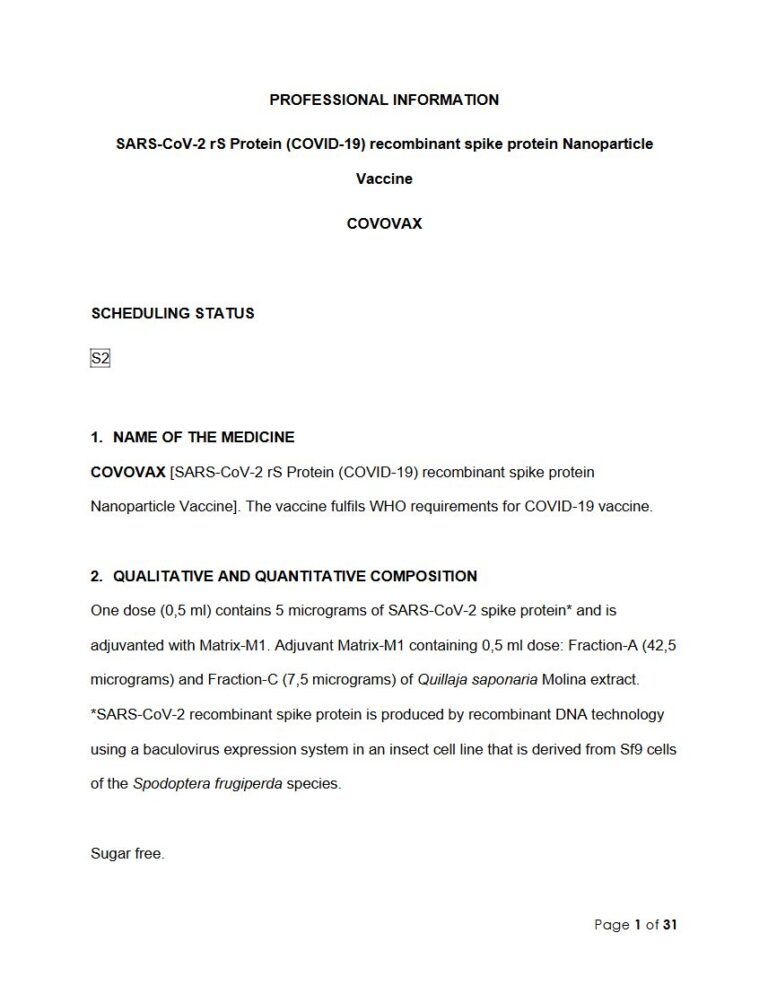
1. NAME OF THE MEDICINE
COVOVAX [SARS - CoV - 2 rS Protein (COVID - 19) recombinant spike protein Nanoparticle Vaccine]. The vaccine fulfils WHO requirements for COVID - 19 vaccine.
2. QUALITATIVE AND QUANTITATIVE COMPOSITION
One dose (0,5 ml) contains 5 micrograms of SARS - CoV - 2 spike protein* and is adjuvanted with Matrix - M1. Adjuvant Matrix - M1 containing 0,5 ml dose: Fraction - A (42,5 micrograms) and Fraction - C (7,5 micrograms) of Quillaja saponaria Molina extract.
*SARS - CoV - 2 recombinant spike protein is produced by recombinant DNA technology using a baculovirus expression system in an insect cell line that is derived from Sf9 cells of the Spodoptera frugiperda species. Sugar free.
For the full list of excipients, see section 6.1.
3. PHARMACEUTICAL FORM
Dispersion for injection (injection). COVOVAX is colourless to slightly yellow, clear to mildly opalescent, free to practically free from visible particles.
4. CLINICAL PARTICULARS
4.1 Therapeutic indications
COVOVAX is indicated for active immunization to prevent COVID - 19 caused by SARS - CoV - 2 in individuals 12 years of age and older. The use of this vaccine should be in accordance with official recommendations.
4.2 Posology and method of administration
Posology Individuals 12 years of age and older COVOVAX is administered intramuscularly as a course of 2 doses of 0,5 ml each. It is recommended to administer the second dose 3 weeks after the first dose, see section 5.1. It is recommended that individuals who receive a first dose of COVOVAX, complete the vaccination course with COVOVAX.
Paediatric population The safety and efficacy of SARS - CoV - 2 rS Protein (COVID - 19) Nanoparticle Vaccine in children and adolescents aged less than 12 years have not yet been established. No data are available.
Elderly population No dose adjustment is required in elderly individuals u2265 65 years of age.
Method of administration COVOVAX is intended for Intramuscular (IM) injection only, preferably in the deltoid muscle. For instructions on administration, see section 6.6.
4.3 Contraindications
Hypersensitivity to the active substance or to any of the excipients listed in section 6.1.
4.4. Special warnings and precautions for use
Hypersensitivity and anaphylaxis Events of anaphylaxis have been reported with COVID - 19 vaccines. Appropriate medical treatment and supervision should always be readily available in case of an anaphylactic reaction following the administration of the vaccine. Close observation for at least 15 minutes is recommended following vaccination. A second dose of the vaccine should not be given to those who have experienced anaphylaxis to the first dose of COVOVAX.
Anxiety - related reactions Anxiety - related reactions, including vasovagal reactions (syncope), hyperventilation, or stress - related reactions may occur in association with vaccination as a psychogenic response to the needle injection. It is important that precautions are in place to avoid injury from fainting.
Concurrent illness Vaccination should be postponed in individuals suffering from an acute severe febrile illness or acute infection. The presence of a minor infection and/or low - grade fever should not delay vaccination.
Thrombocytopenia and coagulation disorders As with other intramuscular injections, the vaccine should be given with caution in individuals receiving anticoagulant therapy or those with thrombocytopenia or any coagulation disorder (such as haemophilia) because bleeding or bruising may occur at the injection site following an intramuscular administration in these individuals.
Immunocompromised individuals The efficacy, safety and immunogenicity of the SARS - CoV - 2 rS Protein (COVID - 19) Nanoparticle Vaccine has been assessed in a limited number of immunocompromised individuals. The efficacy of COVOVAX may be lower in immunosuppressed individuals.
Tuberculosis (TB) Vaccines may be less effective in patients with TB due to weakened immune system, and although there is no evidence the safety profile of this population receiving NVX - CoV2373 will be different to that of the general population, the possibility cannot be excluded.
Human Immunodeficiency Virus (HIV) Subjects with HIV were not excluded from the clinical programme, and 244 participants were enrolled in the 2019nCoV - 501 study. The safety profile of NVX - CoV2373 in HIV - positive participants in this study was similar to that seen in HIV - negative participants.
There is no evidence that the safety profile of this population receiving NVX - CoV2373 will be different to that of the general population, but given the paucity of data, the possibility cannot be excluded.
Duration of protection The duration of protection afforded by the vaccine is unknown as it is still being determined by ongoing clinical trials.
Limitations of vaccine effectiveness Individuals may not be fully protected until 7 days after their second dose. As with all vaccines, vaccination with COVOVAX may not protect all vaccine recipients.
Excipients Sodium This vaccine contains less than 1 mmol sodium (23 mg) per dose, that is to say essentially u2018sodium - freeu2019. Potassium This vaccine contains potassium, less than 1 mmol (39 mg) per 0,5 ml, that is to say essentially u2018potassium - freeu2019.
4.5 Interaction with other medicinal products and other forms of interaction Co - administration of SARS - CoV - 2 rS Protein (COVID - 19) Nanoparticle Vaccine with inactivated influenza vaccines has been evaluated in a limited number of participants in an exploratory clinical trial sub - study, see section 4.8 and section 5.1. The binding antibody response to SARS - CoV - 2 was lower when Nuvaxovid was given concomitantly with inactivated influenza vaccine. The clinical significance of this is unknown.
Concomitant administration of SARS - CoV - 2 rS Protein (COVID - 19) Nanoparticle Vaccine with other vaccines has not been studied.
4.6 Fertility, pregnancy and lactation Pregnancy There is limited experience with use of SARS - CoV - 2 rS Protein (COVID - 19) Nanoparticle Vaccine in pregnant women. Animal studies do not indicate direct or indirect harmful effects with respect to pregnancy, embryo/foetal development, parturition, or post - natal development, see section 5.3. Administration of COVOVAX in pregnancy should only be considered when the potential benefits outweigh any potential risks for the mother and foetus.
Breast - feeding It is unknown whether COVOVAX is excreted in human milk. No effects on the breast - fed newborn/infant are anticipated since the systemic exposure of the breast - feeding woman to COVOVAX is negligible.
Fertility Animal studies do not indicate direct or indirect harmful effects with respect to reproductive toxicity, see section 5.3.
4.7 Effects on ability to drive and use machines COVOVAX has no or negligible influence on the ability to drive and use machines. However, some of the effects mentioned under section 4.8 may temporarily affect the ability to drive or use machines.
4.8 Undesirable effects Overall summary of the safety profile from the Overseas studies: Clinical trial data for the age group u2265 18 Years: The safety of Nuvaxovid [Novovax SARS - CoV - 2 rS Protein (COVID - 19) Nanoparticle Vaccine] was evaluated from an interim analysis of pooled data from 5 ongoing clinical trials conducted in Australia, South Africa, the United Kingdom, the United States and Mexico. At the time of the analysis, a total of 49,950 participants age 18 years and older received at least one dose of Nuvaxovid (n = 30,058) or placebo (n = 19,892). At the time of vaccination, the median age was 48 years (range 18 to 95 years). The median duration of follow - up was 70 days post - Dose 2, with 32,993 (66 %) participants completing more than 2 months follow - up post - Dose 2. Of the pooled reactogenicity data, which includes participants age 18 years and older enrolled in the two phase 3 studies who received at least one dose of Nuvaxovid (n = 19,898) or placebo (n = 10,454), the most frequent adverse reactions were injection site tenderness (75 %), injection site pain (62 %), fatigue (53 %), myalgia (51 %), headache (50 %), malaise (41 %), arthralgia (24 %), and nausea or vomiting (15 %). Adverse reactions were usually mild to moderate in severity with a median duration of less than or equal to 2 days for local events and less than or equal to 1 day for systemic events following vaccination. Overall, there was a higher incidence of adverse reactions in younger age groups: the incidence of injection site tenderness, injection site pain, fatigue, myalgia, headache, malaise, arthralgia, and nausea or vomiting was higher in adults aged 18 to less than 65 years than in those aged 65 years and above. Local and systemic adverse reactions were more frequently reported after Dose 2 than after Dose 1. Licensed inactivated seasonal influenza vaccines were co - administered to participants on the same day as Dose 1 of Nuvaxovid (n = 217) or placebo (n = 214) in the opposite deltoid muscle of the arm in 431 participants enrolled in an exploratory Phase 3 (2019nCoV - 302) sub - study. The frequency of local and systemic adverse reactions in the influenza sub - study population was higher than in the main study population following Dose 1 in both Nuvaxovid and placebo recipients.
Tabulated list of adverse reactions Very common (u2265 1/10), Common (u2265 1/100 to < 1/10), Uncommon (u2265 1/1,000 to < 1/100), Rare (u2265 1/10,000 to < 1/1,000), Very rare (< 1/10,000), Not known (cannot be estimated from the available data).
Table 1: Adverse reactions from Nuvaxovid Clinical Trials MedDRA SOC Frequency Adverse reactions General disorders and administration site conditions Very common Injection site pain a, injection site tenderness a, fatigue a, malaise a Common Injection site redness a,c, injection site swelling a, pyrexia a, chills, pain in extremity Uncommon Injection site pruritis a Higher frequencies of these events were observed after the second dose. b This term also included events reported as influenza - like illness. c This term includes both injection site redness and injection site erythema (common).
Clinical trial data for the age group 12 to < 18 Years: The safety of Nuvaxovid [Novavax SARS - CoV - 2 rS Protein (COVID - 19) Nanoparticle Vaccine] was evaluated in a Phase 3, multinational, multicenter, randomized, observer - blinded, placebo - controlled study evaluating the efficacy, safety, and immunogenicity of NVXCoV2373 in adult participants u2265 18 years of age in the United States (US) and Mexico with a paediatric expansion in adolescents 12 to < 18 years of age conducted in the US only (Study 2019nCoV - 301). At the time of the analysis, a total of 2,232 adolescent participants received at least one dose of Nuvaxovid (n=1487) or placebo (n=745). At the time of vaccination, the median age was 14 years (range 12 to 17 years). Median duration of the safety follow - up period after first and second vaccinations were 94 and 71 days, respectively, in the Nuvaxovid group and 93 and 71 days, respectively, in the placebo group. Nervous system disorders Very common Headache Musculoskeletal and connective tissue disorders Very common Myalgia a, arthralgia a Gastrointestinal system disorders Very common Nausea or vomiting a Skin and subcutaneous tissue disorders Uncommon Rash, erythema, pruritus, urticaria Blood and lymphatic system disorders. Uncommon Lymphadenopathy Nuvaxovid was well tolerated with an acceptable safety profile. Reactogenic events were mostly of mild to moderate severity and of a median duration of 1 to 2 days. Tenderness (65.3%) and pain (61%) were the most frequent solicited local adverse events. Muscle pain (34%), headache (30.3%), fatigue (24.2%), and malaise (14.8%) and were the most frequent solicited systemic adverse events. Overall, the safety profile of Nuvaxovid was similar to that seen with placebo, with higher frequencies of unsolicited treatment - related Treatment Emergent Adverse Events (TEAEs) in the Nuvaxovid group, primarily with events consistent with a reactogenic response.
Table 2: Adverse reactions from Nuvaxovid adolescent Clinical Trial (age group 12 to < 18 Years) MedDRA SOC Frequency Adverse reactions General disorders and administration site conditions Very common Injection site pain, injection site tenderness, fatigue, malaise Common Injection site erythema, injection site swelling, pyrexia Rare Chills Nervous system disorders Very common Headache Musculoskeletal and connective tissue disorders Very common Myalgia Common Arthralgia Gastrointestinal and system disorders Very common Nausea and vomiting Rare Diarrhoea Metabolism and nutrition disorders Rare Decreased appetite Blood and lymphatic system disorders Uncommon Lymphadenopathy Overall summary of the safety profile from the Indian study Adult cohort (u226518 years of age): COVOVAX was safe and well tolerated in the phase 2/3 clinical trial in India. In the Phase 2 part (n = 200), 200 adults received COVOVAX or Placebo in 3:1 ratio. During 14 day follow up post - second dose, there were no causally related serious adverse events (SAEs) reported. In the Phase 3 part (n = 1396), participants received COVOVAX or Novavax SARS - CoV - 2 rS Protein Nanoparticle Vaccine (Novavax vaccine) in 3:1 ratio [1046 in COVOVAX group and 350 in Novavax SARS - CoV - 2 rS Protein Nanoparticle Vaccine (Novavax vaccine) group]. All 1396 participants received the first dose while 1375 participants received the second dose. An interim analysis included data collected until Day 36 visit (14 days after second dose) of all 1396 participants. Demographic characteristics were generally similar among participants across both the groups. Overall, the incidence of solicited reactions (injection site reactions: pain, tenderness, erythema, swelling and induration; and systemic reactions: fever, headache, fatigue, malaise, arthralgia, myalgia, nausea and vomiting), unsolicited adverse events and serious adverse events (SAEs) was comparable in the study and control groups. Among 1396 participants who received the first dose, a total of 5 SAEs in 5 (0,4 %) participants were reported; in 3 (0,3 %) participants in COVOVAX group and in 2 (0,6 %) participants in Novavax vaccine group. The SAEs in the COVOVAX group included pyrexia, limb crushing injury, and joint effusion (1 participant each). The SAEs in the Novavax vaccine group included dengue fever and retinal vein occlusion reported in 1 participant each. All SAEs were assessed as not related to study vaccine. All SAEs resolved without any sequelae except for event of limb crushing injury which was ongoing at the time of data cut off.
Table 3: Adverse drug reactions from COVOVAX study in India (Data until Day 36 visit) MedDRA SOC Frequency Adverse reactions Gastrointestinal disorders Common Nausea Uncommon Vomiting General disorders and administration site conditions Very common Injection site pain, pyrexia Common Injection site tenderness, injection site erythema, injection site swelling, injection site induration, fatigue, pain, malaise Uncommon Asthenia, chills, injection site pruritus, injection site rash Musculoskeletal and connective tissue disorders Common Myalgia, arthralgia Uncommon Pain in extremity, back pain Nervous system disorders Very common Headache Rare Dizziness, somnolence Skin and subcutaneous tissue disorders. Rare Pruritis Adolescent cohort (12 to 17 years of age) This is a Phase 2/3, observer - blind, randomized, controlled study in Indian children 2 to 17 years of age, to evaluate the safety and immunogenicity of COVOVAX. A total of 460 children of 12 to 17 years of age received the first dose of study vaccine (346 COVOVAX and 114 Placebo) and 445 received the second dose of study vaccine (335 COVOVAX and 110 Placebo). Demographic characteristics were generally similar among participants across both the groups. COVOVAX was well tolerated with an acceptable safety profile. The local and systemic solicited events were mostly of mild severity with median duration of 1 to 2 days. Pain (36.4%) and tenderness (11.3%) were the most frequent solicited local adverse events. Fever (22.5%), headache (18.8%), fatigue (14.2%), and malaise (9.2%) and were the most frequent solicited systemic adverse events.
Table 4: Adverse drug reactions in adolescent cohort (12 to 17 years of age) from COVOVAX study in India (Data until Day 36 visit) MedDRA SOC Frequency Adverse reactions General disorders and administration site conditions Very common Injection site pain, injection site tenderness, fatigue, pyrexia Common Injection site erythema, injection site swelling, injection site induration, malaise Nervous system disorders Very common Headache Musculoskeletal and connective tissue disorders Common Myalgia, Arthralgia Gastrointestinal system disorders Common Nausea, vomiting Reporting of suspected adverse reactions Reporting suspected adverse reactions after authorisation of the medicine is important. It allows continued monitoring of the benefit/risk balance of the medicine. Healthcare professionals are asked to report any suspected adverse reactions to SAHPRA via the u201c6.04 Adverse Drug Reaction Reporting Formu201d, found online under SAHPRAu2019s publications: https://www.sahpra.org.za/Publications/Index/8 or [email protected]
4.9 Overdose No case of overdose has been reported. In the event of an overdose, monitoring of vital functions and possible symptomatic treatment is recommended.
5. PHARMACOLOGICAL PROPERTIES
5.1 Pharmacodynamic properties Pharmacotherapeutic group: Antigen A30.2, ATC code: J07BX03 Mechanism of action COVOVAX is composed of purified full - length SARS - CoV - 2 recombinant spike (S) protein that is stabilised in its prefusion conformation. The addition of the saponin - based Matrix - M1 adjuvant facilitates activation of the cells of the innate immune system, which enhances the magnitude of the S protein - specific immune response. The two vaccine components elicit B - and T - cell immune responses to the S protein, including neutralising antibodies, which protect against COVID - 19.
Efficacy data from the Overseas studies: The clinical efficacy, safety, and immunogenicity of Nuvaxovid [Novovax SARS - CoV - 2 rS Protein (COVID - 19) Nanoparticle Vaccine] is being evaluated in two pivotal, placebo - controlled, Phase 3 studies, Study 1 (2019nCoV - 301) conducted in North America and Study 2 (2019nCoV - 302) conducted in the United Kingdom, and a Phase 2a/b study, Study 3, conducted in South Africa.
Study 1 (2019nCoV - 301) Study 1 is an ongoing Phase 3, multicentre, randomised, observer - blinded, placebo - controlled study in participants 18 years of age and older in United States and Mexico. Upon enrolment, participants were stratified by age (18 to 64 years and u2265 65 years) and assigned in a 2:1 ratio to receive Nuvaxovid or placebo. The study excluded participants who were significantly immunocompromised due to immunodeficiency disease; active cancer on chemotherapy; received chronic immunosuppressive therapy or received immunoglobulin or blood - derived products within 90 days; were pregnant; or breastfeeding; or had a history of laboratory - confirmed diagnosed COVID - 19. Participants with clinically stable underlying comorbidity were included as were participants with well - controlled HIV infection. Enrolment of adults completed in February 2021. Participants will be followed for up to 24 months after the second dose for assessments of safety, and efficacy against COVID - 19. Following collection of sufficient safety data to support application for emergency use authorisation, initial recipients of placebo were invited to receive two injections of Nuvaxovid 21 days apart and initial recipients of Nuvaxovid to receive two injections of placebo 21 days apart (u201cblinded crossoveru201d). All participants were offered the opportunity to continue to be followed in the study. The primary efficacy analysis population (referred to as the Per - Protocol Efficacy [PP - EFF] analysis set) included 25,452 participants who received either Nuvaxovid (n = 17,312) or placebo (n = 8,140), received two doses (Dose 1 on day 0; Dose 2 at days 21, median 21 days [IQR 21 to 23]. Range 14 to 60), did not experience an exclusionary protocol deviation, and did not have evidence of SARS - CoV - 2 infection through 7 days after the second dose. Demographic and baseline characteristics were balanced amongst participants who received Nuvaxovid and those who received placebo. In the PP - EFF analysis set for participants who received Nuvaxovid, the median age was 47 years (range: 18 to 95 years); 88 % (n = 15,264) were 18 to 64 years old and 12 % (n = 2,048) were aged 65 and older; 48 % were female; 94 % were from the United States and 6 % were from Mexico; 76 % were White, 11 % were Black or African American, 6 % were American Indian (including Native Americans) or Alaskan Native, and 4 % were Asian; 22 % were Hispanic or Latino. At least one pre - existing comorbidity or lifestyle characteristic associated with an increased risk of severe COVID - 19 was present in 16,493 (95 %) participants. Comorbidities included: obesity (body mass index (BMI) u2265 30 kg/m2); chronic lung disease; diabetes mellitus type 2, cardiovascular disease; chronic kidney disease; or human immunodeficiency virus (HIV). Other high - risk characteristics included age u226565 years with or without comorbidities or age < 65 years with comorbidities and/or living or working conditions involving known frequent exposure to SARS - CoV - 2 or to densely populated circumstances. COVID - 19 cases were confirmed by polymerase chain reaction (PCR) through a central laboratory. Vaccine efficacy is presented in Table 5.
Table 5: Vaccine efficacy against PCR - confirmed COVID - 19 with onset from 7 days after second vaccination1 - PP - EFF analysis set; Study 2019nCoV - 301 1 VE evaluated in participants without major protocol deviation who are seronegative (for SARS - CoV - 2) at baseline and do not have a laboratory confirmed current SARS - CoV - 2 infection with symptom onset up to 6 days after the second dose, and who have received the full prescribed regimen of trial vaccine. 2 Mean disease incidence rate per year in 1,000 people. 3 Based on log - linear model of PCR - confirmed COVID - 19 infection incidence rate using Poisson regression with treatment group and age strata as fixed effects and robust error variance, where VE = 100 u00d7 (1 u2013 relative risk). 4 Met primary efficacy endpoint criterion for success with a lower bound confidence interval (LBCI) > 30 % at the planned primary confirmatory analysis. Vaccine efficacy of Nuvaxovid to prevent the onset of COVID - 19 from seven days after Dose 2 was 90,4 % (95 % CI 82,9 u2013 94,6). No cases of severe COVID - 19 were reported in the 17,312 Nuvaxovid participants compared with 4 cases of severe COVID - 19 reported in the 8,140 placebo recipients in the PP - EFF analysis set. Subgroup analyses of the primary efficacy endpoint showed similar efficacy point estimates for male and female participants and racial groups, and across participants with medical comorbidities associated with high risk of severe COVID - 19. There were no meaningful differences in overall vaccine efficacy in participants who were at increased risk of severe COVID - 19 including those with 1 or more comorbidities that increase the risk of severe COVID - 19 (e.g., BMI u2265 30 kg/m2, chronic lung disease, diabetes mellitus type 2, cardiovascular disease, and chronic kidney disease). Efficacy results reflect enrolment that occurred during the time period when strains classified as Variants of Concern or Variants of Interest were predominantly circulating in the two countries (US and Mexico) where the study was conducted. Sequencing data were available for 61 of the 77 endpoint cases (79 %). Of these, 48 out of 61 (79 %) were identified as Variants of Concern or Variants of Interest. The most common Variants of Concern identified were: Alpha with 31/61 cases (51 %), Beta (2/61, 4 %) and Gamma (2/61, 4 %), while the most common Variants of Interest were Iota with 8/61 cases (13 %), and Epsilon (3/61, 5 %).
Study 1 (2019nCoV - 301), Adolescent Expansion The paediatric expansion of Phase 3 study in USA (reported above) in adolescent participants 12 to < 18 years of age randomized in a 2:1 ratio to receive 2 intramuscular (IM) injections of Nuvaxovid (5 u03bcg SARS - CoV - 2 rS co formulated with 50 u03bcg Matrix M1 adjuvant) or placebo (normal saline) 21 days apart. All participants completed their initial vaccination period. A planned analysis of efficacy, safety, and immunogenicity (including effectiveness) results was conducted after all pediatric participants were followed for a median of 60 days after second vaccination. A two - dose regimen of Nuvaxovid, administered 21 (+7 days) days apart, markedly increased serum anti - S IgG antibodies, hACE2 receptor binding inhibition antibodies, and neutralizing antibody levels relative to placebo at 2 weeks following second vaccination. The observed vaccine efficacy of Nuvaxovid against PCR - confirmed, symptomatic mild, moderate or severe COVID - 19 in the Per - Protocol Efficacy population was 79.54% (95% CI: 46.83, 92.13).
Table 6: Vaccine Efficacy against PCR - Confirmed Symptomatic COVID 19 with Onset from at Least 7 Days after Second Vaccination in Baseline Serologically Negative/PCR - negative Adolescent Participants (PP EFF Analysis Set) Parameter NVX - CoV2373 N = 1205 Placebo N = 594 Participants with occurrence of event 1, n (%) 6 (0,5) 14 (2,4) Log - linear model using modified Poisson regression 2 Mean disease incidence rate per year in 100 people 2,90 14,20 95 % Cl 1,31, 6,46 8,42, 23,93 Vaccine efficacy (%) 79,54 95 % Cl 46,83 & 92,13 Abbreviations: CI = confidence interval; COVID - 19 = coronavirus disease 2019; NVX - CoV2373 = 5 u03bcg SARS - CoV - 2 rS with 50 u03bcg Matrix - M1 adjuvant; PCR = polymerase chain reaction; PP - EFF = Per - Protocol Efficacy; SARS - CoV - 2 rS = severe acute respiratory syndrome coronavirus 2 recombinant spike protein nanoparticle vaccine; VE = vaccine efficacy. 1. Event = first occurrence of PCR - confirmed mild, moderate, or severe COVID - 19 with onset of illness episode from at least 7 days after second vaccination within the surveillance period. 2. Modified Poisson regression with logarithmic link function, treatment group, and strata as fixed effects and robust error variance.
Study 2 (2019nCoV - 302) Study 2 is an ongoing Phase 3, multicentre, randomised, observer - blinded, placebo - controlled study in participants 18 to 84 years of age in the United Kingdom. Upon enrolment, participants were stratified by age (18 to 64 years; 65 to 84 years) to receive Nuvaxovid or placebo. The study excluded participants who were significantly immunocompromised due to immunodeficiency disease; current diagnosis or treatment for cancer; autoimmune disease/condition; received chronic immunosuppressive therapy or received immunoglobulin or blood - derived products within 90 days; bleeding disorder or continuous use of anticoagulants; history of allergic reactions and/or anaphylaxis; were pregnant; or had a history of laboratory - confirmed diagnosed COVID - 19. Participants with clinically stable disease, defined as disease not requiring significant change in therapy or hospitalisation for worsening disease during the 4 weeks before enrolment were included. Participants with known stable infection with HIV, hepatitis C virus (HCV), or hepatitis - B virus (HBV) were not excluded from enrolment. Enrolment was completed in November 2020. Participants are being followed for up to 12 months after the primary vaccination series for assessments of safety and efficacy against COVID - 19. The primary efficacy analysis set (PP - EEF) included 14,039 participants who received either Nuvaxovid (n = 7,020) or placebo (n = 7,019), received two doses (Dose 1 on day 0; Dose 2 at median 21 days), (IQR 21 to 23), range 16 to 45, did not experience an exclusionary protocol deviation, and did not have evidence of SARS - CoV - 2 infection through 7 days after the second dose. Demographic and baseline characteristics were balanced amongst participants who received Nuvaxovid and participants who received placebo. In the PP - EFF analysis set for participants who received Nuvaxovid, median age was 56,0 years (range: 18 to 84 years); 72 % (n = 5,067) were 18 to 64 years old and 28 % (n = 1,953) were aged 65 to 84; 49 % were female; 94% were White; 3 % were Asian; 1% were multiple races, < 1 % were Black or African American; and < 1 % were Hispanic or Latino; and 45% had at least one comorbid condition.
Table 7: Vaccine efficacy analysis of PCR - confirmed COVID - 19 with onset at least 7 days after the second vaccination - (PP - EFF population): Study 2 (2019nCoV - 302) Subgroup Nuvaxovid Placebo & Vaccine Efficacy (95% Cl) Participants N COVID - 19 cases n (%) Incidence Rate Per Year Per 1,000 People 1 Participants N COVID - 19 cases n (%) Incidence Rate Per Year Per 1,000 People 1 Primary efficacy endpoint All participants 7,020 10 (0,1) 6,53 7,019 96 (1,4) 63,43 89,7 % (80,2, 94,6) 2,3 Subgroup analyses of the primary efficacy endpoint 18 to 64 years of age 5,067 9 (0,2) 12,30 5,062 87 (1,7) 120,22 89,8 % (79,7, 94,9) 65 to 84 years of age 1,953 1 (0,10) 2 --- 1,957 9 (0,9) 2 --- 88,9 % (20,2, 99,7) 4 1 Mean disease incidence rate per year in 1000 people. 2 Based on Log - linear model of occurrence using modified Poisson regression with logarithmic link function, treatment group and strata (age - group and pooled region) as fixed effects and robust error variance. 3 Met primary efficacy endpoint criterion for success with a lower bound confidence interval (LBCI) > 30 % efficacy has been confirmed at the interim analysis.
4 Based on the Clopper - Pearson model (due to few events), 95 % CIs calculated using the Clopper - Pearson exact binomial method adjusted for the total surveillance time. These results reflect enrolment that occurred during the time period when the B.1.17 (Alpha) variant was circulating in the UK. Identification of the Alpha variant was based on S gene target failure by PCR. Data were available for 95 of the 106 endpoint cases (90 %). Of these, 66 out of 95 (69 %) were identified as the Alpha variant with the other cases classified as non - Alpha. No cases of severe COVID - 19 were reported in the 7,020 Nuvaxovid participants compared with 4 cases of severe COVID - 19 reported in the 7,019 placebo recipients in the PP - EFF analysis set.
Licensed seasonal influenza vaccine co - administration sub - study Overall, 431 participants were co - vaccinated with inactivated seasonal influenza vaccines; 217 sub - study participants received Nuvaxovid and 214 received placebo. Demographic and baseline characteristics were balanced amongst participants who received Nuvaxovid and participants who received placebo. In the per - protocol immunogenicity (PP - IMM) analysis set for participants who received Nuvaxovid (n = 191), median age was 40 years (range: 22 to 70 years); 93 % (n = 178) were 18 to 64 years old and 7 % (n = 13) were aged 65 to 84, 43 % were female; 75 % were White; 23 % were multiracial or from ethnic minorities; and 27 % had at least one comorbid condition. Co - administration resulted in no change to influenza vaccine immune responses as measured by hemagglutination inhibition (HAI) assay. A 30 % reduction in antibody responses to Nuvaxovid was noted as assessed by an anti - spike IgG assay with seroconversion rates similar to participants who did not receive concomitant influenza vaccine. (see section 4.5 and section 4.8).
Study 3 (2019nCoV - 501) Study 3 is an ongoing Phase 2a/b, multicentre, randomised, observer - blinded, placebo - controlled study in HIV - negative participants 18 to 84 years of age and people living with HIV (PLWH) 18 to 64 years of age in South Africa. PLWH were medically stable (free of opportunistic infections), receiving highly active and stable antiretroviral therapy, and having an HIV - 1 viral load of < 1000 copies/ ml. Enrolment was completed in November 2020. The primary efficacy analysis set (PP - EFF) included 2,770 participants who received either Nuvaxovid (n = 1,408) or placebo (n = 1,362), received two doses (Dose 1 on day 0; Dose 2 on day 21), did not experience an exclusionary protocol deviation, and did not have evidence of SARS - CoV - 2 infection through 7 days after the second dose. Demographic and baseline characteristics were balanced amongst participants who received Nuvaxovid and participants who received placebo. In the PP - EFF analysis set for participants who received Nuvaxovid, median age was 28 years (range: 18 to 84 years); 40 % were female; 91 % were Black/African American; 2 % were White; 3 % were multiple races, 1 % were Asian; and 2 % were Hispanic or Latino; and 5,5 % were HIV - positive. These results reflect enrolment that occurred during the time period when the B.1.351 (Beta) variant was circulating in South Africa.
Elderly population Nuvaxovid was assessed in individuals 18 years of age and older. The efficacy of Nuvaxovid was consistent between elderly (u2265 65 years) and younger individuals (18 to 64 years).
Immunogenicity data from the Indian study: Adult cohort (u226518 years of age): This is a Phase 2/3, multicenter, randomized, observer - blinded, placebo - controlled study in participants 18 years of age and older in India. A total of 1596 were enrolled in the study and received at least one dose of the study vaccine. Safety was assessed in all 1596 participants while immunogenicity was assessed in 458 participants. The demographic and baseline characteristics between the groups were comparable. Among 1596 participants, there were 1563 participants (97.9%) between 18 to 59 years of age and remaining 33 (2.1%) were u2265 60 years of age. Of these 954 were males (59.8%) and 642 were females (40.2%). The median age was 33 years with a range of 18 to 81 years, median BMI was 24.2 kg/m2. Of these 1596 participants, 198 participants (12.4%) had comorbidities at baseline. Comorbidities included obesity (BMI u2265 30), diabetes mellitus, hypertension, cardiovascular disorders, dyslipidaemia, hyperthyroidism, hypothyroidism, asthma, chronic obstructive pulmonary disease etc. Geometric Mean ELISA Units (GMEUs) of IgG antibodies against spike (S) protein were comparable between the groups at baseline u2013 Day 1. GMEUs increased significantly after each dose of vaccine in both the groups and were comparable. There was > 92 % seroconversion in both the groups on Day 36 (14 days after second dose). The immunogenicity data indicates that COVOVAX is comparable in terms of anti - S IgG antibody titers and seroconversion rates to Novavax vaccine (see Tables 8 and 9).
Table 8 Summary of Anti - S IgG antibodies Timepoint Statistic COVOVAX (N = 340) n (%) Novavax vaccine (N = 110) n (%) Baseline N 340 110 GMEU 2172.3 1708.6 95 % Cl (1799.8, 2621.8) (1230.7, 2372.2) 21 (+7) days after Dose 1 N 340 110 GMEU 38350.9 34603.6 95 % Cl (33043.7, 44510.4) (26002.6, 46049.5) 14 (+7) days after Dose 2 N 338 109 GMEU 143506.4 152276.9 95 % Cl (133203.2, 154606.7) (132441.4, 175083.1)
Table 9 Summary of Proportion of Participants with Seroconversion for Anti - S IgG Antibodies Timepoint Statistic COVOVAX (N = 340) n (%) Novavax vaccine (N = 110) n (%) 21 (+7) days after Dose 1 N Evaluated 340 110 Seroconversion, n (%) 281 (82.6) 92 (83.6) 95 % Cl (78.2, 86.5) (75.4, 90.0) 14 (+7) days after Dose 2 N Evaluated 338 109 Seroconversion, n (%) 314 (92.9) 105 (96.3) 95 % Cl (89.6, 95.4) (90.9, 99.0)
Adolescent cohort (12 to 17 years of age): This is a Phase 2/3, observer - blind, randomized, controlled study in Indian children 2 to 17 years of age, to evaluate the safety and immunogenicity of COVOVAX. A total of 460 children of 12 to 17 years of age were enrolled in the study and received at least one dose of the study vaccine. Safety and immunogenicity was assessed in all participants. Of these 241 were males (52.4%) and 219 were females (47.6%). The median age was 14 years with a range of 12 to 17 years, median BMI was 18.7 kg/m2. None of the participants had any comorbid condition. GMEUs of anti - S IgG antibodies were comparable between the groups at baseline u2013 Day 1. GMEUs increased substantially after each dose of the vaccine in the COVOVAX group and no response was seen in the Placebo group. There was > 98% seroconversion in the COVOVAX group on Day 36 (14 days after the second dose). The immunogenicity data indicates that COVOVAXu2122 is highly immunogenic in the children of 12 to 17 years of age (see Tables 10 and 11).
Table 10: Summary of anti - S IgG antibodies Timepoint Statistic COVOVAX (N = 333) n (%) Novavax vaccine (N = 108) n (%) Baseline N 333 108 GMEU 1664.2 1366.6 95 % Cl (1413.7, 1959.1) (1033.1,1807,8) 21 (+7) days after Dose 1 N 332 109 GMEU 72660.4 1614.6 95 % Cl (63586.3, 83029.4) (1174.7, 2219.3) 14 (+7) days after Dose 2 N 330 107 GMEU 170193.6 1480.4 95 % Cl (157429.7, 183992.4) (11101.1, 1974.3)
Table 11: Summary of proportion of participants with seroconversion for anti - S IgG antibodies Timepoint Statistic COVOVAX (N = 333) n (%) Novavax vaccine (N = 108) n (%) 21 (+7) days after Dose 1 N Evaluated 332 108 Seroconversion, n (%) 317 (95.5) 4 (3.7) 95 % Cl (92.7, 97.4) (1.0, 9.2) 14 (+7) days after Dose 2 N 330 107 GMEU 326 (98.8) 3 (2.8) 95 % Cl (96.9, 99.7) (0.6, 8.0)
Pharmacokinetic properties Not applicable
5.2 Preclinical safety data Non - clinical data reveal no special hazards for humans based on conventional studies of repeat dose toxicity, local tolerance and reproductive and developmental toxicity. Genotoxicity and Carcinogenicity: In vitro genotoxicity studies were conducted with the novel Matrix - M1 adjuvant and the adjuvant was shown to be non - genotoxic. Carcinogenicity studies were not performed. Carcinogenicity is not expected. Reproductive toxicity: A developmental and reproductive toxicity study was performed in female rats administered four intramuscular doses (two prior to mating; two during gestation) of 5 u03bcg SARS - CoV - 2 rS protein (approximately 200 - fold excess relative to the human dose of 5 u03bcg on a weight - adjusted basis) with 10 u03bcg Matrix - M1 adjuvant (approximately 40 - fold excess relative to the human dose of 50 u03bcg on a weight - adjusted basis). No vaccine - related adverse effects on fertility, pregnancy/lactation, or development of the embryo/fetus and offspring through post - natal Day 21 were observed.
6 PHARMACEUTICAL PARTICULARS
6.1 List of excipients The excipients used in the manufacturing of COVOVAX are listed below:
- Adjuvant Matrix - M1
- Disodium hydrogen phosphate heptahydrate
- Sodium dihydrogen phosphate monohydrate
- Sodium chloride
- Polysorbate 80
- Sodium Hydroxide (for pH - adjustment)
- Hydrochloric acid (for pH - adjustment)
- Water for Injections
6.2 Incompatibilities In the absence of compatibility studies, this vaccine must not be mixed with other medicinal products, vaccines or diluted.
6.3 Shelf - life Unopened vial 9 months at + 2 u00baC to + 8 u00baC, protect from light. Once opened (first needle puncture) multi - dose vials should be used as soon as practically possible and within 6 hours when kept between + 2 u00baC and + 8 u00baC. All opened (punctured) multidose vials of COVOVAX should be discarded at the end of immunization session or six hours after the first needle puncture, whichever comes first.
6.4 Special Precautions for Storage Store in a refrigerator (+ 2 u00baC to + 8 u00baC). Do not freeze. Keep vials in outer carton to protect from light. Discard if vaccine has been frozen. Opened multidose vial (after the first use) For storage conditions after the first opening of the medicinal product, see section 6.3.
6.5 Nature and Contents of Container COVOVAX is supplied as ready to use liquid in rubber - stoppered (bromobutyl) single and multidose vial in below listed presentations 1 dose u2013 0,5 ml per vial 10 doses - 5 ml per vial
6.6 Special precautions for handling Administration: The vaccine should be discarded if particulate matter or differences in the described appearance are observed. Do not shake the vial. Each vaccine dose of 0,5 ml is withdrawn into a syringe for injection to be administered intramuscularly. Use a separate sterile needle and syringe for each individual. It is normal for liquid to remain in the vial after withdrawing the final dose. When low dead volume syringes and/ or needles are used, the amount remaining in the vial may be sufficient for an additional dose. Care should be taken to ensure a full 0,5 ml dose is administered. Where a full 0,5 ml dose cannot be extracted, the remaining volume should be discarded. Do not pool excess vaccine from multiple vials. The vaccine does not contain any preservative. Aseptic technique should be used for withdrawing the dose for administration. After the first opening, multi - dose vials should be used as soon as practically possible and within 6 hours when kept between + 2 u00baC and + 8 u00baC. Discard any unused vaccine. To facilitate the traceability of the vaccine, the name and the batch number of the administered product must be recorded for each recipient. Disposal Any unused vaccine or waste material should be disposed of in accordance with local requirements.
7 . HOLDER OF CERTIFICATE OF REGISTRATION
CIPLA MEDPRO (PTY) LTD. Building 9, Parc du Cap, Mispel Street, Belville, 7530, RSA
8 . REGISTRATION NUMBER
56/30.2/1236
9 . DATE OF FIRST AUTHORISATION/RENEWAL OF THE AUTHORISATION
16 August 2022
10 . DATE OF REVISION OF THE TEXT
16 August 2022
