
Cabrimiv 600 mg/300 mg Tablet
PDF Leaflet Revision Date: 16 October 2024
Clinical Summary
Quick overview from the medicine insert
Indication
Treatment of HIV infection in adults and adolescents from 12 years.
Dosage (summary)
One tablet once daily for adults and adolescents; not for those under 40 kg.
Special Populations
- Renal impairment
- Hepatic impairment
- Elderly
Pregnancy & Breastfeeding
Not recommended during pregnancy; avoid breastfeeding due to potential HIV transmission.
Key Drug Interactions
- Avoid with emtricitabine
- Caution with trimethoprim/sulfamethoxazole
Contraindications
- Hypersensitivity to abacavir or lamivudine
- Severe hepatic impairment
- Severe renal impairment
- Children under 12 years
Common side effects
- Hypersensitivity reactions
- Nausea
- Vomiting
- Diarrhoea
- Rash
- Fever
Counselling Points
- Inform about hypersensitivity risks
- Do not restart if hypersensitivity occurs
- Regular monitoring required during treatment
Serious warnings
- Risk of lactic acidosis
- Severe hypersensitivity reactions
- Potential for mitochondrial dysfunction
Important Disclaimer
The Cabrimiv 600 mg/300 mg Tablet professional information leaflet below is the property of Viatris Healthcare and is provided on Medinsert exactly as issued, with no.. alterations or editorial changes. We make every effort to keep content current by updating documents as soon as new versions become available. Medinsert serves as a trusted access point for healthcare professionals, but does not replace official sources or clinical judgement. For more details, please read our full disclaimer. read more>>
 Healthcare Professionals Only
This content is for registered healthcare professionals
Sign in or create a free account to read the full package insert.
Free for HPCSA-registered professionals. Powered by Medinsert.
Clinical Particulars
Section 4 of the official insert — extracted exactly as issued, no alterations
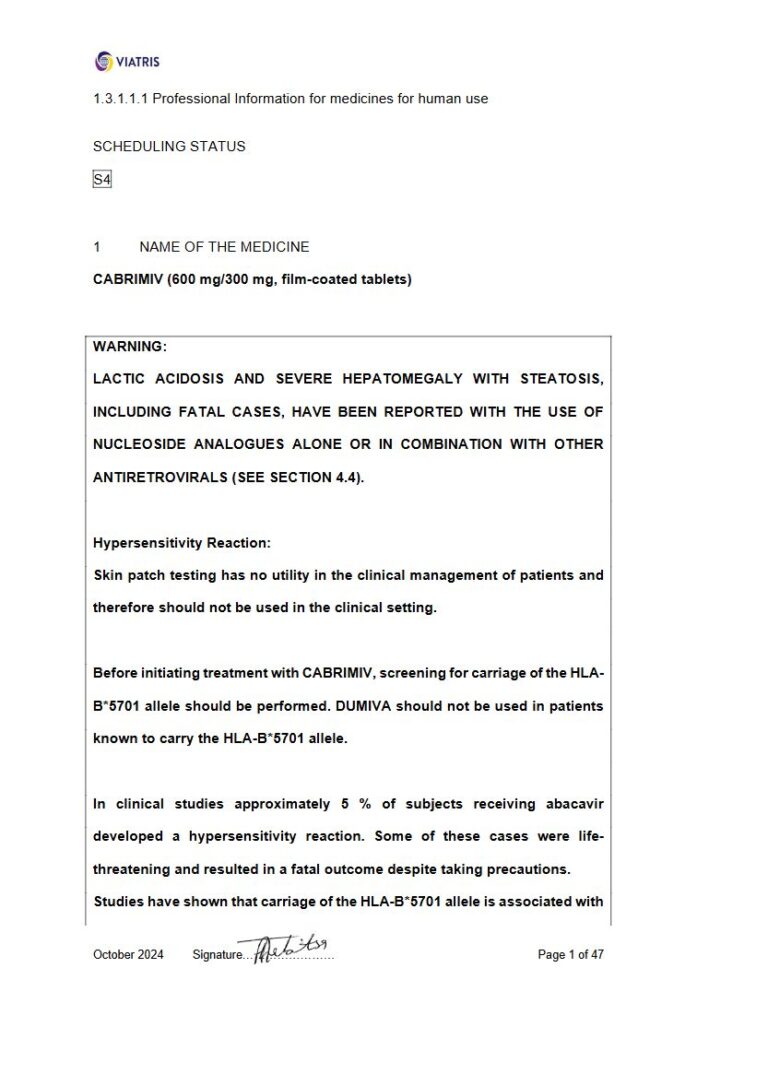
1.3.1.1.1 Professional Information for medicines for human use
October 2024
Signatureu2026u2026u2026u2026u2026u2026u2026u2026
Page 1 of 47
SCHEDULING STATUS S4
1
NAME OF THE MEDICINE CABRIMIV (600 mg/300 mg, film-coated tablets)
WARNING: LACTIC ACIDOSIS AND SEVERE HEPATOMEGALY WITH STEATOSIS, INCLUDING FATAL CASES, HAVE BEEN REPORTED WITH THE USE OF NUCLEOSIDE ANALOGUES ALONE OR IN COMBINATION WITH OTHER ANTIRETROVIRALS (SEE SECTION 4.4).
Hypersensitivity Reaction: Skin patch testing has no utility in the clinical management of patients and therefore should not be used in the clinical setting. Before initiating treatment with CABRIMIV, screening for carriage of the HLA- B*5701 allele should be performed. DUMIVA should not be used in patients known to carry the HLA-B*5701 allele. In clinical studies approximately 5 % of subjects receiving abacavir developed a hypersensitivity reaction. Some of these cases were life-threatening and resulted in a fatal outcome despite taking precautions. Studies have shown that carriage of the HLA-B*5701 allele is associated with a more than 50 % increased risk of a hypersensitivity reaction to abacavir. Abacavir should not be used in patients known to carry the HLA-B*5701 allele, unless no other therapeutic option is available based on the treatment history and resistance testing. In any patient treated with CABRIMIV, the clinical diagnosis of suspected hypersensitivity reaction must remain the basis of clinical decision-making. Even in the absence of HLA-B*5701 allele, it is important to permanently discontinue CABRIMIV and not rechallenge with CABRIMIV or abacavir if a hypersensitivity reaction cannot be ruled out on clinical grounds, due to the potential for a severe or even fatal reaction.
1.3.1.1.1 Professional Information for medicines for human use
October 2024
Signatureu2026u2026u2026u2026u2026u2026u2026u2026
Page 2 of 47
u2022 Clinical Description: Hypersensitivity reactions are characterised by the appearance of symptoms indicating multi-organ system involvement. Almost all hypersensitivity reactions will have fever and/or rash as part of the syndrome. Other signs and symptoms may include respiratory signs and symptoms such as dyspnoea, sore throat, cough, and abnormal chest x-ray findings (predominantly infiltrates, which can be localised), gastrointestinal symptoms, such as nausea, vomiting, diarrhoea, or abdominal pain, and may lead to misdiagnosis of hypersensitivity as respiratory disease (pneumonia, bronchitis, pharyngitis), or gastroenteritis. Other frequently observed signs or symptoms of the hypersensitivity reaction may include lethargy or malaise and musculoskeletal symptoms (myalgia, rarely myolysis, arthralgia). The symptoms related to this hypersensitivity reaction worsen with continued therapy and can be life threatening. These symptoms usually resolve upon discontinuation of CABRIMIV.
u2022 Clinical Management: Hypersensitivity reaction symptoms usually appear within the first six weeks of initiation of treatment with CABRIMIV, although these reactions may occur at any time during therapy. Patients should be monitored closely, especially during the first two months of treatment with CABRIMIV, with consultation every two weeks. Patients who are diagnosed with a hypersensitivity reaction whilst on therapy MUST discontinue the fixed-dose combination of CABRIMIV tablets immediately. The fixed-dose combination of CABRIMIV tablets, or any other medicinal product containing abacavir, MUST NEVER be restarted in patients who have stopped therapy due to a hypersensitivity reaction. Restarting CABRIMIV, or other medicines containing abacavir following a hypersensitivity reaction, results in a prompt return of symptoms within hours. This recurrence is usually more severe than on initial presentation and may include life-threatening hypotension and death.
1.3.1.1.1 Professional Information for medicines for human use
October 2024
Signatureu2026u2026u2026u2026u2026u2026u2026u2026
Page 3 of 47
To avoid a delay in diagnosis and minimise the risk of a life-threatening hypersensitivity reaction, the fixed-dose combination of CABRIMIV tablets must be permanently discontinued if hypersensitivity cannot be ruled out, even when other diagnoses are possible (respiratory diseases, flu-like illness, gastroenteritis or reactions to other medicines). Special care is needed for those patients simultaneously starting treatment with the fixed-dose combination of CABRIMIV tablets and other medicines known to induce skin toxicity (such as nucleotide and non-nucleoside reverse transcriptase inhibitors - NNRTIs). This is because it is currently difficult to differentiate between rashes induced by these products and abacavir related hypersensitivity reactions.
u2022 Management after an interruption of the fixed-dose combination of CABRIMIV tablets therapy: If therapy with the fixed-dose combination of CABRIMIV tablets has been discontinued for any reason and restarting therapy is under consideration, the reason for discontinuation must be established to assess whether the patient had any symptoms of a hypersensitivity reaction. If a hypersensitivity reaction cannot be ruled out, the fixed-dose combination of CABRIMIV or any other medicines medicinal products containing abacavir must not be restarted.
1.3.1.1.1 Professional Information for medicines for human use
October 2024
Signatureu2026u2026u2026u2026u2026u2026u2026u2026
Page 4 of 47
Hypersensitivity reactions with rapid onset, including life-threatening reactions have occurred after restarting abacavir in patients who had only one of the key symptoms of hypersensitivity (skin rash, fever, gastrointestinal, respiratory or constitutional symptoms such as lethargy and malaise) prior to stopping abacavir. The most common isolated symptom of a hypersensitivity reaction was a skin rash. Moreover, on very rare occasions hypersensitivity reactions have been reported in patients who have restarted therapy, and who had no preceding symptoms of a hypersensitivity reaction. In both cases if a decision is made to restart abacavir this must be done in a setting where medical assistance is readily available.
u2022 Essential patient information: Prescribers must ensure that patients are fully informed regarding the following information on the hypersensitivity reaction:
- Patients must be made aware of the possibility of a hypersensitivity reaction to abacavir as in CABRIMIV that may result in a life-threatening reaction or death.
- Patients developing signs or symptoms possibly linked with a hypersensitivity reaction MUST CONTACT their doctor IMMEDIATELY.
- Patients who are hypersensitive to abacavir should be reminded that they must never take the fixed-dose combination of CABRIMIV tablets or any other medicines containing abacavir again.
- In order to avoid restarting abacavir, patients who have experienced a hypersensitivity reaction should dispose of their remaining fixed-dose combination of CABRIMIV tablets in their possession in accordance with the local requirements and ask their doctor or pharmacist for advice.
- Patients who have stopped the fixed-dose combination of CABRIMIV tablets for any reason, and particularly due to possible adverse reactions or illness, must be advised to contact their doctor before restarting.
- Patients should be advised of the importance of taking the fixed-dose combination of CABRIMIV tablets regularly.
- Each patient should be reminded to read the Patient Information Leaflet included in the fixed-dose combination of CABRIMIV tablets package.
- They should be reminded of the importance of removing the Alert Card included in the package and keeping it with them at all times.
2 QUALITATIVE AND QUANTITATIVE COMPOSITION
CABRIMIV constitutes abacavir (as sulfate) and lamivudine in one film-coated tablet. Each film-coated tablet contains:
Abacavir sulfate equivalent to abacavir 600 mg
Lamivudine 300 mg
Sugar free
For the full list of excipients, see section 6.1.
3 PHARMACEUTICAL FORM
Film-coated tablets.
Yellow coloured, biconvex, film-coated tablet, debossed with u201cM157u201d on one side and plain on the other side.
4 CLINICAL PARTICULARS
4.1 Therapeutic indications
CABRIMIV is a fixed-dose combination of two nucleoside analogues (abacavir and lamivudine). It is indicated in antiretroviral combination therapy for the treatment of Human Immunodeficiency Virus (HIV) infection in adults and adolescents from 12 years of age.
4.2 Posology and method of administration
Posology:
- Patients should be stabilised on individual medicines before being switched over to CABRIMIV.
- Therapy should be initiated by a medical practitioner experienced in the management of HIV infection.
- CABRIMIV should not be administered to adults or adolescents who weigh less than 40 kg because it is a fixed-dose tablet that cannot be dose reduced.
- CABRIMIV can be taken with or without food.
Adults and adolescents:
- The recommended dose of CABRIMIV in adults and adolescents is one tablet once daily.
Special Populations
CABRIMIV is a fixed-dose tablet and should not be prescribed for patients requiring dosage adjustments, such as those with creatinine clearance less than 50 ml/min or with mild hepatic impairment. Separate preparations of abacavir or lamivudine should be administered in cases where discontinuation or dose adjustment is indicated. In these cases, the medical practitioner should refer to the individual product information for these medicines.
Children:
CABRIMIV is not recommended for the treatment of children as the necessary dose adjustment cannot be made. For these patients other fixed dose formulations are available.
Elderly:
The pharmacokinetics of abacavir and lamivudine have not been studied in patients over 65 years of age and consideration must be given to the greater frequency of decreased hepatic, renal and cardiac function; concomitant medicines or disease.
Renal impairment:
Whilst no dosage adjustment of abacavir is necessary in patients with renal dysfunction, a dose reduction of lamivudine is required due to decreased clearance. CABRIMIV is not recommended for use in patients with a creatinine clearance less than 50 ml/min.
Hepatic impairment:
A dose reduction of abacavir is likely to be required for patients with mild hepatic impairment. As dose reduction is not possible with CABRIMIV the separate preparations should be used when judged necessary. CABRIMIV must not be used in patients with moderate and severe hepatic impairment (see section 5.2).
Method of administration
For oral use.
4.2 Contraindications
CABRIMIV is contraindicated in:
- Patients with known hypersensitivity to abacavir, lamivudine or to any of the excipients (see section 6.1).
- Patients with abnormally low neutrophil counts (< 0,75 x 10⁹/l) (see section 4.4).
- Patients with abnormally low haemoglobin levels (< 7,5 g/dl or 4,65 mmol/l) (see section 4.4).
- Patients with severe hepatic impairment.
- Patients with severe renal impairment.
- Patients who are receiving treatment with emtricitabine.
- Children below 12 years of age (weighing less than 40 kg) as the necessary dose adjustment cannot be made.
4.4 Special warnings and precautions for use
Patients who develop a hypersensitivity reaction must discontinue CABRIMIV and MUST not be re-challenged with CABRIMIV (see section 4.4). Hypersensitivity (see section 4.8):
- The special warnings and precautions relevant to both abacavir and lamivudine are included in this section.
- There are no additional precautions and warnings relevant to CABRIMIV.
Hypersensitivity to abacavir (see section 4.8):
- In clinical studies, approximately 5 % of subjects receiving abacavir developed a hypersensitive reaction, which in rare cases has proved fatal.
- Hypersensitivity is characterised by the appearance of symptoms indicating multi-organ/body-system involvement.
- Patients who develop a hypersensitivity reaction must discontinue CABRIMIV and MUST NOT be rechallenged with CABRIMIV or any other product containing abacavir (see section 1 NAME OF MEDICINE - Boxed warning).
1.3.1.1.1 Professional Information for medicines for human use
Lactic acidosis/hyperlactataemia: Lactic acidosis and severe hepatomegaly with steatosis, including fatal cases, have been reported with the use of lamivudine alone or in combination, in the treatment of HIV infection. Long-term use of CABRIMIV can result in potentially fatal lactic acidosis as a consequence of mitochondrial dysfunction. Symptomatic hyperlactataemia and lactic acidosis are uncommon. Clinical features are non-specific, and include nausea, vomiting, abdominal pain, dyspnoea, fatigue and weight loss. Suspicious biochemical features include raised transaminases, raised lactate dehydrogenase (LDH) and/or creatine kinase. In patients with suspicious symptoms of biochemistry, measure the venous lactate level (normal < 2 mmol/l) and respond as follows:
- Lactate 2-5 mmol/l: monitor regularly and be alert for clinical signs
- Lactate 5-10 mmol/l without symptoms, monitor closely
- Lactate 5-10 mmol/l with symptoms: STOP all therapy. Exclude other causes e.g. sepsis, uraemia, diabetic ketoacidosis, thyrotoxicosis, lymphoma
- Lactate > 10 mmol/l: STOP all therapy (80 % mortality in case studies)
The above lactate values may not be applicable to paediatric patients. Caution should be exercised when administering CABRIMIV to patients with known risk factors for liver disease. Treatment with CABRIMIV should be suspended in any patient who develops clinical or laboratory findings suggestive of lactic acidosis or hepatotoxicity. Diagnosis of lactic acidosis is confirmed by demonstrating metabolic acidosis with an increased anion gap and raised lactate level. Therapy should be stopped in any patient with a raised lactate level. Blood for lactate assay should be heparinised and stored on ice. After recovery, NRTis should be avoided. Seek expert advice on medicine selection. Lactic acidosis and severe hepatomegaly with steatosis, including fatal cases, have been reported with the use of CABRIMIV alone or in combination. Caution should be exercised when administering CABRIMIV to any patient (particularly obese women) with hepatomegaly, hepatitis or other known risk factors of liver disease and hepatic steatosis (including certain medicinal products and alcohol). Patients co-infected with hepatitis C and treated with alpha interferon and ribavirin may constitute a special risk. Patients at increased risk should be followed closely.
1.3.1.1.1 Professional Information for medicines for human use
Mitochondrial dysfunction: Nucleoside and nucleotide analogues have been demonstrated in vitro and in vivo to cause a variable degree of mitochondrial damage. There have been reports of mitochondrial dysfunction in HIV negative infants exposed in utero and/or post-natal to nucleoside analogues. Apart from lactic acidosis/hyperlactataemia (see above) other manifestations of mitochondrial dysfunction include haematological disorders (anaemia, neutropenia), and peripheral neuropathy. Some late-onset neurological disorders have been reported (hypertonia, convulsion, abnormal behaviour). It is not known whether the neurological disorders are transient or permanent. Any foetus exposed in utero to nucleoside and nucleotide analogues, even HIV negative infants/children, should have clinical and laboratory follow-up and should be fully investigated for possible mitochondrial dysfunction in case of relevant sign and symptoms.
Patients with moderate to severe renal impairment: In patients with moderate to severe renal impairment, the terminal half-life of CABRIMIV is increased due to decreased clearance. The dose of CABRIMIV should therefore be adjusted (see section 4.2 & 4.3).
Pancreatitis: Pancreatitis has been observed in some patients receiving CABRIMIV. Pancreatitis must be considered whenever a patient develops abdominal pain, nausea, vomiting or elevated biochemical markers. Discontinue use of CABRIMIV until diagnoses of pancreatitis is excluded.
Lipodystrophy and metabolic abnormalities: Combination antiretroviral therapy has been associated with the redistribution/accumulation of body fat, including central obesity, dorso-cervical fat, enlargement (buffalo hump), peripheral wasting, facial wasting, breast enlargement, and elevated serum lipid and glucose levels in HIV patients. Clinical examination should include evaluation for physical signs of fat redistribution. Patients with evidence of lipodystrophy should have a thorough cardiovascular risk assessment. The long-term consequences of these events are currently unknown. Knowledge about the mechanism is incomplete. A connection between visceral lipomatosis and protease inhibitors (PIs) and lipoatrophy and nucleoside reverse transcriptase inhibitors (NRTIs) has been hypothesised. A higher risk of lipodystrophy has been associated with individual factors such as older age, and with medicine related factors such as longer duration of antiretroviral treatment and associated metabolic disturbances. Consideration should be given to the measurement of fasting serum lipids and blood glucose. Lipid disorders should be managed as clinically appropriate.
1.3.1.1.1 Professional Information for medicines for human use
Immune Reconstitution Inflammatory Syndrome: In HIV-infected patients with severe immune deficiency at the time of institution of combination antiretroviral therapy (CART), an inflammatory reaction to asymptomatic or residual opportunistic pathogens may arise and cause serious clinical conditions, or aggravation of symptoms. Typically, such reactions have been observed within the first few weeks or months of initiation of CART. Relevant examples are cytomegalovirus retinitis, generalised and/or focal mycobacterial infections, and Pneumocystis jerovicii pneumonia. Any inflammatory symptoms should be evaluated and treatment instituted when necessary. Immune reconstitution inflammatory syndrome (IRIS) is an immunopathological response resulting from the rapid restoration of pathogen-specific immune responses to pre-existing antigens combined with immune dysregulation, which occurs shortly after starting combination Anti-Retroviral Therapy (cART). Typically, such reaction presents by paradoxical deterioration of opportunistic infections being treated or with unmasking of an asymptomatic opportunistic disease, often with an atypical inflammatory presentation. IRIS usually develops within the first three months of initiation of ART and occurs more commonly in patients with low CD4 counts. Common examples of IRIS reactions to opportunistic diseases are tuberculosis, cytomegalovirus retinitis, and cryptococcal meningitis. Appropriate treatment of the opportunistic disease should be instituted or continued and ART continued. Inflammatory manifestations generally subside after a few weeks. Severe cases may respond to glucocorticoids, but there is only limited evidence for this in patients with tuberculosis IRIS. Autoimmune disorders (such as Graves' disease) have also been reported as IRIS reactions. However, the reported time to onset is more variable and these events can occur many months after initiation of treatment.
Osteonecrosis: Although etiology is considered to be multifactorial (including corticosteroid use, alcohol consumption, severe immunosuppression, higher body mass index), cases of osteonecrosis have been reported particularly in patients with advanced HIV- disease and/or long-term exposure to combination antiretroviral therapy (CART). Patients should be advised to seek medical advice if they experience joint aches and pain, joint stiffness or difficulty in movement.
Liver disease; Use of CABRIMIV can result in hepatomegaly due to non-alcoholic fatty liver disease (hepatic steatosis). The safety and efficacy of CABRIMIV has not been established in patients with significant underlying liver disorders/diseases. In case of concomitant antiviral therapy for hepatitis B or C, please also consult the relevant package inserts for these medicines. Patients with pre-existing liver dysfunction including chronic active hepatitis have an increased frequency of liver function abnormalities during combination antiretroviral therapy and should be monitored. If there is evidence of worsening liver disease in such patients, temporary or permanent discontinuation of treatment must be considered.
1.3.1.1.1 Professional Information for medicines for human use
The safety and efficacy of CABRIMIV has not been established in patients with significant underlying liver disorders. CABRIMIV is contraindicated in patients with severe hepatic impairment.
Patients co-infected with hepatitis B or C virus: If lamivudine is being used concomitantly for the treatment of HIV and HBV, additional information relating to the use of lamivudine in the treatment of hepatitis B infection can be found in the Product Information of such medicines. Patients with chronic hepatitis B or C and treated with combination antiretroviral therapy are at an increased risk of severe and potentially fatal hepatic adverse reactions. Medical practitioners should refer to current HIV treatment guidelines for the optimal management of HIV infection in patients co-infected with hepatitis B virus (HBV). In case of concomitant antiviral therapy for hepatitis B or C, please refer also to the relevant product information for these medicines. If CABRIMIV is discontinued in patients co-infected with HIV and HBV, periodic monitoring of both liver function tests and markers of HBV replication is recommended, as withdrawal of lamivudine may result in an acute exacerbation of hepatitis (see the Product Information for such medicines).
1.3.1.1.1 Professional Information for medicines for human use
Cardiovascular events: Although the available data from clinical and observational studies with abacavir show inconsistent results, several studies suggest an increased risk of cardiovascular events (notably myocardial infarction) in patients treated with abacavir. Therefore, when prescribing CABRIMIV, action should be taken to minimise all modifiable risk factors (e.g. smoking, hypertension, and hyperlipidaemia). In addition, alternative treatment options to the abacavir containing regimen should be considered when treating patients with a high cardiovascular risk.
Opportunistic infections: Patients should be advised that CABRIMIV or any other antiretroviral therapy does not cure HIV infection and that they may still develop opportunistic infections and other complications of HIV infection. Therefore, patients should remain under close clinical observation by medical practitioners experienced in the treatment of these associated HIV diseases. Regular monitoring of viral load and CD4 counts needs to be done. In HIV-infected patients with severe immune deficiency at the time of initiation of combination antiretroviral therapy, an inflammatory reaction to asymptomatic or residual opportunistic infections may arise. The risk of transmission of HIV transmission to others: Patients should be advised that current antiretroviral therapy, including CABRIMIV, has not been proven to prevent the risk of transmission of HIV to others through sexual contact or blood contamination. Appropriate precautions should continue to be taken.
1.3.1.1.1 Professional Information for medicines for human use
Risk of virological failure: Triple nucleoside therapy: There have been reports of a high rate of virological failure, and of emergence of resistance at an early stage when abacavir and lamivudine were combined with tenofovir disoproxil fumarate as a once daily regimen.
Medicine Interactions (see section 4.5): DUMIVA should not be taken with any other medicines containing lamivudine or emtricitabine (see section 4.3). The combination of lamivudine with cladribine is not recommended (see section 4.5).
4.5 Interaction with other medicines and other forms of interaction
CABRIMIV contains abacavir and lamivudine therefore any interactions identified for these individually are relevant to CABRIMIV. Clinical studies have shown that there are no clinically significant interactions between abacavir and lamivudine. Abacavir and lamivudine are not significantly metabolised by cytochrome P450 enzymes (such as CYP 3A4, CYP 2C9 or CYP 2D6) nor do they inhibit or induce this enzyme system. Therefore, there is little potential for interactions with antiretroviral protease inhibitors, non-nucleosides and other medicinal products metabolised by major P450 enzymes. The interactions listed below should not be considered exhaustive but are representative of the classes of medicines where caution should be exercised.
Interactions relevant to abacavir: Potent enzymatic inducers such as rifampicin, phenobarbital and phenytoin may via their action on UDP-glucuronyl transferases slightly decrease the plasma concentrations of abacavir. The metabolism of abacavir is altered by concomitant consumption of ethanol resulting in an increase in AUC of abacavir of about 41 %. These findings are not considered clinically significant. Abacavir has no effect on the metabolism of ethanol. Retinoid compounds are eliminated via alcohol dehydrogenase. Interaction with abacavir is possible but has not been studied. In a pharmacokinetic study, co-administration of 600 mg abacavir twice daily with methadone showed a 35 % reduction in abacavir C max and a 1 hour delay in t max, but the AUC was unchanged. The changes in abacavir pharmacokinetics are not considered clinically relevant. In this study, abacavir increased the mean methadone systemic clearance by 22 %. The induction of metabolising enzymes cannot therefore be excluded. Patients being treated with methadone and abacavir should be monitored for evidence of withdrawal symptoms indicating under dosing, as occasionally methadone re-titration may be required.
1.3.1.1.1 Professional Information for medicines for human use
Interactions relevant to lamivudine: The likelihood of metabolic interactions with lamivudine is low due to limited metabolism and plasma protein binding, and almost complete renal clearance. The possibility of interactions with other medicinal products administered concurrently with CABRIMIV should be considered, particularly when the main route of elimination is active renal secretion, especially via the cationic transport system e.g. trimethoprim. Other medicinal products (e.g. ranitidine, cimetidine) are eliminated only in part by this mechanism and were shown not to interact with lamivudine. The nucleoside analogues (e.g. zidovudine and didanosine) are not metabolised by this mechanism and are unlikely to interact with lamivudine. Administration of trimethoprim/sulfamethoxazole 160 mg/800 mg results in a 40 % increase in lamivudine exposure, because of the trimethoprim component. However, unless the patient has renal impairment, no dose adjustment of lamivudine is necessary. The pharmacokinetics of trimethoprim or sulfamethoxazole are not affected. When concomitant administration with co-trimoxazole is warranted, patients should be monitored clinically. Co-administration of CABRIMIV with high doses of co-trimoxazole for the treatment of Pneumocystis jerovicii pneumonia (PCP) and toxoplasmosis should be avoided. Co-administration of lamivudine with intravenous ganciclovir or foscarnet is not recommended until further information is available. Zalcitabine: Lamivudine may inhibit the intracellular phosphorylation of zalcitabine when the two medicinal products are used together. CABRIMIV is therefore not recommended to be used in combination with zalcitabine.
Medicines by Therapeutic Area Interaction
Geometric mean change (%) (Possible mechanism) Recommendation concerning co - administration
ANTIRETROVIRAL MEDICINES Didanosine /Abacavir Interaction not studied. No dosage adjustment necessary. Didanosine/Lamivudine Interaction not studied. Zidovudine/Abacavir Interaction not studied. Zidovudine/Lamivudine Zidovudine 300 mg single dose Lamivudine 150 mg single dose Lamivudine: AUC u2194 Zidovudine: AUC u2194 Emtricitabine/Lamivudine Due to similarities, DUMIVA should not be administered concomitantly with other cytidine analogues, such as emtricitabine (see section 4.3 & 4.4).
ANTI - INFECTIVE PRODUCTS Trimethoprim/sulfamethoxazole (Co- trimoxazole)/Abacavir Interaction not studied. No DUMIVA dosage adjustment necessary. When concomitant administration with co-trimoxazole is warranted, patients should be monitored clinically. High doses of Trimethoprim/sulfamethoxazole (Co-trimoxazole)/Lamivudine (160 mg/800 mg once daily for 5 days/300 mg single dose) Lamivudine: AUC u219140 % Trimethoprim: AUC u2194 Sulfamethoxazole: AUC u2194 (organic cation transporter inhibition)
1.3.1.1.1 Professional Information for medicines for human use
ANTIMYCOBACTERIALS Rifampicin/Abacavir Interaction not studied. Potential to slightly decrease abacavir plasma concentrations through UGT induction. Insufficient data to recommend dosage adjustment. Rifampicin/Lamivudine Interaction not studied. ANTICONVULSANTS Phenobarbital/Abacavir Interaction not studied. Potential to slightly decrease abacavir plasma concentrations through UGT induction. Insufficient data to recommend dosage adjustment. Phenobarbital/Lamivudine Interaction not studied. Phenytoin/Abacavir Interaction not studied. Potential to slightly decrease abacavir plasma concentrations through UGT induction. Insufficient data to recommend dosage adjustment. Monitor phenytoin concentrations. Phenytoin/Lamivudine Interaction not studied. ANTIHISTAMINES (HISTAMINE H2 RECEPTOR ANTAGONISTS) Ranitidine/Abacavir Interaction not studied. No dosage adjustment necessary. Ranitidine/Lamivudine Interaction not studied. Clinically significant interaction unlikely. Ranitidine eliminated only in part by renal organic cation transport system. Cimetidine/Abacavir Interaction not studied. No dosage adjustment necessary. Cimetidine/Lamivudine Interaction not studied. Clinically significant interaction unlikely. Cimetidine eliminated only in part by renal organic cation transport system.
1.3.1.1.1 Professional Information for medicines for human use
CYTOTOXICS Cladribine/Lamivudine Interaction not studied. In vitro lamivudine inhibits the intracellular phosphorylation of cladribine leading to a potential risk of cladribine loss of efficacy in case of combination in the clinical setting. Some clinical findings also support a possible interaction between lamivudine and cladribine Therefore, the concomitant use of lamivudine with cladribine is not recommended (see section 4.4). OPIOIDS Methadone/Abacavir Abacavir: AUC u2194 C max u219335 % No DUMIVA dosage adjustment necessary. (40 to 90 mg once daily for 14 days/600 mg single dose, then 600 mg twice daily for 14 days) Methadone: CL/F u219122 % Methadone dosage adjustment unlikely in majority of patients; occasionally methadone re-titration may be required. Methadone/Lamivudine Interaction not studied. RETINOIDS Retinoid compounds (e.g. isotretinoin)/Abacavir Interaction not studied. Possible interaction given common pathway of elimination via alcohol dehydrogenase. Insufficient data to recommend dosage adjustment. Retinoid compounds (e.g. isotretinoin)/Lamivudine No medicine interaction studies Interaction not studied.
1.3.1.1.1 Professional Information for medicines for human use
MISCELLANEOUS Ethanol/Abacavir (0.7 g/kg single dose/600 mg single dose) Abacavir: AUC u219141 % Ethanol: AUC u2194 (Inhibition of alcohol dehydrogenase) No dosage adjustment necessary. Ethanol/Lamivudine Interaction not studied. Sorbitol solution (3.2 g, 10.2 g, 13.4 g)/ Lamivudine Single dose lamivudine oral solution 300 mg Lamivudine: AUC u2193 14 %; 32 %; 36 % C max u2193 28 %; 52 %, 55 %. When possible, avoid chronic coadministration of DUMIVA with medicines containing sorbitol or other osmotic acting poly-alcohols or monosaccharide alcohols (e.g. xylitol, mannitol, lactitol, maltitol). Consider more frequent monitoring of HIV-1 viral load when chronic coadministration cannot be avoided. Riociguat/Abacavir Riociguat u2191 In vitro, abacavir inhibits CYP1A1. Concomitant administration of a single dose of riociguat (0.5 mg) to HIV patients receiving the combination of abacavir/dolutegravir/lamivudine (600 mg/50 mg/300 mg once daily) led to an approximately three-fold higher riociguat AUC (0- u221e) when compared to historical riociguat AUC (0- u221e) reported in healthy subjects. Riociguat dose may need to be reduced. Consult the riociguat prescribing information for dosing recommendations.
4.6 Fertility, pregnancy and lactation
Pregnancy CABRIMIV is not recommended during pregnancy. The safety of abacavir and lamivudine in human pregnancy has not been established. Studies with abacavir and lamivudine in animals have shown reproductive toxicity.
Mitochondrial dysfunction: Nucleoside and nucleotide analogues have been demonstrated in vitro and in vivo to cause a variable degree of mitochondrial damage. There have been reports of mitochondrial dysfunction in HIV-negative infants exposed in utero and/or post-natally to nucleoside analogues. The main adverse reactions reported are haematological disorders (anaemia, neutropenia), metabolic disorders (hyperlactataemia, hyperlipidaemia). These reactions are often transitory. Some late-onset neurological disorders have been reported (hypertonia, convulsion, abnormal behaviour). Whether the neurological disorders are transient or permanent is currently unknown. Any child exposed in utero to nucleoside and nucleotide analogues, even HIV-negative children, should have clinical and laboratory follow-up and should be fully investigated for possible mitochondrial dysfunction in case of relevant signs or symptoms.
Breastfeeding It is recommended that HIV-infected women do not breastfeed their infants under any circumstances in order to avoid transmission of HIV. Lamivudine is excreted in human milk at similar concentrations to those found in serum. It is expected that abacavir will also be secreted into human milk, although this has not been confirmed. It is therefore recommended that mothers do not breastfeed their babies while receiving treatment with CABRIMIV.
4.7 Effects on ability to drive and use machines
No studies on the effects on ability to drive and use machines have been performed. Nevertheless, the clinical status of the patient and the adverse reaction profile should be borne in mind when considering the patientu2019s ability to drive or operate machinery.
4.8 Undesirable effects
a) Summary of adverse effects Some patients with hypersensitivity reactions were initially thought to have gastroenteritis, respiratory disease (pneumonia, bronchitis, pharyngitis) or a flu-like illness. This delay in diagnosis of hypersensitivity has resulted in abacavir being continued or re-introduced, leading to more severe hypersensitivity reactions or death. Therefore, the diagnosis of hypersensitivity reaction should be carefully considered for patients presenting with symptoms of these diseases. Symptoms usually appeared within the first six weeks (median time to onset 11 days) of initiation of treatment with abacavir, although these reactions may occur at any time during therapy. Close medical supervision is necessary during the first two months, with consultations every two weeks. It is likely that intermittent therapy may increase the risk of developing sensitisation and therefore occurrence of clinically significant hypersensitivity reactions. Consequently, patients should be advised of the importance of taking CABRIMIV regularly.
Restarting abacavir following a hypersensitivity reaction results in a prompt return of symptoms within hours. This recurrence of the hypersensitivity reaction is usually more severe than on initial presentation and may include life-threatening hypotension and death. Regardless of their HLA-B*5701 status, patients who develop this hypersensitivity reaction must discontinue CABRIMIV and must never be rechallenged with CABRIMIV, or any other medicine containing abacavir. To avoid a delay in diagnosis and minimise the risk of a life-threatening hypersensitivity reaction, abacavir must be permanently discontinued if hypersensitivity cannot be ruled out, even when other diagnoses are possible (respiratory diseases, flu-like illness, gastroenteritis or reactions to other medicines). Hypersensitivity reactions with rapid onset, including life-threatening reactions have occurred after restarting abacavir in patients who had only one of the key symptoms of hypersensitivity (skin rash, fever, gastrointestinal, respiratory or constitutional symptoms such as lethargy and malaise) prior to stopping abacavir. The most common isolated symptom of a hypersensitivity reaction was a skin rash. Moreover, on very rare occasions hypersensitivity reactions have been reported in patients who have restarted therapy and who had no preceding symptoms of a hypersensitivity reaction. In both cases, if a decision is made to restart abacavir, as in CABRIMIV, this must be done in a setting where medical assistance is readily available. Each patient must be warned about this hypersensitivity reaction to abacavir. Many of the adverse reactions listed in the table below occur commonly (nausea, vomiting, diarrhoea, fever, lethargy, rash) in patients with abacavir hypersensitivity. Therefore, patients with any of these symptoms should be carefully evaluated for the presence of this hypersensitivity reaction. If CABRIMIV has been discontinued in patients due to experiencing any one of these symptoms and a decision is made to restart a medicine containing abacavir, this must be done in a setting where medical assistance is readily available. Very rarely cases of erythema multiforme, Stevens-Johnson syndrome or toxic epidermal necrolysis have been reported where abacavir hypersensitivity could not be ruled out. In such cases medicine containing abacavir, as in CABRIMIV, should be permanently discontinued. The adverse reactions considered at least possibly related to abacavir or lamivudine are listed by body system, organ class and absolute frequency.
b) Tabulated list of adverse reactions
Body system Abacavir Lamivudine
Blood and lymphatic systems disorders Less frequent: Neutropenia and anaemia (both occasionally severe), thrombocytopenia, pure red cell aplasia
Immune system disorders Frequent: Hypersensitivity
Metabolism and nutrition disorders Frequent: Anorexia, hyperlactataemia Less frequent: Lactic acidosis, redistribution/accumulation of body fat Frequent: Hyperlactataemia Less frequent: Lactic acidosis, redistribution/accumulation of body fat
Nervous system disorders Frequent: Headache Frequent: Headache, insomnia Less frequent: Peripheral neuropathy (or paraesthesia)
Respiratory, thoracic and mediastinal disorders Frequent: Cough, nasal symptoms
Gastrointestinal disorders Frequent: Nausea, vomiting, diarrhoea Less frequent: Pancreatitis Frequent: Nausea, vomiting, abdominal pain or cramps, diarrhoea Less frequent: Rises in serum amylase, pancreatitis
Hepatobiliary disorders Less frequent: Transient rises in liver enzymes (AST, ALT), hepatitis
Skin and subcutaneous tissue disorders Frequent: Rash (without systemic symptoms) Less frequent: Frequent: Rash, alopecia, angioedema
Erythema multiforme, Stevens-Johnson syndrome and toxic epidermal necrolysis
Musculoskeletal and connective tissue disorders Frequent: Arthralgia, muscle disorders Less frequent: Rhabdomyolysis
General disorders and administration site conditions Frequent: Fever, lethargy, fatigue Frequent: Fatigue, malaise, fever
Description of selected adverse reactions
Abacavir hypersensitivity: In clinical studies approximately 5 % of subjects receiving abacavir developed hypersensitivity reactions. Some hypersensitivity reactions were life-threatening and resulted in fatal outcomes despite taking precautions. This reaction is characterised by the appearance of symptoms indicating multi-organ/body-system involvement. Almost all patients developing hypersensitivity reactions will have fever and/or rash (usually maculopapular or urticarial) as part of the syndrome, however reactions have occurred without rash or fever. The signs and symptoms of this hypersensitivity reaction are listed below. Those reported in at least 10 % of patients with hypersensitivity reactions are in bold text:
Tabulated list of adverse reactions
Skin Rash (usually maculopapular or urticarial)
Gastrointestinal tract Nausea, vomiting, diarrhoea, abdominal pain, mouth ulceration
Respiratory tract Dyspnoea, cough, sore throat, adult respiratory distress syndrome, respiratory failure
Miscellaneous Fever, lethargy, malaise, oedema, lymphadenopathy, hypotension, conjunctivitis, anaphylaxis
Neurological/Psychiatry Headache, paraesthesia
Haematological Lymphopenia
Liver/pancreas Elevated liver function tests, hepatitis, hepatic failure
Musculoskeletal Myalgia, rarely myolysis, arthralgia, elevated creatine phosphokinase
Urology Elevated creatinine, renal failure
Metabolic parameters: Weight and levels of blood lipids and glucose may increase during antiretroviral therapy (see section 4.4).
Immune reactivation syndrome: In HIV-infected patients with severe immune deficiency at the time of initiation of combination antiretroviral therapy, an inflammatory reaction to asymptomatic or residual opportunistic infections may arise. Autoimmune disorders (such as Graves' disease and autoimmune hepatitis) have also been reported to occur in the setting of immune reconstitution. However, the reported time to onset is more variable and these events can occur many months after initiation of treatment (see section 4.4).
Osteonecrosis:
Cases of osteonecrosis have been reported, particularly in patients with generally acknowledged risk factors, advanced HIV disease or long-term exposure to CART. The frequency of this is unknown (see section 4.4).
Reporting of suspected adverse reactions
Reporting suspected adverse reactions after authorisation of the medicine is important. It allows continued monitoring of the benefit/risk balance of the medicine. Health care providers are asked to report any suspected adverse reactions to SAHPRA via the u201c6.04 Adverse Drug Reactions Reporting Formu201d, found online under SAHPRAu2019s publications: https://www.sahpra.org.za/Publications/Index/8
4.9 Overdose
Symptoms and Signs: No specific symptoms or signs have been identified following acute overdose with abacavir or lamivudine, apart from those listed as side-effects.
Treatment: If an overdose occurs the patient should be monitored for evidence of toxicity, and standard supportive treatment applied as necessary. Since lamivudine is dialysable, continuous haemodialysis could be used in the treatment of overdose, although this has not been studied. It is not known whether abacavir can be removed by peritoneal dialysis or haemodialysis.
5 PHARMACOLOGICAL PROPERTIES
5.1 Pharmacodynamic properties
Pharmacotherapeutic group: Antivirals for systemic use, antivirals for treatment of HIV infections, combinations. ATC code: J05AR02. Abacavir and lamivudine are nucleoside reverse transcriptase inhibitors (NRTIs), and are potent selective inhibitors of HIV-1 and HIV-2. All two medicinal products are metabolised sequentially by intracellular kinases to the respective 5u2032 - triphosphate (TP). Lamivudine-TP, carbovir-TP (the active triphosphate form of abacavir), are substrates for and competitive inhibitors of HIV reverse transcriptase (RT). However, their main antiviral activity is through incorporation of the monophosphate form into the viral DNA chain, resulting in chain termination. Abacavir, lamivudine triphosphates show significantly less affinity for host cell DNA polymerases. Lamivudine has been shown to be highly synergistic with zidovudine, inhibiting the replication of HIV in cell culture. Abacavir shows synergy in vitro in combination with amprenavir, nevirapine and zidovudine. It has been shown to be additive in combination with didanosine, stavudine and lamivudine.
In vitro resistance: HIV-1 resistance to lamivudine involves the development of a M184I or, more commonly, M184V amino acid change close to the active site of the viral RT. Abacavir-resistant isolates of HIV-1 have been selected in vitro and are associated with specific genotypic changes in the RT codon region (codons M184V, K65R, L74V and Y115F). Viral resistance to abacavir develops relatively slowly in vitro, requiring multiple mutations for a clinically relevant increase in EC50 over wild-type virus.
In vivo resistance (Therapy-nau00efve patients): The M184V or M184I variants arise in HIV-1 infected patients treated with lamivudine-containing antiretroviral therapy.
In vivo resistance (Therapy experienced patients): The M184V or M184I variants arise in HIV-1 infected patients treated with lamivudine-containing antiretroviral therapy and confer high-level resistance to lamivudine. Clinically significant reduction of susceptibility to abacavir has been demonstrated in clinical isolates of patients with uncontrolled viral replication, who have been pre-treated with and are resistant to other nucleoside inhibitors.
Phenotypic resistance and cross-resistance: Zidovudine, didanosine, stavudine and tenofovir maintain their antiretroviral activities against such HIV-1 variants. The presence of M184V with K65R does give rise to cross-resistance between abacavir, tenofovir, didanosine and lamivudine, and M184V with L74V gives rise to cross-resistance between abacavir, didanosine and lamivudine. The presence of M184V with Y115F gives rise to cross-resistance between abacavir and lamivudine. Appropriate use of abacavir can be guided using currently recommended resistance algorithms. Cross-resistance between abacavir or lamivudine and antiretrovirals from other classes e.g. protease inhibitors (PIs) or non-nucleoside reverse transcriptase inhibitors (NNRTIs) is unlikely.
5.2 Pharmacokinetic properties
There is no clinically significant food effect observed between administrations of abacavir/lamivudine (FDC) in the fasted or fed state. These results indicate that FDC can be taken with or without food. The pharmacokinetic properties of lamivudine and abacavir are described below.
Absorption: Abacavir and lamivudine are well absorbed from the gastro-intestinal tract following oral administration. The absolute bioavailability of oral abacavir and lamivudine in adults is about 83 % and 80 - 85 % respectively. The mean time to maximal serum concentrations (tmax) is about 1,5 hours and 1,0 hour for abacavir and lamivudine, respectively. Following a single dose of 600 mg of abacavir, the mean (CV) Cmax is 4,26 u03bcg/ml (28 %) and the mean (CV) AUC is 11,95 u03bcg.h/ml (21 %). Following multiple-dose oral administration of lamivudine 300 mg once daily for seven days, the mean (CV) steady-state Cmax is 2,04 u03bcg/ml (26 %) and the mean (CV) AUC24 is 8,87 u03bcg.h/ml (21 %).
Distribution: Intravenous studies with abacavir and lamivudine showed that the mean apparent volume of distribution is 0,8 and 1,3 l/kg respectively. Plasma protein binding studies in vitro indicate that abacavir binds only low to moderately (~ 49 %) to human plasma proteins at therapeutic concentrations. Lamivudine exhibits linear pharmacokinetics over the therapeutic dose range and displays limited plasma protein binding in vitro (< 36 %). This indicates a low likelihood for interactions with other medicinal products through plasma protein binding displacement. Data shows that abacavir and lamivudine penetrate the central nervous system (CNS) and reach the cerebrospinal fluid (CSF). Studies with abacavir demonstrate a CSF to plasma AUC ratio of between 30 to 44 %. The observed values of the peak CSF concentrations are 9-fold greater than the IC50 of abacavir of 0,08 u03bcg/ml or 0,26 u03bcM when abacavir is given at 600 mg twice daily. The mean ratio of CSF/serum lamivudine concentrations 2 - 4 hours after oral administration was approximately 12 %. The true extent of CNS penetration of lamivudine and its relationship with any clinical efficacy is unknown.
Metabolism: Abacavir is primarily metabolised by the liver with approximately 2 % of the administered dose being renally excreted, as unchanged compound. The primary pathways of metabolism in man are by alcohol dehydrogenase and by glucuronidation to produce the 5'-carboxylic acid and 5'-glucuronide which account for about 66 % of the administered dose. These metabolites are excreted in the urine. Metabolism of lamivudine is a minor route of elimination. Lamivudine is predominately cleared by renal excretion of unchanged lamivudine. The likelihood of metabolic interactions with lamivudine is low due to the small extent of hepatic metabolism (5 - 10 %).
Elimination: The mean half-life of abacavir is about 1,5 hours. Following multiple oral doses of abacavir 300 mg twice a day there is no significant accumulation of abacavir. Elimination of abacavir is via hepatic metabolism with subsequent excretion of metabolites primarily in the urine. The metabolites and unchanged abacavir account for about 83 % of the administered abacavir dose in the urine. The remainder is eliminated in the faeces. The observed lamivudine half-life of elimination is 5 to 7 hours. The mean systemic clearance of lamivudine is approximately 0,32 l/h/kg, predominantly by renal clearance (> 70 %) via the organic cationic transport system.
5.3 Preclinical safety data
With the exception of a negative in vivo rat micronucleus test, there are no data available on the effects of the combination of abacavir and lamivudine in animals.
Mutagenicity and carcinogenicity Neither abacavir nor lamivudine were mutagenic in bacterial tests, but consistent with other nucleoside analogues, they inhibit cellular DNA replication in in vitro mammalian tests such as the mouse lymphoma assay. The results of an in vivo rat micronucleus test with abacavir and lamivudine in combination were negative. Lamivudine has not shown any genotoxic activity in the in vivo studies at doses that gave plasma concentrations up to 40-50 times higher than clinical plasma concentrations. Abacavir has a weak potential to cause chromosomal damage both in vitro and in vivo at high tested concentrations. The carcinogenic potential of a combination of abacavir and lamivudine has not been tested. In long-term oral carcinogenicity studies in rats and mice, lamivudine did not show any carcinogenic potential. Carcinogenicity studies with orally administered abacavir in mice and rats showed an increase in the incidence of malignant and non-malignant tumours. Malignant tumours occurred in the preputial gland of males and the clitoral gland of females of both species, and in rats in the thyroid gland of males and in the liver, urinary bladder, lymph nodes and the subcutis of females. The majority of these tumours occurred at the highest abacavir dose of 330 mg/kg/day in mice and 600 mg/kg/day in rats. The exception was the preputial gland tumour which occurred at a dose of 110 mg/kg in mice. The systemic exposure at the no effect level in mice and rats was equivalent to 3 and 7 times the human systemic exposure during therapy. While the clinical relevance of these findings is unknown, these data suggest that a carcinogenic risk to humans is outweighed by the potential clinical benefit.
Repeat-dose toxicity In toxicology studies abacavir was shown to increase liver weights in rats and monkeys. The clinical relevance of this is unknown. There is no evidence from clinical studies that abacavir is hepatotoxic. Additionally, autoinduction of abacavir metabolism or induction of the metabolism of other medicinal products hepatically metabolised has not been observed in man. Mild myocardial degeneration in the heart of mice and rats was observed following administration of abacavir for two years. The systemic exposures were equivalent to 7 to 24 times the expected systemic exposure in humans. The clinical relevance of this finding has not been determined.
Reproductive toxicology In reproductive toxicity studies in animals, lamivudine and abacavir were shown to cross the placenta. Lamivudine was not teratogenic in animal studies but there were indications of an increase in early embryonic deaths in rabbits at relatively low systemic exposures, comparable to those achieved in humans. A similar effect was not seen in rats even at very high systemic exposure. Abacavir demonstrated toxicity to the developing embryo and foetus in rats, but not in rabbits. These findings included decreased foetal body weight, foetal oedema, and an increase in skeletal variations/malformations, early intra-uterine deaths and still births. No conclusion can be drawn with regard to the teratogenic potential of abacavir because of this embryo-foetal toxicity. A fertility study in rats has shown that abacavir and lamivudine had no effect on male or female fertility.
6 PHARMACEUTICAL PARTICULARS
6.1 List of excipients
Tablet core: Colloidal silicon dioxide Magnesium stearate Microcrystalline cellulose Sodium starch glycollate Coating: Opadry Yellow.
6.2 Incompatibilities
Not applicable.
6.3 Shelf life
24 months
6.4 Special precautions for storage
Store at or below 30 u00b0C. Protect from light.
Store in the original container. Keep the blisters in the outer carton until required for use. Keep the container tightly closed.
6.5 Nature and contents of container
CABRIMIV is presented in the following: High Density Polyethylene (HDPE) bottle pack (marketable pack) comprising of a round wide mouth, white HDPE bottle with a white opaque polypropylene (PP) screw cap with an aluminium induction sealing wad with a package insert in an outer carton. Pack size of 28u2019s or 30u2019s. High Density Polyethylene (HDPE) bottle pack (marketable pack) comprising of a blue wide mouth, blue opaque HDPE bottle with a blue opaque polypropylene screw cap with an aluminium induction sealing liner wad with a package insert in an outer carton. Pack size of 28u2019s or 30u2019s. PVC/Aclar blister pack (marketable pack) comprises of clear, transparent, PVC film-coated, with Aclar on one side (i.e. PVC/Aclar) and hard tempered aluminium foil (coated with VMCH heat seal lacquer) on other side with a package insert in an outer carton. Pack size of 28u2019s or 30u2019s. Not all packs may be marketed.
6.6 Special precautions for disposal and other handling
No special requirements.
7 HOLDER OF CERTIFICATE OF REGISTRATION
VIATRIS HEALTHCARE (Pty) Ltd 4 Brewery Street Isando 1600 Republic of South Africa
8 REGISTRATION NUMBER
56/20.2.8/0117
9 DATE OF FIRST AUTHORISATION/RENEWAL OF THE AUTHORISATION
March 2023
10 DATE OF REVISION OF THE TEXT
16 October 2024
