
Trepiline 10 mg, 25 mg Tablets
PDF Leaflet Revision Date: 28 July 2017
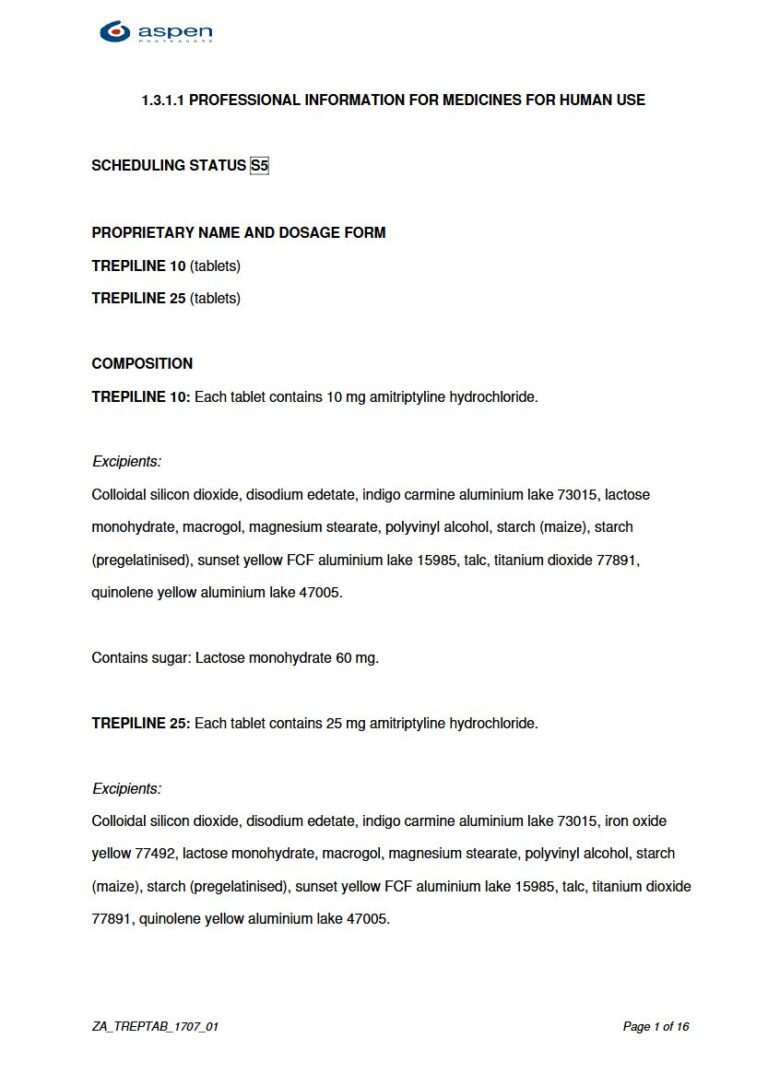
Clinical Summary
Quick overview from the medicine insert
Indication
Treatment of depression in patients 18 years and older.
Dosage (summary)
Initial: 75-150 mg daily; Maintenance: 50-100 mg daily.
Onset of Action / Duration
Onset: 6 hours, Duration: 9-25 hours
Special Populations
- Elderly
- Renal impairment
- Hepatic impairment
Pregnancy & Breastfeeding
Not established; contraindicated in pregnancy and lactation.
Key Drug Interactions
- MAOIs
- SSRIs
- CNS depressants
- Antihypertensives
Contraindications
- Hypersensitivity
- Myocardial infarction
- Concurrent MAOIs
- Pregnancy
- Lactation
- Children under 18
Common side effects
- Drowsiness
- Dry mouth
- Constipation
- Blurred vision
Counselling Points
- Avoid driving until effects are known
- Monitor for suicidal thoughts
- Do not combine with alcohol or CNS depressants
Serious warnings
- Suicidal tendencies
- Cardiac disease caution
- Anticholinergic effects
Important Disclaimer
The Trepiline 10 mg, 25 mg Tablets professional information leaflet below is the property of Pharmacare Limited and is provided on Medinsert exactly as issued, with no.. alterations or editorial changes. We make every effort to keep content current by updating documents as soon as new versions become available. Medinsert serves as a trusted access point for healthcare professionals, but does not replace official sources or clinical judgement. For more details, please read our full disclaimer. read more>>
 Healthcare Professionals Only
This content is for registered healthcare professionals
Sign in or create a free account to read the full package insert.
Free for HPCSA-registered professionals. Powered by Medinsert.
Clinical Particulars
Section 4 of the official insert — extracted exactly as issued, no alterations
4.1 Indications
TREPILINE is a tricyclic antidepressant indicated in the treatment of patients 18 years and older with depression.
4.2 Contraindications
TREPILINE is contraindicated in:
- Patients with hypersensitivity to amitriptyline or to any of the excipients (see COMPOSITION).
- Myocardial infarction.
- History of myocardial infarction, dysrhythmias, particularly heart block to any degree, congestive heart failure, coronary artery insufficiency.
- Concurrent use with monoamine oxidase inhibitors or within 14 days of stopping treatment with MAOIs (see INTERACTIONS).
- Concurrent use with linezolid.
- Concurrent use with antihypertensive medicines (see INTERACTIONS).
- Pregnancy and lactation (see HUMAN REPRODUCTION).
- Children under 18 years of age.
- Mania.
- Severe liver disease.
4.3 Warnings and special precautions
TREPILINE should at all times be kept out of reach of children, as even small doses may be fatal to them.
Drowsiness is often experienced at the start of TREPILINE therapy.
Anticholinergic effects: Peripheral anticholinergic side effects, notably dry mouth, constipation, urinary retention and pupillary dilatation with blurred vision and changes in visual accommodation have been reported. When anticholinergic effects are severe, TREPILINE should be discontinued or reduced.
Sedative effects: Drowsiness or excessive sedation may be caused in certain patients and disorientation and agitation, insomnia and restlessness may occur.
Cardiac disease: In patients suffering from cardiac disease, special caution should be observed because of the occasional problems of tachycardia, dysrhythmias, orthostatic hypotension and other unwanted effects on blood pressure, aggravation of conduction disturbances and electrocardiographic abnormalities. Regular cardiological and electrocardiographic examination is advised.
Endocrine effects: Endocrine effects include changes in libido, interference with sexual function, gynaecomastia and breast enlargement, and galactorrhoea. Changes in blood sugar concentrations may also occur and, less frequently, inappropriate secretion of antidiuretic hormone.
Manic depressive psychosis: Caution should be observed with patients suffering from a depressive phase of manic depressive psychosis, as occasionally mania can be precipitated in such patients. TREPILINE should be withdrawn if the depression develops into a manic phase.
Suicidal tendencies: Patients with suicidal tendencies should be carefully supervised during treatment. Cases of suicidal ideation and suicidal behaviours have been reported during TREPILINE therapy or early after treatment discontinuation.
Direct-acting sympathomimetics and anaesthetics: The pressor effects of the direct-acting sympathomimetic agents, epinephrine and norepinephrine, are enhanced by TREPILINE, and local anaesthetics containing these vasoconstrictors should be avoided as hypertensive reactions may occur. When possible, treatment should be discontinued several days before elective surgery. The hypotensive effect of certain antihypertensive agents may be reduced.
Porphyria: The use of TREPILINE in patients suffering from acute forms of porphyria, especially variegate porphyria and to a lesser extent acute intermittent porphyria and hereditary coproporphyria, is contentious, and thus TREPILINE should be used with caution in these patients.
Cautious use in certain conditions: TREPILINE should also be used with caution in patients with hyperthyroidism or with impaired liver function, and in those with a history of epilepsy, untreated narrow-angle glaucoma, urinary retention, prostatic hypertrophy or constipation. These conditions may be aggravated by TREPILINE.
Skin conditions: TREPILINE should be withdrawn if allergic skin reactions appear.
4.4 Interactions
Monoamine oxidase inhibitors (MAOIs) can potentiate the effects of tricyclic antidepressants such as TREPILINE and hyperpyretic crises, severe convulsions, and fatalities have occurred. A minimum of 14 days should elapse between discontinuing a MAOI and starting TREPILINE, which should be introduced cautiously and dosage increased gradually (see CONTRAINDICATIONS).
TREPILINE may block the antihypertensive action of debrisoquine, bethanidine and clonidine (see CONTRAINDICATIONS). There is an increased risk of hypertension on clonidine withdrawal. All antihypertensive therapy should be reviewed during treatment with TREPILINE.
Concomitant use of TREPILINE and reboxetine should be used with caution.
The plasma concentrations of amitriptyline in TREPILINE may be increased by selective serotonin reuptake inhibitors (SSRIs). Fluoxetine markedly inhibits cytochrome P450 II D6, which is involved in the metabolism of a number of tricyclic antidepressants such as TREPILINE. Patients should be monitored for increased antidepressant plasma levels and toxicity when fluoxetine is used concurrently with TREPILINE. Adjustment of the dosage of TREPILINE and/or fluoxetine may be necessary.
Alpha 2 -adrenoceptor stimulants: Concomitant use of apraclonidine and brimonidine with TREPILINE should be avoided.
Analgesics: The risk of central nervous system (CNS) toxicity of TREPILINE is increased with tramadol. There is a possibility of increased sedation with opioid analgesics.
Anaesthetics: Concomitant therapy with TREPILINE and anesthetics may increase the risk of dysrhythmias and hypotension. If surgery is necessary, the anaesthetist should be informed that a patient is being treated with TREPILINE.
Antidysrhythmics: There is an increased risk of ventricular dysrhythmias when TREPILINE is used with medicines which prolong the QT interval, including amiodarone, disopyramide, procainamide, propafenone and quinidine. Concomitant use is to be avoided.
Antibacterials: Plasma concentrations of amitriptyline in TREPILINE may be reduced by rifampicin which reduces the antidepressant effect. Concomitant use of TREPILINE and linezolid may result in CNS excitation and hypertension (see CONTRAINDICATIONS).
TREPILINE should not be given with sympathomimetic agents such as epinephrine (adrenaline), isoprenaline, norepinephrine (noradrenaline), phenylephrine, and phenylpropanolamine due to hypertension and dysrhythmias.
Methylphenidate may inhibit the metabolism of amitriptyline, as contained in TREPILINE, and therefore increase the antidepressant action of TREPILINE.
TREPILINE may enhance the response to alcohol, barbiturates and other CNS depressants. Concomitant use of disulfiram may inhibit the metabolism of amitriptyline. Delirium has been reported in patients taking TREPILINE with disulfiram.
Concomitant use of TREPILINE and antiepileptics may lower the convulsive threshold.
Barbiturates and carbamazepine may decrease the antidepressant action of TREPILINE.
Antifungals: Increased serum concentrations of amitriptyline, as contained in TREPILINE, have occurred in patients also taking fluconazole. Serious adverse effects have been reported due to increased amitriptyline plasma concentration.
Antihistamines: Increased anticholinergic and sedative effects may occur when antihistamines are used with TREPILINE.
Based on the known metabolism of amitriptyline, as contained in TREPILINE, the protease inhibitor, ritonavir, may increase the serum levels of amitriptyline, as contained in TREPILINE. Therefore, careful monitoring of therapeutic and adverse effects is recommended when these medicines are administered concomitantly.
Antipsychotics: Increased risk of ventricular dysrhythmias. Avoid concomitant use with pimozide or thioridazine. Concomitant use with antipsychotics may increase plasma concentrations of amitriptyline, as contained in TREPILINE, and increase the anticholinergic side effects of phenothiazines and possibly clozapine.
Beta-blockers: There is an increased risk of ventricular dysrhythmias associated with concomitant use of TREPILINE and sotalol.
Calcium-channel blockers: Diltiazem and verapamil may increase the plasma concentration of amitriptyline.
Diuretics: There is an increased risk of postural hypotension.
Dopaminergics: Concomitant use of TREPILINE and entacapone should be avoided. CNS toxicity has also been reported with selegiline.
Muscle relaxants: Concomitant use of baclofen enhances its muscle relaxant effect.
Nitrates: Reduced effect of sublingual nitrates (due to dry mouth).
Oestrogens and progestogens: Oral contraceptives antagonise the antidepressant effect of TREPILINE but side effects may be increased due to increased plasma concentrations of tricyclic antidepressants such as TREPILINE.
Excessive anticholinergic effects may occur when TREPILINE is combined with anticholinergic medicines. Paralytic ileus, urinary retention or acute glaucoma may be precipitated especially in elderly patients.
Cimetidine is reported to reduce hepatic metabolism of TREPILINE. Concomitant use enhances the sedative effect.
St. Johnu2019s Wort may decrease plasma levels of amitriptyline. TREPILINE may increase levels of thioridazine leading to cardiac side effects. Patients taking thyroid preparations may show an accelerated response to TREPILINE. The use of TREPILINE with thyroid hormones may precipitate cardiac dysrhythmias.
4.6 Fertility, pregnancy and lactation
Safety and efficacy during pregnancy and lactation have not been established (see CONTRAINDICATIONS).
Lactation: Mothers on TREPILINE should not breastfeed their babies.
4.7 Effects on ability to drive and use machines
At the time of initiation of therapy, patients should be advised not to drive a motor vehicle, climb dangerous heights or operate dangerous machinery for at least several days. In these situations, impaired decision making could lead to accidents.
Since adverse reactions such as drowsiness, dizziness and blurred vision have been reported in patients receiving TREPILINE, patients should not drive, use machinery or perform any tasks that require concentration, until they are certain that TREPILINE does not adversely affect their ability to do so (see SIDE EFFECTS).
4.8 Undesirable effects
Blood and the lymphatic system disorders: Less frequent: Bone marrow depression including agranulocytosis, eosinophilia, leucopaenia, thrombocytopaenia and purpura.
Immune system disorders: Less frequent: Hypersensitivity reactions including skin rash, urticaria, photosensitisation, oedema of face and tongue, angioedema.
Endocrine disorders: Less frequent: Syndrome of inappropriate ADH secretion (SIADH), hyperglycaemia, hypoglycaemia, hyponatraemia.
Metabolism and nutrition disorders: Less frequent: Increased appetite, weight gain, weight loss, anorexia.
Psychiatric disorders: Less frequent: Confusional states, disorientation, agitation, insomnia, nightmares, delusions, hallucinations, mania or hypomania, excitement, anxiety, restlessness, disturbed concentration, behavioural changes, suicidal ideation, suicidal behaviour.
Nervous system disorders: Frequent: Drowsiness or excessive sedation. Less frequent: Dizziness, headache, peripheral neuropathy, numbness, tingling and paraesthesia of the extremities, incoordination, ataxia, tremors, coma, epileptiform seizures, altered EEG, extra-pyramidal symptoms including abnormal involuntary movements and tardive dyskinesia, dysarthria.
Eye disorders: Frequent: Blurred vision, accommodation disturbance, increased intra-ocular pressure. Less frequent: Mydriasis.
Ear and labyrinth disorders: Less frequent: Tinnitus.
Cardiac disorders: Less frequent: Palpitations, tachycardia, myocardial infarction, heart block, non-specific ECG changes and changes in AV-conduction, dysrhythmias.
Vascular disorders: Less frequent: Hypotension, syncope, postural hypotension, hypertension, stroke.
Gastrointestinal disorders: Frequent: Dry mouth, constipation. Less frequent: Nausea, vomiting, diarrhoea, paralytic ileus, epigastric distress, dysgeusia, stomatitis, metallic taste, parotid swelling, black tongue.
Hepato-biliary disorders: Less frequent: Hepatitis (including altered liver function and cholestatic jaundice).
Skin and subcutaneous tissue disorders: Less frequent: Skin rash, alopecia.
Musculoskeletal, connective tissue and bone disorders: Frequency unknown: Increased risk of bone fractures (class effect).
Renal and urinary disorders: Frequent: Urinary retention. Less frequent: Urinary frequency, urinary tract dilation.
Reproductive system and breast disorders: Less frequent: Gynaecomastia, breast enlargement, galactorrhoea, testicular swelling, changes in libido, impotence, sexual dysfunction.
General disorders and administrative site conditions: Frequent: Hyperthermia. Less frequent: Weakness, fatigue, increased sweating.
4.9 Overdose
Symptoms: Overdosage and poisoning may be characterised by central nervous system depression or excitation, severe anticholinergic effects and cardiotoxicity. The following symptoms and signs are characteristic of acute overdosage: drowsiness, restlessness, ataxia, stupor, coma, pyrexia, palpitations, tachycardia, cardiac dysrhythmias, hypotension, and in severe cases, respiratory depression. Epileptiform seizures may occur. Mixed poisoning with other central nervous system depressants is not uncommon.
Treatment: Treatment is symptomatic and supportive.
