
Teerenz 600 mg/200 mg/300 mg FC tablet
PDF Leaflet Revision Date: 26 August 2025
Clinical Summary
Quick overview from the medicine insert
Indication
For the treatment of HIV-1 infection in adults.
Dosage (summary)
One tablet once daily on an empty stomach.
Special Populations
- Renal impairment
- Hepatic impairment
Pregnancy & Breastfeeding
Not recommended during pregnancy; may cause fetal harm. Avoid breastfeeding.
Key Drug Interactions
- St. John's wort
- Voriconazole
- Rifampicin
Contraindications
- Hypersensitivity to components
- Moderate to severe renal impairment
Common side effects
- Nervous system symptoms
- Rash
- Gastrointestinal disturbances
Counselling Points
- Take on an empty stomach
- Monitor for psychiatric symptoms
- Use barrier contraception
Serious warnings
- Lactic acidosis
- Severe hepatotoxicity
- Potential for serious psychiatric effects
Important Disclaimer
The Teerenz 600 mg/200 mg/300 mg FC tablet professional information leaflet below is the property of Strides Pharma Sa and is provided on Medinsert exactly as issued, with no.. alterations or editorial changes. We make every effort to keep content current by updating documents as soon as new versions become available. Medinsert serves as a trusted access point for healthcare professionals, but does not replace official sources or clinical judgement. For more details, please read our full disclaimer. read more>>
 Healthcare Professionals Only
This content is for registered healthcare professionals
Sign in or create a free account to read the full package insert.
Free for HPCSA-registered professionals. Powered by Medinsert.
Clinical Particulars
Section 4 of the official insert — extracted exactly as issued, no alterations
4.1 Therapeutic indications
TEERENZ is indicated for use alone as a complete regimen or in combination with other anti-retroviral medicines for the treatment of HIV-1 infection in adults.
4.2 Posology and method of administration
TEERENZ therapy should be initiated by a medical practitioner experienced in the management of human immunodeficiency virus (HIV) infection.
Posology
Adults: The dose of TEERENZ is one tablet once daily taken orally on an empty stomach. Dosing at bedtime may improve the tolerability of nervous system symptoms.
Paediatrics: TEERENZ is not recommended for use in patients younger than 18 years of age.
Renal impairment: Because TEERENZ is a fixed-dose combination, it should not be prescribed for patients requiring dosage adjustment such as those with moderate or severe renal impairment (creatinine clearance < 50 ml/min).
Hepatic impairment: The pharmacokinetics of TEERENZ have not been studied in patients with hepatic impairment. Patients with mild liver disease (Child-Pugh-Turcotte (CPT), Class A) may be treated with the normal recommended dose of TEERENZ (see sections 4.3, 4.4 and 5.2). Patients should be monitored carefully for adverse reactions, especially nervous system symptoms related to efavirenz (see sections 4.3 and 4.4). If TEERENZ is discontinued in patients co-infected with HIV, these patients must be closely monitored for evidence of exacerbation of hepatitis (see section 4.4).
Dose adjustment: If TEERENZ is co-administered with rifampicin to patients weighing 50 kg or more, an additional 200 mg/day (800 mg total) of efavirenz may be considered (see section 4.5). A dose reduction and therapeutic drug monitoring should be considered in patients weighing less than 40 kg and presenting with long-term neuropsychiatric effects such as ataxia, encephalopathy, hyper-somnolence and coma.
Method of administration
TEERENZ should be taken once daily, orally without food.
4.3 Contraindications
- TEERENZ is contraindicated in patients with previously demonstrated hypersensitivity to tenofovir, disoproxil, emtricitabine, efavirenz or to any of the excipients of TEERENZ listed in section 6.1.
- TEERENZ should not be administered concurrently with terfenadine, astemizole, bepridil, cisapride, midazolam, pimozide, triazolam or ergot derivatives because competition for CYP3A4 by efavirenz could result in inhibition of metabolism of these medicines and create the potential for serious and/or life-threatening adverse events (e.g. cardiac arrhythmias, prolonged sedation or respiratory depression).
- TEERENZ should not be administered concurrently with voriconazole because efavirenz significantly decreases voriconazole plasma concentrations (see section 4.5).
- Co-administration with herbal preparations containing St. John's wort (Hypericum perforatum) due to the risk of decreased plasma concentrations and reduced clinical effects of efavirenz (see section 4.5).
- TEERENZ is contraindicated in patients with moderate to severe renal impairment (creatinine clearance less than 50 ml/min) and in patients with a history of previous liver injury/failure with efavirenz-containing antiretroviral treatment (ART).
- Pregnancy and lactation (see section 4.6)
4.4 Special warnings and precautions for use
Lactic acidosis/severe hepatomegaly with steatosis
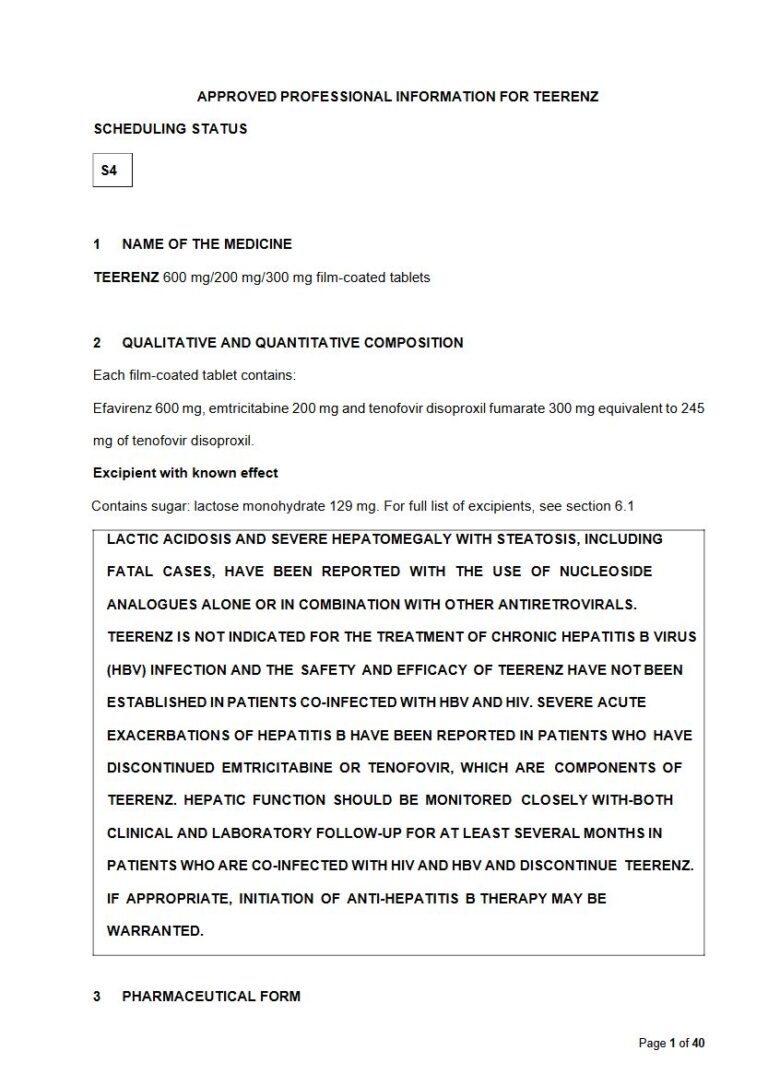
Lactic acidosis and severe hepatomegaly with steatosis, including fatal cases, have been reported with the use of nucleoside analogues alone or in combination with other anti-retrovirals. A majority of these cases have been in women. Obesity and prolonged nucleoside exposure may be risk factors. Particular caution should be exercised when administering nucleoside analogues to any patient with known risk factors for liver disease. However, cases have also been reported in patients with no known risk factors. Treatment with TEERENZ should be suspended in any patient who develops clinical or laboratory findings suggestive of lactic acidosis or pronounced hepatotoxicity (which may include hepatomegaly and steatosis even in the absence of marked transaminase elevations). Routine testing of serum lactate levels in asymptomatic patients on anti-retrovirals is not recommended. Measurement of serum lactate levels is recommended only for patients presenting with clinical signs or symptoms consistent with lactic acidosis.
Lactic acidosis/hyperlactataemia
Use of TEERENZ can result in potentially fatal lactic acidosis as a consequence of mitochondrial dysfunction. Clinical features are non-specific, and include nausea, vomiting, abdominal pain, dyspnoea, fatigue and weight loss. In patients with suspicious symptoms or biochemistry, measure the venous lactate level (normal < 2 mmol/l) and the serum bicarbonate and respond as follows:
- Lactate 2-5 mmol/l with minimum symptoms: switch to agents that are less likely to cause lactic acidosis, monitor regularly, and be alert for clinical signs
- Lactate 5-10 mmol/l without symptoms: monitor closely.
- Lactate 5-10 mmol/l with symptoms and/or with reduced standard bicarbonate: STOP all therapy and change treatment option. Once lactate has settled, use medicines that are less likely to cause lactic acidosis. Exclude other causes, (e.g. sepsis, uraemia, diabetic ketoacidosis, thyrotoxicosis, lymphoma and hyperthyroidism.
- Lactate greater than or equal to 10 mmol/l: STOP all therapy (80 % mortality in case studies).
The above lactate values may not be applicable to paediatric patients. Caution should be exercised when administering TEERENZ to patients with known risk factors for liver disease. Treatment with TEERENZ should be suspended in any patient who develops clinical or laboratory findings suggestive of lactic acidosis or hepatotoxicity.
Mitochondrial dysfunction
Nucleoside and nucleotide analogues have been demonstrated in vitro and in vivo to cause a variable degree of mitochondrial damage. There have been reports of mitochondrial dysfunction in HIV negative infants exposed in utero and/or post-natally to nucleoside analogues. Apart from lactic acidosis/hyperlactataemia (see above) other manifestations of mitochondrial dysfunction include haematological disorders (anaemia, neutropenia), and peripheral neuropathy. Some late-onset neurological disorders have been reported (hypertonia, convulsion, abnormal behaviour). It is not known whether the neurological disorders are transient or permanent. Any foetus exposed in utero to nucleoside and nucleotide analogues, even HIV negative infants/children, should have clinical and laboratory follow-up and should be fully investigated for possible mitochondrial dysfunction in case of relevant signs and symptoms.
Pancreatitis
Pancreatitis has been observed in some patients receiving TEERENZ. Pancreatitis must be considered whenever a patient develops abdominal pain, nausea, vomiting or elevated biochemical markers. Discontinue use of TEERENZ until diagnosis of pancreatitis is excluded.
Patients with moderate to severe renal impairment
In patients with moderate to severe renal impairment, the terminal half-life of TEERENZ is increased due to decreased clearance. The dose of TEERENZ should therefore be adjusted (see section 4.2).
Liver disease
Use of TEERENZ can result in hepatomegaly due to non-alcoholic fatty liver disease (hepatic steatosis). The safety and efficacy of TEERENZ has not been established in patients with significant underlying liver disorders/diseases. In case of concomitant antiviral therapy for hepatitis B or C, please also consult the relevant professional information for these medicines. Patients with pre-existing liver dysfunction including chronic active hepatitis have an increased frequency of liver function abnormalities during combination antiretroviral therapy and should be monitored. If there is evidence of worsening liver disease in such patients, temporary or permanent discontinuation of treatment must be considered.
There is some evidence that efavirenz is associated with three clinical pathological patterns of drug induced liver failure in HIV positive patients of which the sub massive necrosis histological pattern seems to be associated with a high morbidity/mortality risk and may present many months after therapy has been initiated or even stopped. Risk factors include younger age, CD4 + counts u2265 350 cells/microliters and female gender. Patients on TEERENZ or efavirenz containing ART should be regularly monitored for jaundice (including a laboratory bilirubin and liver enzymes) and bleeding tendencies. Early detection and treatment of liver failure and the immediate discontinuation of TEERENZ or efavirenz containing medicines should be stressed. Patients who discontinued treatment with TEERENZ should be followed up for symptoms/signs of liver failure for up to 12 months. TEERENZ is not recommended in patients with moderate to severe impairment because there are insufficient data to determine whether dose adjustments are required.
Patients Co-infected with HIV and hepatitis B (HBV) or C
Patients with chronic hepatitis B or C and treated with antiretroviral therapy are at an increased risk for severe and potentially fatal hepatic adverse reactions. Medical practitioners should refer to current HIV treatment guidelines for the optimal management of HIV infection in patients co-infected with hepatitis B virus (HBV). In case of concomitant antiviral therapy for hepatitis B or C, please refer also to the relevant professional information for these medicines. It is recommended that all patients with HIV be tested for the presence of chronic HBV before initiating anti-retroviral therapy. TEERENZ is not indicated for the treatment of chronic HBV infection and the safety and efficacy of TEERENZ have not been established in patients co-infected with HBV and HIV. Severe acute exacerbations of hepatitis B have been reported in patients who are co-infected with HBV and HIV and have discontinued emtricitabine or tenofovir. In some of these patients treated with emtricitabine, the exacerbations of hepatitis B were associated with liver decompensation and liver failure. Hepatic function should be monitored closely with both clinical and laboratory follow up for at least several months in patients who are co-infected with HIV and HBV and discontinue TEERENZ. In patients with advanced liver disease or cirrhosis, treatment discontinuation is not recommended since post-treatment exacerbation of hepatitis may lead to hepatic decompensation. If appropriate, initiation of anti-hepatitis B therapy may be warranted. Discontinuation of TEERENZ therapy in patients co-infected with HIV and HBV may be associated with severe, acute exacerbations of hepatitis.
Co-administration with related medicines
Related medicines not for co-administration with TEERENZ include emtricitabine, tenofovir, emtricitabine/tenofovir and efavirenz, which contain the same active components as TEERENZ. Due to similarities between emtricitabine and lamivudine, TEERENZ should not be co-administered with medicines containing lamivudine, including lamivudine/zidovudine, lamivudine, abacavir/lamivudine or abacavir/lamivudine/zidovudine.
Medicine interactions (see section 4.5)
Concomitant use of TEERENZ and St. John's wort (Hypericum perforatum) or St. John's wort-containing products is not recommended. Co-administration of NNRTls, including efavirenz, with St. John's wort is expected to substantially decrease NNRTI concentrations and may result in suboptimal levels of efavirenz leading to loss of virologic response and possible resistance to efavirenz or to the class of NNRTls.
4.5 Interactions with other medicines
Efavirenz: Efavirenz has been shown in vivo induce CYP3A4. Other compounds that are substrates of CYP3A4 may have decreased plasma concentrations when co-administered with efavirenz. In vitro studies have demonstrated that efavirenz inhibits 2C9, 2C19 and 3A4 isozymes in the range of observed efavirenz plasma concentrations. Co-administration of efavirenz with medicines primarily metabolised by these isozymes may result in altered plasma concentrations of the co-administered medicine. Therefore, appropriate dose adjustments may be necessary for these medicines.
Medicines which induce CYP3A4 activity (e.g. phenobarbital, rifampin, rifabutin) would be expected to increase the clearance of efavirenz resulting in lowered plasma concentrations. Efavirenz exposure may be increased when given with medicines (for example ritonavir) or food (for example, grapefruit juice) which inhibit CYP3A4 or CYP2B6 activity. Compounds or herbal preparations (for example Ginkgo biloba extracts and St. John's wort) which induce these enzymes may give rise to decreased plasma concentrations of efavirenz.
Emtricitabine and tenofovir DF: Since emtricitabine and tenofovir are primarily eliminated by the kidneys, co-administration of TEERENZ with medicines that reduce renal function or compete for active tubular secretion may increase serum concentrations of emtricitabine, tenofovir and/or other renally eliminated medicines. Some examples included, but are not limited to, aciclovir, adefovir dipivoxil, cidofovir, ganciclovir, valaciclovir and valganciclovir. Co-administration of tenofovir DF and didanosine should be undertaken with caution and patients receiving this combination should be monitored closely for didanosine-associated adverse events. Didanosine should be discontinued in patients who develop didanosine-associated adverse events. Atazanavir and lopinavir/ritonavir have been shown to increase tenofovir concentrations. The mechanism of this interaction is unknown. Higher tenofovir concentrations could potentiate tenofovir-associated adverse events, including renal disorders. Patients receiving either atazanavir or lopinavir/ritonavir with tenofovir DF should be monitored for tenofovir-associated adverse events. TEERENZ should be discontinued in patients who develop tenofovir-associated adverse events.
Medicines that are contraindicated or not recommended for use with TEERENZ
Antifungal Voriconazole: Efavirenz significantly decreases voriconazole plasma concentrations and co-administration may decrease the therapeutic effectiveness of voriconazole. Also, voriconazole significantly increases efavirenz plasma concentrations, which may increase the risk of efavirenz associated side effects.
Antihistamine Astemizole, terfenadine: Due to potential for serious and/or life-threatening reactions such as cardiac dysrhythmias.
Anti-migraine Ergot derivatives (dihydroergotamine, ergonovine, ergotamine, methyl-ergonovine): Due to potential for serious and/or life-threatening reactions such as acute ergot toxicity characterised by peripheral vasospasm and ischaemia of the extremities and other tissues.
Anti-retrovirals Efavirenz, emtricitabine, tenofovir DF, lamivudine: Not for use with TEERENZ because the active ingredients - emtricitabine/tenofovir DF and efavirenz are components of TEERENZ. Lamivudine is similar to emtricitabine.
Benzodiazepines Midazolam, triazolam: Due to potential for serious and/or life-threatening reactions such as prolonged or increased sedation or respiratory depression.
Calcium channel blocker Bepridil: Due to potential for serious and/or life-threatening reactions such as cardiac dysrhythmias.
Gl motility agent Cisapride: Due to potential for serious and/or life-threatening reactions such as cardiac dysrhythmias.
Neuroleptic Pimozide: Due to potential for serious and/or life-threatening reactions such as cardiac dysrhythmias.
St. John's wort (Hypericum perforatum): Expected to substantially decrease plasma levels of efavirenz; but it has not been studied in combination with efavirenz.
Established and other potentially significant medicine interactions: Alteration in dose or regimen may be recommended based on medicine interaction studies or predicted interaction.
Anti-retroviral agents: Protease inhibitor: Amprenavir: Efavirenz has the potential to decrease serum concentrations of amprenavir.
Fosamprenavir calcium: Fosamprenavir (unboosted): Appropriate doses of fosamprenavir and TEERENZ with respect to safety and efficacy have not been established. Fosamprenavir/ritonavir: An additional 100mg/day (300 mg total) of ritonavir is recommended when TEERENZ is administered with fosamprenavir/ritonavir once daily. No change in the ritonavir dose is required when TEERENZ is administered with fosamprenavir plus ritonavir twice daily.
Atazanavir: Plasma concentrations of atazanavir were decreased by both efavirenz and tenofovir DF. Sufficient data are not available to make a dosing recommendation for atazanavir or atazanavir/ritonavir with TEERENZ. Therefore, co-administration of TEERENZ and atazanavir is not recommended due to concerns regarding decreased atazanavir concentrations.
Indinavir: The optimal dose of indinavir, when given in combination with efavirenz, is not known. Increasing the indinavir dose to 1 000 mg every 8 hours does not compensate for the increased indinavir metabolism due to efavirenz.
Lopinavir/ritonavir: A dose increase of lopinavir/ritonavir to 600 mg/150 mg (3 tablets) twice daily may be considered when used in combination with efavirenz in treatment-experienced patients where decreased susceptibility to lopinavir is clinically suspected (by treatment history or laboratory evidence). Patients should be monitored for tenofovir associated adverse events. TEERENZ should be discontinued in patients who develop tenofovir-associated adverse events.
Ritonavir: When ritonavir 500 mg every 12 hours was co-administered with efavirenz 600 mg once daily, the combination was associated with a higher frequency of adverse clinical experiences (e.g. dizziness, nausea, paraesthesia) and laboratory abnormalities (elevated liver enzymes). Monitoring of liver enzymes is recommended when TEERENZ is used in combination with ritonavir.
Saquinavir: Should not be used as sole protease inhibitor in combination with TEERENZ.
NRTI: Didanosine: Higher didanosine concentrations could potentiate didanosine-associated adverse events, including pancreatitis and neuropathy. In adults weighing more than 60 kg, the didanosine dose should be reduced to 250 mg if co-administered with TEERENZ. Data are not available to recommend a dose adjustment of didanosine for patients weighing less than 60 kg.
When co-administered, TEERENZ and didanosine may be taken under fasted conditions or with a light meal (less than 400 kcal, 20 % fat). Co-administration of didanosine buffered formulation with TEERENZ should be under fasted conditions. Co-administration of TEERENZ and didanosine should be undertaken with caution and patients receiving this combination should be monitored closely for didanosine-associated adverse events. For additional information, please consult the didanosine professional information.
Other medicines:
Anticoagulant Warfarin: Plasma concentrations and effects potentially increased or decreased by efavirenz.
Anticonvulsants Carbamazepine: There are insufficient data to make a dose recommendation for TEERENZ. Alternative anticonvulsant treatment should be used. Phenytoin, phenobarbital (phenobarbitone): Potential for reduction in anticonvulsant and/or efavirenz plasma levels; periodic monitoring of anticonvulsant plasma levels should be conducted. Vigabatrin and gabapentin: Can be co-administered with TEERENZ without dose adjustment.
Antidepressant Sertraline: Increases in sertraline dose should be guided by clinical response. Paroxetine: Can be co-administered with TEERENZ without dose adjustment. Fluoxetine: Can be co-administered with TEERENZ without dose adjustment.
Antifungals Itraconazole: Since no dose recommendation for itraconazole can be made, alternative treatment should be considered. Ketoconazole: Medicine interaction studies with TEERENZ and ketoconazole have not been conducted. Efavirenz has the potential to decrease plasma concentrations of ketoconazole.
Anti-infective Clarithromycin: Clinical significance unknown. In uninfected volunteers, 46 % developed rash while receiving efavirenz and clarithromycin. No dose adjustment of TEERENZ is recommended when given with clarithromycin. Alternatives to clarithromycin, such as azithromycin, should be considered. Other macrolide antibiotics, such as erythromycin, have not been studied in combination with TEERENZ.
Antimycobacterial Rifabutin: Increase daily dose of rifabutin by 50 %. Consider doubling the rifabutin dose in regimens where rifabutin is given 2 or 3 times a week. Rifampicin: When TEERENZ is taken with rifampicin in patients weighing 50 kg or greater, an additional 200 mg/day (800 mg total) of efavirenz may provide exposure similar to a daily efavirenz dose of 600 mg when taken without rifampicin. The clinical effect of this dose adjustment has not been adequately evaluated. Individual tolerability and virological response should be considered when making the dose adjustment (see section 5.2). No dose adjustment of rifampicin is recommended when given with TEERENZ.
Calcium channel blockers Diltiazem: Dose adjustments should be guided by clinical response (refer to the complete professional information for diltiazem). No dose adjustment of TEERENZ is necessary when administered with diltiazem.
Others (e.g. felodipine, nicardipine, nifedipine, verapamil): No data are available on the potential interactions of efavirenz with other calcium channel blockers that are substrates of the CYP3A4 enzyme. The potential exists for reduction in plasma concentrations of the calcium channel blocker. Dose adjustments should be guided by clinical response (refer to the complete professional information for the calcium channel blocker).
HMG-CoA Atorvastatin, pravastatin, simvastatin: Plasma concentrations of atorvastatin, pravastatin and simvastatin decreased with efavirenz. Consult the complete professional information for the HMG-CoA reductase inhibitor for guidance on individualising the dose.
Narcotic analgesic Methadone: Co-administration of efavirenz in HIV-infected individuals with a history of injection medicine use resulted in decreased plasma levels of methadone and signs of opiate withdrawal. Methadone dose was increased by a mean of 22 % to alleviate withdrawal symptoms. Patients should be monitored for signs of withdrawal and their methadone dose increased as required to alleviate withdrawal symptoms.
Oral contraceptive Ethinylestradiol: Clinical significance unknown. Because the potential interaction of efavirenz with oral contraceptives has not been fully characterised, a reliable method of barrier contraception should be used in addition to oral contraceptives.
Efavirenz assay interference Cannabinoid test interaction: Efavirenz does not bind to cannabinoid receptors. False-positive urine cannabinoid test results have been observed in non-HIV-infected volunteers receiving efavirenz when the Microgenics Cedia DAU Multi-level THC assay was used for screening. Negative results were obtained when more specific confirmatory testing was performed with gas chromatography/mass spectrometry.
Other interactions
Efavirenz Medicine interaction studies were performed with efavirenz and other medicines likely to be co-administered or medicines commonly used as probes for pharmacokinetic interaction. There was no clinically significant interaction observed between efavirenz and zidovudine, lamivudine, azithromycin, fluconazole, lorazepam, cetirizine or paroxetine. Single doses of famotidine or an aluminium and magnesium antacid with simethicone had no effects on efavirenz exposures.
Emtricitabine and tenofovir disoproxil fumarate No clinically significant medicine interactions have been observed between emtricitabine and famciclovir, indinavir, stavudine, tenofovir DF and zidovudine. Similarly, no clinically significant medicine interactions have been observed between tenofovir DF and abacavir, adefovir dipivoxil, efavirenz, emtricitabine, indinavir lamivudine, lopinavir/ritonavir, methadone, oral contraceptives, ribavirin and saquinavir/ritonavir in studies conducted in healthy volunteers.
Following multiple dosing to HIV-negative subjects receiving either chronic methadone maintenance therapy, oral contraceptives or single doses of ribavirin, steady-state tenofovir pharmacokinetics were similar to those observed in previous studies, indicating a lack of clinically significant medicine interactions between these agents and tenofovir DF.
Nephrotoxic medicines: Use of TEERENZ should be avoided with concurrent or recent use of nephrotoxic medicines. Some examples include, but are not limited to, aminoglycosides, amphotericin B, foscarnet, ganciclovir, pentamidine, vancomycin, cidofovir or interleukin-2 (see section 4.4).
CCR5 antagonists: No effect is suspected when maraviroc is co-administered with TEERENZ. Refer to the maraviroc professional information.
Integrase strand transfer inhibitor: Raltegravir can be co-administered with TEERENZ without dose adjustment.
Immunosuppressants: Decreased exposure of immunosuppressants metabolised by CYP3A4 (e.g. ciclosporin, tacrolimus, sirolimus) may be expected due to CYP3A4 induction. Dose adjustments of the immunosuppressant may be required. Close monitoring of immunosuppressant concentrations for at least two weeks (until stable concentrations are reached) is recommended when starting or stopping treatment with TEERENZ.
Norepinephrine and dopamine reuptake inhibitors: Increases in bupropion dosage should be guided by clinical response, but the maximum recommended dose of bupropion should not be exceeded. No dose adjustment is necessary for efavirenz.
4.6 Fertility, pregnancy and lactation
Women of childbearing potential /Contraception in males and females Barrier contraception should always be used in combination with other methods of contraception (e.g. oral or other hormonal contraceptives) while on therapy with TEERENZ. Because of the long half-life of efavirenz, the use of adequate contraceptive measures for 12 weeks after discontinuation of TEERENZ is recommended. Women of childbearing potential should have a medically and/or laboratory supervised pregnancy test before initiation of TEERENZ. This test should be repeated at frequent intervals during treatment to exclude pregnancy.
Pregnancy
TEERENZ should not be used in pregnancy. Efavirenz may cause foetal harm when administered during the first trimester to a pregnant woman. Pregnancy should be avoided in women receiving TEERENZ. If TEERENZ is used during the first trimester of pregnancy, or if the patient becomes pregnant while taking TEERENZ, the patient should be informed of the potential harm to the foetus. A small number of cases of neural tube defects, including meningomyelocele, have been reported but causality has not been established. Late onset neurological disorders relating to mitochondrial dysfunction have been observed in children who have been exposed in utero and/or postnatally to nucleoside analogues as contained in TEERENZ. There are no adequate and well-controlled studies of TEERENZ in pregnant women. If a patient becomes pregnant while taking TEERENZ the patient (and partner) should be counselled and informed about the potential harm to the foetus. The possibility of termination of pregnancy should be considered and discussed with both patients if there is already evidence of severe harm to the foetus. If termination is unavoidable the patient should be treated with an alternative medicine, known to be safe or safer for use in pregnancy. If no safe or safer alternative is available, cannot be tolerated, has failed or is contraindicated, both partners should be counselled and written consent preferable to both partners be obtained to continue treatment with TEERENZ. If a patient is to be treated with TEERENZ, pregnancy should be excluded 24 hours prior to initiation of treatment.
Breastfeeding
It is recommended that HIV-infected mothers not breastfeed their infants to avoid risking postnatal transmission of HIV. Studies in rats have demonstrated that both efavirenz and tenofovir are secreted in milk. Efavirenz, emtricitabine and tenofovir have been shown to be excreted in human milk. Because of both the potential for HIV transmission and for serious adverse reactions in nursing infants, mothers should be instructed not to breastfeed if they are receiving TEERENZ.
Fertility
No human data on the effect of TEERENZ on fertility are available. Animal studies do not indicate harmful effects on efavirenz, emtricitabine or tenofovir on fertility.
4.7 Effects on ability to drive and use machines
TEERENZ may cause dizziness, impaired concentration, and/or drowsiness. Patients should be instructed that if they experience these symptoms, they should avoid potentially hazardous tasks such as driving or operating machinery when they are on TEERENZ.
4.8 Undesirable effects
Tabulated summary of adverse reactions
Efavirenz
MedDRA system organ class Frequency Adverse reactions
Immune system disorders Less frequent Hypersensitivity
Frequency unknown Immuno - allergic liver injury/failure.
Metabolism and nutrition disorders Less frequent Hypertriglyceridaemia, hypercholesterolaemia
Psychiatric disorders Frequent Depression, anxiety, abnormal dreams, insomnia
Less frequent Suicide attempt, suicide ideation, psychosis, mania, paranoia, hallucination, euphoric mood, affect lability, confusional state, aggression, completed suicide, delusion, neurosis
Frequency unknown Ataxia, hyper-somnolence, encephalopathy and coma
Nervous system disorders: Frequent Cerebellar coordination and balance disturbances, somnolence, headache, disturbance in attention, dizziness
Less frequent Convulsions, amnesia, thinking abnormal, ataxia, coordination abnormal, agitation, tremor
Eye disorders Less frequent Blurred vision
Ear and labyrinth disorders Less frequent Tinnitus, vertigo
Cardiac disorders Frequency unknown Palpitations and tachycardia
Vascular disorders Less frequent Flushing
Respiratory system disorders Frequency unknown Respiratory depression (when co-administered with medicines competing for cytochrome P450 (CYP)3A4)
Gastrointestinal disorders: Frequent Diarrhoea, vomiting, abdominal pain, nausea
Less frequent Pancreatitis
Hepatobiliary disorders, Frequent Elevated aspartate aminotransferase (AST), elevated alanine aminotransferase (ALT), elevated gamma-glutamyltransferase (GGT)
Less frequent Hepatitis acute, hepatic failure
Skin and subcutaneous tissue disorders Frequent Rash, pruritus
Less frequent Stevens-Johnson syndrome, erythema multiforme, severe rash, photoallergic dermatitis, acne, alopecia, eczema, folliculitis, seborrhoea, skin exfoliation, urticarial, nail disorders, skin discolouration, maculopapular rash
Musculoskeletal system disorders Frequency unknown Arthralgia, myalgia and myopathy
Reproductive system and breast disorders Less frequent Gynaecomastia
General disorders and administration site conditions Frequent Fatigue, allergic reaction, asthenia, hot flushes influenza-like symptoms, malaise, syncope
Emtricitabine
MedDRA system organ class Frequency Adverse reactions
Blood and lymphatic system disorders Frequent Neutropenia
Less frequent Anaemia
Immune system disorders Frequent Allergic reaction, angioedema
Metabolism and nutrition disorders Less frequent Hyperglycaemia, hypertriglyceridaemia
Psychiatric disorders Frequent Abnormal dreams, insomnia
Nervous system disorders Frequent Headache, dizziness
Gastrointestinal disorders Frequent Diarrhoea, nausea, elevated amylase including elevated pancreatic amylase, elevated serum lipase, vomiting, abdominal pain, dyspepsia
Hepatobiliary disorders Frequent Elevated serum AST and/or elevated serum ALT, hyperbilirubinaemia
Skin and subcutaneous tissue disorders Frequent Vesiculobullous rash, pustular rash, maculopapular rash, rash, pruritus, urticaria, skin discolouration (increased pigmentation)
Musculoskeletal and connective tissue disorders Frequent Elevated creatine kinase
Renal and urinary system disorders Frequent Elevation of creatinine
General disorders and administration site conditions Frequent Pain, asthenia
Tenofovir disoproxil fumarate
MedDRA system organ class Frequency Adverse reactions
Immune system disorders Frequency Allergic reactions, angioedema
unknown Metabolism and nutrition disorders Frequent Hypophosphataemia
Less frequent Hypokalaemia, lactic acidosis, hypertriglyceridaemia, hyperglycaemia
Nervous system disorders Frequent Headache, dizziness, peripheral neuropathy
Psychiatric disorders Frequency unknown Depression, insomnia and anxiety
Respiratory, thoracic and mediastinal disorders Frequency unknown Chest pain, pneumonia, dyspnoea
Gastrointestinal disorders Frequent Diarrhoea, vomiting, nausea, abdominal pain, abdominal distension, flatulence
Less frequent Pancreatitis, raised serum amylase concentrations, dyspepsia
Hepatobiliary disorders Frequent Increased transaminases
Less frequent Hepatic steatosis, hepatitis, hepatotoxicity
Skin and subcutaneous tissue disorders Frequent Rash (including pruritus, maculopapular rash, urticaria, vesiculobullous rash and pustular rash)
Musculoskeletal and connective tissue disorders Less frequent Rhabdomyolysis, muscular weakness, osteomalacia (manifested as bone pain and infrequently contributing to fractures), myopathy
Renal and urinary disorders Less frequent Increased creatinine, proteinuria, renal failure (acute and chronic), acute tubular necrosis, proximal renal tubulopathy including Fanconi syndrome, nephritis (including acute interstitial nephritis), nephrogenic diabetes insipidus
General disorders and administration site conditions Frequent Asthenia, fever, sweating, weight loss
Paediatric population: TEERENZ is not recommended for use in patients younger than 18 years of age (see section 4.2). Patients with renal impairment: Because TEERENZ is a fixed-dose combination, it should not be prescribed for patients requiring dosage adjustment such as those with moderate or severe renal impairment (see section 4.2).
Reporting of suspected adverse reactions Reporting suspected adverse reactions after authorisation of the medicine is important. It allows continued monitoring of the benefit/risk balance of the medicine. Health care providers are asked to report any suspected adverse reactions to SAHPRA via the u201c6.04 Adverse Drug Reactions Reporting Formu201d, found online under SAHPRAu2019s publications: https:// www.sahpra.org.za/Publications/Index/8
4.9 Overdose
If an overdose occurs, the patient should be monitored for evidence of toxicity, including monitoring of vital signs and observation of the patient's clinical status; standard supportive treatment should then be applied as necessary. Administration of activated charcoal may be used to aid removal of unabsorbed efavirenz. Haemodialysis can remove both emtricitabine and tenofovir (refer to detailed information below) but is unlikely to significantly remove efavirenz from the blood.
Efavirenz: Some patients accidentally taking 600 mg twice daily have reported increased nervous system symptoms. One patient experienced involuntary muscle contractions.
Emtricitabine: Limited clinical experience is available at doses higher than the therapeutic dose of emtricitabine. In one clinical pharmacology study single doses of emtricitabine 1 200 mg were administered to 11 patients. No severe adverse reactions were reported.
Haemodialysis treatment removes approximately 30 % of the emtricitabine dose over a 3-hour dialysis period starting within 1,5 hours of emtricitabine dosing (blood flow rate of 400 ml/min and a dialysate flow rate of 600 ml/min). It is not known whether emtricitabine can be removed by peritoneal dialysis.
Tenofovir disoproxil fumarate: Limited clinical experience at doses higher than the therapeutic dose of tenofovir 300 mg is available. In one study, 600 mg tenofovir was administered to 8 patients orally for 28 days, and no severe adverse reactions were reported. The effects of higher doses are not known. Tenofovir is efficiently removed by haemodialysis with an extraction coefficient of approximately 54 %. Following a single 300 mg dose of tenofovir, a 4-hour haemodialysis session removed approximately 10 % of the administered tenofovir dose.
