
Tafbin 25mg. 200mg Tablet
PDF Leaflet Revision Date: 25 May 2022
Clinical Summary
Quick overview from the medicine insert
Indication
Treatment of HIV-1 infection.
Dosage (summary)
200 mg emtricitabine and 25 mg tenofovir alafenamide once daily for adults and adolescents.
Special Populations
- Elderly
- Renal impairment
- Hepatic impairment
Pregnancy & Breastfeeding
Not recommended during pregnancy or breastfeeding due to potential harm.
Key Drug Interactions
- Anticonvulsants
- Antimycobacterials
- St. John's wort
Contraindications
- Hypersensitivity
- Pregnancy
- Lactation
Common side effects
- Diarrhoea
- Nausea
- Headache
- Fatigue
Counselling Points
- Take once daily with or without food
- Monitor for liver function
- Use barrier contraception to prevent HIV transmission
Serious warnings
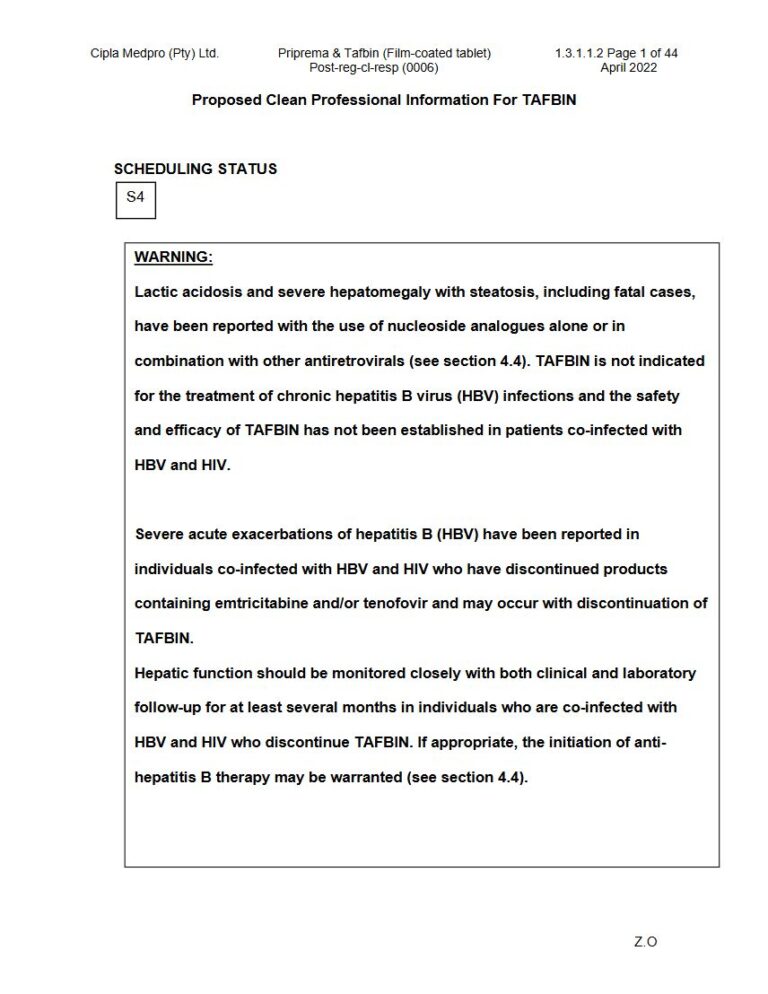
- Lactic acidosis
- Severe hepatomegaly
- Risk of hepatitis exacerbation
Important Disclaimer
The Tafbin 25mg. 200mg Tablet professional information leaflet below is the property of Cipla Medpro and is provided on Medinsert exactly as issued, with no.. alterations or editorial changes. We make every effort to keep content current by updating documents as soon as new versions become available. Medinsert serves as a trusted access point for healthcare professionals, but does not replace official sources or clinical judgement. For more details, please read our full disclaimer. read more>>
 Healthcare Professionals Only
This content is for registered healthcare professionals
Sign in or create a free account to read the full package insert.
Free for HPCSA-registered professionals. Powered by Medinsert.
Clinical Particulars
Section 4 of the official insert — extracted exactly as issued, no alterations
4.1 Therapeutic Indications
Treatment of HIV-1 infection
TAFBIN is indicated in combination with other antiretroviral medicines for the treatment of HIV-1 infection in adults and adolescents (aged 12 years and older with body weight of at least 35 kg) (see sections 4.2 and 5.1).
4.2. Posology and method of administration
Therapy should be initiated by a medical practitioner experienced in the management of HIV infection.
Adults and adolescents aged 12 years and older, weighing at least 35 kg
TAFBIN should be administered as shown in table below:
Dose of TAFBIN Third medicine in HIV treatment regimen (see section 4.5) TAFBIN 200/25 mg once daily Dolutegravir, efavirenz, maraviroc, nevirapine, rilpivirine, raltegravir.
If the patient misses a dose of TAFBIN within 18 hours of the time it is usually taken, the patient should take TAFBIN as soon as possible and resume the normal dosing schedule. If a patient misses a dose of TAFBIN by more than 18 hours, the patient should not take the missed dose and simply resume the usual dosing schedule. If the patient vomits within 1 hour of taking TAFBIN, another tablet should be taken.
Special populations
Elderly (patients u2265 65 years old) No dose adjustment of TAFBIN is required in elderly patients.
Renal impairment Routine monitoring of calculated creatinine clearance and serum phosphorus should be performed in all individuals (see sections 4.3 and 4.4). No dose adjustment is required in adults or adolescents (aged at least 12 years and of at least 35 kg body weight) with estimated creatinine clearance (CrCl) u2265 30 mL/min. TAFBIN should be discontinued in patients with estimated CrCl that declines below 30 mL/min during treatment (see sections 4.4 and 5.2). No dose adjustment of TAFBIN is required in adults with end stage renal disease (estimated CrCl u02c2 15 mL/min) on chronic haemodialysis; however, TAFBIN should generally be avoided but may be used in these patients (see sections 4.4 and 5.2). On days of haemodialysis, TAFBIN should be administered after completion of haemodialysis treatment. TAFBIN should be avoided in patients with estimated CrCl u2265 15 mL/min and u02c2 30 mL/min as the safety of TAFBIN has not been established in this population. TAFBIN should not be used in patients with CrCl u02c2 15 mL/min who are not receiving haemodialysis (see section 4.4). No data are available to make dose recommendations in children less than 18 years with end stage renal disease.
Hepatic impairment No dose adjustment of TAFBIN is required in patients with mild to moderate hepatic impairment. TAFBIN has not been studied in patients with severe hepatic impairment (Child-Pugh Class C); therefore, TAFBIN is not recommended for use in patients with severe hepatic impairment as no dose recommendations can be made (see sections 4.4 and 5.2).
Paediatric population The safety and efficacy of TAFBIN in children younger than 12 years or weighing u02c2 35 kg have not been established. No data are available.
Method of administration TAFBIN should be taken orally, once daily with or without food (see section 5.2). The film-coated tablet should not be chewed, crushed or split.
4.3. Contraindications
- Hypersensitivity to the active substances or to any of the excipients of TAFBIN listed in section 6.1.
- Pregnancy and lactation.
4.4. Special warnings and precautions for use
General Individuals should be fully informed about the use of precautionary measures including barrier contraception (condoms) that should be taken to prevent HIV-1 transmission in accordance with the national guidelines. Treatment compliance reduces risk but does not prevent the transmission of HIV-1 as TAFBIN is not indicated for prophylaxis.
Patients co-infected with HIV and hepatitis B or C virus Patients with chronic hepatitis B or C and treated with antiretroviral therapy are at an increased risk for severe and potentially fatal hepatic adverse reactions. The safety and efficacy of TAFBIN in patients co-infected with HIV-1 and Hepatitis C (HCV) have not been established. Tenofovir alafenamide is active against hepatitis B virus (HBV). Discontinuation of TAFBIN therapy in patients co-infected with HIV and HBV may be associated with severe acute exacerbations of hepatitis. Patients co-infected with HIV and HBV who discontinue TAFBIN should be closely monitored with both clinical and laboratory follow-up for at least several months after stopping treatment. In patients with advanced liver disease or cirrhosis, treatment discontinuation is not recommended since post-treatment exacerbation of hepatitis may lead to hepatic decompensation.
Liver disease Use of TAFBIN can result in hepatomegaly due to non-alcoholic fatty liver disease (hepatic steatosis). The safety and efficacy of TAFBIN has not been established in patients with significant underlying liver disorders/diseases. In case of concomitant antiviral therapy for hepatitis B or C, please also consult the relevant package inserts for these medicines. Patients with pre-existing liver dysfunction including chronic active hepatitis have an increased frequency of liver function abnormalities during combination antiretroviral therapy and should be monitored. If there is evidence of worsening liver disease in such patients, temporary or permanent discontinuation of treatment must be considered.
Weight and metabolic parameters An increase in weight and in levels of blood lipids (hyperlipidaemia) and glucose may occur during antiretroviral therapy. Such changes may in part be linked to diseases control and lifestyle. For lipids, there is in some cases evidence for a treatment effect, while for weight gain there is no strong evidence relating this to any particular treatment. For monitoring of blood lipids and glucose reference is made to established HIV treatment guidelines. Lipid disorders should be managed as clinically appropriate.
Mitochondrial dysfunction following exposure in utero Nucleoside and nucleotide analogues such as TAFBIN have been demonstrated in vitro and in vivo to cause a variable degree of mitochondrial damage. There have been reports of mitochondrial dysfunction in HIV negative infants exposed in utero and/or post-natally to nucleoside analogues. Manifestations of mitochondrial dysfunction include haematological disorders (anaemia, neutropenia), peripheral neuropathy and metabolic disorders (hyperlactataemia, lactic acidosis, hyperlipasaemia). Some late-onset neurological disorders have been reported (hypertonia, convulsion, abnormal behaviour). It is not known whether the neurological disorders are transient or permanent. Possible mitochondrial dysfunction should be considered in any newborn/infant/child exposed in utero to nucleoside or nucleotide analogues, including HIV negative infants/children who present with severe clinical findings of unknown etiology, particularly neurologic findings. Their babies/infants and children should have clinical, and laboratory follow up and be fully investigated for possible mitochondrial dysfunction.
Lactic acidosis Lactic acidosis and severe hepatomegaly with steatosis, including fatal cases, have been reported with the use of nucleoside analogs, including emtricitabine, a component of TAFBIN, and tenofovir disoproxil fumarate, another prodrug of tenofovir, alone or in combination with other antiretrovirals. Treatment with TAFBIN should be suspended in any individual who develops clinical or laboratory findings suggestive of lactic acidosis or pronounced hepatotoxicity (which may include hepatomegaly and steatosis even in the absence of marked transaminase elevations). Clinical features of lactic acidosis are non-specific, and include nausea, vomiting, abdominal pain, dyspnoea, fatigue and weight loss. In patients with suspicious symptoms or biochemistry, measure the venous lactate level (normal < 2 mmol/L) and the serum bicarbonate and respond as follows:
- Lactate 2 to 5 mmol/L with minimum symptoms: switch to medicines that are less likely to cause lactic acidosis.
- Lactate 5 to 10 mmol/L with symptoms and/or with reduced standard bicarbonate: Stop NRTIs and change treatment option. Once lactate has settled, use medicines that are less likely to cause lactic acidosis. Exclude other causes, (e.g., sepsis, uraemia, diabetic ketoacidosis, thyrotoxicosis and hyperthyroidism.
- Lactate > 10 mmol/L: STOP all therapy (80 % mortality). The above lactate values may not be applicable to paediatric patients.
Caution should be exercised when administering TAFBIN to patients with known risk factors for liver disease.
Immune reactivation syndrome (IRS) / Immune reconstitution inflammatory syndrome (IRIS) Immune Reactivation Syndrome (IRS) is an immunopathological response resulting from the rapid restoration of pathogen-specific immune responses to pre-existing antigens combined with immune dysregulation, which occurs shortly after starting combination antiretroviral therapy (cART). Typically, such reaction presents by paradoxical deterioration of opportunistic infections being treated or with unmasking of an asymptomatic opportunistic disease, often with an atypical inflammatory presentation. IRS usually develops within the first three months of initiation of ART and occurs more commonly in patients with low CD4+ counts. Relevant examples include cytomegalovirus retinitis, generalised and/or focal mycobacterial and other infections such as tuberculosis, cryptococcal meningitis and Pneumocystis jirovecii pneumonia. Appropriate treatment of the opportunistic infections and diseases should be instituted or continued, and ART continued. Inflammatory manifestations generally subside after a few weeks. Severe cases may respond to glucocorticoids, but there is only limited evidence for this in patients with tuberculosis IRS.
Autoimmune disorders (such as Graves' disease and autoimmune hepatitis) have also been reported to occur in the setting of immune reactivation however, the reported time to onset is more variable and these events can occur many months after initiation of treatment.
Patients with HIV-1 harbouring mutations TAFBIN should not be started in antiretroviral-experienced patients with HIV-1 harbouring the K65R mutation (see section 5.1)
Triple nucleoside therapy There have been reports of a high rate of virological failure and of emergence of resistance at an early stage when tenofovir disoproxil was combined with lamivudine and abacavir as well as with lamivudine and didanosine as a once daily regimen. Therefore, the same problems may be seen if TAFBIN is administered with a third nucleoside analogue.
Opportunistic infections Patients receiving TAFBIN should be advised that they may continue to develop opportunistic infections and other complications of HIV infection, and therefore they should remain under close observation by healthcare professionals experienced in the treatment of patients with associated HIV disease. Regular monitoring of viral load and CD4 counts needs to be done.
Osteonecrosis Although the aetiology is considered to be multifactorial (including corticosteroid use, alcohol consumption, severe immunosuppression, higher body mass index), cases of osteonecrosis have been reported, particularly in patients with advanced HIV-disease and/or long-term exposure to combination antiretroviral therapy (cART). Patients should be advised to seek medical advice if they experience joint aches and pain, joint stiffness, or difficulty in movement.
Nephrotoxicity A potential risk of nephrotoxicity resulting from chronic exposure to low levels of tenofovir due to dosing with tenofovir alafenamide cannot be excluded (see section 5.3).
Patients with end stage renal disease on chronic haemodialysis TAFBIN should generally be avoided but may be used in adults with end stage renal disease (estimated CrCl u02c2 15 mL/min) on chronic haemodialysis with close monitoring for the risks (see section 4.2).
Co-administration of other medicines The co-administration of TAFBIN is not recommended with certain anticonvulsants (e.g., carbamazepine, oxcarbazepine, phenobarbitone and phenytoin), antimycobacterials (e.g., rifampicin, rifabutin, rifapentine), boceprevir, St. Johnu2019s wort and HIV protease inhibitors (PIs) other than atazanavir, lopinavir and darunavir (see section 4.5). TAFBIN should not be administered concomitantly with medicines containing tenofovir alafenamide, tenofovir disoproxil, emtricitabine, lamivudine or adefovir dipivoxil.
Use in paediatrics The safety and efficacy of TAFBIN in children younger than 12 years of age, or weighing u02c2 35 kg, have not been established. No data are available.
Use in elderly Studies in the elderly have not been conducted. However, dose selection for the elderly patients should be cautious, keeping in mind the greater frequency of decreased hepatic, renal, or cardiac function, and of concomitant disease or other medicine therapy.
4.5. Interaction with other medicines and other forms of interaction
Interaction studies have only been performed in adults.
Emtricitabine In vitro and clinical pharmacokinetic interaction studies have shown that the potential for CYP-mediated interactions involving emtricitabine with other medicines is low. Co-administration of emtricitabine with medicines that are eliminated by active tubular secretion may increase concentrations of emtricitabine, and/or the co-administered medicine. Medicines that decrease renal function may increase concentrations of emtricitabine.
Tenofovir alafenamide Tenofovir alafenamide is transported by P-glycoprotein (P-gp) and breast cancer resistance protein (BCRP). Medicines that strongly affect P-gp and BCRP activity may lead to changes in tenofovir alafenamide absorption. Medicines that induce P-gp activity (e.g., rifampicin, rifabutin, carbamazepine, phenobarbital) are expected to decrease the absorption of tenofovir alafenamide, resulting in decreased plasma concentration of tenofovir alafenamide, which may lead to loss of therapeutic effect of TAFBIN and development of resistance. Co-administration of TAFBIN with other medicines that inhibit P-gp and BCRP activity (e.g., cobicistat, ritonavir, ciclosporin) is expected to increase the absorption of tenofovir alafenamide and xanthine oxidase inhibitors (e.g., febuxostat) is not expected to increase systemic exposure to tenofovir in vivo. Tenofovir alafenamide is not an inhibitor of CYP1A2, CYP2B6, CYP2C8, CYP2C9, CYP2C19 or CYP2D6 in vitro. It is not an inhibitor or inducer of CYP3A in vivo. Tenofovir alafenamide is a substrate of OATP1B1 and OATP1B3 in vitro. The distribution of tenofovir alafenamide in the body may be affected by the activity of OATP1B1 and OATP1B3.
Other interactions Tenofovir alafenamide is not an inhibitor of human uridine diphosphate glucuronosyltransferase (UGT) 1A1 in vitro. It is not known whether tenofovir alafenamide is an inhibitor of other UGT enzymes. Emtricitabine did not inhibit the glucuronidation reaction of a non-specific UGT substrate in vitro.
Interactions between the individual components of TAFBIN and other medicines
Medicine by therapeutic area Effect on medicine levels Recommendation concerning co-administration with TAFBIN
ANTI-INFECTIVES Antifungals Ketoconazole Itraconazole Interaction not studied with either of the components of TAFBIN. Co-administration of ketoconazole or itraconazole, which are potent P-gp inhibitors, is expected to increase plasma concentrations of tenofovir alafenamide. The recommended dose of TAFBIN is 200 mg/10 mg once daily.
Fluconazole Isavuconazole Interaction not studied with either of the components of TAFBIN. Co-administration of fluconazole or isavuconazole may increase plasma concentrations of tenofovir alafenamide. Dose TAFBIN according to the concomitant antiretroviral (see section 4.2).
Antimycobacterials Rifabutin Rifampicin Rifapentine Interaction not studied with either of the components of TAFBIN. Co-administration of rifampicin, rifabutin and rifapentine, all of which are P-gp inducers, may decrease tenofovir alafenamide plasma concentrations, which may result in loss of therapeutic effect and development of resistance. Co-administration of TAFBIN and rifabutin, rifampicin or rifapentine is not recommended.
Anti-hepatitis C virus medicines Ledipasvir (90 mg once daily) Sofosbuvir (400 mg once daily) Emtricitabine (200 mg once daily) Alafenamide (10 mg once daily) Ledipasvir: AUC: Increases 79 % C max: Increases 65 % C min: Increases 93 % Sofosbuvir: AUC: Increases 47 % C max: Increases 29 % No dose adjustment of ledipasvir or sofosbuvir is required. Dose TAFBIN according to the concomitant antiretroviral (see section 4.2).
Sofosbuvir metabolite GS-331007: AUC: Increases 48 % C max: No change C min: Increases 66 % Emtricitabine: AUC: No change C max: No change C min: No change Tenofovir alafenamide: AUC: No change C max: No change.
Ledipasvir (90 mg once daily) Sofosbuvir (400 mg once daily) Emtricitabine (200 mg once daily) Alafenamide (25 mg once daily) Ledipasvir: AUC: No change C max: No change C min: No change Sofosbuvir: AUC: No change C max: No change No dose adjustment of ledipasvir or sofosbuvir is required. Dose TAFBIN according to the concomitant antiretroviral (see section 4.2).
Sofosbuvir metabolite GS-331007: AUC: No change C max: No change C min: No change Emtricitabine: AUC: No change C max: No change C min: No change Tenofovir alafenamide: AUC: Increases 32 % C max: No change.
Sofosbuvir (400 mg once daily) Velpatasvir (100 mg once daily) Emtricitabine (200 mg once daily) Alafenamide (10 mg once daily) Sofosbuvir: AUC: Increases 37 % C max: No change Sofosbuvir metabolite GS-331007: AUC: Increases 48 % C max: No change No dose adjustment of sofosbuvir, velpatasvir or voxilaprevir is required. Dose TAFBIN according to the concomitant antiretroviral (see section 4.2).
Sofosbuvir/Velpatasvir/Voxilaprevir (400 mg/100 mg/100 mg + 100 mg once daily) Emtricitabine (200 mg once daily)/Tenofovir alafenamide (10 mg once daily) Velpatasvir: AUC: No change C min: Increases 46 % C max: No change Voxilaprevir: AUC: Increases 171 % C min: Increases 350 % C max: Increases 92 % Emtricitabine: AUC: No change C min: No change C max: No change Tenofovir alafenamide: AUC: No change C max: Decreases 21 %.
ANTIRETROVIRALS HIV protease inhibitors Atazanavir/Cobicistat (300 mg/150 mg once daily), Tenofovir alafenamide (10 mg) Tenofovir alafenamide: AUC: Increases 75 % C max: Increases 80 % Atazanavir: AUC: No change C max: No change C min: No change The recommended dose of TAFBIN is 200 mg/10 mg once daily.
Atazanavir/Ritonavir (300 mg/100 mg once daily), Tenofovir alafenamide (10 mg once daily) Tenofovir alafenamide: AUC: Increases 91 % C max: Increases 77 % Atazanavir: AUC: No change C max: No change C min: No change The recommended dose of TAFBIN is 200 mg/10 mg once daily) Darunavir/Cobicistat (800 mg/150 mg once daily), Tenofovir alafenamide (25 mg once daily) Tenofovir alafenamide: AUC: No change C max: No change Tenofovir: The recommended dose of TAFBIN is 200 mg/10 mg once daily.
Darunavir: AUC: No change C max: No change C min: No change Darunavir/Ritonavir (800 mg/100 mg once daily), Tenofovir alafenamide (10 mg once daily) Tenofovir alafenamide: AUC: No change C max: No change Tenofovir: AUC: Increases 105 % C max: Increases 142 % Darunavir: AUC: No change C max: No change C min: No change The recommended dose of TAFBIN is 200 mg/10 mg once daily.
Lopinavir/Ritonavir (800 mg/200 mg once daily), Tenofovir alafenamide (10 mg once daily) Tenofovir alafenamide: AUC: Increases 47 % C max: Increases 119 % The recommended dose of TAFBIN is 200 mg/10 mg once daily.
Tipranavir/Ritonavir Interaction not studied with either of the components of TAFBIN. Tipranavir/Ritonavir results in P-gp induction. Tenofovir alafenamide exposure is expected to decrease when tipranavir/ritonavir is used in combination with TAFBIN. Co-administration with TAFBIN is not recommended.
Other protease inhibitors Effect is unknown. There are no data available to make dosing recommendations for co-administration with other protease inhibitors.
Other HIV antiretrovirals Dolutegravir (50 mg once daily), tenofovir alafenamide (10 mg once daily) Tenofovir alafenamide: AUC: No change C max: No change Dolutegravir: AUC: No change C max: No change C min: No change The recommended dose of TAFBIN is 200 mg/25 mg once daily.
Rilpivirine (25 mg once daily), Tenofovir alafenamide (25 mg once daily) Tenofovir alafenamide: AUC: No change C max: No change Rilpivirine: AUC: No change C max: No change C min: No change The recommended dose of TAFBIN is 200 mg/25 mg once daily.
Efavirenz (600 mg once daily), Tenofovir alafenamide (40 mg once daily) Tenofovir alafenamide: AUC: Decreases 14 % C max: Decreases 22 % The recommended dose of TAFBIN is 200 mg/25 mg once daily.
Maraviroc Nevirapine Raltegravir Interaction not studied with either of the components of TAFBIN. The recommended dose of TAFBIN is 200 mg/25 mg once daily.
Tenofovir alafenamide exposure is not expected to be affected by maraviroc, nevirapine or raltegravir, nor is it expected to affect the metabolic pathways relevant to maraviroc, nevirapine or raltegravir.
ANTICONVULSANTS Oxcarbazepine Phenobarbitone Phenytoin Interaction not studied with either of the components of TAFBIN. Co-administration of oxcarbazepine, phenobarbitone or phenytoin, all of which are P-gp inducers, may decrease Tenofovir alafenamide plasma concentrations, which may result in loss of therapeutic effect and development of resistance. Co-administration of TAFBIN and oxcarbazepine, phenobarbitone or phenytoin is not recommended.
Carbamazepine (Titrated from 100 mg to 300 mg twice a day), Emtricitabine/Tenofovir alafenamide (200 mg/25 mg once daily) Tenofovir alafenamide: AUC: Decreases 55 % C max: Decreases 57 % Co-administration of carbamazepine, a P-gp inducer, decreases tenofovir alafenamide plasma concentrations which may result in loss of therapeutic effect and development of resistance. Co-administration of TAFBIN and carbamazepine is not recommended.
ANTIDEPRESSANTS Sertraline (50 mg once daily), Tenofovir alafenamide (10 mg once daily) Tenofovir alafenamide: AUC: No change C max: No change Sertraline: AUC: Increases 9 % C max: Increases 14 % No dose adjustment of Sertraline is required. Dose TAFBIN according to the concomitant antiretroviral (see section 4.2).
HERBAL PRODUCTS St. Johnu2019s wort (Hypericum perforatum) Interaction not studied with either of the components of TAFBIN. Co-administration of St. Johnu2019s wort, a P-gp inducer, may decrease tenofovir alafenamide plasma concentrations which may result in loss of therapeutic effect and development of resistance. Co-administration of TAFBIN with St. Johnu2019s wort is not recommended.
IMMUNOSUPPRESSANTS Ciclosporin Interaction not studied with either of the components of TAFBIN. Co-administration of ciclosporin, a potent P-gp inhibitor, is expected to increase plasma concentrations of tenofovir alafenamide. The recommended dose of TAFBIN is 200 mg/10 mg once daily.
ORAL CONTRACEPTIVES Norgestimate (0,180/0,215/0,250 mg once daily), Ethinylestradiol (0,025 mg once daily), Emtricitabine/Tenofovir alafenamide (200 mg/25 mg once daily) Norelgestromin: AUC: No change C min: No change C max: No change Norgestrel: AUC: No change C min: No change C max: No change Ethinylestradiol: AUC: No change C min: No change C max: No change No dose adjustment of norgestimate/ethinylestradiol is required. Dose TAFBIN according to the concomitant antiretroviral (see section 4.2).
SEDATIVE/HYPNOTICS Orally administered Midazolam (2,5 mg single dose), Tenofovir alafenamide (25 mg once daily) Midazolam: AUC: No change C max: No change No dose adjustment of midazolam is required. Dose TAFBIN according to the concomitant antiretroviral (see section 4.2) Intravenously administered Midazolam (1 mg single dose), Tenofovir alafenamide (25 mg once daily)
4.6. Fertility, pregnancy and lactation
Pregnancy There are limited data in pregnant women. TAFBIN should not be used during pregnancy (see section 4.3).
Lactation TAFBIN should not be used by women breastfeeding their babies as possible harm to their babies cannot be excluded (see section 4.3). Emtricitabine is excreted in human milk and animal studies show that tenofovir is excreted in milk. In order to avoid transmission of HIV to the infant it is recommended that HIV infected women do not breastfeed their infants under any circumstances.
Fertility There are no data on fertility from the use of TAFBIN in humans. In animal studies there were no effects of emtricitabine and tenofovir alafenamide on mating or fertility parameters.
4.7. Effects on ability to drive and use machines
TAFBIN has a moderate influence on the ability to drive and use machines. TAFBIN may affect the ability to drive and use machines. Patients should not drive and use machines until they know how treatment with TAFBIN affects them. Patients should be informed that dizziness and fatigue have been reported during treatment with TAFBIN.
4.8. Undesirable effects
Summary of the safety profile Assessment of adverse reactions based on safety data from studies performed in HIV infected patients who received medicines containing emtricitabine and tenofovir alafenamide, as in TAFBIN, and from post-marketing experience showed that the most frequently reported adverse reactions were diarrhoea, nausea and headache.
Tabulated summary of adverse reactions Blood and lymphatic system disorders Less frequent Anaemia. Psychiatric disorders Frequent Abnormal dreams. Nervous system disorders Frequent Headache, dizziness. Gastrointestinal disorders Frequent Nausea, diarrhoea, vomiting, abdominal pain, flatulence. Less frequent Dyspepsia. Skin and subcutaneous tissue disorders Frequent Rash. Musculoskeletal and connective tissue disorders Less frequent Arthralgia. General disorders and administration site conditions Frequent Fatigue.
Post marketing reported side effects Blood and lymphatic system disorders Anaemia. Psychiatric disorders Angiodema. Description of selected adverse reactions Metabolic parameters u2013 Weight and levels of blood lipids and glucose may increase during TAFBIN therapy. Paediatric population According to studies performed, the safety profile of emtricitabine and tenofovir alafenamide given with elvitegravir and cobicistat to adolescents was similar to that in adults.
Reporting of suspected adverse reactions Reporting suspected adverse reactions after authorisation of the medicine is important. It allows continued monitoring of the benefit/risk balance of the medicine. Healthcare professionals are asked to report any suspected adverse reactions to SAHPRA via the u201c6.04 Adverse Drug Reaction Reporting 359 Formu201d, found online under SAHPRAu2019s publications: https://www.sahpra.org.za/Publications/Index/8 , or to Cipla Medpro (Pty) Ltd. by email ([email protected]) or telephone: 080 222 6662 (toll free).
4.9. Overdose
If overdose occurs the patient must be monitored for evidence of toxicity (see section 4.8). Treatment of overdose with TAFBIN consists of general supportive measures including monitoring of vital signs as well as observation of the clinical status of the patient.
Emtricitabine Emtricitabine can be removed by haemodialysis, which removes approximately 30 % of the emtricitabine dose over a 3-hour dialysis period starting within 1,5 hours of emtricitabine dosing (blood flow rate of 400 mL/min and dialysate flow rate of 600 mL/min). it is not known whether emtricitabine can be removed by peritoneal dialysis.
Tenofovir alafenamide fumarate Tenofovir is efficiently removed by haemodialysis with an extraction coefficient of approximately 54 %.
