
Ibupain Forte 200 mg Capsules
PDF Leaflet Revision Date: 29 September 2023
Clinical Summary
Quick overview from the medicine insert
Indication
Relief of mild to moderate pain of inflammatory origin with or without fever.
Dosage (summary)
1 to 2 capsules every 6 hours, max 8 capsules in 24 hours; limit treatment to 5 days.
Onset of Action / Duration
Onset: 30 mins, Duration: 4-6 hours for pain, 6-8 hours for fever.
Special Populations
- Elderly
- Hepatic impairment
- Renal impairment
Pregnancy & Breastfeeding
Contraindicated in pregnancy (2nd/3rd trimester) and breastfeeding due to risks of renal dysfunction and opioid toxicity.
Key Drug Interactions
- MAOIs
- Anticoagulants
- Other NSAIDs
- CNS depressants
Contraindications
- Hypersensitivity
- Acute respiratory depression
- Severe hepatic failure
- Severe renal failure
- Active peptic ulcer
- History of gastrointestinal bleeding
- Uncontrolled asthma
Common side effects
- Gastrointestinal bleeding
- Nausea
- Dizziness
- Drowsiness
- Constipation
Counselling Points
- Do not exceed recommended dose
- Monitor for signs of gastrointestinal bleeding
- Avoid alcohol
- Inform about opioid risks
Serious warnings
- Risk of overdose leading to severe liver damage
- Potential for opioid dependence
- Gastrointestinal perforation risk
Important Disclaimer
The Ibupain Forte 200 mg Capsules professional information leaflet below is the property of Sandoz Sa 1 and is provided on Medinsert exactly as issued, with no.. alterations or editorial changes. We make every effort to keep content current by updating documents as soon as new versions become available. Medinsert serves as a trusted access point for healthcare professionals, but does not replace official sources or clinical judgement. For more details, please read our full disclaimer. read more>>
 Healthcare Professionals Only
This content is for registered healthcare professionals
Sign in or create a free account to read the full package insert.
Free for HPCSA-registered professionals. Powered by Medinsert.
Clinical Particulars
Section 4 of the official insert — extracted exactly as issued, no alterations
4.1 Therapeutic indications
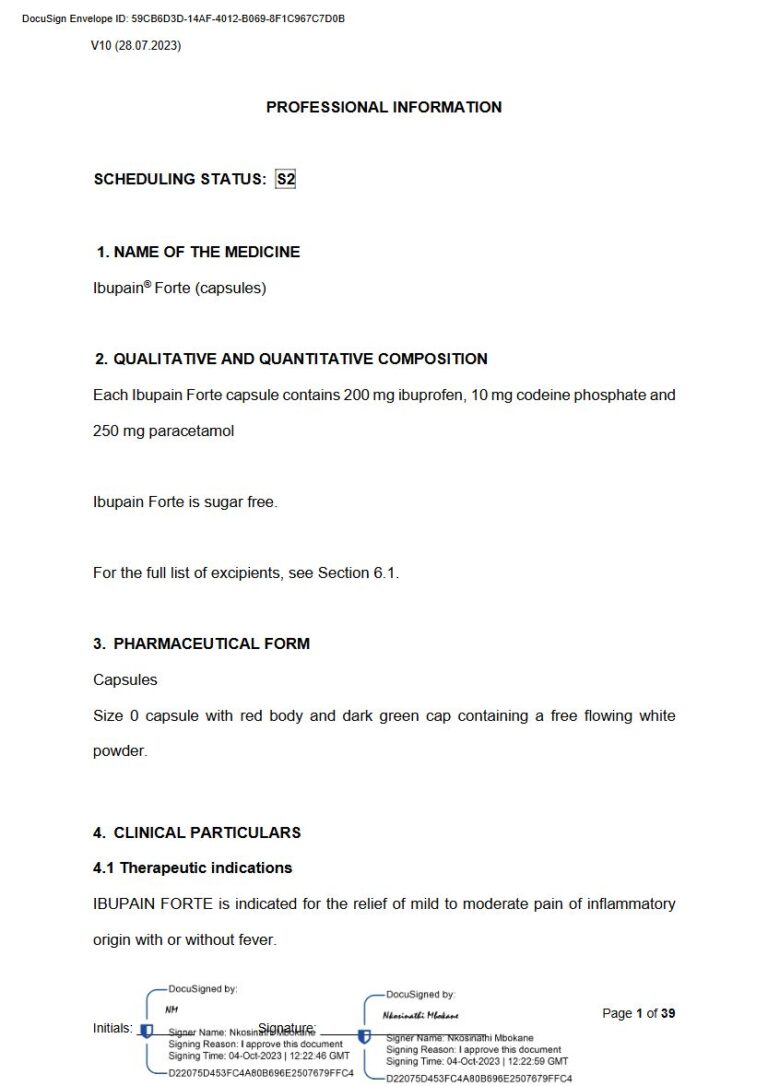
IBUPAIN FORTE is indicated for the relief of mild to moderate pain of inflammatory origin with or without fever.
4.2 Posology and method of administration
Posology
DO NOT EXCEED THE RECOMMENDED DOSE. Undesirable effects may be minimised by using the lowest effective dose for the shortest duration necessary to control symptoms (see section 4.4).
Adults, the elderly and children over 12 years: 1 to 2 capsules 6 hourly. Do not take more than 8 capsules in 24 hours. The duration of treatment should be limited to 5 days and if no effective pain relief is achieved the patients/carers should be advised to seek the views of a medical practitioner.
Hepatic insufficiency and moderate renal insufficiency: In patients with impaired hepatic or renal function or Gilbertu2019s syndrome, the dose must be reduced or the dosing interval prolonged.
Elderly: The elderly are at increased risk of the serious consequences of adverse reactions. If an NSAID is considered necessary, the lowest effective dose should be used and for the shortest possible duration. The patient should be monitored regularly for gastrointestinal bleeding during NSAID therapy.
Children aged less than 12 years: IBUPAIN FORTE should not be used in children below the age of 12 years because of the risk of opioid toxicity due to the variable and unpredictable metabolism of codeine to morphine (see section 4.3 and section 4.4).
Method of administration
For oral use
4.3 Contraindications
- Hypersensitivity to the active substances or to any of the excipients of IBUPAIN FORTE listed in section 6.1.
- Acute respiratory depression.
- Concurrent use with Monoamine Oxidase Inhibitors (MAOIs) or within 14 days of stopping such treatment (see section 4.5).
- Diarrhoea associated with pseudomembranous colitis.
- Severe hepatic failure.
- Severe renal failure.
- Heart failure.
- Active or history of recurrent peptic ulcer/haemorrhage (two or more distinct episodes of proven ulceration or bleeding.
- History of gastrointestinal perforation, ulceration or bleeding (PUBs), related to previous NSAIDs therapy, including IBUPAIN FORTE.
- Patients who have previously shown hypersensitivity reactions (e.g. asthma, rhinitis, angioedema, or urticaria) in response to acetylsalicylic acid (aspirin) or other nonsteroidal anti-inflammatory medicines (NSAIDs).
- Uncontrolled asthma or bronchospasm.
- Nasal polyps associated with aspirin-induced bronchospasm.
- Patients with bleeding disorders.
- In all paediatric patients (0-18 years of age) who undergo tonsillectomy and/or adenoidectomy for obstructive sleep apnoea syndrome due to an increased risk of developing serious and life-threatening adverse reactions (see section 4.4).
- In patients for whom it is known they are CYP2D6 ultra-rapid metabolisers.
- Pregnancy u2013 risk of foetal renal dysfunction (see section 4.4 and 4.6).
- In women during breastfeeding (see section 4.6).
- Chronic constipation.
4.4 Special warnings and precautions for use
This product contains paracetamol which may be fatal in overdose. In the event of overdosage or suspected overdose and notwithstanding the fact that the person may be asymptomatic, the nearest doctor, hospital or Poison Centre must be contacted immediately. Dosages in excess of those recommended may cause severe liver damage. IBUPAIN FORTE is for short term use and is not recommended for use beyond 5 days. Undesirable effects may be minimised by using the lowest effective dose for the shortest duration necessary to control symptoms (see section 4.2 and gastrointestinal and cardiovascular risks below).
Respiratory disorders: Bronchospasm may be precipitated in patients suffering from or with a previous history of bronchial asthma or allergic disease. Acute asthma attack or respiratory impairment or disease u2013 may decrease respiratory drive and increase airway resistance in these patients.
The use of IBUPAIN FORTE with concomitant NSAIDs including cyclooxygenase-2 selective inhibitors should be avoided (see section 4.5).
Cardiovascular and cerebrovascular effects: Appropriate monitoring and advice are required for patients with a history of hypertension and/or mild to moderate congestive heart failure as fluid retention and oedema have been reported in association with NSAID therapy. In view of IBUPAIN FORTEu2019s inherent potential to cause fluid retention, heart failure may be precipitated in some compromised patients. Clinical studies suggest that use of ibuprofen, particularly at a high dose (2400 mg/day) may be associated with a small increased risk of arterial thrombotic events (for example myocardial infarction or stroke). Overall, epidemiological studies do not suggest that low dose ibuprofen (e.g. u2264 1200 mg/day) is associated with an increased risk of arterial thrombotic events.
Patients with uncontrolled hypertension, congestive heart failure (NYHA II-III), established ischaemic heart disease, peripheral arterial disease, and/or cerebrovascular disease should only be treated with IBUPAIN FORTE after careful consideration and high doses (2400 mg/day) should be avoided.
Careful consideration should also be exercised before initiating long-term treatment of patients with risk factors for cardiovascular events (e.g. hypertension, hyperlipidaemia, diabetes mellitus, smoking), particularly if high doses of ibuprofen (2400 mg/day) are required.
Gastrointestinal bleeding, ulceration and perforation: Gastrointestinal bleeding, ulceration or perforation, which can be fatal, has been reported with all NSAIDs at any time during treatment, with or without warning symptoms or a previous history of serious gastrointestinal events. The risk of gastrointestinal Perforation, Ulceration or Bleeding (PUBs) is higher with increasing doses of IBUPAIN FORTE, in patients with a history of ulcers, particularly if complicated with haemorrhage or perforation (see section 4.3), and in the elderly. These patients should commence treatment on the lowest dose available. Combination therapy with protective agents (e.g. misoprostol or proton pump inhibitors) should be considered for these patients, and also for patients requiring concomitant low dose aspirin, or other medicines likely to increase gastrointestinal risk (see below and section 4.5).
Patients with a history of gastrointestinal toxicity, particularly when elderly, should report any unusual abdominal symptoms (especially gastrointestinal bleeding) particularly in the initial stages of treatment.
Caution should be advised in patients receiving concomitant medications which could increase the risk of ulceration or bleeding, such as oral corticosteroids, anticoagulants such as warfarin, selective serotonin-reuptake inhibitors or anti-platelet agents such as aspirin (see section 4.5).
When gastrointestinal bleeding or ulceration occurs in patients receiving IBUPAIN FORTE, the treatment with IBUPAIN FORTE should be stopped. IBUPAIN FORTE should be given with care to patients with a history of gastrointestinal disease (ulcerative colitis, Crohnu2019s disease, hiatus hernia, gastro-oesophageal reflux disease, angiodysplasia) as their condition may be exacerbated (see section 4.8).
Cardiovascular, renal and hepatic impairment: The administration of an NSAID may cause a dose dependent reduction in prostaglandin formation and precipitate renal failure. Patients at greatest risk of this reaction are those with impaired renal function, cardiac impairment, liver dysfunction, those taking diuretics and the elderly. Renal function should be monitored in these patients (see also section 4.3). There is a risk of renal impairment in dehydrated children and adolescents. Severe hypokalaemia and renal tubular acidosis have been reported due to prolonged use of ibuprofen at higher than recommended doses. This risk is increased with the use of codeine/ibuprofen as patients may become dependent on the codeine component (see warning on Opioid use disorder, section 4.8 and section 4.9).
Presenting signs and symptoms included reduced level of consciousness and generalized weakness. Ibuprofen induced renal tubular acidosis should be considered in patients with unexplained hypokalaemia and metabolic acidosis.
Opioid use disorder (abuse and dependence): Tolerance, physical and psychological dependence and opioid use disorder (OUD) may develop upon repeated administration of opioids such as codeine. Abuse or intentional misuse of IBUPAIN FORTE may result in overdose and/or death. Serious clinical outcomes, including fatalities, have been reported in association with abuse and dependence with codeine/ibuprofen combinations, particularly when taken for prolonged periods at higher than recommended doses. These have included reports of gastrointestinal perforations, gastrointestinal haemorrhages, severe anaemia, renal failure, renal tubular acidosis and severe hypokalaemia associated with the ibuprofen component. Patients should be informed about the risks and signs of OUD as well as serious clinical outcomes. If these signs occur, patients should be advised to contact their doctor. Withdrawal symptoms, such as restlessness and irritability may occur once the drug is stopped.
Severe cutaneous adverse reactions (SCARs): Severe cutaneous adverse reactions such as toxic epidermal necrolysis (TEN), exfoliative dermatitis, Stevens-Johnson syndrome (SJS), acute generalized exanthematous pustulosis (AGEP), eosinophilia and systemic (DRESS)/Drug-induced hypersensitivity syndrome (DIHS) and fixed drug eruptions (FDE) have been reported in association with the use of NSAIDs (see section 4.8). Patients appear to be at highest risk for these reactions early in the course of therapy: the onset of the reaction occurring in the majority of cases within the first month of treatment. If a patient develops SCAR, treatment with IBUPAIN FORTE must immediately be discontinued at the first appearance of signs and symptoms of SCARs, such as skin rash, mucosal lesions, or any other sign of hypersensitivity and appropriate treatment instituted.
Masking of symptoms of underlying infections: IBUPAIN FORTE can mask symptoms of infection, which may lead to delayed initiation of appropriate treatment and thereby worsening the outcome of the infection. This has been observed in bacterial community acquired pneumonia and bacterial complications to varicella. When IBUPAIN FORTE is administered for fever or pain relief in relation to infection, monitoring of infection is advised. In non-hospital settings, the patient should consult a doctor if symptoms persist or worsen.
Elderly: The elderly have an increased frequency of adverse reactions to NSAIDs including IBUPAIN FORTE, especially gastrointestinal Perforation, Ulceration and Bleeding (PUBs) which may be fatal (see section 4.2). Elderly patients may metabolise or eliminate opioid analgesics more slowly than younger adults. Codeine should be used with caution in the elderly and debilitated patients as they may be more susceptible to the respiratory depressant effects.
Do not take concurrently with any other codeine containing compounds. Care is advised in the administration of codeine to patients with hypotension, hypothyroidism, adrenocortical insufficiency, shock, obstructive bowel disorders, acute abdominal conditions (e.g. peptic ulcer), recent gastrointestinal surgery, gallstones, myasthenia gravis, and a history of peptic ulcer or convulsions and also in patients with a history of drug abuse. The habitual intake of analgesics, especially the combination of different analgesics may cause permanent kidney damage with the risk of renal failure (analgesic nephropathy). Long-term, inappropriate use of high doses of analgesics may cause headaches, which may not be treated by increasing doses of the medicinal product. Gallbladder disease or gallstones - may cause biliary tract spasm. Alcoholism, drug abuse or dependence: - caution is advised if the patient is predisposed to medicine or drug abuse - alcohol increases the risk of liver toxicity DEPENDENCE MAY DEVELOP WITH PROLONGED USE OF HIGH DOSES. Exceeding the prescribed dose, together with prolonged and continuous use of this medication, may lead to dependency and addiction. This may result in withdrawal symptoms, such as restlessness and irritability once IBUPAIN FORTE is stopped.
Head injury, increased intracranial pressure or intracranial lesions: Risk of respiratory depression and further increase in intracranial pressure. IBUPAIN FORTE may also cause sedation and pupillary changes that may obscure the clinical course of head injury.
Hypothyroidism: Increased risk of respiratory depression and prolonged central nervous system depression.
CYP2D6 metabolism: Codeine is metabolised by the liver enzyme CYP2D6 into morphine, its active metabolite. If a patient has a deficiency or is completely lacking this enzyme an adequate analgesic effect will not be obtained. Estimates indicate that up to 7 % of the Caucasian population may have this deficiency. However, if the patient is an extensive or ultra-rapid metaboliser there is an increased risk of developing side effects of opioid toxicity even at commonly prescribed doses. These patients convert codeine into morphine rapidly resulting in higher than expected serum morphine levels. General symptoms of opioid toxicity include confusion, somnolence, shallow breathing, small pupils, nausea, vomiting, constipation and lack of appetite. In severe cases this may include symptoms of circulatory and respiratory depression, which may be life-threatening and very rarely fatal.
4.5 Interaction with other medicines and other forms of interaction
IBUPAIN FORTE should not be taken with other medicines containing paracetamol, ibuprofen, acetylsalicylic acid, salicylates or with any other anti-inflammatory drugs (NSAIDs) unless under a doctoru2019s instruction.
Ibuprofen: Acetylsalicylic acid: Concomitant administration of ibuprofen and acetylsalicylic acid (aspirin) is not generally recommended because of the potential of increased adverse effects. Experimental data suggest that ibuprofen may competitively inhibit the effect of low dose acetylsalicylic acid on platelet aggregation when they are dosed concomitantly. Although there are uncertainties regarding extrapolation of these data to the clinical situation, the possibility that regular, long-term use of ibuprofen may reduce the cardio-protective effect of low-dose acetylsalicylic acid cannot be excluded. No clinically relevant effect is considered to be likely for occasional ibuprofen use (see section 5.1).
Corticosteroids: Increased risk of gastrointestinal perforation, ulceration or bleeding (PUBs) (see section 4.4).
Anticoagulants: IBUPAIN FORTE may enhance the effects of anticoagulants, such as warfarin (see section 4.4).
Anti-platelet agents and selective serotonin reuptake inhibitors (SSRIs): Increased risk of gastrointestinal bleeding (see section 4.4).
Other NSAIDs including cyclooxygenase-2 selective inhibitors: Avoid concomitant use of two or more NSAIDs as this may increase the risk of adverse effects (see section 4.4).
Anti-hypertensives (ACE inhibitors and angiotensin II antagonists) and diuretics: NSAIDs may diminish the effect of these medicines. In some patients with compromised renal function (e.g. dehydrated patients or elderly patients with compromised renal function) the co-administration of an ACE inhibitor or angiotensin II antagonist and agents that inhibit cyclooxygenase may result in further deterioration of renal function, including possible acute renal failure, which is usually reversible. These interactions should be considered in patients taking a coxib concomitantly with ACE inhibitors or angiotensin II antagonists. Therefore, the combination should be administered with caution, especially in the elderly. Patients should be adequately hydrated and consideration should be given to monitoring of renal function after initiation of concomitant therapy, and periodically thereafter. Diuretics can increase the risk of nephrotoxicity of NSAIDs.
Cardiac glycosides: NSAIDs may exacerbate cardiac failure, reduce GFR and increase plasma glycoside levels.
Lithium: Decreased elimination of lithium.
Methotrexate: Decreased elimination of methotrexate.
Ciclosporin: Increased risk of nephrotoxicity.
Tacrolimus: Possible increased risk of nephrotoxicity when NSAIDs are given with tacrolimus.
Zidovudine: Increased risk of haematological toxicity when NSAIDs are given with zidovudine. There is evidence of an increased risk of haemarthroses and haematoma in HIV(+) haemophiliacs receiving concurrent treatment with zidovudine and ibuprofen.
Quinolone antibiotics: Animal data indicate that NSAIDs can increase the risk of convulsions associated with quinolone antibiotics. Patients taking NSAIDs and quinolones may have an increased risk of developing convulsions.
Mifepristone: NSAIDs should not be used for 8 u2013 12 days after mifepristone administration as NSAIDs can reduce the effect of mifepristone.
Paracetamol: u2022 Probenecid inhibits binding of paracetamol to glucuronic acid and thus leads to a reduction in the paracetamol clearance by about a factor of 2. During concomitant administration of probenecid the paracetamol dose should be reduced. u2022 Special caution is advised during the concomitant use of medicines that lead to enzyme induction. u2022 Special caution is advised during the concomitant use of potentially hepatotoxic substances. u2022 Concomitant use of paracetamol and zidovudine increases the tendency to develop neutropenia. u2022 Cholestyramine reduces the absorption of paracetamol. u2022 Concomitant use of agents that lead to an acceleration of gastric emptying, such as metoclopramide or domperidone causes an acceleration of the uptake and the onset of action of paracetamol. u2022 Concomitant use of agents which slow the gastric emptying, may delay absorption and onset of action of paracetamol. u2022 The anticoagulant effect of warfarin and other coumarins may be enhanced by prolonged regular daily use of paracetamol, with increased risk of bleeding.
Codeine: u2022 Concomitant intake of MAOIs can increase central nervous system effects and other side effects to an unforeseeable extent. IBUPAIN FORTE should not be used until two weeks after the end of treatment with MAO inhibitors. u2022 Due to additive pharmacologic effect, the concomitant use of benzodiazepines or other CNS depressants, including alcohol, anaesthetics, hydroxyzine (anxiolytics), hypnotics, sedatives, tricyclic antidepressants or antipsychotics and phenothiazines, can increase the risk of respiratory depression, profound sedation and hypotension (see section 4.4). u2022 Concomitant administration of IBUPAIN FORTE and antihistamines and antihypertensives may enhance the sedative and respiratory depressant effect. u2022 Alcohol should be avoided during treatment with IBUPAIN FORTE as the psychomotor performance can be significantly reduced. u2022 Cimetidine and other medicines which are known to influence the hepatic metabolism, may enhance the effect of IBUPAIN FORTE. u2022 Concurrent use of codeine with antidiarrhoeal and antiperistaltic agents such as loperamide and kaolin may increase the risk of severe constipation. u2022 Concomitant use of antimuscarinics or medications with muscarinic action, e.g. atropine and some antidepressants may result in an increased risk of severe constipation which may lead to paralytic ileus and/or urinary retention. u2022 The respiratory depressant effect caused by neuromuscular blocking agents may be additive to the central respiratory depressant effects of opioid analgesics. u2022 Quinidine can inhibit the analgesic effect of codeine. u2022 Codeine may delay the absorption of mexiletine and thus reduce the antiarrhythmic effect of the latter. u2022 Codeine may antagonise the gastrointestinal effects of metoclopramide, cisapride and domperidone. u2022 Naxolone antagonises the analgesic, CNS and respiratory depressant effects of opioid analgesics. Naltrexone also blocks the therapeutic effect of opioids.
4.6 Fertility, pregnancy and lactation
Due to the presence of ibuprofen: Inhibition of prostaglandin synthesis may adversely affect the pregnancy and/or the embryo/foetal development. Data from epidemiological studies suggest an increased risk of miscarriage and of cardiac malformation and gastroschisis after use of a prostaglandin synthesis inhibitor in early pregnancy. The absolute risk for cardiovascular malformation was increased from less than 1 %, up to approximately 1,5 %. The risk is believed to increase with dose and duration of therapy. In animals, administration of a prostaglandin synthesis inhibitor has been shown to result in increased pre- and post-implantation loss and embryo-foetal lethality. In addition, increased incidences of various malformations, including cardiovascular, have been reported in animals given a prostaglandin synthesis inhibitor during the organogenetic period.
During the second or third trimester of pregnancy, NSAIDs including celecoxib/ibuprofen may cause foetal renal dysfunction which may result in reduction of amniotic fluid volume or oligohydramnios in severe cases.
During the third trimester of pregnancy, all prostaglandin synthesis inhibitors may expose the foetus to: u2022 cardiopulmonary toxicity (with premature closure of the ductus arteriosus and pulmonary hypertension) u2022 possible prolongation of bleeding time, an antiaggregating effect which may occur even at very low doses u2022 inhibition of uterine contractions resulting in delayed or prolonged labour. consequently, IBUPAIN FORTE is contraindicated during the second and third trimester of pregnancy.
Due to the presence of codeine: An association between abnormalities of the respiratory tract and the use of codeine during the first three months of pregnancy was found in humans. Evidence for other malformations was also found in epidemiological studies with narcotic analgesics, including codeine. Codeine may therefore only be used during pregnancy, especially during the first three months, if clearly indicated and after a careful benefit-risk assessment. In case of imminent birth or preterm birth, the use of codeine is contraindicated since codeine crosses the placental barrier and can cause neonatal respiratory depression. During long-term use of codeine an opioid dependence of the foetus can develop. Withdrawal symptoms in the new-born after repeated use of codeine in the last trimester of pregnancy were reported.
Due to the presence of paracetamol: A large amount of data on pregnant women indicate neither malformative, nor foeto/neonatal toxicity. Epidemiological studies on neurodevelopment in children exposed to paracetamol in utero show inconclusive results. If clinically needed, paracetamol can be used during pregnancy, however it should be used at the lowest effective dose for the shortest possible time and at the lowest possible frequency.
Breastfeeding IBUPAIN FORTE should not be used during breastfeeding (see section 4.3). At normal therapeutic doses codeine and its active metabolite may be present in breast milk at very low doses and is unlikely to adversely affect the breast fed infant. However, if the patient is an ultra-rapid metaboliser of CYP2D6, higher levels of the active metabolite, morphine, may be present in breast milk and on very rare occasions may result in symptoms of opioid toxicity in the infant, which may be fatal.
Fertility The use of ibuprofen may impair female fertility and is not recommended in women attempting to conceive. In women who have difficulties conceiving or who are undergoing investigation of infertility, withdrawal of IBUPAIN FORTE should be considered.
4.7 Effects on ability to drive and use machines
Undesirable effects such as dizziness, drowsiness, fatigue and visual disturbances are possible after intake of IBUPAIN FORTE. If affected, patients should not drive or operate machinery.
4.8 Undesirable effects
Ibuprofen: Infections and infestations: Less frequent: Rhinitis and aseptic meningitis (especially in patients with existing autoimmune disorders, such as systemic lupus erythematosus and mixed connective tissue disease) with symptoms of stiff neck, headache, nausea, vomiting, fever or disorientation (see section 4.4).
Blood and the lymphatic system disorders: Less frequent: Agranulocytosis, thrombocytopenia, leukopenia, neutropenia, pancytopenia, aplastic anaemia and haemolytic anaemia.
Immune system disorders: Less frequent: Hypersensitivity reactions have been reported following treatment with NSAIDs. These may consist of (a) non-specific allergic reactions and anaphylaxis (which could include facial, tongue and throat swelling, tachycardia, hypotension or severe shock) (b) respiratory tract reactivity comprising asthma, aggravated asthma, bronchospasm or dyspnoea, or (c) assorted skin disorders, including rashes of various types, pruritus, urticaria, purpura, angioedema and, more rarely exfoliative and bullous dermatoses (including Stevens-Johnson syndrome, toxic epidermal necrolysis and erythema multiforme).
Metabolism and nutrition disorders: Frequency not known: Decreased appetite, hypokalaemia.
Psychiatric disorders: Less frequent: Insomnia, anxiety, depression, confusion state, hallucination.
Nervous system disorders: Less frequent: Dizziness, nervousness, headache, optic neuritis, paraesthesia, somnolence.
Eye disorders: Less frequent: Visual impairment and toxic optic neuropathy.
Ear and labyrinth disorders: Less frequent: Hearing impairment, tinnitus and vertigo.
Cardiac disorders: Less frequent: Cardiac failure may be precipitated in compromised patients, angina pectoris, cardiac arrhythmias, oedema. Clinical trial and epidemiological data suggest that use of ibuprofen, particularly at high dose (2400 mg daily), and in long term treatment may be associated with a small increased risk of arterial thrombotic events (for example myocardial infarction or stroke).
Vascular disorders: Less frequent: Hypertension.
Respiratory, thoracic and mediastinal disorders: Frequency not known: Respiratory tract reactivity comprising asthma, bronchospasm or dyspnoea.
Gastrointestinal disorders: The most commonly observed adverse events are gastrointestinal in nature. Frequent: Peptic ulcers, perforation or gastrointestinal bleeding, sometimes fatal. Dyspepsia, nausea, vomiting, diarrhoea, abdominal cramps and pain, bloating, flatulence, constipation, melaena, haematemesis, ulcerative stomatitis, exacerbation of colitis and Crohnu2019s disease, gastritis. Less frequent: Pancreatitis.
Hepatobiliary disorders: Less frequent: Hepatic function abnormal, hepatic failure, hepatitis and jaundice.
Skin and subcutaneous tissue disorders: Less frequent: Skin rash, pruritus. Bullous reactions, including Stevens-Johnson syndrome, erythema multiforme and toxic epidermal necrolysis, photosensitivity reaction.
Frequency not known: Drug reaction with eosinophilia and systemic symptoms (DRESS syndrome), acute generalised exanthematous pustulosis (AGEP).
Renal and urinary disorders: Less frequent: Impairment of renal function, acute reversible renal failure (Especially in long-term use, associated with increased serum urea and oedema. Also includes papillary necrosis). Frequency not known: Ureteric colic, dysuria, renal tubular acidosis.
General disorders and administration site conditions: Less frequent: Malaise, fatigue Frequency not known: Hyperhidrosis, irritability.
Paracetamol: Blood and the lymphatic system disorders: Less frequent: Haematological reaction (including thrombocytopenia, leucopoenia, pancytopenia, neutropenia and agranulocytosis).
Immune system disorders: Less frequent: Hypersensitivity. Cutaneous hypersensitivity reactions including, among others, skin rashes and angioedema. Very rare cases of serious skin reactions have been reported. Anaphylactic reaction.
Hepatobiliary disorders: Less frequent: Hepatic enzyme increase, hepatic dysfunction.
Skin and subcutaneous tissue disorders: Less frequent: Rash, pruritus, erythema, urticaria. Very rare cases of serious skin reactions have been reported (including drug-induced Stevens-Johnson Syndrome (SJS), Toxic Epidermal Necrolysis (TEN), and Acute Generalised Exanthematous Pustulosis (AGEP)).
Respiratory, thoracic and mediastinal disorders: Less frequent: Bronchospasm. * There have been cases of bronchospasm with paracetamol, but these are more likely in asthmatics sensitive to aspirin or other NSAIDs.
Renal and urinary disorders: Less frequent: Renal colic, renal failure.
Codeine phosphate: Psychiatric disorders: Less frequent: Hallucinations, dysphoria, euphoria, mood changes, restlessness, confusion. Frequency not known: Nightmares.
Nervous system disorders: Frequent: Drowsiness, dizziness, seizures, addiction, tolerance, dependence, headache, vertigo, malaise, sleep disturbances. Frequency not known: Convulsion, intracranial pressure increased, dyskinesia.
Eye disorders: Less frequent: Miosis, visual disturbances. Frequency not known: Vision blurred, diplopia.
Cardiac disorders: Less frequent: Bradycardia, palpitations, tachycardia.
Vascular disorders: Less frequent: Postural hypotension, hypothermia, facial flushing.
Respiratory, thoracic and mediastinal disorders: Less frequent: Respiratory depression. Frequency not known: Cough suppression.
Gastrointestinal disorders: Frequent: Nausea, vomiting, constipation, pancreatitis. Less frequent: Dry mouth.
Hepatobiliary disorders: Less frequent: Biliary spasm, liver disorder. Frequency not known: Biliary colic.
4.9 Overdose
In the event of overdosage or suspected overdose and notwithstanding the fact that the person may be asymptomatic, the nearest doctor, hospital or Poison Centre must be contacted immediately.
Paracetamol: Prompt treatment is essential. In the event of an overdosage, consult a doctor immediately, or take the person directly to a hospital. A delay in starting treatment may mean that the antidote is given too late to be effective. Evidence of liver damage is often delayed until after the time for effective treatment has lapsed. Symptoms: Susceptibility to paracetamol toxicity is increased in patients who have taken repeated high doses (greater than 5 to 10 g/day) of paracetamol for several days, in the elderly, young children, in chronic alcoholism, chronic liver disease, AIDS, malnutrition, and with the use of medicines that induce liver microsomal oxidation such as barbiturates, isoniazid, rifampicin, phenytoin and carbamazepine. In these cases, an overdose can be fatal. In general, symptoms occur within 24 hours: pallor, nausea, vomiting, anorexia and abdominal pain. Mild symptoms during the first two days of acute poisoning do not reflect the potential seriousness of the overdosage. Liver damage may become apparent 12 to 48 hours, or later after ingestion of paracetamol, initially by elevation of the serum transaminase and lactic dehydrogenase activity, increased serum bilirubin concentrations and prolongation of the prothrombin time. Liver damage may lead to encephalopathy, coma and death. Acute renal failure with acute tubular necrosis may develop even in the absence of severe liver damage. Abnormalities of glucose metabolism and metabolic acidosis may occur. Cardiac arrhythmias have been reported. Cerebral oedema and non-specific myocardial depression have occurred.
Treatment of overdose: Although evidence is limited, it is recommended that an adult who has ingested 5 to 10 g or more of paracetamol (or a child who has had more than 140 mg/kg) within the preceding 4 hours, should have the stomach emptied by lavage (emesis may be adequate for children) and a single dose of 50 g activated charcoal given via the lavage tube. Ingestion of amounts of paracetamol smaller than this may require treatment in patients susceptible to paracetamol poisoning (see above). In patients who are stuperose or comatose, endotracheal intubation should precede gastric lavage in order to avoid aspiration. N-acetylcysteine should be administered to all cases of suspected overdose as soon as possible, preferably within 8 hours of overdosage, although treatment up to 36 hours after ingestion may still be of benefit, especially if more than 150 mg/kg of paracetamol was taken. An initial dose of 150 mg/kg N-acetylcysteine in 200 ml dextrose injection given intravenously over 15 minutes, followed by an infusion of 50 mg/kg in 500 ml dextrose injection over the next 4 hours, and then 100 mg/kg in 1000 ml dextrose injection over the next 16 hours. The volume of intravenous fluid should be modified for children. Although the oral formulation is not the treatment of choice, 140 mg/kg dissolved in water as a 5 % solution may be administered initially, followed by 70 mg/kg every 4 hours for seventeen doses. If activated charcoal is used then it should be removed by gastric lavage as it may interfere with absorption of orally administered N-acetylcysteine and decrease its efficacy. A plasma paracetamol level should be determined 4 hours after ingestion in all cases of suspected overdosage. Levels done before 4 hours may be misleading. Patients at risk of liver damage, and hence requiring continued treatment with N-acetylcysteine, can be identified according to their 4 hour plasma paracetamol level. The plasma paracetamol level can be plotted against time since ingestion in the treatment nomogram. The nomogram should be used only in relation to a single acute ingestion.
Adapted from Smilkstein et al., Ann. Emerg.Med., 1991, 20, 1059
Ibuprofen: Symptoms: Symptoms include headache, nausea, vomiting, epigastric pain, gastrointestinal bleeding, rarely diarrhoea, disorientation, excitation, coma, drowsiness, dizziness, tinnitus, fainting, occasionally convulsions. In cases of significant poisoning acute renal failure and liver damage are possible. In serious poisoning metabolic acidosis may occur and the prothrombin time/ INR may be prolonged, probably due to interference with the actions of circulating clotting factors. Acute renal failure and liver damage may occur.
Prolonged use at higher than recommended doses may result in severe hypokalaemia and renal tubular acidosis. Symptoms may include reduced level of consciousness and generalised weakness (see section 4.4 and section 4.8).
Exacerbation of asthma is possible in asthmatics.
Therapeutic measure: Patients should be treated symptomatically as required. Within one hour of ingestion of a potentially toxic amount, activated charcoal should be considered. Alternatively, in adults, gastric lavage should be considered within one hour of ingestion of a potentially life-threatening overdose. Good urine output should be ensured. Renal and liver function should be closely monitored. Patients should be observed for at least four hours after ingestion of potentially toxic amounts. Frequent or prolonged convulsions should be treated with intravenous diazepam. Other measures may be indicated by the patient's clinical condition.
Codeine: Symptoms: Codeine overdose may result in central nervous system and respiratory depression with hypoxia, hypotension, shock, gastric hypomotility with ileus, non-cardiogenic pulmonary oedema. Nausea and vomiting are prominent features. The opiate intoxication syndrome is described as a triad of depressed level of consciousness, miotic pupils, and decreased respirations.
Management: Treatment is based more on clinical presentation than on specific laboratory data, except when complications have occurred. Plasma codeine levels are not clinically useful. Support the respiratory and cardiovascular function. Monitor arterial blood gases and/or pulse oximetry, pulmonary function tests, and chest x-ray in patients with significant exposure. Ipecac-induced emesis is not recommended because of the potential for CNS depression and seizures. Consider pre-hospital administration of activated charcoal as aqueous slurry in patients with a potentially toxic ingestion who are awake and able to protect their airway. Activated charcoal is most effective when administered within one hour of ingestion. Use a minimum of 240 ml of water per 30 g charcoal. Optimum dose has not been established, but the usual dose is 25 to 100 g in adults and adolescents; 25 to 50 g in children aged 1 to 12 years (or 0,5 to 1 g/kg body weight); and 1 g/kg in infants up to 1 year old. Consider naloxone as antidote in patients with decreased level of consciousness. The most frequently recommended initial naloxone dose for codeine overdose is 0,4 to 2 mg intravenous bolus in both children and adults. This dose can also be given subcutaneously in the absence of intravenous access or intratracheally.
