
Demazin Cold And Flu 200 mg Tablets
PDF Leaflet Revision Date: 4 July 2023
Clinical Summary
Quick overview from the medicine insert
Indication
Relief of symptoms associated with common cold, sinusitis, or flu.
Dosage (summary)
Adults and children 12 years and older: 1 tablet every 4-6 hours, max 6 tablets/24 hours.
Special Populations
- Elderly
- Renal impairment
- Hepatic impairment
Pregnancy & Breastfeeding
Contraindicated in pregnancy and lactation; may affect fetal development.
Key Drug Interactions
- Enhances effects of anticoagulants
- Increased risk of nephrotoxicity with ACE inhibitors
- May reduce antihypertensive effects
Contraindications
- Hypersensitivity to ibuprofen or pseudoephedrine
- MAOI treatment
- Cardiovascular disease
- Gastrointestinal bleeding
- Pregnancy and lactation
Common side effects
- Dizziness
- Nausea
- Skin rash
- Abdominal pain
Counselling Points
- Take with water and food
- Avoid driving if dizzy
- Consult doctor if symptoms persist
Serious warnings
- Risk of gastrointestinal bleeding
- Serious skin reactions
- Fluid retention in compromised patients
Important Disclaimer
The Demazin Cold And Flu 200 mg Tablets professional information leaflet below is the property of Inova Pharmaceuticals and is provided on Medinsert exactly as issued, with no.. alterations or editorial changes. We make every effort to keep content current by updating documents as soon as new versions become available. Medinsert serves as a trusted access point for healthcare professionals, but does not replace official sources or clinical judgement. For more details, please read our full disclaimer. read more>>
 Healthcare Professionals Only
This content is for registered healthcare professionals
Sign in or create a free account to read the full package insert.
Free for HPCSA-registered professionals. Powered by Medinsert.
Clinical Particulars
Section 4 of the official insert — extracted exactly as issued, no alterations
4.1 Therapeutic indications
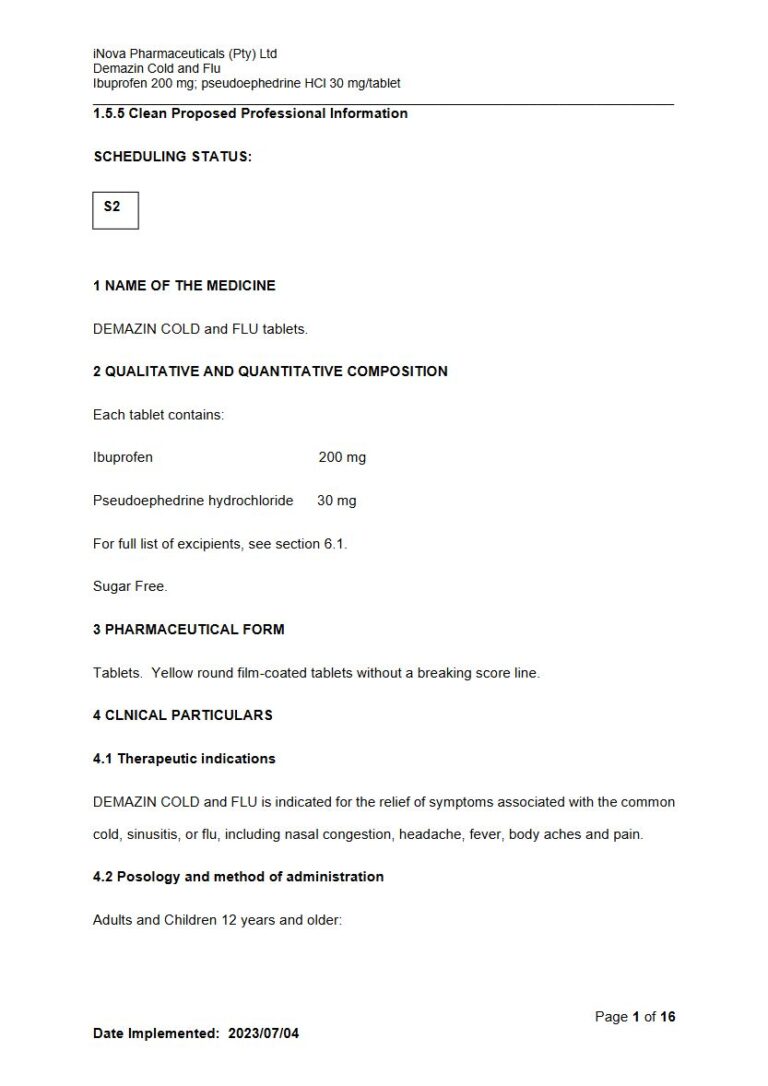
DEMAZIN COLD and FLU is indicated for the relief of symptoms associated with the common cold, sinusitis, or flu, including nasal congestion, headache, fever, body aches and pain.
4.2 Posology and method of administration
Adults and Children 12 years and older:
Take one tablet every 4 to 6 hours. If symptoms do not respond to one tablet, a second tablet may be taken. Do not exceed 6 tablets in 24 hours. Do not take for cold for more than 7 days or for fever for more than 3 days, unless directed by a doctor. If the cold or fever persists or gets worse, or if new symptoms occur, consult a doctor. Use the lowest effective dose for the shortest possible duration of treatment.
Paediatric population
Not to be given to children under 12 years.
Method of administration
For oral use. DEMAZIN COLD and FLU should be taken with a glass of water, with food or after meals.
4.3 Contraindications
DEMAZIN COLD and FLU is contra-indicated in:
- patients sensitive to ibuprofen or any other nonsteroidal anti-inflammatory agent (NSAID)
- patients sensitive to pseudoephedrine hydrochloride or any other sympathomimetic agent
- patients sensitive to any other component of this product (see section 6.1)
- persons under treatment with monoamine oxidase inhibitors, or within 14 days of stopping such treatment
- cardiovascular disease, heart failure, hypertension, diabetes mellitus, hyperthyroidism, hyperexcitability, prostatic hypertrophy, phaeochromocytoma and close-angle glaucoma
- patients who have had a severe allergic reaction to aspirin - asthma, swelling, shock or hives, because even though DEMAZIN COLD and FLU contains no aspirin, or salicylates, cross-reactions may occur in patients allergic to aspirin
- patients with impaired renal and liver functions
- patients with a history of gastrointestinal bleeding or perforation related to previous NSAIDs
- patients with active or history of recurrent ulcer, haemorrhage or perforations
- patients with bleeding disorders, haematological disorders
- pregnancy and lactation See section 4.6.
4.4 Special warnings and precautions for use
Caution is advised to those patients who are receiving coumarin anticoagulants. DEMAZIN COLD and FLU should not be combined with other non-prescription pain relievers or any other ibuprofen-containing product. Caution is required in patients with a history of hypertension and/or heart failure as fluid retention and oedema have been reported in association with non-steroidal anti-inflammatory therapy, including DEMAZIN COLD and FLU. In view of the inherent potential of DEMAZIN COLD and FLU to cause fluid retention, heart failure may be precipitated in some compromised patients.
DEMAZIN COLD and FLU should be given with caution to patients with a history of gastrointestinal disease (e.g. ulcerative colitis, Crohnu2019s disease, hiatus hernia, gastro-oesophageal reflux disease, angiodysplasia) as the condition may be exacerbated. The elderly have an increased frequency of adverse reactions to NSAIDs, such as DEMAZIN COLD and FLU especially gastrointestinal bleeding and perforation, which may be fatal. The risk of gastrointestinal bleeding or ulceration is higher with increasing doses, in patients with a history of ulcers and the elderly. When gastrointestinal bleeding or ulceration occurs in patients receiving DEMAZIN COLD and FLU, treatment should be stopped. Serious skin reactions, some of them fatal, including exfoliative dermatitis, Stevens-Johnson syndrome, and toxic epidermal necrolysis have been reported in association with non-steroidal anti-inflammatory therapy. Discontinue treatment at the first appearance of rash, mucosal lesions, or any other sign of hypersensitivity.
Special Precautions:
Ibuprofen: Ibuprofen should be discontinued in patients who experience blurred or diminished vision or changes in colour vision. Aseptic meningitis has occurred in patients with systemic lupus erythematosus and patients with mixed connective tissue disease who were receiving ibuprofen. Bronchospasm may be precipitated in patients suffering from or with a previous history of asthma or allergic disease. Ibuprofen can mask symptoms of infection, which may lead to delayed initiation of appropriate treatment, thereby worsening the outcome of the infection. Consult a doctor if symptoms persist or worsen.
Drug reaction with eosinophilia and systemic symptoms
Drug reaction with eosinophilia and systemic symptoms (DRESS) has been reported in patients taking NSAIDs such as ibuprofen in DEMAZIN COLD and FLU. Some of these events have been fatal or life-threatening. DRESS typically although not exclusively presents with fever rash lymphadenopathy, and/or facial swelling. Other clinical manifestations may include hepatitis, nephritis, haematological abnormalities, myocarditis, or myositis. Sometimes symptoms of DRESS may resemble an acute viral infection. Eosinophilia is often present. Because this disorder is variable in its presentation, other organ systems not noted here may be involved. It is important to note that early manifestations of hypersensitivity, such as fever or lymphadenopathy, may be present even though rash is not evident. If such signs or symptoms are present, discontinue DEMAZIN COLD and FLU and evaluate the patient immediately.
Pseudoephedrine hydrochloride: To minimise the possibility of insomnia, the last dose for each day should be administered a few hours before bedtime. Some cases of ischaemic colitis have been reported with pseudoephedrine. Pseudoephedrine should be discontinued and medical advice sought if sudden abdominal pain, rectal bleeding or other symptoms of ischaemic colitis develop. Cases of ischaemic optic neuropathy have been reported with pseudoephedrine. Pseudoephedrine should be discontinued if sudden loss of vision or decreased visual acuity such as scotoma occurs. Paediatric population: Avoid the use of two or more different cold and flu medicines at the same time as this can result in serious adverse effects.
4.5 Interaction with other medicines and other forms of interaction
Ibuprofen: Interactions involving NSAIDs include possible enhancement of the effects of oral anticoagulants (such as warfarin) and increased plasma concentrations of lithium, methotrexate and digoxin. The risk of nephrotoxicity may be increased if DEMAZIN COLD and FLU is given with angiotensin-converting enzyme inhibitors, cyclosporine, tacrolimus or diuretics. There may also be an increased risk of hyperkalaemia with angiotensin-converting enzyme inhibitors and potassium-sparing diuretics. The antihypertensive effects of some antihypertensive medicines including angiotensin-converting enzyme inhibitors, beta blockers, and diuretics may be reduced. Convulsions may occur due to an interaction with quinolones. DEMAZIN COLD and FLU may enhance the effects of phenytoin, oral antidiabetic medicines and insulin. The risk of gastrointestinal bleeding and ulceration associated with DEMAZIN COLD and FLU is increased when used with corticosteroids, selective serotonin reuptake inhibitors, the antiplatelets clopidogrel and ticlopidine, or, possibly alcohol, bisphosphonates, or oxpentifylline (pentoxifylline). The concomitant use of more than one NSAID (including aspirin) should be avoided because of the increased risk of adverse effects. There may be an increased risk of haemotoxicity during concomitant use of zidovudine and DEMAZIN COLD and FLU.
Ibuprofen NSAIDs, such as in DEMAZIN COLD and FLU, should not be used 8 - 12 days after mifepristone administration as NSAIDs can reduce the effect of mifepristone.
Pseudoephedrine hydrochloride: Pseudoephedrine hydrochloride should be given with caution to patients receiving halothane or other halogenated anaesthetics. An increased risk of dysrhythmias may occur if pseudoephedrine hydrochloride is given to patients receiving digoxin, quinidine or tricyclic antidepressants and there is an increased risk of vasoconstrictor or pressor effects in patients receiving ergot alkaloids or oxytocin. Pseudoephedrine hydrochloride may reverse the action of many antihypertensive medicines and therefore special care is advisable in patients receiving antihypertensive therapy. Pseudoephedrine may cause a hypertensive crisis in patients receiving a monoamine oxidase inhibitor (MAOI). See section 4.3. Concurrent use with beta-adrenergic blocking medicines may inhibit the therapeutic effect of these medicines, with a risk of hypertension and excessive bradycardia and possible heart block. Concurrent use with citrates may inhibit urinary excretion and prolong the duration of action of pseudoephedrine. Concurrent use with central nervous system (CNS) stimulation-producing medications may result in additive CNS stimulation to excessive levels. The use of levodopa with pseudoephedrine may increase the possibility of cardiac dysrhythmias. Concurrent use of nitrates with pseudoephedrine may reduce the anti-anginal effects of these medications. The use of thyroid hormones and pseudoephedrine concurrently may increase the effects of either these medications or pseudoephedrine. In addition to possibly increasing CNS stimulation, concurrent use with other sympathomimetics may increase the cardiovascular effects and the potential for side effects. Use with appetite suppressants and amphetamine-like psychostimulants may increase the risk of hypertension. Pseudoephedrine may enhance the effects of anticholinergic medicines, such as tricyclic antidepressants.
4.6 Fertility, pregnancy and lactation
DEMAZIN COLD and FLU is contraindicated for use in pregnant or lactating women.
Ibuprofen: Regular use of non-steroidal anti-inflammatory drugs such as ibuprofen may result in:
First trimester: Inhibition of prostaglandin synthesis may adversely affect the pregnancy and/or the embryo/foetal development. Data from epidemiological studies raise concern about an increased risk of miscarriage and of cardiac malformation and gastroschisis after use of a prostaglandin synthesis inhibitor in early pregnancy. The absolute risk for cardiovascular malformation was increased from less than 1% up to approximately 1.5%. In animals, administration of a prostaglandin synthesis inhibitor has been shown to result in increased pre- and post-implantation loss and embryo-foetal lethality. In addition, increased incidences of various malformations including cardiovascular, have been reported in animals given a prostaglandin synthesis inhibitor during the organogenetic period.
Second and Third trimester: During the third trimester of pregnancy, prostaglandin synthesis inhibitors may expose the foetus to: cardiopulmonary toxicity (with premature closure of the ductus arteriosus and pulmonary hypertension); renal dysfunction, which may progress to renal failure with oligo-hydroamniosis. At the end of pregnancy, the mother and the neonate may be exposed to: possible prolongation of bleeding time, an anti-aggregating effect which may occur even at very low doses; inhibition of uterine contractions resulting in delayed or prolonged labour.
Pseudoephedrine hydrochloride: Pseudoephedrine studies on birth defects have not been done in humans. However, studies in animals have shown pseudoephedrine causes a reduction in average weight, length and rate of bone formation in the animal foetus. Pseudoephedrine passes into breast milk and may cause unwanted effects in nursing babies.
4.7 Effects on ability to drive and use machines
None or negligible influence on the ability to drive or operate machines expected at recommended doses and duration of therapy. DEMAZIN COLD and FLU may cause dizziness and patients should avoid driving or operating machines if they experience this.
4.8 Undesirable effects
Ibuprofen:
Blood and the lymphatic system disorders: Less frequent: Agranulocytosis, anaemia, aplastic anaemia, eosinophilia, leukopenia, neutropenia, thrombocytopenia, haemolytic anaemia. Frequency unknown: Ecchymosis.
Immune system disorders: Less frequent: Anaphylaxis or anaphylactoid reactions, angiitis, angioedema; bronchospastic allergic reactions, allergic rhinitis, serum sickness-like reaction, systemic lupus erythematosus-like syndrome, hepatotoxicity and aseptic meningitis, which may occur rarely, may also be hypersensitivity reactions.
Nervous System Disorders: Frequent: Dizziness Less frequent: Mild to moderate headache, nervousness or irritability, confusion, hallucinations, mental depression, peripheral neuropathy, drowsiness, trouble in sleeping. Frequency unknown: Convulsions, mood or mental changes.
Eye disorders: Less frequent: Amblyopia (toxic), blurred or double vision or change in vision, conjunctivitis; dry, irritated or swollen eyes.
Ear and labyrinth disorders: Less frequent: Ringing or buzzing in ears; decrease or change in hearing.
Cardiac disorders: Many of the cardiovascular effects may occur secondary to NSAID-induced renal function impairment. Less frequent: Oedema, hypertension, unexplained nose bleeds; cardiac dysrhythmias; congestive heart failure or exacerbation of; fast or pounding heartbeat; flushing. Frequency unknown: Angina pectoris or exacerbation of; pulmonary oedema.
Respiratory, thoracic and mediastinal disorders: See also u201cImmune system disordersu201d Less frequent: Alveolitis, pulmonary eosinophilia, pulmonary oedema, asthma, bronchospasm, dyspnoea and wheezing.
Gastrointestinal disorders: Frequent: Mild to moderate abdominal cramps; pain or discomfort; epigastric pain or discomfort; heartburn, nausea. Less frequent: Flatulence, constipation, decreased appetite or loss of appetite; diarrhoea, indigestion, vomiting, gastritis, gastrointestinal bleeding or haemorrhage; melaena, haematemesis, gastrointestinal perforation, gastrointestinal ulceration, irritation, dryness or soreness of mouth. Gingival ulceration or aphthous stomatitis. Frequency unknown: Colitis or exacerbation of; enterocolitis, oesophagitis, ulcerative stomatitis, exacerbation of Crohnu2019s disease. Hypokalemia.
Hepato-biliary disorders: Less frequent: Pancreatitis, hepatitis or jaundice (toxic). Frequency unknown: Abnormalities in liver function tests.
Skin and subcutaneous tissue disorders: Frequent: Skin rash. Less frequent: Itching, bullous eruption, hives, Stevens-Johnson syndrome, toxic epidermal necrolysis, erythema multiforme. Frequency unknown: Eczema, exfoliative dermatitis, photo sensitivity reactions. Drug reaction with eosinophilia and systemic symptoms (DRESS syndrome), Acute generalised exanthematous pustulosis (AGEP).
Renal and urinary disorders: Less frequent: Fluid retention; oedema. unexplained vaginal bleeding, blood in urine; cystitis; renal impairment or failure; polyuria, renal papillary or tubular necrosis. Frequency unknown: Renal calculi or obstruction; interstitial nephritis, nephrotic syndrome renal tubular acidosis.
General disorders and administration site conditions: Less frequent: Peripheral oedema.
Investigations: Less frequent: Decreased haematocrit and haemoglobin levels.
Pseudoephedrine hydrochloride: Immune system disorders: Frequency unknown: Hypersensitivity reactions, including cross-sensitivity that may occur with other sympathomimetics.
Endocrine disorders: Frequency unknown: Altered metabolism, including disturbances of glucose metabolism.
Nervous System disorders: Frequent: Nervousness, restlessness, insomnia. Less frequent: Giddiness, headache, sweating, muscular weakness, tremor, hallucinations, convulsions. Frequency unknown: Fear, confusion, irritability, psychotic states, tolerance with dependence may occur.
Eye disorders: Frequency unknown: Ischaemic optic neuropathy.
Cardiac disorders: Less frequent: Tachycardia. Frequency unknown: Precordial pain, palpitations, hypertension and ventricular dysrhythmias may occur.
Respiratory, thoracic and mediastinal disorders: Less frequent: Shortness of breath or troubled breathing. Frequency unknown: Dyspnoea.
Gastrointestinal disorders: Less frequent: Nausea or vomiting. Frequency unknown: Reduced appetite, thirst, ischaemic colitis.
Skin and subcutaneous tissue disorders: Frequency unknown: Skin rashes, skin reactions including acute generalized exanthematous pustulosis (AGEP).
Renal and urinary disorders: Less frequent: Difficult or painful urination. Frequency unknown: Urinary retention.
*Renal tubular acidosis and hypokalaemia have been reported in the post-marketing setting typically following prolonged use of the ibuprofen component at higher than recommended doses due to dependence on the codeine component.
4.9 Overdose
See 4.8. Prolonged use at higher than recommended doses may result in severe hypokalaemia and renal tubular acidosis. Symptoms may include reduced level of consciousness and generalised weakness (see section 4.4 and section 4.8). Treatment is symptomatic and supportive. The latest information regarding the treatment of overdosage can be obtained from the nearest poison control centre.
