
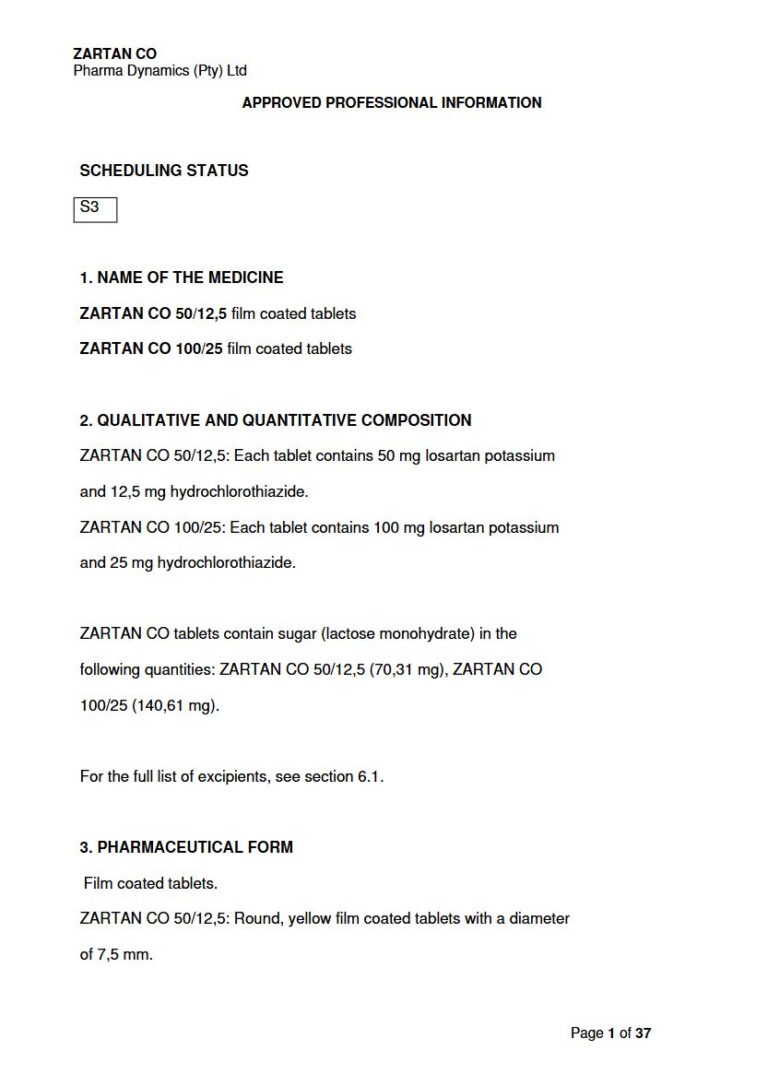
Zartan Co 50 mg/100 mg FC tablets
PDF Leaflet Revision Date: 27 September 2024
Clinical Summary
Quick overview from the medicine insert
Indication
Treatment of hypertension.
Dosage (summary)
Start with 50/12.5 mg once daily; may increase to 100/25 mg if needed.
Onset of Action / Duration
Onset: 3 weeks, Duration: 24 hours
Special Populations
- Elderly
- Renal impairment
- Hepatic impairment
Pregnancy & Breastfeeding
Contraindicated in pregnancy and lactation.
Key Drug Interactions
- NSAIDs
- Lithium
- Potassium-sparing diuretics
Contraindications
- Hypersensitivity
- Severe renal impairment
- Severe hepatic impairment
- Pregnancy
- Lactation
Common side effects
- Dizziness
- Hypotension
- Hyperkalaemia
- Fatigue
Counselling Points
- Monitor blood pressure regularly
- Avoid potassium supplements
- Report any skin changes
Serious warnings
- Risk of fetal injury
- Dual blockade of RAAS not recommended
Important Disclaimer
The Zartan Co 50 mg/100 mg FC tablets professional information leaflet below is the property of Pharma Dynamics and is provided on Medinsert exactly as issued, with no.. alterations or editorial changes. We make every effort to keep content current by updating documents as soon as new versions become available. Medinsert serves as a trusted access point for healthcare professionals, but does not replace official sources or clinical judgement. For more details, please read our full disclaimer. read more>>
 Healthcare Professionals Only
This content is for registered healthcare professionals
Sign in or create a free account to read the full package insert.
Free for HPCSA-registered professionals. Powered by Medinsert.
Clinical Particulars
Section 4 of the official insert — extracted exactly as issued, no alterations
4.1 Therapeutic indications
ZARTAN CO is indicated for the treatment of hypertension in patients established on identical doses of the individual medicines.
4.2 Posology and method of administration
The usual starting and maintenance dose is one tablet of ZARTAN CO 50/12,5 once daily. For patients who do not respond adequately, the dosage may be changed to one tablet of ZARTAN CO 100/25 once daily. The maximum dose is one tablet of ZARTAN CO 100/25 once daily. The maximum antihypertensive effect is attained within three weeks after initiation of therapy.
Special populations
ZARTAN CO should not be initiated in patients who are intravascularly volume-depleted (e.g. those treated with high-dose diuretics).
Hepatic or renal impairment:
ZARTAN CO should not be considered for patients with a history of hepatic or moderate to severe renal impairment (see sections 4.3 and 4.4).
Elderly patients:
No initial dosage adjustment is necessary for elderly patients. A higher dose (100 mg losartan and 25 mg hydrochlorothiazide) should not be used as initial therapy in the elderly.
Paediatric population
Not applicable.
Method of administration
ZARTAN CO may be administered with other antihypertensive medicines, particularly calcium channel blockers and beta-blockers. ZARTAN CO can be administered with or without food.
Missed dose
Doctors should advise patients who forget to take ZARTAN CO to take a dose as soon as possible and then continue with the normal dose. Patients should not take a double dose to compensate for the missed dose.
4.3 Contraindications
- hypersensitivity to losartan potassium, hydrochlorothiazide, other sulphonamide-derived substances or to any of the ingredients of ZARTAN CO (see section 6.1)
- patients with a history of previous and/or current basal cell carcinoma and/or squamous cell carcinoma of the skin and lip
- anuria or severe renal function impairment (creatinine clearance< 30 mL/min) - hydrochlorothiazide may produce cumulative effects or precipitate uraemia
- severe hepatic impairment
- cholestasis and biliary obstructive disorders - increased plasma concentrations may occur. ZARTAN CO is not recommended since dose titration with losartan is needed
- paediatric use u2013 the safety and efficacy of ZARTAN CO have not been established in paediatric patients
- a history of angioedema related to previous therapy with ACE inhibitors or angiotensin receptor blockers (ARBs). Such patients must never again be given these medicines
- hereditary or idiopathic angioedema
- hypertrophic obstructive cardiomyopathy (HOCM)
- bilateral renal artery stenosis
- renal artery stenosis in patients with a single kidney
- concomitant use of fluoroquinolones with Angiotensin Receptor Blockers (ARBs), such as ZARTAN CO, is contraindicated in patients with moderate to severe renal impairment (Creatinine clearance u2264 30 mL/min) and in elderly patients
- aortic stenosis
- concomitant therapy with potassium sparing diuretics such as spironolactone, triamterene, amiloride (see section 4.5)
- porphyria
- hydrochlorothiazide in combination with losartan, as in ZARTAN CO, should not be given to patients with Addison's disease
- lithium therapy: concomitant administration with ZARTAN CO may lead to toxic blood concentrations of lithium
- therapy resistant hypokalaemia or hypercalcaemia
- refractory hyponatraemia
- the concomitant use of ZARTAN CO with renin inhibitors such as aliskiren is contraindicated in patients with diabetes mellitus or renal impairment (GFR < 60 mL/min/1,73 m2) (see sections 4.4 and 4.5)
- pregnancy and lactation (see section 4.6).
4.4 Special warnings and precautions for use
ZARTAN CO treatment may cause foetal injury. Should a woman become pregnant while receiving ZARTAN CO, the treatment must be stopped promptly and changed to a different class of antihypertensive medicine (see sections 4.3 and 4.6). Should a woman contemplate pregnancy, the doctor should consider alternative medication (see section 4.6).
Dual blockade of the renin-angiotensin-aldosterone system (RAAS)
Hypotension, syncope, stroke, hyperkalaemia and changes in renal function (including acute renal failure) have been reported with ZARTAN CO in susceptible individuals, especially if combining medicines that affect this system. Dual blockade of the renin-angiotensin-aldosterone system by combining an angiotensin II receptor blocker, such as ZARTAN CO, with an angiotensin converting enzyme inhibitor (ACEI) or aliskiren is therefore not recommended. Dual blockade of RAAS through the combined use of ZARTAN CO and aliskiren is contraindicated in patients with diabetes mellitus or renal impairment (GFR < 60 mL/min/1,73 m2) (see section 4.3). If dual blockade therapy is considered absolutely necessary, this should only occur under specialist supervision and subject to frequent close monitoring of renal function, electrolytes and blood pressure.
Hypotension and electrolyte/fluid imbalance
Patients who are sodium or volume depleted (e.g. those who have received high-dose diuretics). Symptomatic hypotension may occur following the initiation of therapy with ZARTAN CO. Sodium - or volume depletion should be corrected before initiating therapy or a lower starting dose should be used (see section 4.2). Periodic determination of serum electrolytes must be performed at appropriate intervals.
Patients with electrolyte imbalances - the condition may be exacerbated. The correction of electrolyte imbalance prior to administration of ZARTAN CO is recommended.
Metabolic and endocrine effects
Dosage adjustment of anti-diabetic medicines, including insulin, may be required (see section 4.5), as hydrochlorothiazide may impair glucose therapy. Hydrochlorothiazide may decrease urinary calcium excretion and may cause intermittent and slight elevation of serum calcium. Marked hypercalcaemia may be evidence of hidden hyperparathyroidism. Hydrochlorothiazide should be discontinued before carrying out tests for parathyroid function. Increases in cholesterol and triglyceride levels may be associated with hydrochlorothiazide diuretic therapy. Hydrochlorothiazide therapy may precipitate hyperuricaemia and/or gout in certain patients. Because losartan decreases uric acid, losartan in combination with hydrochlorothiazide, as in ZARTAN CO, attenuates the diuretic-induced hyperuricaemia.
Concomitant use with Lithium
Concomitant administration of lithium may lead to toxic blood concentrations of lithium (see sections 4.3 and 4.5).
Hepatic and renal impairment
ZARTAN CO is not recommended for patients with hepatic impairment or severe renal impairment (see section 4.3 and section 4.2). As a consequence of inhibiting the renin-angiotensin system, changes in renal function including renal failure have been reported. Concomitant use of fluoroquinolones and ARBs, such as ZARTAN CO, may precipitate acute kidney injury in patients, especially those with moderate to severe renal impairment and elderly patients (see section 4.3). Renal function should be assessed before initiating treatment and monitored during treatment, with fluoroquinolones or ARBs, such as ZARTAN CO, whether used separately and/or concomitantly. ZARTAN CO may increase blood urea and serum creatinine in patients with bilateral renal artery stenosis or stenosis of the artery to a solitary kidney. Similar effects have been reported with losartan (see section 4.3).
Hyperkalaemia
Since hyperkalaemia may occur, serum-potassium concentrations should be monitored, especially in the elderly and patients with renal impairment and the concomitant use of potassium-sparing diuretics should be avoided (see sections 4.3 and 4.5).
Renal transplantation
There is no experience in patients with recent kidney transplantation.
Ethnic differences
ZARTAN CO may be less effective in lowering blood pressure in black patients than in non-black patients, possibly because of higher prevalence of low-renin states in the black hypertensive population.
Hypersensitivity
Hypersensitivity reactions may occur, with or without a history of allergy or bronchial asthma, in patients receiving hydrochlorothiazide. Exacerbation or activation of systemic lupus erythematosus has been reported with the use of hydrochlorothiazide, as contained in ZARTAN CO.
Non-Melanoma Skin Cancer
An increased risk of non-melanoma skin cancer (NMSC) [basal cell carcinoma (BCC) and squamous cell carcinoma (SCC)] with increasing cumulative dose of hydrochlorothiazide (HCTZ) exposure has been observed in two epidemiological studies. Photosensitising actions of HCTZ could act as a possible mechanism for NMSC. Patients taking ZARTAN CO should be informed of the risk of NMSC and advised to regularly check their skin for any new lesions and promptly report any suspicious skin lesions. Possible preventive measures such as limited exposure to sunlight and UV rays and, in case of exposure, adequate protection should be advised to the patients in order to minimise the risk of skin cancer. Suspicious skin lesions should be promptly examined potentially including histological examinations of biopsies. ZARTAN CO should not be used by patients who have had previous and/or current basal cell carcinoma and/or squamous cell carcinomas of the skin or lip (see section 4.3).
Primary hyperaldosteronism
Patients with primary aldosteronism will generally not respond to antihypertensive medicines acting through inhibition of the renin-angiotensin system. Therefore, the use of ZARTAN CO is not recommended.
Coronary heart disease and cerebrovascular disease
Excessive blood pressure decrease in patients with ischaemic cardiovascular and cerebrovascular disease could result in a myocardial infarction or stroke.
Heart failure
In patients with heart failure, with or without renal impairment, there is a risk of severe arterial hypotension, and (often acute) renal impairment.
4.5 Interaction with other medicines and other forms of interaction
The anti-hypertensive effects of ZARTAN CO may be potentiated when taken together with antihypertensive medicines. Concomitant use of fluoroquinolones and ARBs, such as ZARTAN CO may precipitate acute kidney injury. The mechanism of the possible interaction between the different classes of medicines, over and above different mechanisms of kidney damage, is unknown (see section 4.3).
Losartan potassium
In clinical pharmacokinetic trials no interactions of clinical significance have been identified with hydrochlorothiazide, digoxin, warfarin, cimetidine, phenobarbital (see hydrochlorothiazide, alcohol, barbiturates or narcotics below) ketoconazole and erythromycin.
The concomitant use of ZARTAN CO with renin inhibitors such as aliskiren is contraindicated (see sections 4.3 and 4.4.).
Rifampicin:
Increased metabolism of losartan and its active metabolite. The clinical consequences of this interaction have not been evaluated.
Fluconazole:
Reduces levels of the active metabolite of losartan. The clinical consequences of this interaction have not been evaluated.
Potassium-sparing medicines, potassium supplements or potassium-containing salt substitutes:
An additive hyperkalaemic effect is possible with concomitant use of medicines that block angiotensin II or its effects, with potassium supplements, potassium-sparing diuretics (e.g. spironolactone, triamterene, amiloride), or salt substitutes containing potassium and other medicines that may increase serum potassium (e.g. trimethoprim-containing products) may lead to increases in serum potassium and can cause hyperkalaemia (see section 4.3).
Lithium:
Lithium excretion may be reduced. Therefore, serum lithium levels should be monitored carefully, if lithium salts are co-administered with losartan.
Non-steroidal anti-inflammatory drugs (NSAIDs) including selective COX-2 inhibitors, acetylsalicylic acid (aspirin) at anti-inflammatory doses and non-selective NSAIDs:
May attenuate the antihypertensive effect of losartan. Concomitant use of ZARTAN CO and NSAIDs may lead to an increased risk of worsening of renal function, including possible acute renal failure, and an increase in serum potassium, especially in patients with poor pre-existing renal function. The combination should be administered with caution, especially in the elderly. Patients should be adequately hydrated and consideration should be given to monitoring renal function after initiation of concomitant therapy, and periodically thereafter. In some patients with compromised renal function who are being treated with non-steroidal anti-inflammatory drugs, including selective cyclooxygenase-2 inhibitors, the co-administration of angiotensin II receptor blockers, as contained in ZARTAN CO, may result in a further deterioration of renal function.
Dual blockade of the RAAS with ARBs, ACE inhibitors or aliskiren:
Studies have shown that dual blockade of the renin-angiotensin-aldosterone system (RAAS) through the combined use of ACE-inhibitors, angiotensin II receptor blockers or aliskiren is associated with a higher frequency of adverse events such as hypotension, hyperkalaemia, and decreased renal function (including acute renal failure) compared to the use of a single RAAS-acting medicine (see sections 4.3 and 4.4). Concomitant use of fluoroquinolones and ACE inhibitors/Renin-Angiotensin receptor blockers may precipitate acute kidney injury (see section 4.3).
Hydrochlorothiazide
Alcohol, analgesics, or barbiturates: Concurrent use with hydrochlorothiazide may potentiate orthostatic hypotension.
Anti-diabetic medicines (oral medicines and insulin): Hydrochlorothiazide may increase blood glucose concentrations. Dosage adjustment of the anti-diabetic medicine may be required.
Other antihypertensive medicines: Additive hypotensive effect or potentiation.
Cholestyramine and colestipol resins: The absorption of hydrochlorothiazide may be reduced in the presence of anionic exchange resins. Single doses of either cholestyramine or colestipol resins bind the hydrochlorothiazide and reduce its absorption from the gastrointestinal tract by up to 85 and 43 percent, respectively. ZARTAN CO should be administered at least one hour before.
Corticosteroids or ACTH Amphotericin B (parenteral), stimulant laxatives, or glycyrrhizin (found in liquorice): Concurrent use with hydrochlorothiazide may aggravate electrolyte depletion, particularly hypokalaemia.
Beta 2 -agonists: Enhancement of potassium depleting effect of hydrochlorothiazide.
Sympathomimetics, such as norepinephrine (noradrenaline): Concurrent use may decrease the response to sympathomimetic medicines.
Neuromuscular blocking medicines and Non-depolarising skeletal muscle relaxants: Concurrent use of hydrochlorothiazide may enhance the blockade of non-depolarising neuromuscular blocking medicines, e.g. tubocurarine.
Lithium: Lithium should not be given with ZARTAN CO. Diuretic medicines reduce the renal clearance of lithium and increase the risk of lithium toxicity. Refer to the package insert for lithium preparations before use of such preparations with ZARTAN CO (see section 4.3).
Non-steroidal anti-inflammatory drugs (NSAIDs) including selective cyclo-oxygenase-2 inhibitors (COX-2 inhibitors): May reduce the diuretic, natriuretic and antihypertensive effects of loop, potassium-sparing and hydrochlorothiazide diuretics.
Pressor amines (e.g. adrenaline): The effect of presser amines may be decreased but not sufficient to preclude their use.
Medicines used in the treatment of gout (probenecid, sulfinpyrazone and allopurinol): Dosage adjustment of uricosuric medicines may be necessary since hydrochlorothiazide may raise the level of serum uric acid. Increase in dosage of probenecid or sulfinpyrazone may be necessary. Co-administration of hydrochlorothiazide may increase the incidence of hypersensitivity reactions to allopurinol.
Anticholinergic medicines (e.g. atropine, biperiden): Increase of the bioavailability to hydrochlorothiazide by decreasing gastrointestinal motility and stomach emptying rate.
Cytotoxic medicines (e.g. cyclophosphamide, methotrexate): Hydrochlorothiazide may reduce the renal excretion of cytotoxic medicines and potentiate their myelosuppressive effects.
Salicylates: In case of high dosages of salicylates, hydrochlorothiazide may enhance the toxic effect of the salicylates on the central nervous system.
Methyldopa: There have been reports of haemolytic anaemia occurring with concomitant use of hydrochlorothiazide and methyldopa.
Ciclosporin: Concomitant treatment with ciclosporin may increase the risk of hyperuricaemia and gout-type complications.
Digoxin:
Hydrochlorothiazide-induced hypokalaemia or hypomagnesaemia may favour the onset of digoxin-induced cardiac dysrhythmias.
Medicines affected by serum potassium disturbances: Periodic monitoring of serum potassium and ECG is recommended when ZARTAN CO is administered with medicines affected by serum potassium disturbances (e.g. digoxin and antidysrhythmics) and with the following torsades de pointes (ventricular tachycardia)-inducing medicines (including some antidysrhythmics), hypokalaemia being a predisposing factor to torsades de pointes:
- class la antidysrhythmics (e.g. quinidine, hydroquinidine, disopyramide)
- class III antidysrhythmics (e.g. amiodarone, sotalol, dofetilide, ibutilide)
- some antipsychotics (e.g. thioridazine, chlorpromazine, levomepromazine, trifluoperazine, cyamemazine, sulpiride, sultopride, amisulpride, tiapride, pimozide, haloperidol, droperidol)
- others (e.g. bepridil, cisapride, diphemanil, erythromycin JV, halofantrin, mizolastin, pentamidine, vincamine IV).
Calcium salts:
Hydrochlorothiazide may increase serum calcium levels due to decreased excretion. If calcium supplements must be prescribed, serum calcium levels should be monitored and calcium dosage should be adjusted accordingly.
Laboratory test interactions:
Because of its effects on calcium metabolism, hydrochlorothiazide may interfere with tests for parathyroid function (see section 4.4).
Carbamazepine:
Risk of symptomatic hyponatraemia. Clinical and biological monitoring is required.
Iodine contrast media:
In case of diuretic-induced dehydration, there is an increased risk of acute renal failure, especially with high doses of the iodine product. Patients should be rehydrated before the administration.
4.6 Fertility, pregnancy and lactation
Women of childbearing potential / Contraception in males and females
Women of childbearing age should use effective contraception.
Pregnancy
ZARTAN CO is contraindicated for use during pregnancy (see section 4.3). When pregnancy is planned or detected, ZARTAN CO should be discontinued. Not to be used in pregnancy as teratogenicity has been shown in experimental animals. Medicines affecting the renin-angiotensin system, such as ZARTAN CO, can cause foetal and neonatal morbidity and mortality when administered to pregnant women.
Breastfeeding
ZARTAN CO is contraindicated during lactation. Losartan and hydrochlorothiazide are excreted in breastmilk but their effect on the nursing infant has not been determined. Thiazides in high doses, causing intense diuresis, can inhibit the milk production. Consequently, mothers on ZARTAN CO should not breastfeed their babies.
Fertility
Not applicable.
4.7 Effects on ability to drive and use machines
ZARTAN CO has a moderate influence on the ability to drive and use machines and can cause side effects such as dizziness or drowsiness. During ZARTAN CO administration, patients should be cautioned against driving or operating machinery until they know how ZARTAN CO affects them.
4.8 Undesirable effects
Tabulated summary of adverse reactions: Losartan potassium
System Organ Class Frequency Side effects
Infections and Infestations Frequent Upper respiratory infection
Blood and lymphatic system disorders Less frequent Symptomatic anaemia, decreased haemoglobin concentrations, neutropenia, thrombocytopenia
Immune system disorders Less frequent Hypersensitivity: anaphylactic reactions, angioedema including swelling of the larynx and glottis causing airway obstruction and/or swelling of the face, lips, pharynx, and/or tongue
Endocrine disorders Less frequent Acute pancreatitis
Metabolism and nutrition disorders Less frequent Frequency unknown Anorexia, gout Hyperkalaemia, hyponatraemia
Psychiatric disorders Frequent Less frequent Insomnia Anxiety, anxiety disorder, panic disorder, confusion, depression, abnormal dreams, sleep disorder, somnolence, memory impairment
Nervous system disorders Frequent Less frequent Frequency unknown Headache, dizziness Migraine, asthenia / fatigue, nervousness, paraesthesia, peripheral neuropathy, tremor, syncope Dysgeusia
Eye disorders Less frequent Blurred vision, burning/stinging in the eye, conjunctivitis, decrease in visual acuity
Ear and labyrinth disorders Less frequent Vertigo, tinnitus
Cardiac disorders Less frequent Palpitations, tachycardia, sternalgia, angina pectoris, grade II-AV block, cerebrovascular event, myocardial infarction, dysrhythmias (atrial fibrillations, sinus bradycardia, ventricular tachycardia, ventricular fibrillation)
Vascular disorders Less frequent Hypotension, oedema/swelling, vasculitis, dose related orthostatic effects
Respiratory, thoracic and mediastinal disorders Frequent Less frequent Cough, nasal congestion, pharyngitis, sinus disorder, chest pain Pharyngeal discomfort, pharyngitis, laryngitis, dyspnoea, bronchitis, epistaxis, rhinitis, respiratory congestion
Gastrointestinal disorders Frequent Frequency unknown Abdominal pain, taste disturbances or complete taste loss, diarrhoea, dyspepsia, nausea Constipation, dental pain, dry mouth, flatulence, gastritis, vomiting, obstipation
Hepatobiliary disorders Less frequent Raised liver enzymes values, severe acute hepatotoxicity, cholestasis, hepatitis
Skin and subcutaneous tissue disorders Less frequent Frequency unknown Urticaria, rash, atypical cutaneous lymphoid infiltrates, vasculitis Photosensitivity, psoriasis, alopecia, dermatitis, dry skin, erythema, flushing, pruritus, sweating, Henoch-Schonlein purpura, ecchymosis, haemolysis
Musculoskeletal, connective tissue and bone disorders Frequent Less frequent Back pain, muscle cramps, leg pain, myalgia Arm pain, joint swelling, knee pain, musculoskeletal pain, shoulder pain, stiffness, arthralgia, arthritis, coxalgia, fibromyalgia, muscle weakness, rhabdomyolysis
Renal and urinary disorders Frequent Less frequent Impaired renal function, renal failure Nocturia, urinary frequency, urinary tract infection
Reproductive system and breast disorders Less frequent Decreased libido, erectile dysfunction/impotence
General disorders and administrative site conditions Frequent Less frequent Frequency unknown Asthenia/fatigue, chest pain, oedema/swelling Fever Flu-like symptoms, malaise
Investigations Frequent Less frequent Frequency unknown Hyperkalaemia, mild reduction of haematocrit and haemoglobin, hypoglycaemia Mild increase in urea and creatinine serum levels, increase in hepatic enzymes and bilirubin Hyponatraemia
Tabulated summary of adverse reactions: Hydrochlorthiazide
System Organ Class Frequency Side effects
Infections and Infestations Frequency unknown Sialadenitis
Neoplasms benign and malignant (including cysts and polyps) Frequency unknown Non-melanoma skin cancer (basal cell carcinoma, squamous cell carcinoma)
Blood and lymphatic system disorders Less frequent Leucopenia, agranulocytosis, thrombocytopenia, aplastic anaemia, haemolytic anaemia, purpura
Immune system disorders Frequency unknown Anaphylactic reaction
Endocrine disorders Less frequent Pancreatitis
Metabolism and nutrition disorders Frequent Less frequent Frequency unknown Electrolyte imbalance (hyponatraemia), hypokalaemia, hypochloraemic alkalosis Anorexia, hyperuricaemia Hyperglycaemia, glycosuria
Psychiatric disorders Frequent Frequency unknown Insomnia Restlessness
Nervous system disorders Frequent Frequency unknown Cephalalgia Paraesthesia, headache, dizziness
Eye disorders Frequency unknown Vision disturbances, xanthopsia
Ear and labyrinth disorders Frequency unknown Vertigo
Vascular disorders Less frequent Hypotension, including orthostatic hypotension
Respiratory, thoracic and mediastinal disorders Less frequent Respiratory distress including pneumonitis and pulmonary oedema, necrotising angitis (vasculitis)
Gastrointestinal disorders Less frequent Gastric irritation, nausea, vomiting, cramping, diarrhoea, constipation
Hepatobiliary disorders Less frequent Jaundice (intrahepatic cholestatic jaundice)
Skin and subcutaneous tissue disorders Less frequent Frequency unknown Purpura, photosensitivity, rash, urticaria, toxic epidermal necrolysis, cutaneous vasculitis Cutaneous lupus erythematosus, erythema multiforme, pseudo-porphyria
Musculoskeletal, connective tissue and bone disorders Frequency unknown Muscle pain or cramps
Renal and urinary disorders Frequency unknown Renal dysfunction, interstitial nephritis, renal failure, glycosuria
Pregnancy, puerperium and perinatal conditions Less frequent Dizziness, weakness, restlessness
Tabulated summary of adverse reactions: Losartan potassium and hydrochlorothiazide
System Organ Class Frequency Side effects
Infections and Infestations Frequency unknown Sialadenitis
Blood and lymphatic system disorders Frequency unknown Thrombocytopenia, aplastic anaemia
Immune system disorders Frequency unknown Anaphylactic reactions, angioedema
Metabolism and nutrition disorders Frequency unknown Electrolyte imbalance including hyponatraemia and hypokalaemia
Psychiatric disorders Frequency unknown Restlessness
Nervous system disorders Frequent Frequency unknown Dizziness Dysgeusia
Eye disorders Frequency unknown Xanthopsia, transient blurred vision
Ear and labyrinth disorders Frequency unknown Vertigo
Vascular disorders Frequency unknown Vasculitis, including Henoch-Schoenlein purpura, hypotension and/or postural hypotension
Gastrointestinal disorders Frequency unknown Vomiting, diarrhoea
Hepatobiliary disorders Frequency unknown Hepatitis
Skin and subcutaneous tissue disorders Less frequent Frequency unknown Erythroderma, photosensitivity Purpura
Musculoskeletal, connective tissue and bone disorders Frequency unknown Arthralgia, cramping, muscle spasm
Renal and urinary disorders Frequency unknown Renal dysfunction, interstitial nephritis, renal failure
General disorders and administrative site conditions Frequent Frequency unknown Asthenia, fatigue Fever
Description of selected adverse reactions
Non-melanoma skin cancer: Based on available data from epidemiological studies, a cumulative dose-dependent association between hydrochlorothiazide and non-melanoma skin cancer (BCC and SCC) has been observed. The largest study included a population comprised of 71 533 cases of BCC and 8 629 cases of SCC matched to 1 430 833 and 172 462 population controls, respectively. High cumulative hydrochlorothiazide use (u2265 50 000 mg) was associated with an adjusted -odds ratio (OR) of 1,29 (95 % CI: 1,23 - 1,35) for BCC and 3,98 (95 % CI: 3,68 - 4,31) for SCC. A cumulative dose-response relationship was observed for both BCC and SCC. Another study evaluated the association between lip cancer (SCC) and exposure to hydrochlorothiazide: 633 cases of lip cancer were matched with 63 067 population controls. A cumulative dose-response relationship was demonstrated with an adjusted OR of 2,1 (95 % CI: 1,7 - 2,6) for ever-use, increasing to an OR of 3,9 (95 % CI: 3,0 - 4,9) for high use (u2265 25 000 mg) and an OR of 7,7 (95 % CI: 5,7 - 10,5) for the highest cumulative dose (u2265 100 000 mg).
4.9 Overdose
Losartan potassium signs and symptoms: The most likely manifestation of overdosage would be hypotension and tachycardia; bradycardia could occur from parasympathetic (vagal) stimulation.
Management of overdose: If symptomatic hypotension should occur, supportive treatment should be instituted. Neither losartan nor the active metabolite can be removed by haemodialysis.
Hydrochlorothiazide signs and symptoms: The most common signs and symptoms observed are those caused by electrolyte depletion (hypokalaemia, hypochloraemia, hyponatraemia) and dehydration resulting from excessive diuresis. If digoxin has also been administered, hypokalaemia may accentuate cardiac dysrhythmias. The degree to which hydrochlorothiazide is removed by haemodialysis has not been established.
Management of overdose: No specific information is available on the treatment of overdose with ZARTAN CO. Treatment is symptomatic and supportive. Therapy with ZARTAN CO should be discontinued and the patient observed closely. Suggested measures include induction of emesis if ingestion is recent, and correction of dehydration, electrolyte imbalance, hepatic coma and hypotension by established procedures.
