
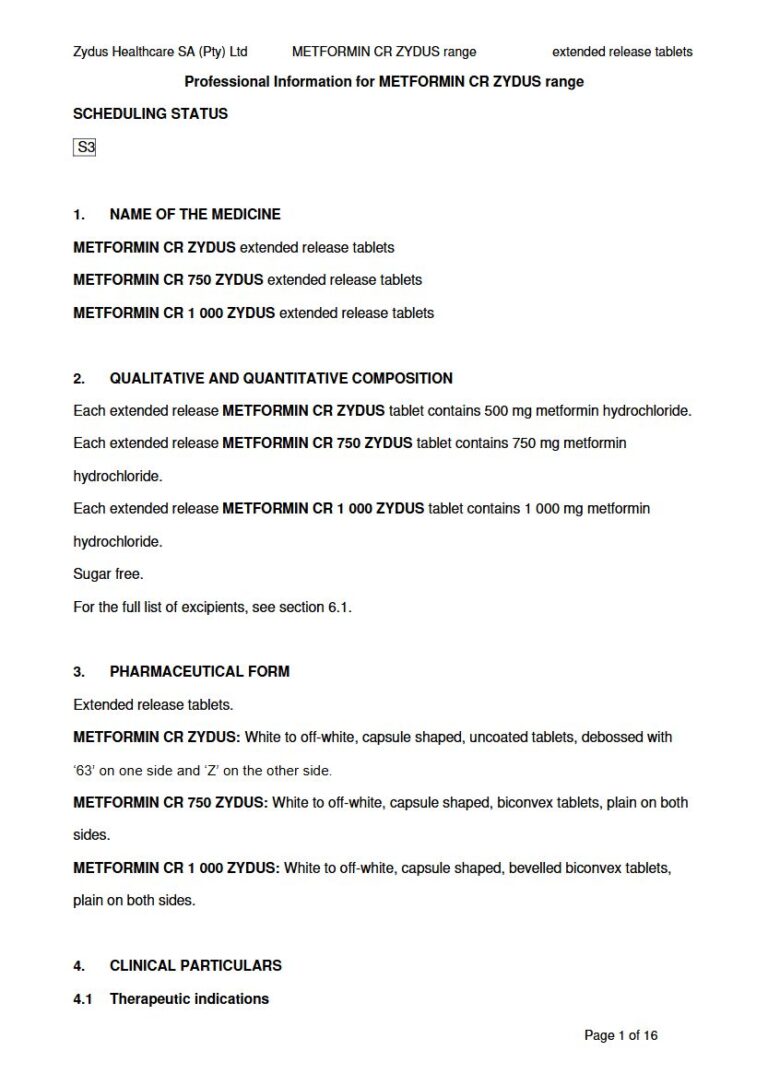
Metformin Cr 750 mg/1000 mg Tablets
PDF Leaflet Revision Date: 18 July 2023
Clinical Summary
Quick overview from the medicine insert
Indication
Treatment of type 2 diabetes mellitus in adults.
Dosage (summary)
Starting dose: 500 mg once daily with evening meal; max: 2000 mg once daily.
Special Populations
- Elderly
- Renal impairment
- Paediatric population
Pregnancy & Breastfeeding
Contraindicated in pregnancy and lactation.
Key Drug Interactions
- Alcohol
- Iodinated contrast agents
- NSAIDs
- Sulphonylureas
Contraindications
- Hypersensitivity to metformin
- Acute metabolic acidosis
- Renal failure
- Hepatic insufficiency
Common side effects
- Nausea
- Vomiting
- Diarrhoea
- Abdominal pain
- Loss of appetite
Counselling Points
- Take with food
- Monitor blood glucose regularly
- Report symptoms of lactic acidosis
Serious warnings
- Risk of lactic acidosis
- Monitor renal function
- Discontinue before surgery
Important Disclaimer
The Metformin Cr 750 mg/1000 mg Tablets professional information leaflet below is the property of Zydus Healthcare Sa and is provided on Medinsert exactly as issued, with no.. alterations or editorial changes. We make every effort to keep content current by updating documents as soon as new versions become available. Medinsert serves as a trusted access point for healthcare professionals, but does not replace official sources or clinical judgement. For more details, please read our full disclaimer. read more>>
 Healthcare Professionals Only
This content is for registered healthcare professionals
Sign in or create a free account to read the full package insert.
Free for HPCSA-registered professionals. Powered by Medinsert.
Clinical Particulars
Section 4 of the official insert — extracted exactly as issued, no alterations
4.1 Therapeutic indications
METFORMIN CR ZYDUS is indicated for the treatment of type 2 diabetes mellitus in adults. It is particularly useful in treating overweight patients, when diet and exercise alone does not result in adequate control of hyperglycaemia. METFORMIN CR ZYDUS can be given on its own as initial therapy, or it can be administered in combination with other oral antidiabetic medicines, or with insulin.
4.2 Posology and method of administration
Posology
METFORMIN CR ZYDUS: The usual starting dose is one tablet daily given with the evening meal. After 10 to 15 days the dose should be adjusted on the basis of blood glucose measurements. A slow increase of dose may improve gastrointestinal tolerability. The maximum recommended dose is 4 tablets daily. Dosage increases should be made in increments of 500 mg every 10 to 15 days, up to a maximum of 4 tablets (2 000 mg) once daily with the evening meal. If glycaemic control is not achieved with 2 000 mg (4 tablets) of METFORMIN CR ZYDUS given once daily, 1 000 mg (2 tablets) of METFORMIN CR ZYDUS given twice daily should be considered, with both doses given with food. If glycaemic control is still not achieved, patients may be switched to metformin immediate release tablets with a maximum daily dosage of 3 000 mg.
METFORMIN CR 750 ZYDUS: The usual starting dose is one tablet daily given with the evening meal. After 10 to 15 days the dose should be adjusted on the basis of blood glucose measurements. A slow increase of dose may improve gastro-intestinal tolerability. The recommended dosage is 2 tablets once daily, with the evening meal. If glycaemic control is not achieved with METFORMIN CR 750 ZYDUS 2 tablets once daily, METFORMIN CR 750 ZYDUS may be increased to a maximum dose of 3 tablets once daily with the evening meal. If glycaemic control is not achieved on METFORMIN CR 750 ZYDUS 3 tablets once daily, one tablet of METFORMIN CR 750 ZYDUS in the morning and two tablets of METFORMIN CR 750 ZYDUS in the evening should be considered, with both doses being given with food. If glycaemic control is still not achieved, patients may be switched to standard metformin tablets to a maximum dose of 3 000 mg daily.
METFORMIN CR 1 000 ZYDUS: METFORMIN CR 1 000 ZYDUS is intended as maintenance therapy for patients already treated with either 1 000 mg (2 tablets of 500 mg METFORMIN CR ZYDUS) or 2 000 mg (4 tablets of 500 mg METFORMIN CR ZYDUS) of sustained release metformin hydrochloride. If glycaemic control is not achieved, patients may be switched to standard metformin hydrochloride tablets to a maximum daily dose of 3 000 mg daily.
Switching patients already treated with metformin tablets: In patients already treated with metformin immediate release tablets, the starting dose of METFORMIN CR ZYDUS should be equivalent to the daily dose of metformin immediate release tablets. In patients treated with metformin immediate release at a dose above 2 000 mg, switching to METFORMIN CR ZYDUS is not recommended.
Switching patients from other oral antidiabetic medicines: If transfer from another oral antidiabetic medicine is intended, discontinue the other medicine and initiate METFORMIN CR ZYDUS at the doses indicated above.
Combination therapy with insulin: METFORMIN CR ZYDUS and insulin may be used in combination therapy to achieve better blood glucose control. The usual starting dose is 500 mg of METFORMIN CR ZYDUS once daily with the evening meal, while insulin dosage is adjusted on the basis of blood glucose measurements. After titration, 1 000 mg of METFORMIN CR ZYDUS may be considered.
Other combination therapy: See section 4.4.
Special populations
Elderly: Due to the potential for decreased renal function in elderly patients, the dosage for METFORMIN CR ZYDUS should be adjusted based on renal function. Regular assessment of renal function is necessary (see section 4.4).
Paediatric population: In the absence of available data, METFORMIN CR ZYDUS should not be used in children.
Method of administration
Oral.
4.3 Contraindications
- Hypersensitivity to metformin hydrochloride or to any of the inactive ingredients of METFORMIN CR ZYDUS (see section 6.1).
- Any type of acute metabolic acidosis (diabetic coma and ketoacidosis).
- Diabetic precoma.
- Renal failure or renal function impairment (creatinine clearance < 60 mL/min). METFORMIN CR ZYDUS may increase the risk of developing lactic acidosis when given to patients with these conditions (see section 4.4).
- Acute conditions that may alter renal function e.g. dehydration, severe infection, shock, intravascular administration of iodinated contrast media (see section 4.4).
- Diseases which may cause tissue hypoxia (especially acute diseases or worsening of chronic diseases), such as cardiac or respiratory failure, recent myocardial infarction or shock.
- Hepatic insufficiency, acute alcohol intoxication, alcoholism (acute or chronic).
- Pregnancy and lactation (see section 4.6).
4.4 Special warnings and precautions for use
Lactic acidosis
METFORMIN CR ZYDUS can increase the risk of developing lactic acidosis. This is a rare, but serious metabolic complication that can occur because of the accumulation of metformin, as in METFORMIN CR ZYDUS. There is a high risk of mortality when treatment is not carried out immediately. In case of dehydration (severe diarrhoea or vomiting, fever or reduced fluid intake), METFORMIN CR ZYDUS should be temporarily discontinued and it is recommended that a health care provider be contacted. The incidence of lactic acidosis may be reduced by assessing and managing other associated risk factors such as inadequately controlled diabetes mellitus type 2, ketosis, prolonged fasting, excessive alcohol intake, hepatic insufficiency and any condition associated with hypoxia. The characteristics of lactic acidosis is acidotic dyspnoea, abdominal pain, muscle cramps, asthenia and hypothermia followed by coma. Diagnostic laboratory test results will indicate decreased blood pH (< 7,3), plasma lactic levels above 5 mmol/L and an increased anion gap and lactate/pyruvate ratio. Treatment with METFORMIN CR ZYDUS should be stopped immediately and the patient hospitalised if metabolic acidosis is suspected.
Renal function
Serum creatinine levels should be determined before treatment with METFORMIN CR ZYDUS is started and regularly thereafter, since METFORMIN CR ZYDUS is excreted by the kidneys. In patients with normal renal function, testing should be done at least annually. In patients with serum creatinine levels at the upper limit of normal and in elderly patients, testing should be done at least two to four times a year.
METFORMIN CR ZYDUS range therapy should be stopped 2 u2013 3 days before surgery and before clinical investigations such as intravenous urography and intravenous angiography, and reinstated only after control of renal function has been regained. The use of METFORMIN CR ZYDUS formulations is not advised in conditions which may cause dehydration, or in patients suffering from serious infections, trauma or on low calorie intake. Patients on long-term treatment with METFORMIN CR ZYDUS formulations should have an annual estimation of vitamin B12 levels, since METFORMIN CR ZYDUS range may cause mal- absorption of vitamin B12, which may result in megaloblastic anaemia.
Cardiac function
Patients with heart failure are more at risk of hypoxia and renal insufficiency. In patients with stable chronic heart failure, METFORMIN CR ZYDUS may be used with regular monitoring of cardiac and renal function. METFORMIN CR ZYDUS is contraindicated in patients with acute and unstable heart failure (see section 4.3).
Elderly patients
Due to the potential for decrease renal function in elderly subjects, the dosage for METFORMIN CR ZYDUS should be adjusted based on renal function. Regular assessment of renal function is necessary. Serum creatinine levels should be determined before initiating treatment and at least two to four times a year in elderly patients. Decreased renal function in elderly patients is frequent and asymptomatic. Special caution should be exercised in situations where renal function may become impaired, for example when initiating antihypertensive therapy or diuretic therapy and when starting therapy with NSAIDs (see section 4.5).
Administration of iodinated contrast agents: As the intravascular administration of iodinated contrast materials in radiological studies can lead to renal failure, METFORMIN CR ZYDUS treatment should be stopped before, or at the time of the test. It should also not be reinstituted until 48 hours afterwards, and only after renal function has been found to be stable after re-evaluation (see section 4.5).
Surgery and clinical investigations: METFORMIN CR ZYDUS should be discontinued 48 hours before elective surgery with general, spinal or epidural anaesthesia, and not resumed earlier than 48 hours after surgery. METFORMIN CR ZYDUS should be discontinued two to three days before surgery and before clinical investigations such as intravenous urography and intravenous angiography. Treatment should only be resumed once the control of renal function has been regained.
Hypoglycaemia: METFORMIN CR ZYDUS on its own may not cause hypoglycaemia, but caution is advised when it is used in combination with insulin or other oral antidiabetic medicines (e.g. sulphonylureas). Stabilisation of diabetic patients with METFORMIN CR ZYDUS and insulin should be carried out in hospital because of the possibility of hypoglycaemia, until the ratio of the two medicines has been obtained. Contraindications should be carefully observed.
Routine monitoring: All patients should continue to monitor their diet with the regular distribution of carbohydrate intake during the day. Overweight patients should continue their energy restricted diet. Laboratory tests for diabetes monitoring should be performed regularly.
Tablet elimination: The tablet shells may be excreted in faeces. Patients should be advised that this is normal.
4.5 Interaction with other medicines and other forms of interaction
Inadvisable combinations
Alcohol: Consuming alcohol with METFORMIN CR ZYDUS increases the risk of developing hypoglycaemia and lactic acidosis in acute alcohol intoxication. This risk is even higher when the patient is fasting, malnourished or suffer from hepatic insufficiency (see section 4.3).
Iodinated contrast agents: Intravascular administration of iodinated contrast agents may lead to renal failure, resulting in METFORMIN CR ZYDUS accumulation and a risk of lactic acidosis. Treatment with METFORMIN CR ZYDUS should be discontinued before, or at the time of the test. It should not be reinstituted until 48 hours afterwards, and only after renal function has been re-evaluated and results indicate that it is stable (see section 4.3).
Combinations requiring precautions for use: Some medicines can adversely affect renal function which may increase the risk of lactic acidosis, e.g. nonsteroidal anti-inflammatory medicines (NSAIDs), including selective cyclo-oxygenase (COX) II inhibitors, angiotensin-converting enzyme (ACE) inhibitors, angiotensin II receptor antagonists and diuretics, especially loop diuretics. When starting or using these medicines in combination with METFORMIN CR ZYDUS, close monitoring of renal function is necessary.
Glucocorticoids, beta2-agonists and diuretics: Caution is advised when administering METFORMIN CR ZYDUS with glucocorticoids (systemic and local routes), beta2-agonists and diuretics, as these medicines have intrinsic hyperglycaemic activity. The patient should be informed, and blood glucose monitoring should be performed more frequently, especially at the initial stages of treatment. If necessary, the dosage of METFORMIN CR ZYDUS should be adjusted with the concomitant use of these medicines during therapy, and after treatment is stopped.
ACE inhibitors: Since ACE inhibitors may decrease the blood glucose levels, caution is advised when co-administering with METFORMIN CR ZYDUS. If necessary, the dosage of METFORMIN CR ZYDUS should be adjusted during therapy when used in combination with these medicines, and after treatment is stopped.
Organic cation transporters (OCT): Metformin is a substrate of both transporters OCT 1 and OCT 2. Co-administration of METFORMIN CR ZYDUS with:
- Inhibitors of OCT 1 (such as verapamil) may reduce efficacy of METFORMIN CR ZYDUS.
- Inducers of OCT 1 (such as rifampicin) may increase gastrointestinal absorption and efficacy of METFORMIN CR ZYDUS.
- Inhibitors of OCT 2 (such as cimetidine, dolutegravir, ranolazine, trimethoprim, vandetanib, isavuconazole) may decrease the renal elimination of METFORMIN CR ZYDUS and thus lead to an increase in metformin plasma concentration.
- Inhibitors of both OCT 1 and OCT 2 (such as crizotinib, olaparib) may alter efficacy and renal elimination of METFORMIN CR ZYDUS. Caution is advised, especially in patients with renal impairment, when these medicines are co-administered with METFORMIN CR ZYDUS, as metformin plasma concentration may increase. If needed, dose adjustment of METFORMIN CR ZYDUS may be considered as OCT inhibitors/inducers may alter the efficacy of METFORMIN CR ZYDUS.
Anticoagulants: METFORMIN CR ZYDUS has been reported to reduce the activity of anticoagulants, and a dose adjustment of warfarin should be considered when administered concomitantly with anticoagulants.
Sulphonylureas: Caution is advised when METFORMIN CR ZYDUS is co-administered with sulphonylureas, as this combined therapy may cause hypoglycaemia.
Vitamins: Long-term treatment with METFORMIN CR ZYDUS may cause vitamin B12 malabsorption in the gastrointestinal tract, thus a dose reduction of METFORMIN CR ZYDUS should be considered.
Paediatric population: No data available.
4.6 Fertility, pregnancy and lactation
The use of METFORMIN CR ZYDUS during pregnancy and lactation is contraindicated (see section 4.3).
Pregnancy: Uncontrolled diabetes during pregnancy (gestational or permanent) is associated with increased risk of congenital abnormalities and perinatal mortality. A limited amount of data from the use of METFORMIN CR ZYDUS in pregnant women does not indicate an increased risk of congenital abnormalities. It is recommended that impaired glycaemic control or diabetes is not treated with METFORMIN CR ZYDUS if a patient plans to become pregnant or during pregnancy. For diabetes it is recommended that insulin be used to maintain blood glucose levels as close to normal as possible to reduce the risk of malformations of the fetus.
Breastfeeding: METFORMIN CR ZYDUS is excreted into human breast milk. No adverse effects were observed in breastfed newborns/infants. However, as only limited data are available, breastfeeding is not recommended during treatment with METFORMIN CR ZYDUS.
4.7 Effects on ability to drive and use machines
METFORMIN CR ZYDUS monotherapy does not cause hypoglycaemia and therefore is not expected to have an effect on the ability to drive or to use machines. However, patients should be alerted to the risk of hypoglycaemia when METFORMIN CR ZYDUS is used in combination with other antidiabetic medicines such as (sulphonylureas, insulin, repaglinide).
4.8 Undesirable effects
Summary of the safety profile
During treatment initiation, the most frequent adverse reactions were nausea, vomiting, diarrhoea, abdominal pain and loss of appetite, which resolve spontaneously in most cases. Metabolism and nutrition disorders: Less frequent: Hypoglycaemia, lactic acidosis, megaloblastic anaemia, decrease of vitamin B12 and folic acid absorption with decrease of serum levels during long-term use of metformin. Consideration of such aetiology is recommended if a patient presents with megaloblastic anaemia. Nervous system disorders: Frequent: Taste disturbance. Gastrointestinal disorders: Frequent: Nausea, vomiting, diarrhoea, abdominal pain and loss of appetite, weight loss. These undesirable effects occur most frequently during initiation of therapy and resolve spontaneously in most cases. A slow increase of the dose may also improve gastrointestinal tolerability. Hepatobiliary disorders: Less frequent: Liver function test abnormalities or hepatitis resolving upon METFORMIN CR ZYDUS discontinuation. Skin and subcutaneous tissue disorders: Less frequent: Erythema, pruritus and urticaria.
Reporting of suspected adverse reactions
Reporting suspected adverse reactions after authorisation of METFORMIN CR ZYDUS is important. It allows continued monitoring of the benefit/risk balance of METFORMIN CR ZYDUS. Health care providers are asked to report any suspected adverse reactions via the Adverse Drug Reaction Reporting Form, found online under SAHPRAu2019s publications: https://www.sahpra.org.za/Publications/Index/8.
4.9 Overdose
Hypoglycaemia can occur when METFORMIN CR ZYDUS is given concomitantly with an oral hypoglycaemic, insulin or alcohol. Lactic acidosis may develop in case of excessive dosage intake, and particularly if there is a possibility of accumulation. Lactic acidosis is a medical emergency which needs to be treated in the hospital. The most effective way to remove lactate and METFORMIN CR ZYDUS is haemodialysis. In addition, therapy should be symptomatic and supportive, particularly aimed at correcting fluid loss and blood glucose levels.
