
Depo-Medroltm 40 mg Suspension for injection
PDF Leaflet Revision Date: 14 February 2022
Clinical Summary
Quick overview from the medicine insert
Indication
Corticosteroid-responsive diseases for local and systemic effects.
Dosage (summary)
Intra-articular: 4-80 mg depending on joint size; IM: 40-120 mg weekly.
Onset of Action / Duration
Onset: 30 mins, Duration: 6-8 hours
Special Populations
- Renal impairment
- Hepatic impairment
Pregnancy & Breastfeeding
Not safe; may cause fetal malformations and adrenal insufficiency in infants.
Key Drug Interactions
- CYP3A4 inhibitors
- CYP3A4 inducers
- Anticoagulants
Contraindications
- Hypersensitivity to methylprednisolone
- Systemic fungal infections
- Intravenous administration
Common side effects
- Infection
- Hypertension
- Cataract
- Skin atrophy
Counselling Points
- Avoid live vaccines
- Monitor for infection signs
- Gradually taper dosage
Serious warnings
- Increased susceptibility to infections
- Adrenal insufficiency risk
- Psychiatric effects
Important Disclaimer
The Depo-Medroltm 40 mg Suspension for injection professional information leaflet below is the property of Pfizer Laboratories and is provided on Medinsert exactly as issued, with no.. alterations or editorial changes. We make every effort to keep content current by updating documents as soon as new versions become available. Medinsert serves as a trusted access point for healthcare professionals, but does not replace official sources or clinical judgement. For more details, please read our full disclaimer. read more>>
 Healthcare Professionals Only
This content is for registered healthcare professionals
Sign in or create a free account to read the full package insert.
Free for HPCSA-registered professionals. Powered by Medinsert.
Clinical Particulars
Section 4 of the official insert — extracted exactly as issued, no alterations
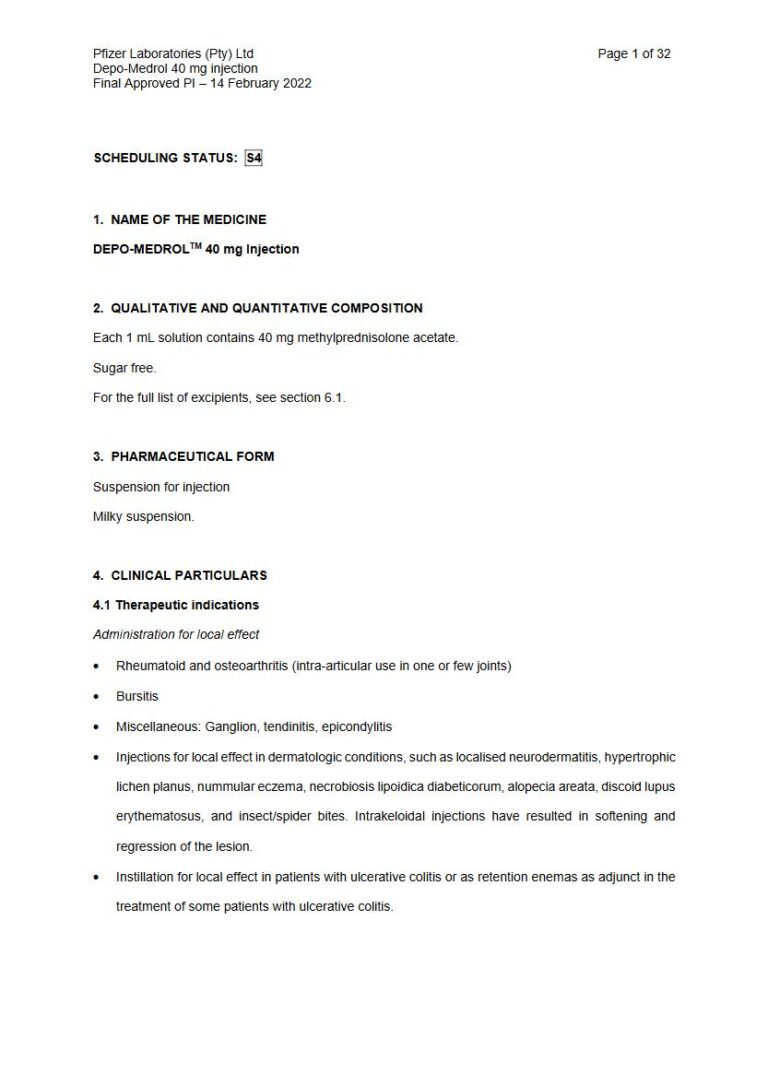
4.1 Therapeutic indications
Administration for local effect
- Rheumatoid and osteoarthritis (intra-articular use in one or few joints)
- Bursitis
- Miscellaneous: Ganglion, tendinitis, epicondylitis
- Injections for local effect in dermatologic conditions, such as localised neurodermatitis, hypertrophic lichen planus, nummular eczema, necrobiosis lipoidica diabeticorum, alopecia areata, discoid lupus erythematosus, and insect/spider bites. Intrakeloidal injections have resulted in softening and regression of the lesion.
- Instillation for local effect in patients with ulcerative colitis or as retention enemas as adjunct in the treatment of some patients with ulcerative colitis.
Administration for systemic effect
Corticosteroid-responsive diseases where the oral route cannot be used.
4.2 Posology and method of administration
Parenteral suspensions should be inspected visually for any foreign particulate matter and discoloration prior to administration whenever product and container permit. The severity, prognosis and expected duration of the disease and the reaction of the patient to DEPO-MEDROL are primary factors in determining dosage. If a period of spontaneous remission occurs in a chronic condition, the DEPO-MEDROL dose should be gradually reduced, and treatment should be discontinued. Dosage must be decreased or discontinued gradually even after administration of more than a few days. DEPO-MEDROL should not be administered IV or by any route other than those listed under section 4.1. It is critical that, during administration of DEPO-MEDROL, appropriate technique be used, and care taken to ensure proper placement of the medicine. The technique of intra-synovial and intramuscular injection should include precautions against leakage into the dermis. Injection into the deltoid muscle should be avoided because of a high incidence of subcutaneous and muscle atrophy.
Posology
Administration for local effect
Therapy with DEPO-MEDROL does not obviate the need for the conventional measures usually employed. Although this method of treatment will ameliorate symptoms, it is in no sense a cure and the hormone has no effect on the cause of the inflammation.
Rheumatoid and osteoarthritis
The dose for intra-articular administration depends upon the size of the joint and varies with the severity of the condition in the individual patient. In chronic cases, injections may be repeated at intervals ranging from one to five or more weeks depending upon the degree of relief obtained from the initial injection. The doses in the following table are given as a general guide.
SIZE OF JOINT
EXAMPLES
RANGE OF DOSAGE
Large
Knee Ankle Shoulder
20 to 80 mg
Medium
Elbow Wrist
10 to 40 mg
Small
Metacarpophalangeal Interphalangeal Sternoclavicular Acromioclavicular
4 to 10 mg
Procedure
It is recommended that the anatomy of the joint involved be reviewed before attempting intra-articular injection. In order to obtain the full anti-inflammatory effect it is important that the injection be made into the synovial space. Employing the same sterile technique as for a lumbar puncture, a sterile 20 to 24 gauge needle (on a dry syringe) is quickly inserted into the synovial cavity. Procaine infiltration is optional. The aspiration of only a few drops of joint fluid proves the joint space has been entered by the needle. The injection site for each joint is determined by that location where the synovial cavity is most superficial and most free of large vessels and nerves. With the needle in place, the aspirating syringe is removed and replaced by a second syringe containing the desired amount of DEPO-MEDROL. The plunger is then pulled outward slightly to aspirate synovial fluid and to make sure the needle is still in the synovial space. After injection, the joint is moved gently a few times to aid mixing of the synovial fluid and the suspension. The site is covered with a small sterile dressing.
Suitable sites for intra-articular injection are the knee, ankle, wrist, elbow, shoulder, phalangeal, and hip joints. Since difficulty may be encountered in entering the hip joint, precautions should be taken to avoid any large blood vessels in the area. Joints not suitable for injection are those that are anatomically inaccessible such as the spinal joints and those like the sacroiliac joints that are devoid of synovial space. Treatment failures are most frequently the result of failure to enter the joint space. Little or no benefit follows injection into surrounding tissue. If failures occur when injections into the synovial spaces are certain, as determined by aspiration of fluid, repeated injections are usually futile. Local therapy does not alter the underlying disease process, and whenever possible, comprehensive therapy, including physiotherapy and orthopaedic correction, should be employed. Following intra-articular corticosteroid therapy, care should be taken to avoid overuse of the joints in which symptomatic benefit has been obtained. Negligence in this matter may increase the joint deterioration. Unstable joints should not be injected. Repeated intra-articular injection may result in instability of the joint. X-ray follow-up is suggested to detect deterioration. If a local anaesthetic is used prior to injection of DEPO-MEDROL, the anaesthetic package insert must be studied and all the precautions observed.
Bursitis
The area around the injection site is prepared in a sterile way and a wheal at the site made with 1 % procaine hydrochloride solution. A 20 to 24 gauge needle attached to a dry syringe is inserted into the bursa and the fluid aspirated. The needle is left in place and the aspiration syringe changed for a small syringe containing the desired dose. After injection, the needle is withdrawn and a small dressing applied.
Miscellaneous: Ganglion, tendinitis, epicondylitis
In the treatment of conditions such as tendinitis or tenosynovitis, care should be taken, following application of a suitable antiseptic to the overlying skin, to inject the suspension into the tendon sheath rather than into the substance of the tendon. The tendon may be readily palpated when placed on a stretch. When treating conditions such as epicondylitis, the area of greatest tenderness should be outlined carefully and the suspension infiltrated into the area. For ganglia of the tendon sheaths, the suspension is injected directly into the cyst. In many cases, a single injection causes a marked decrease in the size of the cyst tumour and may affect disappearance. The usual sterile precautions should be observed, of course, with each injection. The dose in the treatment of the various conditions of the tendinous or bursal structures listed above, varies with the condition being treated and ranges from 4 to 30 mg. In recurrent or chronic conditions, repeated injections may be necessary.
Injections for local effect in dermatological conditions
Following cleansing with an appropriate antiseptic such as 70 % alcohol, 20 to 60 mg of the suspension is injected into the lesion. It may be necessary to distribute doses ranging from 20 to 40 mg by repeated local injections in the case of large lesions. Care should be taken to avoid injection of sufficient material to cause blanching since this may be followed by a small slough. One to four injections are usually employed, the intervals between injections varying with the type of lesion being treated and the duration of improvement produced by the initial injection. In order to minimise the incidence of atrophy of the dermis, care must be exercised not to exceed recommended doses in intradermal injections. Multiple small injections into the area of the lesion should be made whenever possible.
Instillation for local effect in patients with ulcerative colitis
Doses of 40 to 120 mg administered as retention enemas three to seven times weekly for periods of two or more weeks may be a useful adjunct in the treatment of some patients with ulcerative colitis. Many patients can be controlled with 40 mg administered in from 30 to 300 mL of water depending upon the degree of involvement of the inflamed colonic mucosa.
Administration for systemic effect
Intramuscular injections of DEPO-MEDROL must be made deeply into the gluteal muscles. The usual techniques of aspirating prior to injection should be employed to avoid intravascular administration. Do not administer doses recommended for intramuscular injection superficially or subcutaneously. The intramuscular dosage will vary with the condition being treated. When employed as a temporary substitute for oral therapy, a single injection during each 24 hour period of a dose of the suspension equal to the total daily oral dose of MEDROL (methylprednisolone) is usually sufficient. When a prolonged effect is desired, the weekly dose may be calculated by multiplying the daily oral dose by 7 and given as a single intramuscular injection. Dosage must be individualised according to the severity of the disease and response of the patient. DEPO-MEDROL therapy is adjunct to, and not a replacement for, conventional therapy. Dosage must be decreased or discontinued gradually when the medicine has been administered for more than a few days. The severity, prognosis and expected duration of the disease and the reaction of the patient to DEPO-MEDROL are primary factors in determining dosage. If a period of spontaneous remission occurs in a chronic condition, the dosage should be gradually reduced and treatment should be discontinued.
Routine laboratory tests, such as urinalysis, two-hour postprandial blood sugar, determination of blood pressure and body mass, and a chest X-ray should be made at regular intervals during prolonged therapy. Upper GI endoscopy may be indicated in patients with an ulcer history or significant dyspepsia. In patients with the adrenogenital syndrome, a single intramuscular injection of 40 mg every 2 weeks may be adequate. For maintenance of patients with rheumatoid arthritis, the weekly intramuscular dose will vary from 40 to 120 mg. The usual dosage for patients with dermatologic lesions benefited by systemic corticoid therapy is 40 to 120 mg DEPO-MEDROL administered intramuscularly at weekly intervals for one to four weeks. In acute severe dermatitis due to poison ivy, relief may result within 8 to 12 hours following intramuscular administration of a single dose of 80 to 120 mg. In chronic contact dermatitis repeated injections at 5 and 10 day intervals may be necessary. In seborrhoeic dermatitis, a weekly dose of 80 mg may be adequate to control the condition. Allergic conditions (asthma, drug reactions), 80 to 120 mg (2 - 3 mL). Relief may result within 6 to 48 hours and persist for several days to two weeks. If signs of stress are associated with the condition being treated, the dosage of the suspension should be increased. If a rapid hormonal effect of maximum intensity is required, the intravenous administration of highly soluble methylprednisolone sodium succinate is indicated.
Paediatric population
For infants and children, the recommended dosage will have to be reduced, but dosage should be governed by the severity of the condition rather than by strict adherence to the ratio indicated by age or body weight.
Method of administration
For intramuscular, intra-articular, periarticular, intrabursal and intralesional injection and injection into tendon sheaths. For instillation as a retention enema.
4.3 Contraindications
DEPO-MEDROL is contraindicated:
- in patients with known hypersensitivity to methylprednisolone or any of the excipients of DEPO-MEDROL listed in section 6.1
- in patients who have systemic fungal infections
- for intrathecal route of administration
- for epidural route of administration
- for intravenous route of administration
Systemic therapy is contraindicated in patients with arrested tuberculosis, peptic ulcer, acute psychoses, Cushing's syndrome, herpes simplex keratitis, vaccinia and varicella. Administration of live or live, attenuated vaccines is contraindicated in patients receiving immunosuppressive doses of DEPO-MEDROL. DEPO-MEDROL should never be used intravenously.
4.4 Special warnings and precautions for use
Intra-articular, intrabursal, intratendinous or other injections for local effect are contraindicated in the presence of acute infectious conditions. Exacerbation of pain, further loss of joint motion, with fever and malaise following intra-articular injection may indicate that the arthritis has become septic. Appropriate antibacterial therapy should be instituted immediately. DEPO-MEDROL is not suitable for multidose use. Following administration of the desired dose, any remaining suspension should be discarded. Dermal and/or subdermal atrophic changes may form depressions in the skin at the injection site. In order to minimise the incidence of dermal and subdermal atrophy, care must be exercised not to exceed recommended doses in injections. Multiple small injections into the area of the lesion should be made whenever possible. The technique of intra-synovial and intramuscular injection should include precautions against injection or leakage into the dermis. Injection into the deltoid muscle should be avoided because of a high incidence of subdermal and muscle atrophy. DEPO-MEDROL should not be administered by any route other than those listed under section 4.1. It is critical that, during administration of DEPO-MEDROL, appropriate technique be used and care taken to assure proper placement of medicine.
Severe adverse effects have been reported in association with the intrathecal/epidural routes of administration, including arachnoiditis, functional gastrointestinal disorder/bladder dysfunction, headache, meningitis, paraparesis/paraplegia, convulsions, sensory disturbances. The frequency of these adverse reactions is not known. Appropriate measures must be taken to avoid intravascular injection. Intra-synovial injection of corticosteroid may produce systemic as well as local effects. Appropriate examination of any joint fluid present is necessary to exclude a septic process. A marked increase in pain accompanied by local swelling, further restriction of joint motion, fever, and malaise are suggestive of septic arthritis. If this complication occurs and the diagnosis of sepsis is confirmed, appropriate antimicrobial therapy should be instituted. Local injection of DEPO-MEDROL into a previously infected joint is to be avoided. DEPO-MEDROL should not be injected into unstable joints. Sterile technique is necessary to prevent infections or contamination. The slower rate of absorption by intramuscular administration should be recognised.
Immunosuppressant effects/increased susceptibility to infections
Corticosteroids such as DEPO-MEDROL may increase susceptibility to infection, may mask signs of infection, and new infections may appear during their use. There may be decreased resistance and inability to localise infection when corticosteroids are used. Infections with any pathogen, including viral, bacterial, fungal, protozoan or helminthic organisms, in any location in the body, may be associated with the use of corticosteroids alone or in combination with other immunosuppressive medicines that affect cellular immunity, humoral immunity, or neutrophil function. These infections can be severe and may be fatal. With increasing doses of corticosteroids, the rate of occurrence of infectious complications increases. Do not use DEPO-MEDROL intra-synovially, intrabursally or intratendinously for local effect in the presence of acute infection. Persons who are on medicines which suppress the immune system such as DEPO-MEDROL are more susceptible to infections than healthy individuals. Chicken pox and measles, for example, can have a more serious or even fatal course in non-immune children or adults on corticosteroids. While on corticosteroid therapy, patients should not be vaccinated against smallpox. Other immunisation procedures should not be undertaken in patients who are on corticosteroids, because of possible hazards of neurological complications and lack of antibody response. Administration of live or live, attenuated vaccines is contraindicated in patients receiving DEPO-MEDROL. Killed or inactivated vaccines may be administered to patients receiving immunosuppressive doses of corticosteroids; however, the response to such vaccines may be diminished. The use of corticosteroids in active tuberculosis should be restricted to those cases of fulminating or disseminated tuberculosis in which the corticosteroid is used for the management of the disease in conjunction with appropriate antituberculosis regimen. If corticosteroids are indicated in patients with latent tuberculosis or tuberculin reactivity, close observation is necessary as reactivation of the disease may occur. During prolonged corticosteroid therapy, these patients should receive chemoprophylaxis. Kaposi's sarcoma has been reported to occur in patients receiving corticosteroid therapy. Discontinuation of corticosteroids may result in clinical remission.
The role of corticosteroids in septic shock has been controversial, with early studies reporting both beneficial and detrimental effects. More recently, supplemental corticosteroids have been suggested to be beneficial in patients with established septic shock who exhibit adrenal insufficiency. However, their routine use in septic shock is not recommended. A systematic review of short-course high-dose corticosteroids did not support use. However, meta-analyses and a review suggest that longer courses (5 u2013 11 days) of low-dose corticosteroids might reduce mortality, especially in patients with vasopressor-dependent septic shock.
Immune system effects
Hypersensitivity reactions may occur, including skin reactions and anaphylactic/anaphylactoid reactions. Appropriate precautionary measures should be taken prior to administration, especially when the patient has a history of allergy to any medicine.
Endocrine effects
In patients on DEPO-MEDROL therapy of 2 to 3 weeks or more who are subjected to stress, increased dosage of corticosteroids before, during and after the stressful situation may be indicated. Corticosteroids administered for prolonged periods may result in hypothalamic-pituitary-adrenal (HPA) suppression (secondary adrenocortical insufficiency). Acute adrenal insufficiency leading to a fatal outcome may occur if glucocorticoids are withdrawn abruptly. Medicine-induced secondary adrenocortical insufficiency may therefore be minimised by gradual reduction of dosage. This type of insufficiency may persist for months after discontinuation of therapy; therefore, in any situation of stress occurring during that period, DEPO-MEDROL therapy should be reinstituted.
A steroid u201cwithdrawal syndrome,u201d may also occur following abrupt discontinuance of glucocorticoids and may cause anorexia, nausea, vomiting, lethargy, headache, fever, joint pain, desquamation, myalgia, weight loss, and/or hypotension. Because glucocorticoids can produce or aggravate Cushingu2019s syndrome, glucocorticoids should be avoided in patients with Cushingu2019s disease. There is an enhanced effect of corticosteroids on patients with hypothyroidism. Frequent patient monitoring is necessary in patients with hypothyroidism.
Metabolism and nutrition
Corticosteroids, including DEPO-MEDROL, can increase blood glucose, worsen pre-existing diabetes, and predispose those on long-term corticosteroid therapy to diabetes mellitus.
Psychiatric effects
Psychic derangements may appear when corticosteroids are used, ranging from euphoria, insomnia, mood swings, personality changes, and severe depression to frank psychotic manifestations. Also, existing emotional instability or psychotic tendencies may be aggravated by corticosteroids. Potentially severe psychiatric adverse reactions may occur with corticosteroids such as DEPO-MEDROL. Symptoms typically emerge within a few days or weeks of starting treatment. Most reactions recover after either dose reduction or withdrawal, although specific treatment may be necessary. Psychological effects have been reported upon withdrawal of corticosteroids; the frequency is unknown. Patients/caregivers should be encouraged to seek medical attention if psychological symptoms develop in the patient, especially if depressed mood or suicidal ideation is suspected. Patients/caregivers should be alert to possible psychiatric disturbances that may occur either during or immediately after dose tapering/withdrawal of systemic steroids.
4.5 Interaction with other medicines and other forms of interaction
DEPO-MEDROL is a cytochrome P450 enzyme (CYP) substrate and is mainly metabolised by the CYP3A enzyme. CYP3A4 is the dominant enzyme of the most abundant CYP subfamily in the liver of adult humans. It catalyses 6u03b2-hydroxylation of steroids, the essential Phase I metabolic step for both endogenous and synthetic corticosteroids. Many other compounds are also substrates of CYP3A4, some of which (as well as other medicines) have been shown to alter glucocorticoid metabolism by induction (upregulation) or inhibition of the CYP3A4 enzyme (Table1).
CYP3A4 inhibitors
Medicines that inhibit CYP3A4 activity generally decrease hepatic clearance and increase the plasma concentration of CYP3A4 substrate medications, such as DEPO-MEDROL. In the presence of a CYP3A4 inhibitor, the dose of DEPO-MEDROL may need to be titrated to avoid steroid toxicity (Table 1).
CYP3A4 inducers
Medicines that induce CYP3A4 activity generally increase hepatic clearance, resulting in decreased plasma concentration of medications that are substrates for CYP3A4. Co-administration may require an increase in DEPO-MEDROL dosage to achieve the desired result (Table 1).
CYP3A4 substrates
In the presence of another CYP3A4 substrate, the hepatic clearance of DEPO-MEDROL may be affected, with corresponding dosage adjustments required. It is possible that adverse events associated with the use of either medicine alone may be more likely to occur with co-administration (Table 1).
Non-CYP3A4-mediated effects
Other interactions and effects that occur with DEPO-MEDROL are described in Table 1 below.
Table 1. Important medicine or substance interactions/effects with DEPO-MEDROL
Medicine class or type - MEDICINE or SUBSTANCE Interaction or effect
Antibacterial - ISONIAZID CYP3A4 INHIBITOR. In addition, there is a potential effect of DEPO-MEDROL to increase the acetylation rate and clearance of isoniazid (see CYP3A4 inhibitors above for the results of the interaction).
Antibiotic, antitubercular - RIFAMPICIN CYP3A4 INDUCER (see CYP3A4 inducers above for the results of the interaction).
Anticoagulants (oral) The effect of DEPO-MEDROL on oral anticoagulants is variable. There are reports of enhanced as well as diminished effects of anticoagulants when given concurrently with corticosteroids. Therefore, coagulation indices should be monitored to maintain the desired anticoagulant effects.
Anticonvulsant - CARBAMAZEPINE CYP3A4 INDUCER (and SUBSTRATE) (see CYP3A4 inducers and CYP3A4 substrates above for the results of the interaction).
Anticonvulsants - PHENOBARBITAL - PHENYTOIN CYP3A4 INDUCERS (see CYP3A4 inducers above for the results of the interaction).
Anticholinergics - NEUROMUSCULAR BLOCKERS Corticosteroids may influence the effect of anticholinergics. 1) An acute myopathy has been reported with the concomitant use of high doses of corticosteroids and anticholinergics, such as neuromuscular blocking medicines (see section 4.4, Musculoskeletal effects) 2) Antagonism of the neuromuscular blocking effects of all competitive neuromuscular blockers.
Anticholinesterases Steroids may reduce the effects of anticholinesterases in myasthenia gravis.
Antidiabetics Because corticosteroids may increase blood glucose concentrations, dosage adjustments of antidiabetic medicines may be required.
Antiemetic CYP3A4 INHIBITORS (and - APREPITANT - FOSAPREPITANT SUBSTRATES) (see CYP3A4 inhibitors and CYP3A4 substrates above for the results of the interaction).
Antifungal - ITRACONAZOLE - KETOCONAZOLE CYP3A4 INHIBITOR (and SUBSTRATE) (see CYP3A4 inhibitors and CYP3A4 substrates above for the results of the interaction).
Antivirals - HIV-PROTEASE INHIBITORS CYP3A4 INHIBITORS (and SUBSTRATES) (see CYP3A4 inhibitors and CYP3A4 substrates above for the results of the interaction). 1) Protease inhibitors, such as indinavir and ritonavir, may increase plasma concentrations of corticosteroids. 2) Corticosteroids may induce the metabolism of HIV-protease inhibitors, resulting in reduced plasma concentrations. Steroids are also known inducers of CYP enzymes in animal models and in vitro studies. Dexamethasone, at doses similar to those used in clinical practice, has been shown to increase CYP3A4 activity in both healthy volunteers and human hepatocyte cultures. Therefore, corticosteroids may induce the metabolism of HIV-protease inhibitors by upregulation of CYP3A4.
Aromatase inhibitor - AMINOGLUTETHIMIDE Aminoglutethimide-induced adrenal suppression may exacerbate endocrine changes caused by prolonged glucocorticoid treatment.
Calcium channel blocker - DILTIAZEM CYP3A4 INHIBITOR (and SUBSTRATE) (see CYP3A4 inhibitors and CYP3A4 substrates above for the results of the interaction).
Contraceptives (oral) - ETHINYL ESTRADIOL/ NORETHINDRONE CYP3A4 INHIBITOR (and SUBSTRATE) (see CYP3A4 inhibitors and CYP3A4 substrates above for the results of the interaction).
- GRAPEFRUIT JUICE CYP3A4 INHIBITOR (see CYP3A4 inhibitors above for the results of the interaction).
Immunosuppressant - CICLOSPORIN CYP3A4 INHIBITOR (and SUBSTRATE) (see CYP3A4 inhibitors and CYP3A4 substrates above for the results of the interaction). 1) Mutual inhibition of metabolism occurs with concurrent use of ciclosporin and DEPO-MEDROL, which may increase the plasma concentrations of either or both medicines. Therefore, it is possible that adverse events associated with the use of either medicine alone may be more likely to occur upon co-administration. 2) Convulsions have been reported with concurrent use of DEPO-MEDROL and ciclosporin.
Immunosuppressant - CYCLOPHOSPHAMIDE - TACROLIMUS CYP3A4 SUBSTRATE (see CYP3A4 substrates above for the results of the interaction).
Macrolide antibacterial - CLARITHROMYCIN - ERYTHROMYCIN CYP3A4 INHIBITOR (and SUBSTRATE) (see CYP3A4 inhibitors and CYP3A4 substrates above for the results of the interaction).
Macrolide antibacterial - TROLEANDOMYCIN CYP3A4 INHIBITOR (see CYP3A4 inhibitors above for the results of the interaction).
NSAIDs (nonsteroidal anti-inflammatory drugs) - high-dose ASPIRIN (acetylsalicylic acid) 1) There may be increased incidence of gastrointestinal bleeding and ulceration when corticosteroids are given with NSAIDs. 2) DEPO-MEDROL may increase the clearance of high-dose aspirin, which can lead to decreased salicylate serum levels. Discontinuation of DEPO-MEDROL treatment can lead to raised salicylate serum levels, which could lead to an increased risk of salicylate toxicity.
Potassium-depleting medicines When corticosteroids are administered concomitantly with potassium-depleting medicines (i.e. diuretics), patients should be observed closely for development of hypokalaemia. There is also an increased risk of hypokalaemia with concurrent use of corticosteroids with amphotericin B, xanthines, or beta2 agonists.
4.6 Fertility, pregnancy and lactation
Pregnancy
Safety in pregnancy and lactation has not been demonstrated. Some animal studies have shown that corticosteroids, when administered to the mother, may cause foetal malformations. DEPO-MEDROL is teratogenic in animals. Corticosteroids readily cross the placenta and cause low birth weights in infants born of mothers receiving corticosteroids. Infants born of mothers who have received substantial doses of corticosteroids during pregnancy must be carefully observed and evaluated for signs of adrenal insufficiency. Cataracts have been observed in infants born to mothers treated with corticosteroids during pregnancy.
Breastfeeding
Safety has not been demonstrated. Corticosteroids are excreted in breast milk. Corticosteroids distributed into breast milk may suppress growth and interfere with endogenous glucocorticoid production in nursing infants.
Fertility
Corticosteroids have been shown to impair fertility in animal studies.
4.7 Effects on ability to drive and use machines
The effect of corticosteroids on the ability to drive or use machinery has not been systematically evaluated. Undesirable effects, such as dizziness, vertigo, visual disturbance and fatigue may occur during treatment with corticosteroids. If affected, patients should not drive or operate machinery.
4.8 Undesirable effects
Tabulated summary of adverse reactions
The following adverse reactions are listed by system organ class and ranked by frequency where possible, using the following convention: Very common (u2265 1/10); common (u2265 1/100 to < 1/10); uncommon (u2265 1/1 000 to < 1/100); rare (u2265 1/10 000 to < 1/1 000); very rare (< 1/10 000); not known (cannot be estimated from the available data).
Adverse reactions table
System Organ Class Frequency Adverse reactions
Infections and infestations Common Infection
Unknown Opportunistic infection; peritonitis; injection site infection
Blood and lymphatic system disorders Not known Leucocytosis
Immune system disorders Unknown Medicine hypersensitivity; anaphylactic reaction
Endocrine disorders Common Cushingoid
Unknown Hypopituitarism; steroid withdrawal syndrome
Metabolism and nutrition disorders Common Sodium retention; fluid retention
Unknown Increased appetite (which may result in increased weight); impaired glucose tolerance; diabetes mellitus; increased insulin requirement (or oral hypoglycaemic medicines in diabetics); dyslipidaemia; hypokalaemic alkalosis; lipomatosis
Psychiatric disorders Common Affective disorder (including depressed mood, euphoric mood)
Unknown Mood swings; affect lability; anxiety; mental disorder; abnormal behaviour; confusional state; personality change; drug dependence; psychotic disorder (including mania, delusion, hallucination and schizophrenia); suicidal ideation; insomnia
Nervous system disorders Unknown Headache; amnesia; cognitive disorder; increased intracranial pressure (with papilloedema [benign intracranial hypertension]); convulsion; spinal epidural lipomatosis with neurological deficits/paraesthesia/ paralysis; dizziness
Eye disorders Common Cataract
Unknown Glaucoma; exophthalmos; central serous chorioretinopathy with retinal detachment; blindnessu2020
Ear and labyrinth disorders Unknown Vertigo
Cardiac disorders Unknown Congestive cardiac failure (in susceptible patients)
Vascular disorders Common Hypertension
Unknown Hypotension; venous thrombosis
Respiratory, thoracic and mediastinal disorders Unknown Pulmonary embolism; hiccups
Gastrointestinal disorders Common Peptic ulcer (with possible peptic ulcer perforation and peptic ulcer haemorrhage)
Unknown Abdominal pain; abdominal distention; nausea diarrhoea; dyspepsia; oesophagitis; ulcerative oesophagitis; gastric haemorrhage; pancreatitis; intestinal perforation
Skin and subcutaneous tissue disorders Common Skin atrophy; acne; ecchymosis
Unknown Erythema; rash; hyperhidrosis; pruritus; skin striae; skin hyperpigmentation; skin hypopigmentation; hirsutism; petechiae; urticaria; angioedema
Musculoskeletal and connective tissue disorders Common Muscular weakness; osteoporosis; growth retardation
Unknown Arthralgia; myalgia; myopathy; muscle atrophy; neuropathic arthropathy; bone fracture; osteonecrosis
Reproductive system and breast disorders Unknown Irregular menstruation; amenorrhoea
General disorders and administration site conditions Common Peripheral oedema; impaired healing
Unknown Injection site reaction; fatigue; sterile abscess; malaise; irritability
Investigations Common Decreased blood potassium
Not known Increased blood urea
Unknown Increased intraocular pressure; decreased carbohydrate tolerance; negative nitrogen balance (due to protein catabolism); increased urine calcium; increased alanine aminotransferase (ALT); increased aspartate aminotransferase (AST); increased blood alkaline phosphatase (ALP); suppression of reactions to skin tests*
Injury, poisoning and procedural complications Unknown Spinal compression fracture; tendon rupture
u2020 Rare instances of blindness associated with intralesional therapy around the face and head
* Not a MedDRA PT
Reporting of suspected adverse reactions
Reporting suspected adverse reactions after authorisation of the medicine is important. It allows continued monitoring of the benefit/risk balance of the medicine. Health care providers are asked to report any suspected adverse reactions to SAHPRA via the u201c6.04 Adverse Drug Reactions Reporting Formu201d, found online under SAHPRAu2019s publications: https://sahpra.org.za/Publications/Index/8
4.9 Overdose
There is no clinical syndrome of acute overdosage with DEPO-MEDROL. In the event of overdosage, no specific antidote is available. Treatment should be symptomatic and supportive.
