
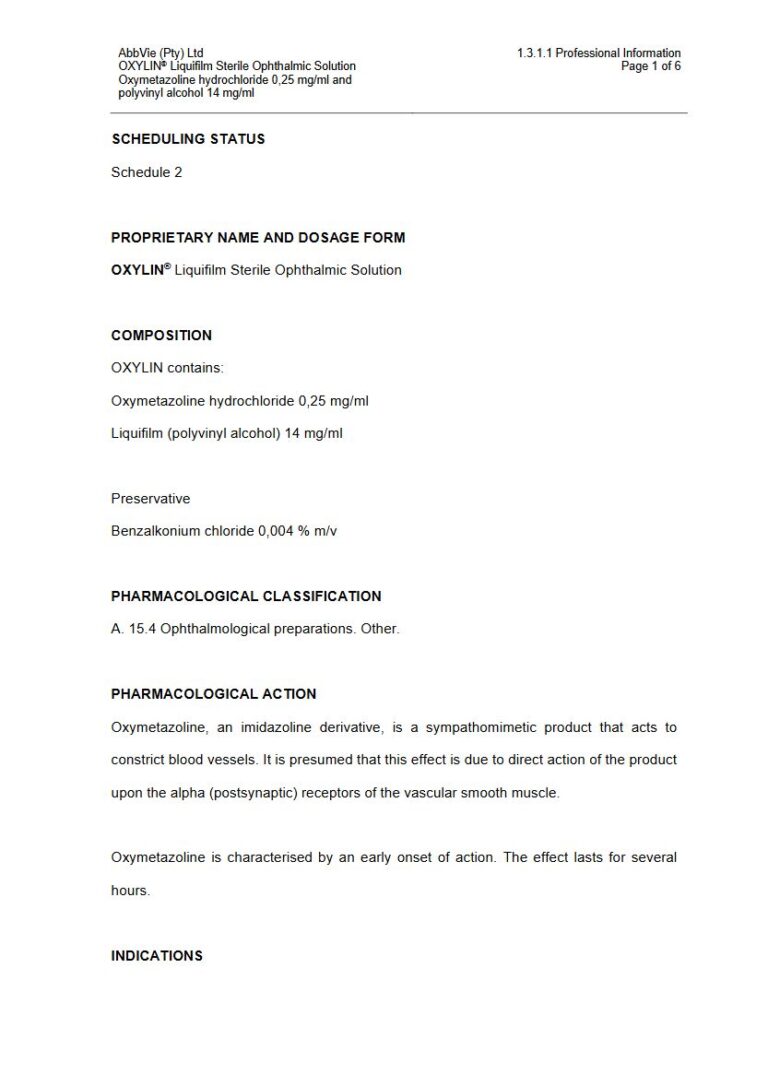
Oxylin 0,25 mg/ml Liquifilm Sterile Ophthalmic Solution
PDF Leaflet Revision Date: 21 April 2023
Clinical Summary
Quick overview from the medicine insert
Indication
Short-term treatment of conjunctivitis and eye irritation.
Dosage (summary)
1-2 drops in the eye(s) 2-4 times a day.
Onset of Action / Duration
Onset: rapid, Duration: several hours
Special Populations
- Children
- Elderly
Pregnancy & Breastfeeding
Safety during pregnancy and lactation not established.
Key Drug Interactions
- Methyldopa
- Maprotiline
- Tricyclic antidepressants
Contraindications
- Angle-closure glaucoma
- Hypersensitivity to components
Common side effects
- Eye irritation
- Pupillary dilation
- Rebound congestion
- Ocular pain
Counselling Points
- Remove contact lenses before use
- Avoid touching the dispensing bottle to the eye
- Consult doctor if symptoms persist after 2-3 days
Serious warnings
- Caution in cardiovascular diseases
- Risk of CNS depression in children
Important Disclaimer
The Oxylin 0,25 mg/ml Liquifilm Sterile Ophthalmic Solution professional information leaflet below is the property of AbbVie and is provided on Medinsert exactly as issued, with no.. alterations or editorial changes. We make every effort to keep content current by updating documents as soon as new versions become available. Medinsert serves as a trusted access point for healthcare professionals, but does not replace official sources or clinical judgement. For more details, please read our full disclaimer. read more>>
 Healthcare Professionals Only
This content is for registered healthcare professionals
Sign in or create a free account to read the full package insert.
Free for HPCSA-registered professionals. Powered by Medinsert.
Clinical Particulars
Section 4 of the official insert — extracted exactly as issued, no alterations
4.1 Therapeutic indications
OXYLIN is indicated for short-term use in the treatment of conjunctivitis and irritation of the eye.
4.2 Posology and method of administration
One to two drops in the eye(s) two to four times a day.
4.3 Contraindications
OXYLIN is contraindicated in those individuals in whom pupillary dilation should be avoided (angle-closure glaucoma or those with critically narrow angles). This product should not be used by those individuals with known hypersensitivity to any of the components of this product. Sympathomimetic medicines should be used with caution in patients using systemic MAO inhibitors as an increase in blood pressure may occur. Use in children, especially infants, may result in CNS depression leading to coma and market reduction in body temperature. Cardiovascular effects may occur following topical application of sympathomimetics to the eye. Excessive doses may cause peripheral vasoconstriction, decreased heart rate and increased blood pressure in children and susceptible adults, i.e. those rare adult patients with a predisposition to sympathetic sensitivity.
4.4 Special warnings and precautions for use
As the possibility of adverse effects on the corneal permeability and the danger of disruption of the corneal epithelium with prolonged or repeated usage of benzalkonium chloride preserved ophthalmological preparations cannot be excluded, regular ophthalmological examination is required.
Caution should be exercised in the use of benzalkonium chloride preserved topical medication over an extended period in patients with extensive ocular surface disease. Use with caution in patients with cardiovascular diseases, hypertension, hyperglycaemia (diabetes), hyperthyroidism, in individuals under treatment with antidepressants and when other medicines are being used. Patients receiving MAO inhibitor therapy or within 14 days of stopping such treatment may experience hypertensive crisis. OXYLIN should be given with care to patients with prostatic enlargement as it may increase difficulty in micturition. Use with caution on the inflamed eye, as significant hyperaemia greatly increases the rate of systemic absorption through the conjunctiva, and prolonged or frequent use, especially in an inflamed eye, may result in increased absorption and possible systemic effects. OXYLIN contains the preservative benzalkonium chloride, which may be absorbed by and cause discolouration of soft contact lenses. Patients wearing soft (hydrophilic) contact lenses should be instructed to remove contact lenses prior to administration of OXYLIN and wait at least 15 minutes following administration before reinserting soft contact lenses. To prevent eye injury or contamination, care should be taken to avoid touching the dispensing bottle to the eye or to any other surface. The use of the bottle by more than one person may spread infection.
If symptoms persist or worsen after a short period of treatment (approximately 2-3 days), consult a doctor.
Paediatric Use: The safety and efficacy of OXYLIN in patients younger than 18 years of age have not been established.
Geriatric Use: The safety and efficacy of OXYLIN in the elderly population have not been established.
4.5 Interactions with other medicines
No interaction studies have been performed. Concurrent use of methyldopa, maprotiline, or tricyclic antidepressants with OXYLIN may alter the effects of OXYLIN.
4.6 Fertility, pregnancy and lactation
Safety and/or efficacy during pregnancy and lactation has not been established.
4.7 Effects on ability to drive and use machines
If transient blurred vision occurs at instillation, the patient should wait until their vision clears before driving or using machinery.
4.8 Undesirable effects
Eye irritation, pupillary dilation, rebound congestion, ocular pain and rebound miosis may occur and may be accompanied by an increase in intraocular pressure. Systemic effects due to absorption of topically applied oxymetazoline have not been reported (refer to CONTRAINDICATIONS).
4.9 Overdose
In case of overdosage or accidental ingestion, OXYLIN can cause peripheral vasoconstriction and severe central nervous depression including hypertension followed by reflex bradycardia and hypotension, marked reduction in body temperature, sweating, drowsiness and coma, particularly in children and susceptible adults i.e. those rare adult patients with a predisposition to sympathetic sensitivity. Should accidental overdosage in the eye(s) occur, flush the eye(s) with water or normal saline. If accidentally ingested, push fluids, induce emesis and institute gastric lavage.
